Hemorrhoids on Pregnancy: Safe Relief That Works

Most women expect back pain and swollen feet in late pregnancy... not a painful lump or bright red blood after a bowel movement.
You're 32 weeks pregnant, already moving carefully, already thinking about sleep, swelling, and labor. Then you go to the bathroom, wipe, and see bright red blood. Or you feel a tender bump that wasn't there yesterday. It's easy to panic, and it's just as easy to feel too embarrassed to ask about it.
If that's you, take a breath. Hemorrhoids on pregnancy are common, especially late in pregnancy and after birth, and they are not a sign that you did something wrong. This guide will help you understand what's happening, what you can try at home, which over the counter options may fit, and how postpartum recovery usually unfolds.
Table of Contents
- Why Hemorrhoids on Pregnancy Catch So Many Women Off Guard
- How Pregnancy Actually Causes Hemorrhoids to Form
- Symptoms You Can Safely Manage at Home
- Prevention Habits That Start Working This Week
- Safe OTC Relief Options During Pregnancy and Postpartum
- Your Postpartum Hemorrhoid Recovery Routine
- Common Myths About Hemorrhoids on Pregnancy
- When to Call Your Doctor and What to Do Next
Why Hemorrhoids on Pregnancy Catch So Many Women Off Guard
A lot of women first notice hemorrhoids on pregnancy in a very ordinary moment. You sit down to have a bowel movement, maybe after a few days of constipation, and suddenly there's stinging, spotting, or a swollen area that feels impossible to ignore. No one really prepares you for how unsettling that can feel.
The surprise makes sense. Pregnancy books often spend pages on nausea, heartburn, and ankle swelling, but much less time on rectal pressure, anal itching, or painful bowel movements. So when hemorrhoids show up, many women assume something has gone seriously wrong.
It's common... and it often shows up late
Hemorrhoids and anal fissures are among the most common perianal problems in pregnancy and after childbirth. In a prospective cohort of 290 women, 43.9% developed a perianal disease overall and 40.7% were specifically diagnosed with hemorrhoids, with 61% of cases appearing in the third trimester, 34.1% after delivery, and 3.3% one month postpartum, according to this medical review of pregnancy related perianal disease.
That pattern matters. It tells you this usually isn't about poor hygiene or some mysterious mistake. It's part of a broader pregnancy and postpartum pressure pattern that tends to build late, then flare again around delivery.
Main takeaway: Hemorrhoids in pregnancy are usually a pressure problem, not a cleanliness problem.
Why the timing feels so unfair
Late pregnancy adds weight, pressure, slower bowel habits, and often more time sitting. Then labor can add straining on top of already swollen tissue. That's why many women feel blindsided twice... once in the third trimester, and again in the first days after giving birth.
If you're embarrassed, that's normal too. This body area is private, and symptoms like itching, bleeding, or a lump can feel hard to say out loud. But they're common enough that your OB or midwife hears about them all the time.
How Pregnancy Actually Causes Hemorrhoids to Form
The simplest way to picture this is to think of a garden hose with a foot pressing down on it while more water is being pushed through. Pressure builds behind the squeeze point. In pregnancy, something similar happens in the veins around the rectum.
The pressure builds from above
As your uterus grows, it presses downward on the pelvic veins. At the same time, pregnancy increases the amount of blood moving through your body. One review explains that late pregnancy tends to be the peak period because the enlarging uterus contributes to venous stasis, vascular engorgement, and increased intra abdominal pressure, with some populations reporting symptom rates as high as 85%, though the review also notes that rates vary widely by study method and setting in this review on pregnancy related hemorrhoids.
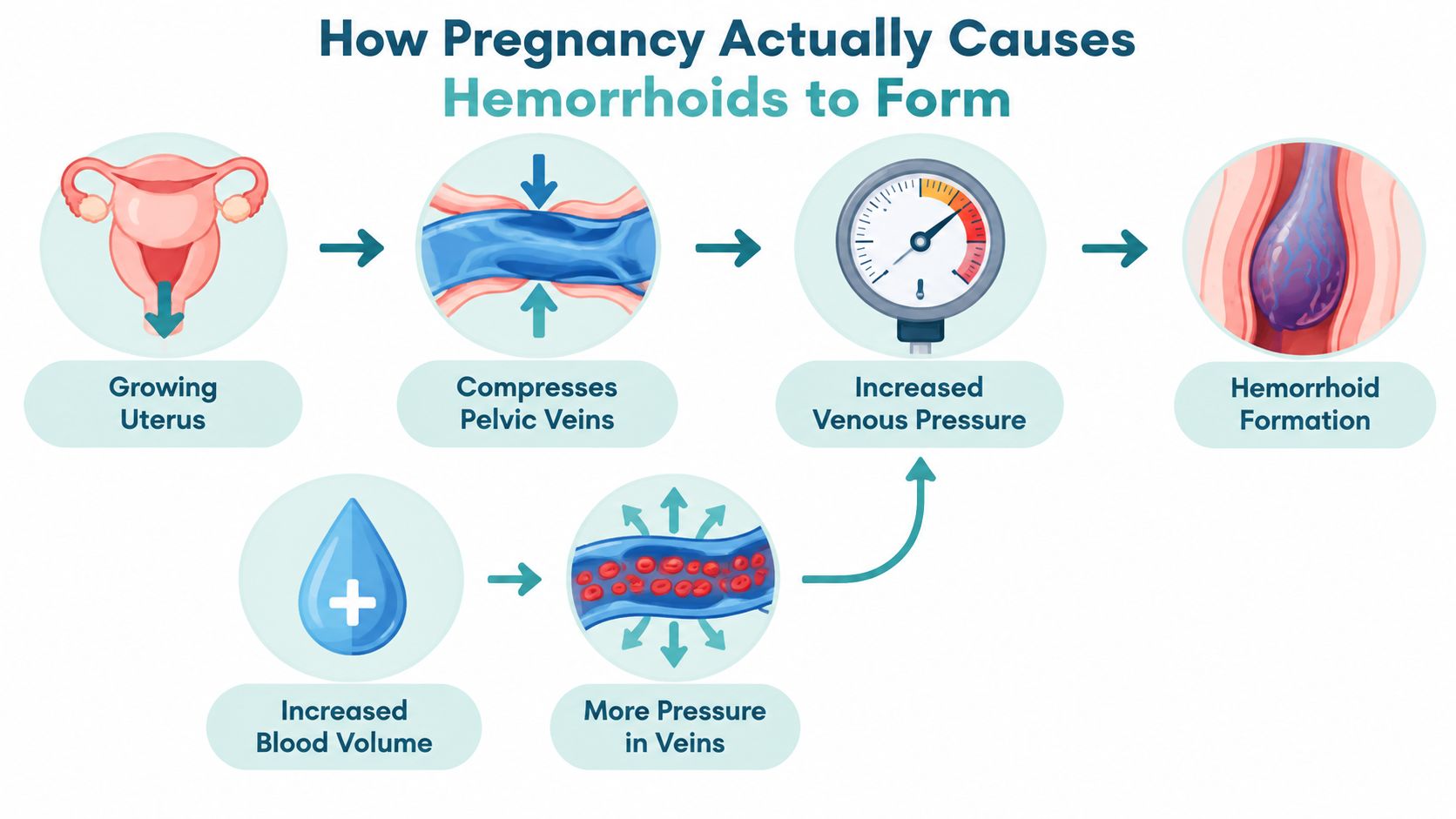
The result is pooling and swelling in the normal vascular cushions inside and around the anus. Those swollen veins can then become irritated, stretched, and painful.
What makes the pressure worse
A few daily habits can add a lot to that pressure:
- Constipation: Hard stool makes you push harder.
- Straining: The longer and harder you strain, the more pressure you create in that area.
- Sitting on the toilet too long: This keeps pressure on the veins even when you're not actively pushing.
- Long periods of sitting: Less movement can slow bowel function and add pelvic pressure.
Internal and external hemorrhoids are not the same
Internal hemorrhoids are inside the anal canal. They often show up as bright red bleeding with little pain, because that tissue has fewer pain-sensitive nerves.
External hemorrhoids are under the skin at the anal opening. These are the ones more likely to feel like a painful lump, swelling, burning, or throbbing.
Understanding that difference helps. If you know what kind of symptoms you're dealing with, you can choose more useful relief instead of trying everything at once.
Symptoms You Can Safely Manage at Home
Not every hemorrhoid symptom means danger. Some are uncomfortable but manageable at home, especially if they're mild and improving. Others deserve a same day call.
Internal symptoms versus external symptoms
- Internal hemorrhoids: You may see bright red blood on toilet paper or in the bowl, but feel little pain.
- External hemorrhoids: You may notice itching, burning, tenderness, or a soft lump near the anal opening.
- After a bowel movement: A flare may feel worse for a while, especially if stool was hard or you had to strain.
- Skin irritation: Repeated wiping can make everything burn more, even when the hemorrhoid itself is small.
A warm soak can calm irritated tissue. If you need a simple method, this guide on how to do a sitz bath at home walks through it clearly.
Symptoms at a Glance Manage at Home vs. Call Your OB GYN
| Symptom | Likely Safe to Manage at Home | Call Your OB/GYN |
|---|---|---|
| Light bright red spotting on toilet paper | Yes, if mild and short lived | If bleeding becomes heavy or keeps recurring |
| Mild itching or burning | Yes | If skin becomes very inflamed or symptoms spread |
| Small tender swelling | Yes | If it becomes hard, very painful, or changes color |
| Throbbing after a bowel movement | Yes, especially if linked to constipation | If pain becomes severe or constant |
| Fever with rectal pain | No | Yes |
| Heavy bleeding | No | Yes |
Mild itching, light spotting, and a small tender lump are common. Severe pain, heavy bleeding, fever, or a hard purple lump need prompt medical advice.
If your clinician says an external cream is appropriate, one OTC option is Revivol-XR® Advanced Hemorrhoid Cream - 5% Lidocaine + Phenylephrine (Vasoconstrictor) - Fast Relief of Burning, Itching, Discomfort. It uses lidocaine for temporary pain and itch relief, phenylephrine HCl 0.25% to help temporarily shrink swollen hemorrhoidal tissue, and glycerin plus petrolatum to help coat and protect irritated skin. If pregnant or breast-feeding, ask a health professional before use, and use only as directed on the Drug Facts label.
Prevention Habits That Start Working This Week
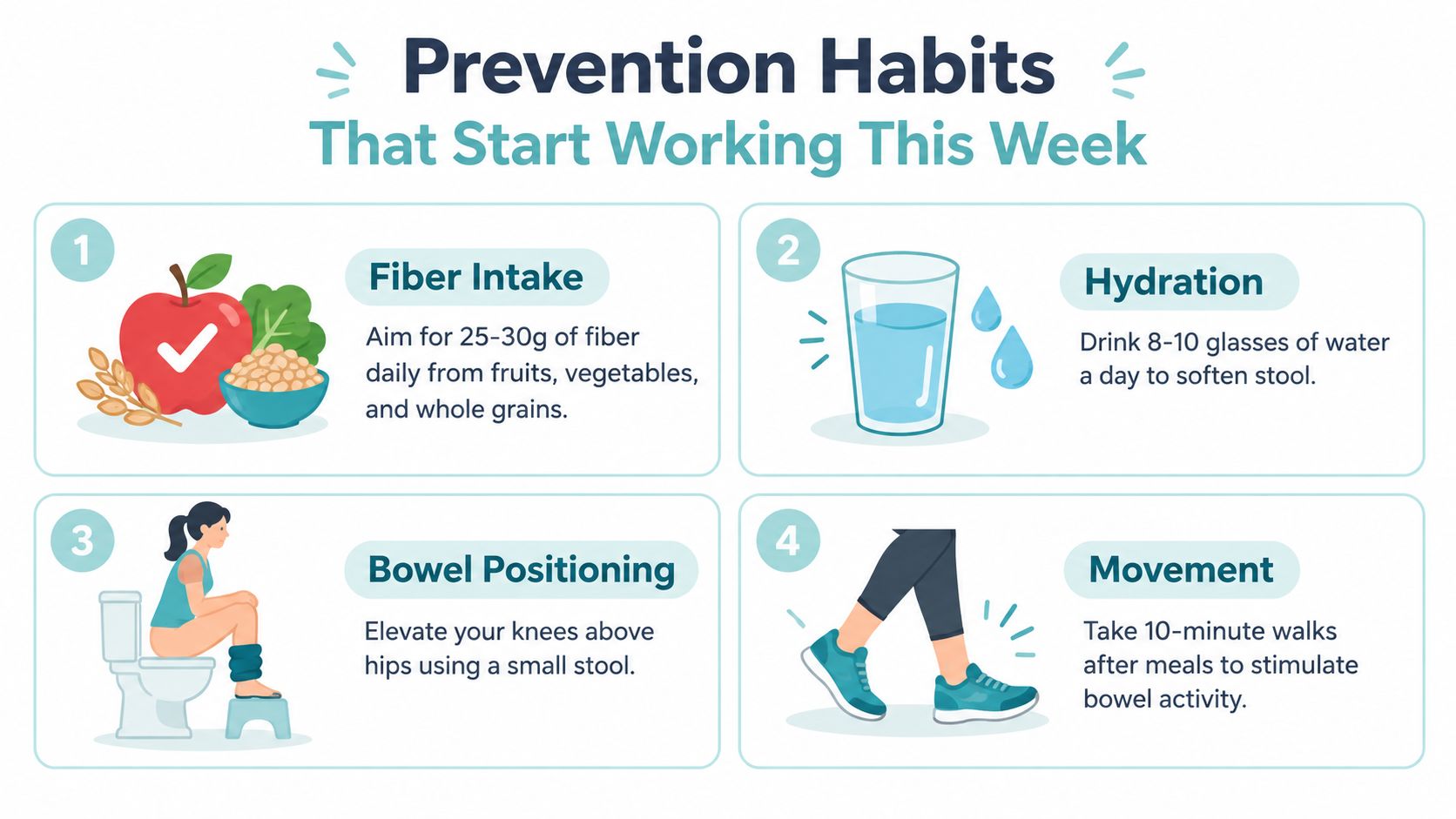
Prevention gets easier when you stop thinking of it as one big fix and start treating it like a few small daily habits. You're trying to lower pressure, soften stool, and avoid long stretches of straining.
Start with stool softness
Aim for about 25 to 30 grams of fiber a day from food first. Fruit, oats, beans, vegetables, chia, and whole grains can all help. If food alone isn't enough, ask your prenatal provider whether a gentle fiber supplement such as psyllium makes sense for you.
Water matters just as much. Many women find that aiming for 8 to 10 glasses of water daily helps stool stay softer. Fiber without enough fluids can leave you feeling more blocked, not less.
Change the way you sit and push
A small footstool under your feet can help raise your knees above your hips. That position can make bowel movements easier and reduce the urge to bear down.
Try this routine:
- Go when you feel the urge: Waiting often leads to drier, harder stool.
- Limit toilet time: Don't scroll on your phone while sitting there.
- Exhale instead of bracing: Let your belly stay soft rather than clenching and pushing hard.
For a few more practical ideas, this guide on how to prevent hemorrhoids while pregnant is a useful companion.
A quick visual can make those bowel mechanics easier to understand:
Keep your body moving
Walking can help wake up a sluggish bowel and reduce the all day pressure that comes from sitting still. A short daily walk, especially after meals, is often more realistic than trying to force a big exercise plan late in pregnancy.
Avoid heavy lifting when you can, especially in the third trimester. The goal isn't perfection. It's less strain, more regularity, and calmer tissue.
Safe OTC Relief Options During Pregnancy and Postpartum
You may notice a pattern like this. Late in pregnancy, the area feels swollen and heavy by evening. Then after birth, especially after pushing or a hard first bowel movement, the discomfort changes. It can feel more sharp, more irritated, or more tender to the touch. That shift is why the same product does not help every person in the same way.
Pregnancy hemorrhoids and postpartum hemorrhoids overlap, but they are not always the same problem in practice. During pregnancy, ongoing pressure from the uterus and slower blood return can leave hemorrhoidal veins puffy and congested. After delivery, labor pushing, perineal soreness, and the strain of the first few bowel movements can add a new layer of local irritation. In other words, some third-trimester swelling fades as pressure comes off after birth, while some hemorrhoids need more targeted local care for a while.
Comparing Safe OTC Options for Pregnancy and Postpartum Hemorrhoids
| Category | Example Actives | What It Does | When to Use |
|---|---|---|---|
| Topical anesthetic | Lidocaine, pramoxine | Temporarily numbs surface pain, burning, or itching | Best for sore external tissue |
| Vasoconstrictor | Phenylephrine | Helps temporarily shrink swollen hemorrhoidal tissue | Best for swelling and fullness |
| Skin protectant | Witch hazel, zinc oxide, glycerin, petrolatum | Coats and protects irritated skin | Best when wiping stings or skin feels raw |
| Warm sitz care | Warm water soaks | Soothes tissue and relaxes the area | Helpful in both pregnancy and postpartum |
| Gentle cleansing | Unscented wipes or warm water cleansing | Reduces friction from dry toilet paper | Useful after bowel movements |
A simple way to choose is to match the product to the feeling you are having.
If the main problem is burning, stinging, or sharp soreness on the outside, a topical anesthetic such as lidocaine or pramoxine usually makes the most sense. If the area feels puffy, full, or pressured, phenylephrine is aimed more at temporary swelling. If wiping feels abrasive and the skin seems rubbed raw, protectants such as witch hazel, glycerin, petrolatum, or zinc oxide are often the better fit.
Apply topical products after gentle cleansing or a sitz bath, once the skin is clean and dry. That tends to sting less and helps the product sit on the skin instead of mixing with moisture or residue.
Timing matters too.
Symptoms often feel worse in the early postpartum period than many women expect, even if the problem started in late pregnancy. That does not automatically mean the hemorrhoids are becoming a long-term disease. It often means childbirth added short-term mechanical strain to tissue that was already swollen. If you want help sorting through categories and labels, this guide to pregnancy safe hemorrhoid cream can make those choices easier to discuss with your OB or midwife.
A few cautions matter
Some OTC products are reasonable to ask about, but pregnancy and breast-feeding are good times to be picky.
- Hydrocortisone: Ask your OB or midwife before using it, rather than assuming it is the standard first step.
- Suppositories for extended use: These are not always the best match, especially if the main issue is outside the anus rather than inside.
- Anything that increases burning or rash: Stop using it and check in with your clinician.
The goal is relief with the least irritation possible. Short-term comfort is helpful, but the better approach is choosing the product that matches the stage you are in: third-trimester swelling, immediate postpartum tenderness, or symptoms that keep hanging on and need a closer look.
Your Postpartum Hemorrhoid Recovery Routine
The first days home with a newborn can make everything feel bigger, louder, and more uncomfortable than expected. Hemorrhoids often seem most swollen early on, especially after vaginal birth, pushing, and the first few bowel movements. That doesn't mean you're failing recovery.
A simple routine you can repeat
Try a warm sitz bath for 15 to 20 minutes, two to three times a day, and again after a bowel movement if needed. Warm water helps relax the area and can ease that tight, bruised feeling.
For soaking, some women prefer a pre mixed option like Revivol-XR® Sitz Bath Soak Mix – Super Concentrated 20-in-1 Blend with Epsom Salt & Essential Oils – 15 Soaks – USP Grade, which contains Epsom salt along with other ingredients listed on the packaging. It's for external use only, and if you have sensitive skin or known essential oil allergies, it's smart to check with your physician before use.
What to do after each bathroom trip
- Clean gently: Use warm water or an unscented wipe if dry toilet paper feels rough.
- Pat dry: Rubbing can restart irritation fast.
- Apply approved topical care: Witch hazel pads or an OB approved numbing gel may help with comfort.
- Use a clean pad: A soft perineal pad is usually kinder than tucking tissue against sore skin.
Don't measure healing by how it feels in one afternoon. Postpartum tissue often needs steady, boring care to calm down.
Protect your healing space
Rest your pelvic floor as much as real life allows. Avoid heavy lifting beyond what your care team says is okay. If sitting is miserable, a cushion may reduce pressure, though some women prefer shifting positions often instead of sitting in one spot too long.
If you need medication guidance while breast-feeding or after a tear, episiotomy, or difficult delivery, ask your provider what pain relief is appropriate for you. Persistent, severe, or bleeding symptoms deserve follow-up.
Common Myths About Hemorrhoids on Pregnancy
You may be a few days or a few weeks after birth, finally expecting your body to settle down, and then the burning, pressure, or bleeding is still there. That catches many women off guard. A lot of pregnancy advice treats hemorrhoids like a short constipation episode. In real life, some third-trimester swelling fades quickly, while some true hemorrhoid symptoms hang on and need steady local care after delivery too.
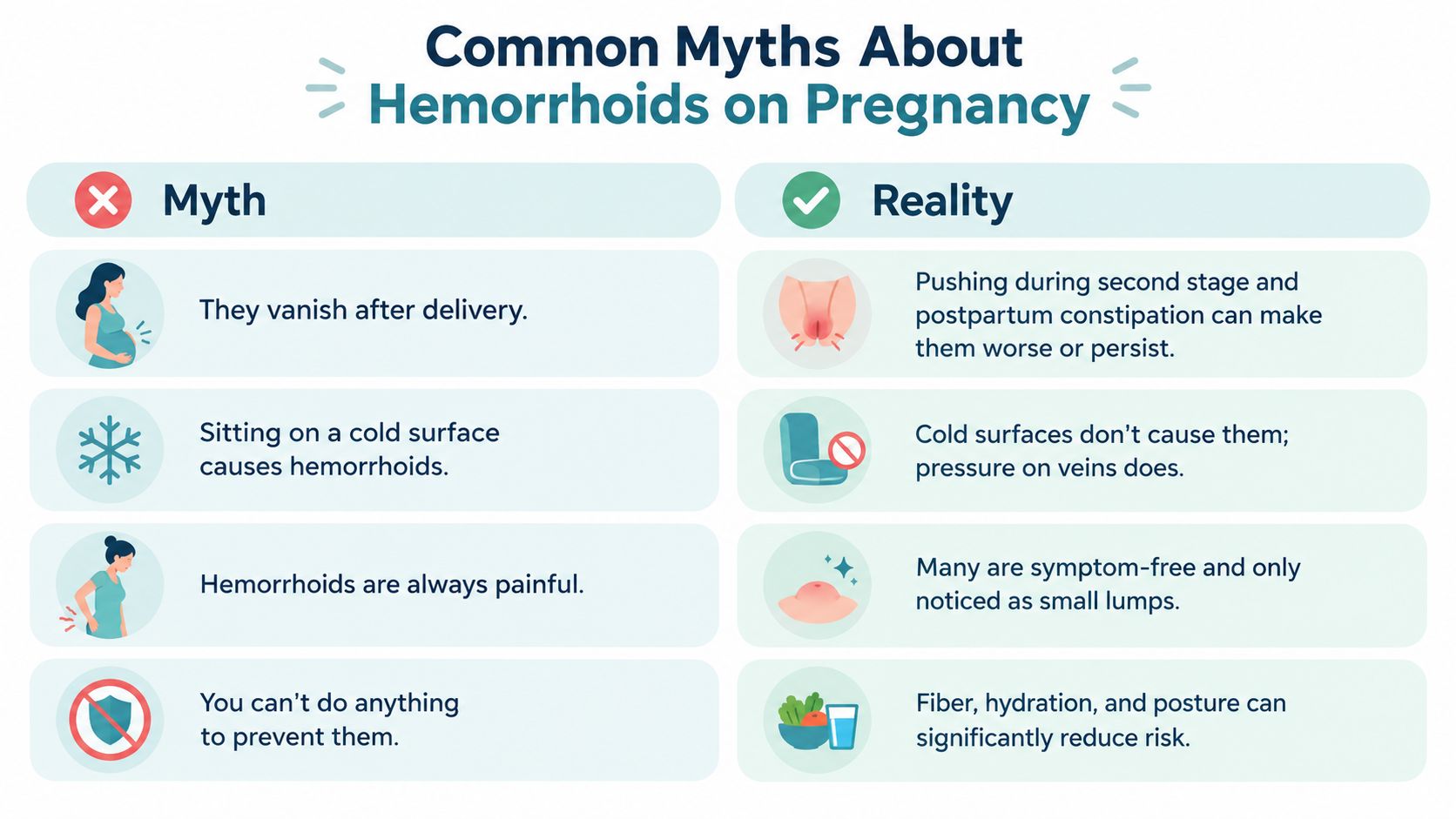
Myth 1 ... They vanish right after delivery
Delivery often removes one big source of pressure, so swelling may ease once the baby is born. But recovery is not always immediate. Some women improve within days, and others keep having symptoms well into postpartum, especially if bowel movements stay hard, straining continues, or irritated tissue never gets a real chance to calm down.
Earlier in this article, we noted research showing that postpartum hemorrhoid symptoms can persist for a subset of women. One limit matters here. Of 496 first-time mothers surveyed at three weeks postpartum, only 120 responded at 1.5 years, so that longer-term persistence figure should be read as a follow-up snapshot, not a prediction for every new mother.
Myth 2 ... Painful stools are just part of pregnancy
Painful bowel movements are common. They still deserve attention.
Pain usually means the area is swollen, irritated, or being stretched by stool that is too hard or too large. A good goal is less friction and less pushing. That is why stool-softening habits, hydration, and a better bathroom position help. They are not small comfort measures. They reduce the repeated pressure that keeps hemorrhoids angry.
Myth 3 ... Topical numbing creams are always unsafe
Some over-the-counter products are commonly used during pregnancy and postpartum, but "topical" does not automatically mean "fine for everyone." The skin around the rectum can be sensitive, and some products combine several ingredients. The safer approach is simple. Check the label, use only as directed, and ask your OB, midwife, or pharmacist if you are pregnant, breastfeeding, healing from stitches, or unsure what the product contains.
Witch hazel pads and provider-approved numbing products may help with short-term comfort. They work like a cooling layer over irritated skin. Relief is helpful, but it does not replace the basics that let the tissue heal.
Myth 4 ... If they don't go away, surgery is the only answer
Persistent symptoms do not automatically point to a procedure. In pregnancy and postpartum, the first step is usually more targeted care. That may mean improving stool consistency, reducing straining, protecting the skin after each bathroom trip, and having a clinician confirm that the problem really is hemorrhoids and not a fissure, infection, or another source of pain or bleeding.
In other words, there is a middle ground between "ignore it" and "you need surgery." Many women get relief there.
When to Call Your Doctor and What to Do Next
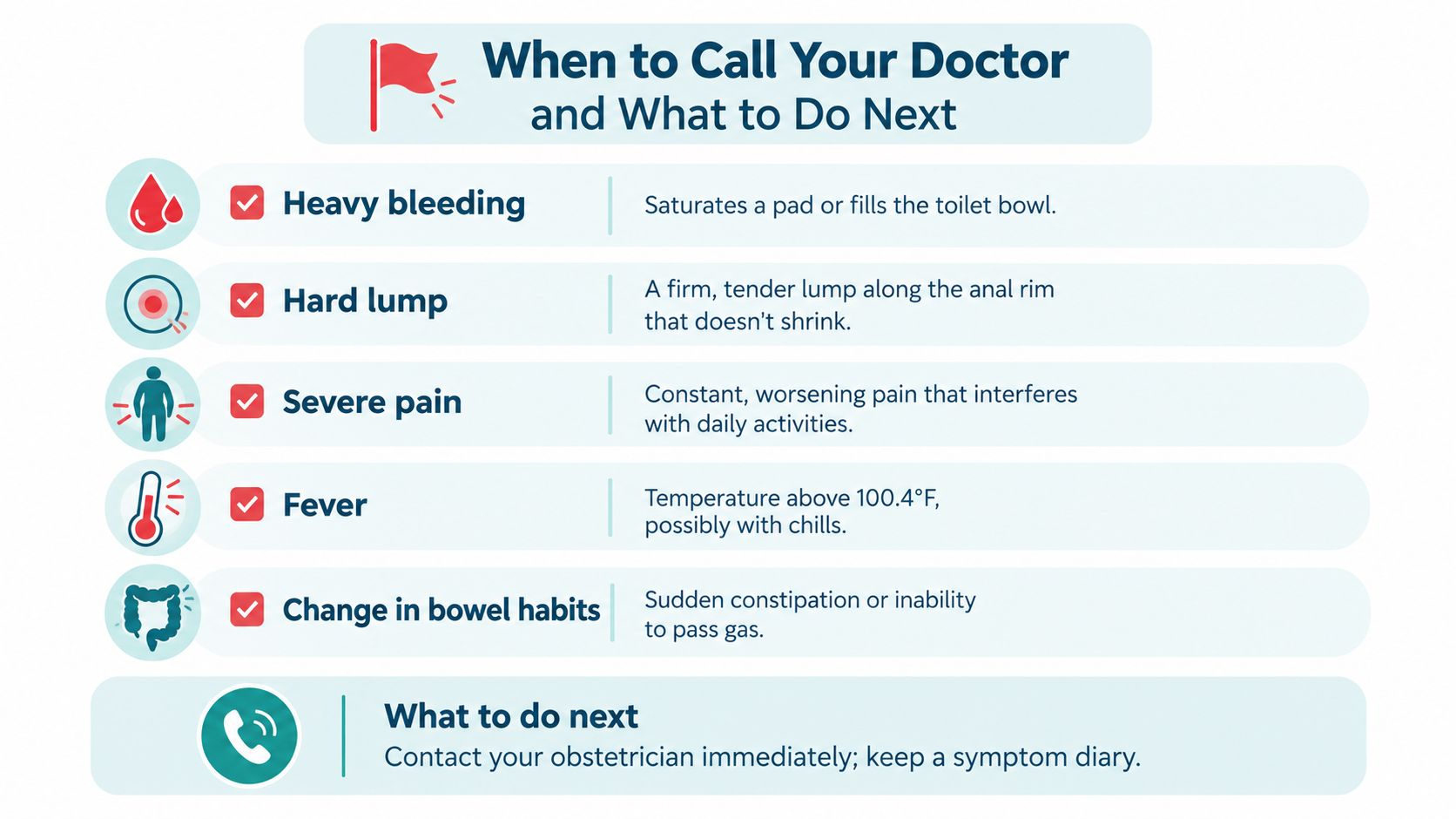
Most hemorrhoids are miserable, not dangerous. But some symptoms should move you out of home care mode and into contact your clinician mode.
Call promptly for these red flags
- Heavy bleeding: If blood is soaking a pad or filling the toilet, don't wait.
- A hard, very painful lump: Especially if it looks bluish or suddenly becomes much more tender.
- Fever with rectal pain: That combination needs medical attention.
- Dizziness or racing heart: Especially if bleeding has been ongoing.
- Tissue that won't go back in gently: Don't keep forcing it.
- Pain that keeps worsening: Especially after about seven days of steady home care.
What to do while you wait for the visit
Take a simple symptom log for a few days. Write down when pain happens, whether bleeding follows bowel movements, what the stool was like, and what you tried. If there's visible swelling, a photo for your own reference can help you describe changes clearly at the appointment.
A broader review in gastroenterology literature notes that hemorrhoids are common in pregnancy, often improve within about six weeks postpartum, but can remain clinically relevant when constipation, prolonged straining, delivery, pain, fissures, or thrombosis are involved in this review on constipation, hemorrhoids, and anorectal disorders in pregnancy.
You don't need to panic. You do need support if symptoms are severe, persistent, or bleeding. Book the visit, keep stools soft, continue gentle care, and let someone look at it.
Revivol-XR offers practical OTC options for the exact discomfort many women deal with during hemorrhoids on pregnancy and postpartum recovery, including soothing external care and sitz bath support. If you want to compare products carefully and choose something that fits your symptoms, visit Revivol-XR.