How to Prevent Hemorrhoids While Pregnant: Your Guide to a Pain-Free Pregnancy

Most people don’t realize that the hormonal shifts in pregnancy are a perfect storm for developing painful hemorrhoids. I once spoke with a new mom who was more distressed by her hemorrhoids than her delivery recovery, a situation that could have been avoided with a few simple steps. Her story stuck with me because it highlights a common, yet preventable, part of pregnancy.
The task list will never keep you comfortable... the follow-up on prevention will.
This isn't just about discomfort... it's about understanding how your amazing, changing body works and giving it the support it needs. Learning how to prevent hemorrhoids while pregnant is about making small, proactive changes to your diet, movement, and daily habits. These adjustments can help you sidestep this common issue, allowing you to focus on the joy of your pregnancy journey.
You can take action right now with these simple, OB/GYN-safe strategies.
Your Pregnancy Journey Without Painful Hemorrhoids
Pregnancy is a time of incredible change, but painful hemorrhoids shouldn't be a guaranteed part of the experience. It’s easy to feel anxious or embarrassed about this, but understanding why it happens is the first step toward preventing it.
Your body is working overtime right now. The trifecta of increased blood volume, major hormonal shifts, and the growing weight of your uterus all put a ton of strain on the veins down there. This pressure is what causes hemorrhoids to pop up.
Why Pregnancy Increases Your Risk
It’s not just one thing... it’s a perfect storm of factors unique to this time that ramp up rectal vein pressure.
- A Growing Uterus: As your baby gets bigger, your uterus expands and presses on the large veins in your pelvis. This slows down blood flow from the lower half of your body, causing the veins below your uterus to swell.
- Hormonal Changes: Progesterone, an essential pregnancy hormone, has a side effect: it relaxes vein walls, making them more likely to bulge. It also slows down your digestive tract, which is a classic recipe for constipation.
- Constipation and Straining: That slower digestion, combined with the physical pressure from your uterus, makes constipation a very common struggle. Straining on the toilet is the final straw, dramatically increasing pressure on rectal veins and leading directly to hemorrhoids.
Knowing these interconnected factors is your best defense. It’s not about blaming your body... it's about empowering yourself with knowledge. By making small lifestyle adjustments to address these root causes, you can significantly lower your risk of developing this painful condition. For a deeper dive into the specific triggers, check out our guide on what causes hemorrhoids during pregnancy.
This article will show you exactly how to build a preventative routine that lets you focus on what truly matters: your health and your growing baby.
Building Your Anti-Hemorrhoid Diet From The Inside Out
The most powerful way to sidestep hemorrhoids during pregnancy doesn't involve a special cream or cushion… it starts right on your plate. Let’s build a practical plan focused on one thing: making your stool soft, bulky, and easy to pass so you never have to strain.
This isn’t about some restrictive diet. It’s about strategically adding the right foods that work from the inside out to keep everything moving smoothly.
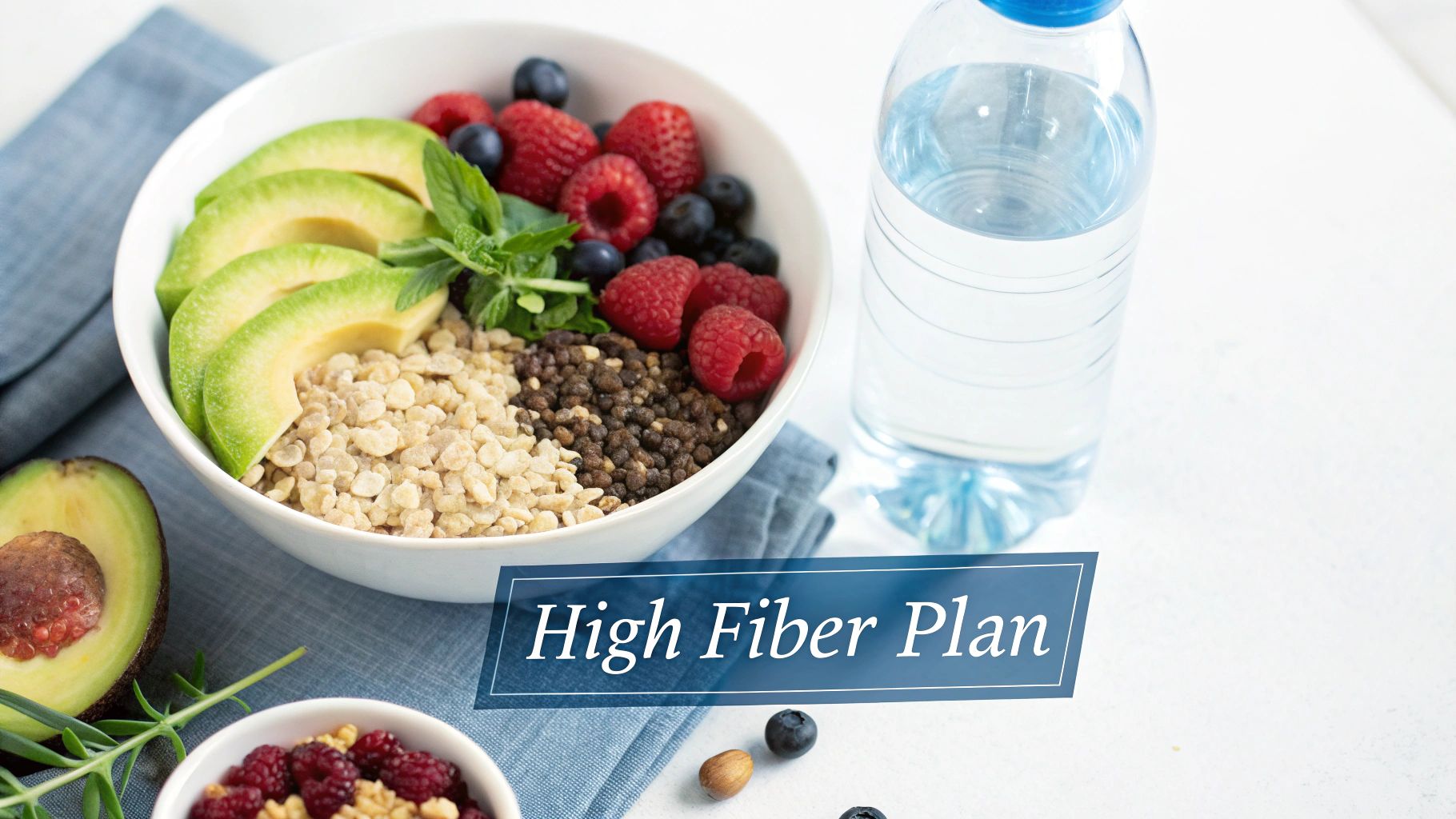
Prioritizing Fiber For Softer Stools
Fiber is the undisputed champion of hemorrhoid prevention, especially when you’re pregnant and hormonal changes tend to slow your system down.
Think of fiber as a natural sponge. It soaks up water in your intestines, which adds both bulk and softness to your stool. This simple action makes bowel movements much easier to pass, eliminating the pressure and straining that lead to hemorrhoids.
Your daily goal should be 25 to 35 grams of fiber. That might sound like a lot, but you can easily get there with a few smart, consistent additions to the meals you already eat.
Easy Fiber-Boosting Foods For Your Pregnancy Diet
Hitting your fiber goal is easier than you think when you know which foods pack the biggest punch. This quick guide will help you reach your daily goal of 25-35 grams with simple, pregnancy-safe additions.
| Food Item (Serving Size) | Approximate Fiber (grams) | Added Benefit |
|---|---|---|
| Chia Seeds (2 tbsp) | 10 g | Rich in Omega-3s for baby's brain development. |
| Lentils (1 cup, cooked) | 15 g | Excellent source of plant-based protein and iron. |
| Raspberries (1 cup) | 8 g | Packed with antioxidants and Vitamin C. |
| Avocado (1/2 medium) | 7 g | Full of healthy fats for you and your baby. |
| Whole-Wheat Pasta (1 cup) | 6 g | Provides sustained energy to fight pregnancy fatigue. |
| Pear (1 medium, with skin) | 6 g | Gentle on the stomach and helps with hydration. |
| Oatmeal (1 cup, cooked) | 4 g | Helps stabilize blood sugar levels. |
Mixing and matching a few of these foods throughout your day makes reaching your fiber target simple and delicious.
Don’t Forget To Hydrate
Here’s the thing: fiber can't work its magic alone. Without enough water, a high-fiber diet can backfire and actually make constipation worse.
Remember that sponge analogy? A dry sponge is hard and useless. It needs water to become soft and pliable. The same goes for fiber in your digestive system.
Aim to drink 8 to 10 glasses (about 2.3 liters) of water daily. This is the key that unlocks fiber's power, helping it swell up to create that soft, easy-to-pass stool that keeps you comfortable.
Struggling to get enough water in? Try these simple tricks:
- Get a Marked Water Bottle: Having visual goals to hit by certain times of the day makes it feel more like a game and less like a chore.
- Set Hourly Reminders: A quick notification from your phone or watch can be a great nudge to take a few sips.
- Infuse It: Make your water more interesting by adding slices of lemon, cucumber, mint, or berries. It adds a hint of flavor without any sugar.
This one-two punch of high fiber and great hydration is the absolute cornerstone of how to prevent hemorrhoids while pregnant. It's a natural strategy that tackles the root of the problem. For more ideas on what to add to your grocery list, our guide on foods that are good for hemorrhoids offers a complete list to keep your meals both effective and interesting.
Mastering Smart Habits For A Healthy Pelvic Floor
Believe it or not, how you move and how you sit can make all the difference in whether you develop hemorrhoids during pregnancy. You don't need a massive life overhaul. Instead, the most powerful strategies are often small, consistent changes that add up to big results.
These smart habits are all about taking unnecessary pressure off the very sensitive veins in your pelvic region. By just being a little more mindful of your daily routines, you can actively protect yourself and stay far more comfortable.
Rethink Your Bathroom Routine
Let’s start in the one place where the most direct pressure happens: the toilet. Straining to have a bowel movement or just sitting on the toilet too long are two of the biggest triggers for hemorrhoids, hands down.
When you strain, you’re creating a big surge of pressure in those rectal veins. Over time, that pressure causes them to swell and bulge. Sitting on the toilet for a long time does something similar by letting blood pool in those same veins.
The toilet is for function, not for scrolling.
This is such a simple but essential rule to live by, especially during pregnancy. If a bowel movement isn't happening within a couple of minutes, get up. You can always try again later when you feel the urge. Ditching the phone will make a huge difference.
Elevate Your Feet To Reduce Strain
One of the most effective tools for how to prevent hemorrhoids while pregnant is also one of the simplest: a little squatting stool.
When you put your feet up on a small stool while on the toilet, you change your body’s posture to mimic a natural squat. This position actually straightens out the colon, which lets stool pass much more easily and with a lot less effort.
- Improved Alignment: Raising your knees above your hips relaxes the puborectalis muscle, which can otherwise put a "kink" in your colon.
- Reduced Straining: Because of this better alignment, you don't have to push nearly as hard, directly lowering the pressure on your rectal veins.
- Faster Elimination: You'll probably spend less time on the toilet, which further cuts down on the risk of blood pooling in the area.
You don't need a fancy branded stool, either. A stack of sturdy books or a small step stool can work just fine.
Gentle Movement Is Your Best Friend
Staying active is absolutely crucial for healthy circulation, which is key to keeping blood from stagnating in your pelvic veins. We're not talking about intense workouts here... gentle, consistent movement is what you're after.
Try to get about 30 minutes of light activity on most days. This keeps your digestive system moving and boosts blood flow throughout your lower body.
Some fantastic pregnancy-safe options include:
- Brisk Walking: A daily walk is one of the easiest and most effective ways to get your circulation and your bowels moving.
- Prenatal Yoga: Certain poses can help relieve pelvic pressure and strengthen the muscles that support the area.
- Swimming: The water's buoyancy takes all the pressure off your veins while you still get a great, low-impact workout.
Regular exercise does more than just help prevent hemorrhoids. It can boost your mood, give you more energy, and help prepare your body for labor. To learn more, check out our guide on how exercise can help with hemorrhoids.
Strengthen Your Pelvic Floor With Kegels
Think of your pelvic floor muscles as a supportive sling holding up your rectum, bladder, and uterus. When you strengthen these muscles with Kegel exercises, you give your rectal veins better support, making them less likely to swell.
To do a Kegel, you just squeeze the muscles you’d use to stop the flow of urine.
- Isolate: Make sure you're only tensing the pelvic floor muscles. Keep your abs and thighs relaxed.
- Contract: Squeeze and hold the contraction for 5 seconds.
- Relax: Release the muscles completely for another 5 seconds.
- Repeat: Aim for a set of 10 repetitions, three times a day.
Consistency is everything. This simple exercise builds the internal support structure your body needs to handle the increased pressure of pregnancy.
Finding Safe and Soothing Relief When Symptoms Appear
Even when you're doing everything right with your diet and habits, the sheer physical pressure of pregnancy can still cause a hemorrhoid flare-up. When that discomfort hits, it's smart to have a plan for safe, gentle relief.
Before you try any new product or remedy, always run it by your OB/GYN first. Your doctor can give you the all-clear, making sure whatever you choose is completely safe for you and your baby.
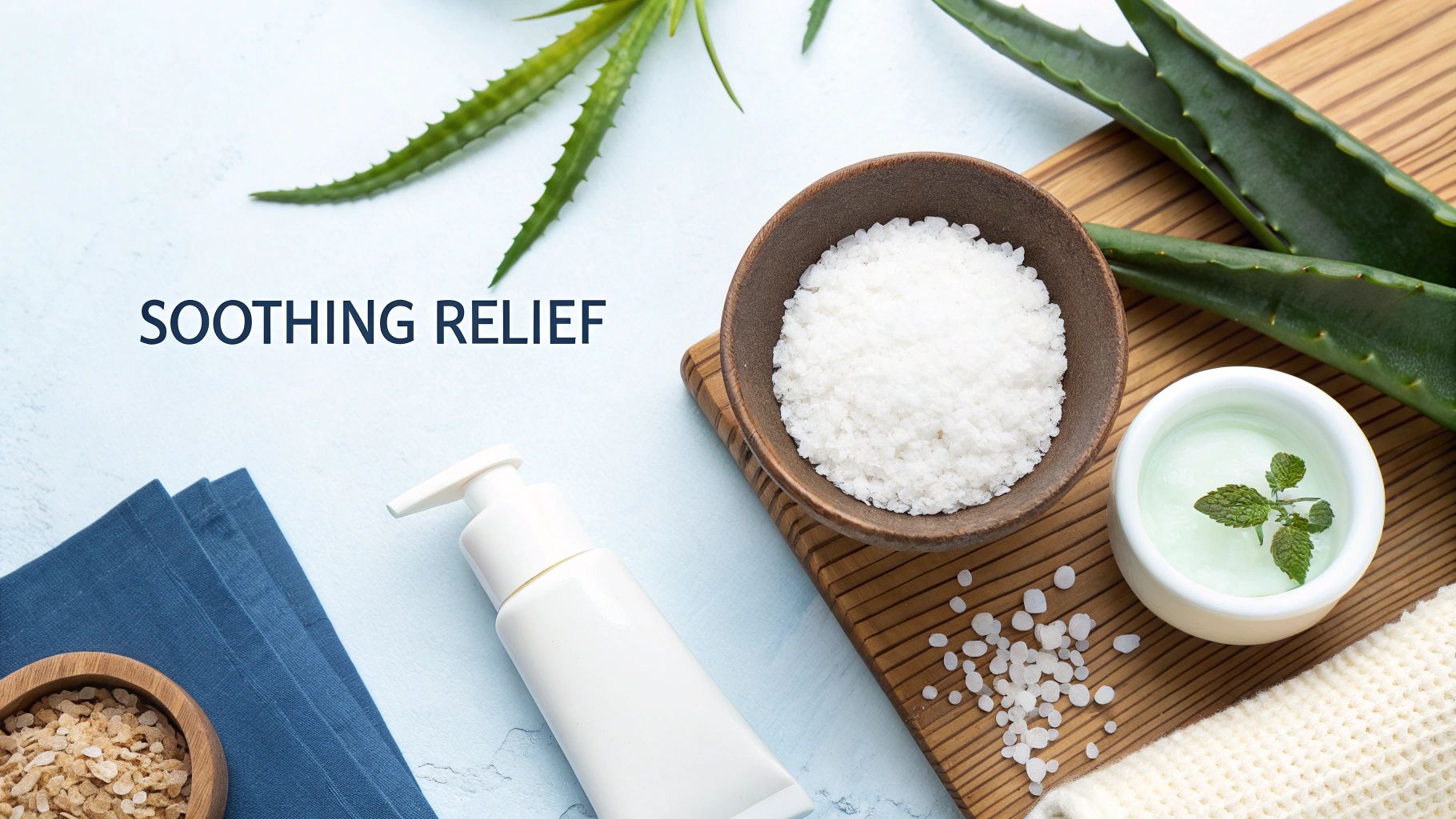
The Immediate Comfort of a Sitz Bath
One of the simplest and most recommended at-home treatments is a sitz bath. It’s a shallow bath of warm water meant to cleanse and soothe the perineal area. That warmth works wonders by increasing blood flow to the tissue, which helps calm irritation and reduce swelling.
You can get a special basin that fits right over your toilet, or just fill your tub with a few inches of warm... not hot... water. Soaking for 15 to 20 minutes a few times a day, especially after a bowel movement, can bring significant relief.
Enhancing Your Soak With Therapeutic Salts
To make your sitz bath even more effective, think about adding therapeutic salts. A high-quality blend can turn a simple soak into a truly healing experience.
Our Revivol-XR 20-in-1 Sitz Bath Salts are formulated specifically for this. They mix pure Epsom salt, famous for its ability to reduce swelling, with a curated blend of soothing botanicals and essential oils. The result is a more comprehensive soak that not only calms symptoms but also gives you a moment of relaxation.
True relief isn't just about managing pain... it's about providing gentle, restorative care that your body trusts.
Adding these salts transforms warm water into a targeted therapeutic session, helping to calm inflammation and provide comfort without any harsh ingredients.
Choosing Gentle Topical Relief
When you need direct, on-the-spot relief, a topical cream can be a lifesaver. During pregnancy, though, it’s vital to choose one that is steroid-free and made with gentle, effective ingredients.
Look for products that contain ingredients known for their natural soothing properties:
- Witch Hazel: A natural astringent, witch hazel helps temporarily shrink swollen tissue and provides powerful relief from itching.
- Aloe Vera: Known for its cooling and anti-inflammatory benefits, aloe soothes sensitive skin and promotes healing.
Revivol-XR’s Advanced Hemorrhoid & Fissure Cream was created with exactly this in mind. It uses the power of ingredients like witch hazel and aloe vera to provide comfort without steroids or other harsh chemicals you might want to avoid while pregnant. It also provides a protective barrier over irritated tissue, which can reduce pain during bowel movements.
What to Expect Postpartum and When to Call Your Doctor
The incredible strain of childbirth itself is often the final push that triggers postpartum hemorrhoids. The journey doesn't end at delivery… it just changes. Heading into this next phase with a proactive plan can make all the difference in your recovery.
Many of the great habits you built during pregnancy are your best allies for the postpartum period. Continuing your prevention strategy helps your body heal and lets you focus on bonding with your newborn instead of wincing in pain.
Continuing Your Prevention Plan After Birth
Your body needs time to recover, and being gentle with yourself is everything. It’s the simple, consistent habits that will support your healing.
Here are a few things that are non-negotiable for new moms:
- Hydrate, Especially If You're Breastfeeding. If you're nursing, your body's demand for water goes way up. Aim for at least 10-12 glasses of water a day to keep your stool soft and your milk supply steady.
- Don't Let the Fiber Slip. Keep eating plenty of fruits, veggies, and whole grains. Have easy, fiber-rich snacks ready to go. Pears, apples, and little bags of nuts are perfect.
- Gentle Cleansing Is a Must. After delivery, the entire perineal area is incredibly sensitive. Your new best friend is the peri bottle. Fill it with warm water, gently squirt the area clean, and then pat dry with a soft towel.
- Move When You Can. Short, gentle walks around the house or your neighborhood are more than enough to boost circulation and help your digestive system stay on track.
Your postpartum body deserves the same care and attention you gave it during pregnancy. Gentle habits are the key to a smoother recovery.
Knowing the Red Flags: When to See a Doctor
Most hemorrhoids that pop up during pregnancy or after childbirth will calm down on their own with at-home care in a few weeks. But it is absolutely vital to know when a symptom is no longer "normal" and requires a call to your healthcare provider.
Never hesitate to reach out to your doctor if you're worried.
When to Make the Call
Pay close attention to your body and contact your doctor or midwife right away if you experience any of these symptoms:
- Severe or Worsening Pain: If the pain is intense, isn't getting better with at-home care, or makes it hard to sit or have a bowel movement, it's time to get it checked out.
- Heavy or Continuous Bleeding: A little bright red blood on the toilet paper is one thing. If the bleeding is heavy, drips into the toilet bowl, or just won't stop, you need medical attention.
- A Hard, Excruciatingly Painful Lump: If a hemorrhoid becomes very firm, turns a purple or blue color, and is extremely painful, it could be a thrombosed hemorrhoid. That means a blood clot has formed inside, and it often requires a doctor's help.
- Fever or Chills: If you develop symptoms like a fever or chills along with hemorrhoid pain, it could be a sign of an infection that needs to be treated.
Remember, you are your own best advocate. That mom I mentioned earlier finally got relief once she spoke up. Don't wait.
Your Top Questions About Pregnancy Hemorrhoids
When you're pregnant, a million new questions pop into your head. If hemorrhoids are one of your worries, you're certainly not alone. Getting straight answers can make all the difference, helping you feel more prepared and a lot less anxious.
Here's a quick rundown of the most common questions we hear from expecting moms.
Will These Hemorrhoids Go Away After I Give Birth?
This is probably the number one question on every expecting mom's mind! The answer is almost always a big, reassuring yes. For most women, hemorrhoids that pop up during pregnancy either shrink dramatically or disappear completely within a few weeks of delivery.
Once your baby is born, that immense pressure from your growing uterus is finally gone. Your blood volume starts returning to normal, and your hormones begin to settle down. All these changes relieve the root causes, allowing those swollen veins to finally retreat.
The key is to keep up the good habits you've started. Sticking with a high-fiber diet and drinking plenty of water will speed up your recovery.
Can Hemorrhoids Affect My Baby or Delivery?
It’s totally normal to worry if this frustrating condition could somehow impact your baby or the birthing process. Let's put that fear to rest. Hemorrhoids are a local issue, affecting only the veins around your rectum and anus. They pose no direct risk to your baby's health or development.
Now, during a vaginal delivery, all that intense pushing can sometimes make existing hemorrhoids worse or even cause new ones to show up. This is incredibly common. While it can add to your postpartum discomfort, it isn't considered a medical complication.
Peace of mind is powerful. Knowing that hemorrhoids are a manageable issue for you, and not a risk for your baby, allows you to focus on the excitement of delivery.
If your hemorrhoids are especially painful, talk to your OB/GYN or midwife. They can give you tips for managing them during labor to keep you as comfortable as possible.
Are Over-the-Counter Treatments Safe During Pregnancy?
This is a really important question. You’ll see a ton of over-the-counter (OTC) hemorrhoid treatments on pharmacy shelves, but not all of them are recommended for use during pregnancy. Some contain steroids or other ingredients that haven't been studied enough to be considered safe.
This is why you need to follow one golden rule: Always check with your doctor before using any new medication, cream, or supplement.
Your doctor can point you toward products with ingredients that are known to be safe, such as:
- Witch Hazel: A natural, gentle astringent that helps reduce swelling and calm itching.
- Aloe Vera: Offers a cooling, anti-inflammatory effect on sore, irritated skin.
- Protectants: Simple ingredients like glycerin or petrolatum create a barrier that prevents further irritation.
Pregnancy-safe options, like many of the products in the Revivol-XR line, are made specifically to provide relief without worrisome ingredients. Our sitz bath salts and gentle creams are designed to soothe without introducing harsh chemicals. But even with trusted brands, getting your doctor's okay first is the smartest and safest move for you and your baby.
At Revivol-XR, we understand the unique challenges of pregnancy and postpartum care. Our doctor-trusted, U.S.-made products are designed to provide safe, effective, and soothing relief when you need it most. Explore our full range of solutions, from therapeutic sitz bath salts to gentle, steroid-free creams, and find the comfort you deserve at https://hemorrhoid.com.