How to Do a Sitz Bath at Home: A Step-by-Step Guide for Relief

Most people don’t realize that the ‘home remedy’ your grandmother swears by may actually be one of the most powerful tools you have for perineal discomfort. Learning how to take a sitz bath at home is surprisingly straightforward... all you really need is a shallow basin of warm water to gently soak and cleanse the area for powerful relief.
A few years ago, I was helping a friend navigate postpartum recovery. She was in a lot of pain, exhausted, and feeling overwhelmed. The hospital had sent her home with a long list of instructions, but the one thing she kept coming back to was the sitz bath. She’d do it a couple of times a day, and for those 15 minutes, she said it was the only time she felt a sense of calm and relief. It wasn’t just about the physical comfort... it was a small, quiet ritual that helped her feel like she was actively taking care of herself.
It was a powerful reminder for me. We often look for complex solutions, but sometimes the most effective remedies are the simplest ones. My friend wasn't using some fancy, expensive gadget. It was just warm water, a plastic basin, and 15 minutes of peace.
True healing often comes from simple, consistent actions, not complicated procedures.
That experience drove home a core truth we focus on at Revivol-XR... empowering people with practical, accessible tools for relief. The sitz bath is a perfect example. It's not a magic cure, but it’s a foundational step that creates the right environment for your body to heal. It increases blood flow, soothes irritated tissue, and provides a gentle clean that toilet paper can't match. It’s the first step in a system of care that can dramatically change your comfort levels.
Here’s how you can take action and make this simple ritual work for you:
- Start by gathering your supplies: a basin or clean tub, warm water, and a soft towel.
- Commit to two or three 15-minute soaks a day, especially after a bowel movement.
- Follow up every soak by patting the area dry and applying a targeted treatment like Revivol-XR cream for temporary relief of pain and itching.
That simple, consistent routine was a game-changer for my friend. It wasn't about one big fix... it was about the small, repeated act of care that led to her recovery.
Your Quick Setup Guide for a Perfect Sitz Bath
A sitz bath isn't some new, trendy wellness hack. Think of it as a targeted soak that delivers warmth exactly where you need it most, promoting healing by increasing blood flow to the perineal area. It’s been a cornerstone of relief for generations, offering a non-medicinal way to manage discomfort and keep things clean.
In fact, its first documented use in the United States was back in 1859, involving a metal half-bathtub for reclining soaks. Fast forward to today, and sitz baths remain a key tool for relief, especially for the up to 40% of pregnant and postpartum women who battle hemorrhoids. You can learn more about the history and benefits of this time-tested practice.
To get you started, here's a quick rundown of what you need and why each part is important for a soothing, effective soak.
Your Quick Setup Guide for a Perfect Sitz Bath
| Component | Recommendation | Why It Matters |
|---|---|---|
| Equipment | A sitz bath basin that fits your toilet or a very clean bathtub. | A basin uses less water and is easy to set up. A tub works fine but needs thorough cleaning first to prevent infection. |
| Water | Comfortably warm, 92-100°F (33-38°C). Test it on your wrist. | Water that's too hot can burn sensitive skin or worsen inflammation. Too cold, and you lose the muscle-relaxing benefits. |
| Duration | 15-20 minutes per session. | This is the sweet spot... long enough for the warmth to increase blood flow but not so long that your skin gets pruned or irritated. |
| Frequency | 2 to 3 times a day, especially after a bowel movement. | Consistency is key. Soaking after a bowel movement provides immediate relief and gently cleanses the area better than wiping alone. |
Getting the basics right... from water temperature to how long you soak... makes all the difference in finding real relief.
What You'll Need to Get Started
Getting set up is incredibly easy, and you probably have most of what you need on hand. No fancy equipment is required, just a few basics to make sure your experience is clean, comfortable, and effective.
Here’s your short-list:
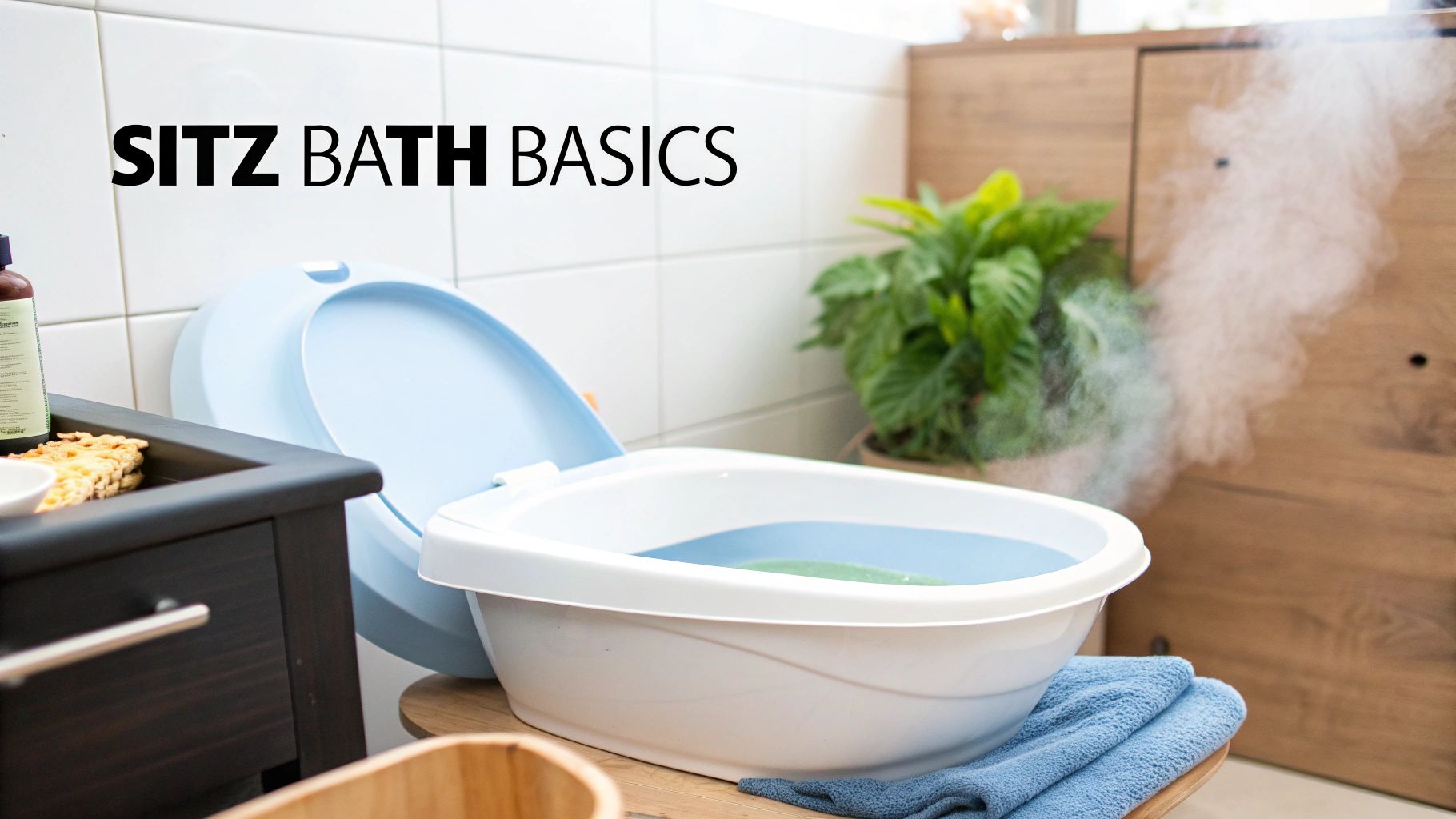
- A Sitz Bath Basin or a Clean Bathtub: You can find a plastic basin that fits right over your toilet at most drugstores. It's convenient and saves water. If you don't have one, a thoroughly cleaned bathtub will do the trick.
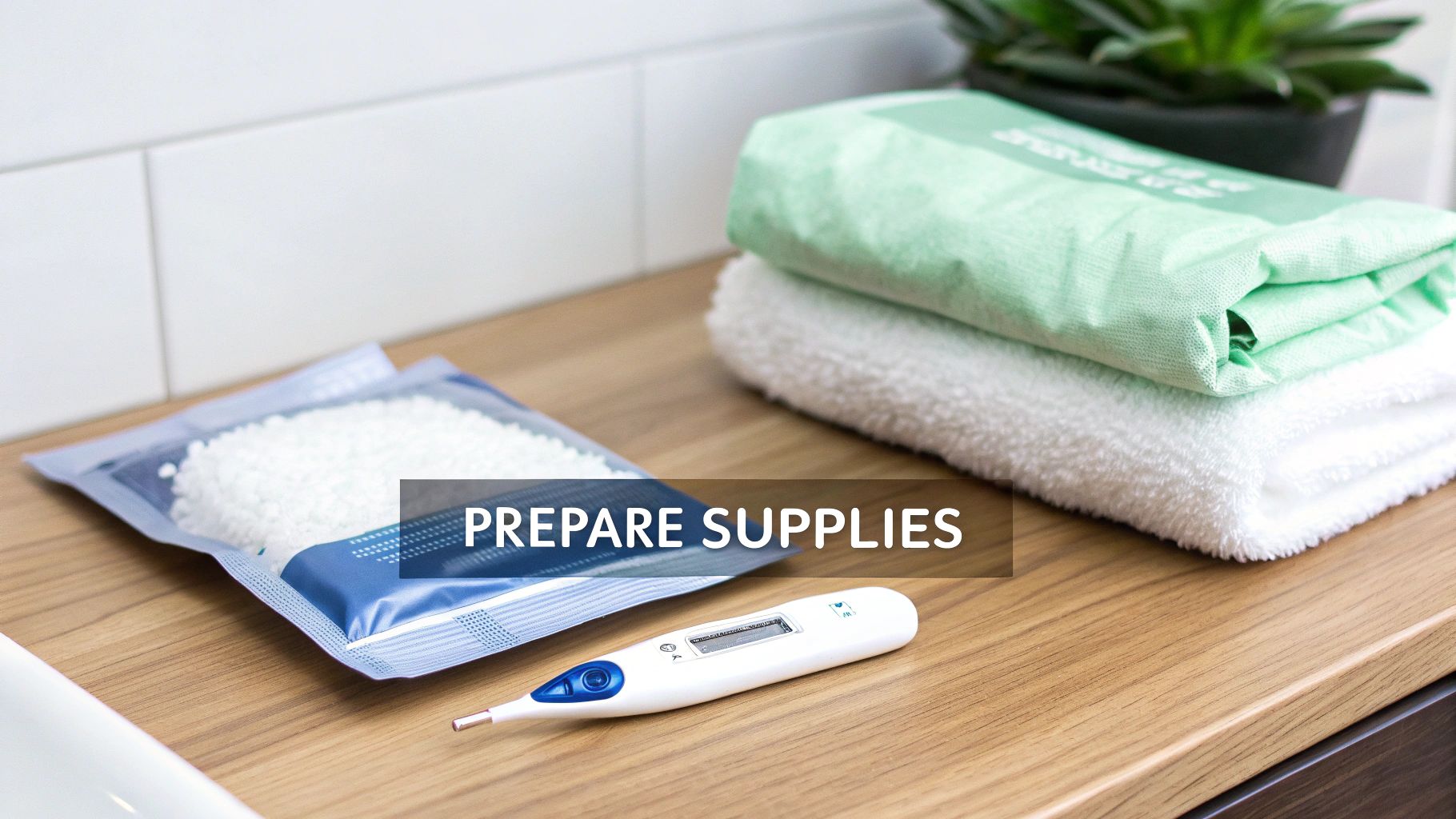
- Warm Water: The goal is comfortably warm, not hot. Aim for a temperature between 92-100°F (33-38°C).
- A Soft, Clean Towel: Have one ready for gently patting the area dry when you're done. Pat, don't rub... rubbing can irritate already sensitive skin.
- Optional Additives: Plain warm water does the job wonderfully, but adding things like specialized Epsom salts for sitz baths can enhance the soothing benefits.
The Basic Steps for Relief
The process itself is meant to be simple and stress-free. Whether you're using a basin or your tub, the core principles don't change: keep it clean, get the water temperature right, and give yourself a moment to relax.
The whole point of a sitz bath is to use warm water to relax the perineal muscles, boost blood circulation, and gently cleanse your skin without causing more irritation.
For many people, making a sitz bath part of their routine after every bowel movement brings the most significant relief. It helps soothe that immediate irritation and cleanses the area much more effectively than toilet paper ever could.
This simple habit can make a world of difference in managing daily discomfort and promoting long-term healing. While a single soak feels good, a consistent routine is what truly helps manage symptoms from conditions like anal fissures, postpartum soreness, and hemorrhoids.
Setting Up Your Soothing Sitz Bath
Getting your sitz bath ready shouldn’t be a hassle. It's a simple process that paves the way for some serious relief, whether you're using a special basin from the pharmacy or just your own bathtub.
First thing’s first: cleanliness is everything. The area you're treating is delicate and often has broken skin, making it a prime target for infection. Before every single soak, your equipment needs to be spotless.
Prepare Your Basin or Bathtub
If you have a sitz bath basin that fits over your toilet, give it a good wash with soap and warm water. A quick scrub with a clean cloth and a thorough rinse usually does the trick. For extra peace of mind, some people wipe it down with a diluted bleach solution (one part bleach to ten parts water) and then rinse it completely clean.
Using your bathtub? The same rules apply, just on a bigger scale. Give the tub a solid cleaning to get rid of any soap scum or lingering bacteria. You definitely don’t want to introduce any new irritants to an already unhappy situation.
Getting the Water Just Right
With everything clean, it’s time to add the water. The temperature and depth are what make a sitz bath both effective and safe.
- Water Level: You only need about 3 to 4 inches of water. That’s just enough to submerge your perineal area without having to draw a full bath.
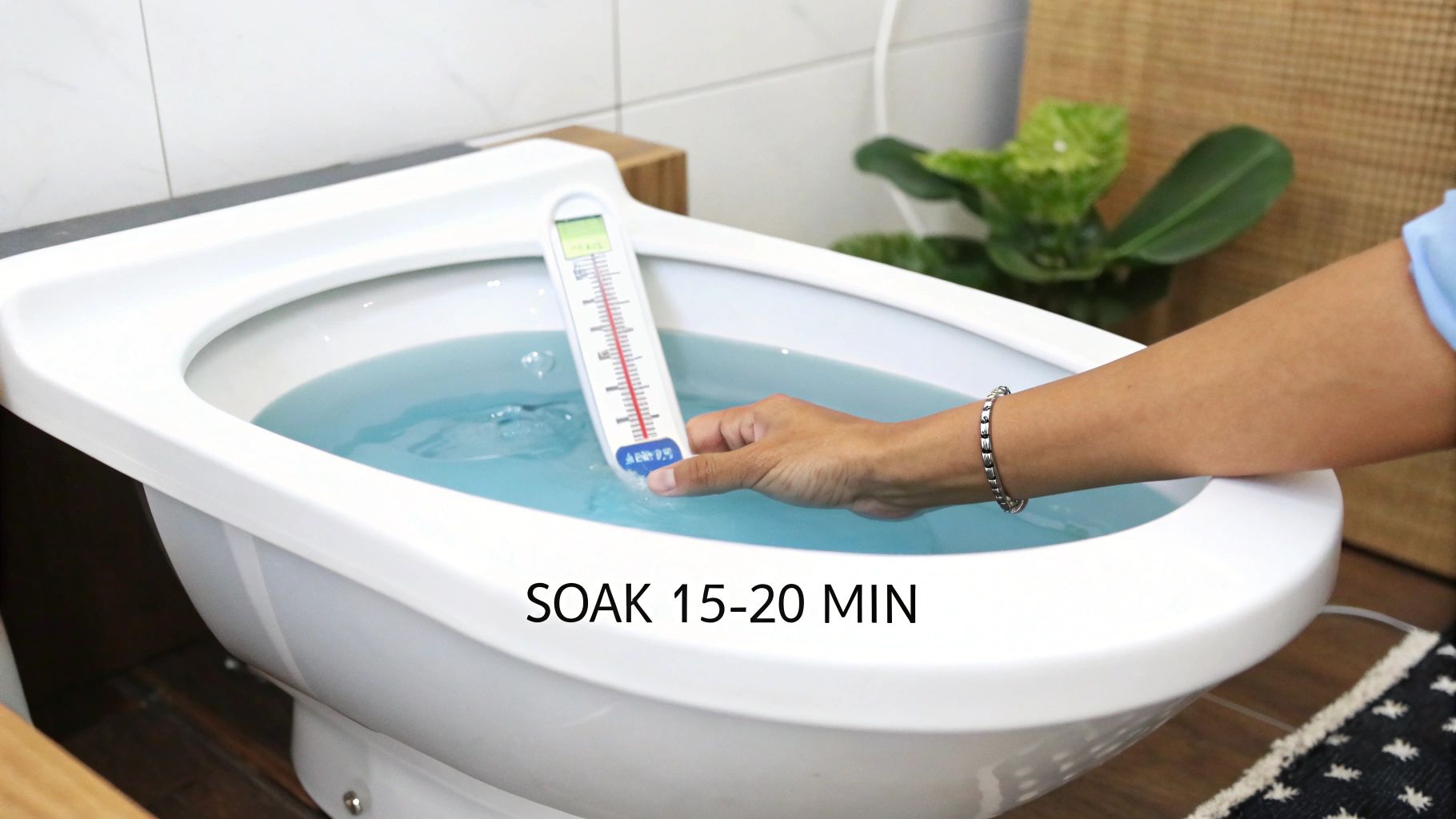
- Water Temperature: The sweet spot is comfortably warm, not hot. Aim for a temperature between 92-100°F (33-38°C). Water that’s too hot can easily burn sensitive skin and might even make inflammation worse.
A simple way to check the temperature is with your wrist or elbow. These spots are more sensitive to heat than your fingers, so you’ll get a much better feel for whether the water is too hot.
This simple soaking therapy isn't new. Sitz baths actually became a popular spa treatment back in the late 1880s and have since evolved into the at-home remedy we know today. They’re a go-to for conditions like hemorrhoids and fissures, which affect about 1 in 20 Americans each year... and the rates are even higher for people who sit for more than eight hours a day. Thankfully, setting one up is foolproof. You can discover more insights on how this simple therapy evolved.
Enhance Your Soak with Soothing Additives
Plain warm water is great, but adding a specialized soak can make it feel even more soothing and comforting.
Steer clear of anything that might cause more irritation, like bubble baths, harsh soaps, or scented essential oils. They’re often loaded with chemicals and fragrances that can aggravate sensitive tissue and mess with your skin’s pH balance.
Instead, go for something made specifically for this. Revivol-XR's Sitz Bath Soak Mix is a perfect example. It’s a 20-ingredient blend chosen for its calming, comforting feel.
- Epsom Salt (Magnesium Sulfate): A classic for a reason. It gives a warm soak a soothing, comforting feel that many people with fissures and hemorrhoids appreciate.
- Witch Hazel: A classic botanical that adds a nice, cooling, soothing sensation.
- Soothing Botanicals: Botanical ingredients and oils help the soak feel calming and comforting on sensitive skin.
Adding a scoop of a specialized soak to your warm water turns a plain soak into a more soothing, comforting ritual.
The Correct Way to Take a Sitz Bath
You've got the water ready, and it's time for the most important part... the soak itself. Getting the technique right is what makes a sitz bath truly effective. The goal is simple: make sure the entire affected area is completely underwater.
Free tool: Want a hands-free way to time your soak? Our free sitz bath timer counts down your soak, plays a soft chime when you're done, and keeps track of today's soaks.
Lower yourself down into the basin or tub slowly and gently. This is especially important if you’re dealing with a lot of pain. A sudden plop can send a jolt of discomfort through the area, so take your time and get comfortable. Find a stable, relaxed position that you can hold for the next 15 to 20 minutes.
Finding Your Soaking Sweet Spot
That 15- to 20-minute window is where the real magic happens. It’s the ideal amount of time for the warm water to do its job.
During the soak, the consistent warmth helps to:
- Boost blood flow to your perineal tissues, which is key for healing.
- Relax the anal sphincter muscle, which is often the source of sharp pain from fissures and hemorrhoids.
- Gently cleanse the area without the friction of toilet paper, providing huge relief after a bowel movement.
Anything less than 15 minutes doesn’t really give your muscles enough time to relax. On the flip side, soaking for much longer than 20 minutes won’t give you any extra benefits and can even lead to dry or irritated skin.
Maintaining the Perfect Temperature
The water will naturally cool down as you soak. If you notice it’s getting lukewarm, you'll start to lose those therapeutic effects. Don’t hesitate to top it up.
If you’re using a basin on the toilet, have a kettle or pitcher of hot water nearby to add a little more. In a bathtub, just turn on the hot tap for a minute or so. Just be careful to avoid direct contact with the stream of hot water.
The key to an effective sitz bath is consistent, gentle warmth. Your goal is to create a stable, soothing environment that encourages your body's natural healing processes to kick in.
This is your time to relax. Read a book, listen to some music, or just close your eyes and focus on your breathing. The more you relax, the more effective the treatment will be.
The Gentle Art of Drying Off
What you do after the soak is just as important as the soak itself. Once your time is up, stand up slowly, as you might feel a little lightheaded.
The number one rule here is to pat, never rub. Use a clean, soft towel... a baby towel or plush microfiber cloth is perfect for this. Gently pat the entire area until it's completely dry. Rubbing will only create friction and irritate the sensitive skin you just spent time soothing.
Drying properly also prevents trapped moisture, which can cause skin irritation or even yeast infections. A clean, dry area is also the perfect setup for any creams you might be using, like Revivol-XR hemorrhoid cream.
Adapting Your Sitz Bath for Specific Conditions
A sitz bath isn't a one-size-fits-all remedy. Its real magic is in how you tailor it to what your body needs at that exact moment.
The basic process can be fine-tuned for very different kinds of discomfort. After all, a new mom’s recovery is worlds away from an acute hemorrhoid flare-up. Knowing how to adapt your soak is the key to getting the best possible relief.
Soothing Relief for Postpartum Recovery
For new mothers, a warm sitz bath is pretty much a non-negotiable part of healing. After childbirth, the perineal area can be incredibly tender, swollen, and sore, especially if you have stitches from a tear or episiotomy. A warm soak is a lifesaver.
The gentle warmth boosts blood flow to the area, which is exactly what your body needs to speed up the healing process. It also offers immediate, soothing relief from that constant ache. Many women find it especially helpful after using the bathroom to gently cleanse the area without the sting of wiping.
When recovering from childbirth, consistency is everything. A gentle, 15-minute warm soak two or three times a day can make a world of difference in your comfort and help your body heal more efficiently.
It’s a simple, calming ritual that offers both physical and mental relief during a very demanding time. You can find more strategies to complement your sitz bath routine in our guide on how to treat hemorrhoids after childbirth.
Calming Hemorrhoids and Anal Fissures
If you're dealing with the sharp, intense pain of hemorrhoids or an anal fissure, a warm sitz bath can feel like a miracle. A lot of that pain comes from a spasming anal sphincter muscle.
Warm water works directly on that muscle, encouraging it to relax. When the sphincter isn't clenched so tightly, the pressure on swollen hemorrhoids or a skin tear is dramatically reduced. This relaxation is absolutely essential for breaking the pain cycle and letting your body start to heal.
Regular soaks, especially after a bowel movement, also help keep the area clean, which reduces irritation and helps prevent things from getting worse.
When to Choose a Cold Sitz Bath
While warmth is fantastic for relaxing muscles and promoting healing, sometimes you need the exact opposite. A cold sitz bath is a less common but incredibly effective tool, particularly for acute inflammation and intense itching.
Think of it like applying a cold compress. The cold water causes blood vessels to constrict, which can quickly and significantly reduce swelling. It also numbs the area, providing powerful, immediate relief from the burning and itching that often come with a sudden hemorrhoid flare-up.
So, how do you decide which one is right for you? It really comes down to the specific symptoms you're trying to manage.
Warm vs Cold Sitz Bath Which One Should You Choose?
This simple table breaks down the key differences to help you choose the right approach for the relief you need right now.
| Feature | Warm Sitz Bath | Cold Sitz Bath |
|---|---|---|
| Primary Goal | Relax muscles, increase blood flow, promote long-term healing. | Reduce acute swelling, numb itching and burning, provide immediate relief. |
| Best For | Anal fissures, postpartum soreness, general muscle tension. | Sudden, painful hemorrhoid flare-ups with significant swelling and itching. |
| How It Feels | Soothing, relaxing, and comforting. | Initially shocking, then numbing and intensely relieving. |
| Duration | 15–20 minutes. | 10–15 minutes. |
You don't always have to pick just one. Some people find success by alternating between the two. A warm bath in the morning can help relax muscles for the day ahead, while a quick cold soak in the evening can calm down any inflammation that built up.
Knowing when to use warm versus cold water is part of mastering the at-home sitz bath. By adapting your approach, you can get precise, effective relief right when you need it most.
What to Do After Your Sitz Bath for Lasting Relief
That warm, soothing water feels great, doesn't it? But what you do in the minutes after you get out of the tub matters too. Think of the sitz bath as the first step... what you do next helps bring more comfort.
After a good soak, the affected skin is clean, warm, and ready for treatment. It's the perfect window of opportunity to apply something that can protect the area and temporarily relieve pain.
Lock in Relief with Targeted Aftercare
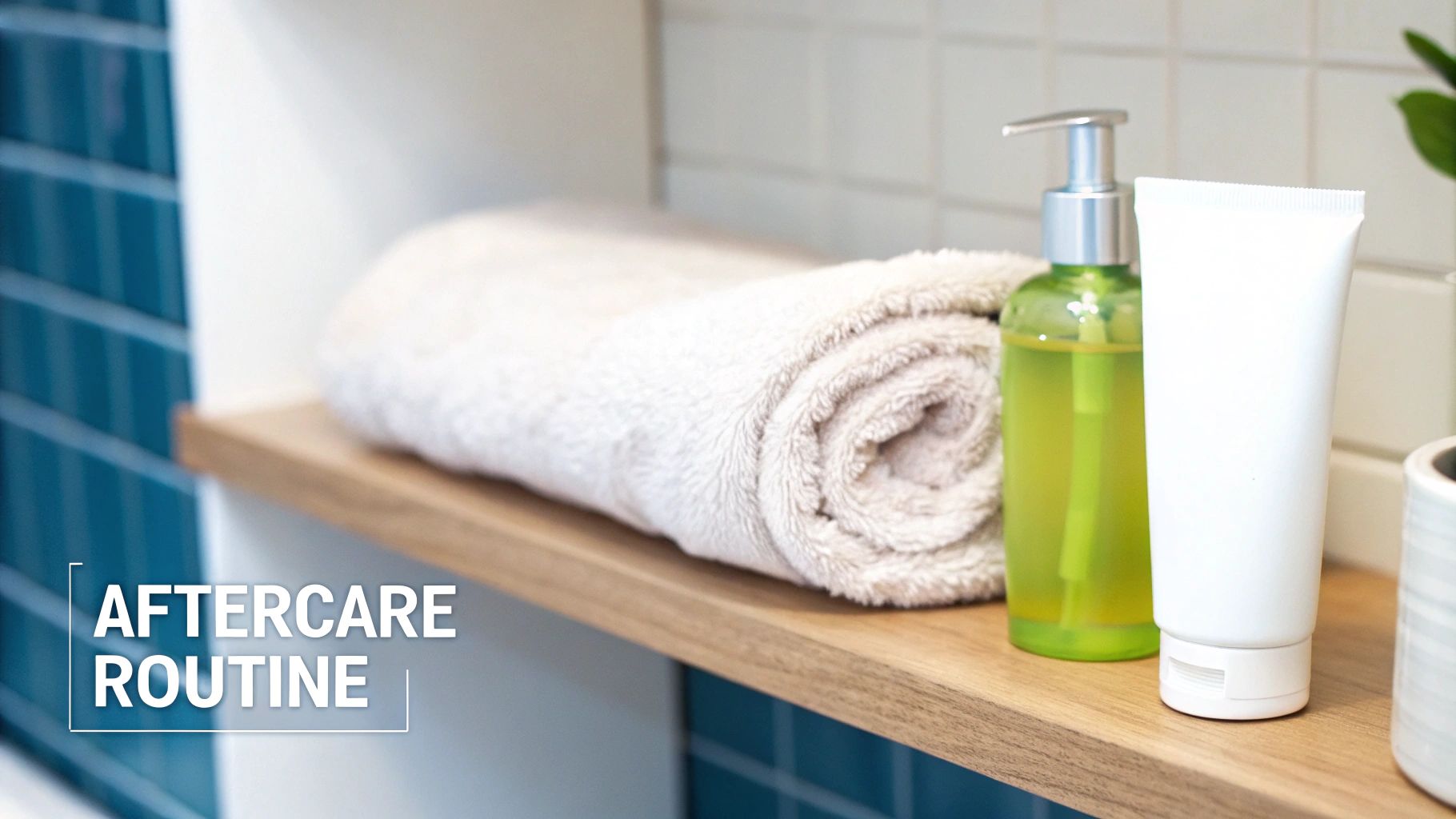
First things first: gently pat the area completely dry. Don't rub! Rubbing can irritate already sensitive skin. Once you're dry, it's time to apply a protective layer externally for temporary relief.
This is where having the right product on hand makes all the difference. The Revivol-XR line offers a few options designed for specific kinds of discomfort.
- For Intense Pain or Fissures: If you're dealing with that sharp, stinging pain from an anal fissure, you need serious numbing power. A thin layer of Revivol-XR's 5% Lidocaine Numbing Cream, applied externally, helps relieve pain, itching, and burning right where you need it most.
- For General Hemorrhoid Discomfort: For the more common itching, burning, and swelling from a hemorrhoid flare-up, the Advanced Hemorrhoid & Fissure Cream is a fantastic go-to. It combines 5% lidocaine for temporary relief of pain and burning with phenylephrine to temporarily shrink hemorrhoidal tissue.
Applying a treatment after each sitz bath helps keep your relief consistent, rather than just treating the problem here and there.
A Gold-Standard Method Backed by History
The sitz bath isn't some new fad. It's been a trusted source of comfort for a long, long time. The practice dates all the way back to 1859 in the U.S., evolving from something you’d only find in a spa to an essential home remedy. It's especially crucial for the 50% of postpartum women who develop hemorrhoids.
The gold-standard advice has always been the same: soak, pat dry, then apply treatment.
Building a Complete Relief System
A sitz bath is a great start, but a full routine brings more complete comfort. It’s about looking at the entire process.
- Cleanse Gently: Skip the dry, scratchy toilet paper. A product like Revivol-XR's Hygienic Cleansing Lotion on a bit of folded tissue cleans the area gently.
- Soak to Soothe: Take your warm sitz bath for 15-20 minutes. This helps relax muscles and calm inflammation.
- Pat Completely Dry: Use a soft, clean towel and gently pat, pat, pat.
- Apply Targeted Treatment: Immediately follow up with your chosen Revivol-XR cream on the clean, dry skin.
This four-step system... Cleanse, Soak, Dry, and Treat... turns a simple sitz bath into a complete comfort routine. You're tackling the symptoms from every angle.
This methodical approach ensures you’re not just chasing relief in the moment. By incorporating products like Revivol-XR, you turn a simple soak into a complete relief system.
Your Questions About Home Sitz Baths, Answered
Starting any new home treatment can feel a bit uncertain, and when it's something as personal as a sitz bath, you want to be sure you're doing it right. My goal is to clear up any confusion so you can feel totally confident in your new routine.
Let's walk through some of the most common questions people have when they first start using a sitz bath at home.
How Often Should I Be Taking a Sitz Bath?
This is probably the number one question, and the answer really depends on what you're dealing with.
For acute problems like a painful hemorrhoid flare-up or postpartum recovery, a good rule of thumb is two to three times a day. Soaking for about 15-20 minutes each session provides consistent relief and helps keep the area clean, which is a huge part of healing.
Many people find that taking a sitz bath right after a bowel movement is especially helpful. It calms that immediate irritation and offers a much kinder way to cleanse than rough toilet paper. Of course, this is just a general guideline... always listen to your body and follow any specific advice from your doctor.
Can I Add Anything to the Water Besides Salts?
It can be tempting to add a few drops of your favorite essential oil or some bubble bath to make it feel more luxurious, but I'd advise against it.
Stick with either plain warm water or a product made specifically for this, like our Revivol-XR Sitz Bath Soak Mix. It's best to avoid adding anything that could irritate skin that is already sensitive or broken.
Key Takeaway: Avoid bubble bath, harsh soaps, and most essential oils. They often contain fragrances and chemicals that can throw off your skin’s natural pH balance, potentially causing more irritation or even an infection.
Simplicity really is key here. The goal is to soothe and heal, not create new problems.
When Is It Time to See a Doctor?
A sitz bath is a fantastic tool for managing your symptoms, but it doesn’t treat the root cause of the problem. It’s an essential part of your at-home care, not a replacement for professional medical advice.
You should book an appointment with your doctor if:
- Your pain is severe or getting worse.
- You notice significant rectal bleeding.
- Your symptoms don't start improving after a week or so of consistent care.
- You see any signs of infection, like a fever or discharge.
Getting a proper diagnosis is the most important step. A doctor can figure out what's really going on and get you on the right treatment plan. Sometimes, conditions like hemorrhoids need more than home remedies, and a doctor can discuss other options.
Is a Toilet Basin Better Than the Bathtub?
This really comes down to what you prefer and what’s most convenient for you. Both methods work well, so there's no single "correct" answer.
A plastic sitz bath basin that fits over your toilet does have some clear benefits. It uses far less water, it's very quick to set up and clean, and it targets the perineal area directly. For many people, this is the most practical choice for soaking multiple times a day.
On the other hand, using your bathtub requires more water and a bit more cleanup, but it can also be a more relaxing, full-body experience. Some people just find it more comfortable to recline in a tub instead of sitting upright on a toilet.
My advice? If you're new to this, try both if you can. See which one feels better and fits more easily into your daily life. The best method is always the one you'll actually stick with.
At Revivol-XR, we believe in a complete system for relief. From our soothing sitz bath soak to our creams for temporary relief, we have a product to help you feel more comfortable. Find the right product for your needs at https://hemorrhoid.com.