5 Best Hemorrhoid Cream Pregnancy Safe Options for Fast Relief

I once watched a customer break down in tears because they thought their hemorrhoids would never go away... and she was seven months pregnant, feeling completely overwhelmed. She felt embarrassed, alone, and terrified that nothing was safe to use. It was a stark reminder of how isolating this common pregnancy symptom can be.
This wasn't just about physical pain... it was about the emotional weight of trying to protect her baby while desperately needing relief for herself.
Finding a safe, effective solution shouldn’t add more stress to your pregnancy.
That raw moment taught me a critical lesson. Expecting mothers need more than just a list of ingredients... they need clarity, reassurance, and practical advice that puts their minds at ease. The search for a hemorrhoid cream pregnancy safe solution is about regaining comfort and confidence during a time that should be joyful, not painful. This guide is designed to give you exactly that... a clear path to relief without the worry.
To help you find that relief, we’ll explore what makes a cream safe during pregnancy, which ingredients to look for, and how brands like our own Revivol-XR are formulated with your unique needs in mind.
The Unspoken Challenge of Pregnancy Hemorrhoids

Pregnancy is a time of incredible change, but it also brings a host of symptoms nobody really warns you about.
One minute you’re happily picking out nursery colors, and the next you’re dealing with a sudden, nagging pain that makes just sitting down a chore. If this is you, you're not alone... up to 85% of women experience this in their third trimester.
Hemorrhoids are incredibly common during pregnancy, yet they’re one of the most unspoken hurdles of the journey. That silence often leads to confusion and anxiety when it's time to find relief.
Navigating Treatment with Two in Mind
The biggest hurdle is finding something that works for you but is also completely safe for your developing baby. A quick look down the pharmacy aisle reveals dozens of creams, but which ones are okay?
This search for a truly hemorrhoid cream pregnancy safe formula is at the heart of the problem. Your body is already working overtime, and you deserve a solution that brings comfort without adding one more thing to your worry list.
Why Pregnancy and Hemorrhoids Often Go Hand in Hand
If you’re pregnant and suddenly dealing with hemorrhoids, you’re not alone. There are very real biological reasons this happens. Understanding what’s going on inside your body is the first step toward relief.
The two main culprits are increased pressure and a flood of pregnancy hormones. Together, they create a perfect storm for developing these swollen, uncomfortable veins.
The Double Impact of Pressure and Hormones
Think of your growing uterus like a water balloon slowly expanding in your pelvis. As your baby gets bigger, it puts more pressure on the big veins in your lower body. This can slow blood flow, causing it to pool and swell the delicate veins around your rectum.
But that’s only half the story. Pregnancy also kicks your hormone production into high gear, especially progesterone. While crucial for a healthy pregnancy, this hormone has a side effect... it relaxes the walls of your veins.
So now you have two things happening at once... more pressure pushing on your veins, and vein walls that are softer and less able to handle it.
This isn't your fault... it’s a direct result of the incredible changes your body makes to grow a new life.
On top of all that, there’s another frequent guest during pregnancy... constipation. Slower digestion often leads to straining on the toilet, which adds even more stress to those already sensitive veins. Digging into the specific causes of hemorrhoids during pregnancy can give you a clearer picture.
Trimester Troubles and What to Expect
Your risk isn’t the same for all nine months. The likelihood of developing hemorrhoids climbs as your pregnancy progresses. While some estimates say 25% to 35% of pregnant women are affected overall, other studies have found that number skyrockets to as high as 85% in the third trimester.
That huge jump makes perfect sense when you think about it. The third trimester is when both your baby’s size and your hormone levels are at their peak. You can explore the clinical data on pregnancy and hemorrhoids to see just how widespread this issue really is.
Reading the Label on a Pregnancy-Safe Hemorrhoid Cream
Standing in the pharmacy aisle, the wall of product labels can feel overwhelming, especially when you’re expecting. Finding a hemorrhoid cream pregnancy safe formula is all about knowing what to look for and what to avoid.
The goal is simple... find a product that provides relief right where you need it, with the absolute minimum being absorbed into your system.
Skin Protectants Are Your Best Friend
This is where understanding different ingredients becomes your superpower. Most creams recommended during pregnancy rely on a class of ingredients called skin protectants.
Think of them as the gentle giants of hemorrhoid care. Instead of being absorbed deep into the skin, they form a physical barrier on the surface. This little shield protects irritated tissue from moisture and friction, giving it a calm space to heal.
Ingredients like witch hazel, glycerin, and zinc oxide work exactly this way. They soothe on contact and help knock down local swelling and discomfort without introducing strong, systemic chemicals.
This flowchart breaks down exactly why pregnancy is such a common trigger for hemorrhoids.
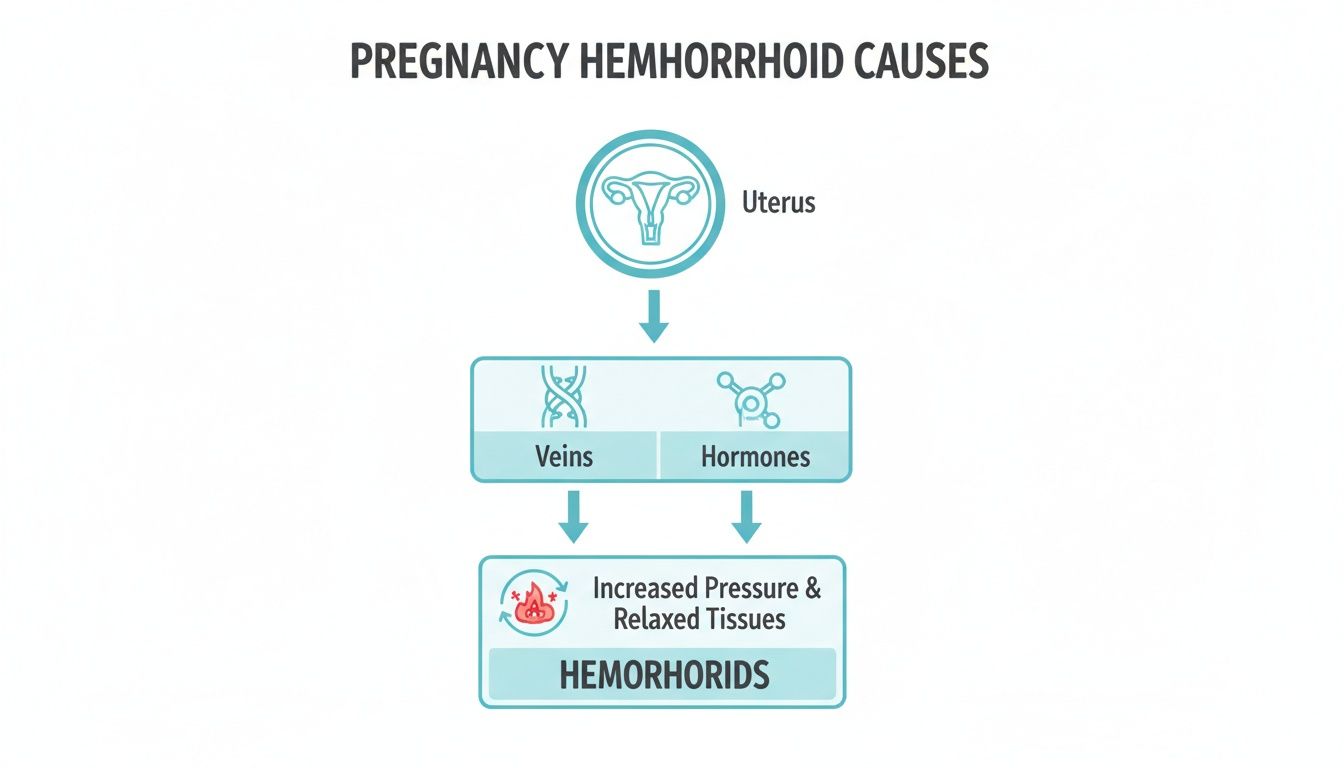
As you can see, the combination of a growing uterus putting pressure on your veins and hormone-driven changes creates the perfect storm for hemorrhoids to show up.
Understanding Key Ingredients
When you're trying to find relief, it helps to know which ingredients are generally considered go-to's and which ones warrant a conversation with your doctor.
Here’s a quick comparison of the most common ingredients you'll find in hemorrhoid creams.
Comparing Pregnancy Safe vs Cautionary Hemorrhoid Cream Ingredients
| Ingredient Category | Examples | How It Works | Pregnancy Safety Note |
|---|---|---|---|
| Skin Protectants | Glycerin, lanolin, mineral oil, petrolatum, zinc oxide | Form a physical barrier on the skin to protect irritated tissue from moisture and friction, promoting a healing environment. | Generally considered safe for topical use during pregnancy as they have minimal systemic absorption. |
| Astringents | Witch hazel | Causes tissues to contract and dry out, helping to relieve burning, itching, and mild discomfort. | Witch hazel is a widely used and accepted topical treatment during pregnancy due to its local action. |
| Topical Anesthetics | Lidocaine, benzocaine, pramoxine | Numb the nerve endings in the skin to provide temporary relief from pain and itching. | Use should be discussed with a doctor. While minimal absorption is expected, it's best to use them for the shortest duration possible. |
| Vasoconstrictors | Phenylephrine | Shrink swollen blood vessels, which can temporarily reduce the size of hemorrhoids. | Should only be used after consulting a doctor, as they can be absorbed and potentially affect blood pressure. |
| Corticosteroids | Hydrocortisone | Reduce inflammation, itching, and swelling associated with hemorrhoids. | Use during pregnancy, especially for prolonged periods, requires a doctor's guidance due to potential for systemic absorption. |
Remember, this table is a guide. Your OB-GYN or midwife should always be your primary source of advice for any medication use during pregnancy.
What to Avoid or Use With Caution
While skin protectants are a safe bet, other common ingredients need a closer look.
- Vasoconstrictors: Ingredients like phenylephrine work by constricting blood vessels. While effective, there’s a potential for them to be absorbed and affect blood pressure, so they are generally avoided unless your doctor gives you the green light.
- Topical Anesthetics: Numbing agents like pramoxine or lidocaine can offer powerful pain relief, but they should be used cautiously and for the shortest time possible. It's always best to check with your provider first.
- Steroids: Hydrocortisone is a potent anti-inflammatory. While a low-dose cream might be okayed by your doctor for a very short period, it's not a first-line choice during pregnancy due to potential systemic effects.
Diving deeper into hemorrhoid cream ingredients can give you even more confidence when you're making a decision. By focusing on formulas built for safety and local relief, you can get back to focusing on what matters most.
Hemorrhoid Cream Ingredients to Use with Caution
Knowing which ingredients are generally safe is a huge step. But finding the right hemorrhoid cream pregnancy safe formula also means knowing which ingredients need a second look. This isn’t about causing alarm... it’s about being informed.
Some common over-the-counter ingredients work in ways that require more thought when you’re pregnant. The main concern is systemic absorption... a fancy way of asking, "How much of this actually gets into my bloodstream?"
Why Some Ingredients Get a Yellow Light
Certain active ingredients are designed to be more powerful than simple skin protectants. And while they work well, that extra potency can sometimes come with a higher chance of being absorbed through the skin.
Let's break down the two main categories you should definitely talk to your doctor about before using.
Vasoconstrictors Like Phenylephrine
Vasoconstrictors do exactly what their name implies... they constrict blood vessels. An ingredient like phenylephrine is really good at temporarily shrinking swollen hemorrhoid tissue.
So, why the caution? If absorbed into your bloodstream in large enough amounts, these ingredients could potentially affect your overall blood pressure. During pregnancy, your cardiovascular system is already working overtime, so doctors usually prefer to avoid anything that might add another variable.
Corticosteroids and Strong Anesthetics
Another category to approach with care includes corticosteroids and certain numbing agents.
- Corticosteroids: An ingredient like hydrocortisone is a potent anti-inflammatory. The catch is that long-term use can lead to skin thinning, and there's a potential for systemic absorption. Your doctor might okay a low-dose version for very short-term use, but it’s rarely the first thing they’ll recommend.
- Topical Anesthetics: Numbing agents such as lidocaine or benzocaine deliver fast pain relief. While products like Revivol-XR use lidocaine effectively, it's always smart to get your doctor's green light. They will likely advise using it only as needed to manage sharp pain.
Ultimately, the goal is to pick the gentlest treatment that still gets the job done.
Natural Remedies and Lifestyle Habits for Lasting Relief
While a good hemorrhoid cream pregnancy safe cream is a must-have, it’s just one part of a bigger picture. True, lasting relief comes from pairing a trusted topical treatment with smart lifestyle habits.
Think of these natural strategies as your first line of defense. They can make a world of difference in your day-to-day comfort.
Simple Soothing Techniques for Immediate Comfort
When you’re in the middle of a painful flare-up, you need relief now. These simple, at-home tricks are fantastic for calming things down quickly.
- Take a Sitz Bath: Soak your hips and bottom in a shallow tub of warm water for 15 to 20 minutes. Do it a few times a day to boost blood flow and ease irritation.
- Use a Cold Compress: Wrap an ice pack in a soft cloth and apply it to the area for 10 to 15 minutes. It helps numb the pain and shrink swollen tissue.
- Practice Gentle Hygiene: Switch to moist, unscented wipes or use a perineal cleansing bottle. Always pat dry with a soft towel... never rub.
Building a Proactive Lifestyle
Getting lasting relief isn’t just about putting out fires. It’s about preventing them from starting. A few small tweaks to your daily routine can make a massive impact.
Your daily habits are the foundation of your comfort... small, consistent changes can do more than any treatment alone.
The goal here is simple... soften your stools and improve your circulation. Tackling those two things directly addresses the main culprits behind pregnancy hemorrhoids.
Take Action: Dietary and Movement Must-Haves
- Boost Your Fiber Intake: Aim for 25 to 30 grams of fiber a day from sources like pears, apples, broccoli, leafy greens, whole grains, and beans.
- Stay Hydrated: All the fiber in the world won't help without water. Drinking enough fluids helps soften your stool so it can pass easily. Shoot for 8 to 10 glasses of water every day.
- Keep Moving Gently: Gentle, regular exercise like a daily walk or prenatal yoga works wonders for your circulation, helping to prevent blood from pooling.
It’s no surprise that topical treatments are the go-to. When you combine these powerful natural habits with a reliable cream, you’ve got a two-pronged strategy for real comfort.
When to Call Your Doctor
Knowing how to manage hemorrhoids at home is great. But it’s just as important to know when to pick up the phone and call your doctor.
Most pregnancy-related hemorrhoids are just a nuisance. Still, there are a few red flags that mean it's time for a professional opinion.
Recognizing Red Flags
Don't wait to call your doctor or midwife if you notice any of these symptoms.
- Pain That Gets Much Worse: If the discomfort shifts from annoying to severe, or if it isn't getting better after a few days of treatment, get it checked out.
- More Than a Little Blood: A speck of bright red blood on the toilet paper is common. But if the bleeding seems heavy, won't stop, or if the blood looks dark or clotted, let your doctor know right away.
- A Hard, Painful Lump: If you feel a firm, swollen, and intensely painful lump, you might have a thrombosed hemorrhoid. This is when a blood clot forms inside the hemorrhoid and usually requires medical help.
Reaching out for help isn't a sign of failure... it's smart. That customer in tears I mentioned earlier? A quick call to her doctor provided a safe prescription and immense peace of mind. Her story wasn't about the pain... it was about waking up to the fact that asking for help is the strongest thing you can do.
FAQs: Your Questions on Safe Hemorrhoid Relief Answered
Here are a few common questions we hear when searching for a hemorrhoid cream pregnancy safe solution.
How quickly will I feel better?
With most pregnancy-safe topical creams, you should feel some immediate soothing effects within the first few applications. For deeper healing, like reducing swelling, use the cream consistently for a few days while also using sitz baths and increasing your fiber intake.
Are suppositories safe during pregnancy?
This is a common point of confusion. Many over-the-counter suppositories contain vasoconstrictors, which fall into the "check with your doctor first" category. You must talk with your OB-GYN before using any suppository to make sure it's right for you.
Will these go away after birth?
For the vast majority of women, the answer is a huge yes. Once you deliver, that internal pressure is gone almost instantly. It might take a few weeks postpartum for hemorrhoids to vanish completely, but you should notice a major difference very soon after giving birth.
Can I keep using my cream while breastfeeding?
Most topical treatments with ingredients like lidocaine or simple skin protectants are generally considered fine to use while breastfeeding. The amount of medication that gets into your system is tiny. However, it's always smart to get the green light from your doctor or a lactation consultant first.
For trusted, multi-symptom relief that’s both powerful and gentle, Hemorrhoid.com offers solutions to help you through pregnancy and beyond. You can explore our products, like the Advanced Hemorrhoid & Fissure Cream, on our website.