Witch Hazel Pregnancy Safety and Relief Guide

Most new mothers expect soreness after birth, but many are unprepared for the sharp burning, itching, and pressure that can make sitting, walking, and using the bathroom feel overwhelming.
Witch hazel can offer temporary external comfort for postpartum hemorrhoid symptoms, but it isn't a cure and it isn't automatically safe in every form. This guide explains how witch hazel during pregnancy and postpartum recovery fits into sensible care, what it can and can't do, and when a clinician should evaluate your symptoms.
Table of Contents
- Understanding Postpartum Discomfort and Relief
- Evaluating the Safety of Witch Hazel During Pregnancy
- Proper Application Methods for Perineal Care
- Managing Expectations for Symptom Relief
- Building a Postpartum Recovery Routine That Addresses Both Comfort and Root Causes
- Choosing the Right Products and Formulations
- Recognizing When to Seek Professional Medical Help
Understanding Postpartum Discomfort and Relief
A new mother may finally get the baby settled, sit down to rest, and immediately feel throbbing pressure around the anus. After a bowel movement, the area may sting. Toilet paper can feel too rough, while standing for long periods can make swelling more noticeable. These symptoms can occur alongside perineal tenderness, stitches, or general pelvic soreness, which makes it difficult to identify what deserves home care and what needs medical attention.
That discomfort can feel isolating, but you don't have to manage it in silence. The American College of Obstetricians and Gynecologists says hemorrhoids often worsen immediately after delivery and then gradually improve during the postpartum period. It also includes externally applied witch-hazel pads among self-care options for relieving hemorrhoid pain and swelling. ACOG's postpartum hemorrhoid guidance supports witch hazel as a comfort measure, not as a replacement for evaluation.
Practical rule: Cooling and soothing are useful goals, but symptom relief doesn't prove that an injury or hemorrhoid has healed.
Witch hazel contains tannins and has astringent properties. Applied externally, a suitable pad or wipe may temporarily calm surface irritation and moisture. It won't correct constipation, remove pressure from swollen veins, heal a deep fissure, or determine whether bleeding is coming from hemorrhoids rather than another postpartum source.
Start with a labeled external product, use it gently, and keep your maternity team informed if symptoms are severe, persistent, or unusual.
Evaluating the Safety of Witch Hazel During Pregnancy
Witch hazel has a documented history spanning more than 400 years, including an early written European account from Thomas Hariot in 1588 describing Indigenous use of the plant in North America. It was introduced to Britain and Europe as a garden species in 1736, and the first commercial witch-hazel extract distillery was established in Essex, Connecticut, in 1866. Several companies were already specializing in witch-hazel extracts by the 1850s. A historical overview from the Brooklyn Botanic Garden makes clear that long use isn't the same as proof that every modern formulation is appropriate during pregnancy.
The central safety issue is the route of administration. Clinical references report that reliable pregnancy and lactation safety data are lacking, and they advise against internal use because tannin toxicity hasn't been adequately defined. By contrast, the European Medicines Agency reports that external cutaneous and ocular application of witch-hazel distillate preparations can be regarded as safe, while pregnancy and lactation safety hasn't been established for internal use. This distinction is summarized in Cleveland Clinic's pregnancy hemorrhoid guidance.
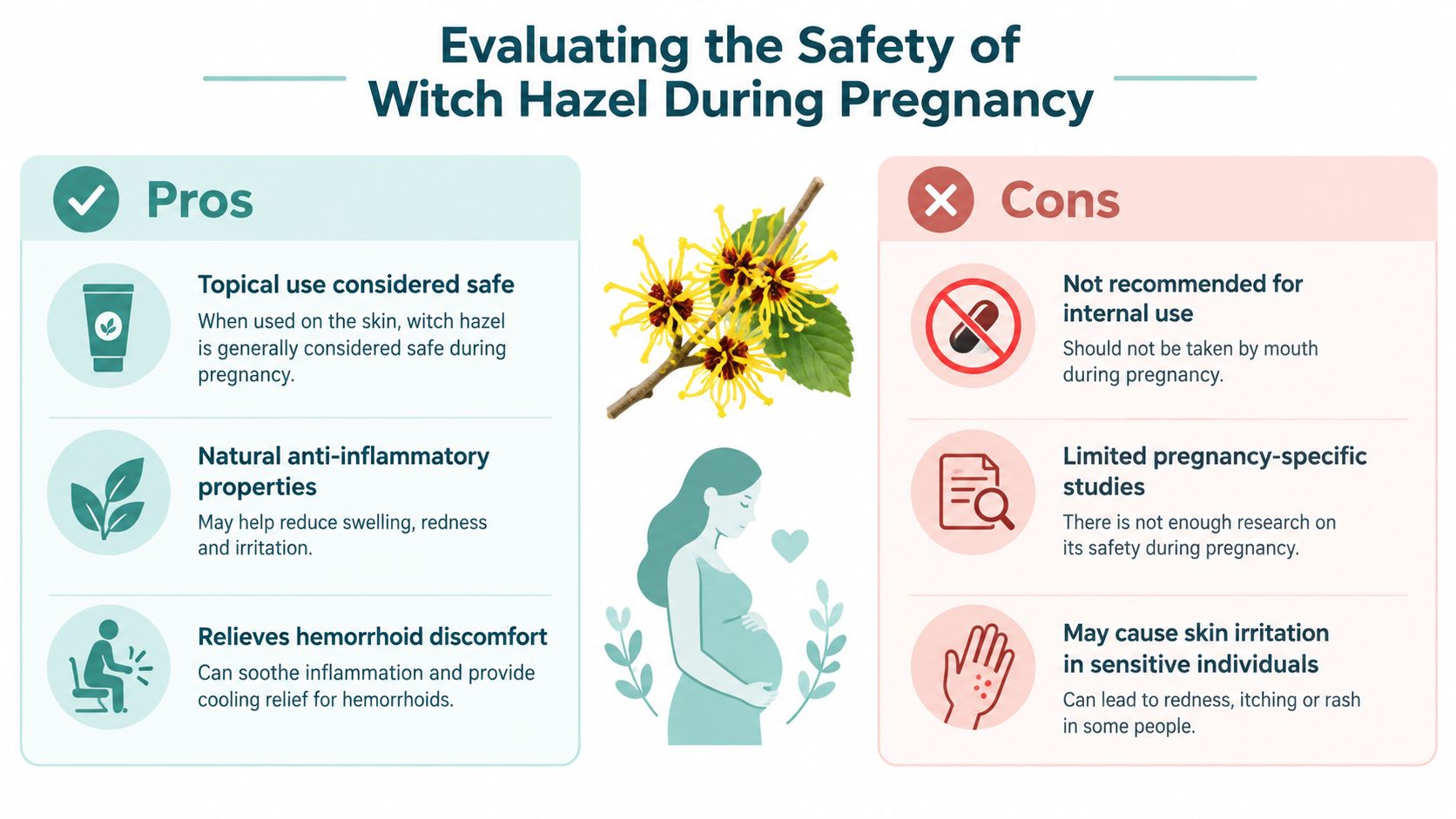
External use versus ingestion
A short-duration topical application to intact or carefully cleansed skin generally creates less systemic exposure than swallowing an extract. That doesn't make every topical product risk-free. Alcohol, preservatives, added anesthetics, vasoconstrictors, fragrances, and other ingredients may cause burning or allergic contact dermatitis, especially on healing or damaged tissue.
For a practical comparison of external hemorrhoid products and pregnancy considerations, see this guide to over-the-counter hemorrhoid treatment during pregnancy. Use only the labeled route, don't drink witch hazel, and ask an obstetric clinician or pharmacist about a product-specific formulation.
Proper Application Methods for Perineal Care
The safest application is gentle, brief, and limited to the area named on the label. Wash your hands first, then cleanse the perianal area with lukewarm water if needed. Pat dry rather than rubbing, since friction can aggravate swollen tissue, stitches, or small tears.
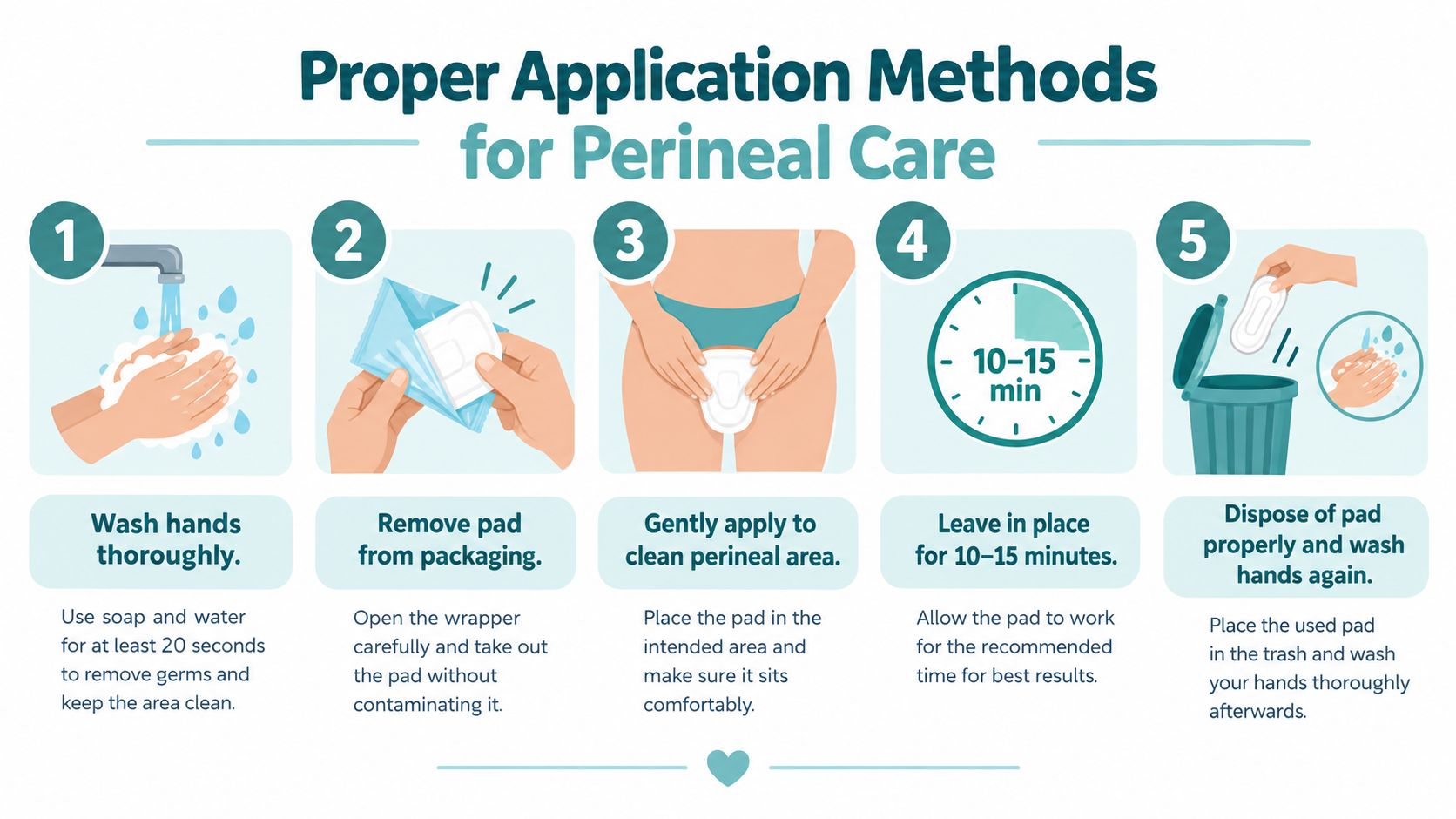
A simple pad routine
- Wash your hands thoroughly: This limits the transfer of bacteria to sensitive skin.
- Remove the pad from its packaging: Don't add other products unless your clinician has told you to.
- Apply gently to the clean perineal or perianal area: Avoid rubbing and don't place the product inside the vagina or rectum unless the label specifically directs it and a clinician approves it.
- Follow the product directions for contact time: Some postpartum routines use a cool pad briefly for comfort. Don't assume that longer contact is better.
- Dispose of the pad and wash your hands again: Stop if you develop burning, a rash, or worsening irritation.
Liquid distillate can be applied to a clean cotton round when the label permits, but avoid soaking the area or applying it to the eyes. Refrigerating a compatible pad may provide extra cooling, but cold comfort won't treat the source of hemorrhoidal pressure.
ACOG states that externally applied witch hazel can help relieve pain and reduce swelling during the postpartum period. For another non-drug comfort option, follow guidance on how to do a sitz bath at home, and ask your maternity team whether it fits your recovery.
Managing Expectations for Symptom Relief
Witch hazel doesn't shrink every hemorrhoid, seal an anal fissure, or repair postpartum tissue. Its tannins may create a temporary astringent effect that reduces superficial moisture and irritation, which can make itching, burning, or swelling feel easier to tolerate. That comfort can be valuable, especially after a bowel movement, but it isn't the same as healing.
Hemorrhoids can involve venous pressure, constipation, straining, prolapse, or thrombosis. A topical pad can't correct those underlying problems. It also can't tell you whether rectal bleeding is from a hemorrhoid, a fissure, a vaginal tear, lochia, or another condition.
Boots guidance notes that pads may temporarily ease post-birth hemorrhoid discomfort, but evidence is insufficient to show reliable improvement in wound healing, and pads shouldn't replace maternity-team care. The cited evidence summary supports setting a modest goal: short-term comfort while the body recovers and the cause is addressed.
Use witch hazel when it makes the area feel calmer. Don't keep escalating the frequency, layering multiple active products, or applying it to increasingly irritated skin because relief hasn't been permanent.
Building a Postpartum Recovery Routine That Addresses Both Comfort and Root Causes
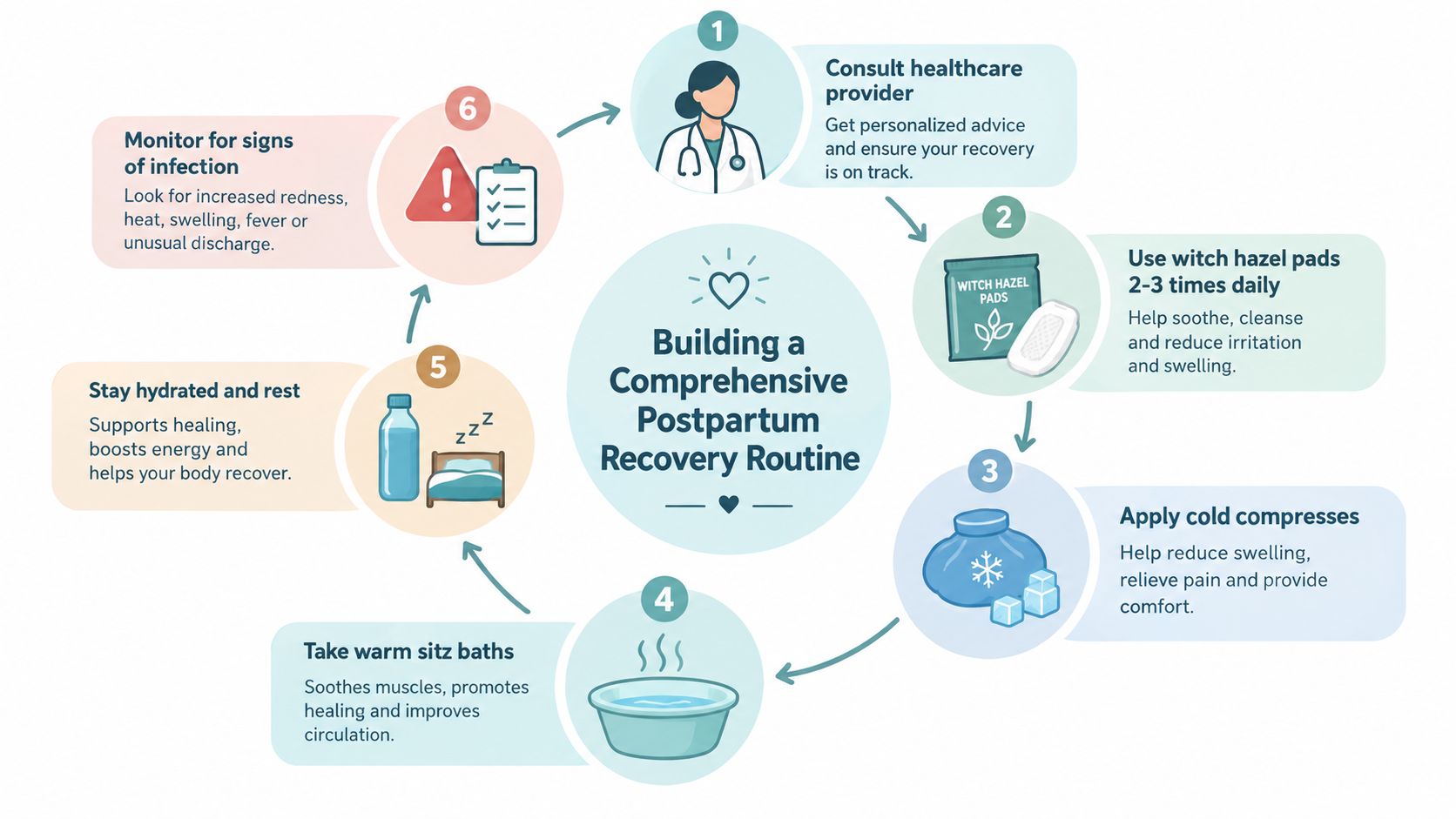
You may feel better after a witch-hazel pad, then hurt again with the next bowel movement or after an hour of sitting. That pattern usually means the skin is getting temporary relief while the cause of the irritation is still there. A better routine lowers friction, supports easier stools, and gives sore tissue a chance to settle.
Start with the basics that reduce strain. Constipation can keep hemorrhoids and perineal discomfort going, so focus on fluids, fiber-rich foods, gentle walking, and any stool plan your clinician has approved. Do not start laxatives or supplements on your own if you are pregnant or breastfeeding.
Comfort measures still matter. Warm sitz baths can relax and soothe in a different way than a cool witch-hazel pad. A cold compress may ease the feeling of swelling for a while, and a cushion can reduce pressure when sitting. Rest helps, but too little movement can make bowel habits less comfortable for some mothers.
Match the tool to the problem
- For surface burning or itching: Use a labeled external witch-hazel pad only if your clinician agrees and your skin tolerates it.
- For pressure after sitting: Change positions, use a supportive cushion, and limit prolonged straining.
- For hard stools: Increase fluids and fiber as tolerated, then ask your healthcare provider about stool support.
- For general perineal soreness: Gentle cleansing, patting dry, and clinician-approved warm or cool care may help more than repeated use of active products.
- For symptoms that keep coming back: Get assessed instead of assuming you need a stronger topical product.
This kind of routine supports real recovery. Witch hazel can calm the surface. Hydration, easier bowel movements, and less pressure address common reasons the area keeps getting irritated.
Choosing the Right Products and Formulations
“Witch hazel” doesn't describe one standardized product. A clear distillate, an alcohol-containing liquid, a pre-soaked pad, a wipe, and a combination hemorrhoid product may differ in concentration, preservatives, texture, and irritation potential.
Read the entire ingredient list, not just the front label. Fragrance and alcohol may sting sensitive postpartum tissue. Added lidocaine, phenylephrine, corticosteroids, or other active ingredients can change the product's safety considerations, so ask a pharmacist or obstetric clinician before using combination products during pregnancy or breastfeeding.
| Format | Potential advantage | Main caution |
|---|---|---|
| Pre-soaked pad | Convenient and less messy | Check active ingredients and contact directions |
| Liquid distillate | Flexible application | Avoid ingestion, eyes, and irritated skin if it burns |
| Cleansing lotion | Can reduce friction from dry toilet paper | Confirm that it is intended for external use |
| Combination cream | May address more than one symptom | Added medicines require product-specific guidance |
Revivol-XR Hygienic Cleansing Lotion is one external cleansing option that uses aloe, coconut, chamomile, and witch hazel to turn ordinary toilet paper into a moist cleansing wipe. It may help reduce the friction of dry paper, but it shouldn't be used internally, and it isn't a substitute for evaluation of bleeding or severe pain.
A DailyMed witch-hazel label identifies witch hazel as an astringent for external use only and directs users to stop and ask a doctor if symptoms worsen or persist for more than 7 days. The same label says not to swallow the product or let it contact the eyes, and advises pregnant or breastfeeding people to ask a health professional before use. Review the pregnancy-safe hemorrhoid cream guidance before choosing a product with additional actives.
Recognizing When to Seek Professional Medical Help
Home care is reasonable for mild, familiar discomfort that is improving. It isn't appropriate to keep treating symptoms indefinitely when the pattern changes or the source of bleeding is unclear.
Contact your obstetric clinician, primary care provider, pharmacist, or colorectal clinician if you have:
- Severe or worsening pain: Especially if a hard, painful lump develops.
- Persistent bleeding: Don't assume ongoing rectal bleeding is only a hemorrhoid.
- Bleeding unrelated to bowel movements: Postpartum bleeding can have more than one source and deserves clarification.
- Fever, discharge, or worsening redness: These may signal a complication requiring assessment.
- Symptoms that don't improve: Follow the product label and seek advice when symptoms persist beyond the recommended period.
- Possible fissure symptoms: Sharp pain during or after a bowel movement may need a different evaluation and care plan.
The FDA-related botanical review describes Witch Hazel USP as a generally recognized safe astringent for temporary relief of anorectal itching, but it doesn't establish that witch hazel heals anal fissures or eliminates hemorrhoids. The botanical review supports a careful boundary: use it for temporary external comfort, not as proof that a persistent condition is resolving.
You deserve relief without guessing. A clinician can help distinguish hemorrhoids from fissures, infection, wound concerns, or other causes of postpartum pain and bleeding.
Revivol-XR offers external comfort options for hemorrhoid and fissure irritation, including cleansing support with aloe and witch hazel and products formulated for targeted soothing relief. Visit Revivol-XR to review the available options and discuss product selection with your healthcare provider, especially during pregnancy or breastfeeding.