Pregnancy Body Changes: A Trimester-by-Trimester Guide

The first thing many pregnant people notice isn't the bump. It's the stair climb that suddenly feels longer, the ring that fits tighter, or the bathroom trip that turns into a source of dread. Pregnancy body changes touch almost every system at once, and the ones that feel smallest day to day are often the ones people worry about most.
That's why a clear map helps. When you know what's shifting in the heart, lungs, gut, pelvis, and postpartum recovery, you can tell the difference between a normal adjustment and a symptom that needs a call to your clinician.
Table of Contents
- What Pregnancy Really Does to Your Whole Body
- The Hormones Behind Nearly Every Change
- A Trimester by Trimester Body Map
- Why Digestion, Constipation, and Hemorrhoids Are Linked
- Hemorrhoids vs Anal Fissures and How to Tell Them Apart
- Safe Prevention and Symptom Relief Options
- Your Postpartum Recovery Map and Red Flags
What Pregnancy Really Does to Your Whole Body
One patient may notice she is winded after one flight of stairs. Another finds her hands swollen enough that rings stop sliding on by mid-pregnancy. Both are common patterns because pregnancy changes circulation, breathing, digestion, and pressure across the body at the same time.
The body is working as a team
Pregnancy is not one organ doing extra work. It is a coordinated adjustment that starts early and keeps building. The heart pumps more blood, the lungs move more air, and the digestive system slows enough that stool can become harder to pass. Those shifts happen together, so a person may feel short of breath, backed up, and puffy in the same week.
Practical rule: when several small symptoms show up together, think whole-body adaptation first.
That wider view matters because the body is supporting the fetus while also protecting maternal circulation and oxygen delivery. Many changes are uncomfortable, but mild, predictable symptoms often respond better to comfort measures than to worry. A symptom can be common and still deserve attention if it becomes intense, sudden, or hard to explain.
When a symptom stops feeling routine
Severe shortness of breath, chest pain, fainting, or sudden swelling require prompt medical evaluation. Pregnancy changes vary with baseline health, multiple gestation, anemia, and other factors, so symptom patterns do not always fit a simple “normal” label. Guidance from ACOG and other clinical resources makes the same point, warning signs should be assessed quickly rather than watched at home.
The same logic applies after delivery. Recovery continues, but it should not bring worsening pain, new swelling, or symptoms that are clearly escalating instead of settling.
That is the practical truth behind pregnancy body changes. Small shifts are expected. The pattern matters more than any one symptom alone.
The Hormones Behind Nearly Every Change
Progesterone is the hormone many people feel without ever naming it. It slows digestion, loosens blood vessels, and changes how the body handles comfort, pressure, and bowel movements. That's part of why pregnancy can bring constipation, light-headedness, warmth, and a lower tolerance for standing in one place too long.
Progesterone changes the pace
Slower digestion means food moves through the gut less quickly, which gives the bowel more time to pull water out of stool. That makes stool harder, which makes straining more likely, which puts more pressure on the anorectal area. The chain sounds simple because it is.
Relaxin works differently. It softens ligaments and pelvic joints so the body can prepare for birth, but that softening can also make hips, the lower back, and the pelvis feel less stable. Some people describe it as wobbliness, others as a dull ache that appears without warning.
Estrogen changes what you can see and feel
Rising estrogen contributes to breast, skin, and vascular shifts. It helps explain why some people notice skin changes, more visible veins, or a different feeling in the breasts before the belly looks much different from the outside. That same hormonal environment also helps explain why one week can bring constipation, dizziness, and pelvic heaviness all at once.
A useful question: “Which hormone is likely peaking right now, and what symptom would that predict?”
That question keeps pregnancy body changes from feeling random. It gives you a working model instead of a long list of disconnected complaints.
A Trimester by Trimester Body Map
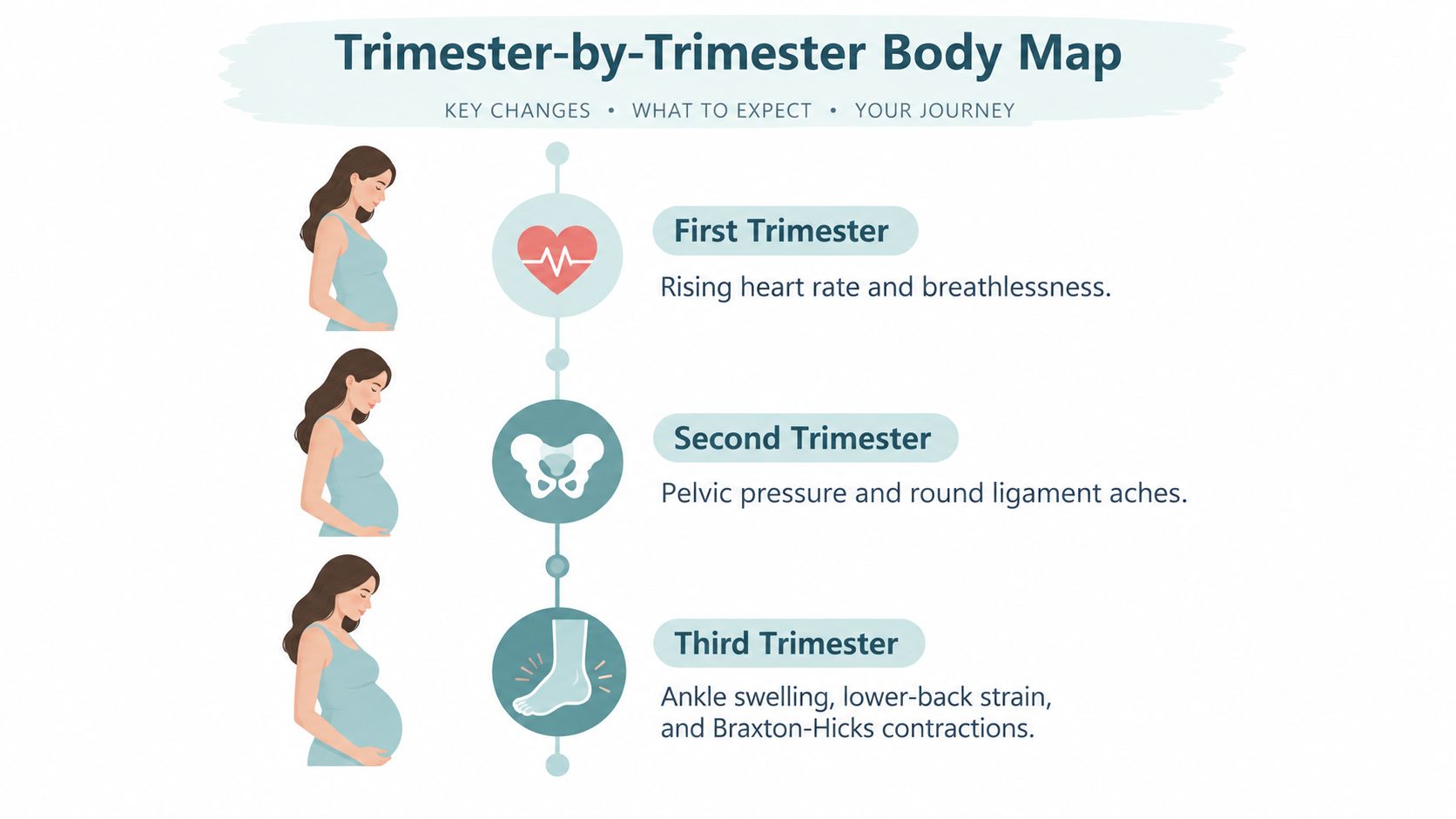
First trimester
Progesterone is the hormone patients describe most often without naming it. Early on, it slows digestion, relaxes blood vessels, and can leave you feeling warm, light-headed, or less steady when you stand for long. The body is also making room for a larger blood volume, so the shift can feel sudden even before the bump shows.
Cardiac output can rise by approximately 30% to 60%, with much of that increase happening in the first trimester NCBI Bookshelf. Heart rate commonly increases by about 10 to 20 beats per minute. Those changes are normal, but they can make stairs, hot rooms, and long standing stretches feel harder than usual.
Breathing can change too. Tidal volume rises, and minute ventilation increases enough that some people notice an unfamiliar air hunger even without lung disease PMC review. If breathing feels unusually strained, that deserves attention.
Second trimester
This is often the phase where the body's mechanics become easier to notice. Cardiac output usually reaches its highest point between 20 and 24 weeks of gestation, and blood pressure often dips around the same time before moving back toward pre-pregnancy levels NCBI Bookshelf. Some people feel better here. Others feel more aware of every positional change, especially when standing up quickly or staying upright for too long.
The lungs are working against a smaller reserve, because the enlarging uterus reduces functional residual capacity by approximately 20% to 30% PMC review. That means breathlessness can show up with activity that used to feel routine. It is common, but it is still worth separating normal pregnancy shortness of breath from shortness of breath that feels sudden, severe, or different from your usual pattern.
Third trimester
By the third trimester, pressure tends to take center stage. The uterus is larger, blood flow returns more slowly from the lower body, and swelling becomes easier to notice. Back strain, pelvic heaviness, and trouble standing for long periods are common trade-offs.
Sleep can also get more disrupted here. A bigger abdomen changes position comfort, and frequent nighttime waking can make the day feel harder than the physical changes alone.
Call your clinician promptly if swelling appears suddenly, breathing worsens fast, or the discomfort no longer follows the usual pregnancy pattern.
The point of the timeline is simple. It helps you read the pattern, decide what needs rest or support, and know when a medical check is the right next step.
Why Digestion, Constipation, and Hemorrhoids Are Linked
Pregnancy constipation is part of a pressure cycle, not just a bathroom annoyance. Hard stools lead to straining, straining irritates the anorectal veins, and that irritation can set up hemorrhoids or a fissure if the pattern keeps repeating. Rising progesterone slows intestinal transit, the uterus can make bowel movement harder mechanically, and higher intra-abdominal pressure adds more stress to the veins in that area.
The cycle that catches people off guard
A hard stool usually starts the chain. People strain more, the pressure rises, and already vulnerable veins swell more easily. That same stretch and friction can also make a fissure more likely when stool finally passes. One clinical review reports that about one-third of pregnant women complain of hemorrhoids and points to increased Valsalva force, about 30% increased blood volume, progesterone-mediated venous smooth-muscle relaxation, and uterine pressure as contributing factors PMC review.
The postpartum window matters too. Hemorrhoids and anal fissures occur in about 40% of pregnant and postpartum women, and they most often show up in the third trimester and within 1 to 2 days after delivery PMC review. A review also found that hemorrhoid prevalence can remain raised for months after birth, which is why symptoms should be tracked instead of dismissed as a short-lived nuisance systematic review.
Severe constipation can make the whole cycle harder to break, especially when pain leads to more avoidance and more straining later. A practical overview of severe constipation with hemorrhoids is useful because it shows how quickly one problem feeds the other.
What actually helps
The goal is to interrupt the cycle early. Soften stool, reduce straining, and protect irritated skin before swelling and tearing become more entrenched. ACOG recommends plenty of water, regular exercise, and good bowel habits, which supports the same prevention logic used for hemorrhoid care ACOG.
For cleansing after bowel movements, a product like Revivol-XR® Hygienic Cleansing Lotion can be used as a gentle toilet-paper lotion for external cleansing, with aloe, witch hazel, and moisturizing ingredients intended to reduce friction during wiping.
Hemorrhoids vs Anal Fissures and How to Tell Them Apart
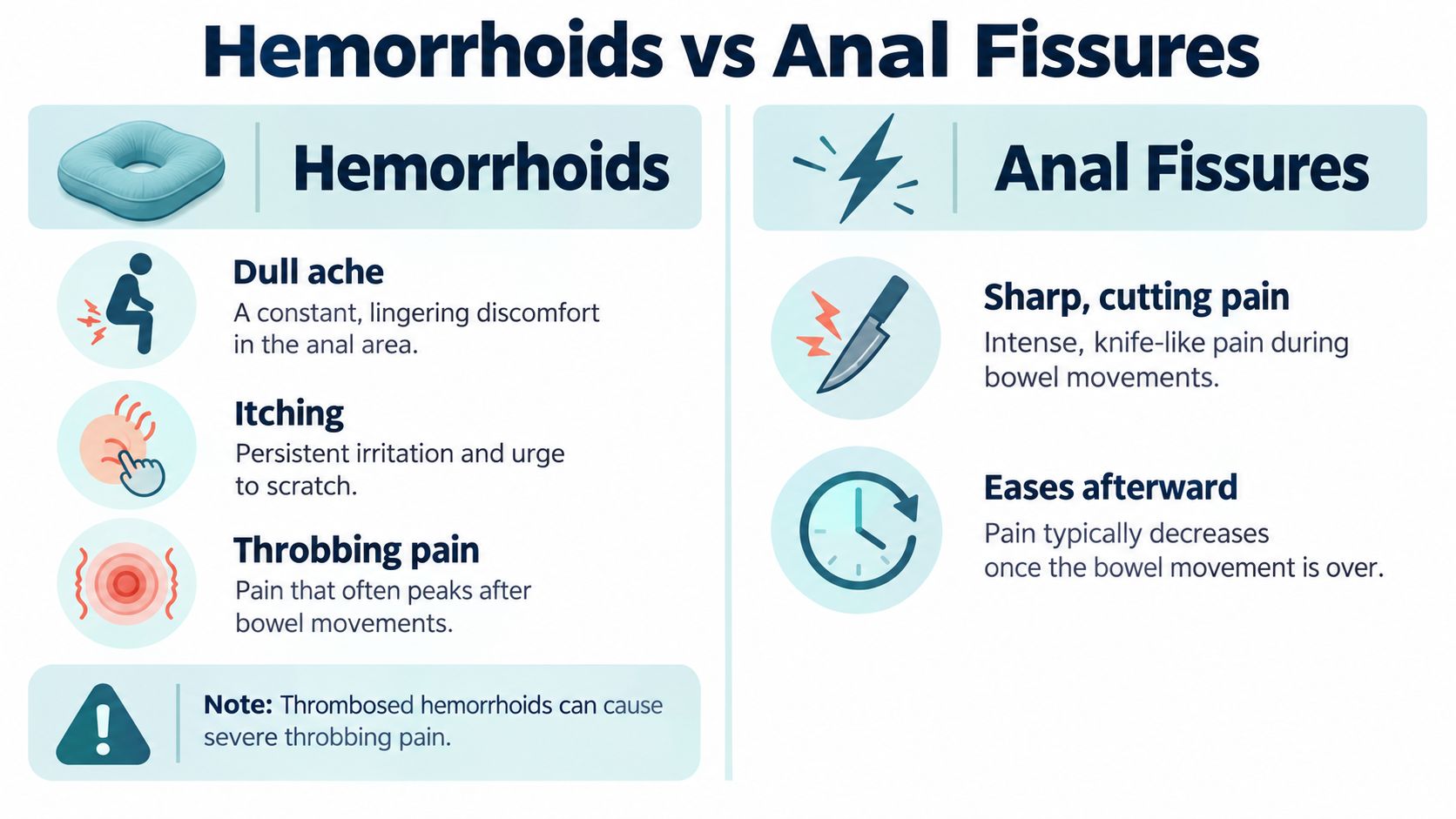
A bowel movement that feels like a cut or tear points more toward an anal fissure. The pain is often sharp, knife-like, or burning during stool passage, and bleeding may or may not appear AJG review. Hemorrhoids more often cause dull soreness, throbbing, itching, or pressure after a bowel movement.
What the feeling usually suggests
Pain that starts the moment stool passes, then lingers as a sting, fits fissure pain well. A tender lump, swelling, itching, or a sense of fullness fits hemorrhoids more often. Severe throbbing pain can mean a thrombosed hemorrhoid, which deserves medical attention rather than watchful waiting.
What do fissures look like can help you compare what you feel with how fissures commonly present, but symptoms alone still do not replace an exam if pain or bleeding keeps coming back.
When symptom matching isn't enough
Rectal bleeding and intense pain can come from more than one cause. Persistent symptoms, heavy bleeding, or pain that does not settle should be reviewed by a healthcare provider instead of guessed at. That matters even more after delivery, when fissures, hemorrhoids, tears, and postpartum pelvic-floor changes can overlap.
If the pain is sharp with every bowel movement, or if bleeding keeps happening, get it checked instead of trying to sort it out on your own. That choice saves time and can prevent a small problem from lingering longer than it should.
Safe Prevention and Symptom Relief Options
A good relief plan tackles the whole cycle, not just one symptom. Hard stool, irritated skin, and local pain feed each other, so treating only one part often leaves the others in place. The most useful pregnancy-friendly steps are usually the ones that lower strain and protect sore tissue at the same time.
Start with stool softness
Softening stool reduces the effort needed to pass it. That means more water, steadier fiber intake, and regular movement when the body allows it. A short prenatal walk often helps the bowels move without adding strain.
Toileting position matters too. Raising the feet and letting the knees come up can reduce pushing pressure and make a bowel movement easier to pass. It will not fix every case, but it often changes a difficult push into a less painful one.
Soothe the irritated area
Warm sitz soaks can calm soreness and make wiping and bowel movements easier to tolerate. Soft padding helps when sitting feels uncomfortable, and side-lying with a pillow between the knees can reduce pressure during rest. Gentle cleansing is worth the effort, because rough wiping can keep already inflamed skin irritated.
For people who need targeted hemorrhoid symptom relief, Revivol-XR® Advanced Hemorrhoid Cream is an OTC option with 5% lidocaine for temporary pain, itching, and burning relief, plus phenylephrine HCl 0.25% to temporarily shrink swollen hemorrhoidal tissue and skin protectants like glycerin and petrolatum. It should be used only as directed on the label, and pregnant or breastfeeding patients should ask a health professional before use.
For a fuller home-care breakdown, see pregnancy discomfort relief options.
Know what needs a clinician
Oral laxatives, prescription topicals, and any new routine during pregnancy should be cleared with a provider. That matters even more if symptoms are getting worse instead of easing.
- Persistent bleeding: do not assume it is just hemorrhoids.
- Severe pain: especially if it feels sharp, throbbing, or unlike the usual discomfort.
- Fever or a new mass: both deserve prompt evaluation.
- No improvement with home care: bring it up at the next visit, or sooner if symptoms are escalating.
The trade-off is simple. Gentle care can help, but self-treatment should not replace a real assessment when symptoms persist or bleeding continues.
Your Postpartum Recovery Map and Red Flags
The first 48 hours after birth often center on pressure, tenderness, and the first bowel movement. If there was tearing, an episiotomy, or a long labor, hemorrhoids and fissures may feel sharper in that window. Constipation can show up early too, especially when pain makes someone hold back.
The first two weeks
This is the stretch when symptoms often become more noticeable. Bowel habits may still be irregular, and iron used during pregnancy can leave constipation hanging on. Hemorrhoid discomfort can flare with wiping, sitting, or passing stool, so gentle cleansing, hydration, and stool-softening habits matter here AAFP review.
The six-week visit and beyond
By the six-week visit, many people expect to feel fully recovered. Sometimes that is true. Other times hemorrhoids, constipation, urinary issues, or perineal pain are still part of healing, and that does not automatically mean something is wrong. At this visit, clinicians usually check perineal healing, bowel function, bleeding, and pelvic floor recovery, so bring a simple log of pain, bleeding, stool changes, and what you have tried at home. Some hemorrhoid symptoms can still be present well after birth, as noted earlier.
Red flags that need attention
Heavy bleeding, fever, severe or worsening pain, a new lump, or any change in bowel control after delivery calls for a real conversation with an OB-GYN, midwife, or colorectal clinician. Hemorrhoids and fissures are only one part of postpartum pelvic-floor recovery, so it helps to speak up instead of guessing.
When a symptom keeps going, the goal is clear. Find out what is healing normally and what needs treatment.