Pregnancy Discomfort Relief: Safe Home Strategies

Most pregnant women don't realize that the constipation, pelvic pressure, and rectal pain arriving together in late pregnancy can turn an ordinary bathroom visit into the hardest part of the day.
Around 25% to 35% of pregnant women experience hemorrhoids, with some reviews reporting 30% to 40%, and certain third-trimester populations reaching 85% (clinical review). This practical guide to pregnancy discomfort relief separates the problem into three plans: bowel regularity, swelling reduction, and pain relief.
Table of Contents
- The Third Trimester Moment Nobody Warns You About
- Start With Bowel Regularity Before Anything Else
- Sitz Baths, Positioning, and Pelvic Floor Habits That Actually Help
- Choosing Safe Topical Options Without Overthinking It
- Postpartum Week One Versus Week Four Recovery Plan
- Red Flags and Mistakes That Make It Worse
- Your Simple Daily Relief Routine
The Third Trimester Moment Nobody Warns You About
You're about 34 weeks pregnant. Dinner is over, your ankles feel swollen, and you're sitting on the toilet longer than you meant to. The stool feels hard. You push, stop, push again, and notice a dull pressure near your tailbone. By the time you stand, the area feels sore and heavy.
I've talked with hundreds of new mothers through this exact moment. Most think they've done something wrong. They haven't. Late pregnancy places several stresses in the same small area.
Constipation makes you strain. Enlarged veins in the rectum, commonly called hemorrhoids, become more vulnerable to swelling. As the baby's head settles lower, the pelvic floor carries more pressure and works harder to support the pelvis. Pregnancy-related changes can also slow bowel movement through the digestive tract, while reduced activity and some prenatal iron supplements may make stools firmer.
The timing matters. Hemorrhoids and anal fissures are reported in about 40% of women during pregnancy and the postpartum period, with the highest frequency in the third trimester and shortly after delivery (NIH review). Another review reports a combined frequency of about 43.9%, with symptoms peaking in the third trimester and as early as the first or second day after birth (pregnancy and postpartum review).
The practical rule: Don't start with the strongest cream. Start by making bowel movements easier, reducing pressure, and calming irritated tissue.
You'll find a clear plan here for constipation, sitz baths and pelvic floor habits, topical choices, the first postpartum month, and symptoms that need professional attention.
Start With Bowel Regularity Before Anything Else
No topical product can compensate for hard stools and repeated straining. Your first checkpoint is a bowel movement that passes without force.
Build a softer-stool routine
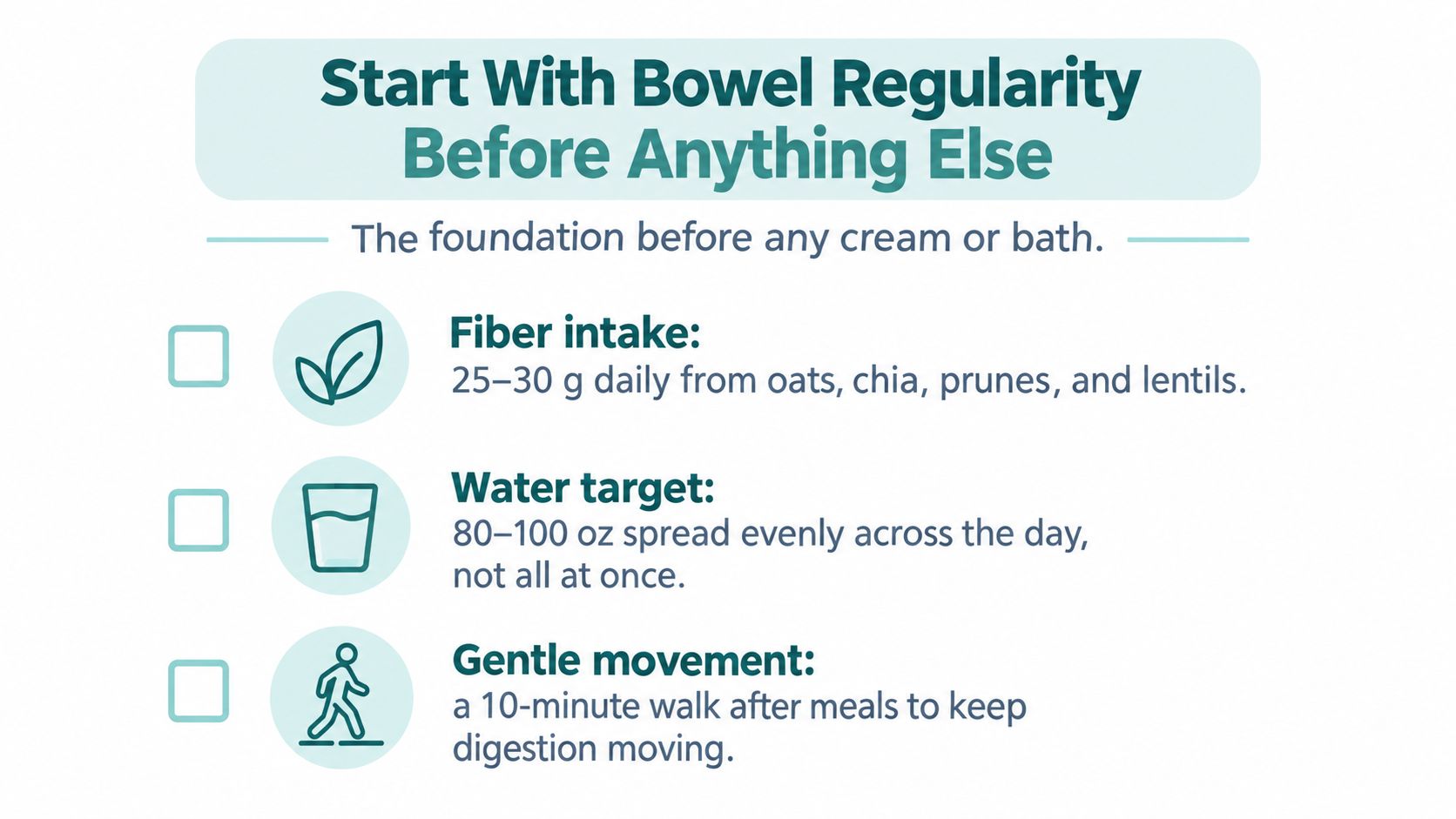
Aim for 25 to 30 grams of fiber daily from foods such as oats, chia, prunes, lentils, vegetables, and fruit. Spread fiber across meals instead of eating a large amount at once. Increase fluids with it, or the extra fiber may leave you more bloated and uncomfortable.
A practical hydration target is 80 to 100 ounces of water across the day, unless your healthcare provider has given you a different fluid plan. Sip regularly rather than trying to drink it all at once. A short, gentle walk after meals can also help keep digestion moving.
Change the bathroom mechanics
Place your feet on a small stool so your knees sit higher than your hips. Keep your spine neutral, lean forward slightly, and let your abdomen relax. Don't hold your breath or push hard.
Keep toilet visits brief. Scrolling on your phone encourages prolonged sitting, which adds pressure to already irritated veins. If nothing happens without straining, get up and try again later, preferably after a meal when the bowel is naturally more active.
Iron in prenatal vitamins can worsen constipation for some people. If stools remain pebble-like after a week of better fluids, fiber, movement, and toilet positioning, ask your provider whether the timing, dose, or formulation should change. Don't stop prescribed or recommended supplements on your own.
For gentler cleanup after a bowel movement, some people use Revivol-XR® Hygienic Cleansing Lotion, which can be applied to toilet paper for external cleansing and includes aloe, chamomile, and witch hazel. Use it externally only, avoid the eyes, and stop if irritation develops. More practical guidance is available in this guide to postpartum constipation remedies.
Sitz Baths, Positioning, and Pelvic Floor Habits That Actually Help
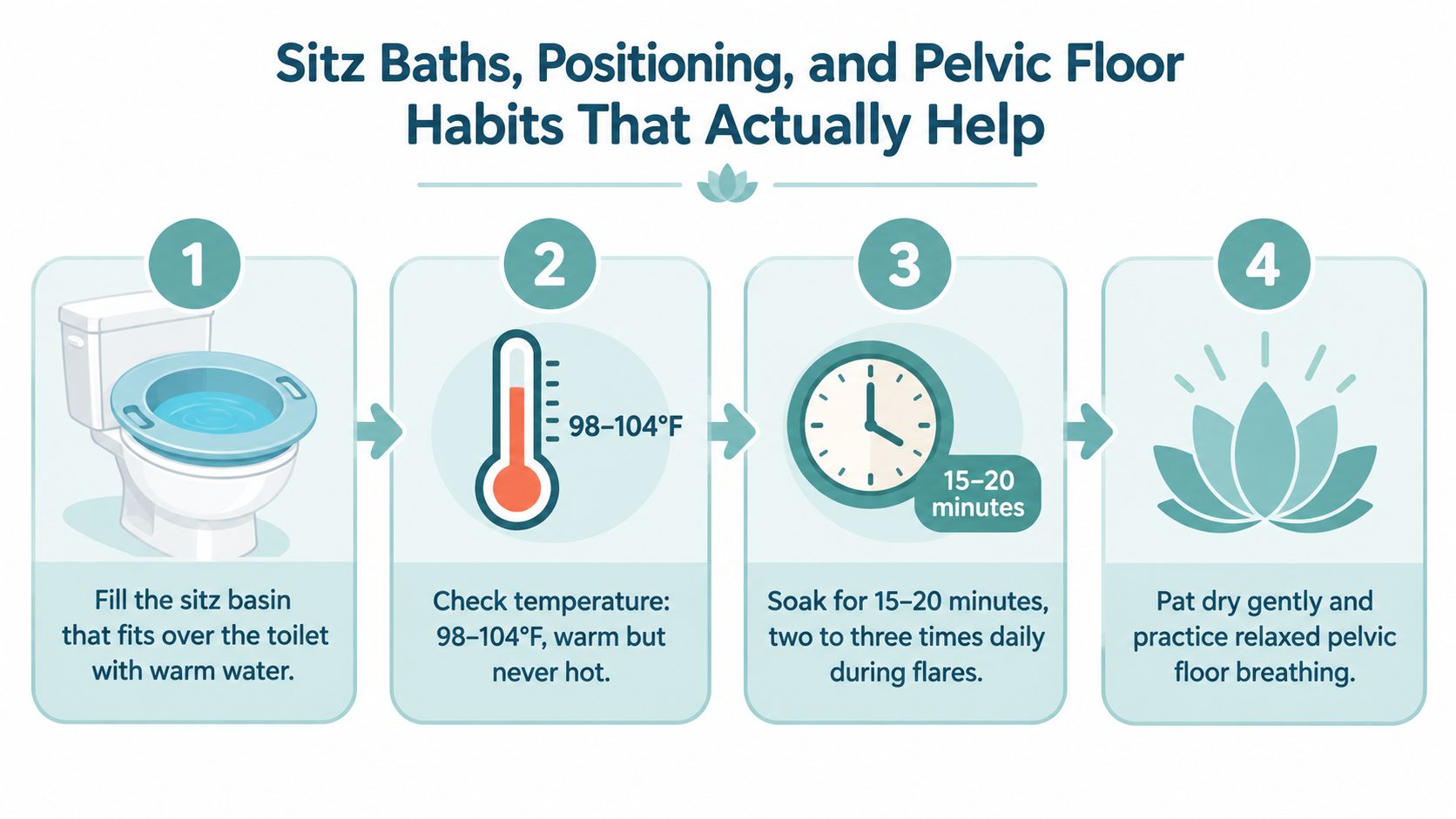
Warm water is simple, but technique matters. Use a sitz basin that fits securely over the toilet, fill it with warm rather than hot water, and check that the temperature feels comfortable before sitting down.
A useful range is 98 to 104°F for 15 to 20 minutes, two to three times daily during a flare. Warmth can relax the anal sphincter, improve local circulation, and ease spasms that keep pain going. Pat dry afterward instead of rubbing.
During late pregnancy, use side-lying rest with a pillow between your knees to reduce pelvic floor loading. Avoid long periods of standing or sitting. If you're feeding a baby, working, or driving, change position regularly and use a cushion that doesn't force the tailbone downward.
Acute pain isn't the time to force Kegels. Try diaphragmatic breathing instead. Let your abdomen expand on the inhale, then use a slow, relaxed exhale while consciously releasing the pelvic floor. Once pain and swelling settle, your provider or pelvic floor therapist can guide gradual strengthening.
In the first postpartum days, cold packs often feel better than warmth, especially when perineal swelling is present. Later, warm sitz baths can become more useful for relaxation and cleansing. If you use Revivol-XR® Sitz Bath Soak Mix, follow its external-use directions, patch test first, and discuss it with your provider if you have sensitive skin, essential-oil allergies, or diabetes.
For setup and safe positioning, see this step-by-step guide to doing a sitz bath at home.
Choosing Safe Topical Options Without Overthinking It
The pharmacy aisle gets confusing because products are organized by brand, not by symptom. Choose by function instead.
| Category | What It Does | Best Used For | Pregnancy/Postpartum Note |
|---|---|---|---|
| Protectants, such as petrolatum or zinc oxide | Forms a barrier over irritated skin | Chafing, moisture, and burning from wiping | Often a sensible starting category, but ask your provider about personal use |
| Astringents, such as witch hazel pads | Can soothe and gently dry irritated external tissue | Itch, mild swelling, and post-bowel-movement discomfort | Commonly used as a conservative option; stop if stinging or dryness worsens |
| Numbing agents, such as pramoxine or lidocaine | Temporarily reduces local nerve sensation | Burning or pain that interferes with sitting | Confirm trimester and breastfeeding use with a healthcare professional and follow the label |
| Combination hemorrhoid creams | May combine protectants, anesthetics, astringents, or steroids | Several symptoms at once | Avoid steroid-containing products without provider approval, especially late in pregnancy or while breastfeeding |
Start with plain warm sitz baths, gentle cleansing, and witch hazel if your skin tolerates it. Apply topical products only as directed, commonly after a bowel movement and at bedtime, but don't keep layering products on already irritated skin.
The NHS Specialist Pharmacy Service recommends a stepwise approach that begins with non-drug measures. It identifies paracetamol as the usual analgesic choice for mild to moderate pain in pregnancy and advises avoiding systemic NSAIDs from week 20 unless clinically necessary (NHS pregnancy pain guidance). Ask your provider before taking any pain medicine.
For temporary external numbing, Revivol-XR 5% Lidocaine Numbing Cream is listed as an over-the-counter topical anesthetic for hemorrhoid pain, itching, and burning. Because it contains lidocaine and is intended for external use, follow the product label and ask a healthcare professional before use during pregnancy or breastfeeding. Stop and seek advice if bleeding occurs, symptoms worsen, or symptoms don't improve.
You can also review this focused guide to pregnancy-safe hemorrhoid cream.
Postpartum Week One Versus Week Four Recovery Plan
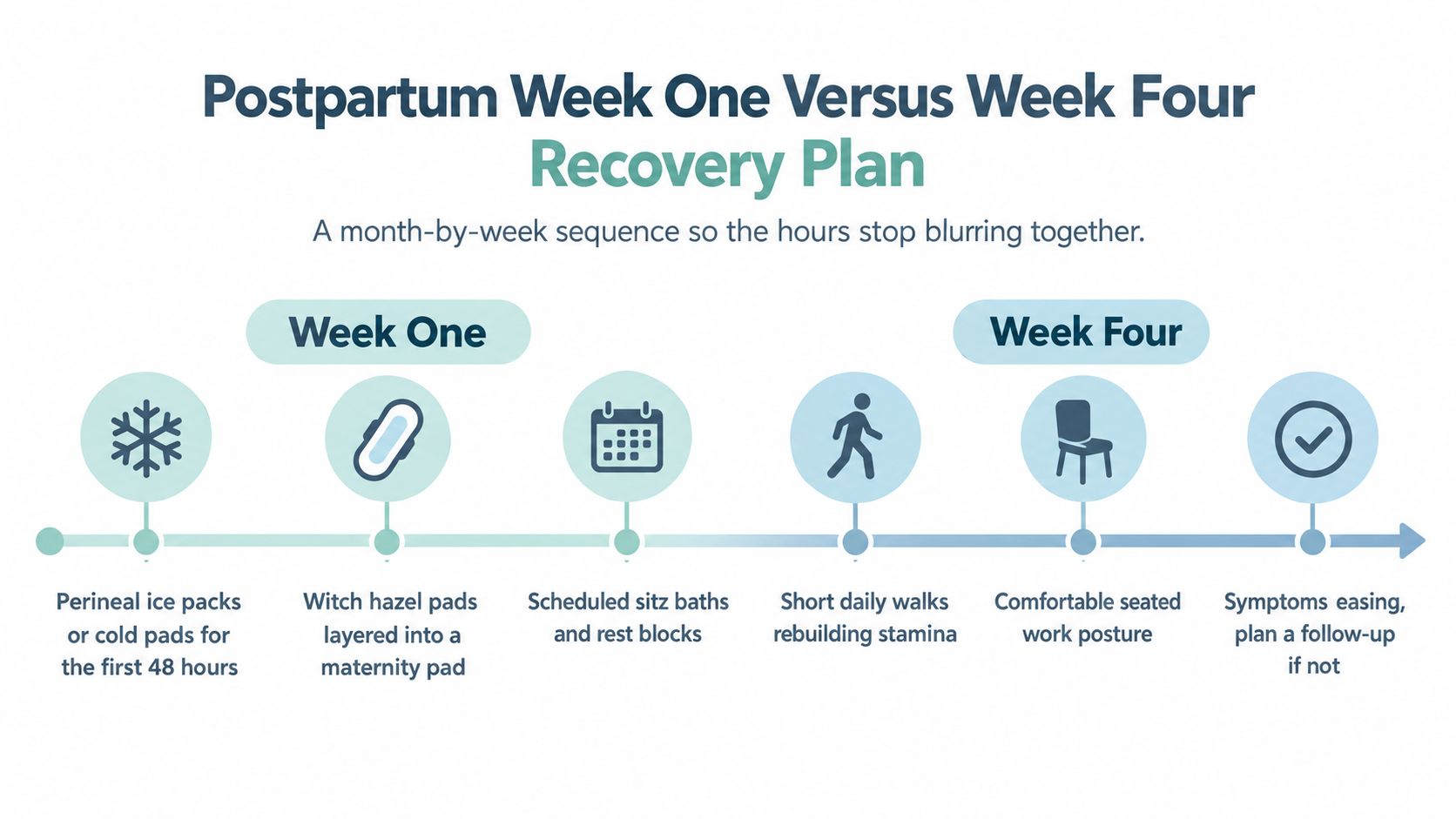
The first month after birth feels like one long day, so use a simple timeline.
Week one
For the first 48 hours, cold pads or perineal ice packs can reduce swelling. Wrap cold sources rather than placing them directly against skin. Witch hazel pads layered into a maternity pad can provide discreet external comfort, and scheduled sitz baths may help once warmth feels soothing rather than irritating.
If opioids were used during labor or recovery, ask your provider about starting a stool softener on day one. Keep fluids and fiber going, rest whenever possible, and avoid treating bowel movements as something to delay.
Breastfeeding adds another type of discomfort. Keep nipple care separate from hemorrhoid care, and never transfer an anorectal product to the nipples unless the product label and a clinician specifically support that use.
Week two
Shift gradually from passive cooling to movement and comfortable positioning. Add short walks as tolerated. If there was no significant perineal tearing and your provider agrees, gentle pelvic floor contractions may begin. Stop if they increase pressure, pain, or pulling.
Continue the bowel routine. Stool softeners should not be stopped just because the first painful bowel movement has passed. Ask your provider how to taper them according to your recovery and medication history.
Week four
By this point, many women notice that swelling has eased substantially, but persistent protruding tissue, a hard painful lump, ongoing fissure pain, or bleeding deserves an appointment. A 2025 review reports postpartum hemorrhoids in up to 85% of cases and discusses fiber, topical therapies, sitz baths, and escalation when home care isn't enough (postpartum anorectal review).
Start structured pelvic floor work only when pain allows. Taper topical care as symptoms settle instead of continuing every product indefinitely.
Red Flags and Mistakes That Make It Worse
You don't earn extra credit for suffering through severe rectal pain. Home care is reasonable for mild, familiar symptoms that are improving. It isn't a substitute for evaluation when symptoms are intense, new, worsening, or associated with bleeding.
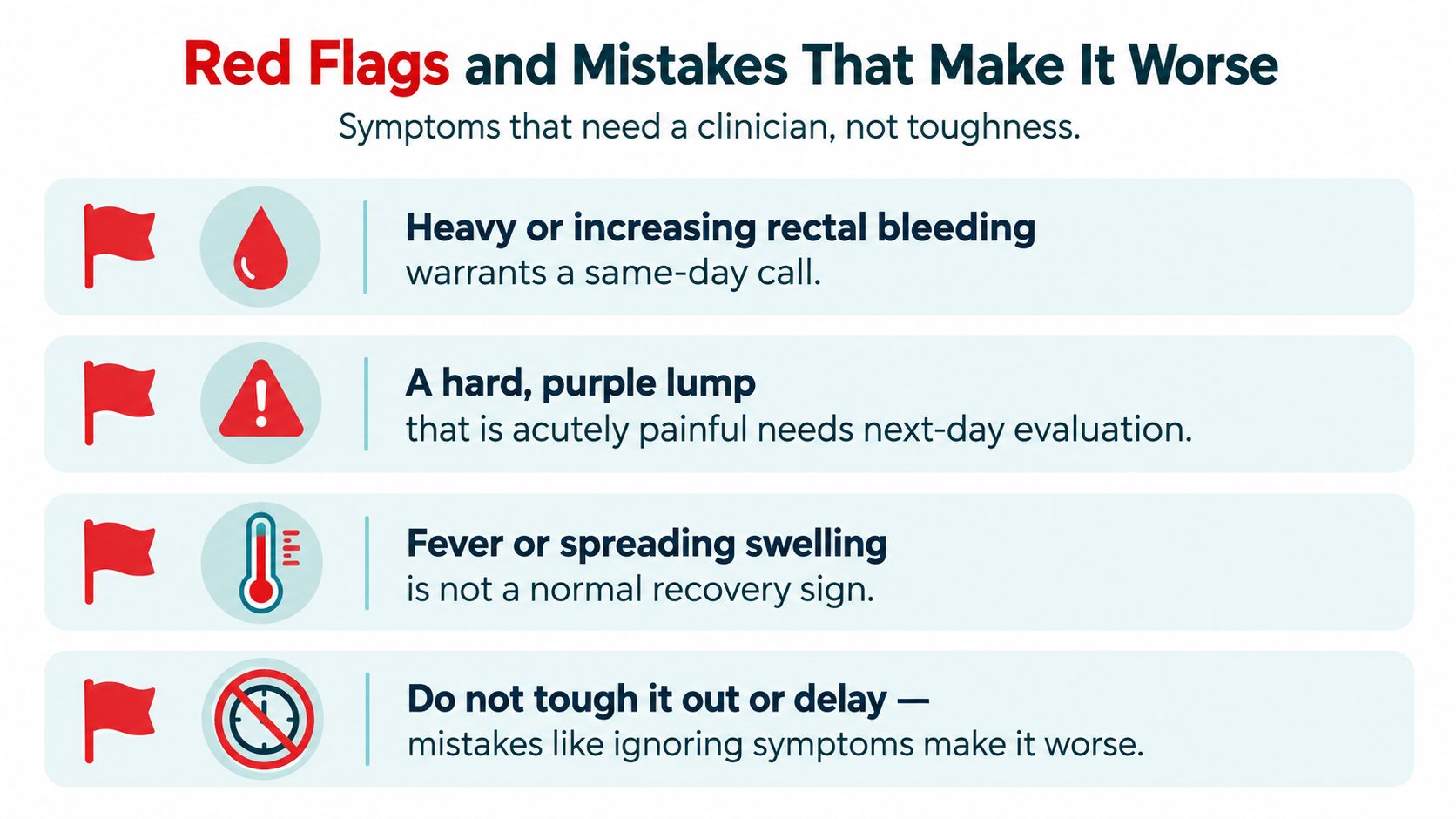
Call your healthcare provider the same day or seek the recommended urgent assessment for:
- Heavy or increasing rectal bleeding: Don't assume every drop is “just hemorrhoids.”
- A hard, purple, acutely painful lump: This can represent a thrombosed external hemorrhoid and needs timely evaluation.
- Fever with pelvic pain or spreading swelling: These symptoms aren't routine irritation.
- Inability to urinate: Seek prompt medical help.
- Severe headache or visual changes in the third trimester: Hemorrhoids alongside these symptoms require a pregnancy blood-pressure assessment.
Several common habits backfire. Sitting on the toilet with a phone encourages pressure and straining. Continuing to push through constipation keeps traumatizing the tissue. Applying heat immediately to a fresh, severely painful lump may aggravate swelling, while cold can be more comfortable early on.
Topical creams also can't rebuild pelvic floor support or correct bowel habits. If pain or weakness continues, ask about pelvic floor care rather than repeatedly changing creams. Persistent, severe, or bleeding symptoms always warrant a healthcare provider's assessment.
Your Simple Daily Relief Routine
Use natural anchors instead of trying to remember a complicated schedule.
- After your first morning bathroom trip: Clean gently, pat dry, and avoid sitting back down to scroll.
- At breakfast: Include fiber-rich food and a glass of prune juice or warm water if those fit your provider's advice.
- Mid-morning: Sip water steadily and take a gentle walk if you're able.
- After lunch: Walk for 10 minutes and respond to the next bowel urge without forcing.
- Before dinner: Take a warm sitz bath for 15 to 20 minutes if warmth feels comfortable.
- During the evening: Use a provider-approved topical option only for the symptom that remains, such as external itching or burning.
- Before bed: Lie on your side with a pillow between your knees and practice relaxed diaphragmatic breathing.
- After recovery begins: Add two to three sets of 10 Kegels across the day only when pain has settled and your provider supports them.
Keep 25 to 30 grams of fiber across three meals rather than chasing one miracle product. In the first week, the meaningful shift is usually practical: less straining, easier cleanup, fewer long toilet visits, and more comfortable sitting.
Tomorrow, choose one anchor, preferably your first morning bathroom routine, and make that the habit you won't skip. Small, repeatable changes work better than waiting for a single product to solve a pressure problem created by constipation and posture.
Revivol-XR offers external cleansing support with aloe and witch hazel, a sitz bath soak mix, and temporary lidocaine-based symptom relief options for hemorrhoid and fissure discomfort. Visit Revivol-XR to review the products and choose an option that fits your symptoms, while contacting your healthcare provider for persistent, severe, or bleeding symptoms.