Severe Constipation with Hemorrhoids: Expert Relief

Many people think hemorrhoids and constipation are separate problems. In practice, severe constipation with hemorrhoids is often one cycle that feeds itself. Hard stools lead to straining and longer time on the toilet. Pain and swelling then make bowel movements something people avoid, which can worsen constipation and keep the flare going. The result is not just discomfort. It can turn an ordinary bathroom habit into days of pain, pressure, and repeated setbacks.
Table of Contents
- Understanding Why Severe Constipation With Hemorrhoids Happens Together
- When Severe Constipation With Hemorrhoids Needs Urgent Attention
- A Practical Plan for Managing Severe Constipation With Hemorrhoids
- Special Guidance for Pregnancy, Postpartum, and Senior Readers
- How to Break the Cycle and Prevent Future Flare-Ups
- Frequently Asked Questions About Severe Constipation With Hemorrhoids
Understanding Why Severe Constipation With Hemorrhoids Happens Together
The cycle starts with stool that is hard, dry, and difficult to pass. People strain, hold their breath, and sit on the toilet too long. That pressure increases stress on the rectal veins, and swollen hemorrhoidal tissue can develop or worsen.
The connection is not just theoretical. In a 2022 study, constipation was more common in people with hemorrhoids than in controls, with an odds ratio of 2.09 and a 95% confidence interval of 1.27 to 3.44 (PubMed). A separate population study found hemorrhoids in 13.1% of participants and reported constipation with adjusted OR 4.32, 95% CI 2.20 to 8.48.
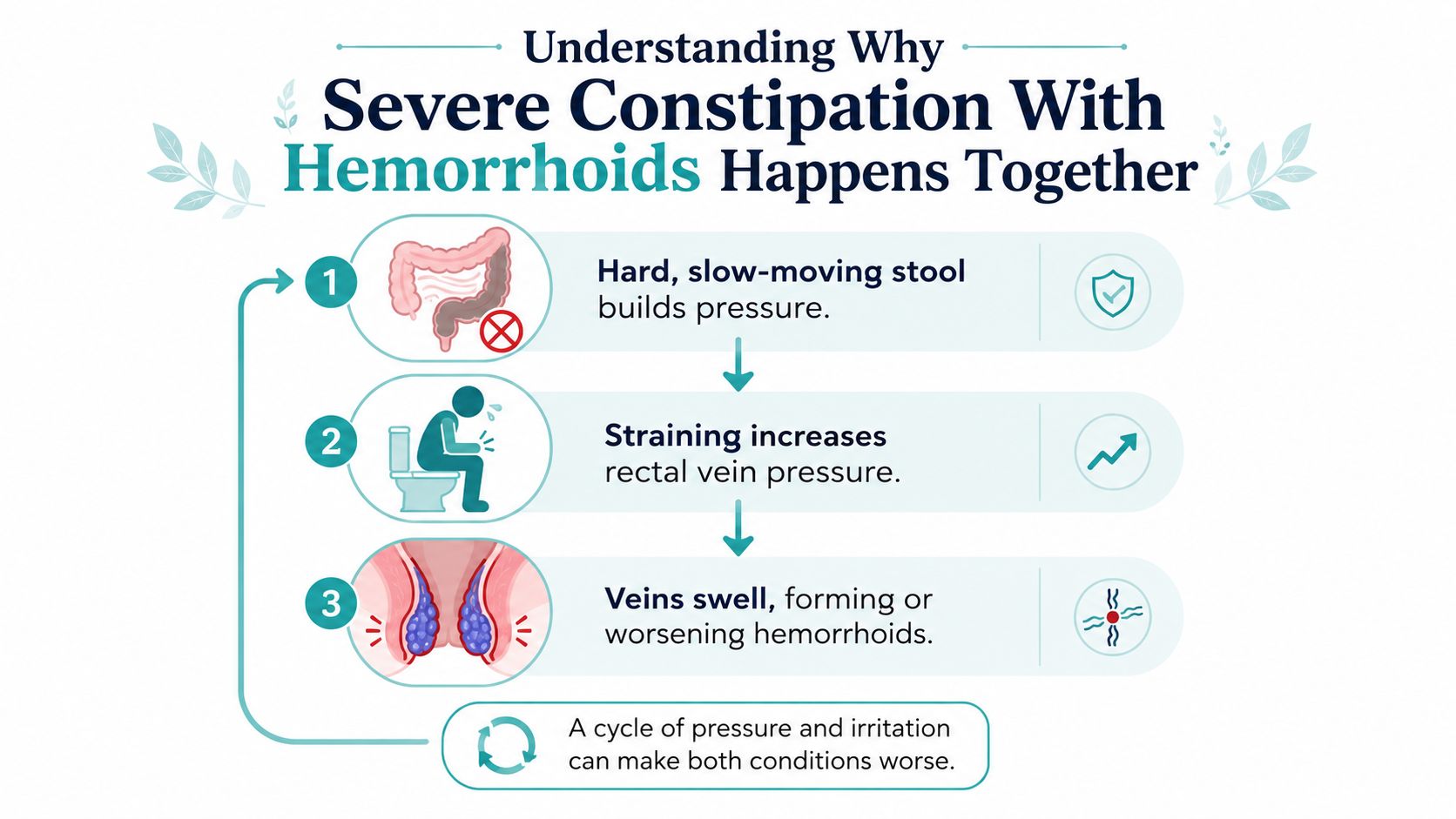
The bowel-mechanics problem patients often overlook
Some patients assume the hemorrhoid is the whole problem. The bowel mechanics often matter just as much. A recent thesis summary reported that functional constipation, dyssynergia, and higher basal anal pressure were more common in people with hemorrhoids, and anal manometry showed dyssynergic patterns in 92.1% of 63 patients studied (University of Groningen).
Practical rule: if bowel movements hurt, many people delay the next one, and that delay makes the stool harder and the strain worse.
That is why treatment has to address both sides at once. If the stool stays hard, hemorrhoid treatment gives only short-lived relief. If the anal tissue stays inflamed, constipation treatment can still feel like a fight.
When Severe Constipation With Hemorrhoids Needs Urgent Attention
Some cases can wait for home care, but a few symptoms shouldn't be brushed off. Heavy rectal bleeding, fever, severe unrelenting pain, or the inability to pass stool or gas all deserve prompt medical attention. New or progressive constipation also deserves a closer look, especially when it doesn't fit the person's usual pattern.
Small, bright red blood on toilet paper can happen with hemorrhoids, but bleeding that is heavier, persistent, or mixed into the stool needs evaluation. Bleeding can also come from other causes, including fissures or more serious conditions, so it's safer not to assume every spot of blood is “just hemorrhoids” (MedStar Health).
A simple decision rule
If symptoms are mild and improving, home care can be reasonable for a short trial. If symptoms are getting worse, not improving after several days, or bleeding starts, it's time to call a clinician. If stool won't move and gas won't pass, don't keep trying to self-manage for long.
Prolonged toilet time is a habit worth changing right away, even when it doesn't feel dramatic. Newer reporting has raised the possibility that time spent sitting may matter as much as pushing, which is one more reason to get in and get out of the bathroom quickly.
I'd also be cautious with anyone who has a bulge that won't go back in, worsening pain when sitting, or symptoms that are not following the usual hemorrhoid pattern. Those aren't the moments to keep experimenting with random home remedies.
A Practical Plan for Managing Severe Constipation With Hemorrhoids
Start with stool consistency, because softer stool reduces both strain and pain. Guidance cited in an anorectal-disorders resource recommends 20 to 30 g/day of fiber and 6 to 8 glasses of fluids daily, and ASCRS guidance identifies dietary and behavioral change as first-line therapy for symptomatic hemorrhoidal disease (ASCRS Toolkit). That's the backbone, not the backup plan.
Build the bowel routine first
- Add fiber gradually: jump too fast and bloating can make people quit. Start with food first, then use supplements if needed.
- Drink regularly through the day: don't wait until evening to catch up.
- Go when your body says go: holding stool makes it drier and harder to pass.
- Keep toilet sessions short: no scrolling, no lingering, no straining.
For day-to-day straining habits, this guide can help: how to avoid straining during bowel movements.
Short-term stool softeners or osmotic laxatives can sometimes help while fiber and hydration are catching up, but they're a bridge, not the whole road. Overuse of stimulant laxatives can create a cycle of urgency and discomfort, so it's smarter to use them carefully and with clinician guidance when constipation is severe or persistent.
Warm sitz baths can make a miserable flare a little more manageable. Use warm, not hot, water for about 15 minutes, several times a day. The goal is comfort and less irritation, not aggressive heat.
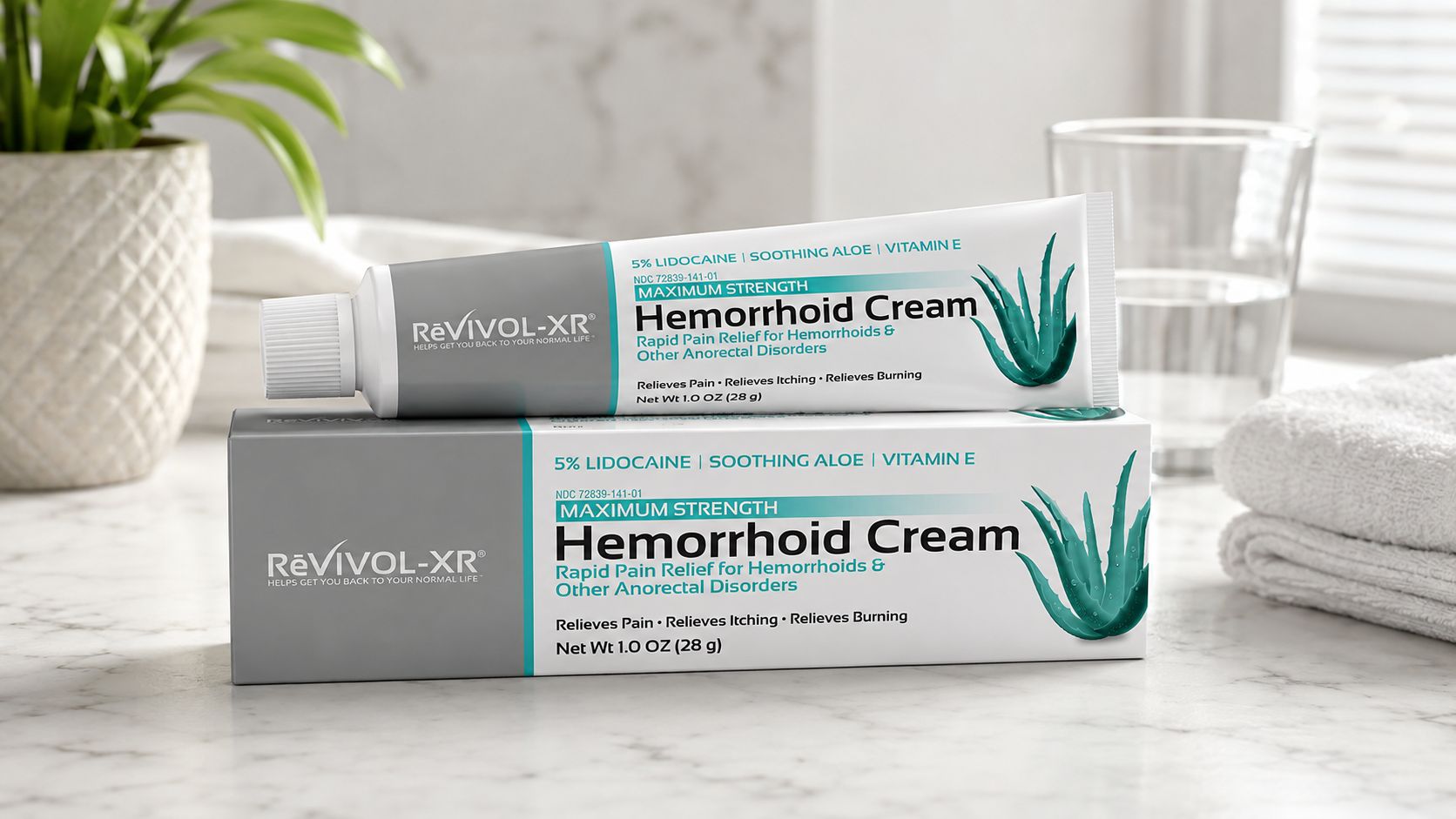
For localized pain, Revivol-XR 5% Lidocaine Numbing Cream – Maximum OTC Hemorrhoidal Grade Strength - Temporary Pain Relief Without a Prescription is an over-the-counter option that contains 5% lidocaine for temporary numbing of hemorrhoid discomfort, burning, and itching. It's one tool among several, not a substitute for fixing the constipation that keeps triggering the flare.
A practical day looks like this, not like a complicated checklist. Eat fiber at breakfast, keep fluids moving all day, use the bathroom only when you need to, and use a soothing topical or sitz bath when the area is flared. That combination usually works better than chasing relief one symptom at a time.
Special Guidance for Pregnancy, Postpartum, and Senior Readers
Pregnancy and the weeks after childbirth change the rules a bit. More pressure in the pelvis, hormonal shifts, and the strain of delivery can all make hemorrhoids more likely, and constipation can be especially common when sleep is poor and routines are disrupted. A straightforward first step is still the same, fiber, fluids, and less straining.
For postpartum hemorrhoids, one patient guidance source recommends a high-fiber diet, plenty of water, and a stool softener to ease pain with bowel movements, and it suggests warm sitz baths using only a couple of inches of warm water for about 15 minutes several times a day (WebMD). This advice aligns with the practical needs of recovery, where comfort and practicality matter more than perfection.
Pregnancy and postpartum
The priorities are gentle stool softening, pain control, and avoiding long bathroom sessions. If sitting hurts, short frequent walks and a predictable bathroom time can help without forcing a bowel movement. If symptoms are bleeding, severe, or lingering, a clinician should weigh in rather than assuming it's routine recovery.
Seniors
Older adults often deal with slower digestion, less fluid intake, and medications that can worsen constipation. New constipation in later life deserves respect, especially if it's progressive or different from the person's baseline. That's where a provider can sort out whether this is just stool hardness or something that needs broader evaluation.
A note on treatment choices
Witch hazel can feel soothing for some people, but it's not a cure for fissure-type pain, and fissure care has different mechanics than hemorrhoid care. An evidence summary notes that fissure management should focus on fiber and water, and in persistent cases a compounded 0.3% nifedipine with 1.5% lidocaine topical has been reported to achieve 95% healing rates (DrOracle). The point is simple, the right problem needs the right tool.
For readers looking for a gentle transition after childbirth, this guide is useful: postpartum constipation remedies.
How to Break the Cycle and Prevent Future Flare-Ups
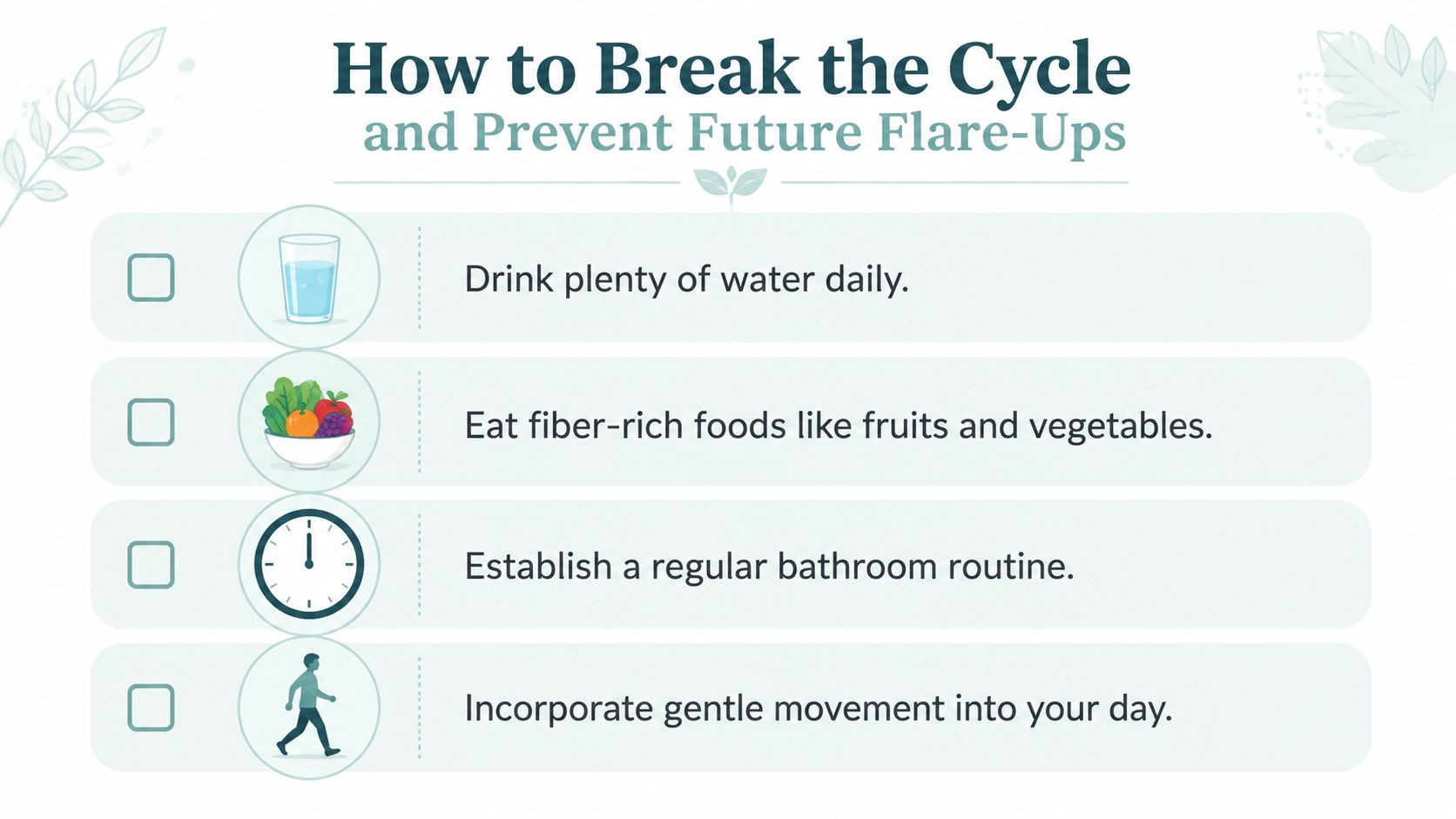
Prevention works best when it becomes ordinary. The people who do best usually aren't doing anything extreme, they're doing the basics consistently. They eat enough fiber, drink enough water, and don't treat the toilet like a place to sit and wait.
The routine is simple, but it has to be repeatable. Keep bowel movements unforced, keep toilet time short, and don't ignore the first signs of hard stool. During flares, use sitz baths and a topical comfort product if needed, then get back to the bowel routine the next day instead of waiting for the next crisis.
Main takeaway: the flare usually returns when stool hardness, bathroom habits, and pain are left to run the same script again.
Some people keep relapsing because the deeper mechanics never get checked. If constipation and hemorrhoids keep coming back despite solid home care, ask a clinician whether a defecation disorder might be part of the picture. That's not overreacting, it's how you stop repeating the same cycle.
Watch:
If you want one change to start today, make it the bathroom routine. Go when you need to, don't linger, and treat stool softness like part of the treatment, not an afterthought. For more practical bowel-habit support, see psyllium husk for hemorrhoids.
Frequently Asked Questions About Severe Constipation With Hemorrhoids
Can hemorrhoids cause constipation?
They can make people avoid bowel movements because passing stool hurts. That holding pattern can make constipation worse even if the hemorrhoids didn't start the problem.
Does witch hazel help?
It may soothe the area for some people, but it won't fix hard stool or a defecation problem. If pain is from a fissure, evidence-based care is different, and witch hazel isn't the main answer.
How long should I try home care?
If symptoms aren't improving within about a week, or if they're worsening sooner, it's time to contact a provider. Bleeding, severe pain, fever, or inability to pass stool or gas needs faster attention.
What does an OTC product do?
A topical numbing product can reduce burning, itching, or pain for a short time, which can make bathroom trips more tolerable while you work on the constipation itself. It should be part of the plan, not the whole plan.
If you're dealing with severe constipation with hemorrhoids, Revivol-XR offers discreet OTC comfort options that can help calm pain, burning, and irritation while you rebuild better bowel habits. Visit Revivol-XR to look at the product range and choose the relief format that fits your routine, especially if your symptoms keep coming back.