Hemorrhoid Treatment While Pregnant Safe Relief Guide

A late-pregnancy bowel movement can turn into a painful routine of itching, pressure, burning, or bright red blood on the toilet paper, and many people feel too embarrassed to mention it.
Hemorrhoid treatment while pregnant usually starts with a calm, stepwise plan: soften stools, reduce straining, soothe irritated tissue, and ask your healthcare provider before using medication. This guide explains what to do during pregnancy and after delivery, including witch hazel, lidocaine, sitz baths, gentle cleansing, constipation support, and signs that need medical attention.
Table of Contents
- Why Hemorrhoids Are So Common During Pregnancy
- Prevention Habits That Reduce Pressure and Straining
- Gentle At Home Relief for Itching Burning and Swelling
- Understanding Safe OTC Options and Ingredients While Pregnant
- Postpartum Recovery and Ongoing Hemorrhoid Care
- When to Contact Your Healthcare Provider
Why Hemorrhoids Are So Common During Pregnancy
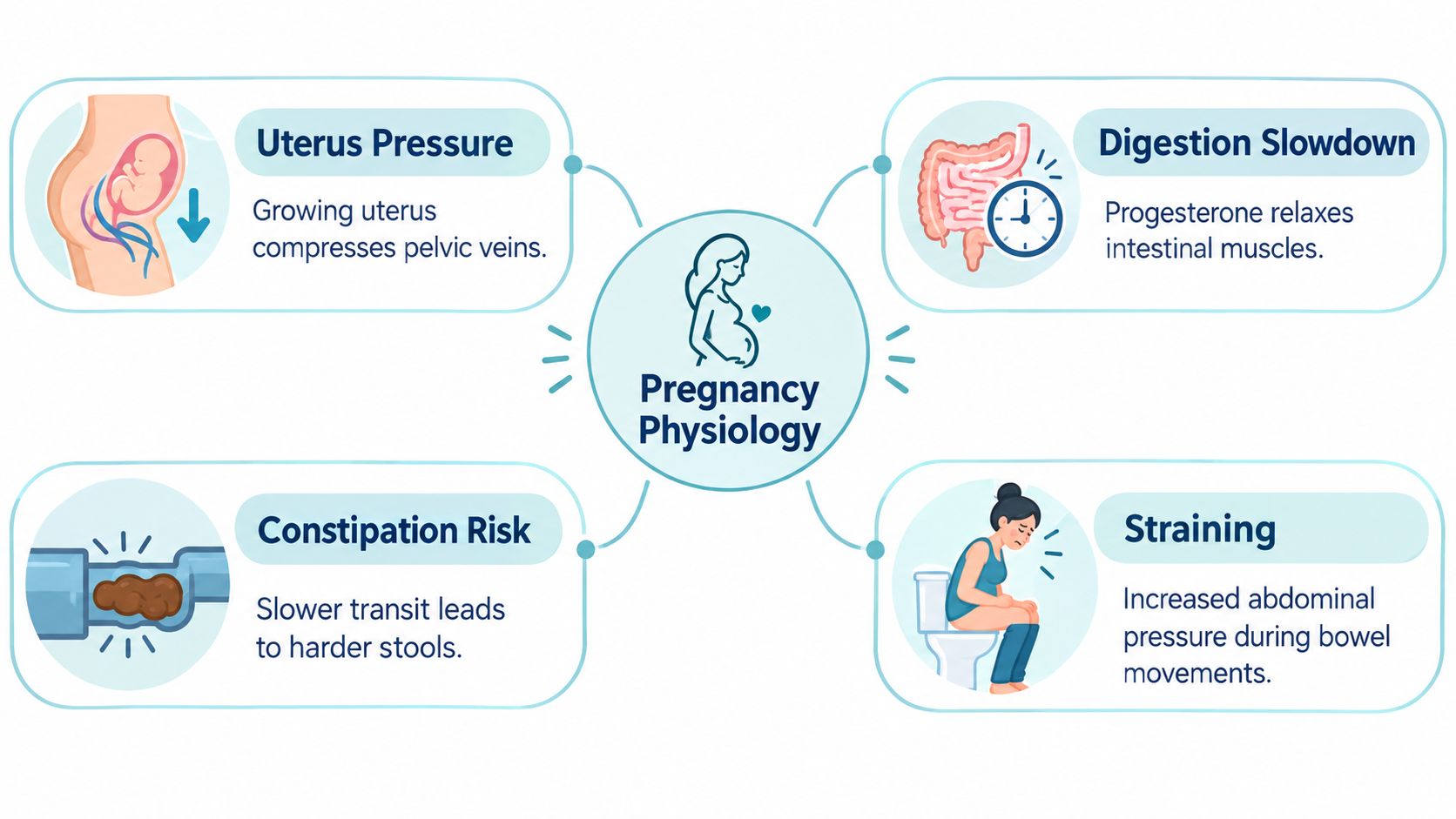
Pregnancy can affect the veins and bowel habits in several ways at once. As the uterus grows, it places pressure on veins in the pelvis. Blood then has a harder time moving back upward, much like traffic slowing when a road becomes crowded. The veins around the rectum can swell more easily.
Hormonal changes can also slow digestion. Slower movement through the bowel may make stools harder or less frequent. When a bowel movement takes more effort, pushing increases pressure around already-sensitive veins.
Childbirth can add another burst of pressure. That's one reason symptoms may appear or become more noticeable late in pregnancy and soon after delivery.
Hemorrhoids and related perianal disease affect many pregnant people. An NIH and PMC review estimated that 25% to 35% of pregnant women are affected, while some populations reported rates as high as 85% in the third trimester. In a UK prospective cohort, 123 of 280 women, or 43.9%, developed peri-anal disease during pregnancy and the first postpartum month. The cohort included 114 women, or 40.7%, diagnosed with hemorrhoids, with timing clustering in the third trimester at 61% and after delivery at 34.1%.
Internal and external symptoms can feel different
Internal hemorrhoids may cause pressure, itching, or bleeding during a bowel movement without a noticeable lump outside the anus. External hemorrhoids can cause tenderness, swelling, or a sore lump that hurts when you sit or wipe.
Symptoms can overlap with an anal fissure, which is a small tear that may cause sharp pain during or after a bowel movement. Because rectal bleeding has several possible causes, don't assume every episode is a hemorrhoid. Mention bleeding to your healthcare provider, especially if it continues or becomes heavier.
Practical rule: Treat constipation and irritation early, but don't self-diagnose persistent pain or bleeding.
Prevention Habits That Reduce Pressure and Straining
The foundation of hemorrhoid treatment while pregnant is often bowel regulation. Softer stools pass with less pushing, and less pushing means less pressure on swollen tissue.
A practical daily routine includes the following:
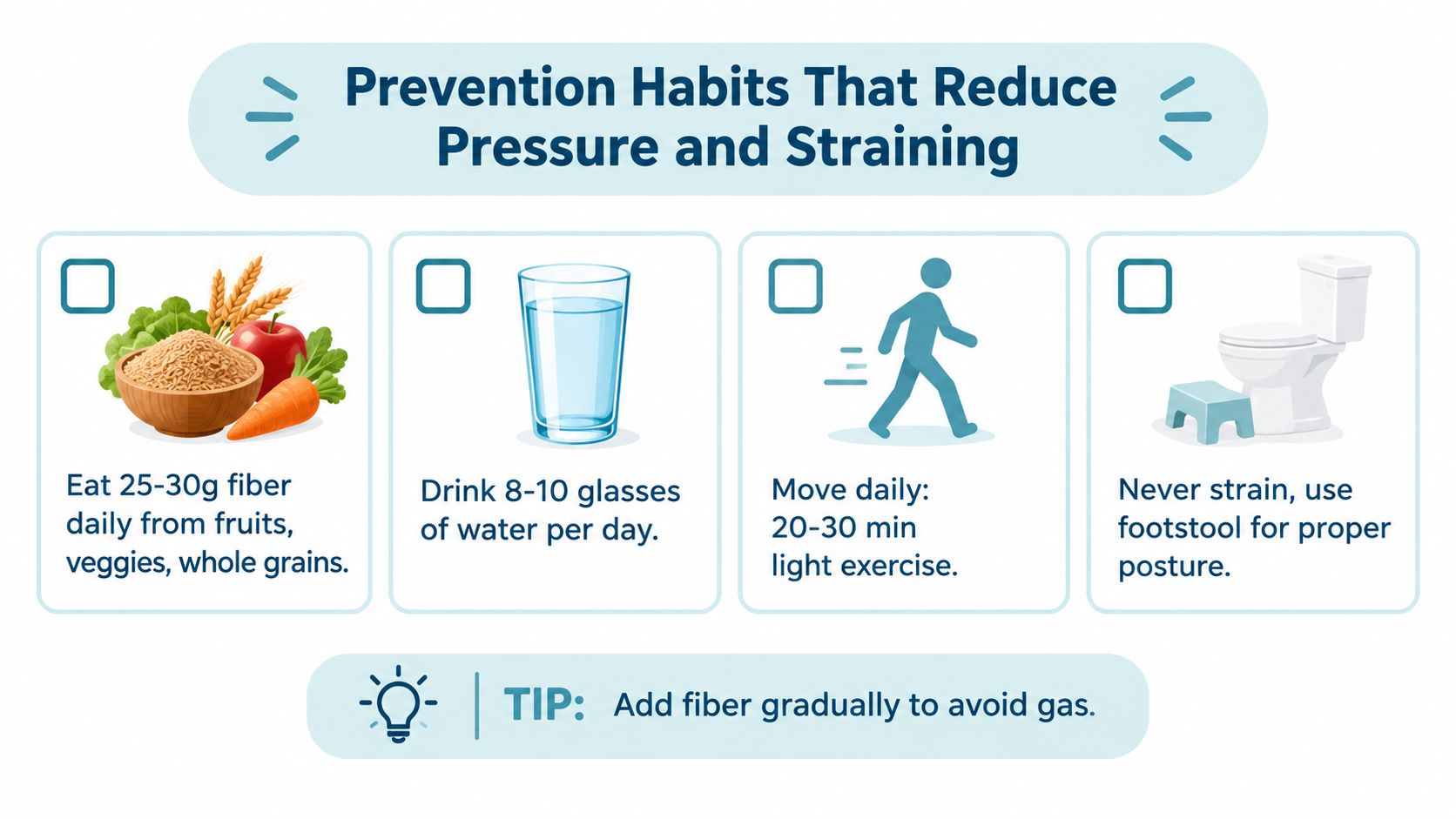
- Aim for fiber: Pregnancy guidance recommends 25 to 30 grams of fiber daily, including fruit, vegetables, beans, and whole grains. Add fiber gradually if your current diet is low in it, since a sudden increase can cause gas or bloating. Cleveland Clinic guidance provides these pregnancy-specific targets.
- Drink regularly: The same guidance recommends 8 to 12 cups of water daily. Spread fluids across the day rather than waiting until you feel very thirsty.
- Move gently: Short walks and pregnancy-appropriate activity can support digestion. Ask your provider what movement is suitable for your pregnancy.
- Use a relaxed toilet position: Keep your feet supported, lean slightly forward, and let your abdomen relax. Don't force a bowel movement or stay on the toilet longer than needed.
- Break up sitting: Change position regularly if you work at a desk or spend much of the day sitting. Long periods of sitting or standing can increase discomfort.
- Clean without rubbing: Rinse with water when possible, pat dry, and avoid harsh wiping or heavily fragranced products.
If diet and fluids aren't enough, ask your healthcare provider or pharmacist whether a stool softener or laxative is appropriate. Pregnancy guidance recommends checking with a provider before using either.
For external cleansing after a bowel movement, Revivol-XR® Hygienic Cleansing Lotion, Gentle Relief + Soothing Aloe & Witch Hazel for “Down-There” Sensitive Areas can be applied in a dime-sized amount to toilet paper. Its listed ingredients include aloe, witch hazel, chamomile, mineral oil, and vitamin E. It's for external use only, so avoid the eyes and stop if irritation occurs.
Use this pregnancy hemorrhoid prevention guide to turn these habits into a simple routine.
Gentle At Home Relief for Itching Burning and Swelling
When discomfort is already present, start with measures that soothe the area without adding unnecessary ingredients.
A warm sitz bath can relax the area and provide temporary comfort. Use comfortably warm water, not water hot enough to make you feel faint or overheated. Sit for a short period, then pat the skin dry instead of rubbing. A clean bathtub or sitz-bath basin matters because irritated tissue can react to residue or fragrance.
Witch hazel pads may calm itching and tenderness for some people. A cool compress wrapped in a clean cloth can also reduce the feeling of swelling. Never place ice directly on the skin, and stop any product that causes stinging, rash, or worsening irritation.
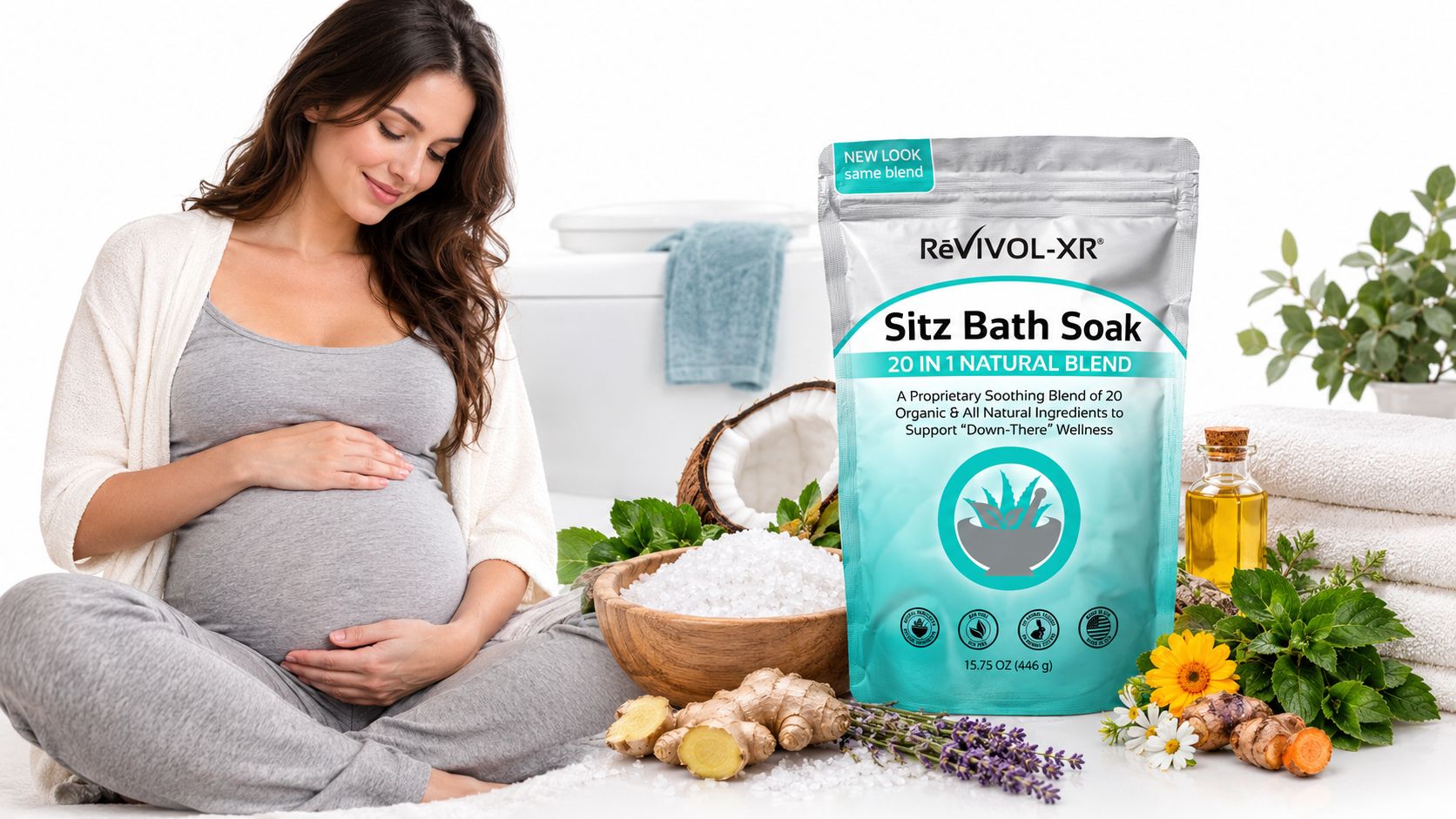
The Revivol-XR® Sitz Bath Soak Mix, Super Concentrated 20-in-1 Blend with Epsom Salt & Essential Oils contains Epsom salt, Dead Sea salt, baking soda, witch hazel, aloe vera, chamomile oil, calendula oil, and other listed botanical ingredients. Because it includes essential oils, follow the product directions, patch test first, and ask your healthcare provider before use during pregnancy, particularly if you have sensitive skin or known allergies. It's for external use only and shouldn't be swallowed.
Make relief easier to maintain
Keep cleansing supplies and a clean cloth near the bathroom. Rinse gently after bowel movements when possible, and avoid scrubbing with dry toilet paper. Resting on your side may feel more comfortable than sitting directly on a sore area.
The Mayo Clinic pregnancy guidance notes that OTC creams and suppositories, witch hazel pads, warm sitz baths, and topical anesthetics may provide symptomatic relief. Topical products generally have limited systemic absorption, but pregnancy-specific evidence isn't equally strong for every ingredient.
Avoid codeine unless your provider specifically tells you otherwise, because it can worsen constipation. Ibuprofen is also generally avoided during pregnancy unless a clinician advises it.
For detailed setup and hygiene steps, see how to do a sitz bath at home.
Understanding Safe OTC Options and Ingredients While Pregnant
OTC products aren't all interchangeable. A cream, pad, spray, or suppository may suit a different symptom pattern, and the ingredient list matters more than the packaging language.
A topical anesthetic such as lidocaine is intended to temporarily numb discomfort. Witch hazel may soothe irritated external skin. Aloe and protectants can help reduce friction and support a more comfortable skin barrier. Vasoconstrictors, including phenylephrine in some hemorrhoid products, are intended to reduce swollen tissue, but pregnancy safety and suitability should be discussed with a healthcare provider or pharmacist.
Evidence also has limits. A 2023 retrospective review concluded that fiber supplements, stool softeners, and mild laxatives are generally safe, while topical medications and oral phlebotonics should be used with special caution because strong pregnancy safety and efficacy evidence is lacking. Flavonoids aren't supported when pregnancy safety data are insufficient, as described in the review indexed by PubMed.
Most pregnant patients receive conservative or topical care rather than a procedure. A nationwide Taiwan cohort reported that 93.2% used topical ointments, 31% used oral medication, and 1.8% required a procedure or surgery in the study population, as reported in the PubMed record.
| Situation | Comfort Approach to Discuss | Caution Note |
|---|---|---|
| Itching or external irritation | Witch hazel pads, gentle cleansing, or a simple protectant | Stop if burning, rash, or dryness develops |
| Sharp surface pain | Ask about a topical anesthetic such as lidocaine | Confirm the product and duration with a provider |
| Swelling or pressure | Warm sitz baths and bowel regulation | Ask before using a vasoconstrictor-containing product |
| Constipation with hemorrhoids | Fiber, fluids, stool softener, or mild laxative | Check with your provider before medication |
| Internal symptoms | Discuss whether a cream or suppository is suitable | Don't assume internal bleeding is from hemorrhoids |
Read the full label, use the smallest amount directed, and avoid combining several medicated products without professional advice. For a closer look at formats and ingredients, see this guide to OTC hemorrhoid treatment during pregnancy.
Postpartum Recovery and Ongoing Hemorrhoid Care
Delivery doesn't always end the problem immediately. Pushing during labor, temporary swelling, reduced movement, and changes in bowel habits can keep symptoms active after birth.
Continue the bowel habits that helped during pregnancy. Keep fluids available while feeding or caring for your baby, choose fiber-rich foods, and avoid sitting on the toilet for a long time. If bowel movements hurt, ask your doctor about a stool softener rather than waiting until constipation becomes severe.

Gentle hygiene can make the postpartum period more manageable. Warm sitz baths, witch hazel pads, and careful patting instead of harsh wiping are commonly recommended. WebMD's postpartum hemorrhoid guidance advises discussing stool-softening support with a doctor to make bowel movements less painful.
Protect recovery while caring for a newborn
Set up a small care station near the bathroom with water, clean cloths, and any provider-approved products. Side-lying rest may reduce pressure when sitting feels uncomfortable. If you had stitches, tearing, or another delivery-related concern, ask your maternity care team how to coordinate anal care with wound care.
Many postpartum symptoms settle with consistent conservative support, but improvement shouldn't be assumed if bleeding or pain continues. Your provider can help distinguish hemorrhoids from an anal fissure, infection, or another cause.
When to Contact Your Healthcare Provider
Persistent constipation deserves attention because it can keep restarting the cycle of hard stools, straining, and irritation. A 2024 NIH review found constipation was common throughout pregnancy and postpartum, rising to 57.6% in the third trimester and remaining present after delivery. A pregnancy cohort reported anal symptoms in 50% during pregnancy, 56.2% immediately postpartum, and 62.9% at three months postpartum.
Contact your healthcare provider if you have rectal bleeding, especially if it keeps returning, becomes heavy, or occurs with other symptoms. Seek prompt advice for severe pain, fever, signs of infection, a rapidly worsening lump, dizziness, or symptoms that don't improve with consistent conservative care.
Bleeding deserves a professional assessment even when hemorrhoids seem likely. A provider may ask about stool consistency, straining, pain timing, the amount and color of blood, and whether symptoms began during pregnancy or after delivery.
Before the appointment, write down:
- Bowel pattern: Note whether stools are hard, difficult to pass, or less frequent than usual.
- Pain pattern: Record whether pain occurs during a bowel movement, afterward, or while sitting.
- Bleeding: Note when it happens and whether it is increasing.
- Products used: List creams, pads, laxatives, stool softeners, and supplements.
- Pregnancy or postpartum details: Include how far along you are or how recently you delivered.
Procedures are uncommon during pregnancy and are generally reserved for people who don't improve with conservative measures. Don't start a procedure, oral medication, or stronger topical regimen without speaking with your healthcare provider.
Revivol-XR offers external cleansing support with aloe and witch hazel, along with a sitz bath soak option for soothing comfort around pregnancy and postpartum hemorrhoid irritation. Visit Revivol-XR to review the products, follow label directions, and discuss any pregnancy or bleeding concerns with your healthcare provider.