Best Hemorrhoid Medicine: A Practical OTC Guide

Shoppers often grab the strongest tube on the shelf, hoping it will silence the pain before dinner. Yet the wrong hemorrhoid medicine can waste a week and leave the underlying issue untouched.
| Format | What it's good for | Main trade-off |
|---|---|---|
| Cream or ointment | External pain, itch, burning, swelling | Easy to overuse, doesn't fix constipation |
| Spray | Touch-free relief when wiping hurts | Less familiar, directions vary by label |
| Suppository | Internal symptoms and swollen tissue | Not ideal for every flare, still temporary |
| Pads or wipes | Cleaning after bowel movements, soothing surface irritation | Comfort aid, not a stand-alone fix |
Table of Contents
- What Shoppers Need From a Hemorrhoid Medicine
- The Four Jobs OTC Hemorrhoid Medicines Do
- Creams, Sprays, Suppositories, and Pads Compared
- Reading the Drug Facts Label Like a Pharmacist
- Safety Considerations for Pregnancy, Postpartum, and Older Adults
- Matching the Product to Your Symptom Pattern
- Why the Best First Move May Not Be a Topical Medicine
- A Practical Decision Framework and When to Stop Self-Treating
What Shoppers Need From a Hemorrhoid Medicine

A person in the drugstore aisle wants relief, plain and simple. The itch needs to ease, the burning needs to settle, and the next bowel movement should not feel like another setback.
Pick the best hemorrhoid medicine for the symptom in front of you, use it only within the label's time window, and stop before irritation builds. The American Society of Colon and Rectal Surgeons notes that prolonged exposure to topical anesthetics, steroids, antiseptics, and similar ingredients can lead to allergic reactions or sensitization, and it finds no evidence for long-term usefulness of these combinations [ASCRS guideline].
Practical rule: buy for symptom coverage, not for permanent hemorrhoid repair.
A useful OTC product does one or more of four things. It numbs pain, calms itching, reduces swollen tissue for a while, or coats irritated skin so wiping and sitting sting less. If the active ingredient does not match the symptom, it is the wrong pick.
NIDDK generally advises trying OTC creams, ointments, or suppositories for about a week, then getting medical advice if symptoms persist, worsen, or cause rash or dryness. That keeps hemorrhoid medicine in the right role, a short trial, not a maintenance plan [NIDDK guidance].
Branding matters less than fit. A product that claims to handle pain, itch, and swelling can be more useful than a single-purpose tube, but only if you keep exposure controlled and stop when the label says stop. The product should support recovery, not hide a bigger issue.
The Four Jobs OTC Hemorrhoid Medicines Do
Numbing, shrinking, coating, and soothing
The shelf looks crowded because the ingredients do different jobs. Once you know those jobs, the labels are easier to compare.
Local anesthetics such as lidocaine and pramoxine give temporary numbness. Pick them when pain, burning, or itching is the main complaint. They do not shrink tissue or fix the problem underneath. Under the FDA OTC anorectal framework, lidocaine may be used at 2% to 5% [FDA OTC anorectal rules].
Vasoconstrictors like phenylephrine hydrochloride 0.25% temporarily reduce swollen hemorrhoidal tissue. That makes them a sensible choice when pressure and swelling are the main problems, but the relief is still temporary, and the label limits how often you can use them.
Protectants such as glycerin, petrolatum, and zinc oxide coat irritated skin and help keep wiping from scraping it raw. They are plain products, but they earn their place after bowel movements and any time the area keeps getting reopened by friction.
Astringents, especially witch hazel, calm and protect irritated anorectal skin. Under the FDA framework, witch hazel may be used at 10% to 50%.
If you want one product that covers more than one symptom, Revivol-XR® Advanced Hemorrhoid Cream - 5% Lidocaine + Phenylephrine (Vasoconstrictor) - Fast Relief of Burning, Itching, Discomfort combines 5% lidocaine, 0.25% phenylephrine, and skin protectants. That makes sense when pain, itch, and swelling show up together, as long as you stay within the label directions.
Stronger is not the point. Match the ingredient to the symptom that is bothering you most right now.
Creams, Sprays, Suppositories, and Pads Compared
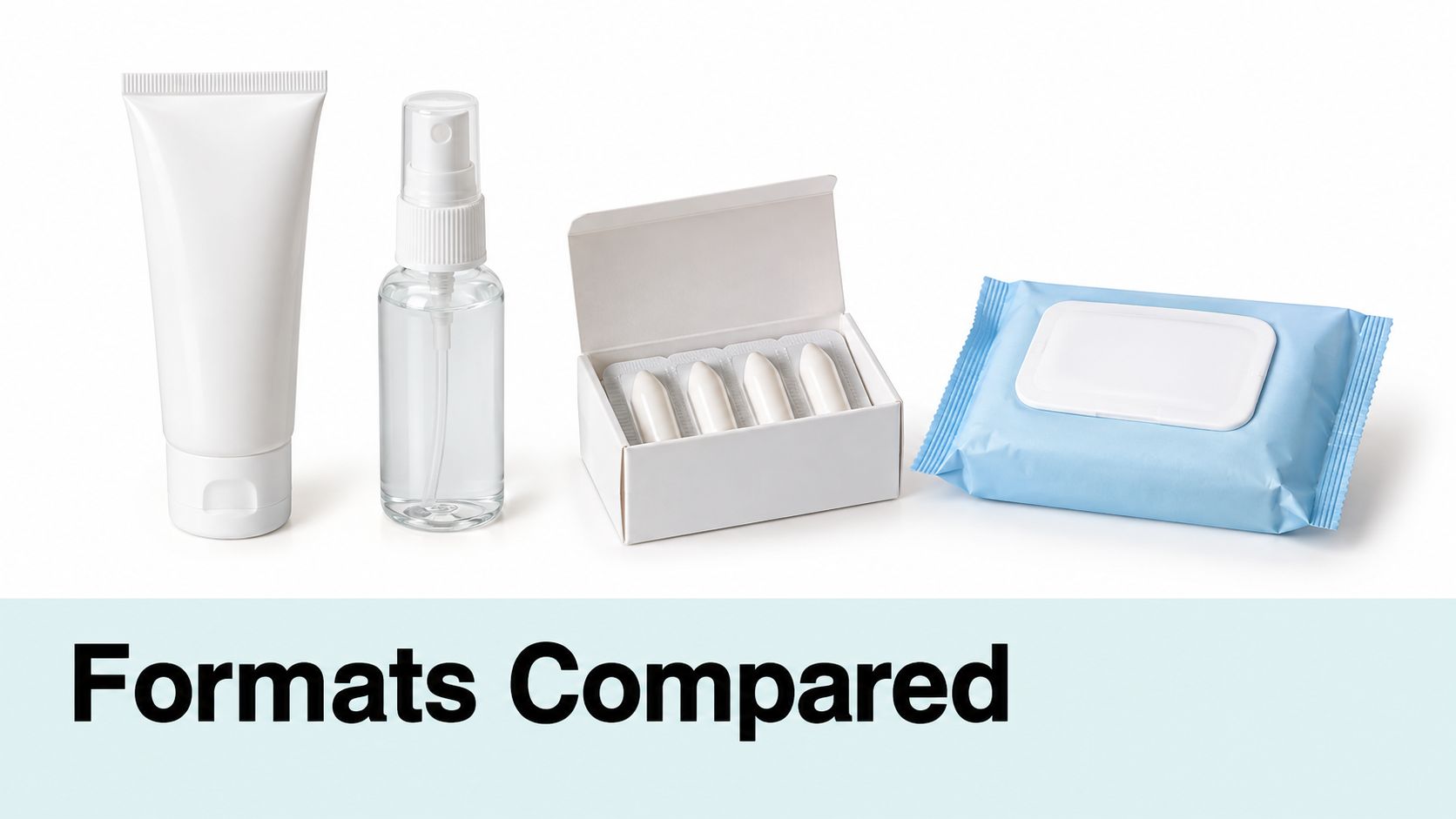
Creams and ointments for external flare-ups
Creams and ointments are the easiest choice for many people because they're familiar and direct. If the pain is on the outside, or the itching is what wakes you up, this is usually the first format worth trying.
They also make the most sense when you want to pair medicine with a warm soak or careful cleansing. The downside is obvious. They can be overused because they're easy to reach for, and they don't solve internal swelling or recurrent constipation.
Suppositories for internal symptoms
Suppositories matter when the discomfort feels deeper or the swelling seems internal. They're useful for short-term symptom relief when an external cream can't reach the area you're trying to calm.
That said, suppositories still don't replace bowel habits, and they don't make prolapse or another diagnosis disappear. They're a tool for symptom control, not a signal that the problem is solved.
Sprays and pads when touching the area hurts
Sprays are helpful when wiping or finger application is the last thing you want. Pads and wipes with witch hazel can be gentler after a bowel movement, especially when the skin already feels scraped and raw.
If the day is packed, or you're trying to manage symptoms at work or while traveling, these formats can be easier to use consistently than a tube. Consistency matters more than gadgetry.
The practical move is to match format to friction. External pain leans toward creams, internal pressure leans toward suppositories, and cleansing support leans toward pads or wipes.
Reading the Drug Facts Label Like a Pharmacist
Start with the active ingredient, not the front panel
Front labels sell comfort. The Drug Facts panel tells you what the product really does.
Read the active ingredient first, then the strength, then the directions. Under the FDA OTC anorectal framework already cited, lidocaine may appear at 2% to 5%, phenylephrine HCl at 0.25%, and witch hazel at 10% to 50%. Those numbers tell you whether a product is aimed at numbing, shrinking, or soothing. A stronger lidocaine formula is not automatically the right pick, and using it more often does not make it safer.
Watch the steroid line carefully
Some products add hydrocortisone for short-term flares of redness and swelling. That can help for a brief stretch, but it should not become a daily habit.
The American Society of Colon and Rectal Surgeons warns that prolonged use of topical steroids can lead to allergic reactions or sensitization, and it does not support long-term use of these combinations [ASCRS guideline].
Label rule: if the directions say stop after a short window, stop after a short window.
Soothing extras like aloe or witch hazel can make a formula feel gentler, but they do not change the main purpose of the medicine. Scan the active ingredients first, then decide whether the extras are worth paying for.
For a practical ingredient comparison, see ingredients in Preparation H cream.
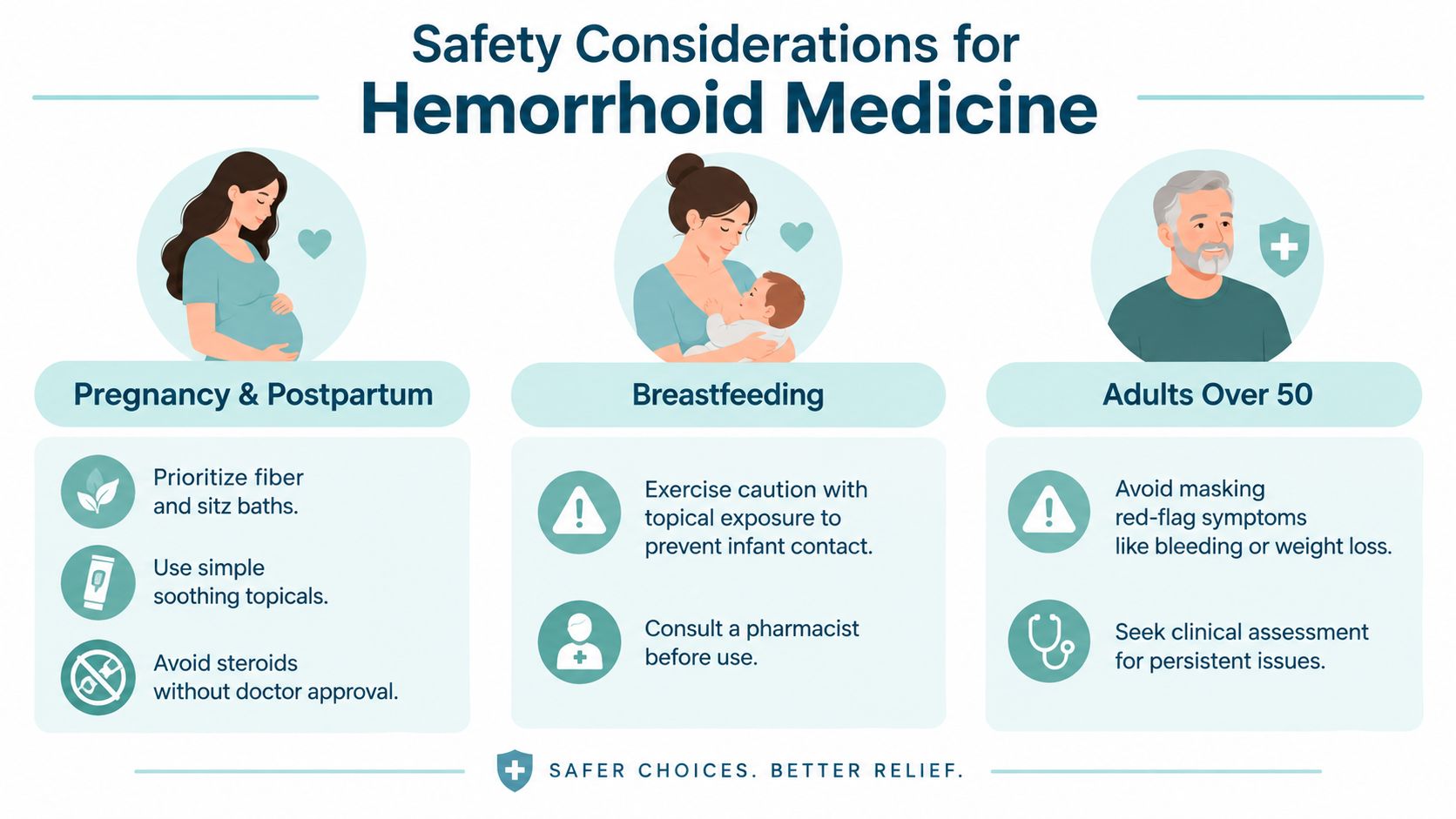
Safety Considerations for Pregnancy, Postpartum, and Older Adults
Pregnancy and postpartum need a simple stepwise plan
Pregnancy and the weeks after birth call for more care than a package label can give you. Start with non-drug measures, then use a topical product only if symptoms persist. The 2025 NHS Specialist Pharmacy Service review says no hemorrhoid preparation is specifically licensed for pregnancy [NHS SPS review]. For a full walkthrough, see OTC hemorrhoid treatment during pregnancy.
The same review notes that simple soothing products may pose less potential risk than products containing corticosteroids or local anesthetics. That does not make them harmless, it just makes them the cleaner first choice when you need short-term relief.
If you are pregnant or breastfeeding, keep it plain. Use fiber, hydration, and gentle cleansing first. If you still need a topical product, choose the simplest option that matches the symptom, then check with a pharmacist or OB before you start using it routinely.
Postpartum bleeding isn't something to shrug off
Ongoing postpartum symptoms can come from hemorrhoids, but they can also come from a fissure, thrombosis, prolapse, or something else entirely. Persistent pain or bleeding deserves a proper look instead of automatic self-treatment.
Revivol-XR® Sitz Bath Soak Mix – Super Concentrated 20-in-1 Blend with Epsom Salt & Essential Oils – 15 Soaks – USP Grade is one example of a soak product aimed at external comfort, but it still belongs in symptom relief, not in proving the cause is harmless.
Older adults need a lower tolerance for delay
Adults over 50 should be stricter about ongoing bleeding, bowel changes, or a new painful lump. Repeated OTC use should not become a way to delay assessment when symptoms are not acting like a routine hemorrhoid flare.
If the blood is darker, brown, black, or mixed with stool, do not assume it is a hemorrhoid. Persistent symptoms need evaluation, not a bigger bottle.
Matching the Product to Your Symptom Pattern
Use the symptom, not the brand, to make the pick
Sharp pain and burning call for a numbing product first. That's where a 5% lidocaine cream makes sense, especially if wiping or sitting is the worst part of the day.
Itching with mild swelling usually points toward phenylephrine plus a soothing surface product. In that setting, a cream with a vasoconstrictor and a witch hazel pad after bowel movements is a cleaner fit than stacking random products together.
Internal swelling that seems to slip out and then go back on its own points toward a short-term suppository approach. That's a format choice, not a sign that you should keep escalating strength every day.
Don't stack ingredients just because the shelf allows it
More product isn't better. Two vasoconstrictors at once, or a numbing cream layered over a steroid without a clear reason, can add irritation without adding much relief.
Simple rule: one main symptom, one main ingredient job, one short trial.
If the flare is severe, a brief sitz bath can help keep the area cleaner and less reactive while the medicine does its job. The point is to lower friction, not to flood the area with every soothing ingredient in the aisle.
When bleeding is active or pain keeps building after about a week, stop the experiment. The medicine isn't supposed to outrun a diagnosis.
Why the Best First Move May Not Be a Topical Medicine
The common mistake is treating the cream as the whole plan. Hemorrhoids and fissures keep coming back when constipation, straining, and toilet habits stay untouched.
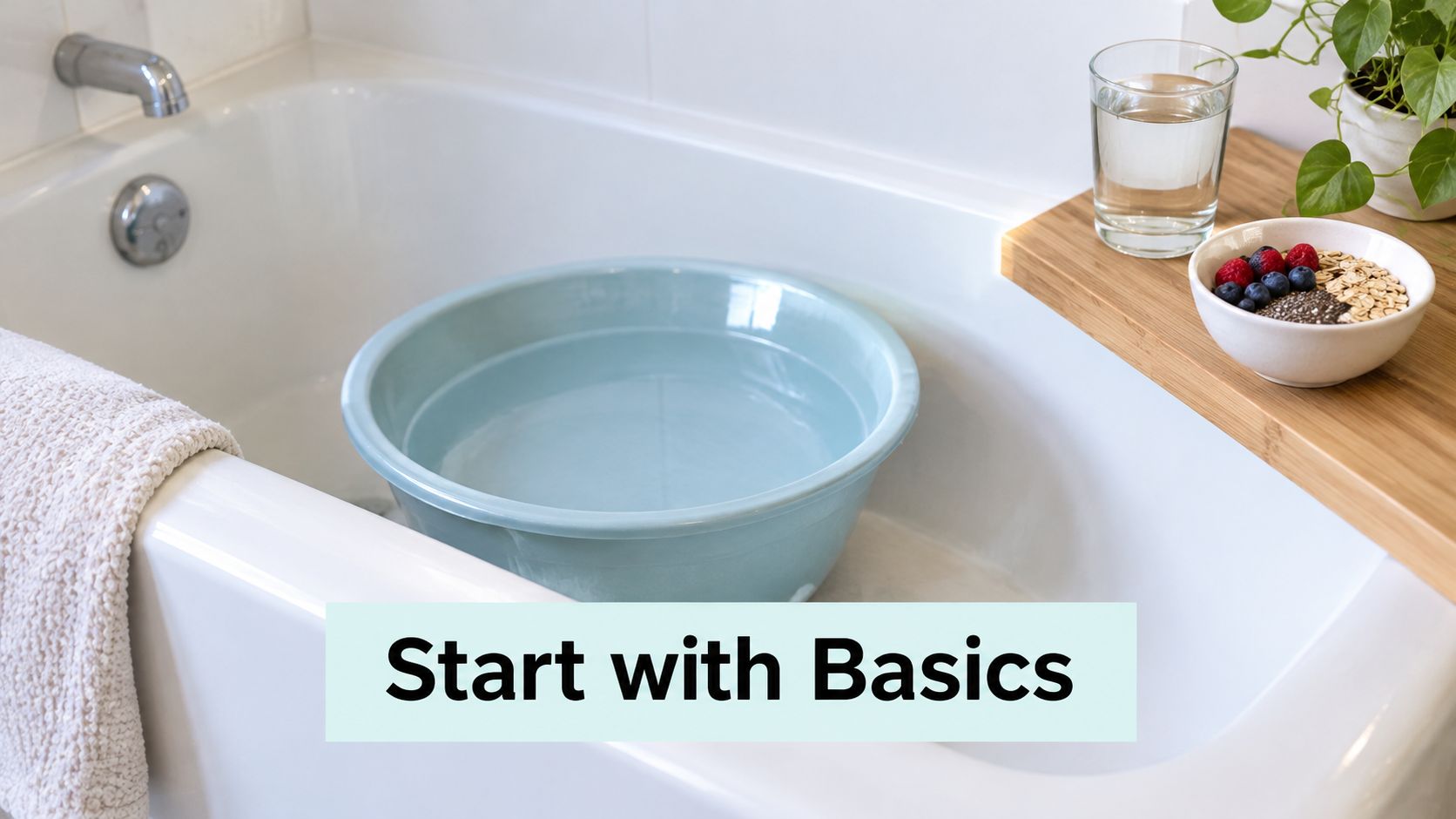
A better short-term reset is boring but effective. Pair the OTC product with fiber, hydration, gentler cleansing, and a sitz bath routine for a few days. For straining control, this practical guide to how to avoid straining during bowel movements fits the same logic.
Build the 7-day reset around comfort
- Add fiber and fluids: bulk and soften stool so the next bowel movement doesn't keep reopening the area.
- Use the medicine only as labeled: treat the symptom, then stop when the directions say stop.
- Choose gentler cleansing: wipe less aggressively, and use witch hazel pads or a soothing cleanser if plain toilet paper stings.
- Try warm sitz baths: keep the area calm and clean without rubbing it raw.
That routine won't cure anything overnight. It does make the day-to-day less miserable while you see whether the flare settles.
If symptoms keep returning, prevention is the actual conversation. Another tube of cream doesn't fix repeated straining.
A Practical Decision Framework and When to Stop Self-Treating
Use this order every time
Start with the symptom. Pain calls for numbing, swelling for a vasoconstrictor, irritated skin for a protectant or soothing astringent, and internal discomfort for a suppository.
Then match the format to the problem. Creams are easiest for external flares, sprays help when touching the area hurts, suppositories fit internal symptoms, and pads make sense after bowel movements.
After that, respect the label. Use the product only for the short trial window on the package. As noted earlier, the ASCRS guideline finds no evidence for long-term utility of these topical combinations, and NIDDK advises getting medical advice if symptoms persist or worsen after a brief self-care trial [NIDDK guidance].
Stop self-treating if any of this happens
- Rectal bleeding: especially if it keeps happening or looks unusual.
- Severe or worsening pain: pain that ramps up does not belong in the self-care bucket.
- No improvement after about a week: the label trial is over.
- Fever, anemia symptoms, or weight loss: these need a clinician's look.
- A changed bowel pattern or a painful lump that will not go away: stop guessing.
Adults over 50 should treat those signs with extra caution. Repeated OTC use can hide a problem long enough to make it harder to catch.
Use the medicine for short-term relief. Use habits to prevent the next flare. Use a clinician when the pattern stops looking routine.
If you want a product that covers pain, itch, and swelling in one OTC formula, visit Revivol-XR and compare it against your symptoms. It is meant for temporary soothing relief, and it fits best when you want a straightforward cream, not a guess.