Witch Hazel Wipes: Benefits, Uses, and Safe Choices

Many people reach for witch hazel wipes when even the smallest amount of toilet paper feels like sandpaper against sore, swollen skin.
After childbirth, a bathroom trip can bring a new parent face to face with burning, itching, hemorrhoids, or tenderness around the perineum. For someone dealing with a flare-up during a long commute, the problem can feel just as immediate: the next bowel movement is already on their mind.
The right cleansing method can make daily care more comfortable, but witch hazel wipes are not a cure for every cause of anal pain.
Table of Contents
- What Witch Hazel Wipes Are and Why People Use Them
- How Witch Hazel Works as a Cleansing Ingredient
- Practical Uses for Hemorrhoid and Perianal Care
- Safety Checks for Pregnancy and Postpartum Use
- Comparing Witch Hazel Wipes With Other Relief Formats
- How to Choose the Best Witch Hazel Wipes
- Building a Soothing Care Routine That Works
What Witch Hazel Wipes Are and Why People Use Them
Witch hazel wipes are single-use, pre-soaked pads made for gentle external cleansing. Their key botanical ingredient comes from Hamamelis virginiana, a plant traditionally used as a topical astringent. Wipes intended for hemorrhoid care commonly contain a standardized 50% witch hazel active concentration, along with ingredients such as aloe, glycerin, water, and preservatives. You can review an example of the labeled formulation and directions through DailyMed's witch hazel wipe information.
The practical purpose is simple. A wipe can lift residue after a bowel movement, reduce the friction caused by dry toilet paper, and leave a temporary cooling or tightening sensation on external skin. That can be useful when the area feels tender, damp, itchy, or difficult to clean without rubbing.
It helps to separate comfort care from treatment. Witch hazel may soothe surface irritation, but it doesn't shrink hemorrhoids or repair a fissure by itself. If symptoms continue, a labeled hemorrhoid cream, another appropriate OTC product, or advice from a healthcare provider may be needed.
What the category tells us
Witch hazel wipes have a measurable commercial footprint in the United States Amazon market. A 2026 market snapshot estimated about 1.1 million searches during the prior 12 months, approximately $1.6 million in annual Amazon U.S. sales, and 125,000 to 150,000 units sold per year (Flapen market snapshot). The same snapshot reported that the top five brands captured 93% of clicks, which suggests that shoppers often face a concentrated category dominated by familiar names.
That history isn't accidental. A 2026 industry profile described Tucks as one of America's oldest and most recognized medicated wipe products, with a history extending more than a century. It also noted that modern Tucks pads contain 50% witch hazel, helping establish pre-moistened pads as a familiar delivery format for hemorrhoid and postpartum care (Rebel Converting industry profile).
The rest of this guide focuses on the questions labels often leave unclear, including pregnancy, postpartum stitches, product ingredients, and when wipes make more sense than creams or sitz baths.
How Witch Hazel Works as a Cleansing Ingredient
A witch hazel wipe can feel cooling or lightly tightening after contact with skin. That sensation comes from plant compounds with astringent properties. It is a surface effect, rather than evidence that the product is repairing damaged tissue.
Astringents interact with proteins at the skin's surface, which can temporarily change how the area feels. Clinical literature describes witch hazel as a commonly used ingredient for easing itching and irritation, while also noting that studies focused specifically on hemorrhoid use remain limited. It is more accurate to view witch hazel as a cleansing and short-term comfort ingredient than as a treatment that heals tissue (clinical review of hemorrhoid care).
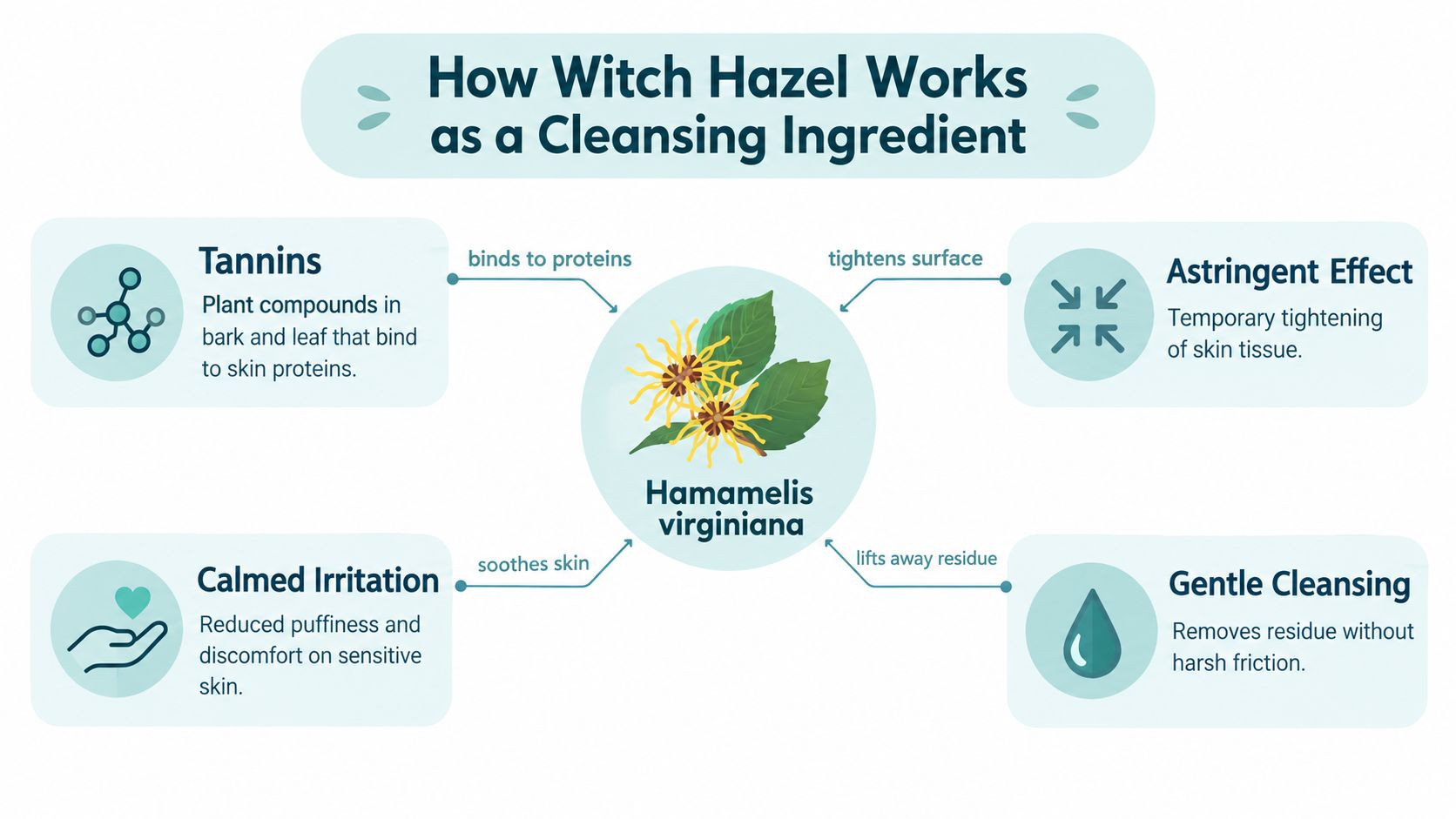
For a broader explanation of the ingredient, learn what witch hazel is good for beyond cleansing.
Why supporting ingredients matter
Repeated wiping can make sensitive skin feel dry or tight. Formulas may include aloe and glycerin to make cleansing feel less harsh, along with preservatives such as phenoxyethanol, potassium sorbate, or sodium benzoate to keep the product stable. The ingredient list matters because the whole formula, not witch hazel alone, determines how the wipe feels.
Plain water can remove residue without adding an astringent sensation. A witch hazel formula may feel more refreshing, while an aloe-focused option may feel more moisturizing. Fragrance, alcohol, preservatives, and botanical extracts can bother perianal skin during a flare or after childbirth, so simpler is often more comfortable for sensitive users.
Postpartum stitches deserve extra caution. A wipe designed for external skin should not be assumed suitable for fresh or tender stitches. Check the label, avoid applying pressure, and ask a healthcare provider or maternity-care professional before using a fragranced or astringent product near healing tissue. A sitz bath or plain-water rinse may be a better choice while the area is especially sensitive.
For people who prefer applying lotion to toilet paper rather than carrying pre-soaked pads, Revivol-XR® Hygienic Cleansing Lotion, a formulation with aloe, chamomile, coconut, and witch hazel offers another external cleansing format. Compare wipes, lotion, creams, and sitz baths by purpose: cleansing, moisture, targeted treatment, or water-based comfort.
Test the first application gently. Strong stinging, worsening itch, or persistent tightness means rinse with water, stop using the product, and seek professional guidance if needed.
Practical Uses for Hemorrhoid and Perianal Care
After a bowel movement, the area may feel sore, swollen, or difficult to clean without rubbing. Witch hazel wipes can help with external cleansing when used gently and externally. They are a finishing step, not a substitute for careful rinsing or medical treatment.
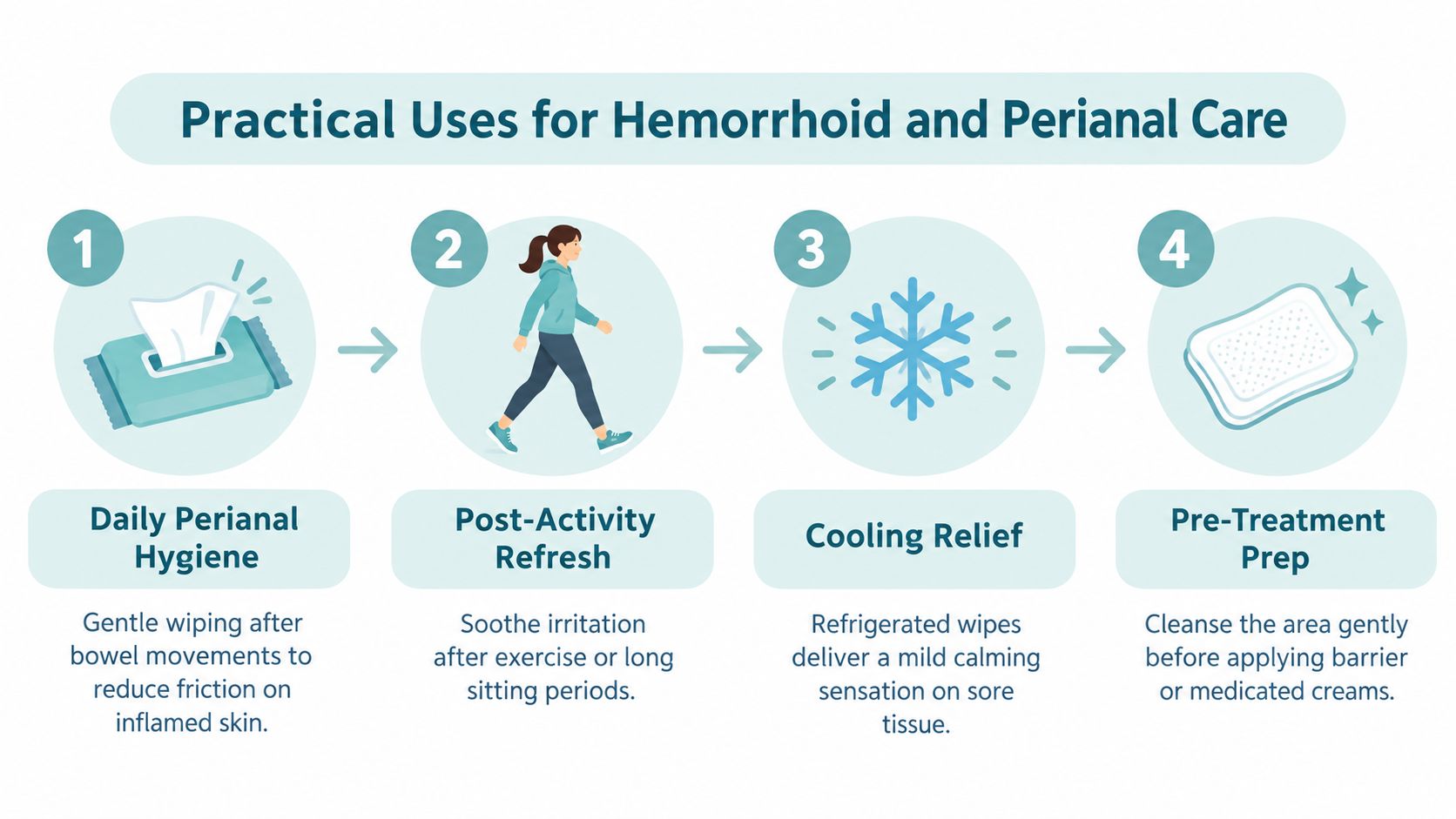
After a bowel movement
Let toilet paper remove most residue first, then dab or lightly pat the external skin. Move from front to back, avoid swollen tissue, and allow the area to air-dry briefly before dressing.
If the wipe stings or feels overly wet, reduce pressure or rinse with lukewarm water instead. The goal is less friction, not an intensely “clean” feeling.
During an external hemorrhoid flare
After bathing or rinsing, press a wipe gently against the external area for a short time. This may provide a cooling or astringent sensation. Prolonged soaking is unnecessary.
Some clinical guidance allows witch hazel-containing wipes up to 6 times daily or after each bowel movement, including before a topical hemorrhoid product (clinical review of hemorrhoid care). Check the product label because formulas and directions vary.
During postpartum recovery
A wipe may temporarily soothe external itching or burning after delivery, but fresh stitches and open wounds need a more cautious approach. Keep the wipe around, rather than directly on, healing tissue, and pat instead of dragging it across the area. If plain water feels more comfortable, use a rinse or sitz bath while the skin heals.
Before another topical product
If you plan to use a labeled hemorrhoid cream, cleanse the external skin first and let it dry. Apply the cream as directed. A wipe removes surface residue, but it does not clean inside the rectum and should never be inserted.
Choose the format that matches the task: wipes for portable cleansing, creams for labeled topical use, and sitz baths for water-based comfort. Discard each wipe after one use, reseal the package, and store it in a cool, dry place. Stop if discomfort worsens.
Safety Checks for Pregnancy and Postpartum Use
After delivery, a wipe can seem like an easy answer for soreness, itching, or hemorrhoids. Pregnancy and postpartum care still call for more than assuming that “natural” means safe. Witch hazel is a botanical astringent, and topical interactions generally aren't expected, but Cleveland Clinic's guidance on witch hazel wipes recommends consulting a clinician during pregnancy or while trying to conceive.
Start by identifying the tissue involved: external, intact skin versus open or broken skin. Postpartum guidance says witch hazel may temporarily ease itching or burning after birth, but it should not go directly on stitches or open wounds. There is also not enough evidence that it speeds healing (Boots postpartum witch hazel guide).
What to do around stitches
If your healthcare provider has approved external cleansing, pat the surrounding skin gently instead of wiping across sutures. Keep the pad on external skin near the area, avoid pulling or rubbing, and stop if it stings or increases irritation. Plain water, a rinse, or a sitz bath may feel more suitable while healing tissue remains sensitive.
For a focused explanation of product use during pregnancy, read this guide to witch hazel for hemorrhoids during pregnancy.
Hemorrhoids and anal fissures can occur around pregnancy and childbirth. A peer-reviewed review reports that these conditions affect about 40% of pregnant women and women during the postpartum period. It reports the highest occurrence in the third trimester at 61%, and during the first or second day after delivery at 34% (peer-reviewed pregnancy and postpartum review).
When to stop self-care
Many OTC labels advise stopping if bleeding occurs or symptoms do not improve within 7 days. Persistent bleeding, increasing pain, or concern about a wound should be assessed by a healthcare professional rather than managed with repeated wiping.
Seek medical advice promptly for fever, spreading redness, foul-smelling discharge, worsening pain, or signs that a tear or incision is opening. A wipe should not conceal symptoms that need examination.
If you add a sitz bath, follow its directions. Revivol-XR® Sitz Bath Soak Mix is described as an external bath-water additive containing Epsom salt, Dead Sea salt, witch hazel, aloe, and other listed ingredients. Its product information advises patch testing, avoiding swallowing it, and consulting a physician if irritation occurs or sensitive skin or essential-oil allergies are concerns.
Comparing Witch Hazel Wipes With Other Relief Formats
No single format wins in every situation. A person traveling may value a sealed wipe, while someone at home with a painful flare may prefer warm water and time to soak.
| Format | Comfort level | Portability | Best use scenario |
|---|---|---|---|
| Witch hazel wipes | Cooling, astringent surface comfort | High | After bowel movements, at work, or while traveling |
| Aloe wipes | More moisturizing feel for some users | High | Sensitive skin that prefers hydration over astringency |
| Sitz bath | Broad water-based soothing and cleansing | Low | Home care during a more uncomfortable flare |
| Barrier cream | Longer-lasting protective coating | Moderate | Skin that feels rubbed, damp, or exposed to friction |
| Hemorrhoid suppository | Intended for internal use when labeled | Moderate | Internal symptoms, not surface cleansing |
| Cleansing lotion on toilet paper | Adjustable moisture and less disposable material | High | Home or travel when you prefer a lotion format |
Witch hazel wipes are useful for quick external care, but they don't replace a sitz bath when warm water feels more comfortable, and they don't replace a labeled medication when pain, itching, or swelling persists.
A barrier cream can stay on the skin longer, although it may feel messy. A suppository has a different purpose and shouldn't be used as a substitute for cleaning the external area. For people who need to cleanse before applying a medicine, OTC lidocaine product labels commonly direct users to wash with mild soap and warm water, rinse thoroughly, and gently pat or blot dry before application (DailyMed lidocaine product directions).
For a targeted topical option, Revivol-XR® Advanced Hemorrhoid Cream with 5% lidocaine and 0.25% phenylephrine is labeled for temporary relief of pain, itching, burning, soreness, and discomfort, with glycerin and petrolatum as skin protectants. Use only as directed on its Drug Facts label, and ask a healthcare provider before use during pregnancy or breastfeeding.
A practical routine often looks like this:
- Morning or evening: Use a rinse or sitz bath when you have time.
- After bowel movements: Choose a wipe or cleansing lotion if gentle external cleaning is comfortable.
- Before bed: Apply a labeled cream or suppository if appropriate for your symptoms.
- During travel: Carry the format you can use discreetly without rubbing or delaying care.
For more detail on the role of pads in external cleansing, see this guide to witch hazel pads for hemorrhoid care.
How to Choose the Best Witch Hazel Wipes
A wipe may look simple on the shelf, but small differences can change how it feels against sensitive skin. Read the label before comparing package size. Focus on the active ingredient, inactive ingredients, physical texture, and directions for use.
Start with the formula
For hemorrhoid care, look for witch hazel or Hamamelis virginiana listed clearly as an active ingredient. A standardized 50% concentration is common in medicated hemorrhoid wipes, but that figure does not predict comfort by itself. Aloe and glycerin may make repeated cleansing feel easier, while fragrance or alcohol may bother reactive skin.
“Natural” describes an ingredient's source, not how every person will tolerate it. Witch hazel is botanical, and botanicals can still sting or trigger sensitivity. If scented personal-care products have caused reactions before, choose fragrance-free when possible and test a small area of external skin first.
Check the physical pad
Size and thickness affect whether a wipe stays intact and feels secure during use. Shopper feedback commonly mentions smell, size, and thickness, while an independent consumer testing review noted that tingling and strong scent can limit a product's versatility (Juno Mom product and testing overview).
A soft, cloth-like pad may need less pressure than a thin sheet. Residue does not require a rough texture to remove. If you have stitches, tears, or very tender tissue, choose a smoother pad and use light patting rather than rubbing. Stitches make the choice more personal: a wipe can offer convenient external cleansing, while a lukewarm sitz bath may suit a home setting. A cream serves a different purpose, so use one only when its label or your healthcare provider's advice fits your symptoms.
Inspect packaging and claims
A secure resealable lid helps keep the remaining pads moist and limits unnecessary air exposure. Select a product with a complete ingredient list instead of a vague proprietary blend.
The witch hazel wipes category is expanding, and market forecasts may indicate broader interest in formulas that combine witch hazel and aloe. Those projections describe the market, not how a particular wipe will feel on your skin. Let the formula, pad texture, packaging, and your own tolerance guide the decision.
Building a Soothing Care Routine That Works
Witch hazel wipes work best as one small part of a routine. The routine should protect the skin from repeated friction, keep bowel movements as comfortable as possible, and give you a clear point at which to seek help.
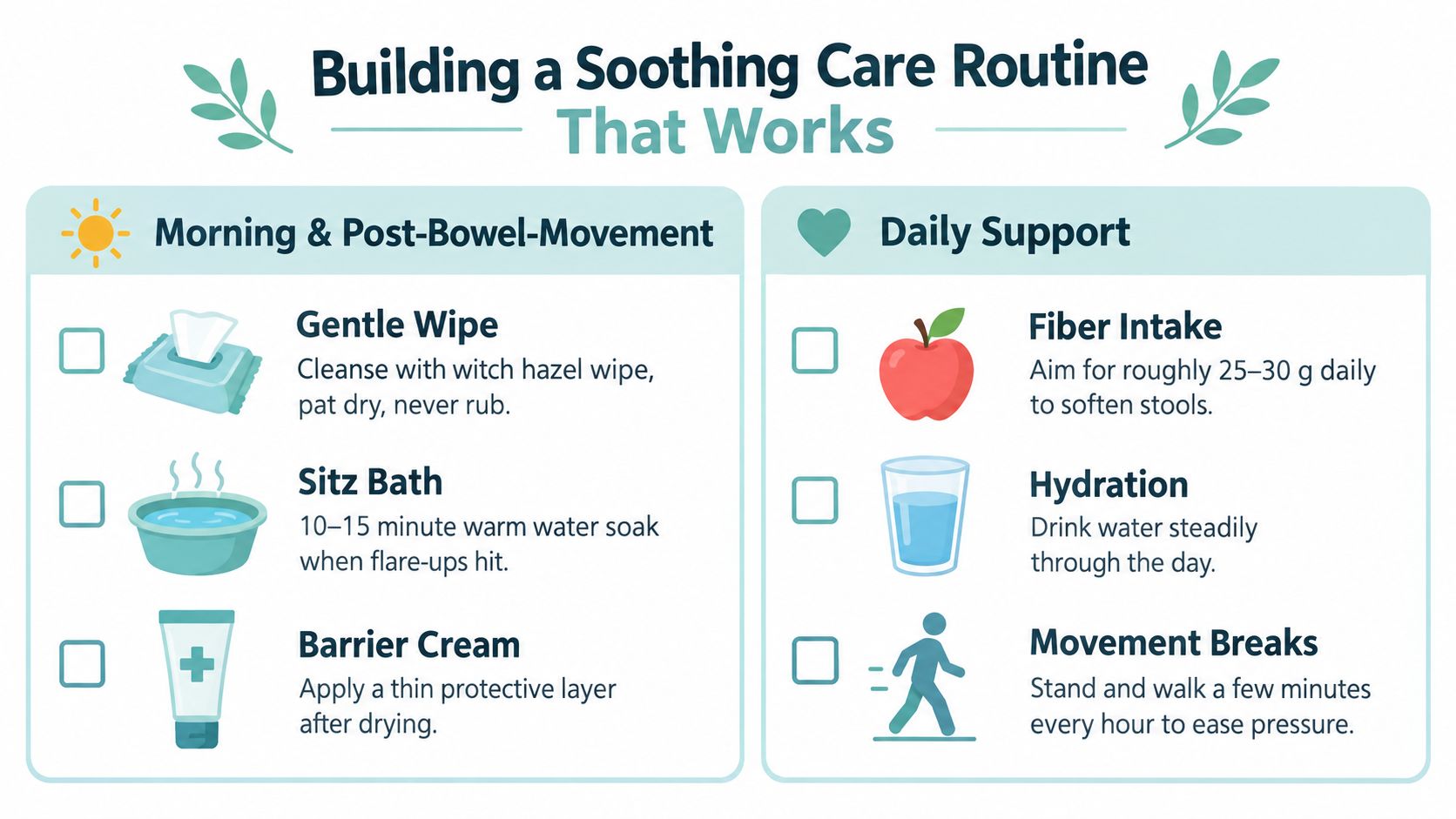
A simple daily flow
Begin with gentle cleansing after a bowel movement. Pat dry instead of rubbing, and wear breathable clothing that doesn't press tightly against the area. If you use a topical medicine, apply it only after cleansing and drying, and follow its label.
On a more uncomfortable day, use a sitz bath or lukewarm rinse at home and reserve witch hazel wipes for midday, work, or travel. If a wipe feels dry or irritating, switch to water or a plain cleansing format rather than forcing yourself to continue.
Constipation and straining can keep aggravating hemorrhoids and fissures. Supportive habits include steady hydration, fiber-rich foods, and regular movement, but sudden or severe digestive symptoms should be discussed with a healthcare provider.
Track what your skin is telling you
For one week, note when symptoms appear, what cleansing format you used, whether the product stung, and whether pain or bleeding changed. This simple record can help you identify whether witch hazel wipes are useful, neutral, or irritating.
Practical rule: Comfort should gradually become easier, not more painful, after cleansing.
Stop using a product if you develop a rash, stronger burning, increasing redness, or swelling. Contact a healthcare provider for persistent, severe, or bleeding symptoms, and don't wait if you develop fever, foul discharge, worsening postpartum wound pain, or another urgent concern.
Revivol-XR offers complementary options for this routine, including a cleansing lotion with aloe and witch hazel, a sitz bath soak, and an OTC hemorrhoid cream with lidocaine and phenylephrine. Visit Revivol-XR to compare those formats and choose the option that fits your symptoms, routine, and healthcare provider's advice.