Witch Hazel Pads for Hemorrhoids and Postpartum Care

Witch hazel pads are OTC soothing wipes containing 50% witch hazel extract that temporarily relieve itching and burning from external hemorrhoids and perineal soreness, but they aren't a standalone treatment for bleeding or severe cases. They can be a gentle first step after a bowel movement or during postpartum recovery, especially when wiping feels too painful.
Many discover them during an uncomfortable bathroom trip. A new mother may be sore, swollen, or worried about stitches. Someone with hemorrhoids may be avoiding the next bowel movement because toilet paper burns. In both situations, the need is simple: clean the area without friction and calm surface irritation without expecting one pad to solve the underlying problem.
Table of Contents
- What Witch Hazel Pads Actually Do
- The History Behind Witch Hazel Relief
- Witch Hazel Pads for Hemorrhoid and Postpartum Relief
- Pre-Made Pads versus DIY Witch Hazel Soaks
- How to Use Witch Hazel Pads Safely and Correctly
- Building a Complete Relief Plan Around Witch Hazel Pads
- Common Questions about Witch Hazel Pads
What Witch Hazel Pads Actually Do
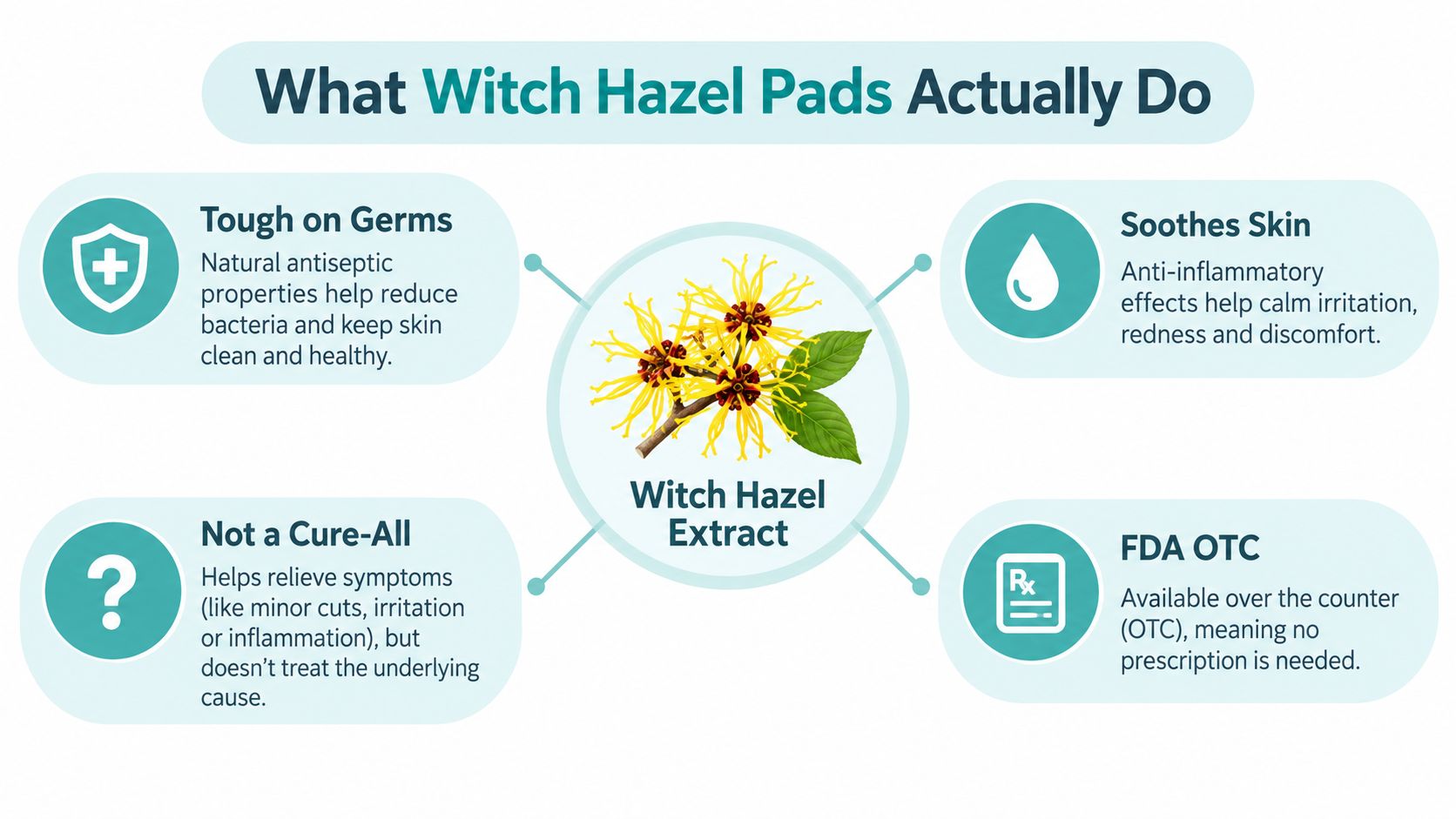
Witch hazel pads are moist topical pads used on external irritated tissue. OTC labels describe them as temporarily relieving the itching, burning, irritation, and discomfort associated with hemorrhoids, while helping protect irritated anorectal tissue. Many products use 50% witch hazel, making the active ingredient strength clear and repeatable rather than leaving shoppers to guess how much liquid is on a cotton pad. You can review an example of the FDA OTC product label for witch hazel pads.
That doesn't mean the pad cures a hemorrhoid, closes an anal fissure, or addresses significant bleeding. It provides temporary surface relief. Cleveland Clinic describes witch hazel as reducing inflammation and notes its use in wipe or pad form for minor rectal irritation, which helps explain why the format feels useful after a bowel movement.
Why the pad format feels gentler
A dry tissue can drag across swollen skin. A moist pad creates contact without requiring the rubbing motion that often makes irritation worse. You can use it as a wipe or hold it gently against the area as a moist compress, depending on the product directions.
Some formulations also contain glycerin, buffers, and preservatives. Glycerin may help limit post-application dryness, while stabilizers help maintain a moist product during storage and handling. Other postpartum-oriented products may include ingredients such as chamomile, tocopherol, or cooling adjuncts, so reading the label matters if your skin is sensitive.
Practical rule: Use witch hazel pads to make irritated tissue more comfortable, not to postpone evaluation of symptoms that are persistent, severe, or bleeding.
The safest mental model is straightforward. A witch hazel pad is a first-line soothing step for external discomfort. It may help with itch, burning, and minor irritation, but it isn't a complete plan for every hemorrhoid, fissure, or postpartum complication.
The History Behind Witch Hazel Relief
Witch hazel didn't begin as a modern bathroom product. EBSCO describes how Indigenous peoples of North America used the plant's bark, leaves, and twigs for wounds, insect bites, hemorrhoids, and digestive complaints. Those uses helped establish witch hazel as a practical botanical for irritated skin and other everyday problems.
European colonists later adopted the plant. In the 1840s, Theron Pond marketed an extract called Golden Treasure, helping move witch hazel from traditional use toward a broader commercial topical product. That history explains why the ingredient appears in familiar forms such as pads, ointments, and suppositories.
The story is useful, but it needs a boundary. Long use can explain why people continue reaching for witch hazel, yet tradition alone doesn't prove every modern claim. EBSCO also notes that studies validating many witch hazel claims remain limited. Modern OTC labels therefore focus on narrower outcomes, such as temporary relief of local itching, burning, irritation, and discomfort.
What history can and can't tell you
A postpartum parent may appreciate that a familiar botanical has been used for generations, particularly when the alternative is a harsh-feeling product. A person with hemorrhoids may also find the history reassuring when choosing between a simple pad and a complicated routine.
Still, the product's history doesn't answer the practical questions that matter most today:
- Where to apply it: Witch hazel pads are intended for external use.
- What to expect: Relief is temporary and focused on surface symptoms.
- When to stop: New or worsening irritation is a reason to discontinue use.
- When to seek help: Persistent, severe, or bleeding symptoms need a healthcare provider's assessment.
That balance keeps witch hazel in its proper place. It can be a useful comfort measure without turning an old remedy into a cure-all.
Witch Hazel Pads for Hemorrhoid and Postpartum Relief
The same pad can serve two different situations, but the routines aren't identical. With external hemorrhoids, the main challenge is often friction after a bowel movement, followed by itching, burning, or local discomfort. During postpartum recovery, the sensitive area may include perineal soreness, swelling, a tear, or stitches, so hygiene has to be especially gentle.
For hemorrhoid care, a moist pad can replace rough wiping or rest against the irritated area for a short period. Product directions commonly allow external use as a moist compress or wipe, with contact for up to 15 minutes, repeated as needed within label directions. See the DailyMed hemorrhoid pad directions for an example.
Postpartum use calls for more caution around healing tissue. A pad may feel soothing on external perineal soreness, but stitches and tears change the decision. Don't press, scrub, or insert the pad. If your maternity care team gave different instructions, follow those instructions before adding any OTC product.
| Context | Hemorrhoid Use | Postpartum Use |
|---|---|---|
| Main goal | Ease external itching, burning, and irritation | Reduce discomfort during gentle external hygiene |
| Useful timing | After bowel movements or when symptoms flare | After bathroom trips or when surface soreness feels aggravated |
| Application | Wipe gently or use as a moist compress | Place externally without rubbing or pressure |
| Main caution | Don't rely on it for persistent or bleeding symptoms | Ask your care team before use over stitches or tears |
| Realistic expectation | Temporary symptom relief | Comfort support during recovery, not treatment of the healing process |
A pad can make a bathroom trip less difficult, but it can't tell you why pain is happening.
Avoid layering several new products at once. If you add a fragranced wipe, cooling ingredient, cream, and witch hazel pad together, you may not know which product caused stinging. Start with one simple external measure, observe how your skin responds, and stop if discomfort increases.
Pre-Made Pads versus DIY Witch Hazel Soaks
Pre-made pads offer consistency. The product is already moist, packaged, and formulated with a stated active strength. That can matter when you're tired after childbirth or trying to manage discomfort discreetly at work. Preservative systems and buffers also help maintain stability in a moist format that is repeatedly exposed to air after opening.
The tradeoff is that commercial products may cost more per use and may include ingredients your skin doesn't tolerate. Labels can list glycerin, citric acid or sodium citrate, phenoxyethanol, potassium sorbate, parabens, menthol-related ingredients, chamomile, or tocopherol. None of those ingredients automatically makes a product unsuitable, but sensitive skin deserves a careful ingredient check.
When a DIY approach makes sense
Some people prefer a clean cotton pad and liquid witch hazel. That approach lets you control how damp the material feels and may reduce packaging. It also requires more attention to concentration, storage, hand hygiene, and contamination.
A homemade pad can become too wet, drip into areas you didn't intend to treat, or dry the skin if you repeatedly apply a strong astringent without monitoring your response. Avoid adding essential oils, fragrance, or random household ingredients to healing or irritated tissue.
For a different kind of warm-water comfort, follow this guide to doing a sitz bath at home. A sitz bath isn't interchangeable with a witch hazel pad, but it can fit into a broader gentle-care routine.
Choose pre-made pads when convenience and standardized formulation matter most. Consider a simple DIY option only when you can keep the preparation clean, the formula uncomplicated, and the application external. In either case, the skin's response is more important than loyalty to a particular format.
How to Use Witch Hazel Pads Safely and Correctly
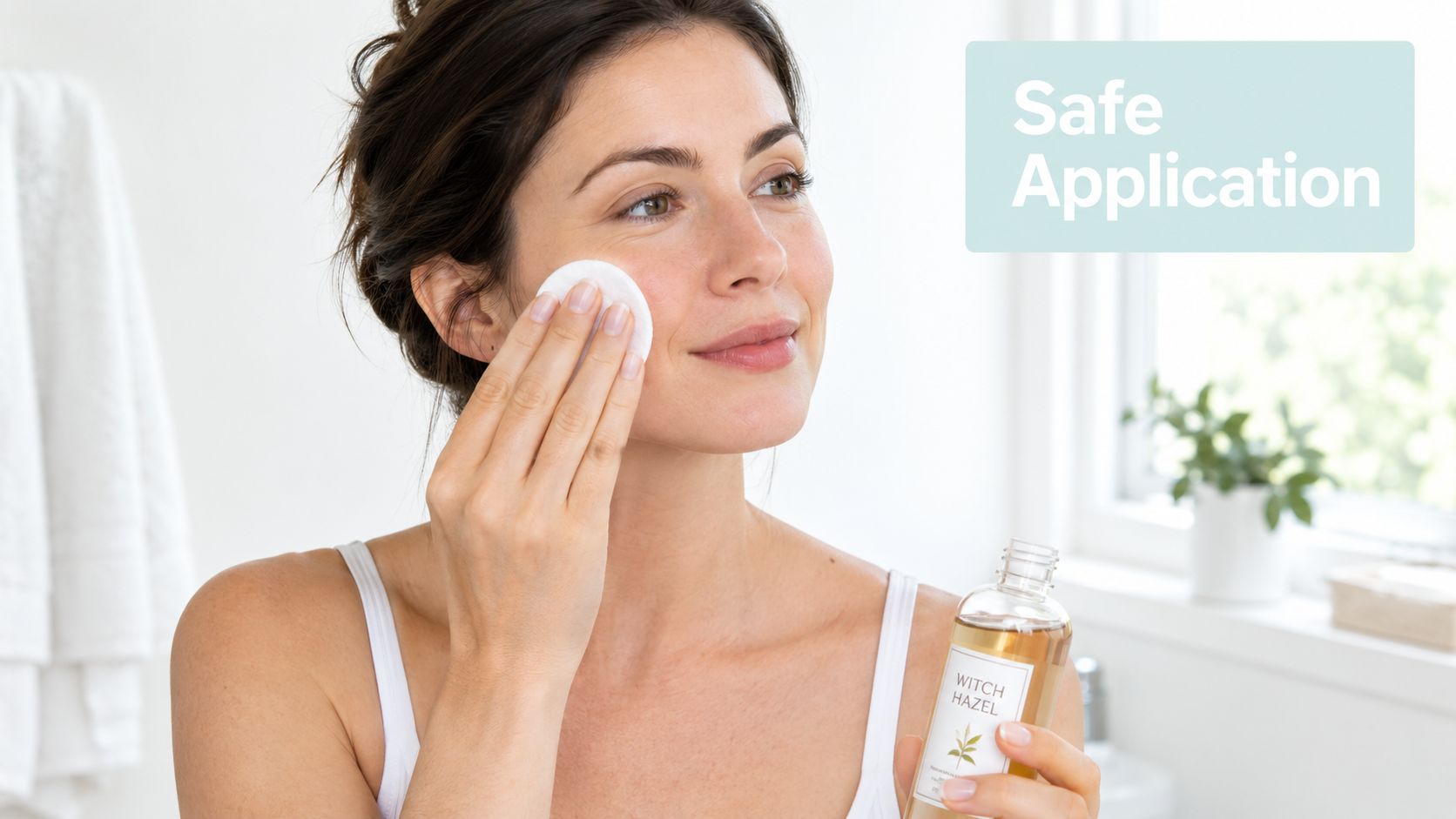
Start with the label. Independent clinical guidance says witch hazel pads are typically used externally up to 6 times per day, while also warning that overuse can cause dryness or irritation. Cleveland Clinic advises contacting a care team if symptoms worsen or don't improve within 7 days. Read the Cleveland Clinic guidance on witch hazel wipes before creating a routine.
A low-friction routine
- Wash your hands. Handle the pad with clean hands, especially after delivery or when the skin is broken.
- Clean gently first. After a bowel movement, use water or another gentle method rather than vigorous wiping.
- Apply externally. Wipe softly or hold the pad against the irritated area according to the product label. Don't insert it into the rectum or vagina.
- Keep contact brief. If the label permits a moist compress, follow its stated contact time rather than leaving the pad in place indefinitely.
- Check your skin. Stop if you notice stinging, worsening redness, rash, or increasing dryness.
- Stay within directions. More applications won't necessarily provide faster relief and may increase irritation.
If you have stitches, a tear, an episiotomy, or an unusually painful recovery, ask your obstetric or midwifery team before use. The question isn't whether witch hazel is familiar. The question is whether this particular product and application method fit your healing tissue.
A short explainer can help you recognize witch hazel hemorrhoid side effects, but it shouldn't replace individualized medical advice.
Use the pad only where the label permits. It shouldn't become an internal treatment, and it shouldn't be used to mask symptoms that are getting worse.
Building a Complete Relief Plan Around Witch Hazel Pads
Witch hazel pads work best as one part of a routine that reduces irritation from several directions. The pad addresses surface discomfort. Other steps can reduce the friction, straining, dryness, or hygiene problems that keep symptoms aggravated.
A practical routine may look like this:
- Clean without rubbing: Rinse with water after bowel movements or postpartum bathroom trips, then pat dry.
- Support easier bowel movements: Hydration and fiber-focused eating can help support softer stool and reduce straining. Ask a healthcare provider before using a stool-softening product, particularly after childbirth.
- Use warmth when appropriate: A sitz bath can provide a different kind of comfort from a cool topical pad.
- Match the active ingredient to the symptom: OTC products may contain witch hazel, lidocaine, hydrocortisone, or phenylephrine. These ingredients serve different purposes, so don't combine products casually.
- Watch the timeline: Persistent, severe, or bleeding symptoms need clinical evaluation rather than a longer self-care experiment.
For perineal hygiene after delivery, this postpartum perineal care guide can help you keep cleansing gentle and practical.
Where Revivol-XR can fit
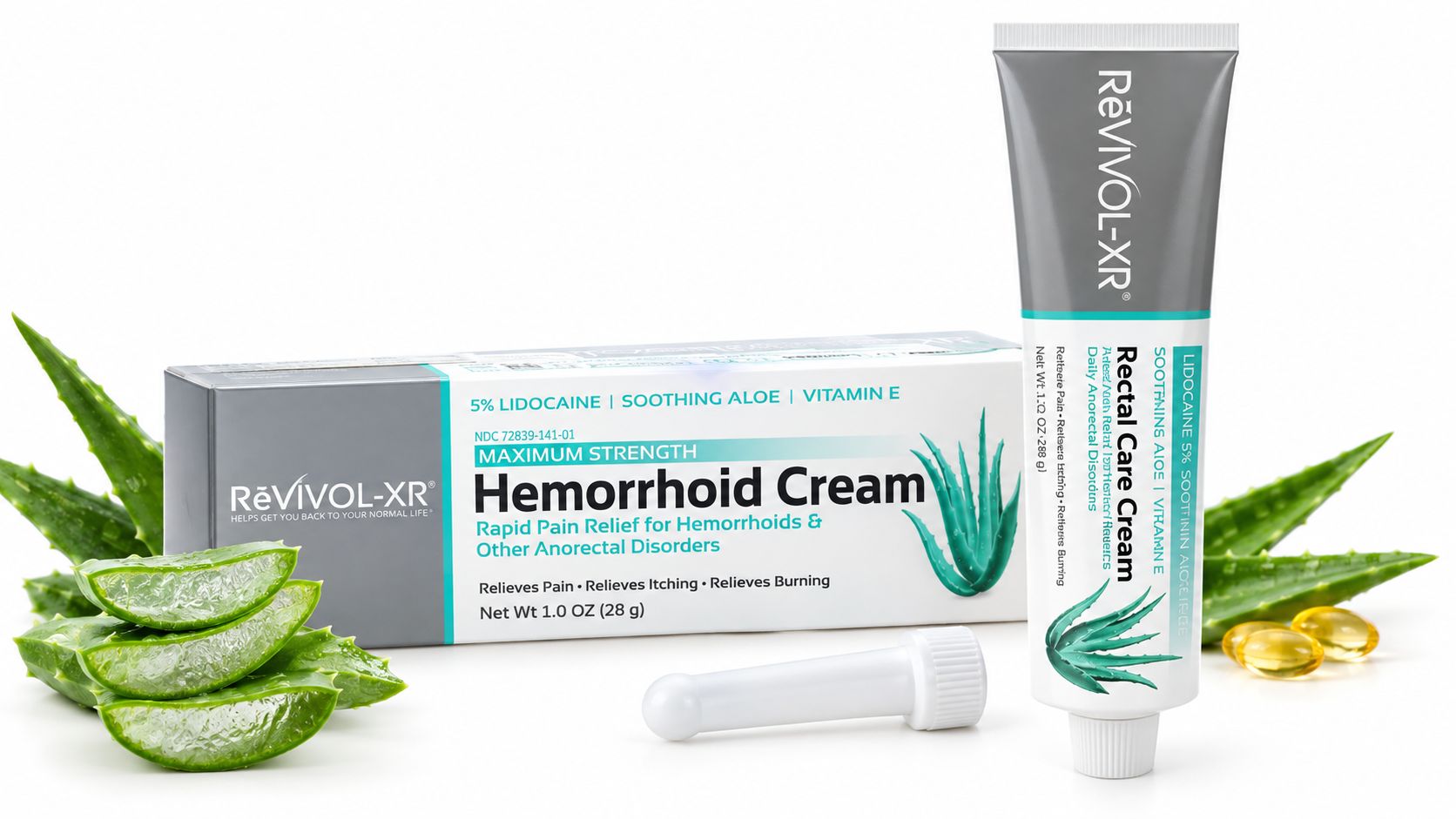
Revivol-XR® Hygienic Cleansing Lotion, Gentle Relief + Soothing Aloe & Witch Hazel for “Down-There” Sensitive Areas is an external cleansing lotion containing aloe, coconut, chamomile, tocopherol, and witch hazel. The product is designed to apply a dime-sized amount to toilet paper to create a moisturizing cleansing wipe, and its label snapshot specifies external use only.
That makes it different from a 50% witch hazel pad and different from a numbing cream. It may be considered when the main problem is friction from dry toilet paper and the goal is gentle cleansing. It doesn't replace medical evaluation or provide a reason to ignore bleeding, severe pain, or worsening symptoms.
Keep the routine simple. A rinse, gentle drying, one suitable soothing product, and bowel habits that limit straining are easier to follow than a crowded sequence of overlapping treatments.
Common Questions about Witch Hazel Pads
Can witch hazel pads dry out sensitive skin?
They can. Astringent products may leave tissue feeling dry or irritated, particularly when used too often or when the formula contains additional ingredients that your skin dislikes. Use them only as directed, and stop if burning, rash, worsening redness, or dryness develops.
Can I use them with postpartum stitches?
Don't assume that a familiar OTC pad is automatically right for every repair. If you have stitches, a tear, or an episiotomy, ask your maternity care team before applying a new product. Never scrub or insert a pad, and seek advice if pain is increasing rather than settling.
Are witch hazel pads enough for bleeding or severe pain?
No. Their labeled role is temporary relief of local itching, burning, irritation, and discomfort. Bleeding, severe pain, symptoms that persist, or symptoms that worsen require a healthcare provider's assessment. Don't use repeated pad applications to delay care.
When might another OTC ingredient be considered?
Medical sources note that OTC hemorrhoid products may contain lidocaine, hydrocortisone, phenylephrine, or witch hazel. Lidocaine is used for temporary pain and itching relief, phenylephrine may temporarily reduce swollen hemorrhoidal tissue, and hydrocortisone can help with some inflammatory symptoms but generally shouldn't be used for more than a week because it can thin the skin, as explained by Harvard Health's hemorrhoid guidance.
These products aren't interchangeable. A pharmacist or healthcare provider can help you choose based on your symptoms, pregnancy or breastfeeding status, other medicines, and medical history. Don't combine multiple active products unless the labels or a professional tell you how to do so.
Witch hazel pads can be a useful comfort measure when the problem is external irritation. They work best when you use them gently, keep expectations realistic, and know when a symptom has moved beyond self-care.
Revivol-XR offers external cleansing support with aloe and witch hazel for sensitive anal or vaginal-area skin, while its broader product range includes options for temporary hemorrhoid discomfort relief. Visit Revivol-XR to review the available care options, and speak with a healthcare provider for persistent, severe, or bleeding symptoms.