What to Do if Hemorrhoid Pops: Safe Steps and Red Flags

A tight, painful lump can split in seconds and leave blood in the toilet, and knowing what to do if hemorrhoid pops in that first hour helps you stay calm and safe. You're probably sitting carefully right now, checking the paper and wondering if this is an emergency. The steps below help you clean up gently, watch the bleeding, and decide when home care is enough and when you need a clinician today.
Table of Contents
- What to Do in the First Hour After It Pops
- Warning Signs That Need Medical Care Today
- Home Care for the First Week
- Softening Stools to Protect the Healing Tissue
- How Timing Changes What a Clinician Can Do
- Confirm Healing and Decide Your Next Step
- Frequently Asked Questions
What to Do in the First Hour After It Pops
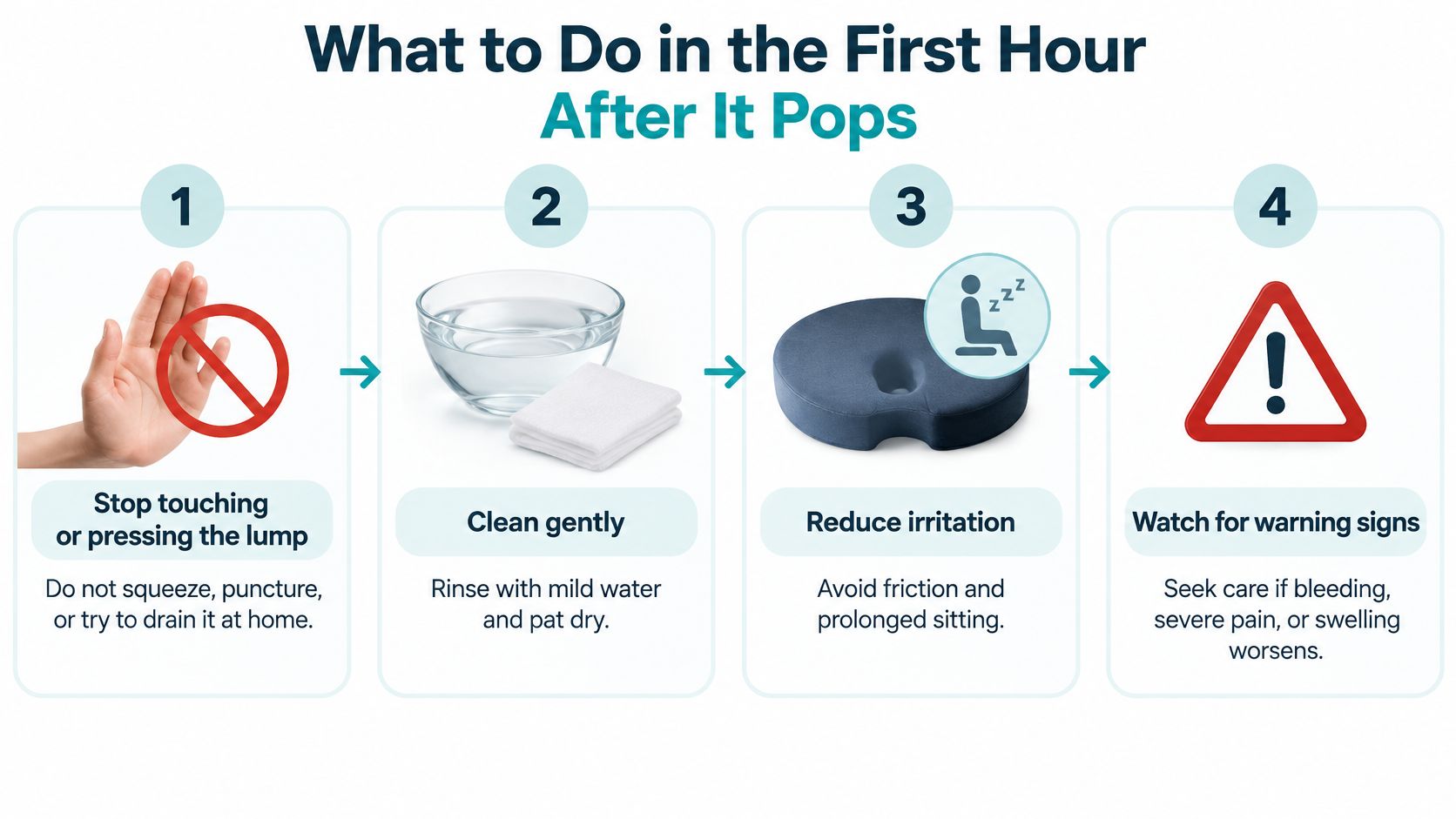
Start by doing less, not more. A sudden very painful, swollen, or purple-blue lump may be a thrombosed hemorrhoid, meaning a blood clot has formed inside an external hemorrhoid, and the Cleveland Clinic page on thrombosed hemorrhoids explains that bleeding can occur if it ruptures. Only a healthcare professional should drain or remove one, because trying at home can injure tissue or introduce infection.
Your First Hour Checklist
- Stop touching the lump. Don't squeeze, puncture, press, or try to drain it, even if you think more blood needs to come out.
- Clean gently with plain water. Rinse in the shower or with a squeeze bottle, don't rub, and pat dry with a soft cloth.
- Use a clean pad or gauze. Place it in your underwear so you can see how much blood appears and whether it's slowing down.
- Note what you see. Write down the time, color, rough amount, and whether clots appear, because a clinician will ask.
- Rest off the area. Lie on your side or sit briefly on a cushion, and don't strain to pass stool.
- Check urgency before you settle in. Use the warning signs below to decide if you need care today rather than monitoring at home.
Practical rule: Clean, cover, observe. Don't try to finish draining it yourself.
Some bleeding after a clot ruptures isn't surprising, and the pressure may feel better once it opens. That relief doesn't confirm the cause. A clinician still needs to confirm the bleeding is hemorrhoidal and not from another anorectal or gastrointestinal condition.
Get prompt advice sooner if you're pregnant, postpartum, taking anticoagulants, immune suppressed, or having recurrent bleeding. The same goes if pain is significant, symptoms persist, or you develop fever or chills. Most thrombosed hemorrhoids improve over several days, but you don't have to guess which path yours is on.
Warning Signs That Need Medical Care Today
Rectal bleeding can have causes other than hemorrhoids, even if you have a known hemorrhoid. The Mayo Clinic guide to hemorrhoid symptoms advises contacting a healthcare professional for bleeding during bowel movements or symptoms that do not improve after a week of home care. Severe pain or bleeding calls for earlier attention. Read the table from the top down and follow the first row that matches your symptoms.
| Symptom | Urgency | What to do |
|---|---|---|
| Bleeding that will not stop, large clots, or lightheadedness and faintness | Emergency | Call emergency services now |
| Fever, chills, pus, or spreading redness and swelling | Same day | Contact a healthcare provider today |
| Severe or rapidly worsening anal pain | Same day | Seek medical evaluation rather than waiting |
| Bleeding during bowel movements | Soon | Contact a healthcare provider |
| No improvement after one week of home care | Within days | Arrange an evaluation with a healthcare provider |
Why the Top Rows Can't Wait
When you contact a clinic, describe what is happening in concrete terms: when the bleeding or pain began, whether it is changing, and what symptoms accompany it. This helps the triage nurse understand how quickly you need to be seen.
Symptoms can overlap with fissures, inflammatory bowel disease, polyps, and colorectal cancer. Persistent or unexplained bleeding needs assessment, rather than another round of self-treatment.
Home Care for the First Week
A warm soak can help soothe the area while it heals. The Mayo Clinic treatment page for hemorrhoids recommends soaking the anal area in plain warm water for 10 to 15 minutes, two or three times daily. Use a sitz bath over the toilet or a shallow tub. If you need help setting one up, follow this step-by-step sitz bath routine.
Between soaks, keep cleansing gentle. Rinse with water after bowel movements when possible, then pat dry with soft toilet paper or a damp cloth. Repeated wiping or rough paper can irritate the tender skin and restart bleeding.
| Stage | What to expect | What to do |
|---|---|---|
| First 72 hours | Pain is often strongest | Soak in warm water for 10 to 15 minutes, two or three times daily |
| Days 3 to 4 | Pain may begin to ease; bleeding should become lighter or stop | Clean gently and watch for changes in symptoms |
| Days 5 to 7 | Look for steady improvement | Continue gentle cleansing and avoid irritating the area |
| After 7 days | Symptoms should be improving | Arrange an evaluation if they are not |
Symptom Relief Versus Tissue Recovery
Pressure may ease quickly after a hemorrhoid ruptures, while the skin still needs time to recover. Friction, prolonged sitting, diarrhea, and repeated wiping can irritate the area. Short walks are fine; take breaks from long periods of sitting.
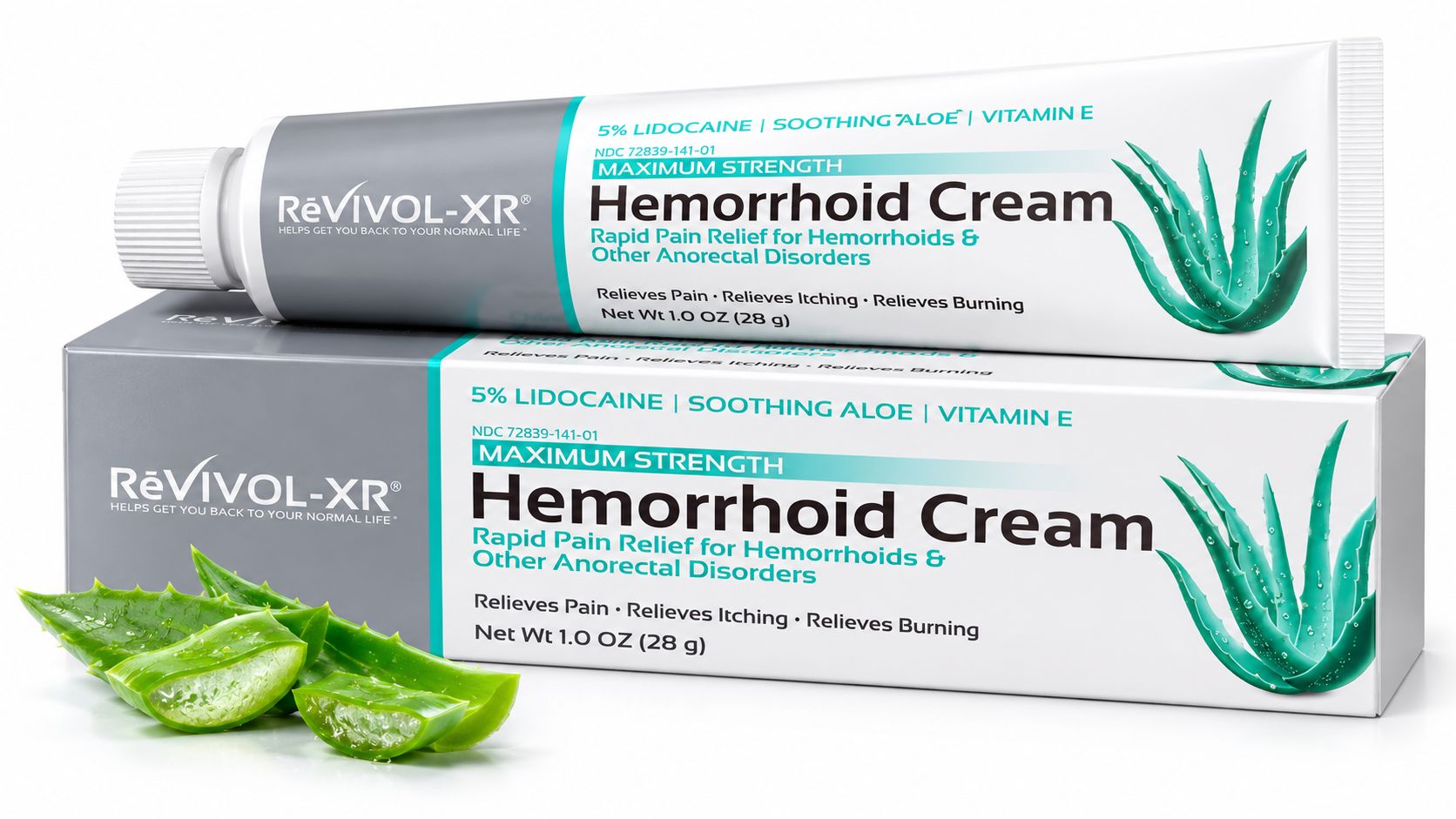
Some people use Revivol-XR Advanced Hemorrhoid Cream for comfort from external irritation, following the Drug Facts label. If you are pregnant, postpartum, or still bleeding, ask a healthcare provider before using a topical product. A cream may ease discomfort, but persistent or worsening symptoms still need medical attention.
Softening Stools to Protect the Healing Tissue
One hard bowel movement can reopen tissue that's just started to close. Straining raises pressure in the veins around the anus, so your goal all week is a stool that passes without pushing, breath holding, or waiting it out on the toilet.
The NIDDK guidance on hemorrhoid treatment points to a short set of habits that do most of the work.
- Eat high fiber foods daily. Fruit, vegetables, beans, and whole grains add bulk and softness, and a guide to what to eat with hemorrhoids can help you build meals.
- Consider a fiber supplement if appropriate. Psyllium or methylcellulose are the common options, increased gradually so gas doesn't become its own problem.
- Drink fluids as advised. Fiber works by holding water, so it needs fluid to do its job.
- Don't strain. If nothing happens within a few minutes, get up and try later.
- Keep toilet time short. Leave your phone outside the bathroom so a quick visit doesn't become a long sit.
A Simple Daily Routine
Go when the urge comes rather than holding it until a meeting ends. Held stool gets harder, and harder stool takes more effort tomorrow. A regular meal pattern and a short walk after eating also nudge your bowels along without any product at all.
Softer stool, shorter sits, no straining. That combination protects healing tissue better than any single cream.
Diarrhea irritates the area too, with frequent wiping and loose stool on raw skin. Ask a pharmacist before adding a stool softener or changing medicines, especially during pregnancy or postpartum recovery. These habits support recovery, but they don't establish why you bled and they don't replace an exam when symptoms are severe or persistent.
How Timing Changes What a Clinician Can Do
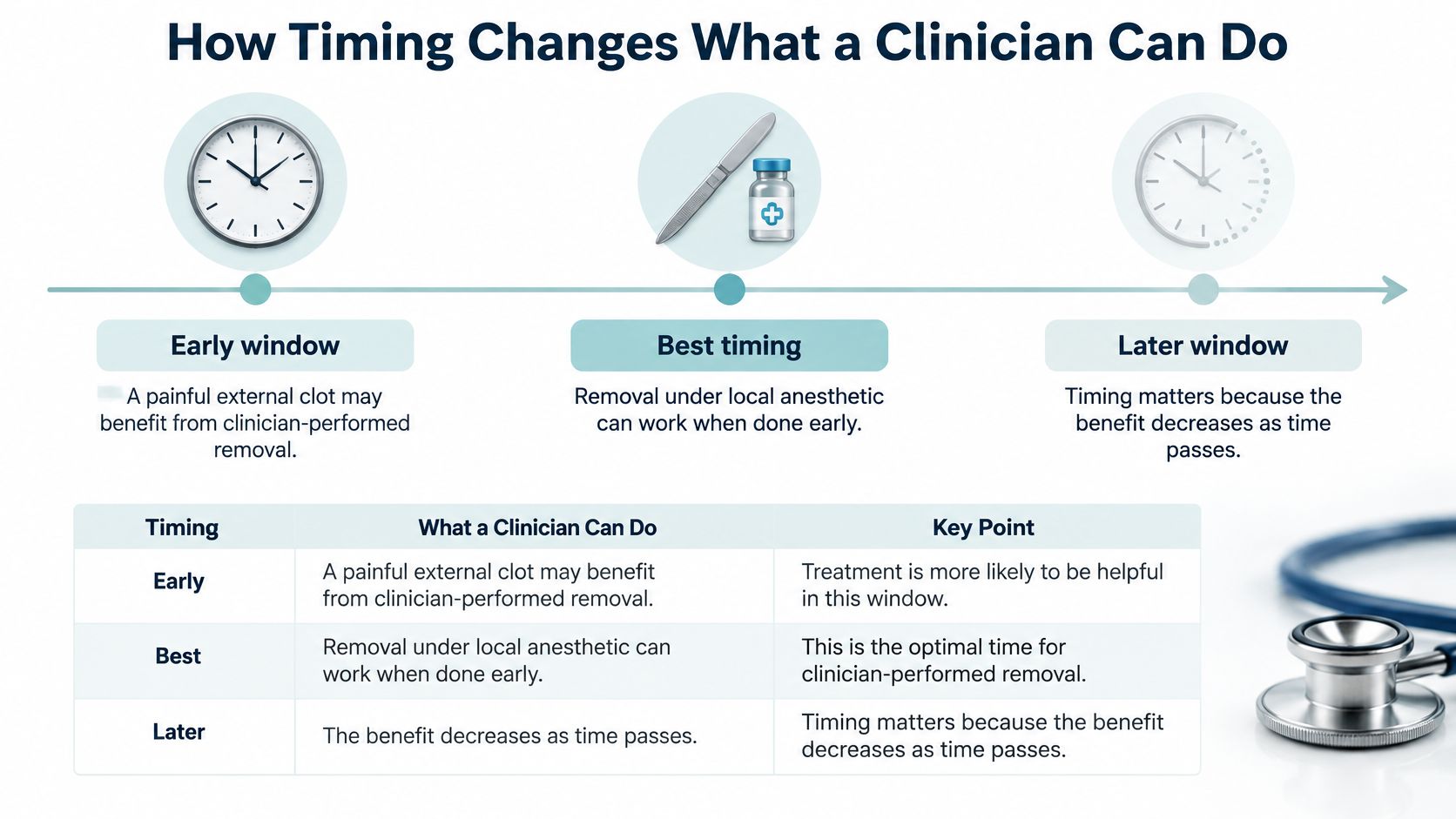
A painful lump that has opened may still contain a clot. If the clot has not fully emptied, a clinician may be able to remove it. The Mayo Clinic's guidance on hemorrhoid treatment says removal under local anesthetic works best within 72 hours of clot formation and can provide immediate relief. With severe pain, contact a provider promptly rather than waiting several days.
The timing can shape which options are available:
| Time since clot formed | Clinician option | What the reader should do |
|---|---|---|
| Within 48 hours | A clinician can assess whether removal under local anesthetic is appropriate | Contact a provider quickly for severe pain |
| 48 to 72 hours | Removal may still be an option within this window | Ask a provider about removal without delay |
| After 72 hours | Home care may be the main path; excision may be considered for selected patients | Arrange an exam to decide |
| After one week | An exam can help assess symptoms that have not improved | Schedule a visit with a healthcare provider |
For selected patients, a clinician may consider excision of a thrombosed external hemorrhoid that has not fully decompressed. The NHS guidance on piles identifies nonstop bleeding, substantial blood or large clots, and severe pain as reasons to seek emergency care. The 2024 American Society of Colon and Rectal Surgeons guideline describes low-quality evidence that excision may lead to faster symptom resolution, lower recurrence, and longer remission than nonoperative care. The decision depends on pain severity, timing, examination findings, bleeding risk, and diagnostic uncertainty.
This short video explains clinician options in plain language:
You can review these broader hemorrhoid treatment options to prepare questions for a visit. Removal is never a home procedure. If pain is severe or bleeding continues, contact a provider promptly.
Confirm Healing and Decide Your Next Step
Feeling better on day two is encouraging, but one calm morning does not prove the tissue has settled. Use the same three checkpoints each day for a full week, at roughly the same time, so you are reading a trend rather than a single moment. Keep each entry short: one line for bleeding, one for pain, one for any fever or redness. Two or three days moving in the same direction matters more than one quiet hour.
- Bleeding check. Blood is lighter than the day before, and there is none between bowel movements.
- Pain check. Pain eases steadily, and sitting and bowel movements feel less tender than yesterday.
- Infection check. There is no fever, chills, pus, or spreading redness.
Returning to Work and Exercise
Resume your routine in stages once those checkpoints hold. Desk work usually comes first, with standing breaks so you are not sitting for long stretches. Light walking is fine early. Heavy lifting and hard workouts should wait if they bring pain or fresh spotting back.
Daily question to ask yourself: Less blood, less pain, no new redness or fever. If any answer flips to no, call.
A settling area should not start bleeding again after normal activity. If a normal workday restarts bleeding, that is useful data for your symptom note.
Book a visit when a checkpoint does not hold. Bring a short note with the time, color, and amount of bleeding, plus your medicines and any pregnancy or postpartum details. Soothing comfort products are one option to discuss at that visit, not a substitute for it. Embarrassment is not a reason to wait.
Frequently Asked Questions
Can a Popped Hemorrhoid Be Pushed Back In?
Don't squeeze, press, or puncture the lump, and don't force it back in if it hurts. If it stays out or becomes more painful, ask a healthcare provider to examine it. A clinician can usually distinguish a hemorrhoid from a skin tag or another cause during an exam.
Is It Normal to Bleed for a Few Days?
Light bleeding may happen when a hemorrhoid opens. Keep track of how much you see and whether it changes, and contact a healthcare provider if you're concerned.
Should I Choose Urgent Care or the Emergency Room?
For help deciding where to go, use the warning-sign table above. If you're unsure, call a healthcare provider and describe your symptoms.
Is a Sitz Bath Safe During Pregnancy or Postpartum Recovery?
A warm sitz bath can offer gentle comfort. Use warm, not hot, water, and check with your OB/GYN or midwife if you have concerns or have been given specific recovery instructions.
For soothing relief from external hemorrhoid irritation, Revivol-XR offers OTC options to review alongside their Drug Facts labels. Compare the formulas and follow the directions carefully.