What to Eat With Hemorrhoids: Best Diet Tips for Relief

What to Eat When You Have Hemorrhoids: A Diet Plan for Fast Relief
Most people don’t realize that straining on the toilet for just five minutes can be the start of years of hemorrhoid pain. When people ask what to eat when you have hemorrhoids, the answer is actually pretty straightforward... you need to focus on high-fiber foods and drink plenty of water.
That simple combination is the secret to softening your stools, which means less straining and, finally, some lasting relief.
The Critical Link Between Your Diet and Hemorrhoids
I once watched a customer break down in tears because they thought their hemorrhoids would never go away. They’d tried every cream and quick fix, but the pain just kept coming back, completely disrupting their life.
They felt trapped in a cycle of temporary relief followed by another painful flare-up. What they didn’t realize was that the real solution wasn’t in their medicine cabinet... it was in their kitchen.
The truth is, lasting relief almost always starts with what’s on your plate.
Lasting hemorrhoid relief starts with what you eat, not what you apply.
The number one cause of hemorrhoids is straining during bowel movements. And what causes all that straining? Hard, dry stools. This is a direct result of a diet that's too low in fiber and fluids.
Your food choices aren't just a small part of the equation... they're the main thing driving both the problem and the solution. Making a few smart, simple changes to your meals is the single most powerful step you can take to prevent future flare-ups and help your body heal.
The Science Behind Food and Flare-Ups
The connection between what you eat and hemorrhoid pain isn't just an old wives' tale... there's solid science behind it.
Think of fiber as a sponge. When you eat fiber-rich foods and drink enough water, that fiber soaks up the water inside your colon. This process adds bulk and, more importantly, softness to your stool, making it much easier to pass without any pushing or force.
When you don't get enough fiber, your stool stays small, hard, and difficult to pass. That forces you to strain, putting intense pressure on the veins in your rectum. That pressure is exactly what causes hemorrhoids to swell up, bleed, and become painful. It’s a direct cause-and-effect relationship happening inside your body every single day. We cover this in more detail in our guide on how to shrink hemorrhoids naturally.
This isn't just a minor issue... it's a global one. Hemorrhoids affect a massive portion of the population, with some estimates as high as 38.93% in certain groups. A comprehensive study in PLOS One confirmed that low fiber intake is a consistent culprit across the board. In fact, one study found that constipation... which is almost always tied to diet... quadrupled a person's odds of developing hemorrhoids.
Building Your Plate with High-Fiber Heroes
When you’re trying to figure out what to eat when you have hemorrhoids, the answer almost always circles back to one crucial nutrient... fiber. It’s the single most important tool in your nutritional toolkit for creating soft, bulky stools that pass easily, which means less straining for you.
But it’s not just about eating more fiber. It’s about eating the right kinds of fiber.
There are two main types, and they work together like a tag team to keep your digestive system running smoothly. Getting a handle on how they each work is the first step to building meals that actively fight off hemorrhoid flare-ups.
Soluble vs. Insoluble Fiber
First up is soluble fiber. Just like the name suggests, it dissolves in water, creating a gel-like consistency in your digestive tract. Think of this gel as a natural lubricant that helps everything slide through without friction or force. You'll find it in foods like oats, barley, nuts, seeds, beans, lentils, and fruits like apples and citrus.
Then you have insoluble fiber. This type doesn’t dissolve. Instead, it acts like a gentle broom, sweeping through your intestines. It adds bulk to your stool, which is important because it triggers the natural contractions that lead to regular, easy bowel movements. It’s abundant in whole grains, vegetables like broccoli and leafy greens, and the skins of many fruits.
A low-fiber diet is one of the biggest culprits behind hemorrhoids. It's what forces you to strain, which puts pressure on the veins and leads to all that pain and swelling.
This chart really puts it into perspective, showing the direct link between a poor diet, straining, and the development of hemorrhoids.
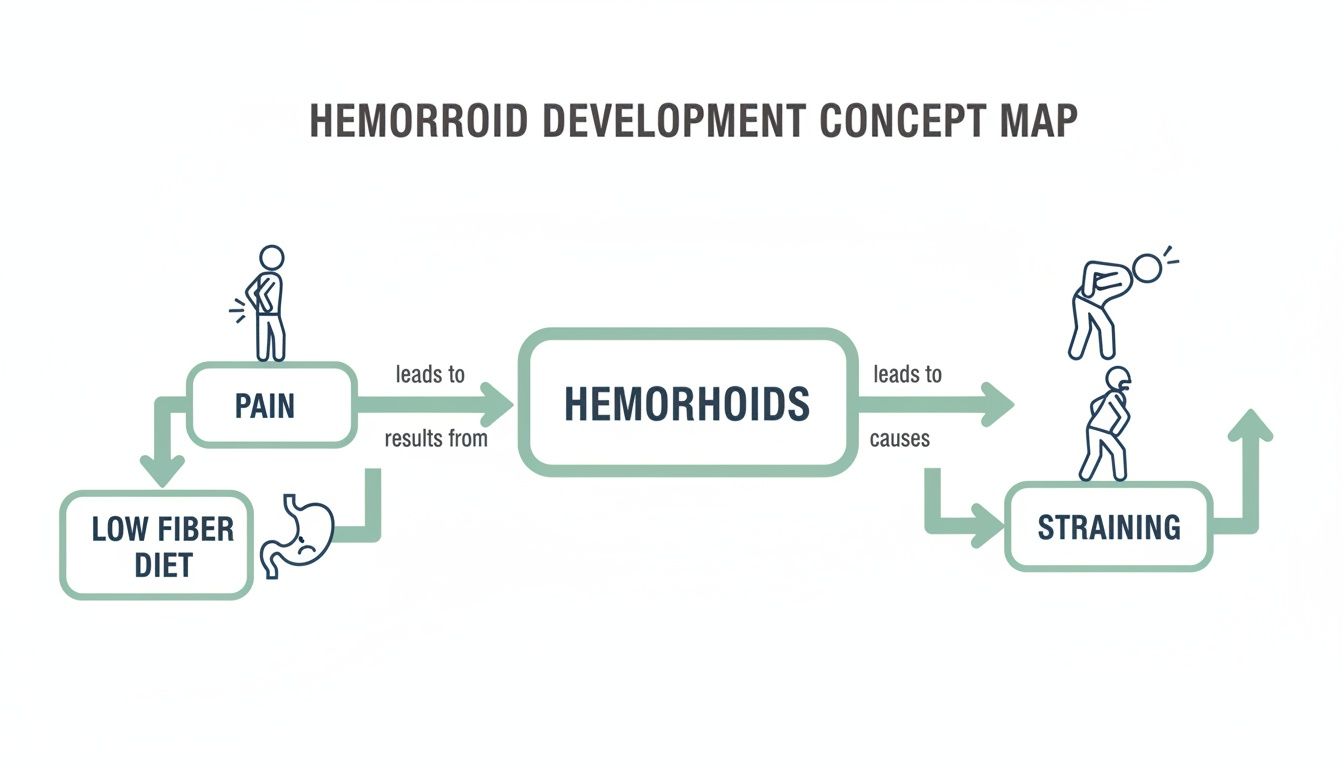
The takeaway here is that this cycle is completely preventable. A better diet breaks the chain before it even starts.
Power Up with Fiber-Rich Foods
You don't have to completely change your diet overnight. The real secret is making small, consistent additions of high-fiber foods to your everyday meals. The impact is huge. In fact, studies show a low-fiber diet is a major factor in a staggering 69.6% of hemorrhoid cases and is strongly tied to more severe symptoms. You can read the full research about these findings to see the data for yourself.
To get you started, here is a quick-reference table with some of the best high-fiber foods you can add to your grocery list.
Top Fiber-Rich Foods for Hemorrhoid Relief
| Food (1 Cup Cooked/Raw) | Fiber Type | Approx. Fiber Content (grams) |
|---|---|---|
| Lentils | Both | 15.6 |
| Black Beans | Both | 15.0 |
| Chickpeas | Both | 12.5 |
| Raspberries | Both | 8.0 |
| Pear (with skin) | Both | 7.1 |
| Artichoke Hearts | Soluble | 7.0 |
| Whole-Wheat Pasta | Insoluble | 6.3 |
| Broccoli (chopped) | Insoluble | 5.1 |
| Oatmeal (cooked) | Soluble | 4.0 |
| Brown Rice (cooked) | Insoluble | 3.5 |
This table makes it easy to see how quickly you can boost your fiber intake with simple additions. For more ideas, here are some of our favorites:
- Legumes: Lentils, chickpeas, black beans, and kidney beans are true fiber superstars. A single cup of cooked lentils can deliver over 15 grams of fiber!
- Whole Grains: It’s an easy swap. Go for whole-wheat bread and pasta instead of white, or choose brown rice, quinoa, and oatmeal. A warm bowl of oatmeal is one of the best ways to kickstart a high-fiber day.
- Fruits: Pears and apples (keep the skin on!) are fantastic, as are raspberries and prunes. Prunes, in particular, have a well-deserved reputation for their natural laxative qualities.
- Vegetables: Load up on broccoli, Brussels sprouts, and artichokes. Leafy greens like kale and spinach are also packed with the insoluble fiber you need to add bulk.
By focusing on weaving these foods into your daily routine, you’ll naturally increase your fiber, soften your stools, and take a massive step toward finding lasting relief.
The Importance of Hydation for Relief
Eating a high-fiber diet without drinking enough water is like trying to mix concrete without any liquid. You just end up with a hard, unmovable block. This is exactly what can happen inside your digestive system.
Fiber absolutely needs water to do its job. Without it, you can actually make constipation... and hemorrhoid pain... a whole lot worse.
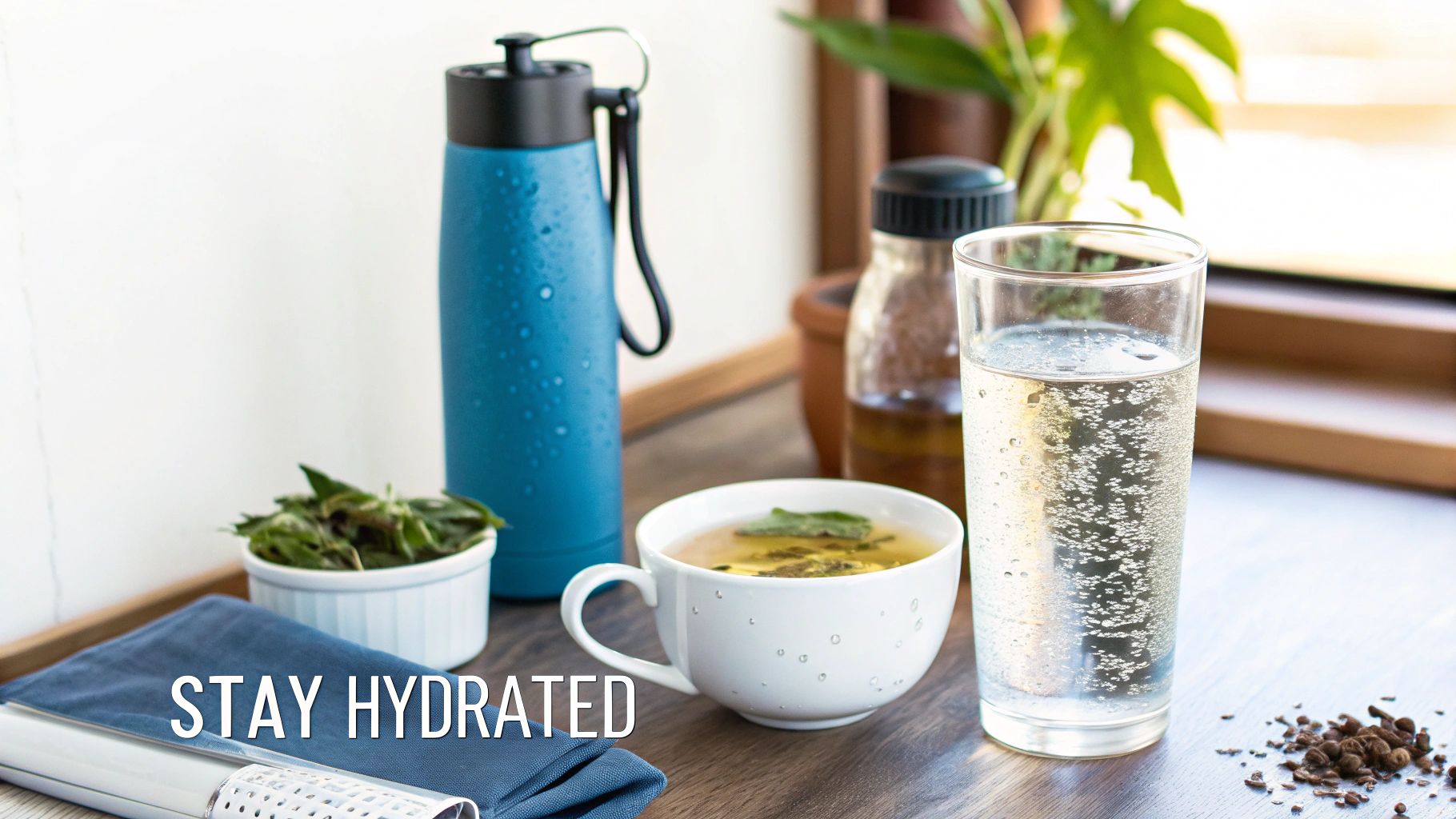
Think of hydration as fiber's essential partner. When soluble fiber soaks up water, it creates a soft, gel-like substance that helps stool pass easily. This teamwork between fiber and water is the secret to preventing the straining that causes hemorrhoids in the first place. Water turns fiber from a potential problem into a powerful solution for relief.
How Much Water Is Enough?
The old advice to drink eight glasses a day is a decent starting point, but everyone’s needs are a bit different. A better target for most adults is 2 to 2.5 liters daily. This ensures your body has plenty of fluid to keep everything running smoothly, especially creating soft, easy-to-pass stool.
And no, this doesn't mean you have to chug plain water all day long. Lots of different fluids count toward your daily total, so you have plenty of options to stay hydrated.
Making hydration an effortless habit is one of the keys to long-term hemorrhoid management. A few simple adjustments can make a world of difference for your comfort and digestive health.
Smart Hydration Strategies
Staying hydrated is about more than just carrying a water bottle. By weaving a few simple habits into your day, you can easily hit your fluid goals and give your digestive system the support it needs.
Here are a few practical tips to boost your intake:
- Start Your Day Right: Kick off your morning with a large glass of warm water. It’s a simple trick that can help wake up your digestive system and gets you a head start on your daily hydration.
- Explore Other Fluids: Herbal teas like peppermint or chamomile are great hydrating options that can also soothe your gut. Clear broths and even diluted fruit juices count, too.
- Eat Your Water: Many fruits and vegetables are packed with water. Cucumbers, celery, watermelon, and strawberries are all delicious ways to add extra fluid to your diet while getting a fiber boost at the same time.
- Set Reminders: If you’re the type who forgets to drink, use your phone to set hourly reminders. Small, consistent sips throughout the day are much more effective than chugging a huge amount all at once.
Figuring out what to eat when you have hemorrhoids is only half the battle. You have to pair those food choices with consistent, solid hydration to truly find relief and keep future flare-ups at bay.
Foods That Can Make Hemorrhoids Worse
Knowing what to eat when you have hemorrhoids is only half the battle. Just as crucial is understanding which foods to sidestep, because the wrong choices can quickly sabotage your efforts and trigger a painful flare-up.
Most of these trouble-making foods have one thing in common... they're low in fiber. This makes stools harder, drier, and tougher to pass, which is a direct cause of straining. It’s like creating traffic jams in your digestive system... the more your body has to work to push through, the more pressure you put on those sensitive veins.
Key Foods to Limit or Avoid
The worst offenders are often highly processed foods that have been stripped of their natural fiber and water. By consciously limiting these, you can dramatically improve your symptoms and avoid future problems.
Here are the main culprits to keep an eye on:
- Refined Grains: White bread, white rice, pastries, and most packaged crackers are missing the beneficial fiber found in their whole-grain versions. They can bog down digestion and contribute directly to constipation.
- Processed Foods: Think frozen meals, fast food, and pre-packaged snacks. They are usually loaded with sodium and unhealthy fats but have very little fiber, a combination that’s a perfect storm for hard stools.
- Excessive Dairy: For some people, high-fat dairy products like cheese and whole milk can be constipating. If you notice a pattern, try cutting back or switching to lower-fat alternatives.
- Red Meat: When eaten in large amounts, red meat can be tough to digest and lacks fiber. It tends to linger in your digestive system longer, making constipation more likely.
Your best strategy is to focus on smart swaps. Instead of feeling like you're missing out, concentrate on replacing these problem foods with high-fiber alternatives to keep everything moving smoothly.
Making better choices at the grocery store doesn't have to be complicated. Here's a simple comparison to guide you.
Common Hemorrhoid Trigger Foods and Healthier Swaps
| Food to Limit or Avoid | Why It Can Be a Problem | Smart Swap for Relief |
|---|---|---|
| White Bread or Bagels | Stripped of natural bran and fiber, leading to harder stools. | 100% Whole-Wheat Bread |
| Cheese and Full-Fat Dairy | Can be binding and slow digestion for some individuals. | Greek Yogurt with Probiotics |
| Fried Foods and Fast Food | High in fat and low in fiber, causing digestive slowdown. | Baked Sweet Potato Fries |
| Sugary Pastries and Cakes | High in refined carbs and sugar, offering no fiber. | A Bowl of Berries with Oats |
A few simple changes can make a massive difference in how you feel day-to-day.
Dehydrating Drinks That Worsen Symptoms
It’s not just food that can spell trouble. Certain drinks can pull water from your body, which in turn draws water out of your colon and makes stools even harder.
Alcohol is a big one. It acts as a diuretic, which can lead to dehydration. In the same way, while a cup or two is usually fine, too much caffeine from coffee and energy drinks can have a similar effect on some people. You can learn more by exploring the connection between coffee and hemorrhoids in our detailed guide.
The goal here is balance. You don't have to cut these foods and drinks out of your life completely, but being mindful of how much you consume... and prioritizing high-fiber, hydrating options... will make all the difference for your comfort.
A Simple 1-Day Meal Plan for Relief
It’s one thing to know which foods to eat, but it's another to actually put it all together into daily meals. That can feel like a chore.
To make it easy, here’s a sample one-day meal plan designed to be high in fiber, tasty, and simple to follow. Think of it as a blueprint for what a hemorrhoid-friendly day of eating can look like, all while aiming for that sweet spot of 25-35 grams of daily fiber.
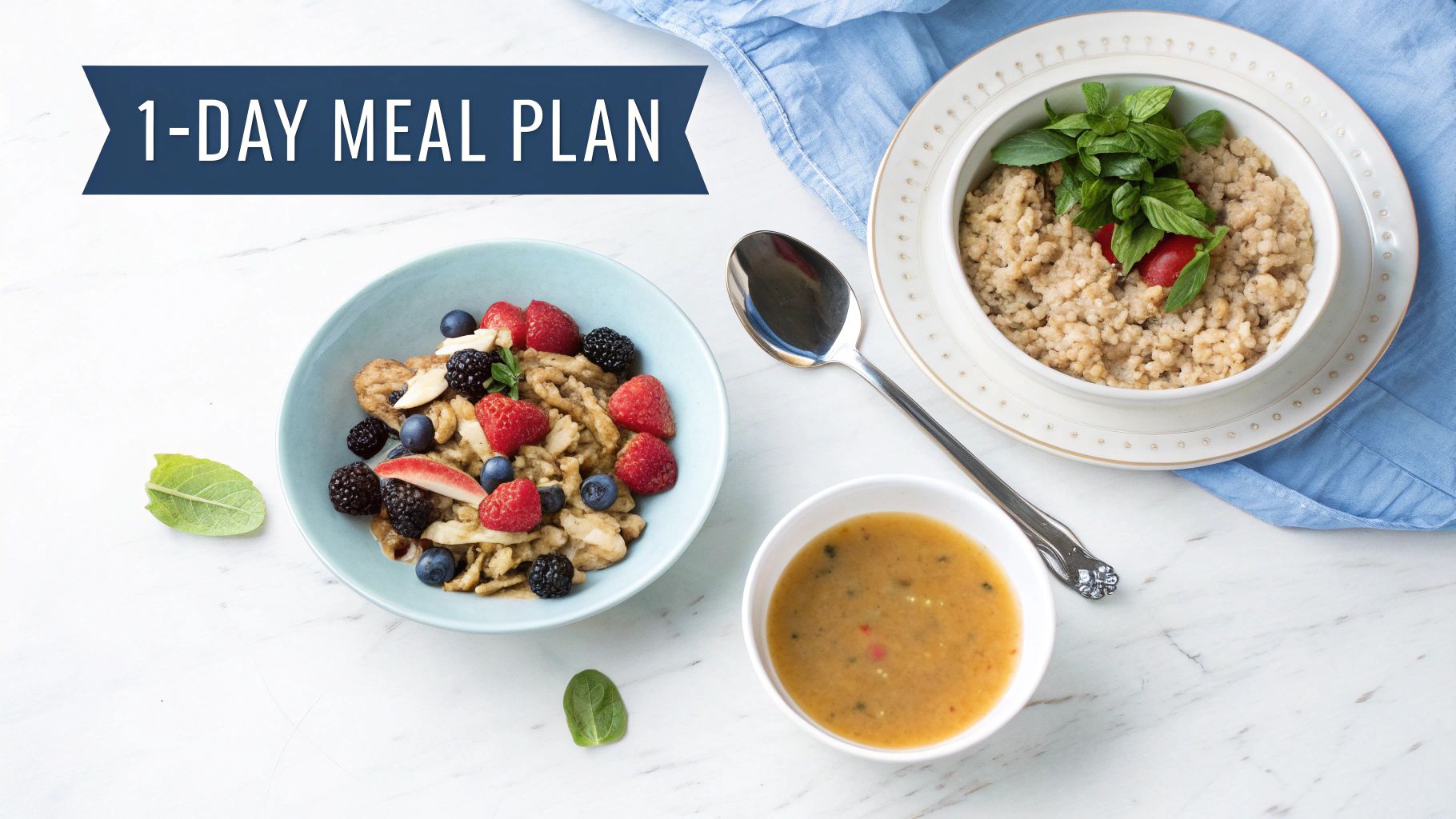
Morning Kickstart Breakfast
Kick off your day with a classic that’s loaded with soluble fiber. This is the stuff that helps form a soft, gel-like consistency in your stool, making everything move along smoothly.
- Meal: One cup of cooked oatmeal topped with a half-cup of raspberries and a tablespoon of chia seeds.
- Why it works: The oatmeal is gentle and soothing, while the raspberries and chia seeds give you a major fiber boost right from the start.
This combo gets your digestive system off on the right foot, helping prevent the hard stools that lead to straining later.
Midday Fuel Lunch
For lunch, we're bringing in the heavy hitters... legumes. They are one of the most powerful fiber sources you can find. This meal is both satisfying and incredibly effective.
- Meal: A big bowl of lentil soup, served with a slice of 100% whole-wheat bread.
- Why it works: Lentils are a fiber powerhouse, delivering a great mix of both soluble and insoluble types. The whole-wheat bread adds even more insoluble fiber to help add bulk.
This simple meal plan isn't about restriction; it's about making smart, effective choices. Each component is chosen to actively soften stool and make your life more comfortable.
Afternoon Pick-Me-Up Snack
When that afternoon slump hits, don't reach for low-fiber processed snacks. A simple piece of fruit is the perfect way to tide you over until dinner.
- Snack: One medium pear (with the skin on!) and a small handful of almonds.
- Why it works: Pear skin is packed with insoluble fiber, and the almonds add healthy fats and even more fiber to keep you feeling full.
Evening Wind-Down Dinner
Your final meal should be balanced, pulling together lean protein, veggies, and another healthy whole grain.
- Meal: Grilled chicken breast or baked fish with a side of steamed broccoli and one cup of cooked quinoa.
- Why it works: Broccoli is a fantastic source of insoluble fiber, and quinoa is a complete protein that’s also high in fiber. It’s a combination that’s easy on your stomach but powerful for your gut.
This simple guide shows just how easy it is to figure out what to eat when you have hemorrhoids. It all comes down to choosing whole foods that work for you, not against you.
Your Next Steps for Lasting Comfort
Figuring out what to eat when you have hemorrhoids is easily the most powerful thing you can do to find real, lasting comfort. It all boils down to a simple formula... prioritize fiber, stay hydrated, and cut back on the processed foods that back you up.
Here’s how you can take action today:
- Add one high-fiber food to every meal.
- Drink a glass of water before you eat anything.
- Swap one processed snack for a piece of fruit.
That customer I mentioned earlier? After a few weeks of focusing on her diet, she finally broke the cycle. The constant worry disappeared. That's the power of focusing on the root cause... what goes in your body determines the strain coming out.
This is just one piece of the puzzle, and you can learn about other effective strategies in our guide on how to get rid of hemorrhoids. While a good diet lays the groundwork for recovery, sometimes you need a little extra help to manage the symptoms right now. Revivol-XR offers a range of products, from creams to a soothing sitz bath soak, that fit alongside your new healthy habits. Explore how our products can complement your new lifestyle with temporary symptom relief.
Frequently Asked Questions About Diet and Hemorrhoids
Making changes to your diet always brings up questions. It's completely normal. Getting solid answers is the best way to feel confident in your new eating plan and really understand how it helps bring you relief. Let's tackle some of the most common ones we hear.
How Quickly Will Changing My Diet Help
This is probably the number one question on everyone's mind. While you might notice softer, easier-to-pass stools within a few days of upping your fiber and water, the real healing takes a bit more time.
Think of it this way... consistency over several weeks is what truly makes the difference. It gives your body a chance to heal properly and reduces those nagging long-term symptoms like swelling and bleeding. A little patience now pays off big time later.
Are Fiber Supplements As Good As High-Fiber Foods
It's a fair question, especially when you're looking for an easy win. While supplements like psyllium husk can definitely be helpful... particularly when you're just getting started... whole foods are always the best choice.
Real foods like fruits, veggies, and beans are packed with vitamins, minerals, and antioxidants that you just can't get from a powder. Think of supplements as a good backup to help you hit your daily fiber target, not as a replacement for a healthy plate. If you do use them, always start with a small dose and drink plenty of water.
Can Spicy Food Cause Hemorrhoids
Let's clear the air on this myth. Spicy food does not cause hemorrhoids. The real culprit is almost always straining on the toilet, usually due to constipation.
That said, if you’re in the middle of a painful flare-up, very spicy foods can sometimes irritate the area as they pass. This might make symptoms like burning or itching feel worse for a little while. If you notice this happening, it’s probably a good idea to lay off the hot sauce until things have calmed down.
For help managing symptoms while your diet takes effect, Revivol-XR offers products for temporary relief of hemorrhoid pain, itching, and burning. Explore our full line of care at https://hemorrhoid.com.