Treatment of Hemorrhoids and Fissures: A Complete Guide

A cream can quiet the pain while a chronic anal fissure remains unhealed. If you've just noticed blood on the toilet paper and a sting that won't settle, the treatment of hemorrhoids and fissures starts with understanding what needs comfort, what needs healing, and when to get examined. You don't have to choose between doing nothing and having surgery, but you do need a clear plan.
Table of Contents
- When Bathroom Pain Becomes a Real Problem
- The Conservative Foundation That Does Most of the Work
- Over-the-Counter Options That Match Your Symptoms
- When Self-Care Is Not Enough
- Office Procedures and Surgery in Plain Language
- Pregnancy, Postpartum, and the Honest Trade-Offs
- Quick Answers Readers Ask Before They Buy
- Your Short Checklist Before Tomorrow Morning
When Bathroom Pain Becomes a Real Problem
You finish a bowel movement, look at the paper, and see bright red blood. There's a sting when you stand up, and you're already worrying about the next bathroom trip. You may also be wondering how to explain this to someone without feeling embarrassed.
Start with a distinction: hemorrhoids and anal fissures aren't interchangeable. Hemorrhoids involve swollen tissue containing blood vessels around or inside the anus. A fissure is a small tear in the anal lining, rather like a split in delicate skin.
The same difficult bowel movement can irritate hemorrhoidal tissue and injure the lining. That's why constipation and straining matter for both, including during pregnancy and postpartum recovery. Still, symptoms alone can't confirm which problem you have.
Similar symptoms don't mean identical care
With hemorrhoids, a clinician considers swelling, bleeding, and whether internal tissue slips outward, called prolapse. With a fissure, the question is whether the tear is recent or persistent and whether muscle tightening is preventing recovery.
The important distinction: Feeling less pain and having healed tissue aren't the same thing.
A useful care ladder has separate branches after a shared starting point:
- Begin gently: Improve stool consistency and reduce straining.
- Add targeted comfort: Choose local relief that matches the symptom and permitted application area.
- Reassess: Seek a diagnosis when symptoms persist, worsen, or involve bleeding.
- Escalate selectively: Consider prescriptions, office procedures, or surgery according to the confirmed condition.
Hemorrhoid care has historically happened largely outside hospitals. The NIDDK's historical analysis of hemorrhoid care supports that outpatient pattern, so a consultation doesn't automatically mean an operation.
You can describe the problem plainly: “I have pain after bowel movements and blood when I wipe.” You don't need to diagnose yourself before asking for help.
The Conservative Foundation That Does Most of the Work
The foundation isn't an expensive cream. It's making bowel movements easier to pass without repeated pushing or irritation. Local products may improve comfort, but they can't replace changes that address hard stools and difficult toilet habits.
Build a routine you can repeat
For fissure care, the ASCRS patient guide recommends 25 to 35 grams of dietary fiber daily and warm sitz baths lasting 10 to 20 minutes several times daily, especially after bowel movements. It also describes topical anesthetics such as lidocaine as an option for pain relief.
Translate that into ordinary choices. Add oats at breakfast, beans with lunch, or another fiber-rich food you'll eat. If reaching your fiber needs through food is difficult, ask whether a supplement is appropriate.
The NIDDK's hemorrhoid self-care recommendations include high-fiber foods, supplements such as psyllium or methylcellulose when appropriate, fluids as recommended by a healthcare professional, less straining, and limited toilet sitting. There isn't one fluid target that suits every person, particularly if a clinician has advised fluid restrictions.
- Keep the phone outside: Make your personal rule no scrolling on the toilet. Finish and leave rather than turning a bowel movement into a sitting session.
- Don't force the stool: If you're repeatedly pushing without success, ask about a stool-softening plan rather than pushing harder.
- Use soothing warmth: A sitz bath means soaking the anal area in warm water, not scrubbing it or using hotter water for a stronger effect.
This checklist summarizes the shared starting point.
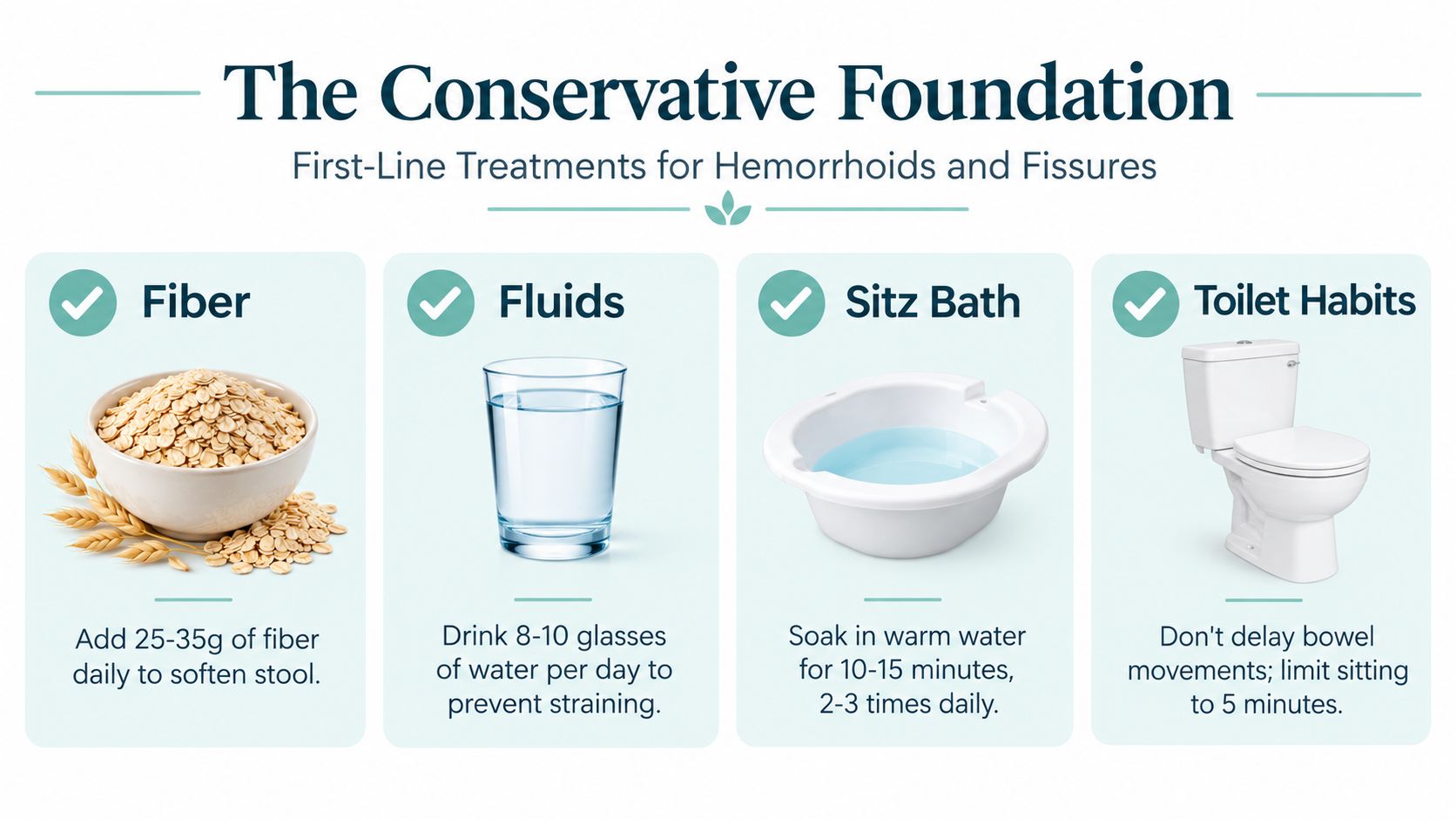
Use the individualized fluid advice and bath timing above rather than treating a graphic's schedule as a prescription.
Keep comfort add-ons optional
Bath salts and witch-hazel cleansing products are add-ons, not required parts of healing. Plain warm water is a reasonable starting point, especially when skin feels raw or you're recovering from childbirth.
If you choose an additive, follow its label and stop if irritation develops. Ask your clinician before applying products around a postpartum wound. Our guide to anal fissure care at home can help you organize the routine without confusing soothing care with a cure.
Over-the-Counter Options That Match Your Symptoms
The shelf can make every product look interchangeable. They aren't. The active ingredient tells you what a product does; the format tells you how it's applied.
An anesthetic is intended for temporary pain and itch relief. A vasoconstrictor targets temporary swelling relief. A protectant coats irritated skin. A cream may combine those functions, while a spray, wipe, or suppository may contain very different ingredients.
OTC Format Match-Up
| Format | Main Symptom Addressed | Best Used For |
|---|---|---|
| Anesthetic cream | Local pain, burning, or itching | Symptoms in the application area allowed by the label |
| Vasoconstrictor-containing product | Swelling-related discomfort | Temporary symptom support after checking precautions |
| Protectant cream or ointment | Irritated skin and surface discomfort | Coating the permitted external area |
| Spray | Depends on its active ingredients | A permitted application when less handling is preferred |
| Wipe or cleansing lotion | Cleansing-related irritation | Gentle external hygiene, not treatment of persistent bleeding |
| Suppository | Internal symptoms, depending on ingredients | Internal use only when the product is specifically labeled for it |
An external cream isn't automatically suitable for insertion. Likewise, a suppository isn't automatically the right choice for a painful tear near the opening. If the location or diagnosis is uncertain, a pharmacist or clinician can help you avoid buying the wrong format.
Read the label before comparing tube sizes
One option for temporary soothing relief is Revivol-XR® Advanced Hemorrhoid Cream, whose catalog lists 5% lidocaine, 0.25% phenylephrine HCl, glycerin, petrolatum, and botanical ingredients including aloe and witch hazel, in a 1.5 oz tube. Those details identify the formula and package size, not a promise of healing.
The product is marketed under the FDA OTC monograph for anorectal drug products. OTC monograph products aren't individually FDA-approved, and monograph status doesn't establish that a product repairs a fissure.
Choose by the symptom, the application site, and the safety instructions, not by the strongest-sounding front label.
This cream is for adults and external use only. Don't insert it using fingers or an applicator. Its Drug Facts precautions require clinician input for certain medical conditions and medicines, and consultation before use during pregnancy or breastfeeding.
The linked label says to stop use and ask a doctor if bleeding occurs, symptoms worsen, or they don't improve within seven days. A numbing product belongs in a short-term comfort plan, not an open-ended routine that postpones assessment.
When Self-Care Is Not Enough
Waiting can matter, especially with fissures. Pain relief may make daily life easier while leaving the reason for persistent symptoms unresolved.
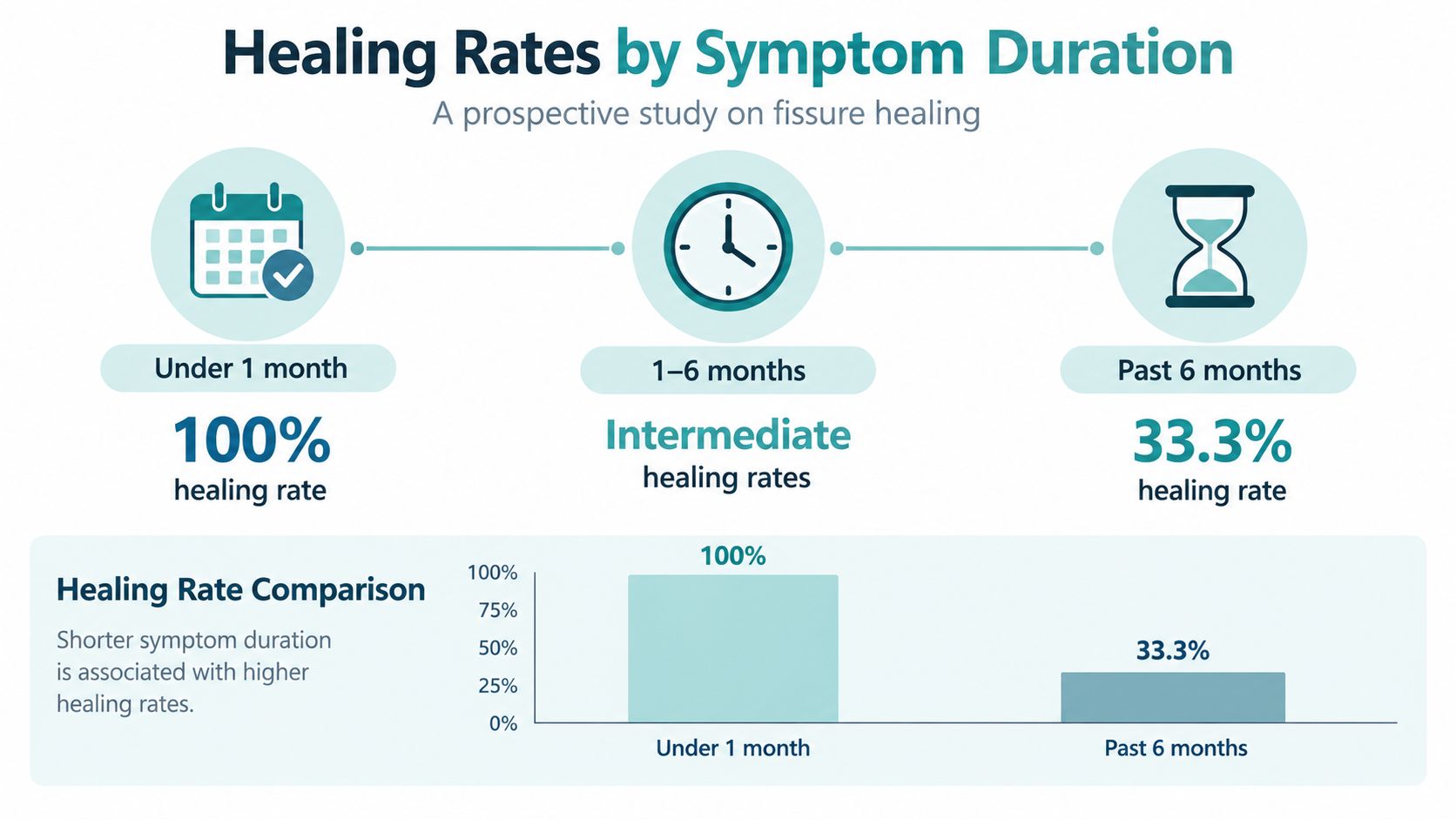
The 2023 ASCRS anal-fissure guideline cites a prospective study of 60 patients in which healing reached 100% when symptoms had lasted less than one month, compared with 33.3% when they had lasted more than six months. These are study results, not a guarantee for an individual patient, but they make early assessment worth taking seriously.
The difference is illustrated below.
Symptoms that change the plan
Don't keep switching creams when the pattern calls for an examination.
- Ongoing bleeding: Contact a healthcare provider rather than assuming the cause.
- Severe or worsening pain: Seek prompt assessment, particularly with a painful mass or tissue that remains outside.
- Fever or drainage: These need prompt medical attention, not another soothing product.
- Possible anemia symptoms: Report unusual weakness, breathlessness, or marked fatigue alongside bleeding.
- Repeated or unusual fissures: A recurrent, multiple, or unusually located tear deserves evaluation.
The Alberta Health Services perianal disease pathway supports reassessment after roughly six weeks when fissure symptoms haven't improved. It also highlights evaluating atypical or recurrent fissures for underlying conditions such as Crohn's disease or sexually transmitted infections.
A checkpoint isn't permission to wait
That reassessment point is for a conservative care plan without urgent warning signs. It doesn't override an OTC label's earlier stop-use instructions, and it doesn't mean you should tolerate bleeding until a calendar date arrives.
Look for a clear trend: bowel movements are easier, discomfort is easing, and symptoms aren't returning whenever you stop numbing the area. You can report that trend to a clinician, but you can't confirm tissue healing from comfort alone.
For postpartum readers, don't wait for a routine recovery appointment if pain, bleeding, fever, or drainage is concerning. Call the obstetric team and describe exactly what has changed.
Office Procedures and Surgery in Plain Language
A specialist visit should begin with identifying the problem, not automatically scheduling surgery. Ask which finding explains your symptoms and why the proposed option fits that finding.
The hemorrhoid branch
The 2024 ASCRS hemorrhoid guideline recommends office procedures for most grade I and II internal hemorrhoids and selected grade III cases when conservative care isn't enough. It identifies rubber-band ligation as the most effective office-based option.
Banding is an office treatment directed at internal hemorrhoidal tissue. Sclerotherapy and infrared coagulation are other options you may hear discussed. Ask why your clinician favors one approach for your anatomy and symptom pattern rather than assuming they offer identical results.
This overview shows the options a clinician may discuss.
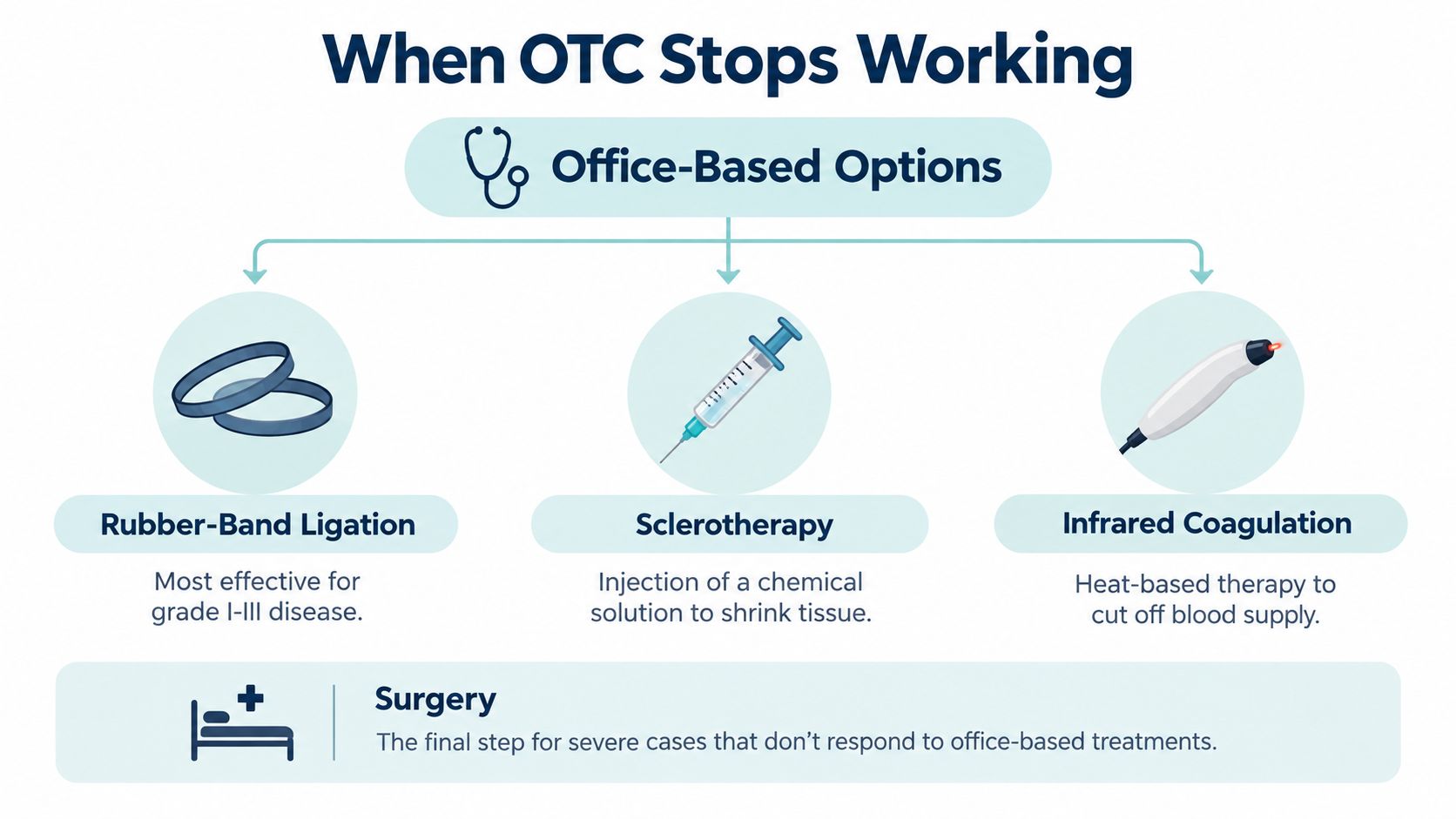
The guideline's selection criteria are narrower than a blanket statement that every grade fits an office procedure. Hemorrhoidectomy, removal of hemorrhoidal tissue, is generally reserved for selected external disease or symptomatic combined internal and external grade III to IV disease, according to the same guideline.
It also notes that Doppler-guided hemorrhoidal artery ligation may cause less postoperative pain than excisional surgery but has a higher recurrence risk. That's a real choice between recovery burden and the possibility of symptoms returning.
The chronic fissure branch
Fissure treatment may need to relax the internal anal muscle rather than only numb the surface. The ASCRS fissure management toolkit describes topical calcium-channel blockers as similarly effective to nitrates but with a more favorable adverse-effect profile. Nitrate-associated headaches can make treatment difficult to continue.
The earlier cited fissure guideline reports approximately 50% healing with topical nitroglycerin and surgical healing rates of 88% to 100%, alongside reported fecal-incontinence rates of 8% to 30% across trials. Those ranges reflect different studies and follow-up, not your personal odds.
Botulinum toxin is another option, including after topical treatment fails. Lateral internal sphincterotomy, surgery to reduce internal muscle tension, requires careful selection, particularly when bowel control is already affected.
Ask about:
- Suitability: Does my diagnosis support this option?
- Trade-offs: What are the recurrence, pain, and continence risks for me?
- Recovery: What help and time away from usual activities should I plan?
The hemorrhoid treatment recovery guide can help prepare that conversation.
Pregnancy, Postpartum, and the Honest Trade-Offs
Pregnancy, recovery after birth, and breastfeeding need separate medication conversations. A cream that someone used before pregnancy isn't automatically appropriate now.
The clinical material on anal fissures and vaginal birth estimates that hemorrhoids and fissures affect about 40% of pregnant or postpartum women, commonly appearing in the third trimester and the first one to two days after delivery. It also discusses delaying nonurgent hemorrhoid surgery until after pregnancy, childbirth, and lactation.
Recovery needs to accommodate both bathroom comfort and care of the birth area.

Build a bridge plan with your maternity team
The ACOG advice for hemorrhoids during pregnancy includes a high-fiber diet, adequate fluids, movement, warm rather than hot soaks, cold applications, and witch-hazel pads for pain and swelling relief.
Ask your OB/GYN, midwife, or pharmacist which active ingredients fit your stage of pregnancy or breastfeeding. Review the specific package, not just the word “hemorrhoid” on the front.
- Address constipation: Ask whether a stool softener is appropriate, especially if prescribed postpartum pain medicine includes an opioid.
- Separate the areas: Don't put anorectal products onto vaginal tissue, stitches, or a perineal wound unless your maternity clinician directs you to.
- Use clean handling: Wash your hands and avoid transferring material from the anal area toward the birth wound.
- Check the source of bleeding: If you can't tell whether bleeding is anal, vaginal, or from a wound, call your maternity team.
Postpartum priority: A comfort plan should make bowel movements manageable without interfering with wound care or hiding worsening symptoms.
Our pregnancy-safe hemorrhoid treatment guide offers questions to take to that conversation.
This video can accompany the discussion, but your maternity team's advice should guide individual product choices.
The external anesthetic option discussed earlier may be a candidate for short-term comfort only after the required professional consultation. Persistent symptoms need a reassessment plan, and severe pain, significant bleeding, fever, or drainage shouldn't wait for routine follow-up.
Quick Answers Readers Ask Before They Buy
How long does an external hemorrhoid flare take to settle?
There isn't a reliable single timeline for every flare. Swelling, a possible clot, stool consistency, and the actual diagnosis affect the plan. Follow your product's stop-use instructions and seek assessment if symptoms aren't clearly improving rather than assuming you need a longer course.
Can hemorrhoids and a fissure happen together?
Yes, having one doesn't exclude the other. The shared irritation described earlier helps explain why both may be considered, but an examination is needed to identify what's causing your symptoms. Don't decide that a visible lump explains all the pain or bleeding.
Should I buy a cream, spray, or suppository?
Choose by location and label, then by ingredients. External creams and sprays belong only where their directions permit application; suppositories are designed for internal use. If the pain is sharp, the area is bleeding, or you're unsure what's wrong, get advice before inserting anything.
Can I use lidocaine alongside a sitz bath?
A routine may include both warm-water comfort and a labeled anesthetic, but they have different roles. Follow the product's application and dosing instructions, and ask a pharmacist about combining products with overlapping ingredients. During pregnancy, breastfeeding, or postpartum wound recovery, check with your clinician first.
A useful buying question is: “What symptom will this relieve, and what would tell me to stop?” If you can't answer both from the label and professional advice, pause before purchasing.
Your Short Checklist Before Tomorrow Morning
That moment of blood on the paper can leave you feeling helpless. A practical next step is more useful than another anxious search.
Make treatment of hemorrhoids and fissures a clear plan
- Choose a fiber source: Put a food or appropriate supplement into your next-day routine.
- Prepare the bath: Arrange a comfortable warm-water soak using the timing discussed earlier.
- Leave the phone outside: Keep toilet visits focused, without lingering or repeated pushing.
- Match comfort to symptoms: Check the active ingredients, application site, and stop-use directions.
- Record the pattern: Note when symptoms began and whether they're improving.
- Arrange reassessment: Put the conservative-care checkpoint on your calendar only if no earlier warning sign requires attention.
You don't need polished medical language or an apology to ask for help. Tell your healthcare provider about persistent, severe, or bleeding symptoms so the plan addresses the cause, not just the discomfort.
Revivol-XR offers OTC cream for temporary soothing relief and sitz-bath products for comfort alongside a bowel-care routine. Visit Revivol-XR to compare ingredients and directions, and ask your clinician or pharmacist which option fits your symptoms, especially during pregnancy or postpartum recovery.