5 Paths to Safe Pregnant Hemorrhoids Relief

Most people don’t realize that straining on the toilet for just five minutes can be the start of years of hemorrhoid pain.
Finding effective pregnant hemorrhoids relief starts with understanding why this frustrating issue is so common. If you’re dealing with them, it’s not a sign you're doing anything wrong. The mix of hormonal shifts, incredible physical pressure, and digestive changes just creates the perfect storm for these swollen veins to show up.
Why Pregnancy and Hemorrhoids Often Go Hand in Hand
I once watched a friend, seven months pregnant and usually glowing, break down in tears of frustration. She felt like she had tried everything for her hemorrhoids, but the pain and itching were relentless. She couldn’t sit, she couldn’t sleep, and she felt completely alone in her misery.
What she didn't know was that her body was doing exactly what it was supposed to do to grow a healthy baby. The very processes protecting her pregnancy were also creating this painful side effect. It wasn’t a personal failing... it was a biological reality.
Your body's incredible pregnancy adaptations are the direct cause of hemorrhoids.
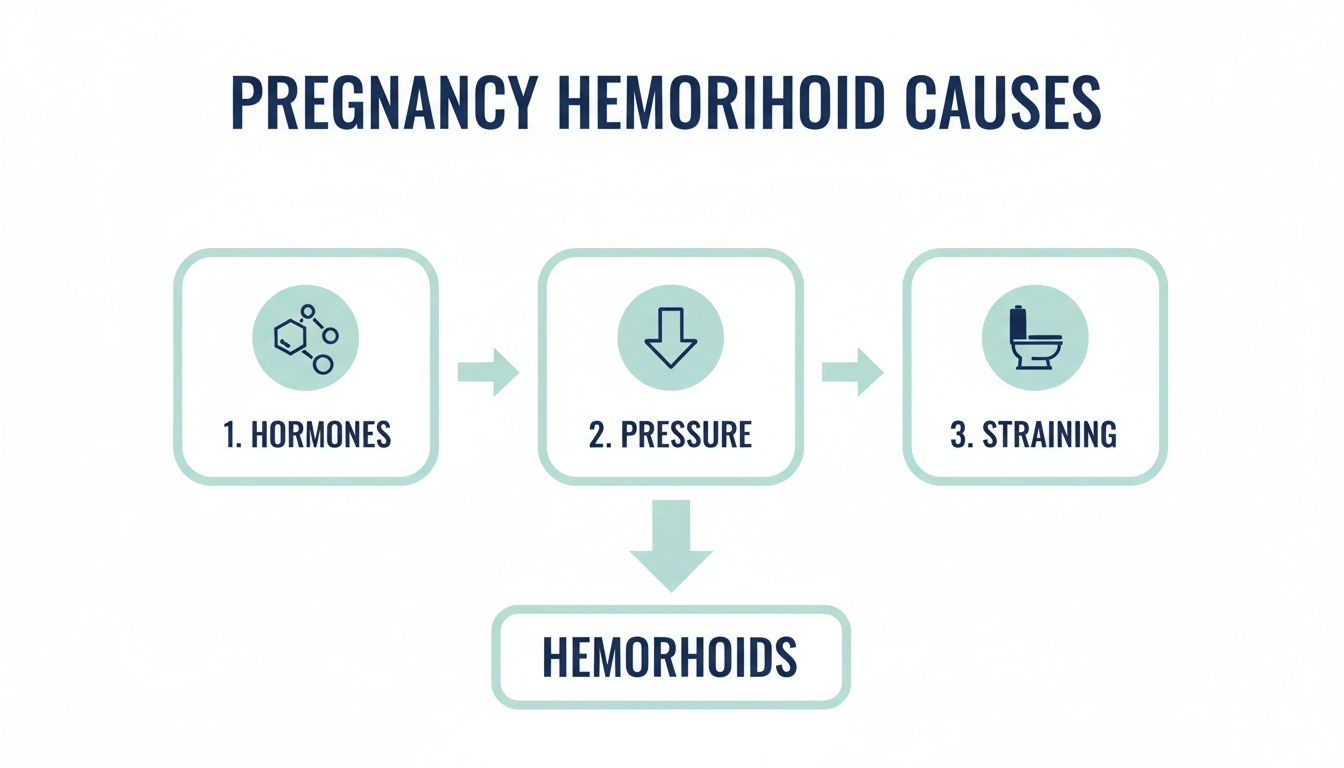
Understanding this link is the first step toward finding solutions that actually work. The main culprits are the physiological changes your body needs to go through. Think of it as a domino effect where one necessary change leads to another, sometimes with hemorrhoids as the end result.
Let's break down the main triggers so you can take action.
The Role of Pregnancy Hormones
Right from the first trimester, your body starts producing more of the hormone progesterone. This is essential for a healthy pregnancy... it maintains the uterine lining and keeps early contractions at bay.
But progesterone has a side effect: it relaxes the walls of your veins, making them more pliable and stretchy. When the vein walls in your rectal area are this relaxed, they're much more likely to swell and bulge under pressure.
The Pressure from a Growing Uterus
As your baby grows, your uterus expands, putting a ton of pressure on your entire pelvic region. This growth compresses the inferior vena cava and other pelvic veins.
This compression slows down blood flow from the lower half of your body. The blood starts to pool, which increases pressure in the veins below your uterus… including the ones in your rectum. This is most intense in the third trimester.
The Constipation Connection
Pregnancy-related constipation is another huge factor. That same hormone, progesterone, that relaxes your veins also slows down your entire digestive system. This can lead to harder, drier stools.
When you're constipated, you're more likely to strain on the toilet. That straining puts immense, direct pressure on the rectal veins, causing them to swell. This is a crucial link, because managing constipation is one of the best ways to find relief.
You can dive deeper into the specific causes of hemorrhoids during pregnancy in our detailed guide.
Pregnancy Hemorrhoid Triggers at a Glance
| Factor | How It Contributes to Hemorrhoids | Peak Impact Stage |
|---|---|---|
| Hormonal Changes (Progesterone) | Relaxes vein walls, making them prone to swelling. Also slows digestion, leading to constipation. | First to Third Trimester |
| Increased Blood Volume | Places extra strain on the entire circulatory system, including the veins in the rectal area. | Second & Third Trimester |
| Growing Uterus | Compresses pelvic veins and the inferior vena cava, slowing blood return from the lower body. | Third Trimester |
| Constipation & Straining | Puts direct, forceful pressure on rectal veins during bowel movements. | All Trimesters & Postpartum |
| Labor & Delivery | Intense pushing during delivery can cause new hemorrhoids or worsen existing ones. | Childbirth |
| Postpartum Recovery | Lingering effects of constipation, straining, and hormonal shifts can delay healing. | First 6 Weeks Postpartum |
Research backs this up... hemorrhoids are incredibly common, affecting up to 40% of women during pregnancy or postpartum. You can find more insights about these pregnancy-related physiological changes.
Finding Immediate and Safe At-Home Relief
When hemorrhoids strike, the itching, burning, and pain can feel relentless. You need relief that’s not just fast, but also completely safe for you and your baby.
These methods are all about soothing inflammation, shrinking swollen tissue, and giving your body a chance to heal.
Here are the concrete steps to take for at-home relief:
- Soak in a Sitz Bath: Use a basin over your toilet or a few inches of warm water in the tub. Soak for 15–20 minutes, a few times a day. The warmth boosts blood flow and provides incredible relief. For a more soothing soak, add Revivol-XR® Sitz Bath Soak Mix, a comforting blend of Epsom salt, Dead Sea salt, witch hazel and essential oils. You can learn more about the benefits of a sitz bath for hemorrhoids.
- Use a Cold Compress: Cold shrinks swollen tissue and numbs the area. An ice pack wrapped in a cloth or witch hazel pads kept in the fridge are perfect. Apply for 10–15 minutes at a time.
- Adjust Your Position: Sleep on your left side to take pressure off your major veins. Avoid sitting for long periods and use a doughnut cushion if you need to.
That moment with my friend wasn't about her feeling weak... it was about her body doing a powerful job without the right support. These simple actions provide that support, helping you manage the symptoms so you can focus on your pregnancy.
Choosing Safe Over The Counter Treatments
Walking down the pharmacy aisle for pregnant hemorrhoids relief can feel completely overwhelming. How do you know what’s actually safe for you and your baby? The secret is knowing which doctor-approved ingredients to look for.
First thing's first: always, always chat with your OB/GYN or midwife before trying any new product. They know your health history and can give you the green light.
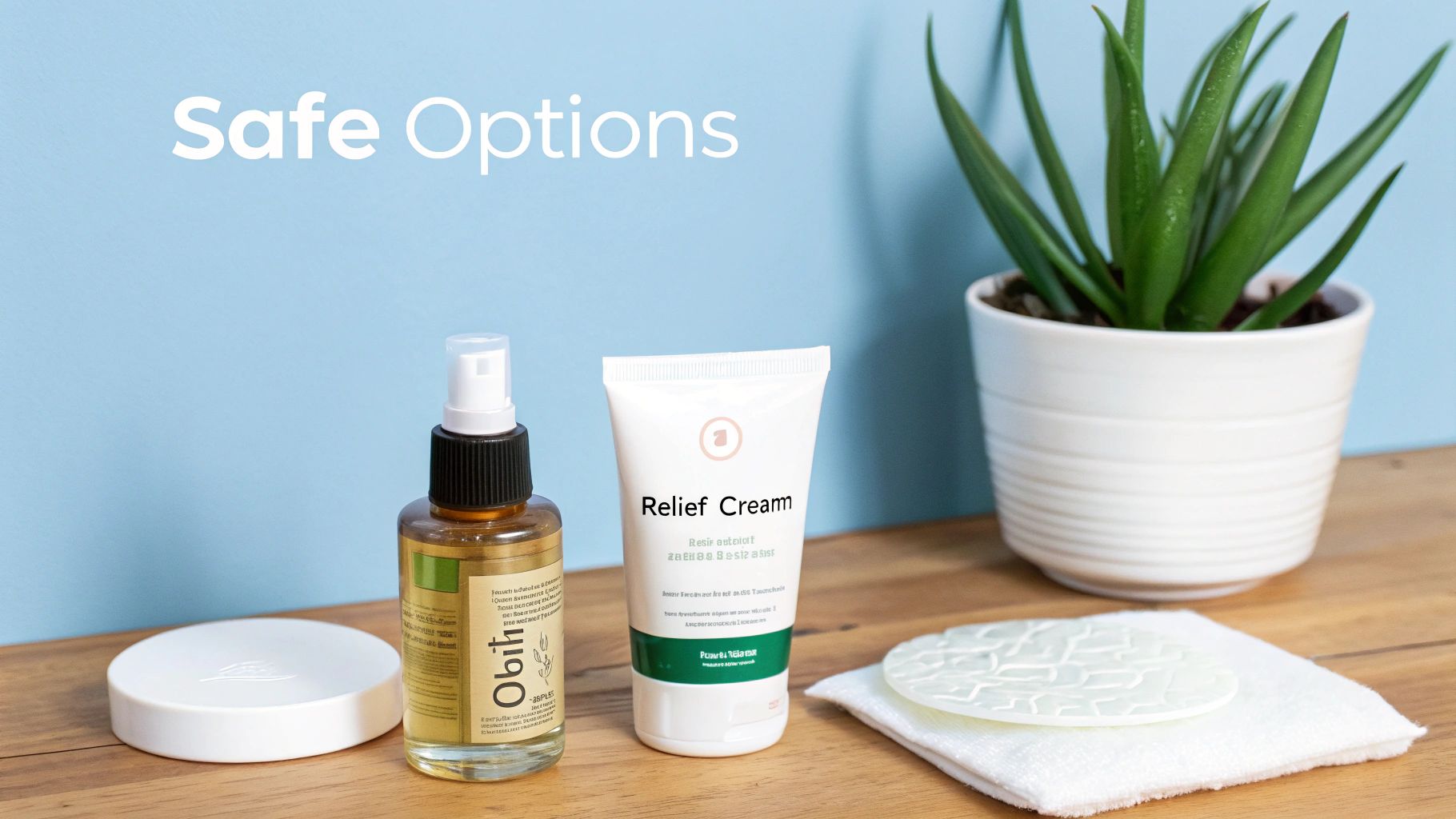
Most over-the-counter (OTC) treatments work by combining ingredients that soothe, protect, and shrink swollen tissues. It’s all about finding the right mix for your symptoms.
Understanding Key Soothing and Protective Ingredients
You've probably heard of the safest and most effective ingredients before. They work by either creating a physical barrier over irritated skin or calming inflammation directly.
-
Witch Hazel: A natural astringent that helps tighten and shrink swollen tissue. It’s fantastic for that cooling sensation and reducing itch.
-
Aloe Vera: Famous for its soothing properties, aloe gently calms burning and irritation while helping moisturize delicate skin.
-
Glycerin & Lanolin: These are protectants. They form a thin, protective layer over the hemorrhoid, which is a lifesaver. It prevents friction and makes bowel movements less irritating.
Targeting Pain and Swelling More Directly
When simple soothing agents aren't cutting it, you might need something with a little more targeted power. This is where numbing agents and vasoconstrictors come into play.
Numbing agents, like lidocaine, are a game-changer for severe pain and itching. A 5% lidocaine cream is the maximum strength you can get over the counter and can provide hours of relief.
Vasoconstrictors, such as phenylephrine, work by narrowing the blood vessels within the swollen tissue. This action directly reduces swelling.
It's no surprise that most women reach for topical solutions. A huge Taiwanese study of over 1.6 million deliveries found that an overwhelming 93.2% used topical ointments. You can read the full research on treatment preferences during pregnancy.
OTC Ingredient Guide for Pregnancy
To help you make sense of the labels, here's a quick guide to common OTC ingredients.
| Ingredient | Primary Action | Why It Helps | Brand Example |
|---|---|---|---|
| Lidocaine | Anesthetic | Numbs the area to provide fast relief from severe pain and itching. | Revivol-XR |
| Phenylephrine | Vasoconstrictor | Narrows blood vessels to shrink swollen hemorrhoidal tissue. | Preparation H |
| Witch Hazel | Astringent | Tones and tightens tissue, providing cooling relief from itching. | Tucks Pads |
| Glycerin / Lanolin | Protectant | Forms a physical barrier to prevent friction and irritation. | A+D Ointment |
| Aloe Vera | Soothing Agent | Calms inflammation and moisturizes to help heal irritated skin. | Earth Mama Organics |
Remember, this is just a guide. It's essential to discuss any specific product or ingredient with your healthcare provider before use.
A Smart, Multi-Symptom Approach
Instead of juggling separate products, a multi-action cream simplifies your routine and usually gets better results.
This is where a thoughtfully formulated product like Revivol-XR's Advanced Hemorrhoid & Fissure Cream comes in. It’s formulated with several of these ingredients:
- 5% Lidocaine: Maximum OTC-strength numbing for temporary relief of pain, itching and burning.
- Phenylephrine: Temporarily shrinks swollen hemorrhoidal tissue.
- Glycerin: Temporarily provides a protective coating over irritated skin.
By putting these active ingredients together, it provides temporary pregnant hemorrhoids relief without any steroids. If pregnant or breast-feeding, ask a health professional before use.
Your Guide to Postpartum Hemorrhoid Recovery
The moment you’ve been waiting for has finally arrived... you’re holding your new baby. But the physical challenges don't just end with delivery. The immense pressure of childbirth can easily cause new hemorrhoids or make existing ones worse.
This period is all about gentle care and giving your body the time it needs to heal. You’ve just accomplished something incredible, and now it's time to nurture yourself. Finding effective postpartum hemorrhoid relief is a huge part of that process.
You're definitely not alone in this. Postpartum hemorrhoids can ambush new moms, with rates soaring to 31% in high-risk groups. The physical act of birth often creates more intense pressure than the entire third trimester. You can find more information in this landmark study on anorectal lesions post-birth.
Gentle Cleansing for Sensitive Skin
After delivery, the perineal area is unbelievably tender. Gentle cleansing is absolutely non-negotiable for comfort and preventing infection.
This is where a product like Revivol-XR® Hygienic Cleansing Lotion becomes a postpartum lifesaver. You simply apply a small pump to your regular toilet paper, instantly transforming it into a soft, soothing, and cleansing wipe.
It’s made with gentle ingredients like aloe and witch hazel, which are perfect for calming irritated skin without the fragrances or alcohols that can sting.
Discreet and Effective Pain Management
As a new mom, you're constantly on the move. You need pain relief that works fast and fits into your hectic new life. You might not have 20 minutes for a sitz bath when the baby needs you.
For those moments, a quick application is a game-changer. Revivol-XR® 5% Lidocaine Numbing Cream, applied externally, helps relieve pain, itching and burning associated with hemorrhoids.
Patience and Consistent Care are Key
It’s easy to feel discouraged if your hemorrhoids don't disappear overnight. But remember, your body has been through a monumental event. Healing takes time.
For most women, postpartum hemorrhoids get a lot better within a few weeks with consistent, gentle care. Stick with your sitz baths when you can, use soothing products, and focus on keeping your stools soft.
- Stay Hydrated: Drink plenty of water, especially if you're breastfeeding.
- Eat Fiber: Add high-fiber foods like fruits, vegetables, and whole grains back into your diet.
- Use a Stool Softener: Talk to your doctor about a pregnancy-safe stool softener if you need a little extra help.
By being patient and consistent, you help your body heal. Check out our complete guide on how to treat hemorrhoids after pregnancy.
Preventing Flare Ups Throughout Pregnancy and Beyond
While finding fast relief is a top priority, the best long-term plan is a proactive one. Shifting your focus from just managing symptoms to actively preventing flare-ups can make a world of difference. It’s all about building small, gentle habits that support your body.
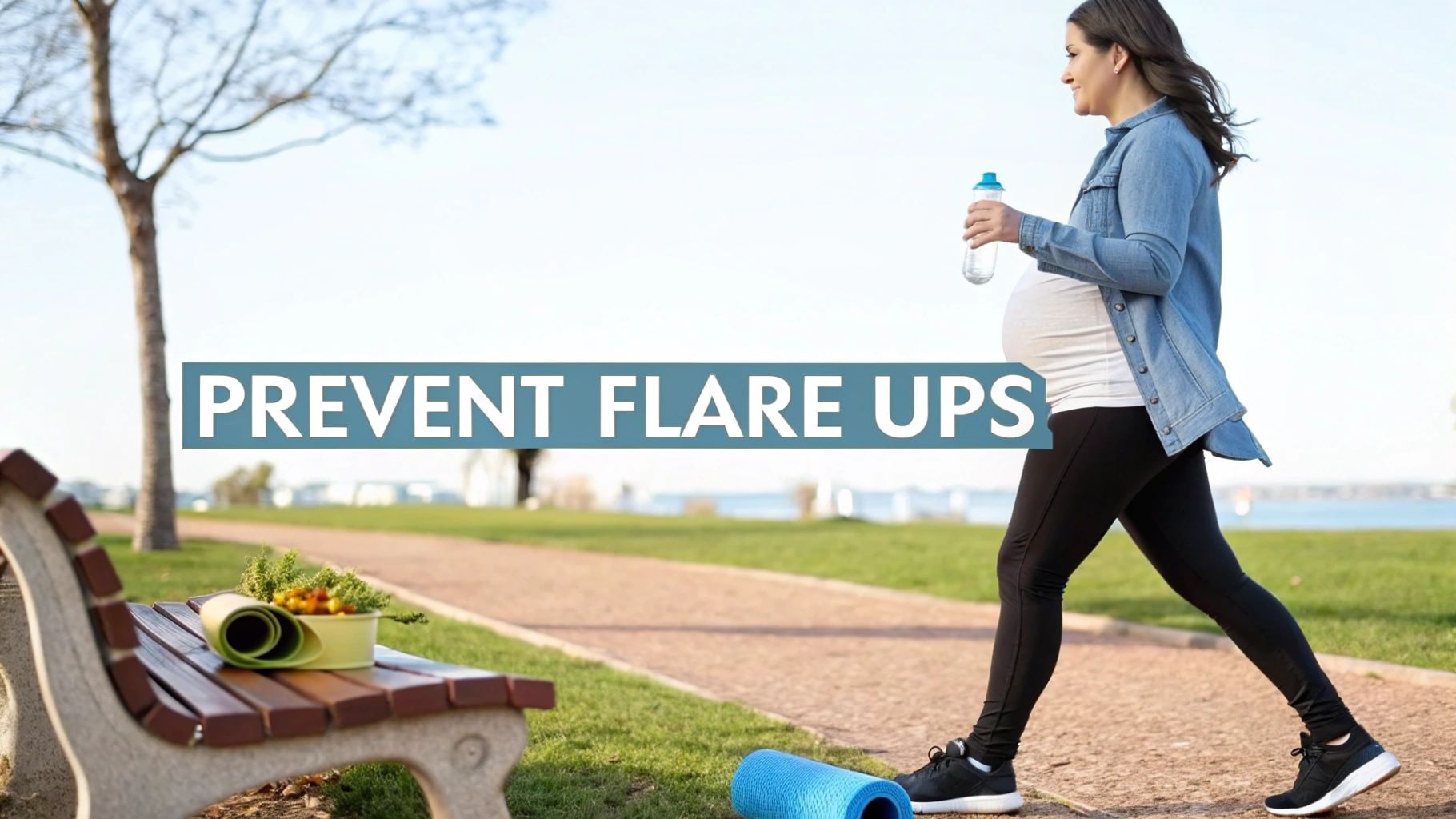
Making a few consistent tweaks to your daily routine can dramatically lower your risk of developing painful hemorrhoids. The goal here is to get ahead of the main culprits... constipation and poor circulation... before they ever become a problem.
Master Your Diet to Beat Constipation
Constipation is public enemy number one when it comes to hemorrhoids. That direct pressure is exactly what causes rectal veins to swell.
The fix is surprisingly simple, but you have to stick with it: fiber and water.
- Boost Your Fiber Intake: Aim for 25 to 30 grams of fiber every day. Awesome sources include fruits (pears and berries), veggies (broccoli and Brussels sprouts), beans, lentils, and whole grains like oatmeal.
- Hydrate Relentlessly: Water is fiber's best friend. It helps soften your stool, making it much easier to pass. Try to drink at least eight to ten glasses of water daily.
This advice is backed by solid research. A 2021 study highlighted constipation as a common problem for pregnant women dealing with perineal issues. You can read more about the study's findings on perineal health during pregnancy.
Embrace Gentle Movement
Even light activity offers huge benefits for preventing hemorrhoids. Movement is a fantastic way to stimulate bowel function and improve circulation, which helps stop blood from pooling in your pelvic veins.
Try adding one of these activities into your regular routine:
- Daily Walks: A brisk 20–30 minute walk is one of the safest and most effective exercises you can do.
- Prenatal Yoga: This practice is wonderful for circulation, and many poses are specifically designed to ease pelvic pressure.
- Swimming: The water’s buoyancy takes all the pressure off your veins while giving you a great full-body workout.
Smart Toilet Habits
How you use the bathroom matters more than you might think. Lingering on the toilet or straining puts direct, intense pressure on your rectal area.
Adopt these smart habits to protect yourself:
- Go When You Feel the Urge: Don't hold it in. Waiting can make constipation worse.
- Avoid Straining: Let gravity do the work. If nothing happens after a minute or two, get up and try again later.
- Use a Footstool: Propping your feet up on a small stool (like a Squatty Potty) changes your posture, aligning your colon for a smoother movement.
- No Scrolling: Leave your phone outside the bathroom. Sitting on the toilet for too long allows blood to pool in the rectal veins.
Common Questions About Pregnancy Hemorrhoids
Pregnancy comes with a whole new set of questions, and when hemorrhoids join the party, that list gets a lot longer.
We’ve gathered the most common questions from expecting moms to give you some peace of mind and help you handle this common pregnancy symptom.
Will Pregnancy Hemorrhoids Go Away After Birth?
The good news is, for most women, hemorrhoids that pop up during pregnancy do go away on their own after delivery.
Once your baby arrives, that intense pressure on your pelvic veins vanishes. Your hormone levels rebalance, and your blood volume goes down. The swollen veins can finally shrink back to normal. It might take a few weeks, but you should notice a big improvement with consistent care.
Can Hemorrhoids Affect My Baby or Delivery?
Let’s put this worry to rest: hemorrhoids pose zero direct risk to your baby. They're entirely a maternal health issue.
During a vaginal delivery, pushing can temporarily make existing hemorrhoids worse or cause new ones. While this can be uncomfortable for you after birth, it's incredibly common and doesn't complicate the delivery itself.
Are There Any Treatments I Must Avoid?
Yes, absolutely. The main category to be cautious with is steroid creams, like those containing hydrocortisone.
Although steroid creams are great for inflammation, their routine use during pregnancy is generally discouraged unless your doctor says otherwise. Always check the active ingredients, and when in doubt, just go for a steroid-free formula.
Also, be wary of certain herbal remedies or supplements. Stick with tried-and-true, doctor-approved ingredients like witch hazel, aloe, glycerin, and lidocaine.
When Should I Call My Doctor?
Most hemorrhoids during pregnancy can be managed at home, but there are definitely times when you should pick up the phone. Don't wait to call your provider if you experience:
- Severe or escalating pain that home remedies aren't touching.
- Significant bleeding during a bowel movement.
- A thrombosed hemorrhoid. This is a hard, extremely painful lump that might look purple or blue.
- Any signs of infection, like a fever or increased redness and swelling.
Your doctor can give you a proper diagnosis and prescribe stronger, pregnancy-safe treatments if you need them.
For temporary relief of hemorrhoid symptoms during pregnancy and postpartum, explore the range of products from Hemorrhoid.com. Our steroid-free formulas are designed to provide gentle relief; if pregnant or breast-feeding, ask a health professional before use. Visit us at https://hemorrhoid.com to find the right product for you.