Pregnancy Hemorrhoids Bleeding: A Reassuring Guide

Most pregnancy hemorrhoids bleeding is small, bright red, and tied to bowel movements, and hemorrhoids or fissures show up in about 40% of pregnant or postpartum women. Rectal bleeding during pregnancy has been reported in 10% to 43% of cases, but any bleeding still needs to be reported to a clinician so the source isn't missed.
You're not overreacting if you're staring at toilet paper or the bowl and feeling alarmed. A lot of people have that same jolt of fear, especially in the third trimester or after delivery, when the area is already sore and every bathroom trip feels loaded.
Pregnancy hemorrhoids bleeding is common, but it should still be taken seriously.
Table of Contents
- What Bleeding Hemorrhoids in Pregnancy Can Feel Like
- Why Hemorrhoids Form and Bleed During Pregnancy and Childbirth
- When Bleeding Is Most Likely to Happen Across Pregnancy and Postpartum
- Normal Hemorrhoid Bleeding Versus When to Call Your Provider
- Safe At-Home Comfort Measures for Pregnancy Hemorrhoid Bleeding
- How to Talk to Your OB/GYN or Midwife About Bleeding Hemorrhoids
What Bleeding Hemorrhoids in Pregnancy Can Feel Like
You wipe, see bright red blood, feel a tender lump, and then spend the next hour wondering whether it is “just hemorrhoids” or something more serious. The amount may be small, but the worry can feel immediate and heavy.
A common pattern is a little blood on toilet paper, a streak on the stool, or a few drops in the bowl after a bowel movement. That pattern fits hemorrhoids, and it can also overlap with anal fissures and other benign anorectal problems that show up in pregnancy and after childbirth. If you are trying to compare pain patterns, what hemorrhoid pain can feel like gives a plain explanation of what people often notice.
Practical rule: small, bright red blood after wiping often fits hemorrhoids, but it still deserves a call to your clinician.
Pregnancy can make the whole area feel more sensitive. Swelling, pelvic pressure, constipation, and postpartum soreness can turn a routine bathroom trip into a painful reminder that everything feels stretched and irritated. That does not mean you caused it, and it does not automatically mean the bleeding is dangerous.
Prior hemorrhoids matter too. If you have had them before, pregnancy pressure can make the veins flare more easily, so bleeding may start with less strain than you expect. A peer-reviewed review of anorectal disease in pregnancy notes that hemorrhoid or fissure-related bleeding is a common cause of pregnancy-related rectal bleeding, and conservative care often helps symptoms settle peer-reviewed review of anorectal disease in pregnancy.
For tonight, a simple check helps: note whether the blood is bright red, whether it appears only after a bowel movement, and whether pain is coming from a lump, wiping, or a tearing feeling. If the bleeding is more than a few spots, keeps happening, or comes with dizziness, black stool, fever, or severe pain, get medical advice promptly.
Why Hemorrhoids Form and Bleed During Pregnancy and Childbirth
Hemorrhoids are swollen veins in and around the anus and lower rectum. They can be internal, which means they form inside the anal canal, or external, which means they sit under the skin around the opening.
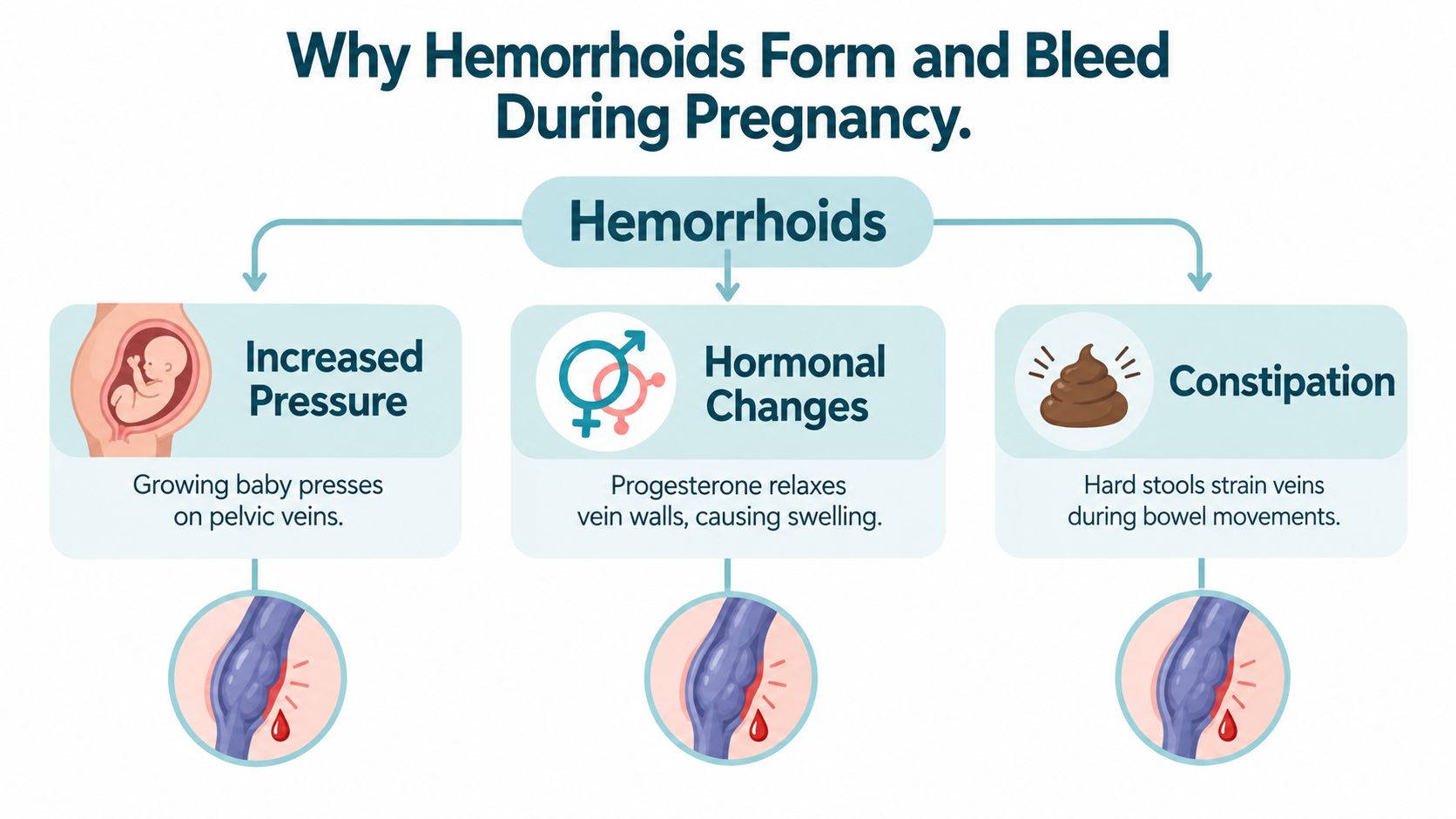
Pregnancy changes the pressure inside the pelvis, and that matters for the veins around the rectum. As the uterus grows, it compresses the venous system, pregnancy hormones make vein walls looser, and blood volume rises, which adds more strain to veins that are already crowded mechanism review. Pregnancy hemorrhoids are common enough that we cover the baseline picture in are hemorrhoids common during pregnancy.
That pressure slows drainage. When blood has a harder time moving out, the tissue swells, and swollen tissue bleeds more easily after a bowel movement, wiping, or sitting for a long time. The bleeding is often bright red because it comes from tissue close to the opening.
Constipation and straining can make that irritation worse, but they do not explain every case. A prior hemorrhoid history can matter just as much, because pregnancy pressure can flare veins that were already prone to swelling. A 2024 observational study found prior hemorrhoid history was the significant predictor of symptoms, while constipation, toilet straining, low fiber intake, and low fluid intake were not significant predictors in that dataset 2024 observational study.
That is why prevention advice should cover bowel habits and the body changes of pregnancy together. If you have had hemorrhoids before, even a fairly normal bathroom routine may not fully prevent bleeding.
When Bleeding Is Most Likely to Happen Across Pregnancy and Postpartum
Bleeding is not random. It tends to show up later in pregnancy, when pelvic pressure is higher and bowel movements are often harder to pass. One study reported per-rectal bleeding in 10.6% of women in the first trimester, 12.9% in the second, and 30.6% in the third, with the third trimester significantly higher than earlier periods trimester symptom study. The same study found that 43% of women in the third trimester had at least one anorectal symptom, including pain, painful defecation, and bleeding same study.
Postpartum time matters too. Labor pressure, constipation, and healing tissue can keep the area irritated after birth postpartum review.
Timing snapshot
| Stage | Reported Symptom or Bleeding Rate | Why It Happens |
|---|---|---|
| First trimester | Per-rectal bleeding reported by 10.6% | Early pregnancy changes can start venous strain |
| Second trimester | Per-rectal bleeding reported by 12.9% | Pressure and bowel changes keep building |
| Third trimester | Per-rectal bleeding reported by 30.6%, and 43% had at least one anorectal symptom | Larger uterus, more pelvic pressure, more constipation or straining |
| Third trimester and postpartum | Perianal disease was most frequent in the third trimester at 61% of cited cases, and the first or second day after delivery at 34% | Peak pressure before birth, then immediate postpartum strain |
| Postpartum hospital stay | Hemorrhoids reported in 28% of women | Labor pressure and early recovery |
| First 3 months after childbirth | Hemorrhoids reported in 8% to 24% of women | Recovery, bowel changes, and tissue healing |
| Postpartum sample | Hemorrhoids in 35.1% of participants | Ongoing postpartum pressure and constipation |
All figures in the table come from the study above and the postpartum review cited here.
A practical takeaway is easy to miss. If you have had hemorrhoids before, pregnancy pressure may trigger a flare rather than a brand-new problem. That can feel discouraging, but it does not mean your body is failing to settle down. It usually means the veins need more support while pressure is still high.
Normal Hemorrhoid Bleeding Versus When to Call Your Provider
You may notice a small smear of bright red blood on toilet paper, a few drops in the bowl, or a streak on the stool after a bowel movement. That pattern often fits hemorrhoids, especially when it comes with itching, swelling, fullness, or soreness around the anus rather than deep belly pain.
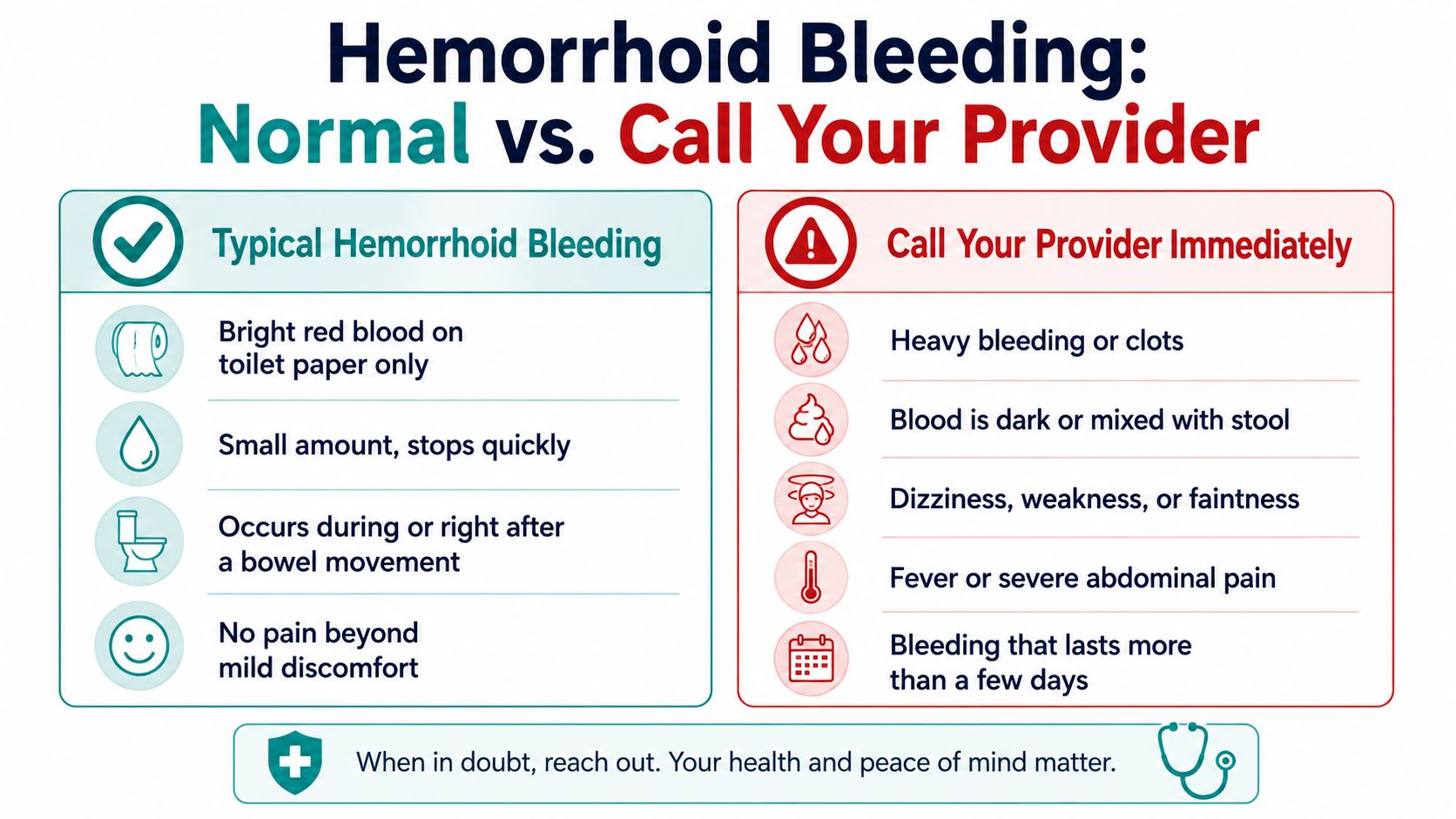
A simple triage checklist
- Bright red blood on paper only. This pattern often points to hemorrhoids.
- A small amount that stops quickly. That is more reassuring than ongoing bleeding.
- Blood that appears during or right after a bowel movement. This is common with anorectal irritation.
- Heavy bleeding or clots. Seek prompt medical attention instead of waiting it out.
- Toilet water turning red. Do not treat this as routine hemorrhoid bleeding.
- Dizziness, weakness, or faintness. Get urgent help.
- Black or tarry stool. That points away from hemorrhoids toward another cause.
- Bleeding that lasts more than a few days. Contact your provider.
Rectal bleeding in pregnancy is not always hemorrhoids. reviewed guidance notes that inflammatory, neoplastic, and other gastrointestinal disease can also cause bleeding, and more concerning signs include large-volume bleeding, anemia, low blood volume, weight loss, constitutional symptoms, or pregnancy compromise.
If you cannot tell whether the blood is coming from the rectum or the vagina, report it right away.
Cleveland Clinic advises pregnant patients to tell their healthcare provider about any bleeding they notice, and to reach out if anal pain does not improve with home care Cleveland Clinic. That low threshold matters when pressure, constipation, or an older hemorrhoid history makes the source harder to sort out.
Safe At-Home Comfort Measures for Pregnancy Hemorrhoid Bleeding
Start by making bowel movements easier on the tissue. Soft stools move with less pressure, so the swollen veins are less likely to reopen and bleed. That usually means more fluids, more fiber from food when you can, and stool-softening help only if your OB team says it is appropriate clinical review.
A few small habits can lower repeat irritation:
- Don't strain, even if you feel rushed.
- Go when the urge hits, because waiting can make stool harder.
- Avoid long toilet sitting, since pressure builds quickly.
- Clean gently with moisture, not rough wiping.
- Use a cool compress for short periods if swelling feels tender.
Warm sitz baths can help too. A sitz bath is a shallow soak that lets the area rest from friction, and it is often used after bowel movements or childbirth home care guidance. Gentle movement, loose clothing, and lying on your left side can also ease pelvic pressure without asking much of your body.
For external cleansing, some people prefer a soft wipe alternative. Revivol-XR® Hygienic Cleansing Lotion is a toilet-paper lotion with aloe, coconut, chamomile, and witch hazel made for external cleansing comfort. Revivol-XR 5% Lidocaine Numbing Cream is meant for temporary external relief of pain, burning, or itching. Whichever product you consider, clear it with your OB team first, since pregnancy and breastfeeding call for individualized guidance.
If you want to reduce irritation tonight, start with the lowest-effort steps first: hydrate, soften stools, and avoid anything that scrapes or adds pressure. That is usually the fastest way to break the cycle of hard stool, soreness, and repeat bleeding.
How to Talk to Your OB/GYN or Midwife About Bleeding Hemorrhoids
You wipe, see bright red blood, and wonder if you should wait it out. This is the moment to call your prenatal or postpartum team, because they can sort out hemorrhoids from other causes of bleeding and decide whether you need a closer look.
Start with a clear, simple summary:
- When it started, during pregnancy or after delivery.
- How much you see, paper-only spotting, blood in the bowl, clots, or a steady flow.
- What color it is, bright red, dark, or mixed with stool.
- What else is going on, pain, itching, constipation, fever, dizziness, or weakness.
- What you have tried, fiber, fluids, sitz baths, or gentle cleansing.
- Any past hemorrhoid history, because earlier problems often flare again when pelvic pressure rises.
A support person can help you make the call if you are tired, sore, or worried you will forget details. That can matter even more after delivery, when sleep loss and healing make every task feel heavier.
A provider visit usually starts with questions, then a brief exam if needed. They may also ask about bowel habits, straining, and whether the bleeding looks separate from the stool, since fissures, inflammation, and hemorrhoids can look similar at first. If the bleeding pattern fits hemorrhoids, they will usually focus on comfort, stool softening, and warning signs to watch for. If the story does not fit, they can check for another source instead of assuming.
Quick questions people ask
Is bright red blood on toilet paper an emergency?
Usually no, but it should still be reported.
Can hemorrhoids cause anemia in pregnancy?
Repeated bleeding can contribute to anemia, so bleeding that keeps coming back needs evaluation.
Does this mean I'll need a C-section?
Hemorrhoids alone do not decide delivery mode, but severe symptoms should be discussed with your OB team.
If your provider's line is busy, most prenatal teams have a triage nurse who can return your call the same day. Use that line rather than waiting for the next appointment.