Petroleum Jelly Anal Fissure: Does It Really Help?

Petroleum jelly can soothe and protect the irritated skin around an anal fissure, especially during bowel movements, but it does not heal the tear or relax the anal sphincter. Conservative care closes about 90% of acute fissures and fewer than 40% of chronic ones, so a barrier sits inside a larger plan rather than replacing it.
If you're reading this with a wince, you're in good company. The petroleum jelly anal fissure question lands in our inbox most weeks, usually phrased as "can I just use Vaseline," and usually asked by someone who has been toughing out a burning, stinging pain for longer than they'd like to admit.
The short version: reach for the tub for comfort, and reach for a clinician when the pain keeps coming back. The rest of this page explains exactly where that line sits.
Table of Contents
- Does Petroleum Jelly Help an Anal Fissure
- How to Apply Petroleum Jelly Around the Fissure
- Why a Barrier Alone Does Not Heal the Tear
- Keep Stools Soft So the Fissure Can Heal
- Using Petroleum Jelly During Pregnancy or After Birth
- When Fissure Pain or Bleeding Needs a Doctor
- Choose Your Next Step for Fissure Comfort
Does Petroleum Jelly Help an Anal Fissure
Yes for comfort. No for healing. Nearly all the confusion around petroleum jelly anal fissure care comes from blurring those two jobs into one.
Think of the film the way you'd think of lip balm on cracked lips. A thin layer sits on the surface, stool and toilet paper glide instead of dragging, and raw skin gets a moment of quiet. It also seals in moisture, which helps skin that has been over-wiped and irritated.
That's a real benefit. It is not a small thing to make a bowel movement less frightening when you've been dreading every trip to the bathroom.
Petroleum jelly cannot numb pain the way a topical anesthetic does. It doesn't relax the tight internal muscle that keeps a fissure from closing. It isn't an antibiotic, and it won't treat an infection. Those limits matter because a fissure that keeps reopening usually needs something more than a surface coating.
Practical rule: A barrier changes how the bowel movement feels. It doesn't change how the tear heals.
Clinical references list petroleum jelly among first-line topical lubricants used for comfort, and conservative measures heal about 90% of acute fissures while healing fewer than 40% of chronic ones (5-Minute Clinical Consult). That gap tells you duration matters as much as the product you reach for.
It helps to compare the options side by side, because each one is doing a different job.
What each option does for an anal fissure
| Goal | Petroleum jelly | 5% lidocaine cream | Nitroglycerin ointment |
|---|---|---|---|
| Forms a protective barrier on external skin | Yes | Limited | No |
| Numbs local pain | No | Yes, topical anesthetic | No |
| Relaxes the internal anal sphincter | No, not shown in trials | No | Yes, lowers resting pressure |
| Heals chronic fissures | Not shown in trials | Not a healing treatment | Heals at least 50% of chronic fissures |
Read the table left to right and the logic becomes obvious. Petroleum jelly is a comfort layer. A numbing cream is a pain layer. A nitrate ointment is a muscle layer, and it comes with supervision because of headaches and blood pressure effects.
Use petroleum jelly for comfort. Expect real healing when stools soften and, if the tear persists, a clinician adds treatment that targets the muscle.
How to Apply Petroleum Jelly Around the Fissure
This is outside work. The skin around the anal opening gets the film, and nothing goes inside. Keep that in mind and the rest is simple.
- Wash gently with mild soap and warm water, then rinse. Skip washcloths, scrubbing and anything scented, because friction and perfume both irritate broken skin. A handheld shower head or a squeeze bottle of warm water works better than a wipe.
- Pat the skin dry with a clean towel. Don't rub. Damp skin under a sealed film traps moisture and can turn sore skin soggier, so a few seconds of gentle patting matters.
- Apply a thin layer with a clean fingertip or a cotton pad. You want a sheen, not a scoop. A thick layer slides around, stains underwear and traps heat, which is the most common mistake people make.
- Time it around the bowel movement. Apply before you go to create a slick surface, and again afterward to protect the skin while you clean up. Rinsing with warm water beats dry paper every time.
- Keep it outside the anal opening. Never push petroleum jelly inside the rectum or apply it with a device. Products labeled for external use only are not designed for internal use.
- Wash your hands afterward. Then reassess in a few days rather than reapplying on autopilot for weeks.
Here's the same sequence as a flow you can follow.
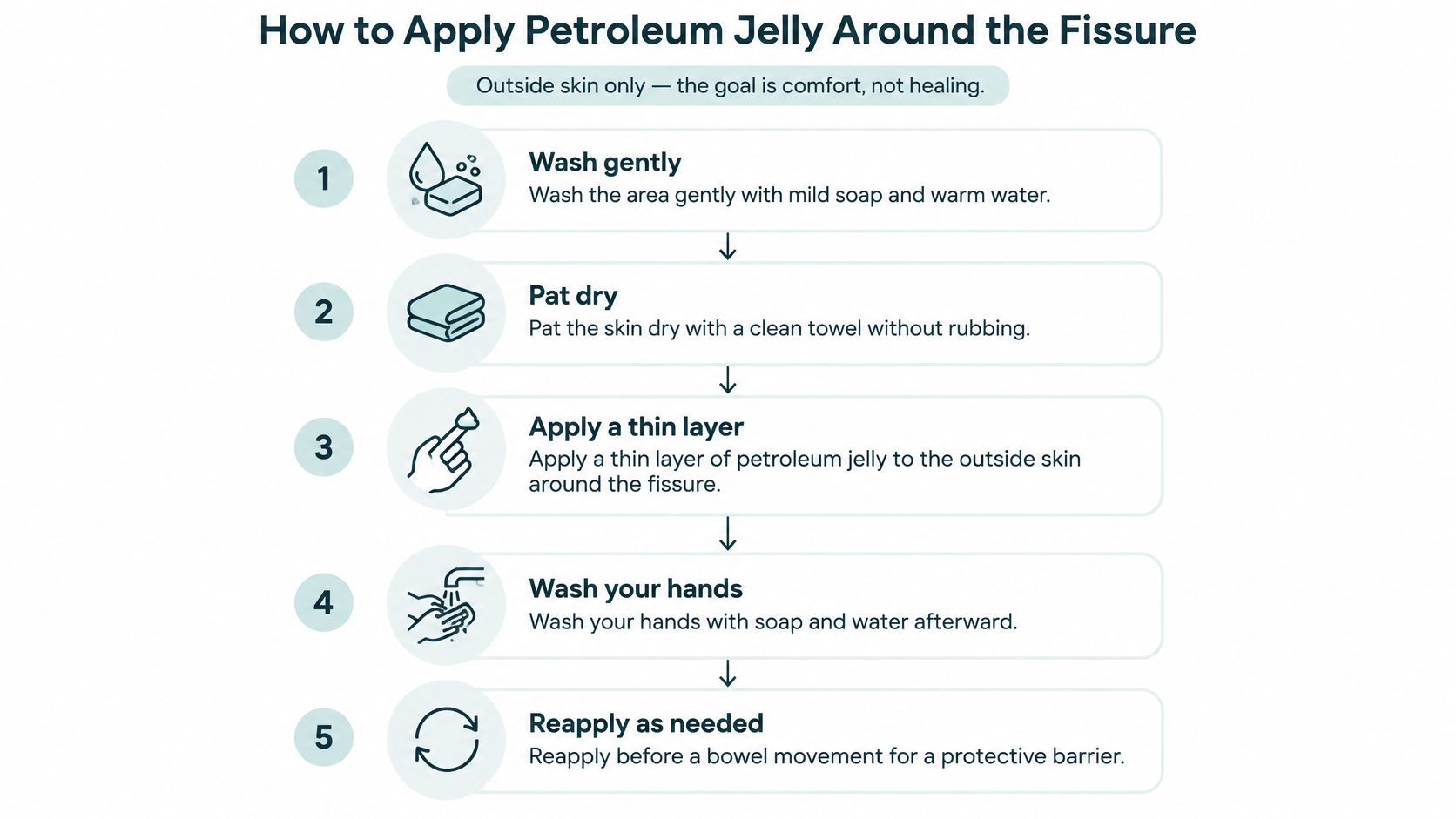
The same sequence applies to any external cream or ointment you use in this area: clean with mild soap and warm water, rinse and pat dry, then spread a thin layer over the affected external area. Nothing labeled for external use goes into the rectum.
A warm soak can make the cleanup step gentler too. Revivol-XR® Sitz Bath Soak Mix blends Epsom salt with 19 other natural and organic ingredients, including Dead Sea salt, witch hazel, organic coconut oil and organic chamomile oil, and it dissolves in 1 to 2 minutes in a sitz bath for a toilet seat. Follow the tablespoon mixing directions on the pouch and patch test with a teaspoon first if your skin is sensitive.
What relief should look like: less burning when you wipe, fewer pink streaks on toilet paper, and a bowel movement you stop bracing for. If you still dread the bathroom after a week of this routine, that's your signal to stop guessing alone.
Why a Barrier Alone Does Not Heal the Tear
An anal fissure is a small tear in the lining of the anal canal. The pain triggers the internal anal sphincter to clamp down, which lowers blood flow to the edge of the tear, which slows healing and keeps the pain going. That loop is why a fissure can outlast the injury that started it.
Petroleum jelly sits on the surface. The sphincter is a muscle underneath, and a surface film cannot tell a muscle what to do.
The evidence on that point is direct. In a randomized, double-blind trial of 64 patients with chronic anal fissure, petroleum jelly was compared with 0.2% nitroglycerin, 5% xylocaine, and a combination prescription ointment, each applied twice daily for six weeks (trial report). Nitroglycerin significantly reduced mean anal resting pressure after the first application. Petroleum jelly did not.
Timing separated the groups further. No treatment group had healed by week 2. By weeks 4 and 6, nitroglycerin produced significantly more healing than petroleum jelly.
Nitroglycerin isn't a casual purchase. It heals at least 50% of chronic fissures, but headaches are common and blood pressure can drop, so a clinician supervises it. Topical calcium-channel blockers are another prescription route a provider may discuss.
If you've reacted badly to a numbing cream before, say so out loud. A history of allergic reaction to local anesthetics or vasoconstrictors is a reason to skip those products, and a pharmacist can point you toward a safer option.
For a tear that keeps returning, the question worth asking is not "which ointment" but "what is keeping this from closing." Fissure treatment without surgery walks through the options clinicians use.
Keep Stools Soft So the Fissure Can Heal
Hard stool is the reason most fissures stay open. Every firm bowel movement drags across the tear and restarts the pain and spasm cycle, and no surface film can keep pace with that kind of repeated trauma.
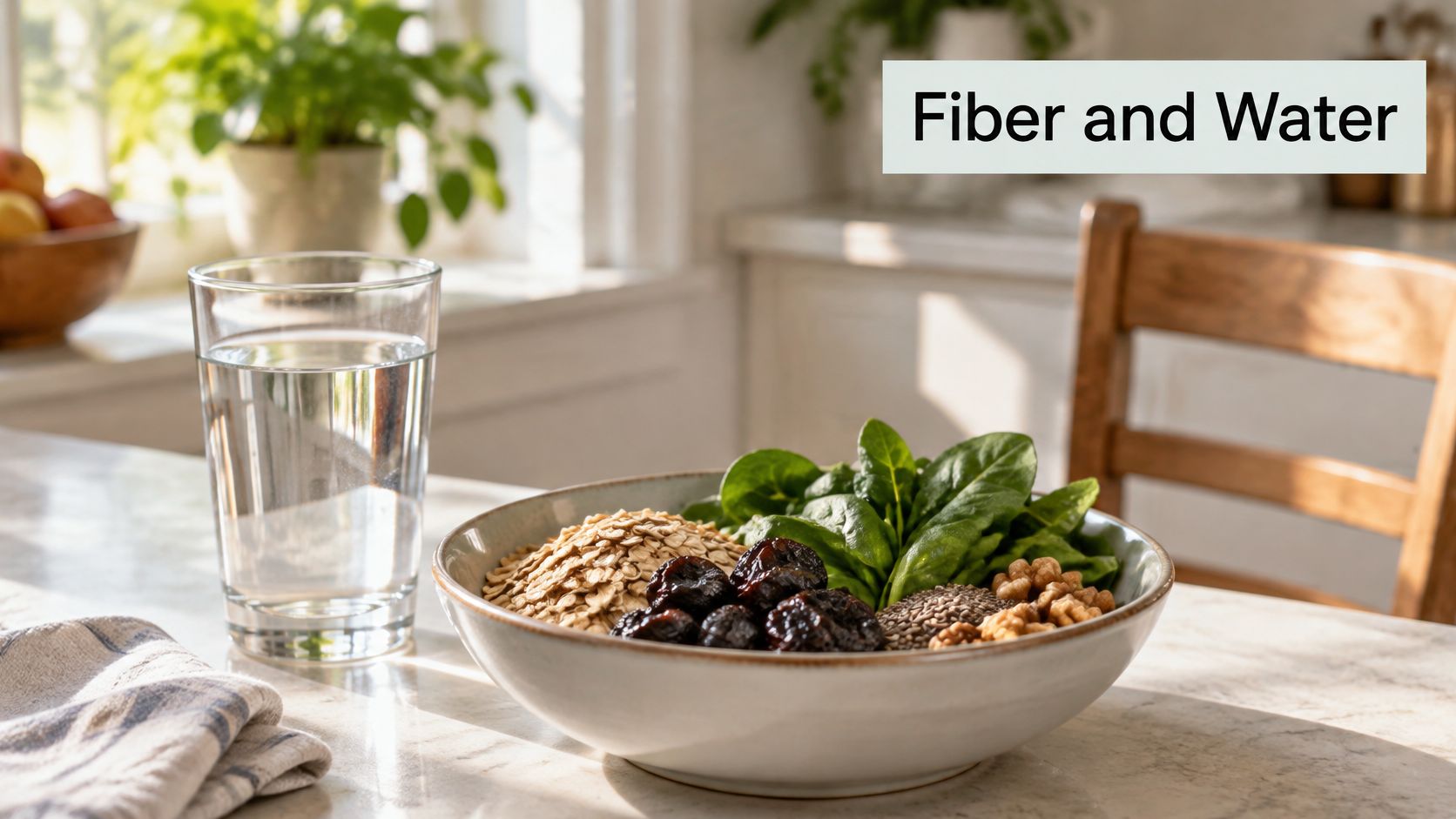
Soft stool plus a thin external barrier is the core of conservative care. Everything else is detail.
- Build fiber from food first. Beans, oats, prunes, pears, berries and cooked vegetables soften stool more gently than a sudden supplement. Add them over a few days rather than all at once, or you'll trade a fissure for gas and bloating.
- Sip water through the day. One big glass at noon doesn't do what steady drinking does. Fiber without fluid can make stool firmer, which is the opposite of what you want.
- Add psyllium if meals fall short. Start with a small spoonful in a full glass of water and build up. Give it several days before you judge it.
- Ask a pharmacist about a stool softener if things stay hard despite the fiber and fluids.
- Stop straining and keep toilet sits short. Long sitting adds pressure, and scrolling on your phone turns two minutes into ten.
Pregnancy is where this gets urgent. In a prospective cohort of 280 women, constipation carried an odds ratio of 18.98 for perianal disease, and straining during delivery for more than 20 minutes carried an odds ratio of 29.75 (BJOG cohort study). Those numbers describe risk, not fate, but they make one thing clear: preventing constipation is doing more for the tear than any ointment.
If nothing is moving after several days of this, tell a provider instead of layering on more product. Here's a closer look at choosing a stool softener that won't fight your gut.
Using Petroleum Jelly During Pregnancy or After Birth
Pregnancy and the weeks after birth raise the odds of anal pain, and an over-the-counter product isn't automatically the right choice just because you can buy it without a prescription. A 2023 colorectal guideline treats pregnancy and breastfeeding as special situations, meaning treatment should be individualized rather than assumed safe (MSD Manual guidance).
That doesn't ban petroleum jelly. It means a conversation, not a default.
The frequency is what surprises people. A separate prospective study of 94 pregnant women found anal symptoms reported by 50% during pregnancy, 56.2% immediately after delivery, and 62.9% by three months postpartum (American Journal of Gastroenterology). Fissure prevalence was 10.6% in the second trimester and 9.6% at three months postpartum.
So yes, this is common. It's also the reason not to assume that every postpartum pain is the same problem you read about.
Before you buy anything, check three things: whether you're pregnant or breastfeeding, whether there's bleeding without a known cause, and whether there's any chance of infection. Any yes is a call to your clinician or pharmacist, not a reason to self-treat at home.
A thin external layer of petroleum jelly can ease friction around bowel movements during this stretch. It won't close the tear or relax the muscle, and topical protection can't compensate for ongoing straining or hard stool.
Keep the routine low-irritation: rinse or gently cleanse, pat dry, apply a thin external barrier, prevent constipation, then reassess instead of escalating application. Practical questions like "inside or outside," "before or after stool," and "how long do I try this" all have the same answer: outside, thin, and a week before you ask for help. Our guide to perineal care after birth covers the surrounding routine.
When Fissure Pain or Bleeding Needs a Doctor
A small, thin, painful tear that eases as stools soften is one pattern. A lump, a fever, or bleeding that soaks through paper is another, and it deserves a different response.
Don't assume the symptom is a simple fissure just because one ran in your family or you've had one before. In a study of 902 postpartum participants, 327, or 36.3%, had at least one perianal problem; anal fissure was reported in 185 participants, or 20.5%, and hemorrhoids in 110, or 12.2% (Jornal de Coloproctologia study). The authors noted published estimates for postpartum anal fissure generally range from 9% to 15.2%, which shows how much reported rates shift with population and diagnostic method.
Fissure symptoms, likely meanings and next steps
| Symptom | What it may mean | What to do |
|---|---|---|
| Pain or bleeding that does not improve within 7 days | Persistent or chronic fissure | See a healthcare provider |
| Bleeding that is heavy, new or ongoing | Needs medical evaluation | Contact a provider promptly |
| Painful lump near the anus, with or without fever | Possible abscess or infection, not a simple fissure | Seek same-day medical care |
| Pain or bleeding after delivery that keeps getting worse | Postpartum complication or another cause | Call your obstetric provider |
| Swelling, rash or itching after using a product | Possible allergic reaction | Stop use and get medical help |
The escalation rules are short. Seven days of self-care with no improvement is a visit. Heavy or ongoing bleeding is a prompt contact. A painful lump or a fever is same-day care. Pain that builds after childbirth goes to your obstetric provider, not a group chat.
At that visit, a clinician can examine the area, review your stool habits, and discuss prescription options such as topical nitrates or calcium-channel blockers. Asking early is normal, and it usually shrinks the worry faster than another week of Googling.
Choose Your Next Step for Fissure Comfort
Pick one comfort step for today and one clear point for getting help. That's the whole plan, and it beats a bathroom cabinet full of half-tried products.
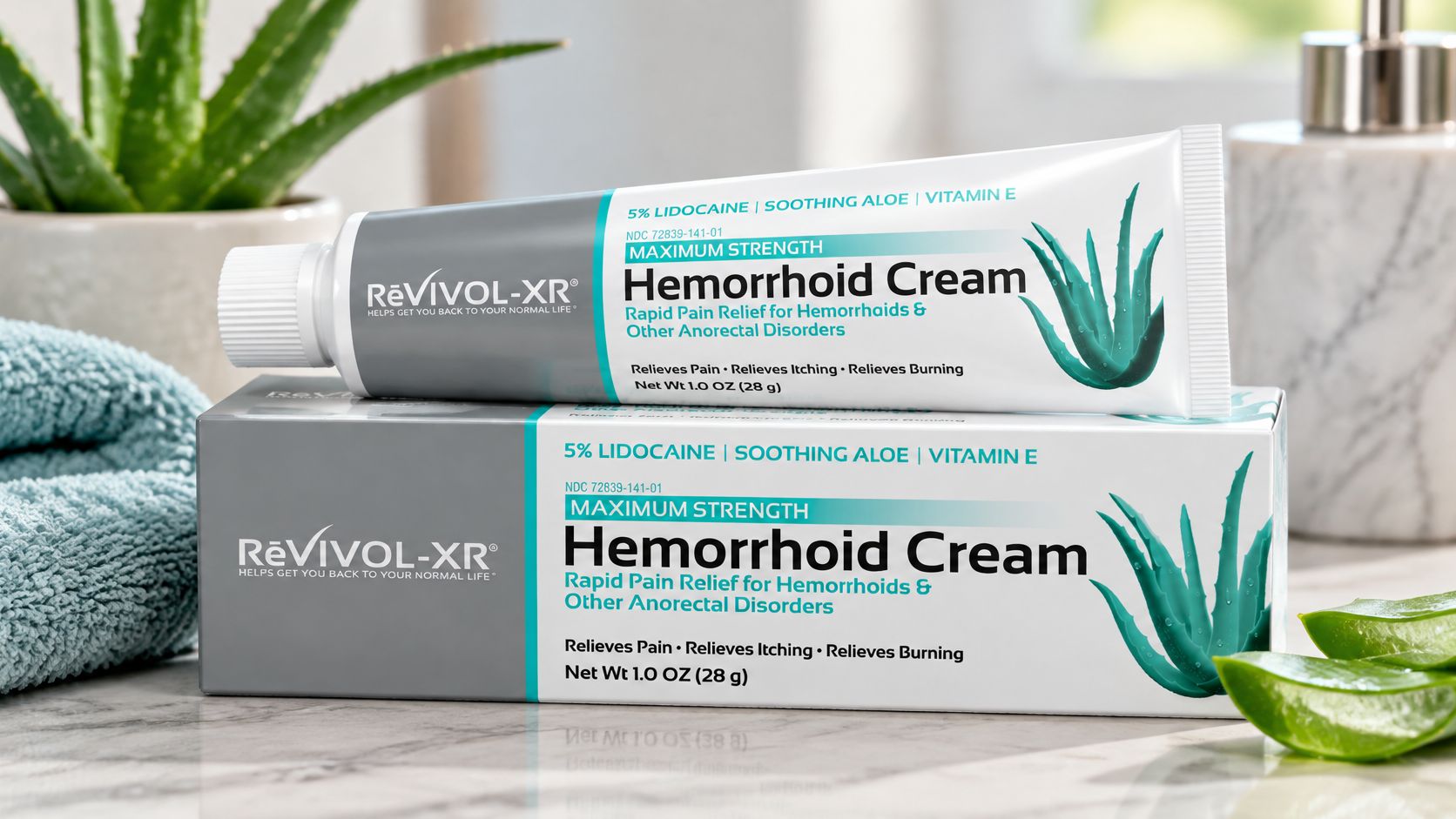
If wiping burns, use a thin external film of petroleum jelly, or a protectant cream, before and after bowel movements while you keep stools soft. Revivol-XR® Advanced Hemorrhoid & Fissure Cream is one external option: it pairs maximum-strength 5% lidocaine with skin protectants glycerin and petrolatum plus soothing botanicals, and comes in a 1.5 oz tube at $26.99. It provides temporary soothing relief of pain, itching and soreness. It does not treat, cure or prevent a fissure or any other condition. Follow the Drug Facts label, apply it only to the outside skin, and don't insert it into the rectum.
One tube typically lasts 2 to 4 weeks at the recommended schedule, and the first purchase carries a money-back guarantee with discreet packaging. Use it as a comfort layer, not a substitute for soft stools and, when needed, a clinician's plan.
Make the call if pain or bleeding is still there after about 7 days of this routine. Go sooner for heavy bleeding, a painful lump, fever, or pain that worsens after childbirth.
Revivol-XR gives you a practical way to handle the discomfort side of a fissure while the healing side gets the attention it needs. Our topical products are made for temporary, soothing relief of pain, itching and soreness around the anal area, with maximum-strength 5% lidocaine and skin protectants that coat irritated skin, and they ship discreetly so nobody needs to know. If wiping has become the worst part of your day, visit Revivol-XR to see the full line of external creams, sitz soaks and gentle cleansing options, and keep the seven-day rule in mind if things don't improve.