Best Stool Softener for Hemorrhoids and Postpartum Relief

The familiar bottle labeled “stool softener” may not be the best stool softener for the constipation that's making your hemorrhoids hurt. If you're sore after childbirth or worried about a painful bowel movement, the useful question isn't which product is most popular, but which approach fits your stool, symptoms, and health history.
You deserve a plan that makes bathroom trips less stressful without promising an overnight fix. That starts with separating stool softening from constipation relief, then adding gentle care for the irritated skin.
Table of Contents
- Stool Softener Options at a Glance
- Why Docusate Is Popular but Weak on Evidence
- PEG and Psyllium for Ongoing Constipation
- Choosing a Softener by Situation
- How to Use a Stool Softener Safely Each Day
- When Symptoms Need a Provider Right Away
- Stool Softener Questions Readers Ask
- Pick Your Softener and Add Gentle Local Care
Stool Softener Options at a Glance
For ongoing constipation, PEG 3350 has the strongest guideline support, psyllium beat docusate in a randomized trial, and docusate has the weakest evidence of these options. They're often grouped together in everyday conversation, but they don't work the same way.
Stool softener types compared
| Option | How It Works | Typical Onset | Evidence for Constipation |
|---|---|---|---|
| Docusate sodium | Surfactant that helps water and fat mix into stool | Days rather than immediate relief | Weak; no better than placebo in reviewed trials |
| Polyethylene glycol 3350 (PEG) | Osmotic laxative that holds water in the bowel | Several days; follow the product's directions | Strong; guideline-recommended for chronic constipation |
| Psyllium | Bulk-forming fiber that adds water-holding stool bulk | Several days with fluids | Moderate; beat docusate in a randomized trial |
For someone who's straining, the distinction is practical: docusate targets stool consistency, PEG helps retain bowel water, and psyllium adds moisture-holding bulk. None should be treated as an instant solution to a painful bathroom trip.
Match the goal before choosing the product
Say you're passing stool regularly, but it's dry and uncomfortable. That's a different problem from repeatedly feeling backed up, going infrequently, or struggling despite stool that's already soft.
With hemorrhoids or an anal fissure, the immediate target is soft, formed stool that passes without force. Watery stool isn't the goal, and stronger medication isn't automatically a better fit.
- Hard stool that's still moving: Start with a gentle, situation-appropriate approach after checking your medicines and fluid intake.
- Constipation that keeps returning: Discuss PEG or psyllium rather than repeatedly buying docusate because the package says “softener.”
- Unclear symptoms: Ask a pharmacist or healthcare provider whether you need help with consistency, regularity, or further evaluation.
Practical rule: Choose the ingredient for the problem, not the product category printed on the front.
Check the active ingredient before buying. A familiar brand name can appear on different constipation products, so the name alone doesn't tell you how the medicine works.
Why Docusate Is Popular but Weak on Evidence
Docusate feels like the default because it's familiar, widely available, and explicitly labeled as a stool softener. When pushing hurts, that label sounds like exactly what you need.
But a familiar label isn't proof of meaningful benefit. The evidence doesn't establish docusate as the best choice for constipation.
What the trials found
The evidence summarized in an NCBI Bookshelf evidence review includes seven randomized, placebo-controlled studies conducted between 1956 and 2021, in which docusate doses of 100 to 400 mg daily showed no significant stool-softening advantage over placebo, and an eight-week crossover trial completed by 15 of 22 participants, with 4.25 versus 4.12 bowel movements weekly and 97% versus 93% soft or normal stools, respectively, neither difference statistically significant.
Those results don't mean that someone who felt better after taking docusate imagined the improvement. Constipation can change as eating, drinking, activity, recovery, and other medicines change.
They do mean that improvement after taking a product doesn't necessarily prove the ingredient caused it. That matters when you're deciding whether to keep buying it or discuss another approach.
Popularity tells you what people recognize. A controlled trial helps tell you whether the ingredient adds a measurable benefit.
Judge the outcome, not the reputation
If a clinician recommends docusate for short-term use, you don't need to panic or stop a prescribed plan because its evidence is limited. Instead, agree on what success should look like.
Watch for changes you can describe:
- Consistency: Is stool less dry or difficult to pass?
- Effort: Can you go without bearing down?
- Comfort: Is the bathroom trip less painful rather than more frequent?
If nothing improves after several days, contact your provider rather than assuming you need more. Persistent symptoms deserve a better-matched plan, not an endless trial of the same product.
PEG and Psyllium for Ongoing Constipation
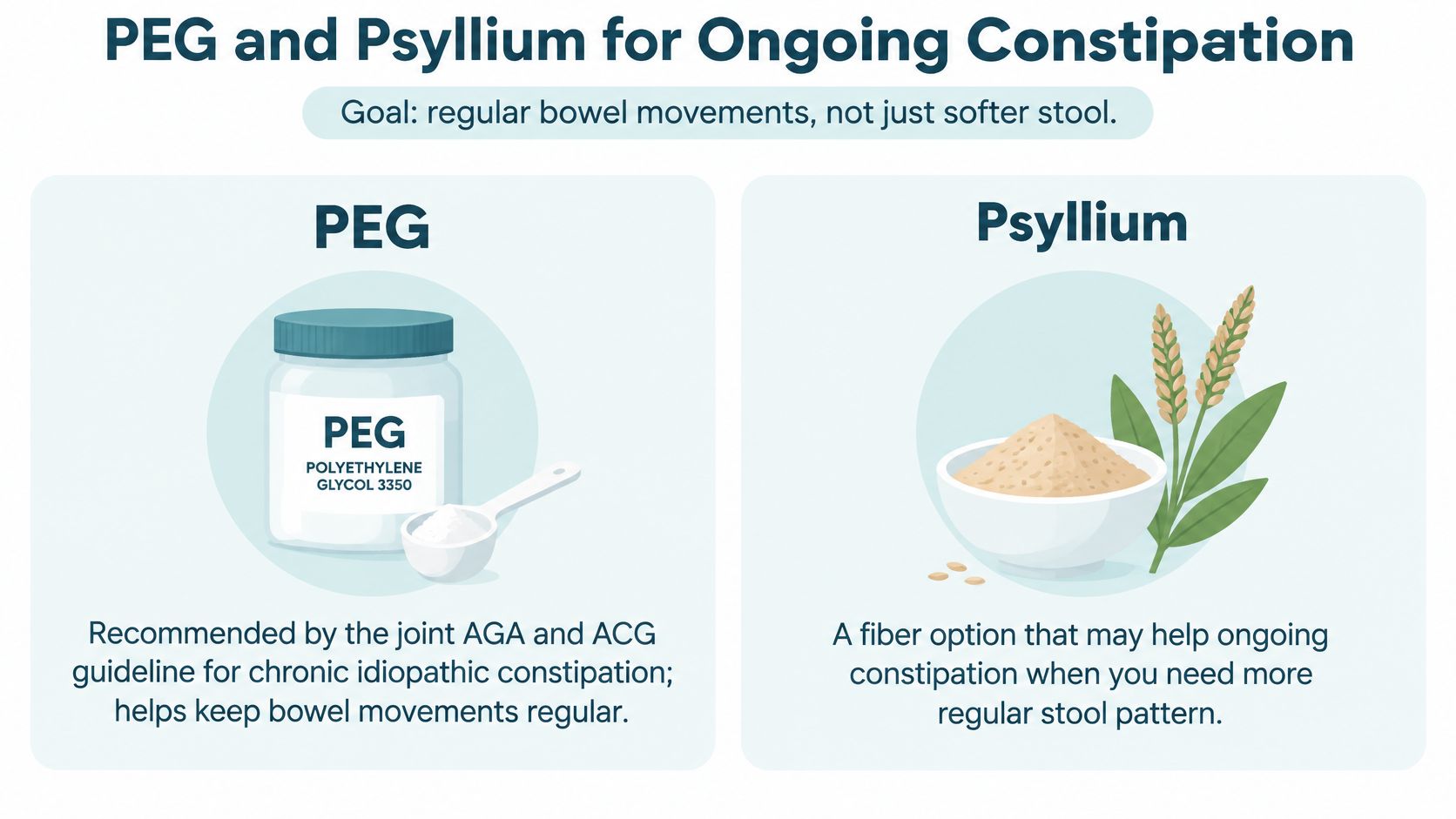
When constipation keeps returning, the choice is not just about making stool softer. PEG draws water into the bowel, while psyllium adds soluble fiber that holds water in stool. They work differently, so the better fit depends on your symptoms and what you can tolerate.
The joint American Gastroenterological Association and American College of Gastroenterology guideline recommends PEG for chronic idiopathic constipation, typically 17 g once daily. Studies found that benefits lasted at least six months and that PEG produced approximately 2.30 additional spontaneous bowel movements weekly compared with placebo.
“Chronic idiopathic constipation” means ongoing constipation without an identified cause. The guideline does not establish PEG as the right choice for every new symptom, pregnancy situation, or suspected blockage.
How psyllium compares
A systematic review of constipation treatments describes a randomized trial of 170 adults. During the second treatment week, psyllium 5.1 g twice daily produced 3.5 bowel movements weekly, compared with 2.9 with docusate 100 mg twice daily. Stool water rose 2.33% from baseline with psyllium, compared with 0.01% with docusate.
PEG and psyllium trial results compared
| Option | Typical Dose in Trials | Measured Result | Main Trade-off |
|---|---|---|---|
| PEG 3350 | 17 g once daily | Approximately 2.30 more spontaneous bowel movements weekly than placebo | Bloating, cramping, gas, loose stool, nausea |
| Psyllium | 5.1 g twice daily | 3.5 bowel movements weekly in the trial, compared with 2.9 with docusate | Needs enough fluid to work well |
| Docusate sodium | 100 mg twice daily | 2.9 bowel movements weekly in the trial, compared with 3.5 with psyllium | Weak evidence over placebo |
The studies compare different treatments with different controls. They do not show that PEG beats psyllium directly, or predict which option will work best for you.
Make room for tolerability
PEG may cause bloating or make stool too loose. Ask a pharmacist or provider how to adjust your plan based on your response, rather than aiming for the highest dose.
Psyllium may suit you if you want a fiber-based approach and can keep up your fluid intake. Add it gradually, and pair it with a practical food plan, such as these suggestions for what to eat when you have hemorrhoids.
Magnesium is not an interchangeable substitute. Magnesium-based laxatives can cause electrolyte and toxicity problems, particularly in people with kidney disease.
Discuss PEG when measurable constipation relief is your priority. Consider psyllium when a fiber-based approach fits your needs and fluid intake.
Choosing a Softener by Situation
You've recently given birth, sitting is uncomfortable, and you're worried the next bowel movement will hurt. The right question isn't which bottle works best. It's which plan fits your recovery, breastfeeding, medicines, and symptoms.
Pregnancy and postpartum recovery are reasons to individualize the choice.

Mayo Clinic's pregnancy constipation guidance describes docusate as minimally absorbed and unlikely to harm a developing baby, while identifying psyllium and polycarbophil as generally suitable because they aren't absorbed. Check with your maternity clinician before starting, rather than treating that reassurance as blanket permission.
Use your situation to frame the conversation
Softener options by situation
| Situation | Options Usually Discussed | Ask a Provider About |
|---|---|---|
| Pregnancy or postpartum | Psyllium or polycarbophil; docusate with clinician input | Breastfeeding, cesarean or vaginal recovery |
| Fissure with pain on bowel movements | Softener plus fiber and fluids | Whether softer stool is enough on its own |
| Chronic constipation | PEG 3350 or psyllium | Dose changes if bloating or loose stool occurs |
| Opioid-related constipation | Provider chooses the approach | Which laxative fits the prescribed pain medicine |
| Older adults | PEG 3350, generally preferred | Electrolyte risk with other osmotic agents |
| Kidney disease | Magnesium-based products only if directed | Electrolyte and toxicity risk |
For a postpartum reader, the key question is: Does this fit my feeding and recovery plan? Guidance about pregnancy doesn't automatically settle every breastfeeding or postsurgical question.
For someone with pain during bowel movements, ask: Does this need an examination as well as a stool plan? Don't assume every sharp pain is a fissure or every lump is a hemorrhoid.
For opioid-related constipation, bring the pain medicine's name and your bowel symptoms. Ask whether the medicine calls for a different constipation strategy rather than adding a softener at random.
The video below is an additional resource, not a substitute for advice specific to your recovery.
Older adults and people with kidney disease should bring a complete medication list to the conversation. Ask which products could create fluid or electrolyte problems and which symptoms should prompt a call.
The table is a starting point, not a prescription. Your provider can confirm the match, especially after a cesarean, while breastfeeding, or when several medicines are involved.
How to Use a Stool Softener Safely Each Day
This routine is for docusate, not a universal schedule for PEG, fiber, or combination laxatives. Read the active ingredient and directions before starting.
The DailyMed docusate sodium label permits adults and children 12 years and older to take 1 to 3 softgels of 100 mg daily with water; don't exceed your product's directions without clinician guidance.
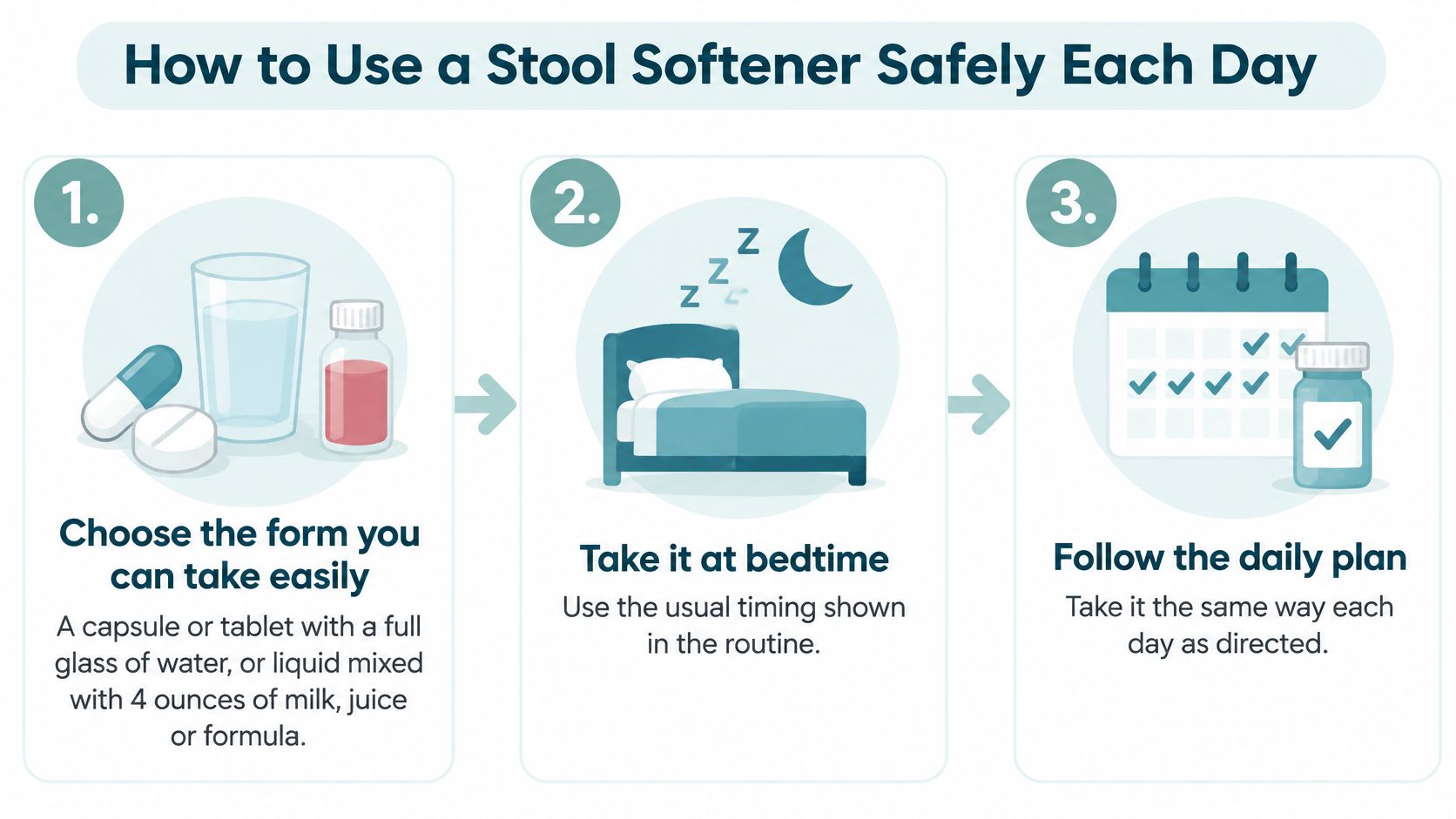
MedlinePlus's stool-softener instructions describe bedtime use, tablets or capsules with a full glass of water, liquid mixed with 4 ounces of milk, fruit juice, or formula, an expected effect in 1 to 3 days, and no use beyond one week unless a clinician directs otherwise.
Follow a consistent routine
- Choose a form you can take comfortably. Swallow capsules or tablets with the water described above, or measure and dilute liquid according to its instructions. A common slip is swallowing liquid medicine straight from the bottle without checking how it should be mixed.
- Use the recommended timing. Bedtime is common, but follow your own label or prescription. Taking it at night doesn't guarantee a bowel movement the next morning, so don't add an extra dose because nothing happened overnight.
- Keep fluids steady during the day. Make drinking part of meals and other regular routines rather than relying on the water taken with the capsule. If you have a prescribed fluid restriction, ask how to fit constipation care within it.
- Allow the medicine time to work. Check your stool response over the expected window rather than increasing the dose after each unsuccessful bathroom visit. More medicine isn't a safe substitute for reassessing the problem.
- Add fiber gradually. A sudden jump in fiber can make bloating harder to tolerate. Keep track of changes so you can tell whether the medicine, fiber, or their combination is causing discomfort.
- Plan a stopping point. Don't turn a short-term product into an automatic daily habit. If constipation returns whenever you stop, arrange a provider-guided plan.
Your self-check: Stool passes without pushing, straining is reduced, and pain isn't worse than before you started.
Use those observations when you speak with a pharmacist. “Still uncomfortable” is useful, but “stool is soft and I still can't pass it easily” gives them a clearer problem to assess.
When Symptoms Need a Provider Right Away
Gentle care can make an irritated area more comfortable, but bleeding or severe pain shouldn't be explained away as constipation. Even when you've had hemorrhoids before, a new symptom deserves attention.
MedlinePlus's rectal bleeding guidance advises evaluation for fresh blood, blood with abdominal pain or bloody mucus, changed stool color, anal pain, unexplained weight loss, or dizziness and fainting, even when hemorrhoids seem like the likely cause.
Contact a healthcare provider for these changes
- Fresh blood: Blood in the stool or new rectal bleeding needs assessment.
- Blood with other symptoms: Abdominal pain or bloody mucus makes evaluation especially important.
- Changed stool color: Don't assume a change comes from the softener.
- Anal pain: Pain while sitting or passing stool deserves care, particularly when it persists.
- Unexplained weight loss: Bring it up even if your bowel symptoms seem manageable.
- Dizziness or fainting: These symptoms can require urgent care, especially alongside bleeding.
Sudden constipation with cramps and an inability to pass gas or stool is a warning sign. Don't take laxatives in that situation. Seek urgent assessment rather than trying to force a bowel movement.
Severe abdominal pain with vomiting also calls for prompt medical attention. A home constipation routine isn't the right next step when you may have a blockage or another urgent problem.
If you're unsure where to start, this guide to who treats hemorrhoids explains the types of providers you may see.
For our cream, stop using it and ask a doctor if rectal bleeding occurs, the condition worsens or doesn't improve within 7 days, or an allergic reaction occurs. A comfort product shouldn't delay care for persistent, severe, or bleeding symptoms.
Stool Softener Questions Readers Ask
Does a stool softener shrink hemorrhoids?
No. A stool softener may make bathroom trips less difficult by changing the stool, but it doesn't shrink a hemorrhoid or heal a fissure. Persistent pain or bleeding still needs a healthcare provider's assessment.
The distinction matters because easier bowel movements and local symptom relief are separate goals. You may need support for both, and neither replaces evaluation when symptoms continue.
Can I use a softener with a soothing cream?
Often, yes, because they address different needs: an oral product changes bowel contents, while a suitable external product provides local comfort. Check the directions for both, and ask a pharmacist about your particular products, especially during pregnancy, breastfeeding, or postsurgical recovery.
You don't need to add several creams or change products repeatedly. A simple routine makes it easier to notice irritation and identify which product may be responsible.
What if my stool is still hard after three days?
Check whether you've taken the product as directed and maintained appropriate fluid intake, but don't increase the dose yourself. Contact a pharmacist or provider if nothing is changing, and seek care sooner for pain, bleeding, vomiting, or inability to pass gas or stool.
Persistent difficulty isn't a personal failure. It may mean you need a different approach or an assessment of what's contributing, rather than more effort on the toilet.
Pick Your Softener and Add Gentle Local Care
Start with the situation that fits you, then confirm any special considerations before taking a constipation medicine. Bring pregnancy, breastfeeding, kidney disease, opioid use, or unexplained symptoms into that decision.
Once you have a stool plan, keep external care simple. A constipation product doesn't clean or soothe irritated skin, and a topical comfort product doesn't correct the bowel problem.
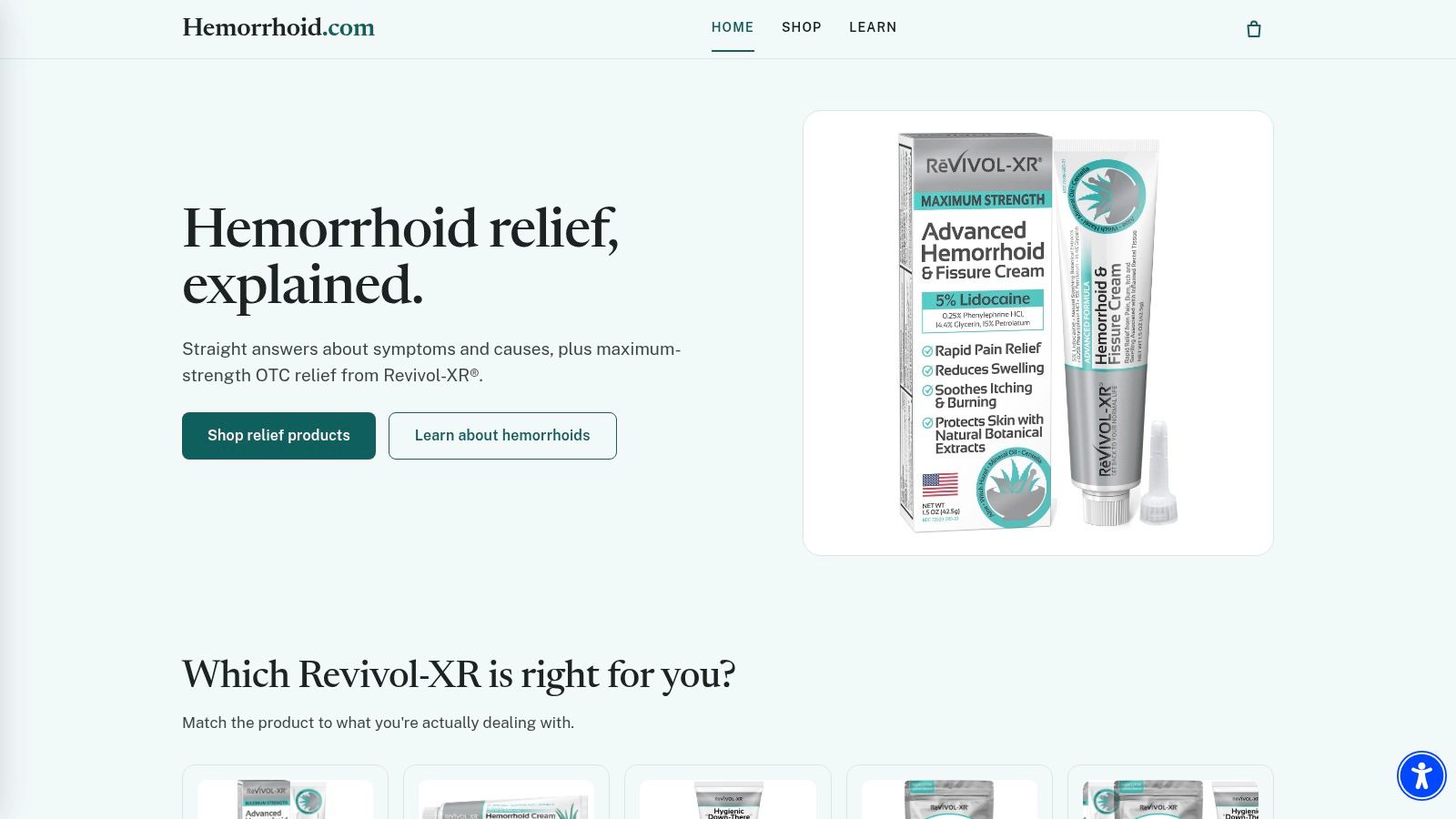
Our Revivol-XR Relief Kit brings together the Advanced Hemorrhoid Cream, Sitz Bath Soak Mix, and Hygienic Cleansing Lotion, shipped in one plain box. These are companion comfort products, not replacements for constipation treatment or an examination.
The website shows the local-care range.
Keep the comfort routine gentle
Use the soak before applying the cream:
- Prepare warm water. Dissolve one scoop of Sitz Bath Soak Mix in a few inches of warm, not hot, water in a sitz bath basin or clean tub.
- Sit comfortably. Soak for 10 to 15 minutes without scrubbing the area.
- Dry with care. Pat the skin dry, then apply the Advanced Hemorrhoid & Fissure Cream to clean, dry skin according to its label.
The soak is for external use only as a bath-water additive, and you should patch test before first use. Don't swallow it or assume that a botanical ingredient can't irritate sensitive skin.
For cleansing, apply a dime-sized amount of our Hygienic Cleansing Lotion to folded toilet paper. Wipe the external area gently without rubbing, then pat dry; it uses ordinary toilet paper rather than wipes that need flushing.
Choose comfort without adding complexity
The Sitz Bath Soak Mix costs $21.99 if you prefer a soak rather than the full kit. It's a concentrated option for the end of the day or when applying a cream feels uncomfortable.
If you're recovering after birth, discuss topical products and bathing with your maternity team, particularly around healing wounds. Our guide to perineal care after birth offers additional practical context for that conversation.
Stop using the cream and ask a doctor if rectal bleeding occurs, symptoms worsen or don't improve within 7 days, or an allergic reaction happens. The aim is a manageable daily comfort routine, not covering up symptoms that need care.
Revivol-XR offers a Relief Kit with cream, soak mix, and cleansing lotion for soothing local comfort alongside your stool-care plan. Visit Revivol-XR to choose the kit or a companion comfort product, and consult a healthcare provider for persistent, severe, or bleeding symptoms.