Perianal Hematoma Relief: Fast At-Home Care That Works

A sudden purple lump appears after a hard bowel movement, and within minutes sitting down feels impossible. Perianal hematoma relief depends heavily on what happens during the first 72 hours, so the right decision is often more important than another random home remedy.
Most small cases improve with careful pressure reduction, warm water, stool-softening, and pain control. But severe, newly formed pain can justify same-day clinical evaluation, especially before the clot becomes organized. This guide gives you a practical path without pretending every lump should be treated the same way.
Table of Contents
- What a Perianal Hematoma Actually Feels Like
- First 48 Hours of At-Home Care
- Red Flags That Mean You Need a Clinician Sooner
- Procedural Relief and When It Beats Waiting
- Your Recovery Timeline Day by Day
- Stopping the Next One Before It Starts
- Quick Answers to the Questions You Are Still Asking
What a Perianal Hematoma Actually Feels Like
A firm bluish-purple lump at the anal opening can appear suddenly, followed by throbbing pain that makes sitting, wiping, coughing, or walking difficult. The combination often fits a thrombosed external hemorrhoid, also called a perianal hematoma, rather than an ordinary itchy hemorrhoid.
An external hemorrhoid may feel soft, swollen, or irritated. A thrombosed vein contains a clot, creating a firm, marble-like nodule beneath the skin. Heavy lifting, straining during a bowel movement, postpartum pressure, or prolonged sitting on a hard surface can increase pressure in the area.
A clinical review of thrombosed external hemorrhoids describes pain and swelling as peaking around 48 hours. Treat that point as a decision marker, not a deadline you must endure.
The practical rule: Use the first 72 hours to choose your path. Mild or improving symptoms usually support conservative care. Severe, fresh pain deserves a same-day clinic assessment, particularly if the lump appeared recently.
After the early peak, the clot can organize and become less suitable for simple evacuation. The right choice depends on the lump's size, pain severity, and time since onset. A small lump that is already easing can usually be watched, while intense pain that limits basic movement is a strong reason to seek prompt evaluation. Self-care is not enough when symptoms are severe, worsening, or difficult to tolerate.
First 48 Hours of At-Home Care
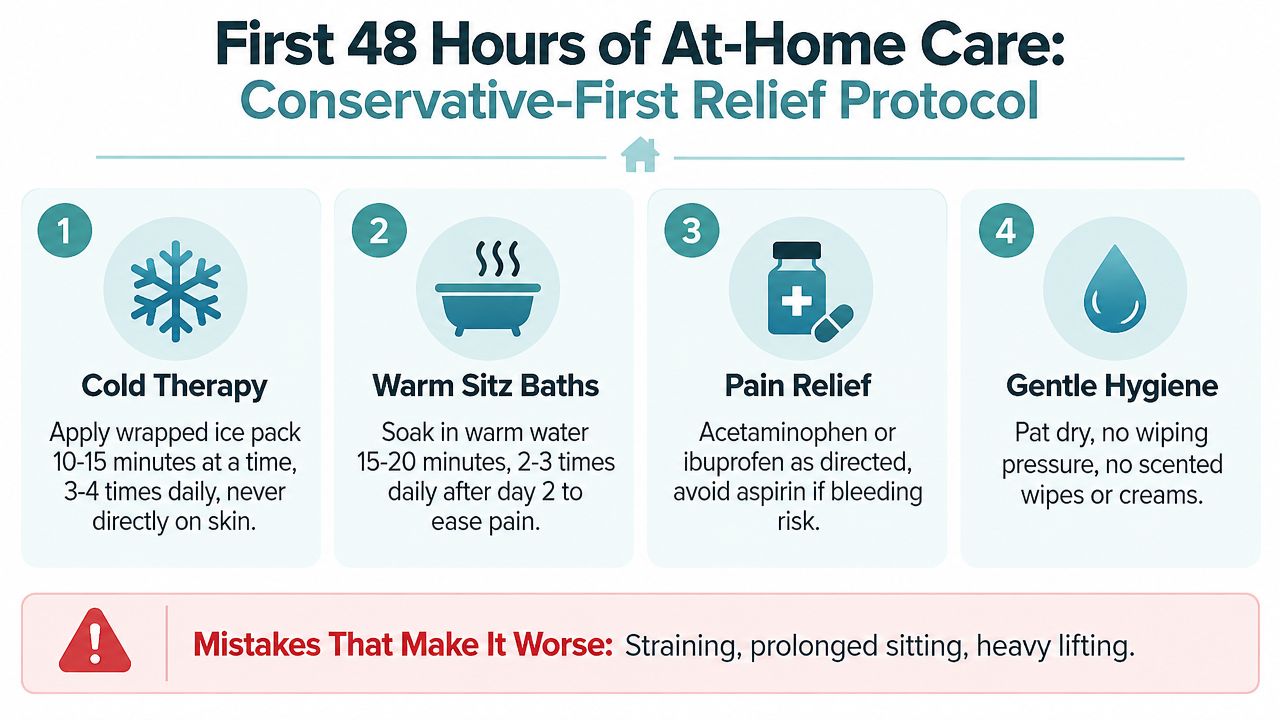
If the lump is small and symptoms are tolerable or already easing, start with a conservative plan. The purpose isn't to force the clot away. It's to reduce pressure, calm irritation, prevent hard stools, and avoid turning a painful problem into an injured or infected one.
Use cold first, then warm water for comfort
A wrapped cold pack can reduce swelling and numb discomfort. Keep a barrier between the pack and your skin, and use short applications rather than prolonged direct exposure. Stop if the skin becomes numb, pale, or irritated.
Warm sitz baths are useful for cleansing and comfort. Harvard Health recommends 3 to 4 inches of warm, not hot, water for about 10 to 15 minutes, while UMass Memorial describes 10-minute soaks twice daily for hemorrhoid discomfort in its sitz bath guidance. You can also follow this step-by-step sitz bath guide.
Keep bowel movements soft without irritating the skin
Drink fluids, eat fiber gradually, and consider a mild stool-softening approach if constipation is driving the pain. The clinical pathway described in acute perianal hematoma guidance emphasizes warm baths, oral analgesics, stool-softening measures, and avoiding straining.
Don't insert needles, squeeze the lump, or try to drain it yourself. Self-drainage can increase bleeding, pain, and infection risk. Avoid prolonged sitting, heavy lifting, repeated wiping, and any activity that makes pressure worse.
A plain warm-water bath is enough. If you prefer a bath additive, Revivol-XR® Sitz Bath Soak Mix contains Epsom salt among its listed ingredients, along with salts, aloe, witch hazel, oils, and other botanicals. It's for external use as a bath-water additive only. Patch test first, avoid it if irritation develops, and ask a clinician before use if you have diabetes, sensitive skin, or essential-oil allergies.
Choose pain relief carefully
Use an over-the-counter pain reliever only according to its label and your own medical advice. Ibuprofen may not be appropriate if you have a history of stomach bleeding, kidney disease, certain cardiovascular conditions, or take blood thinners. Acetaminophen also has important dose limits and may be unsafe with some liver conditions or heavy alcohol use.
Avoid opioid pain medicines unless a clinician prescribes them and gives you a bowel-management plan. Constipation and straining can intensify pressure exactly when the area needs protection.
Red Flags That Mean You Need a Clinician Sooner
Normal healing has a recognizable direction. The pain may be intense at first, then gradually begins to ease. The lump may stay noticeable while becoming less tense. Fever, spreading redness, pus, and worsening swelling don't fit that pattern.
| Symptom or Sign | Normal Healing | Red Flag, Call a Clinician |
|---|---|---|
| Pain | Peaks early, then starts easing | Intensifies after the early period or remains unbearable |
| Lump | Stays localized and slowly softens | Grows, becomes fluctuant, hot, or increasingly tender |
| Skin | Local tenderness or mild irritation | Spreading redness or warmth |
| Temperature | No fever | Fever or chills |
| Drainage | None, or minimal spotting if skin breaks | Pus, foul-smelling drainage, or persistent bleeding |
| Bleeding | Small spotting linked to irritation | Heavy bleeding, clots, dizziness, or weakness |
| Function | Sitting and walking slowly become easier | Urinary retention or inability to sit by the third day |
Seek same-day evaluation if pain is severe and the lump formed recently. Early evacuation may provide faster relief while the clot is still easier to remove, as described in clinical procedural guidance.
Don't wait at home if you're taking blood thinners, have a weakened immune system, recently gave birth and have severe pain, or developed the lump after significant trauma. Emergency services are appropriate for heavy bleeding, faintness, severe weakness, or rapidly worsening symptoms.
Procedural Relief and When It Beats Waiting
Some people get more relief from a brief clinic procedure than from continuing to endure severe pain. A clinician may examine the lump and decide whether evacuation or excision is appropriate. Local anesthetic is commonly used for office-based treatment, but the exact procedure depends on the diagnosis, size, location, and timing.
Early evacuation can involve a small incision to remove the clot. A dressing or gauze may be placed afterward, and the clinician may recommend stool-softening measures while the area heals. The purpose is symptom relief, not cosmetic removal of every remaining bump.
Formal excision may enter the discussion when the lesion is substantial, symptoms are severe, or the presentation doesn't fit a simple early clot. If episodes keep returning, a specialist may also investigate the underlying hemorrhoidal disease rather than repeatedly treating each painful lump. A hemorrhoid treatment overview can help you understand the broader options, but it can't replace an examination.
The balance tips toward a clinic visit when:
- Timing is early: The lump appeared recently and pain is intense.
- Pain is function-limiting: You can't sit, walk, sleep, or use the bathroom normally.
- The lump is large or tense: Size and pressure can make waiting harder.
- Symptoms are worsening: The direction matters more than the original pain score.
- Home care isn't helping: There is no meaningful improvement after a careful trial of conservative measures.
Rubber band ligation and hemorrhoidectomy address different hemorrhoid problems and aren't automatic treatments for a perianal hematoma. A colorectal clinician should decide whether recurrent episodes point to another condition or require a different intervention.
Your Recovery Timeline Day by Day
The first 72 hours decide a lot. Small perianal hematomas often settle with conservative care, and a 2025 clinical discussion summarizes a prospective study of 504 patients in which pain largely resolved after 5 days, disappeared by 10 days, and local recurrence was 6.3%.
Day 1 and day 2: Pain and swelling usually dominate. Reduce pressure, use cold carefully, take suitable label-directed analgesia, and keep stools soft. A newly formed, extremely painful lump needs same-day assessment if you are not clearly improving.
Day 3 and day 4: This is the checkpoint. If pain is easing, keep going with home care. If pain rises, redness spreads, fever appears, or drainage starts, stop treating it like a routine clot and contact a clinician.
Day 5 through day 10: The clot may soften, walking may feel easier, and warm baths may feel better. This is the period when conservative care often starts to pay off.
Weeks 2 through 4: The lump can keep shrinking after the pain fades. A small skin tag may remain. If it stays hard and painful, comes back, or develops foul drainage, get examined instead of assuming it will sort itself out.
Stopping the Next One Before It Starts
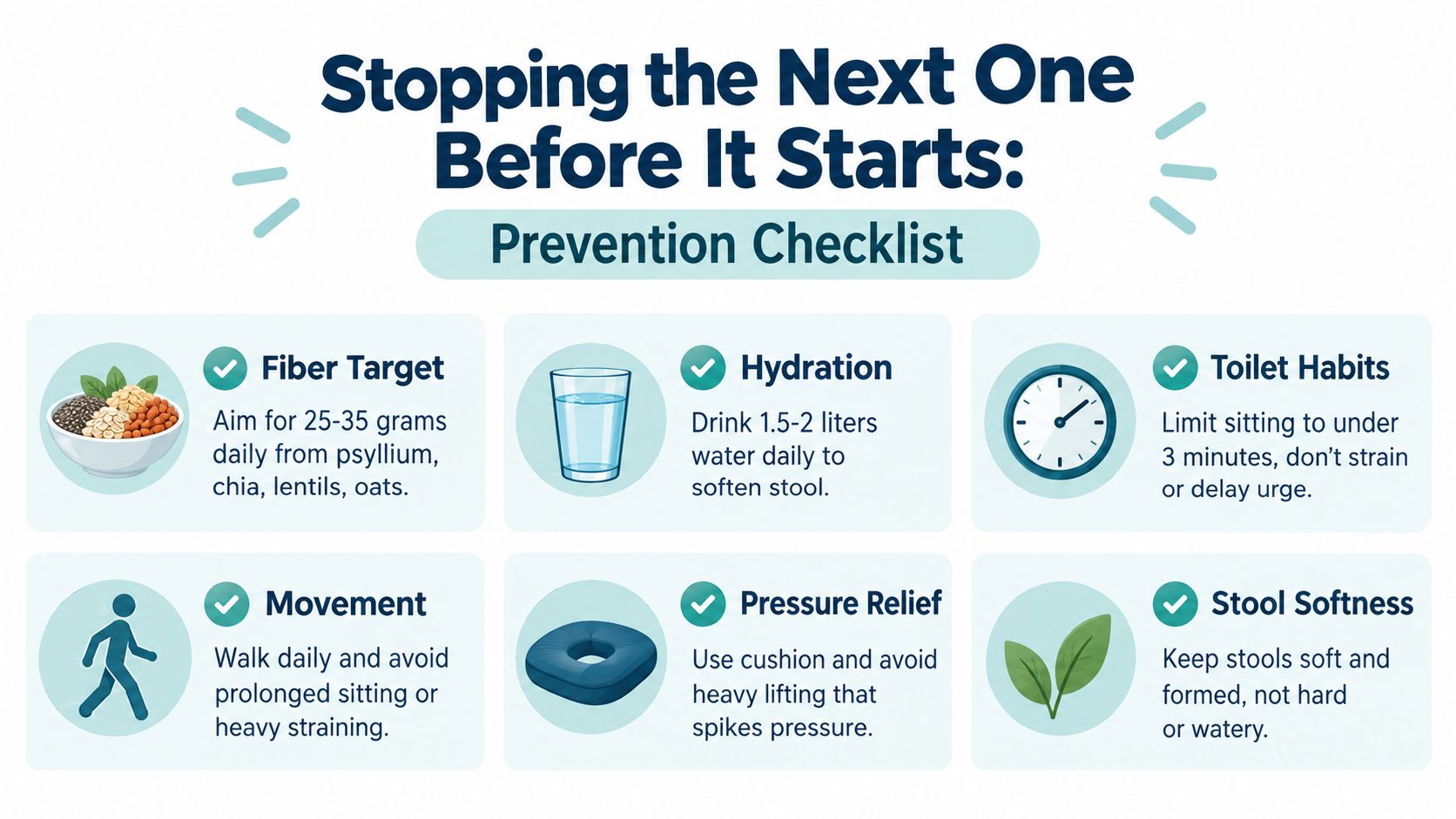
Prevention comes down to two pressures: mechanical pressure around the anal veins and stool consistency. A hard stool, delayed urge, or forceful lift can create more strain than a calm, brief bowel movement.
Fiber helps, but increase it in a way your body tolerates. Psyllium, chia, lentils, oats, and prunes are practical options. Postpartum guidance from AAFP recommends fiber and water for constipation, and a postpartum pelvic-floor review describes a daily fiber target of 20 to 30 grams. The exact amount should fit your digestion, especially if more fiber causes bloating.
Bathroom rule: Go when you feel the urge, keep the visit brief, and don't turn the toilet into a reading chair.
For postpartum recovery, use a peri-bottle for gentle rinsing, avoid prolonged sitting during feeds when possible, and ask your obstetric clinician about bowel medicines that are suitable for you. Pregnancy-related hemorrhoids are generally managed conservatively, and pregnancy hemorrhoid guidance advises avoiding constipation, prolonged straining, and long toilet sessions.
If constipation is chronic, ask a healthcare provider or pharmacist whether an osmotic laxative is appropriate. Don't start magnesium or stimulant products casually, especially with kidney disease, pregnancy, medication use, or diarrhea.
For lifting, breathe continuously instead of holding your breath through a heavy effort. During desk work or driving, stand and walk regularly, and avoid sitting through escalating pressure.
Use a footstool if it helps you maintain a comfortable position, put your phone away, and don't delay the urge. For food ideas that support softer bowel movements, see what to eat when you have hemorrhoids.
Quick Answers to the Questions You Are Still Asking
How long does the worst pain last?
The worst pain commonly lasts around 48 to 72 hours, then gradually eases when the clot is stabilizing and pressure falls. If pain is intensifying instead, arrange a clinical assessment.
Can a perianal hematoma burst or drain?
It can open and release blood, but don't make it happen yourself. Gently clean the area, use a warm sitz bath, avoid rubbing, and seek care for heavy bleeding, pus, fever, or worsening pain.
When will the swelling disappear completely?
The lump may take 2 to 4 weeks to fully resolve, even after the pain improves, as described in the clinical review of thrombosed external hemorrhoids. A small residual skin tag can remain.
Can recurrence be prevented?
You can reduce risk by preventing hard stools, avoiding straining, limiting prolonged sitting, and managing lifting pressure. Recurrence still happens, so repeated episodes deserve a clinician's evaluation rather than endless self-treatment.
Revivol-XR offers external comfort options including sitz bath products and topical formulations designed to soothe irritation, but these products don't replace an examination for severe, persistent, or bleeding symptoms. Visit Revivol-XR to review the available options, follow each label carefully, and contact a healthcare provider if your symptoms worsen.