Numbing Hemorrhoid Spray: How It Works and When to Use It

A numbing hemorrhoid spray can hide a problem that needs medical attention.
You're at work, in the car, or standing in a public restroom, trying to manage burning, itching, or pain without drawing attention. A spray can offer discreet, temporary comfort, but numbness isn't the same as healing. This guide explains what these products do, how to use them safely, and when to stop self-treating.
Table of Contents
- Why a Spray Can Feel Like the Easiest Option
- What a Numbing Hemorrhoid Spray Actually Is
- How It Stacks Up Against Creams and Suppositories
- Safe Application From Start to Finish
- Who Should Be Cautious Before Spraying
- Pregnancy, Postpartum, and the Newborn Stage
- When Numbness Is Covering Up Something Serious
- Putting It All Together
Why a Spray Can Feel Like the Easiest Option
The need is often immediate. You've just had a bowel movement, your clothing is rubbing against tender skin, or sitting through a meeting has made the discomfort impossible to ignore. A cream may require direct contact, while a suppository may feel unsuitable for symptoms that are clearly external.
A numbing hemorrhoid spray offers a hands-free alternative. You can apply it after gentle cleansing without rubbing the sore area, which can be useful when the skin feels too sensitive to touch. The format also suits travel, work, and other situations where you want a quick, discreet routine.
Still, the goal is temporary symptom relief, not a cure. Hemorrhoid symptoms can be linked with constipation, straining, prolonged pressure, or another anorectal condition. A spray may make the next hour more manageable, but it won't correct the reason symptoms started.
Practical rule: Use numbness as a comfort signal, not as proof that the tissue is healing.
A sensible routine combines the product with gentle bowel habits, adequate fluids, avoiding straining, and soothing measures such as a sitz bath when appropriate. If pain, bleeding, or swelling persists, repeating the spray can delay the care you need.
The most useful questions are simple. What ingredients are in the product? Is the discomfort external or internal? Are you following the label? And has the symptom lasted long enough to deserve an evaluation?
What a Numbing Hemorrhoid Spray Actually Is
A numbing hemorrhoid spray is an over-the-counter aerosol or pump product applied topically to the external perianal area. Some U.S. products combine two active ingredients with different roles.
Lidocaine is a local anesthetic. A U.S. OTC hemorrhoid spray can contain 5% lidocaine, which temporarily reduces anorectal pain, burning, and itching by reversibly inhibiting voltage-gated sodium channels in sensory nerves. The FDA anorectal monograph permits lidocaine at 2% to 5%, so 5% sits at the upper end of that OTC concentration range. FDA anorectal drug monograph
Phenylephrine hydrochloride is a topical vasoconstrictor. At 0.25%, it temporarily reduces vascular engorgement and swelling in irritated hemorrhoidal tissue. In plain language, lidocaine targets the sensation, while phenylephrine targets some of the visible swelling.
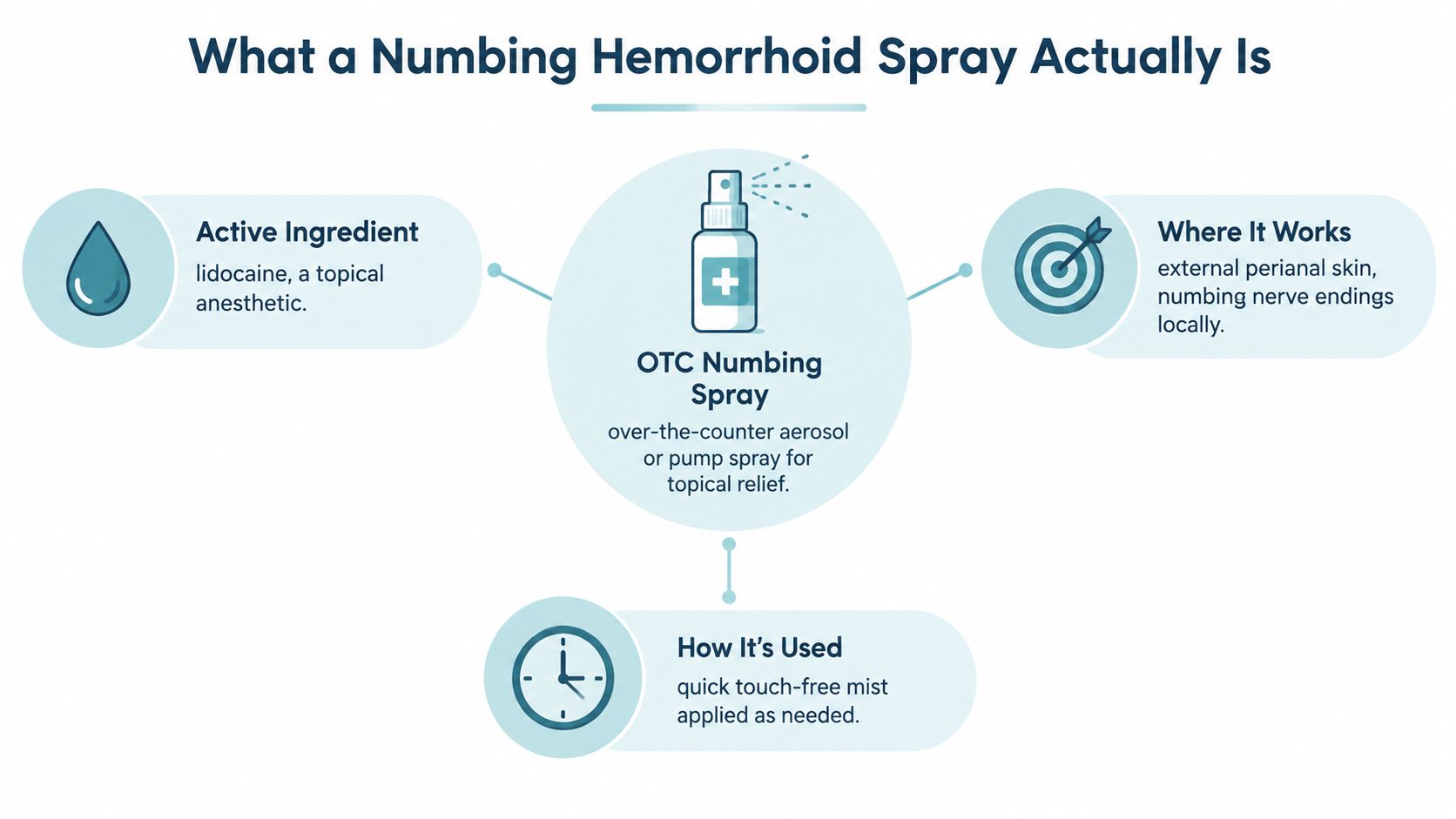
That combination may suit symptoms involving both discomfort and edema. It isn't designed to repair prolapse, thrombosis, bleeding, or the constipation and straining that can contribute to hemorrhoid irritation.
For a broader explanation of topical anesthetic options, see this guide to over-the-counter anesthetic spray. A cream such as Revivol-XR® Advanced Hemorrhoid Cream - 5% Lidocaine + Phenylephrine (Vasoconstrictor) - Fast Relief of Burning, Itching, Discomfort uses the same general active-ingredient approach in a different format, with the product label defining its directions and limits.
The FDA labeling says to seek medical evaluation if symptoms worsen or don't improve within 7 days. That boundary matters because persistent pain or bleeding may need diagnosis rather than continued topical anesthetic use.
How It Stacks Up Against Creams and Suppositories
The best format depends on where the symptoms are and how much contact you can tolerate. A spray is convenient for external irritation. A cream or ointment can provide a thicker coating, but it requires contact with the skin. A suppository is intended for internal use and shouldn't be substituted for an external spray just because the symptoms are uncomfortable.
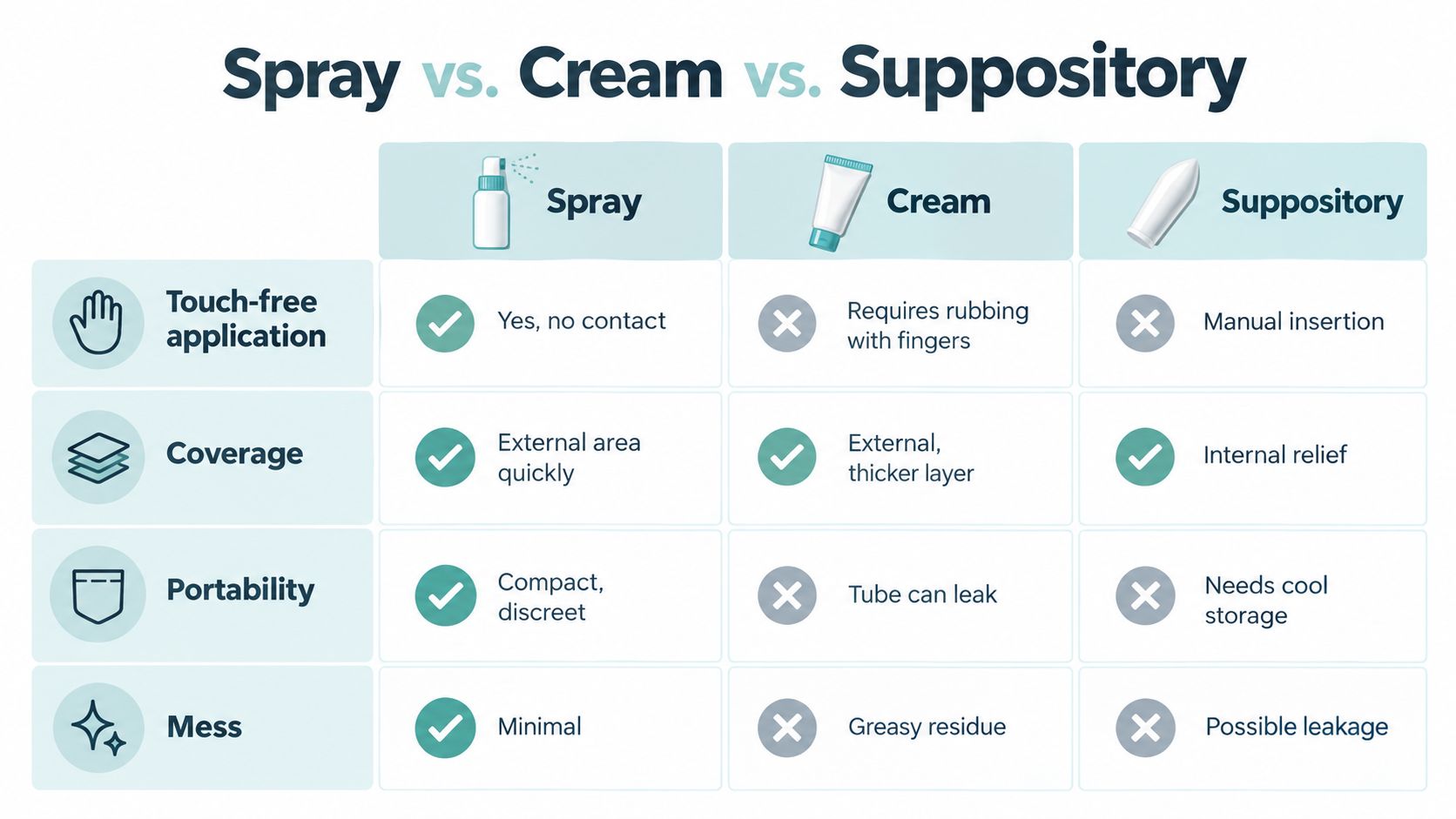
| Format | Touch-free | Best for | Portability |
|---|---|---|---|
| Spray | Yes | External irritation and quick application | Compact and discreet |
| Cream | No | External symptoms needing a coating | Tube may be messy |
| Suppository | No | Symptoms requiring an internal product | Follow storage and label directions |
U.S. labels for comparable sprays direct external use only. That makes a spray a poor choice for a prolapsing internal hemorrhoid or another symptom that needs internal coverage. A suppository guide can help explain that distinction, but product directions should always take priority. See suppositories for hemorrhoids for format-specific considerations.
A cleansing step may improve comfort before any topical product. Revivol-XR® Hygienic Cleansing Lotion – Gentle Relief + Soothing Aloe & Witch Hazel for "Down-There" Sensitive Areas is described as an external cleansing lotion with aloe and witch hazel that can be applied to toilet paper for gentle cleaning. It isn't a numbing product, so it serves a different purpose.
Choose the format that matches the symptom pattern, not the one that sounds strongest. External burning and itching may fit a spray or cream. Internal pressure, prolapse, severe pain, or unexplained bleeding should prompt a healthcare conversation rather than a format comparison.
Safe Application From Start to Finish
Follow the Drug Facts label for your specific product. Comparable 5% lidocaine and 0.25% phenylephrine sprays allow use up to four times daily, including after bowel movements, but another product may have different directions.
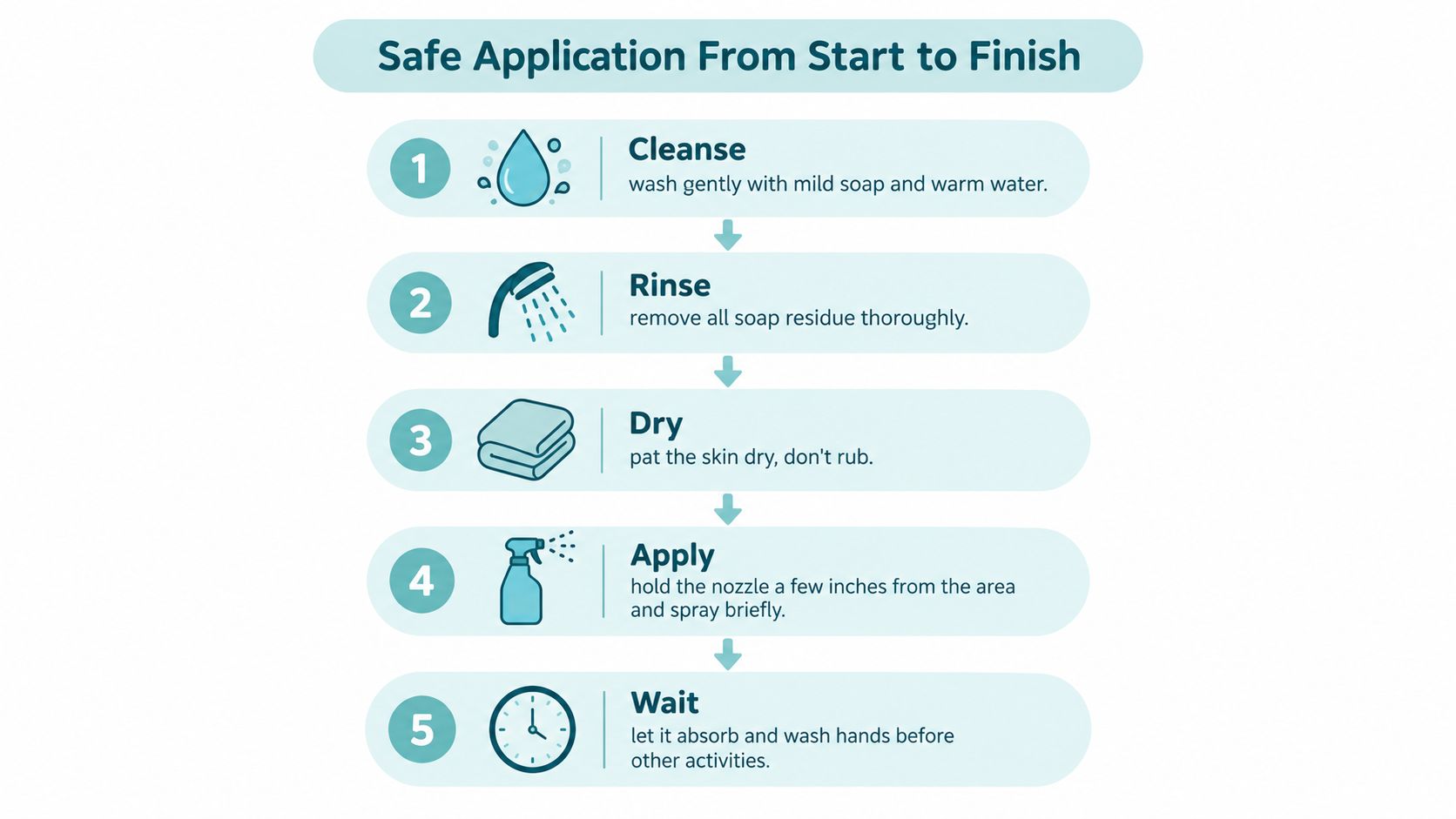
- Cleanse gently. Use mild soap and warm water around the affected external area.
- Rinse thoroughly. Remove soap residue, which can irritate already sensitive skin.
- Pat dry. Don't rub. Friction can worsen burning and itching.
- Apply externally. Hold the nozzle a few inches from the perianal area and use a brief spray or thin application as directed.
- Wash your hands. Avoid touching your eyes, food, or other sensitive areas until your hands are clean.
Don't put the product into the rectum with your fingers, an applicator, or another device. Don't spray it into the eyes, and don't exceed the labeled dose or frequency.
Damaged anorectal tissue can increase absorption. Excessive or repeated lidocaine exposure can raise the risk of systemic local-anesthetic toxicity, including neurological or cardiovascular effects, as described in DailyMed product labeling.
If you prefer a non-spray comfort measure, Revivol-XR® Sitz Bath Soak Mix – Super Concentrated 20-in-1 Blend with Epsom Salt & Essential Oils – 15 Soaks – USP Grade is intended as an external bath-water additive. Its label advises external use, a small sensitivity test, and avoiding use if irritation develops.
Aerosol products need extra care. Comparable products are flammable and pressurized, so don't puncture or incinerate the container, keep it away from flames, and don't store it above 120°F.
Who Should Be Cautious Before Spraying
Phenylephrine can matter for people with certain health conditions. Ask a doctor before use if you have heart disease, high blood pressure, thyroid disease, diabetes, or difficulty urinating related to an enlarged prostate.
A pharmacist or clinician should also review the product if you're taking a prescription medicine for high blood pressure or depression. This is a short conversation, but it can prevent you from overlooking a relevant warning.
Sensitive perianal skin may react to any topical product. Stop using the spray if you develop burning, rash, redness, irritation, swelling, worsening pain, or another reaction. Don't keep applying more in an attempt to overcome a reaction.
If you're concerned about lidocaine reactions, review information about lidocaine cream side effects. The same basic principle applies to sprays: the affected area should feel more comfortable, not increasingly inflamed.
Seek urgent help for symptoms suggesting a serious reaction, such as trouble breathing, faintness, or significant changes affecting the nervous system or heart. For any unexplained bleeding or severe pain, contact a healthcare provider rather than relying on repeated applications.
Pregnancy, Postpartum, and the Newborn Stage
Pregnancy and the period after delivery deserve a more careful approach. AAFP reports that topical lidocaine has limited safety data after the first trimester and that lidocaine crosses the placenta. NHS Specialist Pharmacy Service guidance also says no hemorrhoid preparation is specifically licensed for pregnancy, so product selection shouldn't be treated as a simple yes-or-no question.
Ask an OB-GYN or pharmacist before using a lidocaine spray. Tell them your trimester, whether you're breastfeeding, the condition of the skin, and any other medicines you're using. If they agree that the product is appropriate, use the smallest amount for the shortest labeled duration.
Avoid applying it to extensive, severely inflamed, or open tissue unless a clinician specifically advises you to do so. Absorption can increase when lidocaine is used on irritated or broken skin, over large areas, for prolonged periods, or under occlusion.
Postpartum pain also isn't always caused by hemorrhoids. An episiotomy, tear, infection, fissure, or another birth-related issue can produce pain in the same general area. Escalating pain, increasing swelling, fever, discharge, or difficulty coping with ordinary movement deserves clinical assessment.
Labor can increase pressure on the anal and rectal veins, so hemorrhoids may worsen immediately after delivery. ACOG recommends practical comfort measures such as medicated sprays or topical ointments, sitz baths, cold witch-hazel compresses, and avoiding straining during bowel movements. It also advises discussing stool softeners with an obstetric clinician when needed. ACOG postpartum pain guidance
Witch hazel pads may also provide soothing comfort during pregnancy and after birth. Stop any product that causes worsening burning, rash, or itching.
When Numbness Is Covering Up Something Serious
Numbness can make a painful symptom quieter without changing what caused it. That distinction matters when pain is severe, unusual, or getting worse.
Seek medical care for heavy bright-red bleeding, blood clots, fever, pus or discharge, rapidly increasing swelling, dizziness, or severe pain. Emergency evaluation is especially important for substantial bright-red bleeding or clots, as noted in NHS hemorrhoid guidance.
A fissure can cause sharp pain with bowel movements. A thrombosed hemorrhoid can produce intense localized pain and swelling. An abscess may involve worsening pain, swelling, fever, or pus. A spray can temporarily dull the sensation in each situation, but it won't resolve the underlying problem.
Stop self-treating and seek advice if symptoms worsen or don't improve within 7 days, consistent with FDA labeling for anorectal products. If over-the-counter treatment isn't effective or symptoms continue beyond roughly 2 to 3 weeks, NHS primary-care guidance recommends medical review because persistent symptoms may need a clearer diagnosis. NHS primary-care referral guidance
Bleeding shouldn't be explained away as “just hemorrhoids” without considering the full picture. A clinician can decide whether the symptom fits routine irritation or needs another evaluation.
Putting It All Together
A numbing hemorrhoid spray fits best as a short-term comfort tool for external pain, burning, or itching. Use it according to the label, keep the application external, and combine it with gentle cleansing, avoiding straining, adequate fluids, fiber-rich food, and a sitz bath when appropriate.
If a clinician agrees, a stool softener may help reduce the pressure associated with hard bowel movements. Reassess your symptoms at the 7-day mark, and don't continue indefinitely just because the spray still makes the area feel numb.
The right next step may be a different topical format, a bowel-habit adjustment, or a healthcare appointment. Persistent, severe, or bleeding symptoms should always move the focus away from masking discomfort and toward finding the cause.
Revivol-XR offers topical hemorrhoid comfort options, including lidocaine and phenylephrine formulations, but you should use any product only as directed on its label. Visit Revivol-XR to review the available options, and speak with a healthcare provider if your symptoms are severe, bleeding, worsening, or not improving.