Lidocaine Cream Side Effects: The Shocking Truth About Over-the-Counter Numbing Creams

Using more lidocaine cream than recommended won’t make it work faster... it could land you in the emergency room.
I once spoke with a customer who applied a thick layer of numbing cream and then used a heating pad over it, thinking the heat would speed up the relief for their hemorrhoid pain. They didn’t realize they were creating a dangerous situation, dramatically increasing how much of the drug their body absorbed. They started feeling dizzy and noticed a strange metallic taste in their mouth, early warning signs of systemic toxicity.
Luckily, they called for advice and we told them to wash it off immediately and monitor their symptoms. They were fine, but it was a close call that highlighted a critical gap in understanding. People need powerful relief, but they also need to know how to use these products safely.
That customer's close call is a perfect example of why knowledge is your best defense.
This guide isn’t here to scare you. It’s here to empower you. Lidocaine cream is overwhelmingly safe and effective when used correctly. My goal is to break down what you need to know about potential lidocaine cream side effects so you can manage your discomfort with confidence and peace of mind.
For the vast majority of people, any side effects are mild, localized, and temporary. The key is knowing the difference between a common, minor reaction and a rare but serious one. When you’re in control, you can get the relief you need without the worry.
Your Guide To Using Lidocaine Cream Safely
Lidocaine cream is a trusted tool for pain relief, but its effectiveness comes with a responsibility to use it wisely.
Products made under strict guidelines, like our FDA monograph-compliant Revivol-XR cream, are designed to maximize relief while minimizing risks.
Here are the non-negotiable rules for safe use:
- Follow the Directions: Never use more cream than recommended or apply it more often than the label says. More is not better... it just increases the risk of the drug entering your bloodstream.
- Mind the Application Area: Only apply the cream to intact skin. Keep it away from open wounds, cuts, or broken skin unless a doctor has specifically told you to do so.
- Know Your Health History: Certain medical conditions, like severe liver disease or specific blood disorders, can change how your body processes lidocaine. Always consult a doctor if you have underlying health issues.
That story about the customer with the heating pad wasn't just about the heat... it was a lesson in respecting the product's power. By following a few simple rules, you can harness its benefits for fast, effective relief from pain and itching. This guide is your partner in doing just that.
Common and Mild Lidocaine Cream Side Effects
When you apply a lidocaine cream, the good news is that most side effects are nothing to worry about.
They're typically minor, temporary, and stay right where you put the cream. Think of it as a small, short-lived skin reaction that fades away on its own.
Most people don't experience any issues at all. But if you do notice a mild reaction, it will almost always be confined to the small area where you applied the cream.
What To Expect On The Skin
The most common reactions are purely cosmetic and sensory. They often disappear within a few hours after you’ve wiped the cream off.
Here are the usual suspects:
- Slight Redness or Paleness: The skin might turn a little red or, conversely, pale. This is a very common response as the cream temporarily changes blood flow.
- Minor Swelling: You might see a little puffiness right where you applied the cream. This is a mild and harmless response that subsides quickly.
- Mild Itching or Burning Sensation: A slight stinging or itching feeling can happen when you first apply the cream. This is usually brief and fades as the numbing effect kicks in.
These reactions are manageable and rarely a cause for concern.
Data Backs Up The Safety
It's reassuring to know this isn't just anecdotal... clinical data supports the high safety profile of topical lidocaine.
A comprehensive review of topical lidocaine use found that application site reactions were the main type of side effects reported, and the numbers were quite low.
This means that well over 95% of people using the cream as intended experience either no side effects or only very trivial ones.
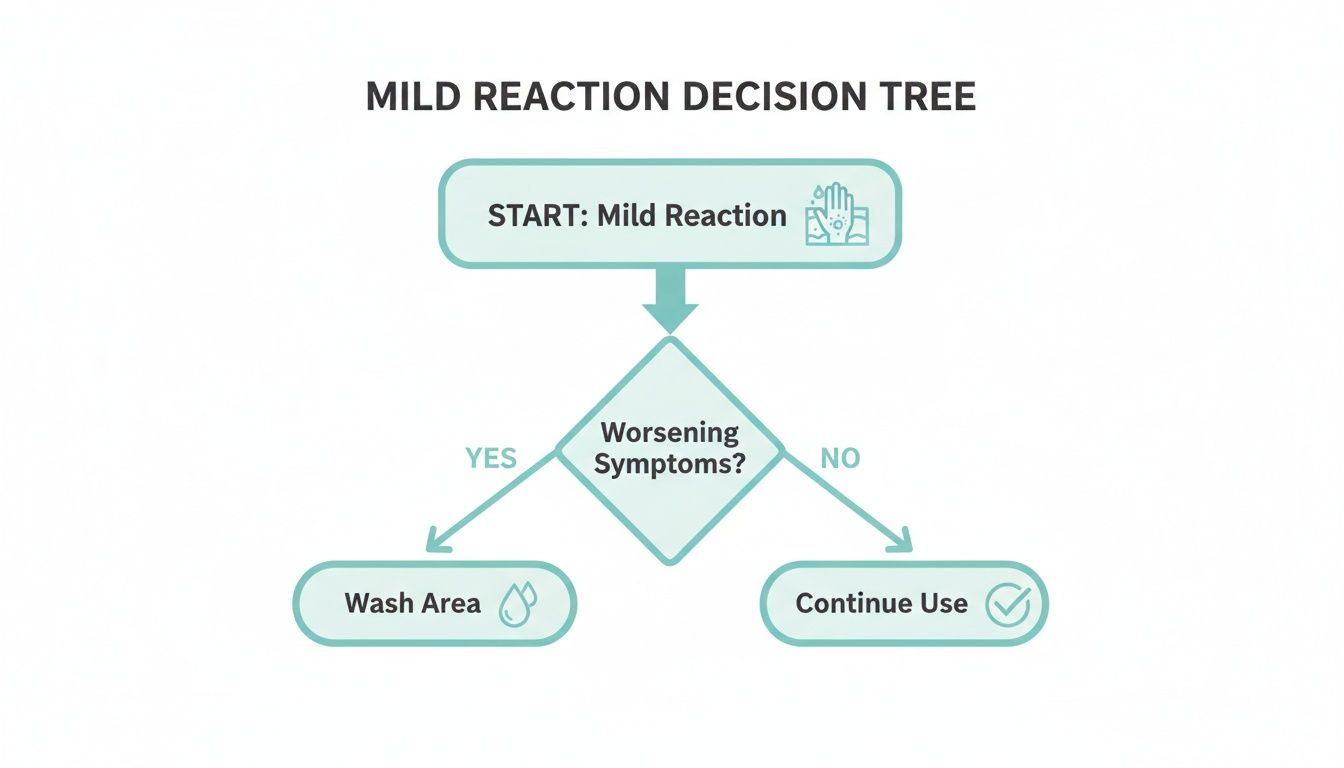
How To Manage Mild Reactions
If you do run into one of these common and mild lidocaine cream side effects, managing it is straightforward.
The most important rule is to listen to your skin. If an area becomes more irritated instead of less, it’s time to take a break.
Here’s what to do if you notice minor irritation:
- Stop Using the Cream: First things first, pause the application.
- Gently Wash the Area: Use mild soap and cool water to wash any remaining cream off your skin. Avoid scrubbing.
- Pat Dry: Use a soft, clean towel to gently pat the area dry.
- Let It Breathe: Don't cover the area with tight clothing or bandages.
In almost every case, these steps will be enough to calm the skin down, and any redness or itching will fade on its own within a few hours.
Recognizing Rare But Serious Side Effects
While mild reactions are usually no big deal, it's smart to know about the rare but serious lidocaine cream side effects.
These problems typically pop up if too much lidocaine gets absorbed into your bloodstream, a condition called systemic toxicity.
This happens when you apply too much cream, cover a huge patch of skin, put it on broken or inflamed skin, or apply heat over the top.
Signs Of Systemic Toxicity
When too much lidocaine hits your bloodstream, it can mess with your central nervous system and heart.
Early warning signs can include:
- Numbness around your mouth or a strange metallic taste.
- Ringing in your ears (tinnitus).
- Feeling lightheaded, dizzy, or unusually sleepy.
- Blurred or double vision.
If the absorption continues, these symptoms can become much more serious, including muscle twitching, irregular heartbeat, or seizures. Stop using the cream and call 911 or head to the nearest emergency room if you experience any of these.
Recognizing the earliest signs, like a metallic taste or numbness around the lips, is your best defense.
Severe Localized Skin Reactions
Besides systemic problems, it's also possible to have a severe reaction right on your skin. This is a whole different level from mild redness.
Look out for these signs where you applied the cream:
- Blistering, peeling, or oozing skin.
- Intense burning or pain that won't quit.
- Purple or dark red spots (purpura).
- Large, hive-like welts (urticaria).
If you see any of these severe skin changes, wash the area thoroughly and call your doctor right away.
Methemoglobinemia... A Rare Blood Disorder
Another very rare but serious side effect is methemoglobinemia. This is a blood disorder where your body can't carry oxygen effectively.
The most obvious sign is a change in skin color to a blue or grayish tint, especially on the lips or fingernails. This is a medical emergency.
It's extremely uncommon with over-the-counter 5% lidocaine creams used properly, but it’s good to be aware of.
Understanding Allergic Reactions To Lidocaine
Not all skin reactions are created equal. It's crucial to know the difference between a simple, mild irritation and a true allergic reaction.
A simple irritation usually stays right where you applied the cream and fades quickly. An allergic reaction is your immune system overreacting, and that response can be more intense and widespread.
Distinguishing Irritation From Allergy
A true allergic reaction to lidocaine is rare. The key difference is how your body responds.
Irritation is a direct, localized effect, while an allergy triggers an immune system cascade that can affect areas far beyond where you applied the cream.
An allergic reaction isn't just about redness... it's about your immune system sending out an alarm.
Signs Of A True Allergic Reaction
If your body is having an allergic response, the symptoms will likely be far more pronounced than simple redness.
Here are the key warning signs:
- Intense, Spreading Itchiness: The itching is severe and may spread to other parts of your body.
- Hives (Urticaria): These are raised, red, itchy welts that can pop up anywhere on the skin.
- Significant Swelling: Swelling that extends well beyond the application area is a major red flag.
- Blistering or Oozing: The skin may develop small blisters or begin to ooze clear fluid.
While uncommon, some studies show allergic reactions are a notable factor among lidocaine cream side effects. You can learn more about these findings from the 2009-2013 review to see how this highlights the need for awareness.
What Is Anaphylaxis?
Anaphylaxis is an extremely rare but life-threatening allergic reaction that requires immediate medical help. Call 911 if you experience difficulty breathing or swallowing, or swelling of the face, lips, or tongue.
Action Plan For A Suspected Allergy
If you think you're having an allergic reaction, act quickly.
- Stop Using the Product Immediately.
- Wash the Area Thoroughly with cool water and gentle soap.
- Take an Antihistamine (this does not replace medical advice).
- Contact Your Doctor or Seek Medical Care. For any signs of a severe reaction, go to an urgent care clinic or the emergency room.
How To Use Lidocaine Cream Safely And Minimize Risks
When it comes to lidocaine cream side effects, preventing them is far better than dealing with them.
By following a few simple rules, you can get powerful numbing relief while keeping your risk of adverse reactions extremely low.
Always Follow Dosage Instructions
This one is non-negotiable. The instructions on the label are there for a reason.
Always use the smallest amount needed to cover the affected area with a thin layer. Brands like Revivol-XR give you clear, easy-to-follow directions to take the guesswork out of it.
Perform A Patch Test First
Before you apply the cream to a large or sensitive area, it’s smart to do a quick patch test.
- Apply a tiny dab of the cream to a small patch of skin, like your inner wrist.
- Leave it on for about an hour or as directed.
- Wipe it off and wait 24 hours. Keep an eye out for any redness, itching, or irritation.
If your skin looks fine after a day, you can feel much more confident using it.
Never Apply To Broken Or Infected Skin
Your skin is a fantastic barrier. If you apply the cream to open wounds, cuts, or severely inflamed skin, that protective barrier is gone.
This gives the lidocaine a direct route into your bloodstream, a recipe for systemic toxicity. Always apply the cream to intact skin only. For related products, understanding the difference between a hemorrhoidal ointment vs cream can help.
Avoid Using Heat Or Tight Wraps
This is a critical safety tip. Applying a heating pad or wrapping the area tightly can spell trouble.
Heat acts like an accelerator for absorption. It opens up your pores and blood vessels, allowing lidocaine to rush into your system.
This can easily lead to an overdose, even if you used the correct amount of cream.
Frequently Asked Questions About Lidocaine Cream Safety
Let's tackle some of the most common questions we hear about lidocaine cream side effects with straightforward answers.
Can lidocaine cream cause nerve damage?
When used on intact skin as directed, the risk of nerve damage from an over-the-counter cream is incredibly low. Serious nerve issues are almost always linked to lidocaine injections or dangerously high absorption, not standard OTC use.
How long do lidocaine cream side effects last?
Common, mild side effects like redness or temporary itching typically fade within a few hours after you’ve washed the cream off. If irritation lasts more than a day or gets worse, stop using the product and check with a healthcare provider.
Is it safe to use lidocaine cream every day?
Always follow the product’s specific instructions. Most OTC lidocaine creams are for short-term use, up to 3-4 times per day for about a week. If you need it for longer, you need to see a doctor to treat the underlying problem, not just numb the symptoms.
What happens if you use too much lidocaine cream?
Using too much is the main reason for serious side effects. It can trigger systemic toxicity, with signs like dizziness, ringing in your ears, blurred vision, or a metallic taste. Always use the smallest amount needed.
Can I use lidocaine cream on an anal fissure?
Yes, a 5% lidocaine cream is often recommended for the sharp pain of an anal fissure. It can make bowel movements less painful, helping the sphincter muscle relax so the fissure can heal. Apply a small, thin layer to the external area. For more details, see our guide on how to treat anal fissures.
The story I shared at the beginning about the customer and the heating pad wasn’t about blame... it was about education. That moment reinforced why clear, direct information is so important for safe relief.
For a product you can trust, Revivol-XR offers a 5% Lidocaine Cream formulated under strict FDA OTC monograph guidelines. Made in the USA, our cream provides maximum strength numbing for hemorrhoids and fissures while prioritizing your safety. Get doctor-trusted relief at https://hemorrhoid.com.