FAST & FREE 📦 2-DAY SHIPPING!*

Most people don’t realize their daily routine is actually making their hemorrhoids worse.
I remember talking to a new mom who was in absolute agony. She loved her newborn more than anything, but the constant, searing pain from postpartum hemorrhoids was stealing the joy from those precious early days. She felt like she couldn’t sit, couldn’t walk, and was terrified of going to the bathroom. All she wanted was to focus on her baby, but the pain was all-consuming.
Your body doesn’t have to fight this battle alone ... but it needs the right tools.
That conversation stuck with me because it’s a story I hear over and over. The physical trauma of childbirth, combined with hormonal shifts and postpartum constipation, creates a perfect storm. The goal for hemorrhoids treatment after birth isn't just about masking the pain; it's about creating a healing environment so your body can recover. Relief starts with simple at-home care, like cold packs and warm sitz baths, and is boosted by safe, effective over-the-counter creams that tackle the swelling and discomfort head-on.
Here’s how to take action and find relief, starting today.
This new mom eventually found a combination of sitz baths and a powerful topical cream that gave her the relief she needed. It wasn’t about a magic cure... it was about giving her body the consistent, gentle support it needed to heal, so she could finally enjoy her baby without being distracted by pain.
If you're dealing with this, you are not alone. This discomfort is an incredibly common part of the postpartum journey.
Many new moms are caught off guard, but a few key factors make it an almost expected side effect of giving birth.
Postpartum hemorrhoids are surprisingly widespread. Research shows about 40% of women get them during pregnancy or right after delivery. For a deeper dive, you can read more about the clinical findings on postpartum hemorrhoids.
Understanding why this happens can help you find the right relief. Childbirth creates a perfect storm for hemorrhoids.
The good news? This is almost always a temporary and highly treatable problem. With the right care plan, you can find real relief.
When you’re in the thick of postpartum recovery, you need simple, effective fixes.
This is your first line of defense for hemorrhoids treatment after birth.
In the first day or two, the goal is to reduce swelling and numb the pain. Cold therapy is fantastic for this.
It works by constricting blood vessels, which shrinks swollen tissue and gives you immediate relief.
Here’s how to do it safely:
If you need extra comfort, using a numbing spray after birth can offer similar touch-free relief.
After a day or two of cold packs, switching to warm water can feel like a miracle. A sitz bath is a shallow, warm soak that cleanses, boosts blood flow, and relieves itching.
The process is easy. Most hospitals send you home with a sitz bath kit, but a clean, shallow bathtub works too.
Soak for 15-20 minutes, two to three times a day. The warmth is especially soothing after a bowel movement.
To level up your soak, add therapeutic salts. Products like Revivol-XR's 20-in-1 Sitz Bath Salts are a great option. They use Epsom salt and natural botanicals to calm inflamed skin.
Staring at the pharmacy aisle as an exhausted new mom is overwhelming. You just want something that works fast.
A common worry is safety while breastfeeding. The good news? Most topical treatments are considered standard care postpartum.
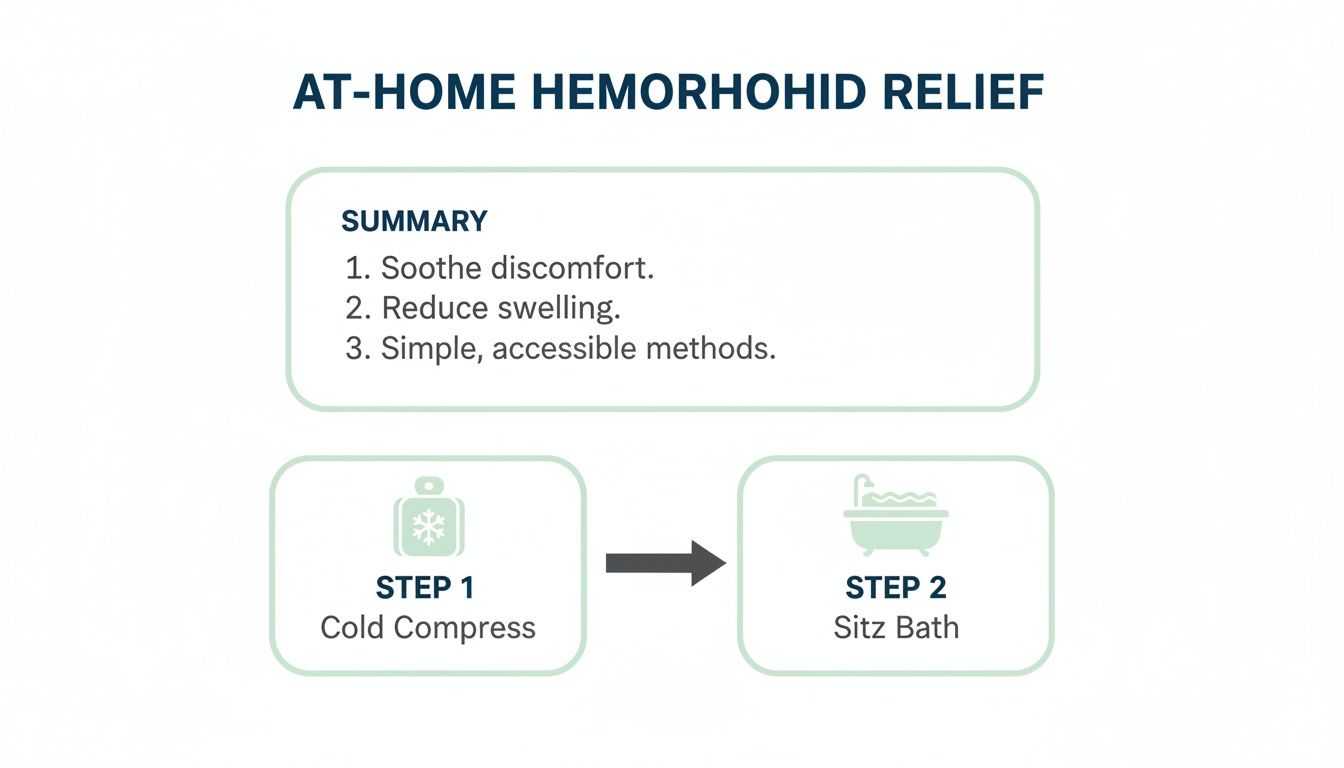
Starting with a cold compress and a sitz bath provides a powerful one-two punch against pain and swelling.
When you scan labels, a few key ingredients show up again and again. Each has a specific job.
Lidocaine: This is a local anesthetic. Its job is to numb the area and stop pain signals. A product with 5% lidocaine offers maximum over-the-counter strength.
Phenylephrine: This is a vasoconstrictor, meaning it shrinks swollen tissue. It narrows the blood vessels, taking down the size of the hemorrhoids.
Protectants (like Glycerin): These ingredients form a protective barrier over irritated skin, allowing it to heal without more aggravation.
The most effective OTC treatments usually combine these ingredients, attacking the problem from all sides.
| Ingredient | Primary Function | Postpartum Benefit |
|---|---|---|
| Lidocaine | Local Anesthetic | Provides fast-acting numbing relief for acute pain and burning. |
| Phenylephrine | Vasoconstrictor | Shrinks swollen hemorrhoidal tissue, reducing pressure and size. |
| Glycerin | Protectant | Creates a soothing barrier to prevent further irritation from friction. |
| Witch Hazel | Astringent | A natural anti-inflammatory that helps calm itching and reduce swelling. |
| Aloe Vera | Soothing Agent | Cools and calms inflamed skin, promoting a healing environment. |
This table is your cheat sheet for comparing products and targeting your specific symptoms.
Beyond the active ingredients, many top treatments include calming botanicals.
Witch hazel is a classic for a reason... it’s a natural astringent that reduces swelling and itching. Aloe vera offers incredible cooling power.
Our guide on the best over-the-counter hemorrhoid treatments dives deeper into products that blend these ingredients.
How you apply treatment is just as important as what you’re using. Being gentle and hygienic is everything.
A touch-free spray can be a lifesaver when the area is too sensitive to touch.
Here are a few tips:
Following these steps ensures the treatment works, helping you heal faster.
Soothing immediate pain is one thing, but lasting relief means tackling the root of the problem... avoiding strain.
Your diet and bathroom habits are your most powerful tools for long-term healing.
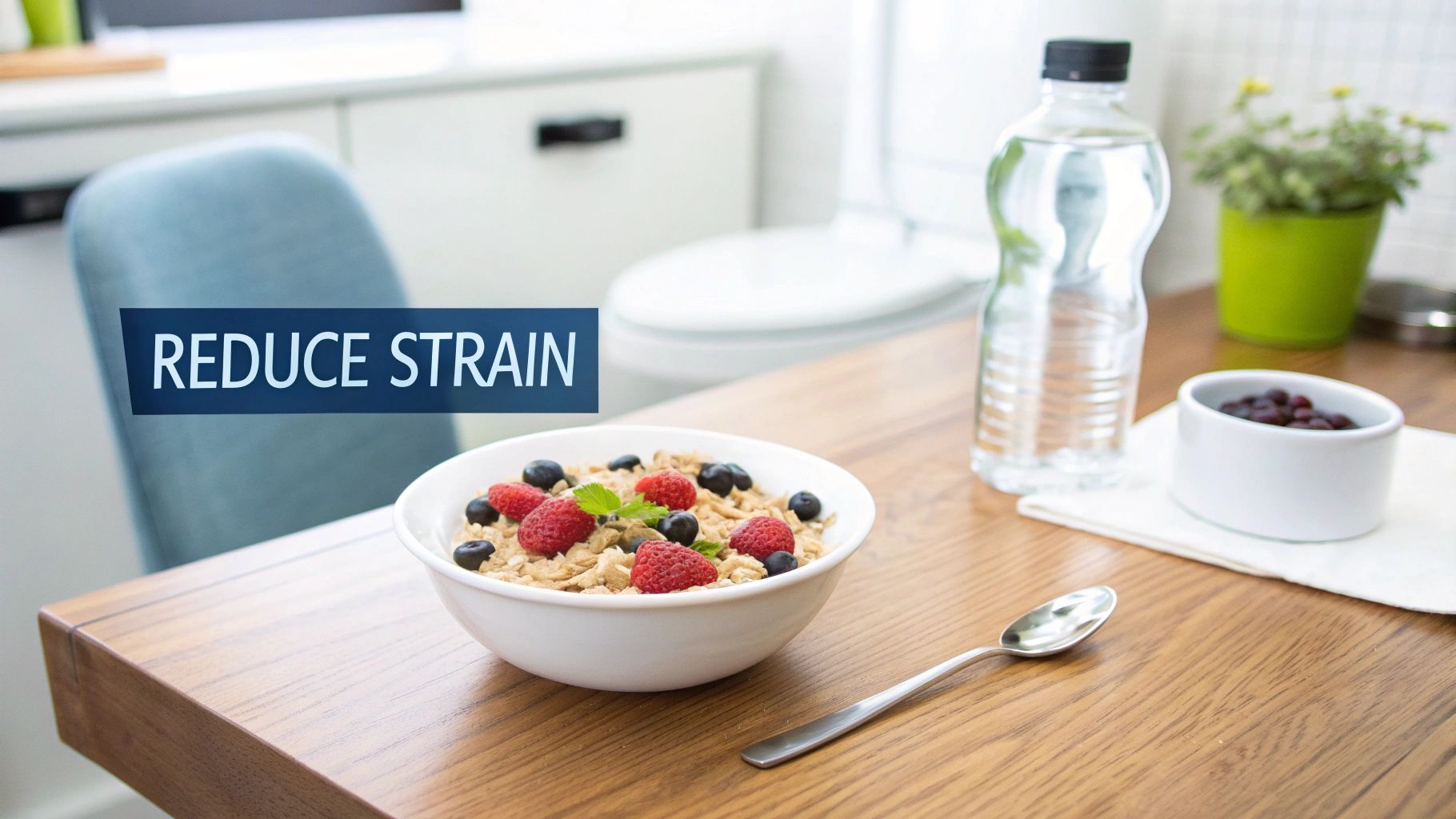
The fear of that first postpartum bowel movement is real. Straining puts direct pressure on swollen veins, making the problem worse.
The goal is to make bowel movements soft and easy to pass. A few simple additions can make a world of difference.
Focus on high-fiber foods that are easy to grab:
Just as important is water. Drink plenty of fluids all day, especially if you're breastfeeding. Fiber needs water to soften stool.
How you go is as critical as what you eat. Small tweaks can cut down on straining.
First, never ignore the urge to go. Holding it in makes stool harder to pass.
Next, fix your posture on the toilet. Propping your feet up on a small stool changes your body’s angle, which relaxes the muscle and straightens the colon.
Your goal is to spend as little time on the toilet as possible. Avoid sitting for more than a few minutes.
Dry toilet paper is the enemy of healing hemorrhoids. The friction can feel like sandpaper on raw tissue.
Instead of wiping, gently pat the area with a moist towelette. An even better option is Revivol-XR's Toilet Paper Lotion, which turns regular paper into a soothing wipe.
This all lines up with the science. A 2023 study found that 62% of women with postpartum hemorrhoids also struggled with constipation. Find more strategies in our guide to constipation and hemorrhoids.
While most postpartum hemorrhoids respond to at-home care, you need to know when a symptom is more than normal.
Trust your gut. If the pain feels unbearable or gets worse after a few days of consistent hemorrhoids treatment after birth, call your doctor.
Some signs should never be ignored. They can point to a complication that needs prompt medical attention.
Severe or Worsening Pain: Constant, throbbing pain that doesn’t ease up could signal a thrombosed hemorrhoid... a blood clot inside the hemorrhoid.
Heavy or Continuous Bleeding: A small amount of bright red blood is one thing. Heavy, dripping, or ongoing rectal bleeding is a red flag.
Signs of Infection: A fever, or if the area becomes more red, warm, or produces a foul-smelling discharge, could be an infection.
Your health is the priority. There is no reason to "tough it out" if something feels wrong.
Putting off a call to your doctor because you feel embarrassed is never worth the risk.
Your healthcare provider has seen it all and is there to support you without judgment.
They can figure out if you have a thrombosed hemorrhoid or if something else is going on. Putting your health first is the best thing you can do for yourself and your baby.
Postpartum recovery comes with a lot of questions. Let’s tackle the most common ones.
It really depends. The good news is that for most women, the worst of it improves within a few weeks with consistent care.
Research shows nearly 75% of women find their hemorrhoids clear up within a few weeks. For some, around 28%, symptoms can stick around for months.
Patience is key. Sticking with your sitz baths, treatments, and diet changes makes a difference.
Yes, absolutely. Most topical, steroid-free treatments are considered safe for breastfeeding moms.
Ingredients like lidocaine, phenylephrine, and witch hazel work locally. They aren't absorbed into the bloodstream in any significant amount.
Always double-check the product label and talk to your doctor. Products like Revivol-XR are designed with your and your baby's needs in mind.
You can definitely be proactive. While you can’t change the pressure of pregnancy, you can control the things that make hemorrhoids worse.
Building these habits early can lower your risk of severe hemorrhoids again.
It’s common to confuse the two. A hemorrhoid is a swollen vein, feeling like a soft lump. An anal fissure is a tiny tear in the skin that causes a sharp pain during a bowel movement.
It's possible to have both. This is why a multi-symptom hemorrhoids treatment after birth is valuable. A cream that numbs pain, shrinks swelling, and creates a protective barrier can soothe both issues.
Your postpartum recovery deserves effective, gentle care. Revivol-XR offers a complete range of doctor-trusted solutions, from soothing creams to therapeutic sitz salts, designed to help you heal comfortably. Find the right relief for your needs at https://hemorrhoid.com.