Postpartum Hemorrhoids: 5 Doctor-Approved Treatments for New Moms

Most people don’t realize that the final “push” of childbirth can be the start of weeks, or even months, of hemorrhoid pain.
You’ve just been through one of the most physically demanding experiences of your life. The focus is all on your beautiful new baby, but no one prepares you for the painful reality of postpartum hemorrhoids. And it’s incredibly common... affecting up to 40% of new moms.
This isn't just a minor annoyance. It's a real, painful condition that can make sitting, walking, or even just holding your newborn a challenge. The good news is that with the right care, you can find relief and get back to enjoying those precious first weeks.
The Postpartum Pain No One Talks About
Those first few weeks with a new baby are a whirlwind. Between the round-the-clock feedings and diaper changes, you’re already exhausted. The last thing you need is a sharp, burning pain that makes you dread every trip to the bathroom.
I've heard from so many new moms who feel completely blindsided by this. They prepare for sleepless nights, but no one warns them about the agony of postpartum hemorrhoids. They feel isolated and embarrassed, wondering if they're the only ones going through it.
You are absolutely not alone in this struggle.
Giving birth creates the ideal conditions for hemorrhoids to develop. The primary culprit is the intense pressure from pushing during labor, which puts an enormous strain on the veins in your rectum and anus, causing them to swell. On top of that, hormonal shifts and postpartum constipation create a trio of factors working against you.
This isn't something you did wrong; it's a physiological response to childbirth. Studies show that up to two in every five women get hemorrhoids shortly after giving birth, making it one of the most frequent postpartum conditions. You can dig into the research on postpartum hemorrhoid prevalence to see for yourself.
To get better, you need an action plan. Here are the steps:
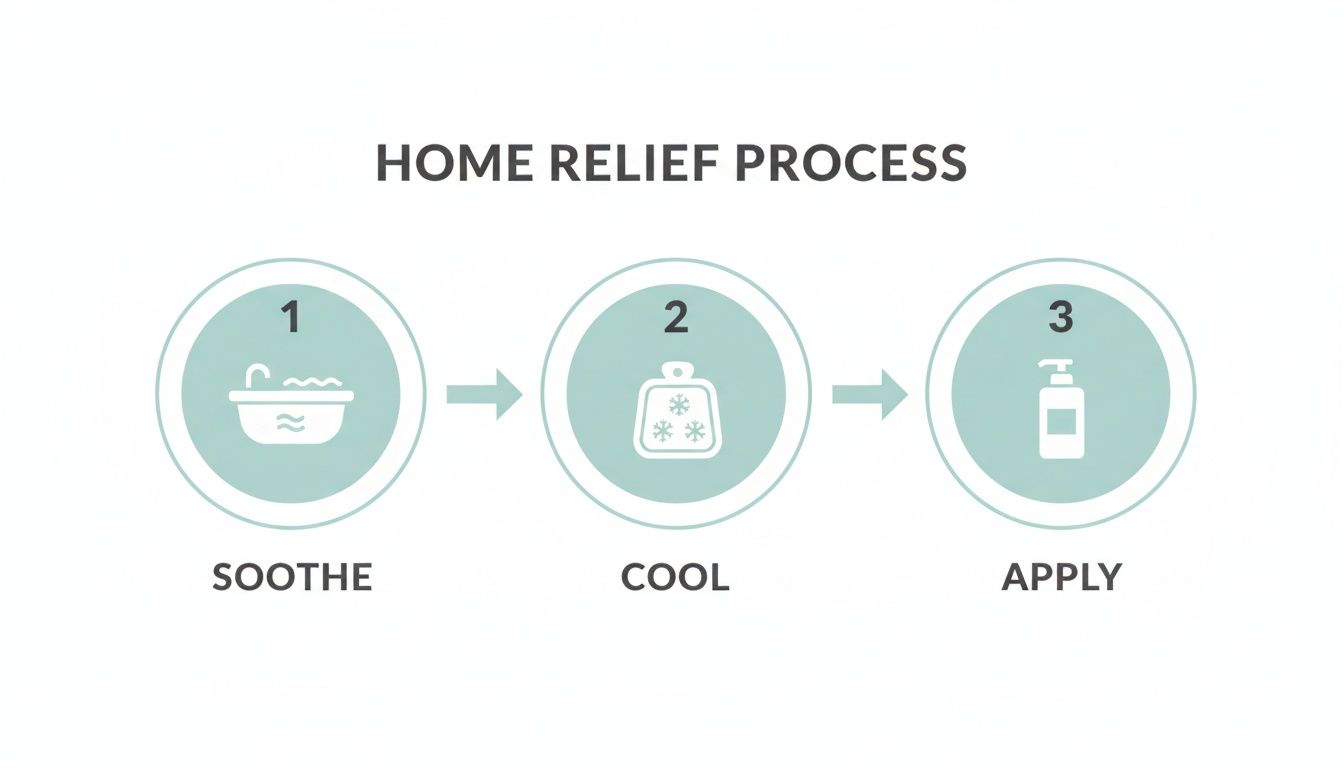
- Soothing At-Home Care: Simple strategies like sitz baths and cold packs to take the edge off the pain.
- Safe OTC Options: How to choose creams that are effective and safe while breastfeeding.
- Beating Constipation: Diet and habit tweaks to prevent straining, which is key to healing.
- Gentle Movement: How light activity can help your recovery and prevent future flare-ups.
This experience with postpartum hemorrhoids is a painful souvenir from an amazing journey. Acknowledging this is the first step toward compassionate self-care and effective healing. Our goal is to give you the tools to manage this so you can get back to what matters most.
Finding Immediate Relief In Your Own Home
When you're recovering from childbirth, you need hemorrhoid relief now. The good news is that the most effective first steps start right in your own home. These simple strategies are all about reducing pain, calming inflammation, and giving your body a chance to heal.
The cornerstone of at-home care? Warm water.
The Soothing Power of a Sitz Bath
A sitz bath is a shallow, warm bath that cleanses and soothes your perineal area. It’s one of the best things you can do for immediate postpartum hemorrhoid relief because it relaxes the anal sphincter, easing pain and improving blood flow.
For the best results, take a 10 to 15-minute soak a few times a day. You want the water to be comfortably warm, not hot. A small plastic basin that fits over your toilet seat works great.
To boost this remedy, you can add a soak mix. A blend like Revivol-XR® Sitz Bath Soak Mix combines 20 ingredients, including botanicals, essential oils, and Epsom salt, for a soothing, comforting soak. You can learn more in our complete guide to using a sitz bath for hemorrhoids.
Harnessing Cold Therapy for Numbing Relief
While warm water soothes, cold therapy is your go-to for numbing pain and shrinking swollen hemorrhoids. Applying a cold compress for about 10 minutes at a time can deliver instant relief from burning and itching.
Many new moms swear by these methods:
- Witch Hazel Pads: Gently pat the area with pre-moistened pads or tuck one in your underwear for continuous cooling.
- DIY 'Padsicles': A brilliant home remedy. Spread pure aloe vera gel and witch hazel on a maternity pad, then freeze it for a perfectly shaped ice pack.
- Simple Cold Packs: A small bag of frozen peas wrapped in a soft cloth will also do the trick. Never apply ice directly to your skin.
At-Home Postpartum Hemorrhoid Care Quick Guide
This table summarizes the best at-home remedies for fast relief.
| Remedy | Primary Benefit | Recommended Use | Pro Tip |
|---|---|---|---|
| Sitz Bath | Reduces pain, relaxes muscles | 2-3 times daily for 10-15 mins | Add Epsom salts or a specialized blend to enhance soothing effects. |
| Cold Compress | Numbing, reduces swelling | 3-4 times daily for 10 mins | A "padsicle" made with aloe and witch hazel is a new-mom favorite. |
| Witch Hazel Pads | Astringent, cooling relief | As needed after toilet use | Store your container in the refrigerator for an extra cooling sensation. |
| Peri Bottle | Gentle cleansing, avoids friction | After every urination/bowel movement | Fill with warm water to gently cleanse instead of wiping with dry paper. |
These strategies are the bedrock of your recovery. Conservative treatments like these are incredibly effective and work in over 85% of cases. Creating a "Relief Station" in your bathroom with your sitz bath, witch hazel pads, and peri bottle makes it much easier to stick with your routine.
Choosing Safe OTC Treatments While Breastfeeding
Standing in the pharmacy aisle as a new mom can feel overwhelming, especially when you’re breastfeeding. You need powerful hemorrhoid relief, but you also need to know it's safe for your baby.
The good news? There are plenty of great over-the-counter (OTC) options that tackle pain, itching, and swelling safely.
Decoding Key Ingredients For Safe Relief
When you look at product labels, you’ll see a few key active ingredients. Knowing what they do helps you choose the right product.
Here are the most common and effective ingredients:
- Lidocaine: A local anesthetic that provides fast-acting numbing relief from pain and itching.
- Phenylephrine: A vasoconstrictor that works by temporarily shrinking swollen hemorrhoidal tissue.
- Protectants: Ingredients like glycerin and lanolin form a protective barrier over irritated skin.
A multi-symptom cream often offers the most complete relief. A product like Revivol-XR's Advanced Hemorrhoid & Fissure Cream is one example, as it combines lidocaine, phenylephrine, and protectants for temporary relief: it numbs pain, temporarily shrinks swelling, and protects the skin. If you are pregnant or breast-feeding, ask a health professional before use. For a deeper dive, check our guide on the best hemorrhoid cream.
The Importance Of Steroid-Free Formulas
One critical thing to look for on the label is "steroid-free." While hydrocortisone is common, many doctors advise against its long-term use during the postpartum period.
Instead, look for products with soothing botanicals like aloe vera and witch hazel. They work beautifully alongside other actives to calm irritated skin naturally.
Always check with your doctor or pharmacist before starting any new OTC medication while breastfeeding. While most topical treatments are low-risk, a quick chat provides ultimate peace of mind.
By confidently selecting a safe, multi-action OTC product, you’re not just treating symptoms... you’re speeding up your healing process. This allows you to shift your focus from managing pain back to bonding with your new baby.
How Diet And Habits Can Speed Up Healing
Soothing creams are fantastic for immediate relief, but they only address symptoms. True healing means looking at the root cause. This is where changes to your diet and habits become the most important part of your treatment for hemorrhoids after birth.
The biggest hurdle is constipation. Every time you strain, you put immense pressure on swollen veins. The only way to break this painful cycle is to soften your stool.
Fueling Your Body With Fiber
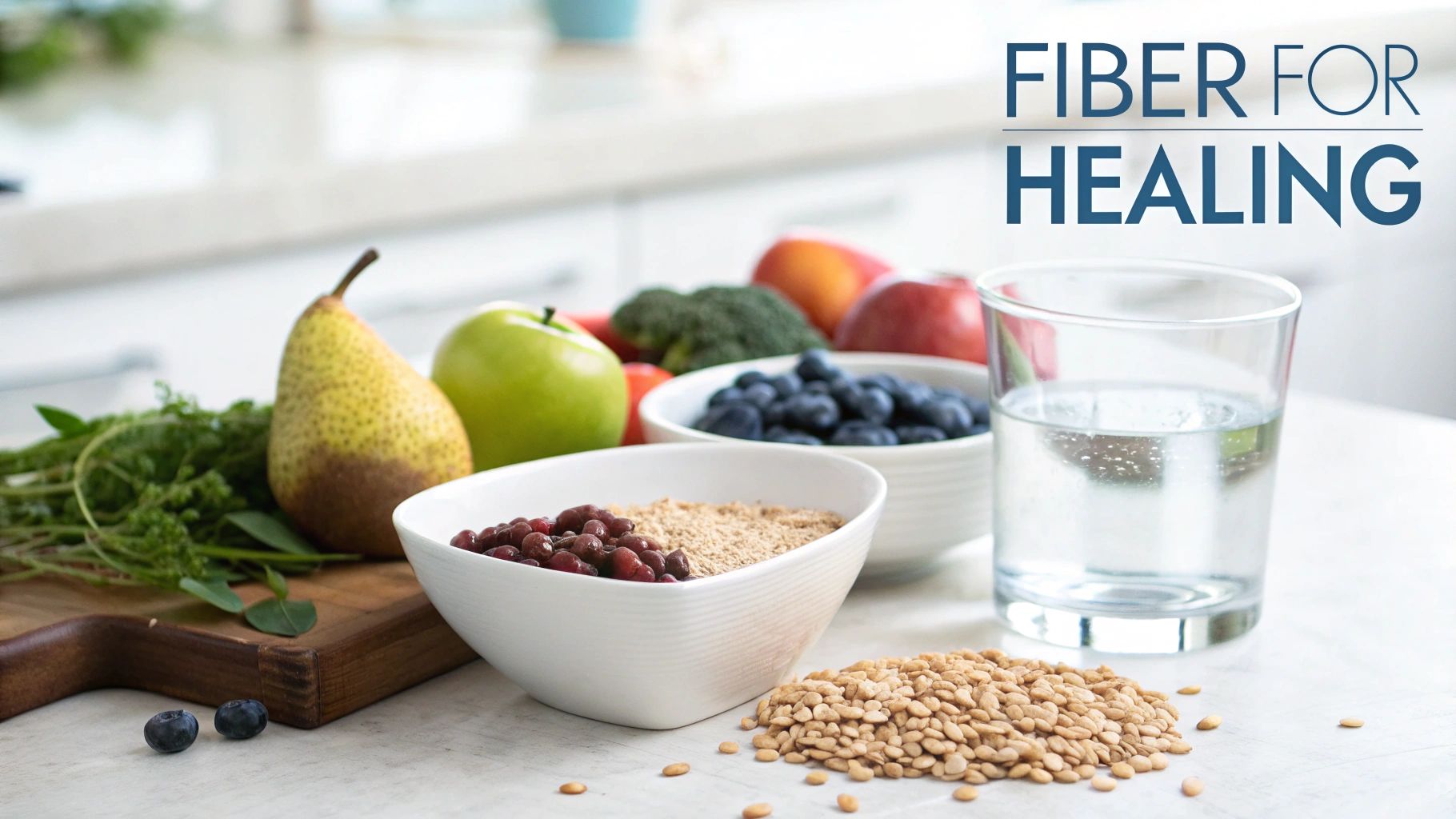
Fiber is your best friend for easy, regular bowel movements. It adds bulk to your stool and helps it hold water, making it softer and easier to pass. Aim for 25 to 30 grams of fiber per day.
Weave these fiber-rich foods into your routine:
- Oats: A warm bowl of oatmeal is a comforting way to get soluble fiber.
- Pears and Apples: These are packed with pectin. Be sure to eat the skin.
- Beans and Lentils: Add black beans to a salad or enjoy lentil soup.
- Berries: Raspberries and blackberries are loaded with fiber and antioxidants.
For more ideas, check out our guide on foods that are good for hemorrhoids.
The Non-Negotiable Role Of Hydration
Fiber won’t help without enough water. If you’re dehydrated, a high-fiber diet can make constipation worse.
This is especially true if you're breastfeeding. Keep a giant water bottle by your side and sip on it all day. Getting at least eight to ten glasses of water should be your goal.
Smarter Toilet Habits For Less Strain
How you use the toilet matters. The goal is to reduce straining and pressure.
A simple change in posture can revolutionize your bathroom experience. Elevating your feet on a small stool mimics a squatting position, which straightens the colon for a smoother bowel movement with less effort.
Also, kick the habit of using harsh, dry toilet paper. A peri bottle filled with warm water is a postpartum lifesaver. To take it a step further, a product like Revivol-XR® Hygienic Cleansing Lotion instantly turns regular toilet paper into a soft, cleansing wipe with calming aloe and witch hazel.
Gentle Movement For Long-Term Prevention
True healing is about building habits that support long-term recovery. While rest is essential, incorporating gentle movement is a powerful tool for treatment for hemorrhoids after birth. It improves blood flow to your pelvic region, which reduces swelling and speeds up healing.
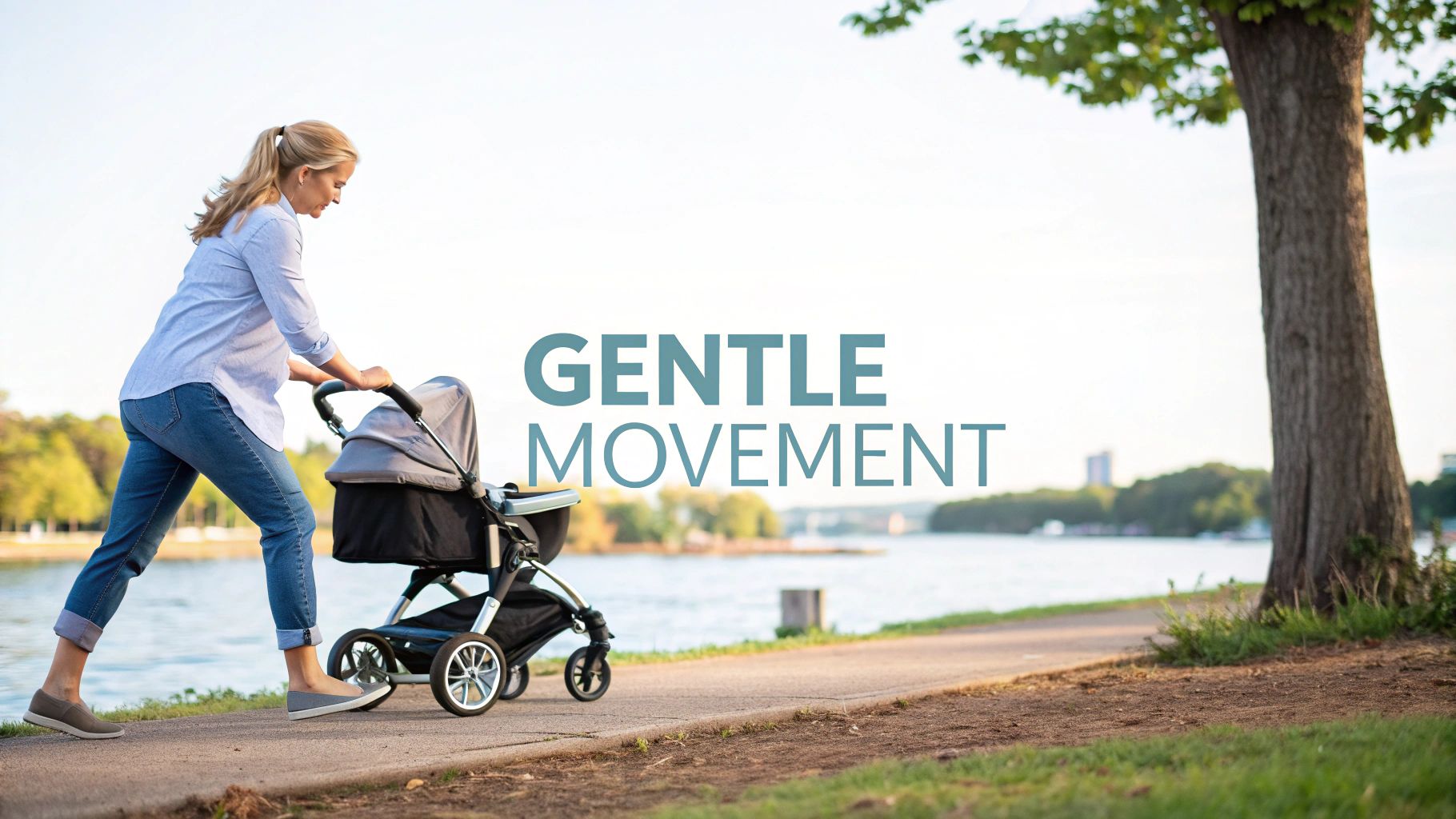
This isn't about jumping back into intense workouts. It's about light, mindful activity that supports circulation and keeps your digestive system moving.
The Power Of A Simple Walk
Never underestimate the healing benefits of a short walk. Even just 10 to 15 minutes a day can make a huge difference. Walking encourages healthy blood flow and gently stimulates your digestive system. Listen to your body and start slow.
Rethinking How You Sit
Sitting for too long on a hard surface puts direct pressure on sensitive rectal veins. This is especially true when you're spending a lot of time feeding your baby.
Try to get up and move around for a few minutes every hour. When you do sit, a donut cushion can be a lifesaver. It has a hole in the center to take pressure off the sore area.
Strengthening Your Foundation With Pelvic Floor Exercises
Your pelvic floor muscles act as a supportive sling for your rectum. When these muscles are strong, they provide better support for the veins in that area.
The most well-known exercise is the Kegel. Here’s how to do them:
- Find the right muscles: Try stopping your stream of urine mid-flow. Those are the muscles.
- Squeeze and lift: Contract those muscles and hold for three to five seconds.
- Relax completely: Let go and relax for the same amount of time.
- Repeat: Aim for a set of 10 repetitions, a few times a day.
Postpartum Activity Do's and Don'ts for Hemorrhoid Healing
This simple table breaks down what helps versus what can hinder your recovery.
| Activity Do's (Promotes Healing) | Activity Don'ts (Can Worsen Hemorrhoids) |
|---|---|
| Short, daily walks | Prolonged periods of sitting on hard surfaces |
| Pelvic floor exercises (Kegels) | Heavy lifting or strenuous exercise |
| Using a donut cushion for sitting | Straining on the toilet |
These simple habits don’t just help you heal now; they build a stronger foundation to prevent future issues.
Knowing When to Call Your Doctor
Most of the time, home remedies are all you need to get postpartum hemorrhoids under control. They usually get much better within a few weeks. But it’s important to recognize when self-care isn't enough.
Trust your gut. If something feels off, or the pain is getting worse, calling your doctor is always the right move.
Red Flags That Mean It’s Time for a Check-Up
Certain symptoms are clear signals that you need a doctor to take a look. Don’t hesitate to reach out if you experience any of these:
- Severe or worsening pain: If the pain is so bad that OTC creams aren’t helping.
- Heavy or continuous bleeding: A bit of bright red blood is common. A significant amount is not.
- A hard, painful lump: This could be a thrombosed hemorrhoid, which means a blood clot has formed inside. It often needs a minor medical procedure to relieve the pain.
- Signs of infection: Pain that comes with a fever, chills, or any discharge.
Your postpartum check-up is the perfect time to bring up any hemorrhoid issues. Your doctor is there to help with every part of your recovery. They might prescribe stronger medications or perform a simple in-office procedure for a thrombosed hemorrhoid.
A Few More Postpartum Hemorrhoid Questions
Even with a game plan, it's natural to have lingering questions. Let's tackle some common ones about treatment for hemorrhoids after birth.
How Long Do Postpartum Hemorrhoids Last?
For most women, the worst is over within a few weeks of giving birth. As your body heals and you stay consistent with home care, you should see a huge improvement.
That said, it can sometimes take a couple of months for them to disappear completely. Be patient with your body.
Can I Use Suppositories If I Have Stitches?
This is a really important question. If you had an episiotomy or tearing that required stitches, you must avoid using suppositories until your doctor or midwife gives you the green light.
Putting anything into the rectum could interfere with healing or cause an infection. Always check with your provider first.
Do Hemorrhoids Affect C-Section Recovery?
It’s a misconception that hemorrhoids only happen after vaginal births. You can still get them from pregnancy pressure and postpartum constipation.
The good news? They won't interfere with your C-section incision healing. You can safely use all the at-home treatments we've talked about.
For a complete approach to postpartum care, explore the full range of soothing products from Revivol-XR. Our formulas are designed to provide gentle, temporary relief so you can focus on your recovery and your new baby. Discover the solution that’s right for you at https://hemorrhoid.com.