5 Treatments for Postpartum Hemorrhoids (And When to Call a Doctor)

The ‘home remedy’ your grandmother swears by may actually make your hemorrhoids worse. When it comes to finding the right treatment for hemorrhoids after pregnancy, you need to focus on safe, proven methods that bring real relief, so you can focus on your new baby.
The Unspoken Reality of Postpartum Hemorrhoids
For weeks, I dreamed of the moment I’d finally hold my baby. What I never imagined was the sharp, burning pain that made sitting down to feed her feel almost impossible. No one warned me about this part of recovery… the part where you feel like you’re sitting on fire.
Every trip to the bathroom was filled with dread. I felt totally alone, wondering if I was the only one dealing with such an embarrassing and painful problem. It cast a frustrating shadow over what was supposed to be a joyful time.
Painful postpartum hemorrhoids are not a personal failure... they are a physiological reality of childbirth.
This experience taught me something crucial: the silence around postpartum recovery issues doesn’t make them any less real. Understanding why hemorrhoids happen is the very first step toward getting rid of them and feeling like yourself again. The most important thing to remember is that you are not alone.
Why Do Hemorrhoids Happen After Birth?
Pregnancy and childbirth create the perfect storm for hemorrhoids. Think of it like a plumbing system put under sudden, massive pressure. For nine months, the weight of your growing baby presses down on the veins in your lower rectum and pelvis.
This constant pressure can make the veins swell, stretch, and bulge... a lot like a balloon being overinflated.
Then comes delivery. The intense pushing and straining during labor adds even more force to these already stressed-out veins. It’s this one-two punch of prolonged pressure and the physical exertion of childbirth that leads to postpartum hemorrhoids.
Several factors are at play here:
- Increased Blood Volume: During pregnancy, your blood volume shoots up, causing veins to expand.
- Hormonal Changes: The hormone progesterone relaxes the walls of your veins, making them much more likely to swell.
- Pressure from the Uterus: Your growing uterus puts direct, heavy pressure on the veins in your lower body.
- Straining During Labor: Pushing during delivery is a major trigger for hemorrhoid flare-ups.
This isn't just a minor inconvenience; it's a widespread medical issue. Postpartum hemorrhoids are incredibly common, with studies showing prevalence rates between 12% and 41% among pregnant or postpartum women. Learning about what causes hemorrhoids during pregnancy is a huge part of managing them after your baby arrives.
Finding Gentle Relief with At-Home Remedies

When you're busy with a newborn, you need solutions that are simple, safe, and effective. The good news is that the best place to start your treatment for hemorrhoids after pregnancy is right at home. These gentle methods soothe irritated tissue and support your body’s natural healing.
The Soothing Power of Sitz Baths
One of the most comforting remedies you can turn to is a sitz bath. It’s essentially a shallow, warm soak for your perineal area that works wonders on postpartum discomfort.
The warm water boosts blood flow to the area, which helps bring down swelling and relaxes the tight, painful muscles around the anus. It's a simple act of self-care that provides immediate relief from that awful itching and burning.
Here's how to get the most out of your soak:
- Keep it warm, not hot. The water should feel comfortably warm, never scalding.
- Soak for 10-15 minutes. Try to fit in two or three sessions a day, especially after a bowel movement.
- Pat dry gently. When you're done, use a soft, clean towel to pat the area dry. Rubbing will only make the irritation worse.
To make your soak even more therapeutic, you can learn how to create an effective postpartum sitz bath recipe with calming additions like Epsom salt.
Fight Back with Fiber and Fluids
What you eat and drink plays a huge role in how you feel down there. Your main goal should be to avoid constipation at all costs, because straining on the toilet is a hemorrhoid's best friend.
This is where fiber and water become your secret weapons. Fiber adds bulk and softness to your stool, making it much easier to pass. Aim to get at least 25-30 grams of fiber every day from whole grains, fruits, and vegetables.
At the same time, you need to drink plenty of water to keep things moving. Aim for at least eight glasses a day… and even more if you're breastfeeding. This one-two punch is your best defense against the hard stools that cause painful straining.
Cool Down with Cold Compresses
While warm water soothes, a little bit of cold can provide instant relief when the pain and swelling feel intense. Applying a cold compress helps numb the area and temporarily shrinks the swollen blood vessels.
You don’t need anything fancy. Just wrap a few ice cubes in a soft cloth for a simple, effective cold pack.
For an extra layer of relief, many new moms rely on witch hazel pads. Witch hazel is a natural astringent that helps calm inflammation and itching. You can buy pre-soaked pads, or just apply liquid witch hazel to a cotton ball yourself. Pro tip: store them in the fridge for an extra cooling effect that feels incredible.
Effective At-Home Postpartum Hemorrhoid Treatments
| Treatment Method | How It Helps | Recommended Usage |
|---|---|---|
| Sitz Baths | Warm water improves blood flow, reduces swelling, and soothes irritated tissue. | Soak in warm (not hot) water for 10-15 minutes, 2-3 times daily, especially after bowel movements. |
| Fiber & Fluids | Softens stool to prevent straining, which is a primary cause of hemorrhoid flare-ups. | Consume 25-30 grams of fiber and drink at least 8 glasses of water daily. |
| Cold Compresses | Numb the area, constrict blood vessels, and provide immediate relief from swelling and pain. | Apply an ice pack wrapped in a cloth or chilled witch hazel pads for 10-15 minutes as needed. |
By incorporating these gentle habits into your daily routine, you can get your symptoms under control and put your focus back where it belongs: on your recovery and your beautiful new baby.
Choosing Over-the-Counter Solutions Safely
When at-home remedies just aren't enough, the pharmacy aisle offers the next level of defense. But walking into that aisle as a new mom can feel overwhelming. The right treatment for hemorrhoids after pregnancy is out there, though, and it can bring targeted, fast-acting relief.
These products are made to tackle the specific symptoms making you miserable… the itching, burning, and swelling. It’s all about knowing what's in the bottle so you can choose the safest, most effective option for your recovering body.
Decoding the Ingredients in OTC Products
Staring at the shelves, you'll see a lot of different boxes with various promises. Most of these products rely on a few key types of active ingredients to get the job done. Understanding how they work is the first step to finding real relief.
Here’s a simple breakdown:
- Astringents (like Witch Hazel): These cause skin tissues to tighten up. This helps shrink swelling and creates a protective layer over the irritated area, which can calm that nagging itch.
- Vasoconstrictors (like Phenylephrine): The name sounds complex, but its job is simple. Vasoconstrictors temporarily narrow the blood vessels. For hemorrhoids, this means shrinking the swollen veins, which directly reduces their size and eases related pain.
- Anesthetics (like Lidocaine): When the pain is sharp and distracting, anesthetics are your best friend. Ingredients like lidocaine provide temporary numbness by blocking nerve signals in the area. This offers powerful, fast relief from pain and severe itching so you can finally sit and move comfortably.
- Protectants (like Glycerin): Think of these as a physical shield over the skin. This barrier prevents irritation from contact with stool and reduces moisture loss, which helps calm inflammation and gives sensitive tissue a chance to heal.
Many products combine several of these ingredients to offer multi-symptom relief. For a deeper dive, our guide on the best over-the-counter hemorrhoid treatments can help you compare what’s available.
The Critical Question of Breastfeeding Safety
For new mothers, one question trumps all others… is it safe to use while breastfeeding? This is a non-negotiable. The good news is that most topical hemorrhoid treatments are considered low-risk because very little of the active ingredient actually gets absorbed into your bloodstream.
However, this is not a decision to make on your own. Always consult your doctor or pharmacist before using any new medication while breastfeeding. They can review the specific ingredients and give you personalized advice based on your health and your baby's needs.
They will help you weigh the benefits against any potential risks, ensuring you choose a product that provides relief without compromising your baby’s safety. Never hesitate to ask them directly about specific ingredients like hydrocortisone or lidocaine.
A Trusted Option for Postpartum Recovery
Finding a solution that combines effective ingredients safely is the goal. That’s where a well-formulated product like Revivol-XR Advanced Hemorrhoid & Fissure Cream comes in. It's designed to provide multi-symptom relief by blending pharmaceutical-grade actives with soothing botanicals.
The formula includes 5% lidocaine… the maximum strength available without a prescription… to quickly numb pain and itching. It also contains phenylephrine to help shrink swollen tissue.
What sets it apart is the addition of protectants and soothing ingredients like aloe vera and witch hazel. This means it doesn't just mask symptoms… it also creates a healing environment that supports your body's recovery. As a doctor-trusted brand made in the USA, Revivol-XR offers a reliable choice for postpartum care, helping you feel more like yourself again so you can focus on your new baby.
Knowing When to Call Your Doctor for Hemorrhoids
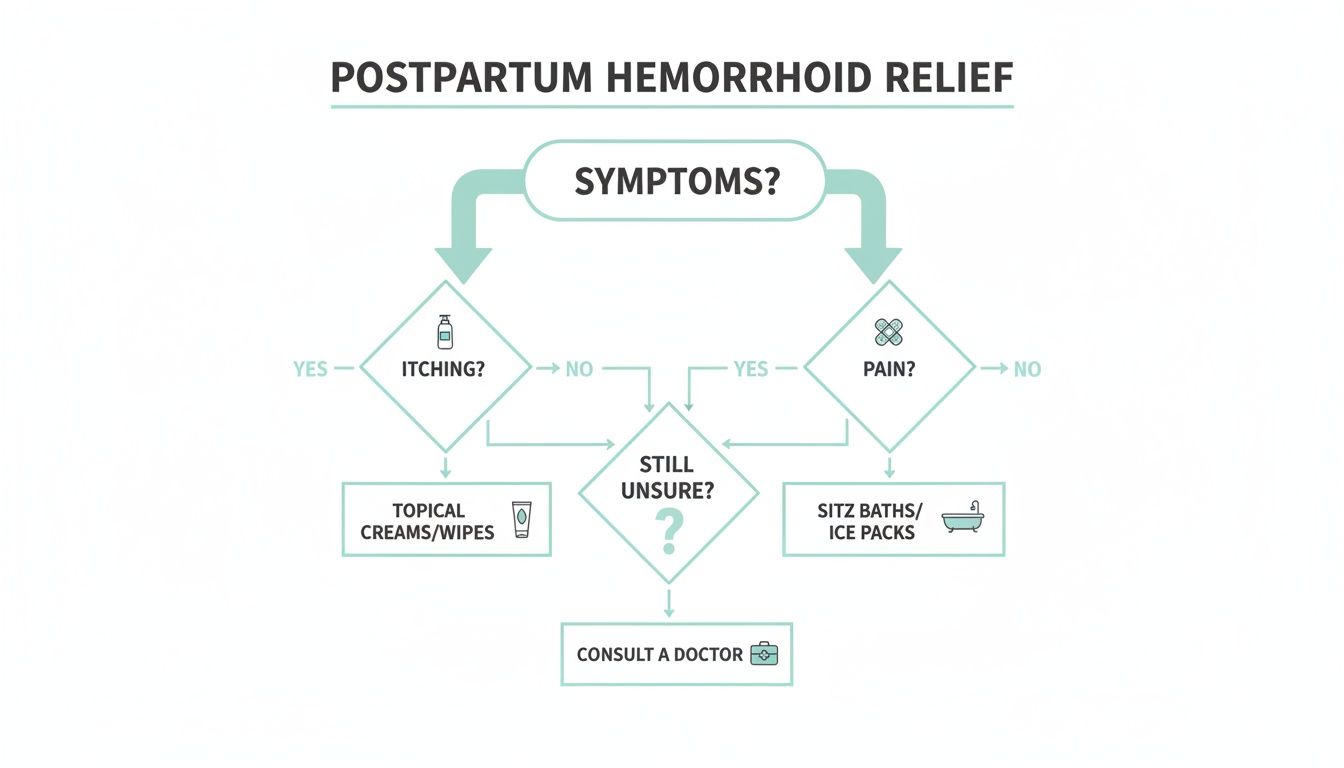
Most postpartum hemorrhoids get better with at-home care, but it’s so important to know the difference between normal healing and a red flag. Pushing through certain symptoms won’t make them disappear. Sometimes, the best treatment for hemorrhoids after pregnancy involves a quick call to your doctor… and that’s not a sign you’ve failed. It’s just a smart move toward feeling like yourself again.
This simple decision tree can help you figure out the best next step based on what you’re feeling.
Red Flags That Warrant a Doctor's Visit
Don’t wait to call your healthcare provider if you experience any of these. They could point to something more serious than a standard hemorrhoid and need a professional look.
-
Severe or Worsening Pain: If the pain is intense, makes it hard to sit or walk, or just keeps getting worse after a few days of home care, it’s time to call. This could be a sign of a thrombosed hemorrhoid.
-
Persistent Bleeding: A little bit of bright red blood on the toilet paper is common. But if the bleeding is heavy, won’t stop, or the blood looks dark (maroon or black), you need to be seen right away.
-
A Hard, Painful Lump: If you feel a lump near your anus that’s extremely tender, hard, and looks purplish-blue, it’s probably a thrombosed external hemorrhoid. A doctor can offer procedures to give you immediate relief.
-
Symptoms Don't Improve: If you’ve been doing all the right things for over a week and see zero improvement, a check-in with your doctor is a good idea. They can confirm what’s going on and suggest stronger treatments.
What to Expect at Your Appointment
Talking about hemorrhoids can feel awkward, but your doctor has seen and heard it all before. They are there to help you feel better, not to judge.
Your doctor will probably start by asking about your symptoms and medical history. Then, they’ll likely do a visual exam of the area. This simple evaluation helps them figure out the type and severity of your hemorrhoids so they can create the most effective treatment plan for you.
For stubborn cases, office-based procedures like banding or sclerotherapy are options. Surgery is rarely the first step after childbirth. You can learn more about the full range of medical and surgical treatments available if simpler methods don’t provide relief.
Preventing Future Hemorrhoid Flare-Ups
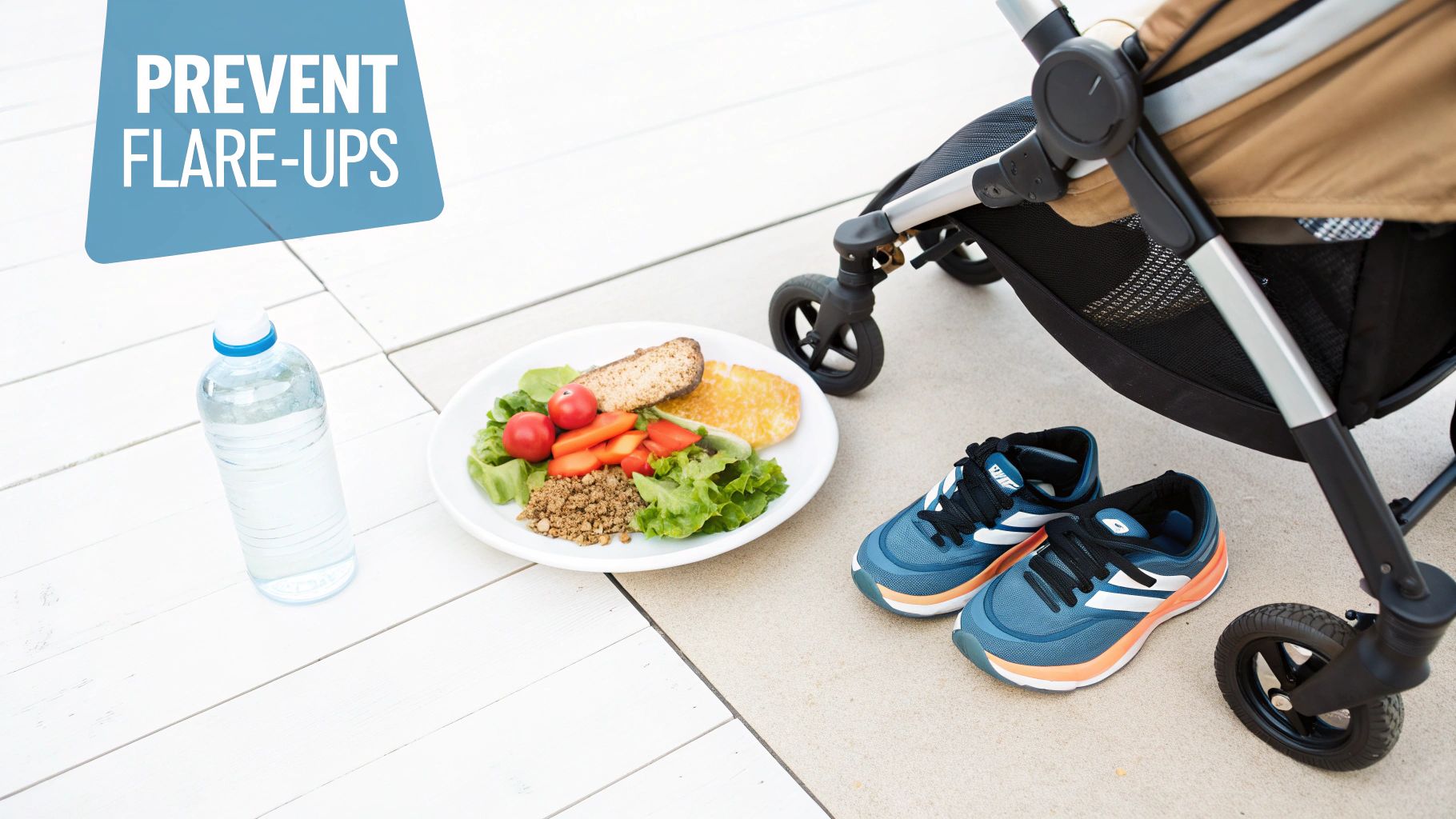
Getting relief from postpartum hemorrhoids is a huge victory. Now, the mission is to keep them from coming back. A smart long-term treatment for hemorrhoids after pregnancy is less about reacting to flare-ups and more about building daily habits that stop them before they start.
Here are the concrete steps you can take to prevent flare-ups:
- Make Fiber Effortless: Add a high-fiber food to each meal. Sprinkle chia seeds on your yogurt, add black beans to your lunch, or grab a handful of raspberries for a snack.
- Hydrate Strategically: Keep a big water bottle with you at all times. A great trick is to drink a full glass of water every time you sit down to feed your baby.
- Rethink Bathroom Time: Your toilet is not a place for scrolling. If nothing is happening within three minutes, get up and try again later. Use a small stool to lift your knees above your hips to make passing stool easier.
- Embrace Gentle Movement: Once your doctor gives you the all-clear, a brisk walk with the baby in the stroller is perfect. Movement improves circulation and keeps your bowels regular.
- Do Your Kegels: Strengthening your pelvic floor muscles boosts blood flow and strengthens the supportive tissues around the anal canal. Adding a few sets to your daily routine makes a big difference.
Common Questions About Postpartum Hemorrhoid Treatment
When you’re a new mom dealing with hemorrhoids, you need clear answers. Here are some of the most common questions we hear, along with straightforward advice.
How Long Do Hemorrhoids Last After Pregnancy?
For most new mothers, postpartum hemorrhoids start to shrink within a few weeks of delivery. As your hormones settle down and the pressure on your pelvis eases, your body can finally begin to heal.
With consistent at-home care, many women feel much better in about two to four weeks. If your symptoms are severe, don't seem to improve, or stick around longer than six weeks, it's time to check in with your doctor.
Are Hemorrhoid Creams Safe While Breastfeeding?
This is a big one for any nursing mom. Generally, many over-the-counter hemorrhoid creams are considered low-risk because only a tiny amount of medication gets absorbed into your bloodstream.
That said, you should never just grab a product off the shelf and use it without professional advice first. Always ask your doctor or pharmacist before using any OTC hemorrhoid treatment. They know which ingredients are safest for you and your baby, so you can get relief without taking any chances.
Can I Prevent Hemorrhoids in My Next Pregnancy?
You can’t completely eliminate the risk, but you can absolutely take steps to lower your chances of getting them again. As soon as you start your next pregnancy, make these habits a top priority:
- Prevent Constipation: Eat a high-fiber diet and drink plenty of water every single day.
- Don't Strain: When you have to go, go. A toilet stool can make a surprising difference.
- Stay Active: Pregnancy-safe exercise like walking or swimming helps with circulation and keeps you regular.
What Is the Difference Between Internal and External Hemorrhoids?
Knowing the difference can help you explain your symptoms to a doctor. It all comes down to location.
External hemorrhoids form under the skin around the outside of the anus. These are the ones you can usually feel… sensitive, itchy, or painful lumps that make sitting or wiping uncomfortable.
Internal hemorrhoids are inside the rectum. They’re often painless, but the biggest clue you have one is seeing bright red blood on the toilet paper.
That moment with the burning pain wasn’t about a personal failure... it was a wakeup call to find a real, safe solution. A proper treatment for hemorrhoids after pregnancy should provide complete relief from pain, itching, and swelling. For a trusted option, learn more about Revivol-XR Advanced Hemorrhoid & Fissure Cream and its maximum-strength 5% lidocaine formula by visiting https://hemorrhoid.com.