Hemorrhoids Cream vs Ointment: 5 Differences and How to Choose

Most people don’t realize their daily routine is actually making their hemorrhoids worse. When you're in pain, you grab the first box that promises relief, but the secret to real comfort isn’t just about the active ingredients... it’s about the base. The debate over hemorrhoids cream vs ointment comes down to one thing... water vs. oil.
The One Detail That Sabotages Your Relief
I once watched a customer in the pharmacy aisle, looking completely defeated. He had tried three different products, and nothing was working. He was so focused on the promises on the front of the box... "fast-acting," "maximum strength"... that he never once turned it over to look at the formulation.
He was using a lightweight cream for severe, overnight irritation. It was like trying to put out a bonfire with a squirt gun. The relief would last for a few minutes and then disappear, leaving him frustrated and in pain. He was missing the key to effective treatment.
Your treatment’s base... cream or ointment... is just as critical as its active ingredients.
This small detail is the difference between fleeting comfort and sustained healing. Creams are water-based for quick absorption, ideal for daytime. Ointments are oil-based, creating a long-lasting protective barrier perfect for overnight. Choosing the wrong one is why your treatment might be failing you.
Here's how to get it right:
- Use a cream for fast, discreet relief from itching or mild swelling during the day.
- Use an ointment for overnight healing and to protect severely irritated tissue.
- Look for advanced formulas like Revivol-XR that combine fast-acting ingredients in a base that offers both quick absorption and lasting comfort.
That moment in the pharmacy wasn’t just about one customer’s confusion... it was a wake-up call. The right knowledge empowers you to choose a product that actually works for your specific situation. This guide will cut through the confusion and show you how to find the relief you deserve.
Hemorrhoids Cream vs Ointment: The Fundamental Difference
When you’re looking for relief, the choice between a hemorrhoids cream and an ointment seems small. But their core difference is simple and incredibly important... water versus oil.
This single distinction changes how a product feels, how it works, and ultimately, which one is right for your specific discomfort.
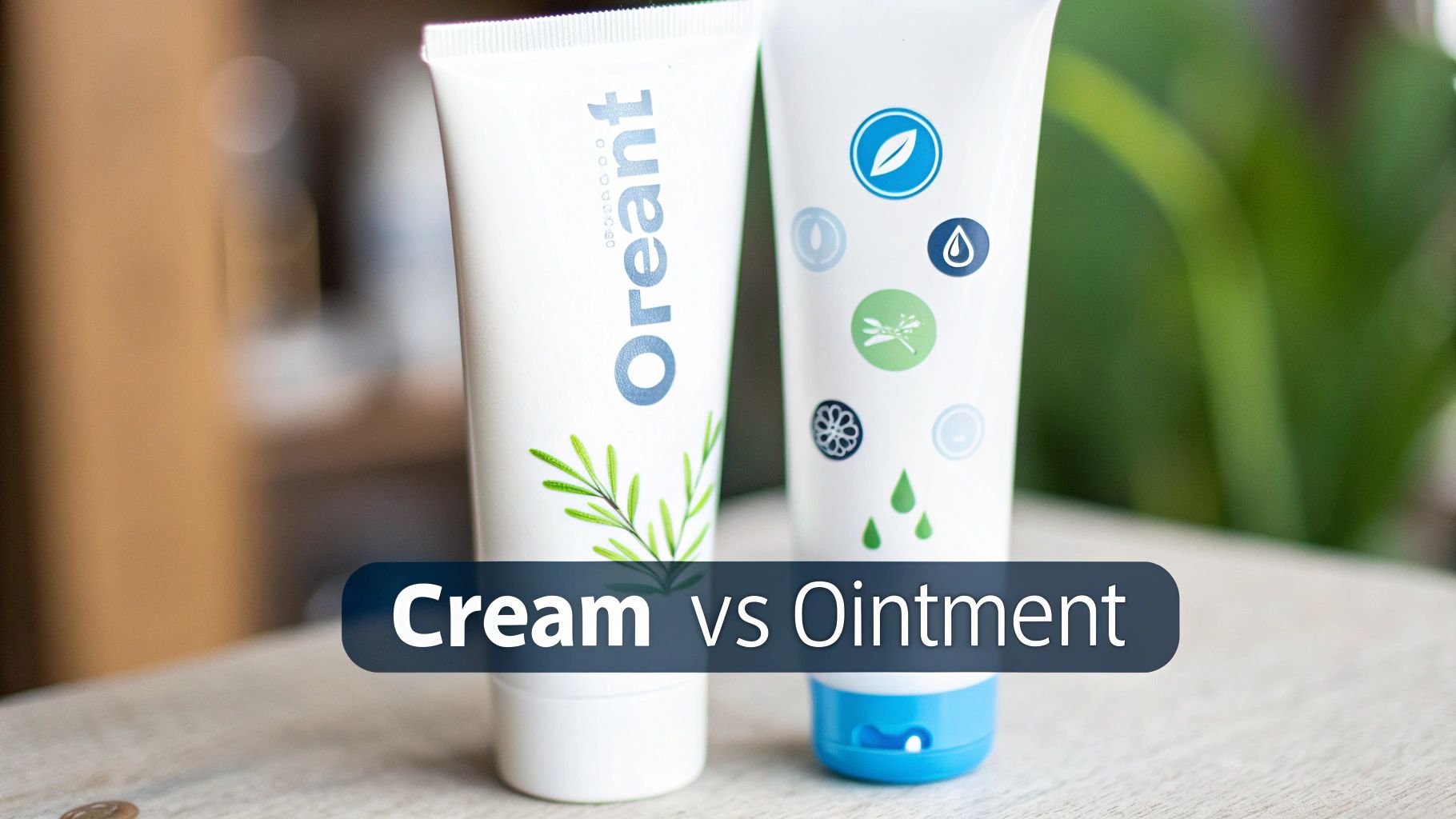
Creams are water-based. This makes them light, easy to spread, and quick to absorb without leaving a greasy feeling behind. They are perfect for daytime use when you need discreet comfort.
Ointments are oil-based. Their texture is much thicker, designed to create a protective, moisture-locking barrier on the skin's surface. This barrier keeps active ingredients in contact with irritated tissue longer, making them great for sustained relief and overnight healing.
The Science of Absorption and Protection
How well a topical treatment works comes down to how it delivers its active ingredients. A cream’s water base allows it to absorb quickly, meaning numbing agents like lidocaine can get to work fast.
An ointment’s thick, oily base creates a barrier that locks in medicine and shields sensitive skin from friction and moisture. This makes it a better choice for protecting severely irritated tissue or helping anal fissures heal.
Creams deliver relief quickly, while ointments provide relief that lasts longer and offers superior protection.
It's no surprise these two are so popular. In the global hemorrhoids treatment market, creams and ointments together hold a massive 47.43% market share. This preference shows how much people rely on them for real relief. You can dig deeper into these trends in the full Fortune Business Insights report.
Cream vs Ointment At a Glance
To make the choice clearer, let's break down the properties side-by-side.
| Characteristic | Hemorrhoid Cream | Hemorrhoid Ointment |
|---|---|---|
| Primary Base | Water-based for fast absorption. | Oil-based to create a protective barrier. |
| Feel & Texture | Lightweight and non-greasy, great for daytime. | Thick and occlusive, may feel greasy. |
| Best Use Case | Quick relief for external itching and mild pain. | Long-lasting, overnight relief for severe irritation. |
| Application Benefit | Spreads easily and vanishes into the skin. | Stays in place to shield skin from friction. |
Choosing between a hemorrhoids cream vs ointment isn't about which one is "better." It's about which one is better for you, right now.
A Closer Look at Active Ingredients
While the base determines how a product feels and lasts, the active ingredients do the real work. Understanding what they do is key to picking a product that targets your specific symptoms... whether it’s pain, itch, or swelling.
The base is the delivery truck, and the active ingredients are the package. A cream is like a sprinter, getting its package there fast. An ointment is like a long-haul truck, making sure its delivery stays put.
Anesthetics for Fast Numbing Relief
For most people, the most urgent symptom is intense pain or itch. That's where anesthetics come in.
- Lidocaine: This is the gold standard for topical numbing. OTC products can contain up to 5% lidocaine for anorectal use. It works by temporarily blocking nerve signals, delivering powerful relief almost immediately.
When you're dealing with sharp pain, a product with maximum-strength lidocaine is a game-changer. It doesn't heal the hemorrhoid, but it makes the healing process much more bearable.
Vasoconstrictors to Shrink Swollen Tissue
Swelling is the other major culprit. Vasoconstrictors tackle this by temporarily shrinking swollen blood vessels.
- Phenylephrine (0.25%): The most common vasoconstrictor in OTC products. By narrowing blood vessels, it helps reduce the hemorrhoid's size, which eases discomfort, itching, and burning.
Topical treatments make up 46% of all sales in the hemorrhoids treatment market. Vasoconstrictors like phenylephrine are gaining ground because of their excellent safety profile. You can explore more trends in this SNS Insider analysis.
Protectants for Soothing and Shielding
When your skin is raw, it needs a barrier. That’s the job of protectants.
- Glycerin, Petrolatum, and Mineral Oil: These ingredients form a protective coating over the hemorrhoid. This shield prevents further irritation and creates a better environment for healing. An ointment base shines here, creating a durable barrier.
Botanicals and Soothing Agents
Many modern formulas include botanicals for an extra soothing touch.
- Witch Hazel: A natural astringent, witch hazel helps calm inflammation and gives a cooling sensation. Check out our guide on how witch hazel helps with hemorrhoids.
- Aloe Vera: Famous for its calming properties, aloe helps hydrate and soothe irritated skin.
Formulas like Revivol-XR combine these different ingredients for multi-symptom relief. By integrating a powerful anesthetic, a vasoconstrictor, and soothing botanicals, one product can numb pain, shrink swelling, and calm irritation all at once.
When to Choose a Cream or an Ointment
Figuring out whether to grab a hemorrhoids cream vs ointment isn’t about which is superior. It’s about which one is right for your situation.
For Daytime Relief at Work or On the Go
You're in a meeting, and the familiar itch hits. You need something that works fast but won’t leave a greasy residue. This is where a hemorrhoid cream is perfect.
- Fast Absorption: A cream’s water base sinks in quickly, delivering active ingredients like lidocaine for numbing in just a few minutes.
- Discreet Comfort: It’s lightweight and non-greasy, so you can apply it and get on with your day.
- Easy Application: Creams spread easily over external hemorrhoids for a quick and clean application.
For Overnight Healing and Severe Irritation
Nighttime is when your body heals. If you're dealing with raw, severely irritated skin, you need a treatment that stays put for hours. This is where a hemorrhoid ointment shines.
The thick, oil-based formula creates a protective barrier. This seals active ingredients against your skin for long-lasting relief and shields the tender area from friction, creating the perfect environment for healing.
Creams are for rapid, discreet daytime comfort. Ointments are for sustained, protective nighttime healing.
Choosing Your Relief Based on Symptoms
This decision tree helps you connect your goal to the right active ingredients.
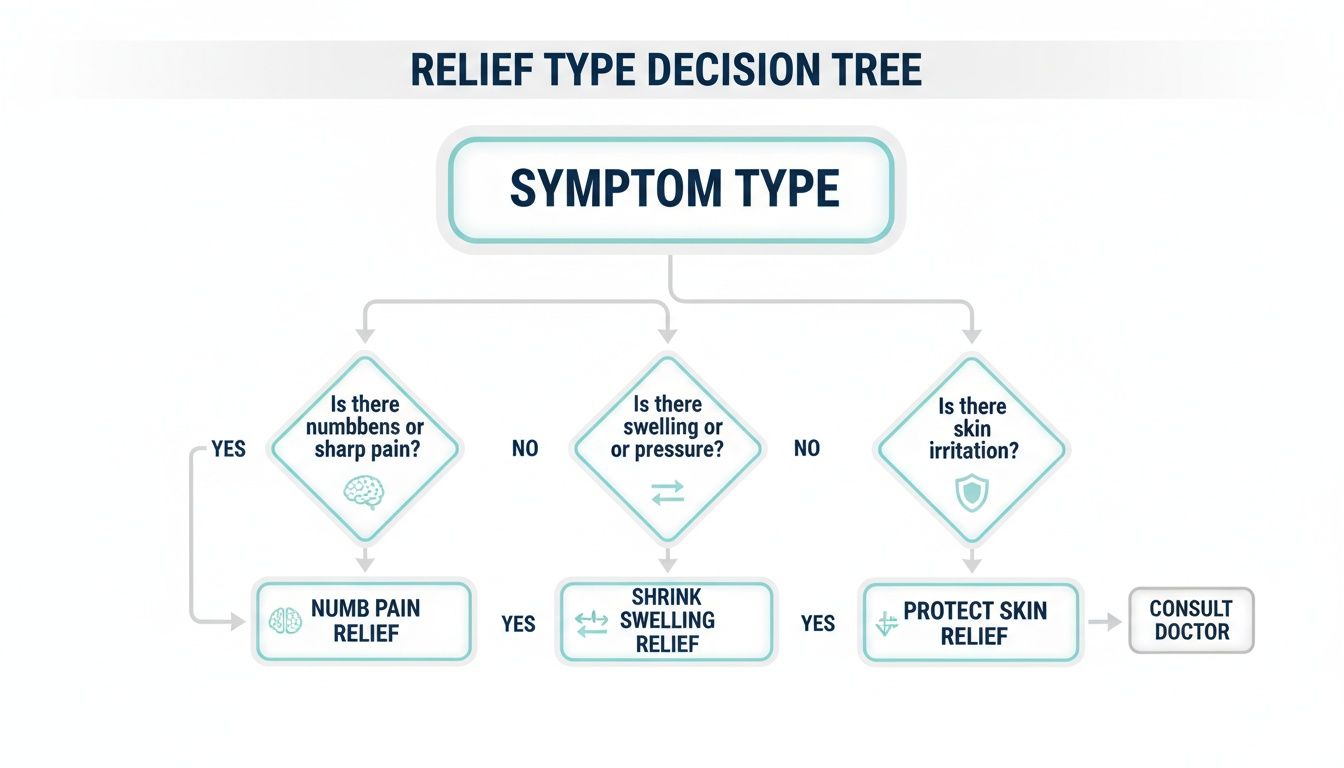
As the chart shows, identifying your main symptom is the best way to pick a product.
Special Considerations for Pregnancy and Postpartum
Pregnancy is a common time for hemorrhoids. Safety and gentle care are top priorities.
Many women seek effective, steroid-free solutions. Ointments can be comforting for postpartum soreness, while a fast-absorbing cream might feel more practical.
With up to 40% of pregnant women affected, the demand for trusted, steroid-free formulas like Revivol-XR continues to rise. You can learn more from these hemorrhoid cream market insights. For many, having both on hand is the best approach.
Best Choice for Your Situation
This quick guide matches common scenarios with the best formulation.
| Situation or Condition | Recommended Formulation | Why It Works Best |
|---|---|---|
| Mild external itching at the office | Cream | Absorbs fast without a greasy feel, providing quick, discreet relief. |
| Painful anal fissure | Ointment | Creates a durable protective barrier that shields the fissure and promotes healing. |
| Severe overnight pain and swelling | Ointment | Its thick base ensures active ingredients stay in contact with tissue for hours. |
| Postpartum soreness and irritation | Ointment or Gentle Cream | Ointment provides a soothing barrier; a gentle cream offers practical daytime relief. |
| Discomfort before a workout | Cream | A light cream won't feel heavy or cause extra friction during activity. |
By considering your lifestyle and symptoms, the choice in the hemorrhoids cream vs ointment debate becomes much clearer.
How to Apply Creams and Ointments for Maximum Relief
You've picked the right product in the hemorrhoids cream vs ointment debate. But how you apply your treatment directly impacts how well it works.
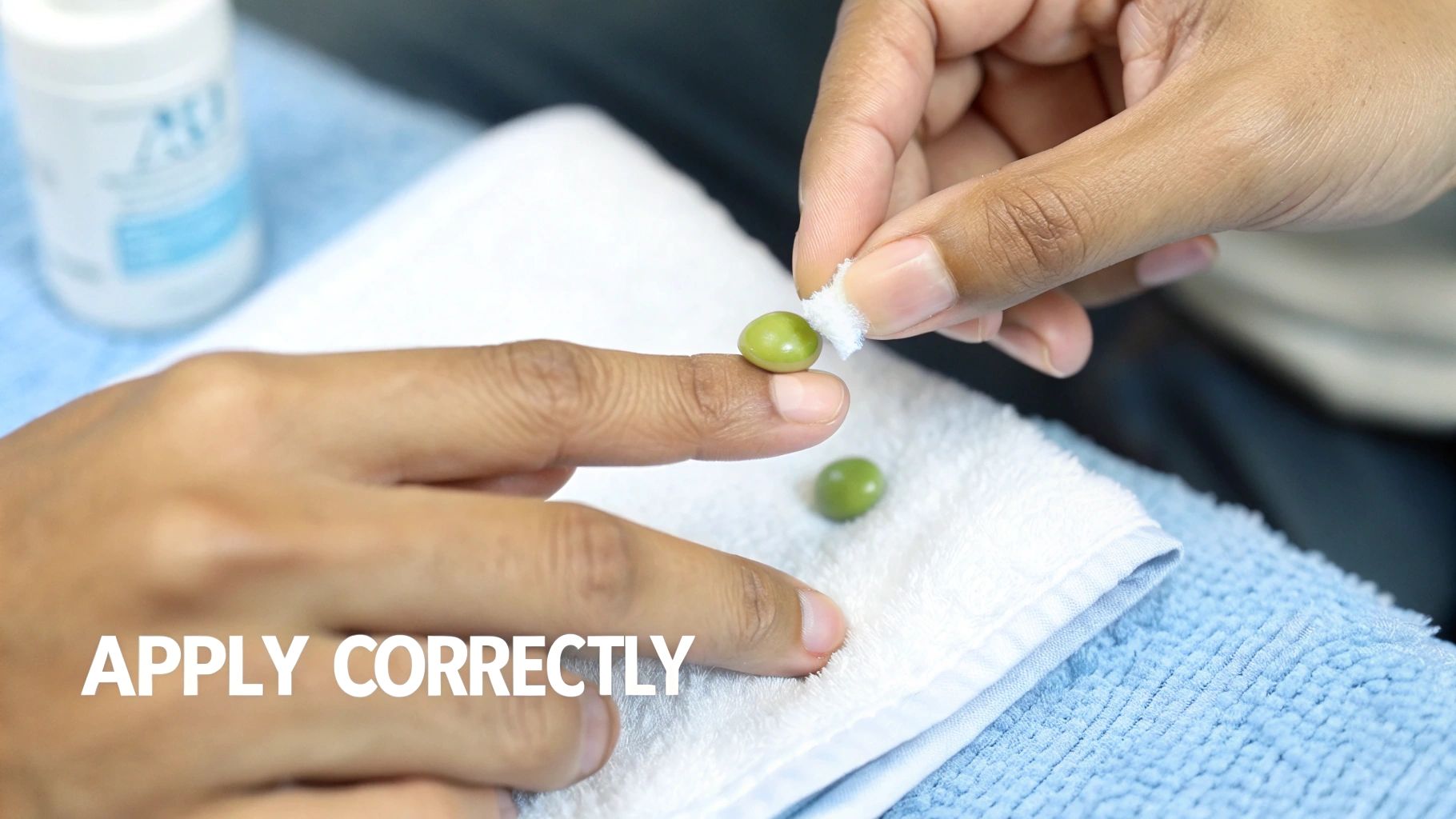
Proper application gets the active ingredients right where they need to go, maximizing your comfort. A little technique goes a long way.
Step 1: Prepare the Area Correctly
Before you open the tube, getting the area ready is critical.
- Gently Cleanse: Wash the area with warm water and a mild, unscented soap. Avoid harsh scrubbing.
- Pat, Don't Rub: Use a soft, clean towel to gently pat the area completely dry.
- Wash Your Hands: Always start with clean hands.
Step 2: Apply for External and Internal Hemorrhoids
A pea-sized amount is usually all you need.
External Application Method
Squeeze a small dab of cream or ointment onto your fingertip.
- For Creams: Gently massage the cream into the tissue until it’s fully absorbed.
- For Ointments: Apply a thin, even layer over the hemorrhoid. The goal is to create a protective barrier.
Internal Application with a Nozzle
If your product is for internal use, it will likely come with an applicator nozzle.
- Attach the Nozzle: Screw the applicator onto the tube.
- Lubricate the Tip: Squeeze a tiny bit of product out to lubricate the end.
- Insert and Apply: Gently insert the applicator into the rectum and squeeze the tube.
Proper application is not just about technique... it’s about creating a healing environment.
Boost Your Routine for Better Results
A topical treatment works best as part of a complete care routine. Pairing it with a therapeutic soak can accelerate relief.
Using Revivol-XR's 20-in-1 Sitz Bath Salts before applying treatment helps soothe inflammation and cleanses the area. This combined approach offers faster comfort. While this guide focuses on topicals, learn more in our article on how to use hemorrhoid suppositories.
Your Next Steps for Relief
Remember the customer in the pharmacy aisle? After a quick chat about the difference between creams and ointments, he switched to an ointment for overnight use. A few days later, he was a new person... finally getting the sustained relief he needed.
That small shift in strategy made all the difference. He stopped guessing and started healing. The whole hemorrhoids cream vs ointment debate isn’t confusing once you know the rules. Creams are for fast, daytime relief. Ointments are for protective, overnight healing.
Advanced formulas like Revivol-XR Advanced Hemorrhoid & Fissure Cream bridge the gap. It offers the fast action of ingredients like 5% lidocaine in a rich base that provides lasting comfort without feeling greasy. This means you don't have to compromise.
When you shop, look for a formula that:
- Numbs pain and itching.
- Shrinks swollen tissue.
- Protects raw skin.
- Soothes inflammation.
Trust signals like being Made in the USA and doctor endorsements matter. They indicate quality and safety. Armed with this knowledge, you can choose with confidence and start your journey back to feeling like yourself. For a complete healing strategy, check out our guide on how to get rid of hemorrhoids.
A Few More Questions, Answered
You might still have a few questions. Let's clear up some common ones so you can choose your treatment with confidence.
Can I Use Both a Cream and an Ointment?
Yes, but don’t layer them. That can make them less effective.
Use them at different times. A fast-absorbing cream is perfect for the morning. Before bed, switch to a thick ointment to create a long-lasting barrier that lets you heal peacefully while you sleep.
How Quickly Will I Actually Feel Relief?
This depends on the active ingredients.
- For immediate numbing (within minutes): A product with 5% lidocaine will be your best friend. It works in just a few minutes to provide rapid comfort.
- For swelling reduction (a few days): Ingredients that shrink swollen tissue, like phenylephrine, need more time. You'll likely notice less swelling after a few days of consistent use.
Numbing agents are a quick fix for pain, but the real healing... the shrinking of the hemorrhoid... is a gradual process.
What Are the Common Side Effects?
Most OTC hemorrhoid treatments are very safe when used correctly. The most common side effect is mild, temporary skin irritation like a little redness or a slight burning feeling.
If irritation gets worse, or if your symptoms don't improve after seven days, stop using the product and call your doctor. Sticking with products that use trusted OTC ingredients, like those in Revivol-XR, is a great way to minimize risks.
Is a Cream or an Ointment Better for an Anal Fissure?
For an anal fissure, an ointment is almost always the right call. A fissure is a tiny tear, and the goal is to protect it so it can heal.
An ointment’s thick, oil-based texture creates a heavy-duty protective barrier. It shields the fissure from stool and moisture, which is critical for healing. A lightweight cream absorbs too fast to offer the same lasting protection.
For a complete, multi-symptom approach that combines powerful active ingredients in an advanced formula, explore the full line of products from Revivol-XR. Find doctor-endorsed, USA-made solutions for hemorrhoids and fissures at https://hemorrhoid.com.