Cream or Ointment for Hemorrhoids: Which One *Actually* Works?

Most people don’t realize their daily routine is actually making their hemorrhoids worse.
I once watched a customer nearly break down in the pharmacy aisle, completely overwhelmed by the dozens of hemorrhoid products. They were in pain and just wanted something that worked, but the choice between a cream and an ointment felt impossibly confusing. They just stood there, staring at the boxes, feeling helpless.
That moment stuck with me. The problem wasn’t just the pain... it was the confusion. Nobody had ever explained to them why they should choose one over the other.
Choosing the wrong hemorrhoid treatment is the fastest way to prolong your misery.
When you're trying to decide between a cream or ointment for hemorrhoids, it’s not just about texture. It's about how the base... water or oil... delivers medicine to your body. Creams are water-based and absorb fast, while ointments are oil-based and create a protective barrier. Picking the right one for your specific symptoms is the difference between fast relief and wasted time.
My brand, Revivol-XR, was created to end this exact confusion by combining the best of both worlds into one formula.
Here’s what you need to know to make the right choice:
- First, understand the core differences between creams and ointments.
- Then, match the right formula to your specific symptoms... pain, itching, or raw skin.
- Finally, apply the treatment correctly for maximum relief.
That day in the pharmacy wasn’t just about a confused customer... it was about realizing that good information is just as important as good medicine.
Unpacking the Cream vs. Ointment Choice
Standing in the pharmacy aisle, you’re faced with a wall of options. Do you go for the cream or the ointment? They look almost the same, but their differences in texture and how they work are huge. Getting this choice right is critical for effective relief.
Knowing the distinction helps you pick the right product for your symptoms... whether you’re dealing with itching, swelling, or raw pain. The right formula gets the active ingredients exactly where they're needed most.
Key Differences at a Glance
Creams and ointments are built with very different jobs in mind. One is designed for speed and quick delivery of medicine, while the other is made for endurance and protection. A good way to think about it is that a cream is like a fast-acting spray, and an ointment is like a durable, protective shield.
Here’s a simple breakdown of what sets them apart:
| Characteristic | Hemorrhoid Cream | Hemorrhoid Ointment |
|---|---|---|
| Base | Water-Based | Oil-Based (e.g., Petrolatum) |
| Absorption Speed | Fast... absorbs quickly into the skin | Slow... sits on top of the skin |
| Texture | Lighter, less greasy | Thicker, greasy, and lubricating |
| Primary Function | Delivers active ingredients rapidly | Creates a protective barrier |
| Best For | Intense itching, swelling, and sharp pain | Protecting raw, irritated skin and fissures |
This comparison shows why choosing a cream or ointment for hemorrhoids isn't just about what you prefer. It’s about matching the product's design to what your body needs at that moment.
For example, if your main problem is a sudden, intense itch, a fast-absorbing cream is your best bet. It gets anti-itch ingredients right to the nerve endings without leaving a heavy, greasy mess.
But if you're dealing with raw, chafed skin that’s constantly irritated by clothing or moisture, an ointment is far better. Its thick, oil-based formula creates a waterproof barrier that shields the sensitive area, giving it a chance to heal without more friction. Making the right call from the start can seriously shorten your recovery time and make you a lot more comfortable.
How Creams and Ointments Work Differently
When you’re staring at the shelf, the choice between a cream or ointment for hemorrhoids feels like a small one, but it’s not. You're actually picking a specific delivery system, and the core difference... water versus oil... changes everything about how it feels, how it works, and which symptoms it’s best equipped to handle.
Think of a cream as a high-quality lotion. It's water-based, making it light, non-greasy, and designed to absorb quickly. Its main job is to shuttle active ingredients deep into the skin to tackle the source of your pain and inflammation.
An ointment, on the other hand, is oil-based, usually with petrolatum. This makes it thick, even a bit greasy, and its purpose isn't absorption... it's protection. It’s built to sit on top of the skin, forming a durable, waterproof barrier.
The Role of Absorption Speed
How fast a product gets to work is critical when you're in pain. A cream's water base lets it sink into the skin's outer layers almost instantly.
This rapid delivery is exactly what you need for symptoms that demand a quick response, like sharp pain or that maddening itch. Anesthetics like lidocaine and vasoconstrictors such as phenylephrine can start working within minutes because the cream doesn’t just sit on the surface.
Ointments operate on a completely different timeline. Since they're oil-based and occlusive, they absorb very slowly, if at all. Their strength lies in staying put, creating a lubricating shield that protects sensitive, raw tissue from friction.
Texture and Feel on Sensitive Skin
Let's be honest, how a product feels matters a lot when the area is already irritated and tender.
Creams feel light and clean when you apply them. They don’t leave behind a heavy, greasy residue, which means less staining on your clothes and a far more comfortable feeling, especially during the day. This is a huge plus for daytime use or for anyone who just can't stand that thick, coated feeling.
The lightweight nature of a cream makes it ideal for treating irritated, weeping skin. It allows the area to breathe while delivering medication, which can be critical for healing.
Ointments are intentionally heavy and greasy. That texture is their superpower. It's what allows them to create a protective barrier that seals the skin off from moisture, stool, and other irritants. For raw, chafed skin that needs constant protection, this barrier effect is incredibly soothing.
Protective Qualities and Barrier Function
One of the most important distinctions between a cream and an ointment is its ability to protect damaged skin.
In this category, ointments are the undisputed champions. That thick, oil-based layer provides several key benefits:
- Moisture Lock: It stops skin from drying out, which is vital for helping small cracks or fissures heal.
- Friction Shield: It lubricates the area, dramatically reducing the pain caused by contact with clothing or during bowel movements.
- Irritant Blocker: It forms a waterproof seal, shielding raw skin from sweat and other irritants that sting and get in the way of healing.
Creams offer some moisturizing properties, but they provide a minimal protective barrier compared to ointments. Their strength is in fast-acting treatment, not long-lasting surface protection. To learn more about what goes into these formulas, take a look at our guide on common hemorrhoid cream ingredients.
Cream vs Ointment: A Quick Comparison
To make the choice crystal clear, here’s a direct comparison of the key characteristics of hemorrhoid creams and ointments. This table will help you quickly pinpoint the right formula for your specific needs.
| Characteristic | Hemorrhoid Cream | Hemorrhoid Ointment |
|---|---|---|
| Primary Base | Water-Based | Oil-Based (Petrolatum) |
| Absorption Rate | Fast. Sinks into the skin quickly to deliver active ingredients. | Slow. Sits on the skin's surface to form a protective layer. |
| Feel and Texture | Lightweight, non-greasy, and clean. | Thick, greasy, and lubricating. |
| Main Function | To rapidly deliver medication for pain, itching, and swelling. | To create a long-lasting barrier that shields and protects raw skin. |
| Ideal for... | Acute flare-ups with intense itching, sharp pain, or swelling. | Protecting chafed skin, healing fissures, and soothing constant irritation. |
So, what’s the bottom line? The best choice comes down to your primary symptom. For the sharp, stabbing pain of a fissure or the intense itch of a flare-up, a cream delivers relief fast. For the constant, raw discomfort of irritated external hemorrhoids, an ointment provides the protective shield you need to heal.
Matching the Right Formula to Your Symptoms
The best hemorrhoid treatment doesn't just have the right ingredients... it has the right delivery system for your specific kind of discomfort. Choosing between a cream and an ointment isn't just a matter of preference; it’s about matching the formula to what you're actually feeling.
Think of it like this: you wouldn't use a band-aid for a headache. In the same way, the texture and function of your treatment should directly address your symptoms. A fast-absorbing cream and a protective ointment are built for very different jobs.
This simple flowchart can help guide your choice based on how your skin feels right now.
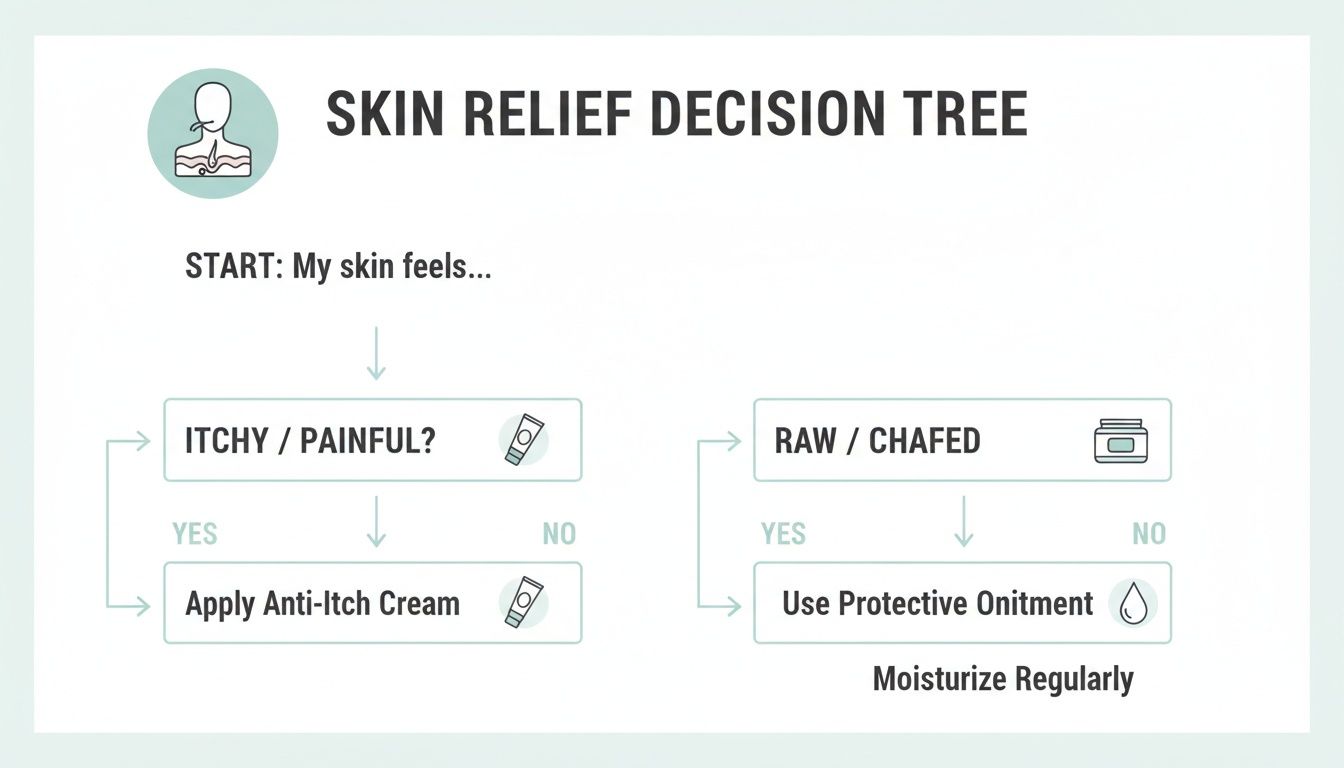
As the guide makes clear, creams are designed for active, "on-fire" symptoms like pain and itching. Ointments, on the other hand, are best for shielding raw, damaged skin so it can finally heal.
For Intense Pain and Itching
When you’re dealing with sharp, distracting pain or a relentless itch, your number one goal is speed. You need relief that gets to the root of the problem without delay, and that’s where a fast-absorbing cream shines.
A cream's water base allows it to deliver numbing agents like 5% lidocaine directly to the nerve endings. It sinks in quickly without leaving a heavy, greasy film, getting to work in just a few minutes. This rapid action is what you need to interrupt the pain signals that make sitting, walking, or just existing feel unbearable.
The market for these solutions is growing for a reason. Valued at USD 1.11 billion recently, the hemorrhoid treatment market is expected to hit USD 1.82 billion by 2033. This isn't surprising, considering sedentary lifestyles affect as many as 1 in 20 Americans. You can dig into the trends in this detailed industry report, but the takeaway is clear: people want multi-symptom formulas that work fast.
For Swelling and Pressure
If your main complaint is a feeling of fullness, pressure, or visible swelling, your focus should shift to ingredients that reduce inflammation. A vasoconstrictor like phenylephrine is the go-to active for this job.
Here again, a cream is often the ideal vehicle. It can deliver phenylephrine quickly to start working on the swollen blood vessels, helping to shrink hemorrhoidal tissue and relieve that uncomfortable pressure.
The right formula attacks multiple symptoms at once... it shouldn't make you choose between numbing pain and shrinking swelling.
Revivol-XR's Advanced Cream was designed with this exact multi-symptom approach in mind. It pairs maximum-strength 5% lidocaine for pain with phenylephrine to tackle swelling, all in a formula that gets absorbed fast.
For Raw Skin and Anal Fissures
When the problem is raw, chafed skin or a painful anal fissure, your priority shifts from speed to protection. Here, the skin barrier is broken, and constant friction from clothing or bowel movements prevents it from healing.
In this scenario, an ointment's thick, lubricating barrier is the clear winner. Its oil base creates an occlusive layer that shields sensitive tissue from irritants, giving it the uninterrupted time it needs to repair itself.
Consider these two common situations:
- A postpartum mother dealing with painful swelling would get more relief from a cream that quickly soothes and shrinks tissue without a heavy feel.
- An office worker with persistent external irritation from sitting all day needs the long-lasting protective barrier an ointment provides to prevent chafing.
By figuring out your main symptom, you can confidently choose the hemorrhoid treatment that will target it most effectively and bring you much-needed relief.
Special Considerations for Pregnancy, Postpartum, and Fissures
Certain times in life... and certain conditions... call for a more careful approach. This is especially true when choosing between a cream or ointment for hemorrhoids, where the decision becomes much more than a simple preference. Pregnancy, the postpartum period, and the sharp pain of an anal fissure all bring unique challenges that demand safe, gentle, and effective relief.
These situations aren't just about quieting discomfort. They're about creating the right environment for healing under sensitive circumstances. The right product can provide that relief without introducing harsh chemicals or ingredients that could be problematic, particularly for new and expecting mothers.
Relief During Pregnancy and Postpartum
The immense pressure on the pelvic region during pregnancy and childbirth makes hemorrhoids an unfortunate rite of passage for many. The biggest concerns here are finding something that’s safe for both mom and baby and a formula that soothes without causing more irritation.
For these reasons, a cream is often the go-to choice. A light, water-based cream absorbs quickly and doesn't leave behind a heavy, greasy residue... a huge win for comfort when you’re already feeling overwhelmed.
Keep an eye out for formulas with soothing botanicals like witch hazel and aloe vera. These ingredients are known for their gentle, calming properties that help reduce inflammation and itching without harsh side effects. A steroid-free formula, like what you’ll find in Revivol-XR products, is often recommended to avoid any potential issues.
Of course, always check with your OB/GYN before using any new treatment during pregnancy or while breastfeeding to be sure it's the right and safe choice for you. For more in-depth advice, you can check out our guide on how to get rid of hemorrhoids after childbirth.
The Best Approach for Anal Fissures
Anal fissures are tiny, excruciatingly painful tears in the delicate lining of the anus. When you have one, your goals are twofold: get immediate pain relief and create a protected environment so it can actually heal. This is one of those situations where using both a cream and an ointment is a smart, highly effective strategy.
Here’s a practical game plan that usually works best:
- First, Numb the Pain: Start by applying a maximum-strength 5% lidocaine cream directly to the area. Because the cream absorbs fast, it delivers powerful numbing relief to quiet that intense, sharp pain that can make bowel movements feel impossible.
- Then, Protect the Area: Once the numbing cream has absorbed, follow it with a thin layer of a protective ointment. The ointment creates a slick, lubricating barrier that shields the fissure from friction and irritation, giving the tear a fighting chance to heal.
This combination plays to the strengths of both products... the cream for its rapid-fire medicinal delivery and the ointment for its unmatched protective qualities.
An anal fissure needs more than just pain relief... it needs a protected, low-friction environment to heal.
Understanding the Broader Context
These specific situations are part of a much larger picture. Worldwide, adults over 50 face higher odds of recurring hemorrhoids, and factors like obesity and chronic constipation have increased cases by 20-30% in urban populations. Postpartum women are also a significant group, with up to 40% dealing with hemorrhoids during or after birth, which naturally drives the demand for safe, accessible products.
The entire market is expected to grow from USD 914 million to USD 2.24 billion by 2032. Interestingly, vasoconstrictors like 0.25% phenylephrine are becoming more popular than steroids, largely due to their strong safety profile. This data just underscores how important it is to choose formulas that are both safe and effective, especially for more vulnerable groups.
Whether you're pregnant, postpartum, or dealing with a fissure, selecting the right kind of treatment is the first, most critical step toward finding real, lasting relief.
How to Properly Apply Treatments for Maximum Relief
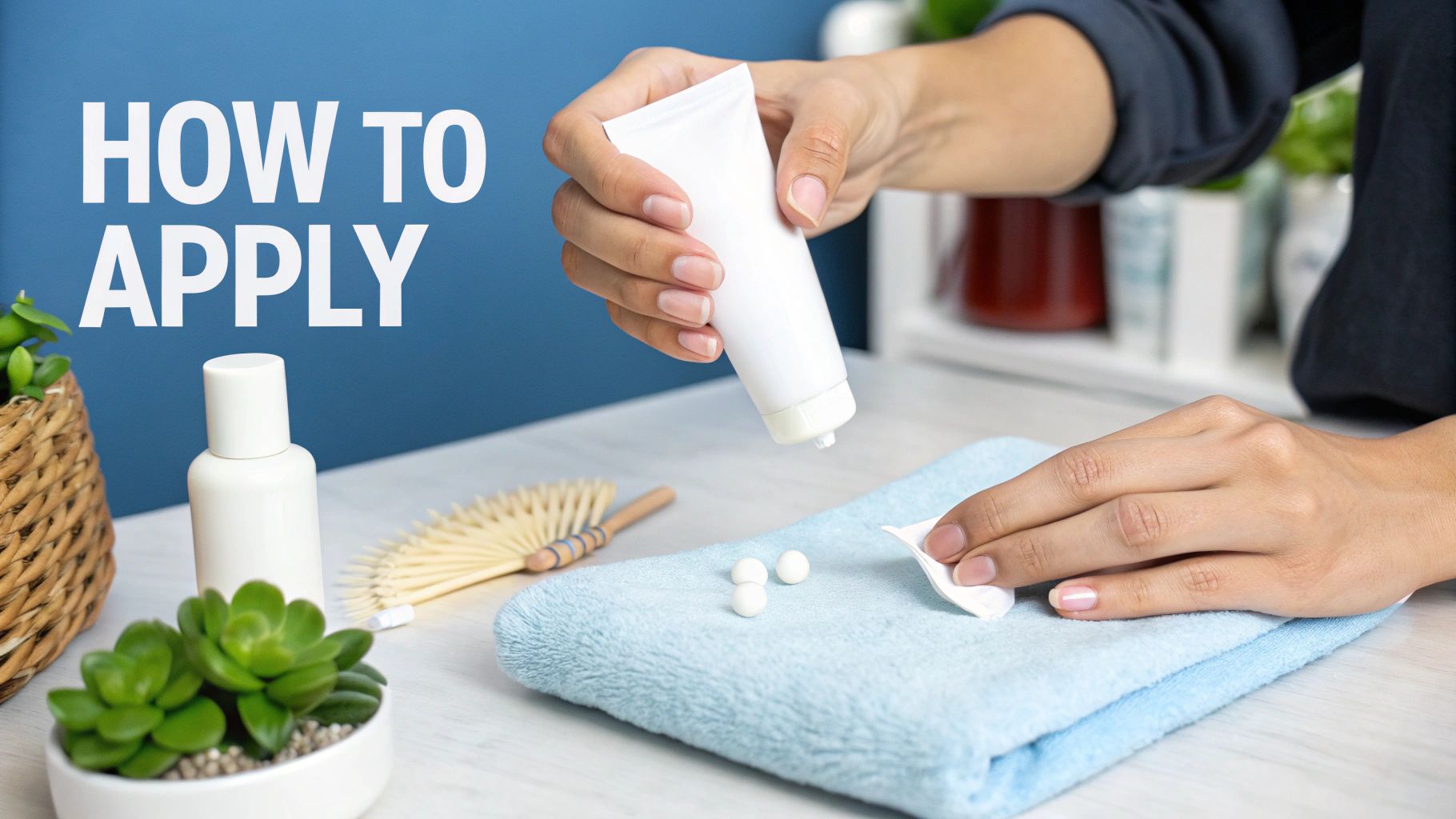
Even the best cream or ointment for hemorrhoids won't work well if it's not applied correctly. Getting real relief isn’t just about what you use... it’s about how you use it. Proper application makes sure the active ingredients get right to the irritated tissue, prevents further aggravation, and keeps the area clean... all critical for healing.
Think about it this way: you wouldn't just slap medication onto an open cut. You’d clean it, dry it, and apply the treatment with care. The same logic applies here. Taking just a few moments to follow a simple routine can make a world of difference in your comfort and results.
This is more than just reading the instructions on a box. It's about developing a gentle process that soothes the area and puts you back in control of flare-ups. A consistent and careful technique is your best tool for managing symptoms.
Your Step-by-Step Application Guide
Following a few simple steps can dramatically improve how well your treatment works. This routine is designed to be gentle, hygienic, and effective every time.
-
Gently Cleanse the Area First Before you apply anything, it’s vital to clean the anal area. Use warm water, a sitz bath, or unscented, gentle wipes. Steer clear of harsh soaps or vigorous scrubbing, which will only make inflammation worse.
-
Pat the Skin Completely Dry Moisture can trap bacteria and keep treatments from sticking to the skin. Use a soft, clean towel and gently pat the area until it’s totally dry. Never rub... friction is your enemy here.
-
Use Only a Pea-Sized Amount When it comes to hemorrhoid treatments, more is not better. A small, pea-sized dab is all you need to cover an external hemorrhoid with a thin, even layer. Overdoing it just leads to a greasy mess and wasted product.
-
Apply Gently Without Rubbing Using a clean fingertip, gently dab or pat the cream or ointment onto the hemorrhoid. The key is to avoid any motion that creates friction or pressure, which can trigger more pain and irritation.
-
Follow Package Directions for Frequency Consistency is what keeps flare-ups under control. Most treatments, including multi-symptom formulas like Revivol-XR, recommend applying the product up to 3-4 times daily, especially after bowel movements and at bedtime.
Essential Hygiene Tips
Good hygiene is just as important as the application itself. These simple practices help minimize the risk of infection and can speed up your healing time.
- Wash Hands Before and After: Always wash your hands thoroughly with soap and water before and after application to avoid spreading bacteria.
- Use a Dedicated Applicator for Internal Use: If your product includes an applicator for internal hemorrhoids, use it as directed and clean it well after every use. For strictly internal symptoms, you might find our guide on how to use hemorrhoid suppositories helpful.
- Avoid Contamination: Never touch the tube’s opening directly to your skin or double-dip. This keeps the rest of the product sterile.
Proper technique is the bridge between a good product and great results... a gentle routine activates its full healing potential.
By mastering these simple steps, you empower yourself to manage symptoms effectively. This isn't just about temporary relief; it's about building a confident, hygienic routine that supports long-term comfort and healing.
Don't Get Stuck in the Cream vs. Ointment Aisle
Standing in the pharmacy, staring at a wall of options, is frustrating. The whole cream or ointment for hemorrhoids debate can feel overwhelming, but it boils down to one thing: matching the right formula to your specific symptoms. The real win isn't picking a side, but finding a single product that does everything you need it to do.
That’s where most treatments fall short. They make you choose between quick relief and a soothing, protective barrier. But what if you need both? Why should you have to compromise between a formula that delivers powerful medicine fast and one that provides a gentle shield for raw, irritated skin?
A Hybrid Formula for Complete Relief
We developed Revivol-XR’s Advanced Hemorrhoid & Fissure Cream to end this frustrating compromise. It's built from the ground up to be a hybrid solution, giving you the best of both worlds in one tube.
Our unique base is engineered to absorb quickly, getting potent active ingredients right where you need them. But it’s also rich enough to leave behind a light, non-greasy protective layer that soothes and shields sensitive tissue... all without the heavy, messy feeling of a classic ointment.
How Our Formula Solves Your Problem
We didn't just mix ingredients together; we built a targeted solution for the most common and disruptive hemorrhoid symptoms. Seeing how our formula maps directly to your needs is the key.
Here’s a breakdown of how it works:
- For Sharp Pain and Itching: The fast-absorbing base is your first line of defense, immediately delivering maximum-strength 5% lidocaine. This numbs the local nerve endings within minutes, bringing rapid relief from that distracting, sharp pain and maddening itch.
- For Swelling and Pressure: We added the vasoconstrictor phenylephrine. Its job is to help shrink swollen hemorrhoidal tissue, easing that uncomfortable pressure and feeling of fullness that can derail your day.
- For Irritated, Raw Skin: Unlike thin, watery creams that disappear in a flash, our formula is fortified with soothing botanicals like aloe and witch hazel. It leaves a light, comforting layer behind to calm inflammation and protect raw skin from further irritation.
The best hemorrhoid treatment doesn't force you to choose... it delivers both fast relief and lasting protection in one formula.
The need for effective topicals is undeniable. The hemorrhoid treatment market hit USD 1.03 billion in 2023 and is on track to reach USD 1.74 billion by 2032. Creams and ointments dominate because they're easy to access and work on multiple symptoms. North America accounts for a 44.66% market share, driven by lifestyle factors and high demand from postpartum women, who make up a staggering 40% of cases and often seek out gentle ingredients like aloe. You can dig into more of these market trends in this comprehensive report.
With Revivol-XR, you can finally stop weighing the pros and cons of a cream versus an ointment. You get an all-in-one formula that combines the fast-acting medicinal power of a cream with the gentle, protective comfort of an ointment. It’s designed to let you get back to your life, free from pain and confusion.
Common Questions About Hemorrhoid Treatments
When you're dealing with the discomfort of hemorrhoids, you just want answers that work. Trying to figure out whether a cream or an ointment is better... or if either will help with a fissure... can feel overwhelming.
We hear these questions all the time. Let's clear up some of the most common points of confusion so you can feel confident you're making the right choice.
Can I Use a Hemorrhoid Cream for an Anal Fissure?
Yes, you can, and it's often a smart move. An anal fissure comes with a uniquely sharp, intense pain, and a cream with a high-potency anesthetic like 5% lidocaine is one of your best allies. Its main job is to numb the area, which can make bowel movements much less dreaded.
That said, some people find the protective barrier of an ointment helps shield the tear from getting more irritated, which creates a better healing environment. For fissures, a two-step approach often works wonders: a numbing cream for the pain, followed by a thin layer of a protective ointment.
Are Creams or Ointments Better for Internal Hemorrhoids?
Both creams and ointments can be used internally, but only if the product includes a special applicator tip. These tips are designed to get the medication right where it needs to be to treat the affected internal tissue.
However, if your symptoms are only internal, suppositories are usually the most direct and least messy option. They're specifically made to dissolve inside the rectum, delivering medication precisely where it's needed to tackle swelling and discomfort from the inside.
How Long Does It Take for a Cream or Ointment to Work?
How quickly you feel relief really comes down to the active ingredients in the product you’ve chosen.
- For Pain and Itching: Numbing creams with lidocaine get to work fast, often providing relief from that sharp pain or distracting itch within minutes.
- For Swelling: Ingredients that shrink swollen tissue, like phenylephrine, might take a bit longer to show their full effect.
The real key is consistent use as directed. Applying your treatment regularly, especially after you go to the bathroom, is the best way to keep symptoms in check and prevent flare-ups from getting out of hand.
To end the cream vs. ointment debate once and for all, trust Revivol-XR. Our Advanced Hemorrhoid & Fissure Cream was designed to give you the fast-acting relief of a cream with the lasting protection of an ointment, all in one. Find the right relief for you at hemorrhoid.com.