Hemorrhoid Itching Burning: Causes, Relief, and When to Act

Many don't realize that the “hemorrhoid” itch they're treating may be caused by moisture, irritated skin, or an anal fissure.
You're sitting, trying not to shift in your chair, but the area feels hot, damp, and impossible to ignore. Later, after a bowel movement, the burning gets sharper. Hemorrhoid itching burning can be miserable, but understanding the sensation and its possible source helps you choose safer relief and recognize when it's time to seek care.
Table of Contents
- What Hemorrhoid Itching and Burning Actually Feel Like
- How Hemorrhoids Trigger Itching and Burning
- Other Common Causes Worth Considering
- How to Triage Your Symptoms at Home
- Evidence-Based Relief That Actually Works
- Daily Habits That Prevent Flare-Ups
- Warning Signs and When to See a Clinician
What Hemorrhoid Itching and Burning Actually Feel Like
You may first notice a faint damp feeling, tingling, or irritation after using the bathroom. It can seem minor, almost like a problem caused by rough toilet paper. Then the urge to scratch becomes harder to ignore. The itch sits on the skin around the anus and may return whenever you sweat, sit for a long time, or finish a bowel movement.
Burning feels different. Instead of an urge to scratch, you may feel rawness, heat, stinging, or a sensation similar to chafed skin. It often becomes more noticeable after stool passes over irritated tissue. Prolonged sitting can add pressure and friction, while moisture can make the skin feel tender and exposed.
The symptoms may arrive in waves. A person might feel relatively comfortable during the day, then experience a flare in the evening when the area has stayed warm and covered. Some people also notice irritation after spicy foods, coffee, or alcohol, although triggers vary from person to person.
Why the sensation can feel so alarming
Anal itching and burning often occur alongside other hemorrhoid-related symptoms, including bleeding, pain, prolapse, mucus discharge, moisture, swelling, and difficulty keeping the area clean. A clinical summary from the National Center for Biotechnology Information notes that about 75% of Americans may experience hemorrhoidal symptoms at some point in life, while published studies report prevalence ranging from 4% to 40%.
That makes these sensations common, but common doesn't mean you should automatically assume hemorrhoids are responsible. The discomfort can interfere with sleep, concentration, intimacy, and confidence. Describing whether you feel itch, heat, sharp pain, dampness, or pressure gives you a useful starting point.
The first practical clue is the sensation itself. An itch points you toward skin irritation and moisture. A sharp burn during bowel movements raises more concern for a fissure or a damaged skin barrier.
How Hemorrhoids Trigger Itching and Burning
Hemorrhoids are swollen vascular cushions in and around the anal canal. Constipation, straining, or prolonged toilet sitting can increase pressure in that area, causing tissue to swell. The swelling itself doesn't always cause pain. Symptoms often begin when swollen tissue rubs against skin, leaks mucus, or makes cleaning difficult.
External hemorrhoids
External hemorrhoids sit beneath the sensitive skin around the anus. When they swell, the surrounding skin may feel tight, itchy, or irritated. A clot inside an external hemorrhoid can create a firm, tender lump and a sharper burning or throbbing sensation.
Friction adds to the problem. Tight clothing, repeated wiping, and rubbing during movement can disturb already sensitive skin. If the surface becomes inflamed or develops tiny areas of breakdown, nerve endings respond with stinging and heat.
Internal hemorrhoids
Internal hemorrhoids sit inside the rectum. They often cause painless bleeding, but symptoms can change if the tissue prolapses, meaning it moves downward and may protrude through the anus. Prolapsed tissue can collect mucus or small amounts of stool, leaving the surrounding skin damp and itchy.
The Merck Manual's clinical overview of hemorrhoids emphasizes an important distinction: anal itching isn't commonly caused by hemorrhoids unless they're significantly prolapsed. Irritation, moisture, leakage, wipes, soaps, dermatitis, fissures, and other anorectal conditions may be the cause.
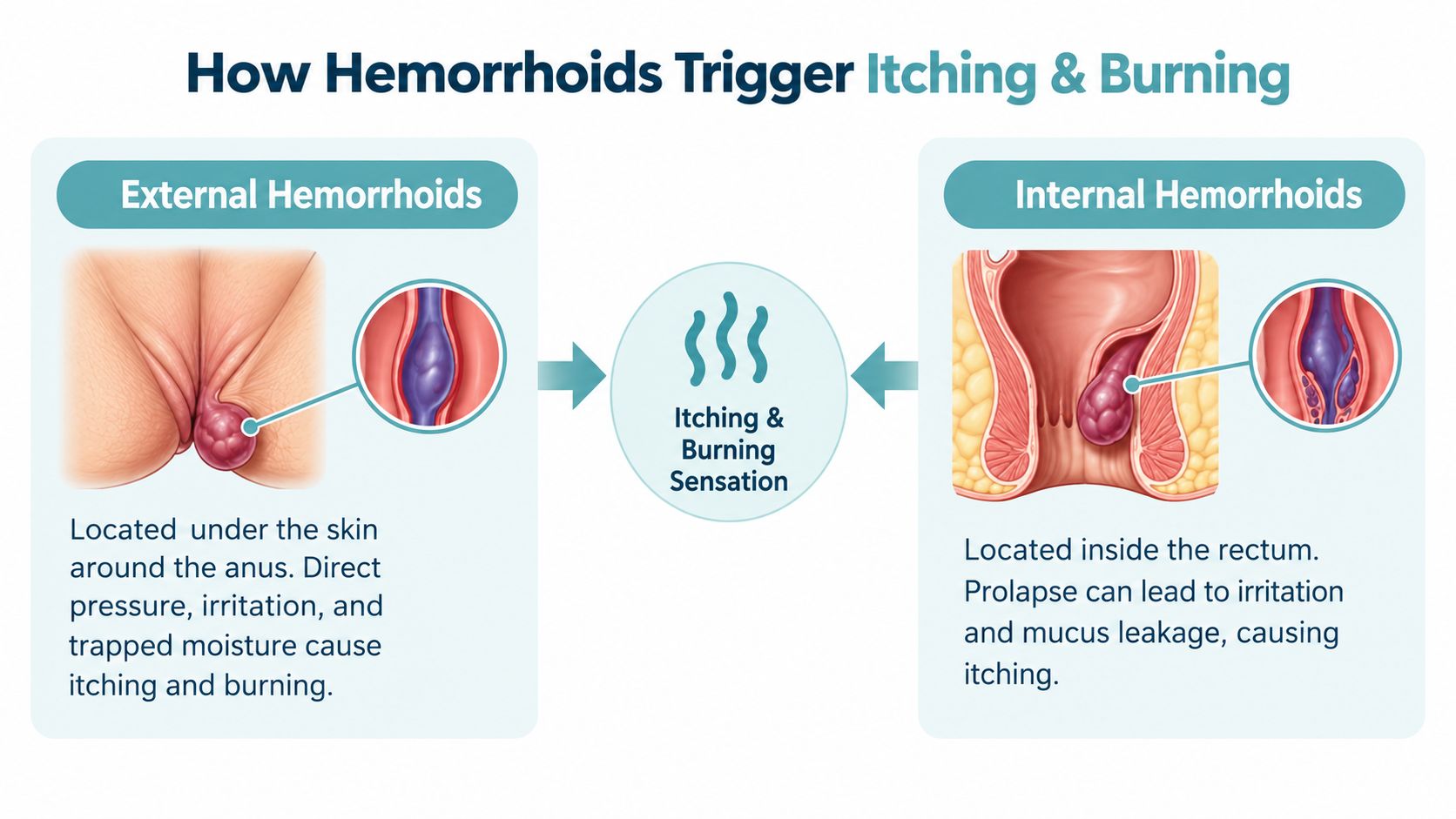
The moisture and inflammation cycle
Constipation and straining can swell hemorrhoidal tissue. Inflammation then makes the area more sensitive, while inflammatory mediators such as histamine can contribute to itching. Moisture and skin breakdown create a second pathway, producing burning and stinging similar to the irritation caused by a diaper rash, as explained by Cleveland Clinic.
For temporary symptom relief, some people consider Revivol-XR® Advanced Hemorrhoid Cream - 5% Lidocaine + Phenylephrine (Vasoconstrictor) - Fast Relief of Burning, Itching, Discomfort. Its listed ingredients include 5% lidocaine for temporary relief of pain, itching, burning, soreness, and discomfort, phenylephrine HCl 0.25% to help temporarily shrink swollen hemorrhoidal tissue, and glycerin and petrolatum to coat and protect irritated skin. Use it only as directed on the Drug Facts label, and stop use and ask a doctor if symptoms worsen, don't improve within 7 days, or if bleeding occurs.
Other Common Causes Worth Considering
A persistent itch or burn deserves a wider look. Hemorrhoids can be present without causing the skin irritation you feel, and treating the wrong cause may keep the cycle going.
An anal fissure is a small tear in the anal lining or nearby skin. It commonly causes sharp, cutting, or burning pain during and after a bowel movement. The pain may continue after you leave the bathroom because the injured area remains sensitive and the anal muscle can tighten around it.
Contact dermatitis can follow a change in products. Fragranced soaps, cleansing wipes, laundry detergent, deodorizing sprays, and aggressive scrubbing may remove protective oils from the skin. The result may be redness, soreness, peeling, or a burning itch that continues even when hemorrhoid swelling is mild.
Clues that point away from hemorrhoids
Moisture can be the main driver of pruritus ani, the medical term for anal itching. Sweat, mucus, leakage, or incomplete drying can keep the area warm and irritated. Repeated wiping often makes matters worse by adding friction to an already damaged barrier.
Other possibilities include pinworms, especially when several people in a household have symptoms or the itch is strongest at night. Yeast and bacterial infections, sexually transmitted infections, psoriasis, and lichen sclerosus can also mimic hemorrhoid irritation. Discharge, a spreading rash, sores, unusual skin thickening, or symptoms after sexual contact should prompt a healthcare evaluation rather than repeated self-treatment.
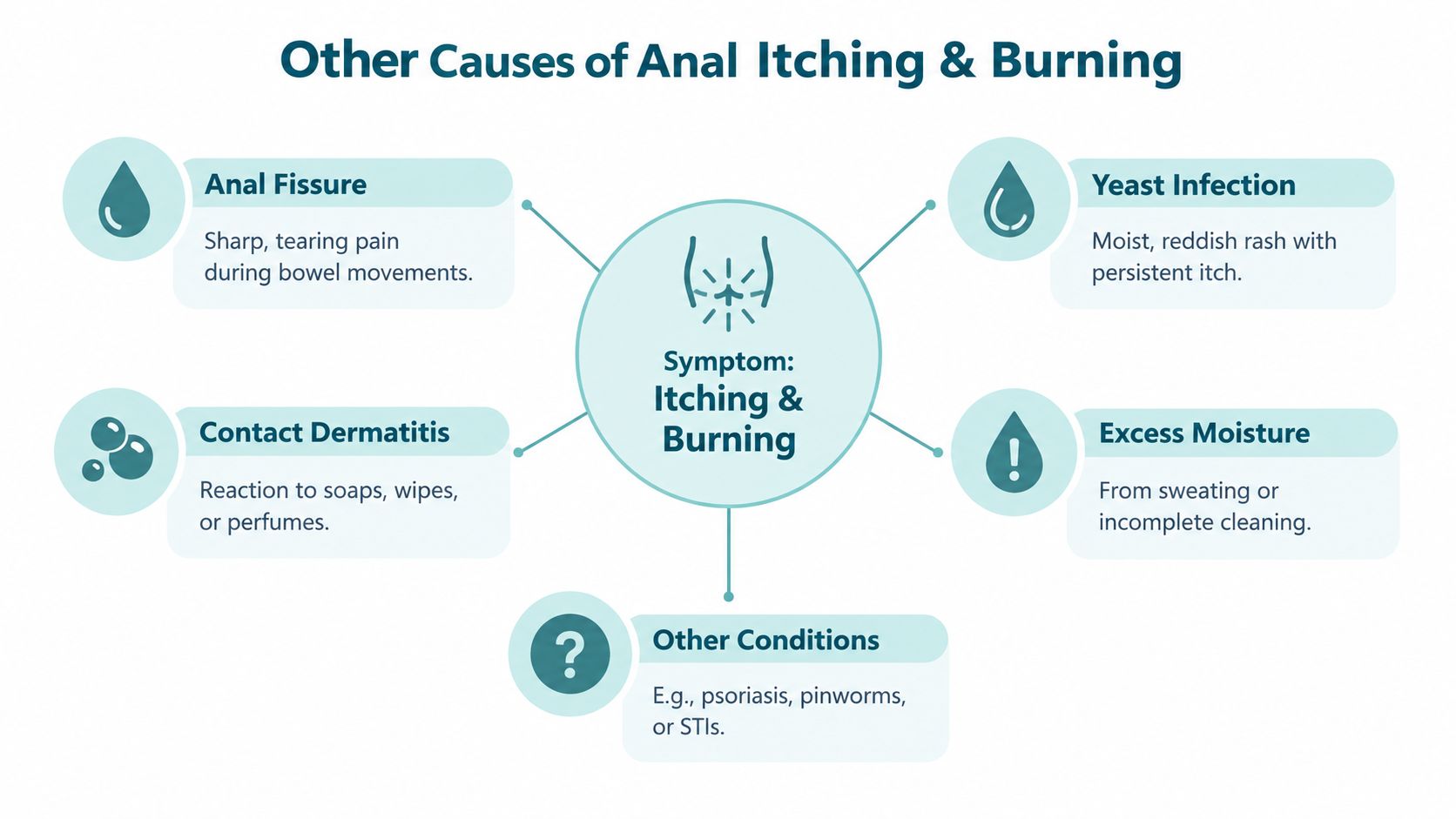
Try to track timing, triggers, and visible changes. Burning that follows every bowel movement suggests a different pattern from itching that appears mainly after sweating. A rash following a new wipe points toward irritation, while a tender lump suggests swelling that needs closer attention.
How to Triage Your Symptoms at Home
Triage isn't a diagnosis. It's a way to decide whether gentle self-care is reasonable or whether you should arrange professional advice.
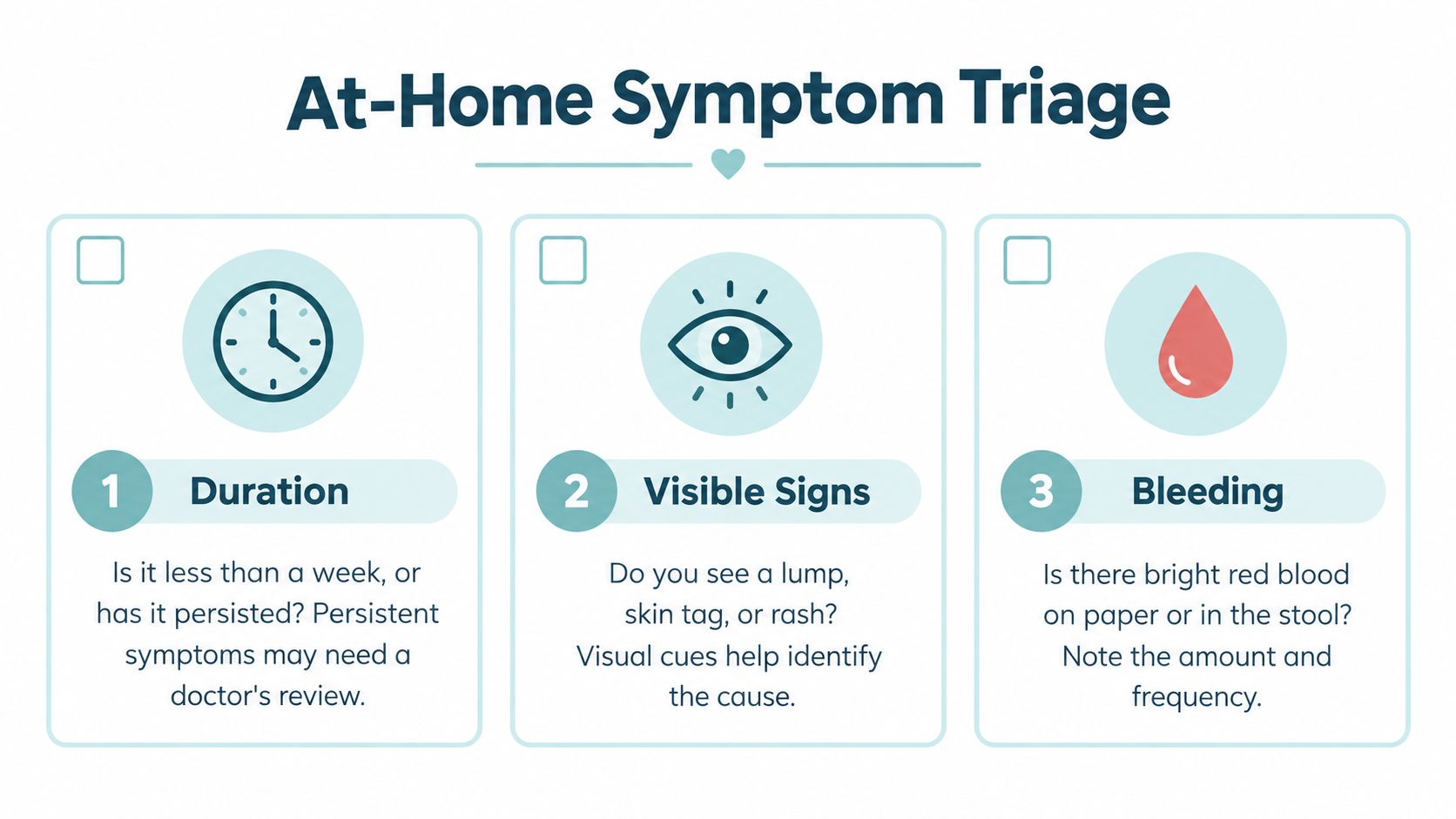
Start with three questions:
- How long has it been happening? A new, mild flare may respond to removing irritants and improving stool consistency. Symptoms that continue, return frequently, or worsen need a different level of attention.
- What can you see or feel? Use a hand mirror and good lighting if you're comfortable. A small external lump, a rash, a skin tag, or tissue that appears during straining can offer useful clues, but appearance alone can't confirm the cause.
- Is there bleeding? Note whether blood is bright red, how much you see, and whether it appears repeatedly. Don't assume rectal bleeding is automatically from hemorrhoids.
A simple action framework
- Green: Mild symptoms with no warning signs may be managed with gentle cleansing, careful use of an appropriate OTC product, and warm sitz baths. If symptoms don't settle within a reasonable period, arrange an evaluation.
- Yellow: Persistent discomfort beyond two weeks, recurring flares, or mild bleeding deserves a routine appointment. A clinician can check for fissures, dermatitis, prolapse, infection, or another cause.
- Red: Heavy bleeding, severe or rapidly increasing pain, fever, pus, or a suspected abscess requires prompt medical care. Dizziness or fainting with bleeding calls for urgent evaluation.
For gentle cleansing, Revivol-XR® Hygienic Cleansing Lotion, Gentle Relief + Soothing Aloe & Witch Hazel for “Down-There” Sensitive Areas can be applied to toilet paper as an external cleansing lotion. Its listed ingredients include aloe, coconut, chamomile, and witch hazel. Avoid rubbing, and discontinue use if irritation develops.
Evidence-Based Relief That Actually Works
Relief works best when you match the tool to the dominant sensation. A numbing ingredient may help burning, but it won't correct constipation. A barrier may protect irritated skin, but it won't explain unexplained bleeding.
| Relief option | What it does | Best for |
|---|---|---|
| Lidocaine or pramoxine | Temporarily numbs localized discomfort | Burning, soreness, and pain |
| Witch hazel pads | May reduce itching, burning, and irritation for people who tolerate them | Short-term comfort after bowel movements |
| Cold compress | Cools swollen, irritated tissue | Itch and puffiness |
| Hydrocortisone 1% | Reduces inflammation for short-term use | Inflamed external skin |
| Petroleum jelly or zinc oxide | Coats the skin and supports the moisture barrier | Rawness and moisture-related irritation |
| Warm sitz bath | Relaxes and cleanses the area without rubbing | General discomfort |
A plain warm-water sitz bath can last 15 to 20 minutes, two to three times daily. Avoid harsh additives, hot water, and scrubbing. The step-by-step sitz bath guide can help you set one up safely.
Witch hazel requires individual judgment. Cleveland Clinic's witch hazel guidance describes its use for temporary relief of itching, burning, and irritation, while other clinical guidance advises avoiding witch hazel, fragrance, or alcohol when they worsen sensitivity. Test one product at a time and stop if the skin becomes redder, drier, or more painful.
Steroid creams should be used only for short-term symptom control and according to label or clinician guidance. They may worsen certain infections and can thin or irritate skin when overused. Pregnant or breastfeeding readers should ask a healthcare professional before using medicated products.
The foundation remains stool management. Fiber supplements such as psyllium or methylcellulose, stool softeners when appropriate, and adequate fluids can reduce hard stools and straining. The treatment that numbs the symptom works better when bowel movements stop repeatedly irritating the area.
Daily Habits That Prevent Flare-Ups
A comfortable routine doesn't need to be elaborate. Focus on keeping stool easy to pass, reducing pressure, and protecting the skin from moisture and friction.
Build the routine around four habits
- Fiber: Work gradually toward 25 to 35 grams daily, using foods such as beans, oats, berries, vegetables, and whole grains. If food isn't enough, psyllium husk for hemorrhoid support may be an option. Increase fiber slowly and pair it with fluids.
- Fluids: Aim for six to eight glasses of water daily if that fits your health needs. People with fluid restrictions should follow their clinician's advice instead.
- Movement: Avoid long, uninterrupted periods of sitting. Stand, stretch, or walk regularly, and don't make the toilet a place to scroll.
- Gentle hygiene: Rinse with warm water or use a fragrance-free option, then pat dry. Wear breathable underwear and change out of sweaty or tight clothing promptly.
In the morning, give yourself enough time for a relaxed bowel movement, eat a fiber-containing breakfast, and drink water. In the evening, check whether the area feels damp or irritated, cleanse gently, and choose loose sleepwear.
A sitz soak can fit into that evening routine. Revivol-XR® Sitz Bath Soak Mix, Super Concentrated 20-in-1 Blend with Epsom Salt & Essential Oils, 15 Soaks, USP Grade contains Epsom salt, Dead Sea salt, aloe, witch hazel, chamomile, calendula, and other listed ingredients. Use it only as directed as a bath-water additive, patch test first, and avoid it if an ingredient irritates your skin. People with diabetes should ask their physician before using hot or warm baths.
Pregnancy and postpartum recovery deserve extra patience. Constipation affects 25% to 40% of women during pregnancy and postpartum, according to a clinical review in the American Journal of Gastroenterology. A prospective study also reported anal symptoms in 50% during pregnancy, 56.2% immediately postpartum, and 62.9% during the first three months postpartum in the Gut journal report. Ask your obstetric or primary care provider before using medicated creams, essential oils, or supplements during pregnancy or breastfeeding.
Warning Signs and When to See a Clinician
Bleeding deserves attention, even when hemorrhoids seem likely. Arrange medical evaluation for bleeding that persists or returns, black or tarry stools, unexplained weight loss, or symptoms that continue beyond two weeks.
Seek prompt care for severe pain that doesn't improve with appropriate OTC measures, a lump that becomes hard or increasingly tender, fever, pus, or worsening swelling. These signs may indicate thrombosis, infection, an abscess, or another condition that needs examination.
Sudden heavy bleeding, fainting, marked dizziness, or signs of severe infection require urgent evaluation. Don't drive yourself if you feel faint.
For a practical review of thresholds, use this guide on when to see a doctor for hemorrhoids. A clinician visit isn't an overreaction. It's the fastest way to stop guessing when itching, burning, pain, discharge, or bleeding won't settle.
Revivol-XR offers OTC options for temporary hemorrhoid-related comfort, including a lidocaine and phenylephrine cream, a cleansing lotion, and a sitz bath soak. Visit Revivol-XR to review the formulas and choose a product based on your symptoms, while following the label and seeking healthcare advice for persistent, severe, or bleeding symptoms.