Hemorrhoid Itch Relief Home Remedy: Safe Steps That Work

The wipe you reach for after a bathroom trip may be keeping the itch going.
You're back at your desk, shifting in your chair, trying not to scratch. A hemorrhoid itch relief home remedy should help you calm irritated skin, not add another layer of burning or leave you guessing about when to call a healthcare provider.
Gentle care matters more than a stronger sensation. Start with a simple routine, then test optional products carefully rather than using everything at once.
Table of Contents
- Step-by-Step Home Routine for Itch Relief
- Which Home Remedies Help Itch and How to Test Them Safely
- Fix the Bowel Habits Feeding the Itch
- Itch Relief During Pregnancy and After Delivery
- Frequently Asked Questions About Hemorrhoid Itch
- Decide When Home Care Is Enough or Call a Provider
Step-by-Step Home Routine for Itch Relief
Itching after a bowel movement doesn't mean you haven't cleaned enough. Repeated wiping can leave the skin around your anus more sensitive, especially when moisture or stool residue is already causing irritation.
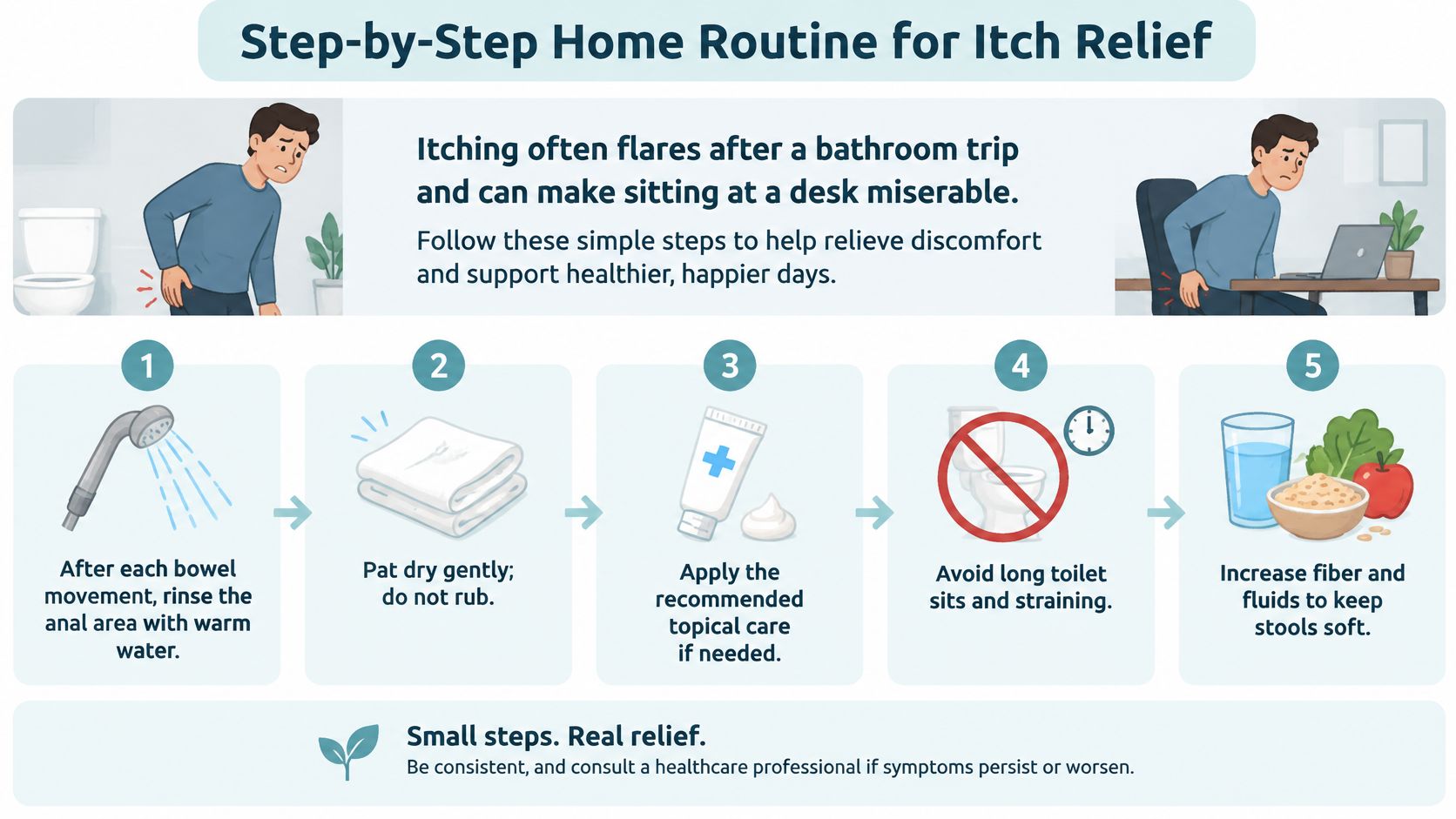
The gentle cleansing approach described by Mayo Clinic includes rinsing without scrubbing, drying carefully, using a thin moisture barrier, and avoiding scratching. You don't need an elaborate bathroom setup. A rinse bottle, a soft towel, and a plain barrier ointment are useful starting tools.
Clean and protect without rubbing
- Rinse after each bowel movement. Use plain lukewarm water, with a little mild, fragrance-free cleanser when needed, and rinse it away thoroughly. Don't scrub with a washcloth or keep washing until the skin feels squeaky clean.
- Pat dry with a soft towel. Press gently rather than dragging the towel across your skin. If you use a hair dryer, choose fan-only air, never heat.
- Apply a thin barrier. Petroleum jelly or zinc oxide can help shield irritated skin from moisture and stool residue. More isn't better, so avoid leaving a thick, sticky coating.
- Choose loose cotton underwear. Breathable clothing helps reduce dampness and friction. Skip tight leggings or snug seams while the area feels irritated, and change out of sweaty clothing.
This visual keeps the basic care steps easy to remember.
Add comfort without adding irritation
- Try a plain warm sitz bath. Mayo Clinic's practical recommendation, summarized in the American Society of Colon and Rectal Surgeons patient guidance, is a soak lasting 10 to 15 minutes, two or three times daily. The water should feel warm, not hot; skip bath oils, essential oils, and scented additives.
- Use a wrapped cold pack if swelling is the main complaint. Apply it for about 10 minutes, keeping a cloth between the pack and your skin. Remove it sooner if the cold becomes uncomfortable, and never apply bare ice.
- Keep nails short and resist scratching. Scratching can damage the skin and keep inflammation going. When the urge strikes, change position or use gentle cooling rather than rubbing through your clothes.
For help setting up a basin or tub, use this practical sitz bath guide.
Practical rule: Finish cleaning when the area is clean, not when repeated wiping finally feels reassuring.
Mild symptoms often settle within about a week of home care. At your seven-day check, look for clear improvement rather than brief relief immediately after a bath. If the itch and discomfort aren't clearly better, arrange a provider visit instead of adding more remedies.
Which Home Remedies Help Itch and How to Test Them Safely
Gentle beats strong when skin is already irritated. A cooling sensation, herbal ingredient, or numbing effect doesn't prove that a product suits your skin.
Common home remedies for itch, what they do and the watch-outs
| Remedy | What It Helps | How to Use | Watch For |
|---|---|---|---|
| Plain warm-water sitz bath | Soothes irritated skin and eases itch | 10 to 15 minutes, two or three times daily | Use plain water only; skip bath oils and fragrance |
| Petroleum jelly or zinc oxide | Forms a moisture barrier | Thin layer after cleaning | Heavy layers can trap moisture |
| Cold pack wrapped in cloth | Eases swelling and burning | About 10 minutes at a time | Never place ice directly on the skin |
| Witch hazel pad | Cooling feel and mild astringent effect | Pat on gently, don't rub | Can sting or irritate; stop if burning starts |
| Hydrocortisone 1% | Short-term itch relief | Two or three times daily for one to two weeks at most, subject to the product's shorter label limit | Longer use can thin the skin |
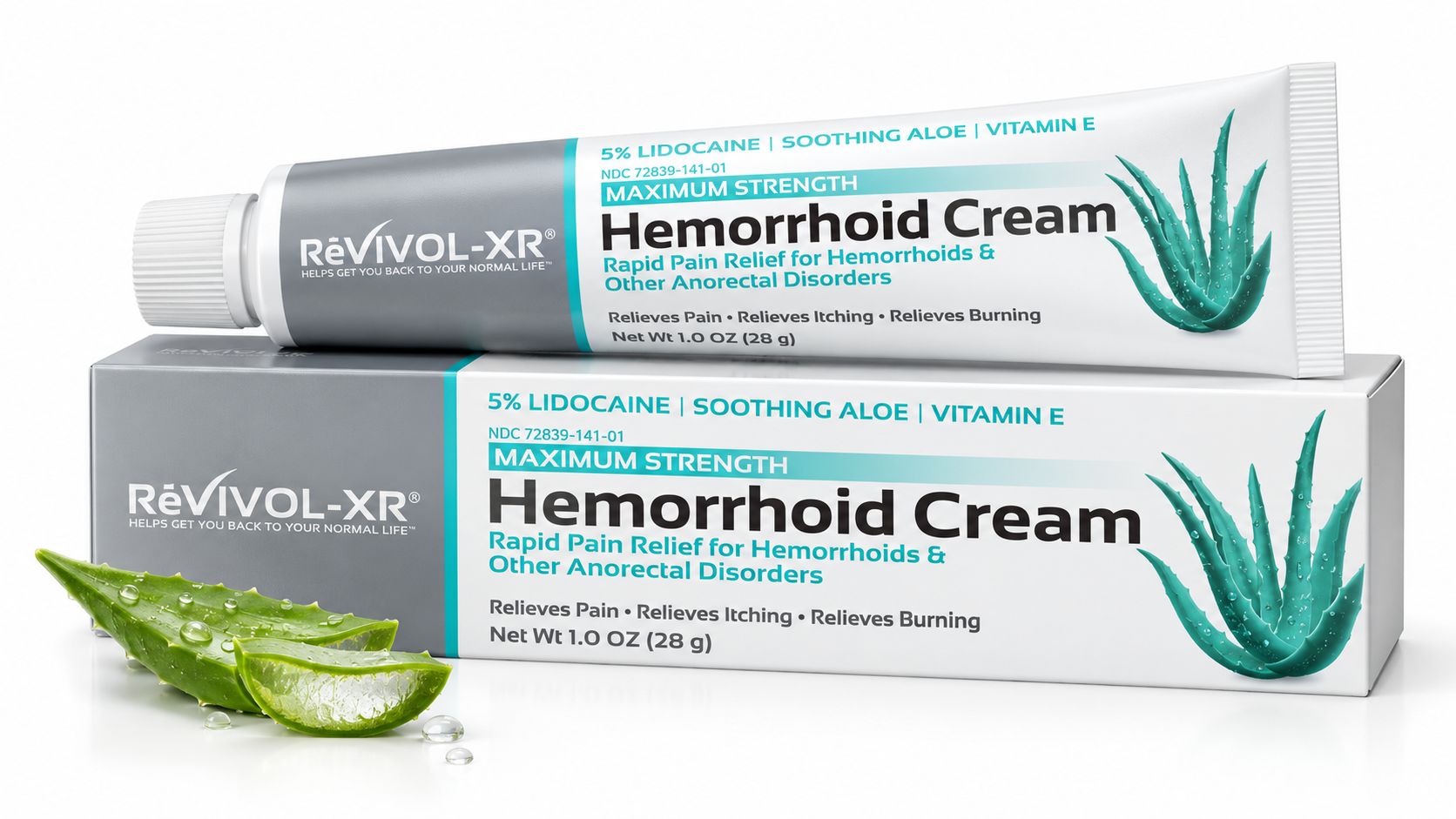
| Revivol-XR 5% Lidocaine Numbing Cream | Temporary numbing of pain, itch, and burning for comfort | Thin layer on the external area, up to 6 times daily for adults and children 12 and older, as directed | Stop if rectal bleeding occurs or there's no improvement in 7 days; don't insert into the rectum |
| Fragrance-free cleanser | Gentle cleaning after each bowel movement | Rinse with water, then pat dry | Scented soaps often worsen itch |
| Scented or wet wipes | Little benefit for itch | Skip them | Fragrance and alcohol can cause contact irritation |
The numbing cream is one optional comfort measure, not a cure or a substitute for finding the trigger. Its aloe and vitamin E are inactive ingredients, and any formula can cause a reaction in sensitive skin.
Check the package directions before choosing an external product.
Test one optional product at a time
Witch hazel and wipes can cause contact irritation that feels like hemorrhoid itch. MedlinePlus's anal itching guidance recommends avoiding perfumed or colored toilet tissue and scratching, which supports keeping your routine plain while you identify triggers.
Use this short trial only for mild symptoms without warning signs:
- Simplify first. Stop fragranced products and unnecessary bath additives for three to five days, and clean with plain water only. Don't stop prescribed medication without asking your clinician.
- Add cautiously. If the itch eases, try only one optional product for two or three days, within its label directions. Record whether itching, burning, or redness changes.
- Stop a suspected irritant. If itching returns or burning begins, drop that product and don't deliberately restart it to confirm the reaction.
A simple log might say: “Plain water today, less burning,” followed by “Added pad, stinging afterward.” That's more useful than trying several products and not knowing which caused trouble.
Itch can also come from moisture, stool residue, dermatitis, a small fissure, or infection. Home remedies may ease symptoms, but they don't establish the diagnosis or necessarily fix the underlying problem.
Fix the Bowel Habits Feeding the Itch
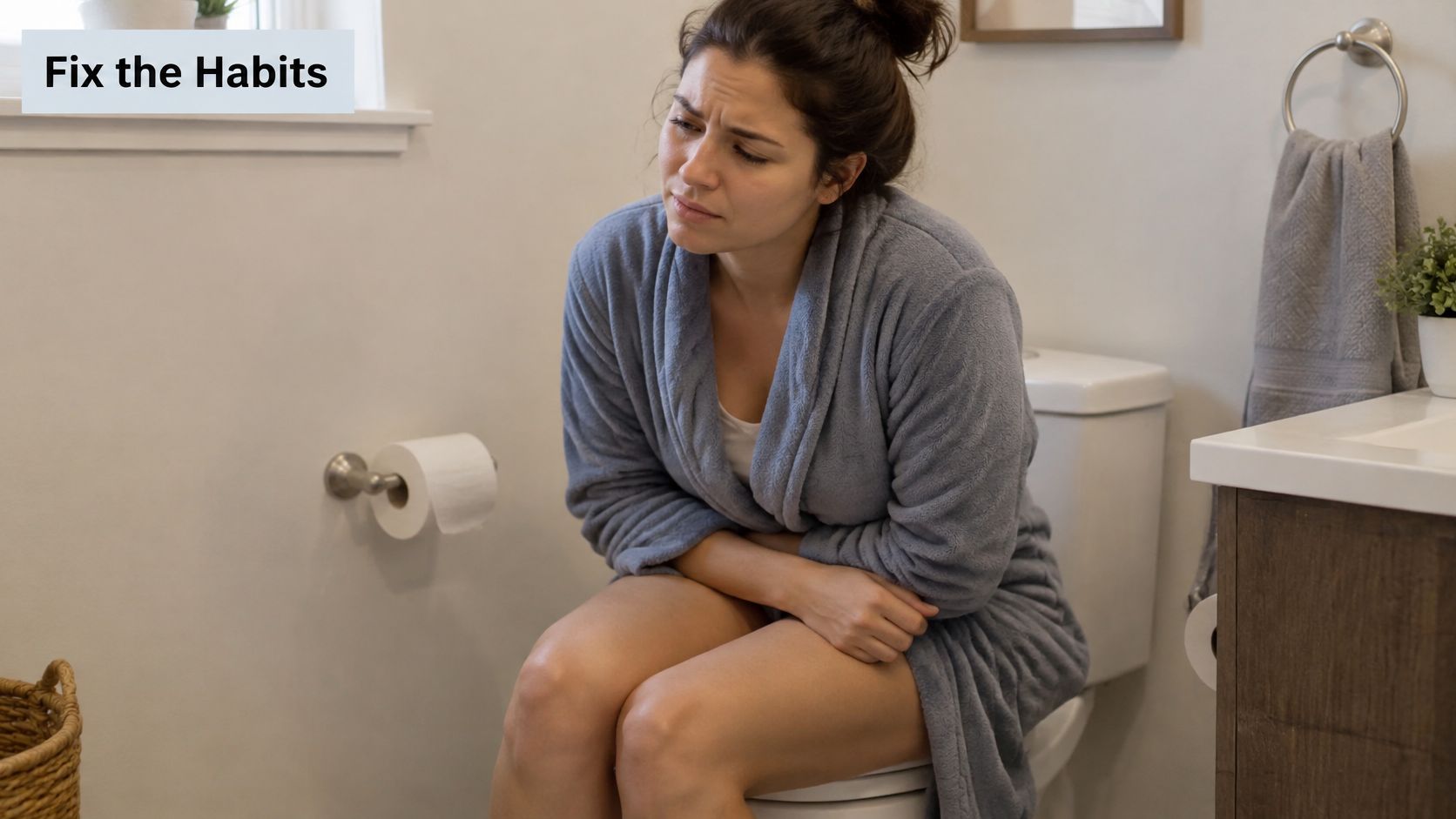
Hard stools stretch and rub sensitive tissue. Diarrhea creates a different problem: frequent bowel movements, moisture, and repeated cleaning can leave the skin sore. Straining and long toilet sessions add pressure, so topical care alone may not be enough.
A Cochrane review of 7 randomized trials involving 378 participants found that fiber reduced persistent hemorrhoid symptoms and bleeding. Fiber's direct effect on itching was more limited, so think of it as help for bowel habits rather than an instant itch remedy.
Bathroom discomfort can be a useful signal to check stool consistency and toilet habits, not just the products you're applying.
Aim for soft, formed stools
The American Society of Colon and Rectal Surgeons guidance summarized alongside Mayo Clinic's home-care recommendations gives a practical target of 25 to 35 grams of fiber daily and roughly 1 to 2 minutes on the toilet.
Build toward those habits gradually:
- Add fiber slowly. Over a few weeks, work in foods such as oatmeal, beans, pears, and vegetables rather than changing every meal overnight. A gradual increase helps limit gas and bloating.
- Drink appropriate fluids. Have water regularly, especially when adding fiber. If you have a fluid restriction for a heart or kidney condition, ask your clinician what's appropriate.
- Leave the phone outside. Go when you feel the urge, avoid pushing hard, and get up if nothing happens. The toilet shouldn't become a reading chair.
- Adjust for diarrhea. Don't assume every flare needs a constipation remedy. Persistent loose stools need a different assessment, particularly if they started after a medication change.
For everyday meal ideas, see what to eat when you have hemorrhoids.
A useful bowel goal is a stool that passes comfortably, not a bowel movement you have to force.
Constipation related to pregnancy, iron supplements, or other medications deserves a conversation with your provider. Don't stop prescribed iron or another medicine on your own.
Keep a daily tracker for one week: note stool texture, time on the toilet, and fiber grams from food labels. Add whether you strained and how your skin felt afterward. The pattern can help you and your provider choose the next step.
Itch Relief During Pregnancy and After Delivery
You've settled down to feed your baby, but sitting makes the discomfort hard to ignore. The American College of Obstetricians and Gynecologists explains that hemorrhoids commonly worsen immediately after delivery, then gradually improve during postpartum recovery.
Feeding and recovery can make comfortable positioning difficult.

Start with low-irritation comfort measures
ACOG's suggestions include wrapped ice packs or witch-hazel pads, movement to ease pelvic pressure, and soaking in a warm, not hot, tub several times daily. A pad is optional, not essential; stop using it if it stings.
The NHS Specialist Pharmacy Service puts fiber, fluids, avoiding straining, and good anal hygiene first during pregnancy. It recommends considering a topical preparation when lifestyle measures aren't enough, rather than starting several products together.
Use the stool-softening plan to choose manageable meals and drinks during recovery. Short, comfortable movement breaks can also help when you're spending much of the day sitting for feeds.
Before trying a cream or suppository, check its active ingredients with an obstetric clinician or pharmacist. Pregnancy and breastfeeding require product-specific advice, and hydrocortisone use should stay short.
This video offers another way to learn about comfort measures.
Use this checklist before adding a product:
- Confirm suitability. Ask whether it fits your stage of pregnancy or breastfeeding and your other medicines.
- Keep the soak plain. Avoid introducing scented additives to already sensitive skin.
- Call when needed. Get advice if relief doesn't come, symptoms worsen, or bleeding occurs.
The guide to hemorrhoid suppositories during pregnancy can help you prepare questions for that conversation.
Frequently Asked Questions About Hemorrhoid Itch
Why does hemorrhoid itch get worse at night?
Warm bedding, sweating, staying in the same position, and scratching during sleep can increase irritation. Loose cotton pajamas, short nails, a cool room, and a gentle plain-water rinse before bed may help without adding another product. If itching wakes you most nights, tell your provider about the pattern rather than assuming hemorrhoids are the cause.
Can I use lidocaine and hydrocortisone together?
Check with a pharmacist before combining them, because products can overlap in active ingredients or contain ingredients that irritate your skin. Bring the actual packages or clear photos of their Drug Facts labels so the pharmacist can check the formulas and directions. Never exceed either label's amount or duration, and don't use added numbing as a reason to ignore worsening pain.
Why does the itch come back after I feel better?
A return to hard stools, long toilet sessions, forceful wiping, or tight underwear can bring irritation back. Look at what changed just before the flare, including a new cleanser, wipe, or medication, and return to the simplest comfortable routine. Repeated episodes need assessment, because recurring itch isn't proof that swollen hemorrhoidal tissue is the only problem.
Keep the pattern, not just the product name: A note about when symptoms start, what touches your skin, and what your bowel movements are like can make a pharmacy or clinic conversation more useful.
A hemorrhoid itch relief home remedy is most useful when it helps you spot what your skin tolerates. You shouldn't have to keep increasing the number of products to get through the day.
Decide When Home Care Is Enough or Call a Provider
Home care is reasonable for mild, short-lived itching that steadily improves. It isn't the right plan for severe pain, bleeding, or symptoms that keep returning despite a gentle routine.
A review of postpartum anorectal and pelvic-floor disorders highlights the need to distinguish symptom relief from conditions requiring assessment and notes evaluation when home care fails after about a week. You don't need to identify the condition yourself before asking for help.
When to keep home care going and when to contact a provider
| Symptom or situation | What to do |
|---|---|
| Mild itch that improves within about one week | Keep the home routine going |
| No clear improvement after seven days | Book a visit with a healthcare provider |
| Any rectal bleeding | Contact a healthcare provider promptly, since bleeding can have causes other than hemorrhoids |
| Severe pain or fever | Seek care promptly |
| Spreading swelling or redness, or skin breakdown | Contact a healthcare provider |
| Symptoms that keep coming back | Share your stool and symptom log with a healthcare provider |
Make the next step straightforward
If symptoms are improving, stay consistent rather than adding new remedies. If they're not, bring your symptom log and a list of everything you've applied to the appointment, including wipes, botanical products, and nonprescription creams.
- Ask about the cause. A provider can check whether the skin, bowel habits, or another anorectal condition needs attention.
- Check the product fit. A pharmacist can help you choose an appropriate short-term OTC option and avoid overlapping ingredients.
- Don't delay urgent care. Heavy or ongoing bleeding, faintness, or unbearable pain needs urgent medical attention.
An external lidocaine cream may provide temporary numbing within its label directions, but comfort doesn't establish a diagnosis or mean the underlying problem has resolved. Many mild flare-ups improve with consistent, gentle care, and getting help when they don't is a sensible next step, not a failure of home care.
Revivol-XR offers topical options for temporary soothing relief and comfort when anal itching, burning, or soreness makes daily life difficult. Visit Revivol-XR to review ingredients and label directions, and consult a healthcare provider for persistent, severe, or bleeding symptoms.