Hemorrhoid Flare Up Relief That Actually Works Fast

A hemorrhoid flare-up can turn an ordinary bowel movement into a cycle of pain, swelling, and more straining.
When the sting starts, the best response isn't a random collection of home remedies. Hemorrhoid flare up relief works best as a staged plan, beginning with immediate comfort, then addressing stool consistency, safe OTC use, and clear signs that self-care isn't enough.
Table of Contents
- When a Hemorrhoid Flare Up Hits and You Need Relief Now
- First 72 Hours of Self Care for a Painful Flare Up
- Using OTC Creams and Sprays the Right Way
- Stopping the Strain Cycle With Fiber and Better Bowel Habits
- When a Hemorrhoid Flare Up Needs a Doctor
- Preventing the Next Flare Up and Quick Answers to Common Questions
When a Hemorrhoid Flare Up Hits and You Need Relief Now
You may recognize the moment. Sitting suddenly feels sharp and uncomfortable. After a bowel movement, there's throbbing, burning, or itching that makes you dread the next trip to the bathroom. Many people stay quiet because the location feels embarrassing, but this is a common problem with practical treatment steps.
Hemorrhoids are swollen vascular cushions around the anus and lower rectum. During a flare-up, they may become inflamed, develop a clot, or protrude. Constipation, straining, pregnancy, postpartum recovery, heavy lifting, and long periods of sitting can all add pressure to the area.
A large prospective study of 280 pregnant women found that 40.7% developed hemorrhoids, with the problem clustering in late pregnancy and immediately after delivery. The same study reported hemorrhoids in 61% of affected participants during the third trimester and 34.1% on the first day after delivery. Broader reviews report pregnancy-associated hemorrhoids in 25% to 35% of pregnant women, with some populations reporting rates as high as 85% in the third trimester. These findings help explain why postpartum hemorrhoid care is such a frequent need. (Pregnancy-associated hemorrhoid study)
Practical rule: Relief should calm the irritated tissue, but prevention starts by making bowel movements easier.
Use this guide to hemorrhoid flare-up symptoms to compare common sensations, but don't assume every anal symptom is a hemorrhoid. Conservative care is a common starting point, while persistent, severe, or bleeding symptoms deserve professional evaluation.
First 72 Hours of Self Care for a Painful Flare Up
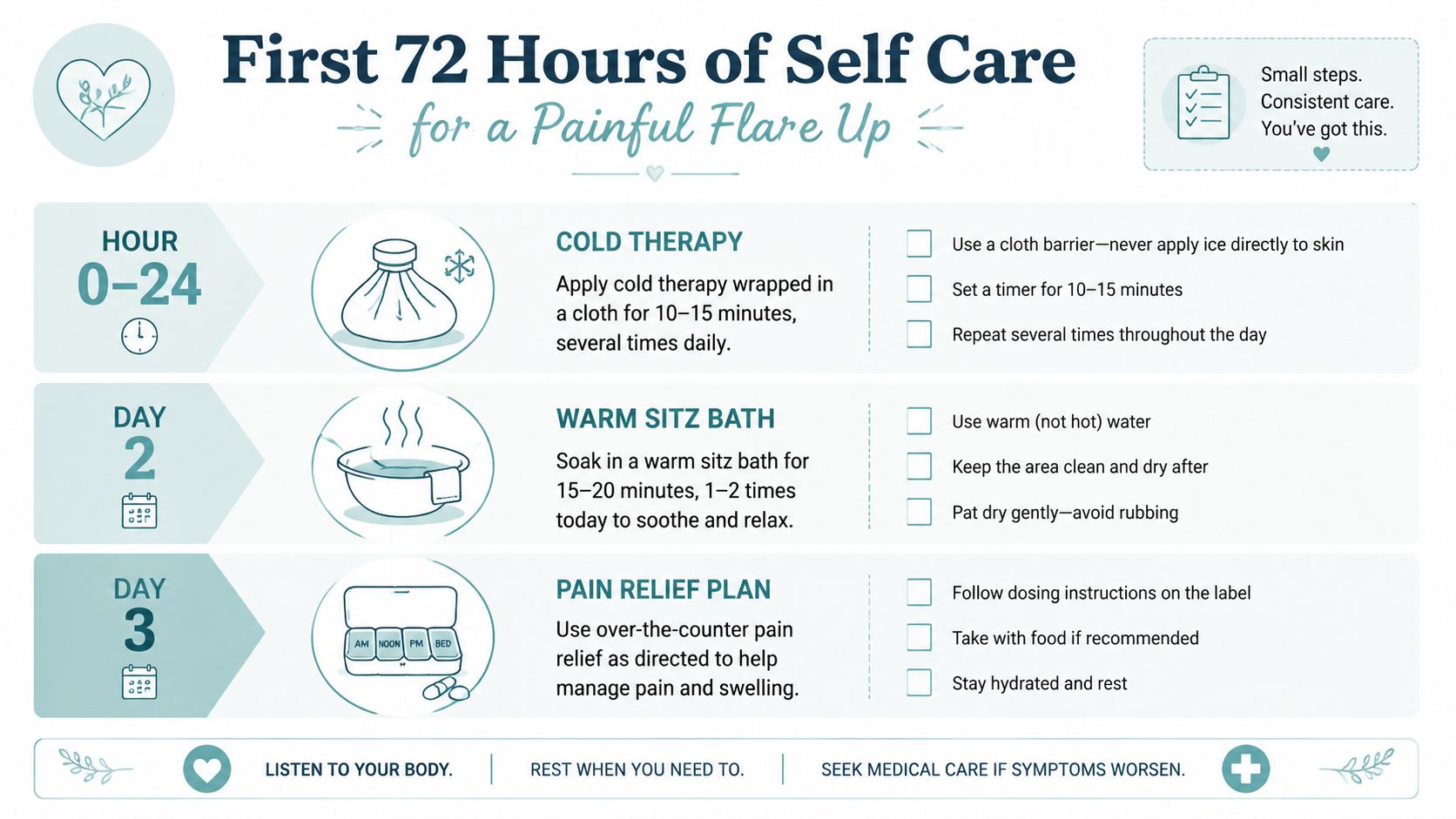
During the first day or two, layer simple measures instead of relying on one remedy. The aim is to reduce swelling, limit friction, and prevent the next bowel movement from restarting the irritation.
Start with cooling and gentle cleaning
Wrap an ice pack or a cold pack in a soft cloth and apply it for 10 to 15 minutes at a time, several times during the day. Never place ice directly on the skin. Cooling can make a swollen, throbbing area feel less irritated, but it shouldn't cause numbness, burning, or skin discoloration.
After a bowel movement, rinse with warm water when possible. Pat dry rather than rubbing. Harsh toilet paper, scented products, and vigorous wiping can keep already-sensitive skin irritated.
Add warm water without overestimating it
A warm sitz bath can provide temporary comfort. Soak for 15 to 20 minutes, 2 to 3 times daily, and after bowel movements if that feels soothing. A basin that fits over the toilet or a shallow bathtub can work. Practical instructions are available in this guide to doing a sitz bath at home.
Sitz baths work best as an adjunct, not a standalone fix. A controlled review found no significant reduction in overall pain or faster fissure or wound healing from sitz baths alone, although warm water can temporarily relax the internal anal sphincter. (Controlled review of sitz baths)
If you use the Sitz Bath Soak Mix, Super Concentrated 20-in-1 Blend with Epsom Salt and Essential Oils, remember that it's an external bath-water additive. Epsom salt is one of 20 listed ingredients, including Dead Sea salt, baking soda, witch hazel, aloe vera, chamomile oil, calendula oil, and other botanical oils. Patch test with a teaspoon first, avoid eye contact, don't swallow it, and stop if irritation develops. People with diabetes should ask a physician before using warm or hot baths.
Change the bathroom routine
Keep toilet sessions brief, avoid straining, and consider a small footstool so your knees sit higher than your hips. A cushion can make sitting more tolerable, while lying on your side may reduce pelvic pressure. After childbirth, chilled witch hazel pads or a perineal cold pack can be placed externally for comfort, following product directions.
A postpartum resource recommends warm-water sitz baths for 10 to 15 minutes, 2 to 3 times daily, and describes chilled witch hazel pads as an option after vaginal birth. (Postpartum care guidance)
Using OTC Creams and Sprays the Right Way
OTC products can ease pain, itching, burning, irritation, and swelling, but their ingredients do different jobs. Read the Drug Facts label before combining products, especially during pregnancy or breastfeeding, or if you take blood-pressure or depression medication or have heart, thyroid, diabetes, or urinary problems.
| Ingredient type | Examples | What it does | Typical use | Safety note |
|---|---|---|---|---|
| Protectants | Petrolatum, zinc oxide, glycerin | Coats irritated skin and reduces friction | Apply a thin external layer as directed | Stop if irritation develops |
| Vasoconstrictor | Phenylephrine | Temporarily reduces swollen tissue | Use according to the label | Ask a pharmacist or clinician if you have relevant medical conditions |
| Local anesthetic | Lidocaine, pramoxine | Temporarily numbs localized discomfort | Use a thin layer or directed applicator | Don't combine multiple numbing products |
| Astringent | Witch hazel | May soothe itching, burning, and irritation | Pads or topical preparations | Avoid products that sting or dry the skin |
| Mild steroid | Hydrocortisone | Reduces itching and inflammation | Short-term external use | OTC use should generally be limited to 7 days unless a clinician advises otherwise |
Apply less, not more
Clean and dry the area first, then apply a thin layer externally for external symptoms. For internal symptoms, use only the applicator and method supplied with the product. Wash your hands before and after application.
The schedule depends on the formulation. Some labels allow use several times daily, particularly after bowel movements and at bedtime. A lidocaine, phenylephrine, and witch hazel spray is labeled for use up to 4 times daily. A glycerin, lidocaine, and witch hazel topical product is described for use up to 6 times daily or after a bowel movement. Its directions warn against applying it directly in the rectum with fingers, a mechanical device, or an applicator. (OTC spray directions, topical glycerin, lidocaine, and witch hazel directions)
Do not apply cream to broken skin without medical advice. If a product stings, avoid formulas containing fragrance or alcohol. Do not layer multiple lidocaine or pramoxine products. Suppositories may be intended for internal symptoms, but they still require label-based dosing and placement.
The Preparation H directions illustrate why route, frequency, and cleaning instructions matter. Follow the label rather than adding applications because symptoms remain uncomfortable.
Revivol-XR® Advanced Hemorrhoid Cream, 5% Lidocaine and Phenylephrine combines 5% lidocaine for temporary discomfort relief, phenylephrine HCl 0.25% to temporarily shrink swollen tissue, and glycerin and petrolatum to coat and protect irritated skin. It also contains aloe, witch hazel, and botanical ingredients. Use it only as directed on the Drug Facts label, and ask a health professional before use during pregnancy or breastfeeding. It may soothe symptoms, but it does not correct the underlying cause.
Stopping the Strain Cycle With Fiber and Better Bowel Habits
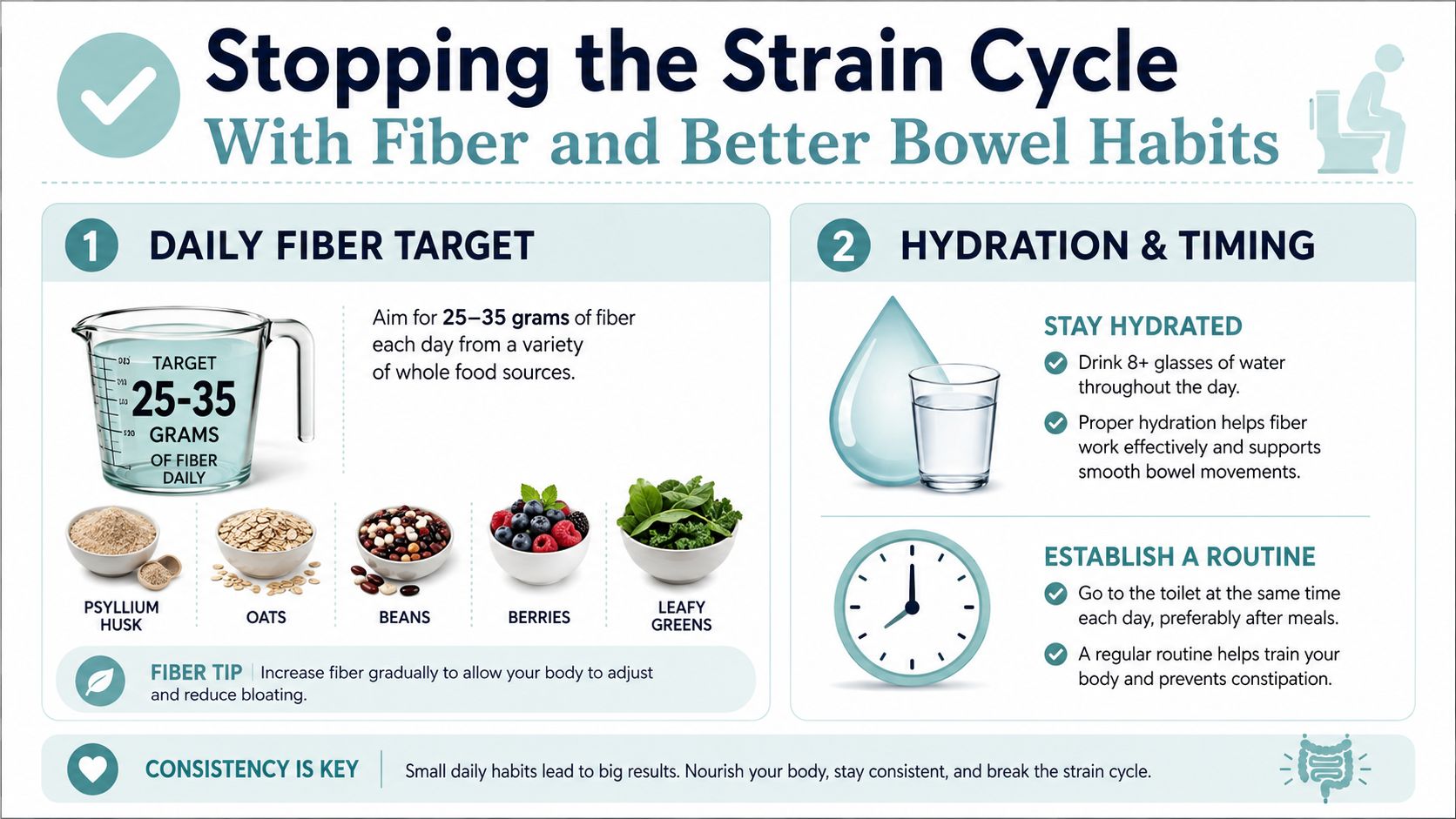
Soft stool is what keeps topical relief from being undone by the straining that triggered the flare. Start with food-based fiber, including psyllium, oats, beans, berries, and leafy greens. Pregnancy and postpartum guidance commonly recommends 20 to 30 grams of fiber daily, with regular fluids and bowel habits that limit pushing. (Postpartum hemorrhoid treatment review)
Make the toilet easier on your body
Use the bathroom when the urge arrives, then leave rather than lingering. Put your phone away, support your feet, lean slightly forward, and avoid forcing the bowel movement. A footstool can raise your knees above your hips and make that position easier.
Drink fluids consistently unless a clinician has restricted your intake. Prunes, gentle movement, a fiber supplement, or a mild laxative may help with postpartum constipation. If you have not had a bowel movement by the third or fourth day after birth, contact a healthcare provider, as advised in this postpartum constipation guidance.
If constipation continues, ask a clinician or pharmacist whether a stool softener fits your situation. Check before starting a new laxative during pregnancy or after delivery, especially if you take iron, use pain medication, or breastfeed. Increase fiber gradually and pair it with fluids, since a sudden increase can worsen bloating or discomfort.
Conservative care can help, but symptoms still need monitoring. One observational study of micronized purified flavonoid fraction-based management reported 76.3% of patients had elimination of bleeding and prolapse, and 51.0% were symptom-free at the end of treatment. (Conservative hemorrhoid treatment study)
When a Hemorrhoid Flare Up Needs a Doctor
Some symptoms should end the home-treatment experiment. Seek prompt medical care for bleeding that's more than a few drops, blood that pools in the toilet, clots, or bleeding that occurs without a bowel movement.
A firm purple or blue lump that's extremely tender may represent a thrombosed external hemorrhoid. Timing can matter, and clinical guidance often considers treatment when symptoms are severe or the clot is recent. Don't try to puncture or drain it yourself.
Postpartum and urgent warning signs
Contact a clinician promptly if tissue prolapses and can't be gently pushed back, turns dusky, or becomes increasingly painful. Fever, foul discharge, or rapidly worsening pain can signal a problem that needs examination rather than another cream.
Postpartum bleeding should generally taper, not increase. Increasing bleeding, severe pain, dizziness, palpitations, or symptoms that could suggest anemia warrant same-day evaluation.
Don't self-diagnose ongoing rectal bleeding. Hemorrhoids are common, but bleeding can have other causes. Colonoscopy screening is recommended for new rectal bleeding over age 45, or earlier with a family history, regardless of what you think is causing it.
A clinician may use a history, digital rectal examination, or anoscopy to identify the source. Persistent or recurrent grade II to III symptoms may lead to discussion of office-based options such as rubber band ligation or sclerotherapy. A recent meta-analysis found rubber band ligation had lower postoperative pain and faster recovery, while recurrence was higher in more advanced disease. (Procedure comparison)
Preventing the Next Flare Up and Quick Answers to Common Questions
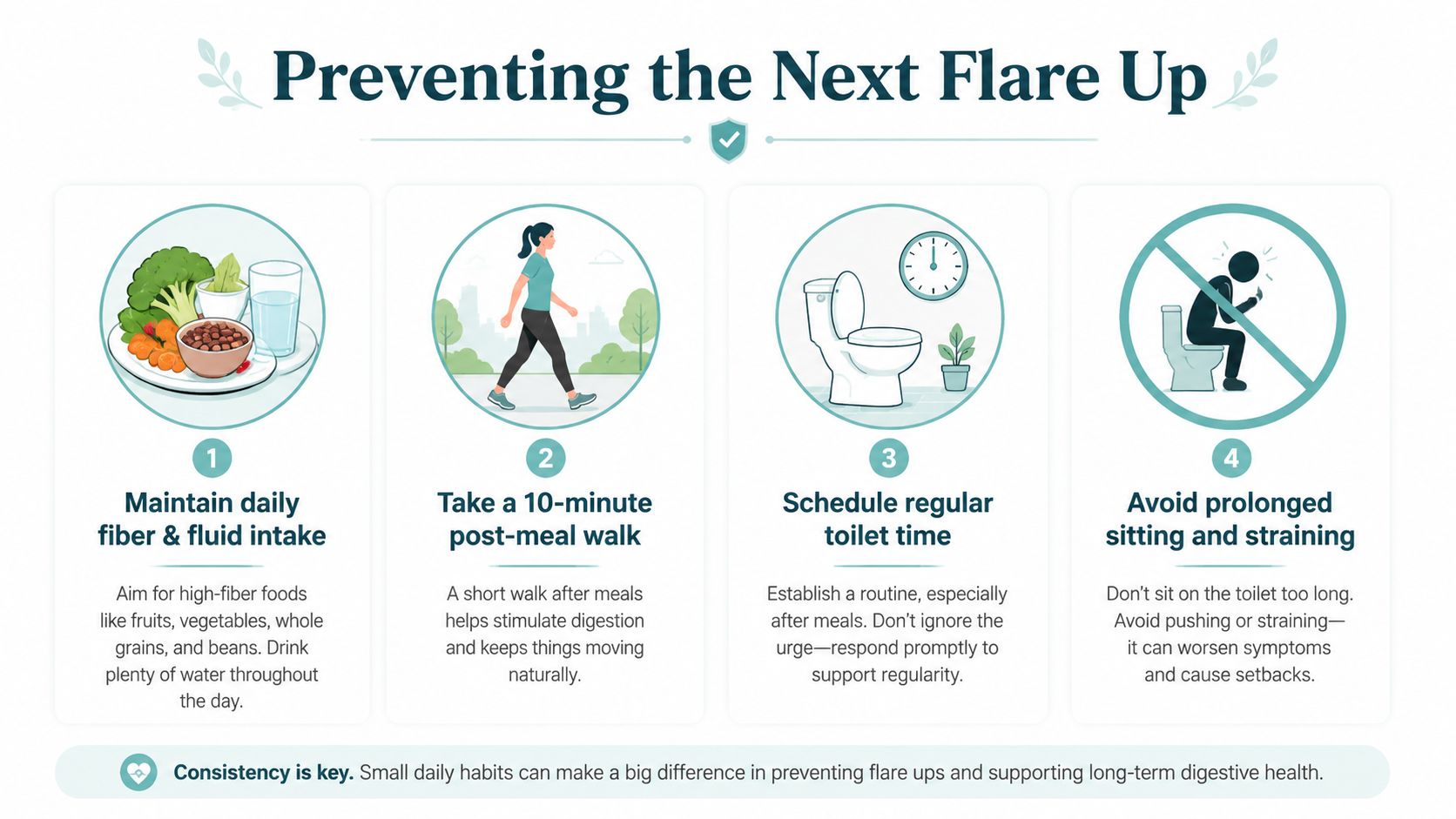
Prevention is usually quiet and repetitive. Keep fiber and fluids steady, take a 10-minute walk after meals when you can, respond to the urge to have a bowel movement, and avoid prolonged sitting on the toilet.
Lifting technique matters too. Exhale instead of holding your breath, avoid sudden heavy effort during a flare, and notice whether pelvic-floor tension makes bowel movements harder. These adjustments won't replace medical care, but they can reduce repeated pressure.
Common questions readers ask
Do hemorrhoids ever fully go away
Symptoms can settle completely, but the tendency to flare may remain if constipation, straining, prolonged sitting, or pregnancy-related pressure continues. Recurring episodes deserve a clinician conversation about diagnosis and treatment options.
Are hemorrhoids cancer
Hemorrhoids aren't cancer, but you shouldn't use that fact to explain away new or ongoing bleeding. Bleeding, especially when heavy, recurrent, or unrelated to bowel movements, needs medical assessment.
How long is bleeding normal after a flare
A small amount of bright-red blood can occur with irritated hemorrhoidal tissue, but there's no safe universal period for unexplained bleeding. If bleeding persists, increases, includes clots, or appears without a bowel movement, contact a healthcare provider.
When is sex safe again
Wait until pain, bleeding, and significant tenderness have settled. After childbirth, follow the guidance from your obstetric clinician, especially if there were tears, stitches, or ongoing postpartum bleeding.
Can I use a sitz bath during pregnancy
Warm sitz baths are commonly recommended, but water temperature and personal medical conditions matter. Ask your obstetric clinician if you're unsure, and avoid adding essential oils or other ingredients that irritate your skin.
Is toilet paper enough
Dry wiping may be irritating during a flare. Rinsing with warm water and patting dry is often gentler. If you use wipes, choose fragrance-free products and avoid rubbing.
How can I tell a fissure from a hemorrhoid
An anal fissure often causes sharp, cutting pain during or after a bowel movement, while hemorrhoids may cause itching, swelling, pressure, or bleeding. The symptoms can overlap, so persistent pain needs an examination rather than self-diagnosis.
The most reliable preventive lever remains consistent stool management. If flare-ups keep returning despite better bowel habits and short-term symptom relief, ask a clinician whether office procedures or other treatments are appropriate.
Revivol-XR offers OTC options for temporary hemorrhoid comfort, including topical relief with lidocaine, phenylephrine, protectants, and soothing ingredients such as aloe and witch hazel. Visit Revivol-XR to review the available products, follow each Drug Facts label carefully, and contact a healthcare provider for persistent, severe, or bleeding symptoms.