Fastest Way to Reduce Hemorrhoid Swelling at Home

The fastest same-day relief is a stack of four steps: a wrapped cold compress, a 10 to 15 minute warm sitz bath, a short-term labeled topical, and a softer next stool. Comfort can change in minutes. Visible shrinking usually takes days, and a firm lump can take weeks to settle, so speed means calming the injury while you stop the next strain.
That is why the strongest tube alone often disappoints. A cream can numb pain and itching for a while. A soak can ease the tight, angry feeling. A hard bowel movement can still reopen the same vein, and a clot or prolapsed tissue needs more than home care.
Use each step for the job it can do today. Cold first for sharp swelling, warmth after cleaning, then a thin layer of topical on dry skin as the label allows. Keep the next stool soft with water, fiber, and no lingering on the toilet. Once the clock is realistic, the plan feels calmer and works better.
Table of Contents
- How Soon Hemorrhoid Swelling Can Ease
- The Same Day Steps That Cut Swelling Fast
- Cold Packs Sitz Baths and Better Sitting
- Habits That Keep Swelling From Returning
- When Swelling Needs a Clinician Instead
- What to Do Tonight for Calmer Swelling
How Soon Hemorrhoid Swelling Can Ease
Five minutes of hard pushing can leave a vein swollen for days. That's the hard truth behind most flare ups, and it's also why the fastest way to reduce hemorrhoid swelling starts with stopping the next injury, not hunting for a stronger tube.
Think in three clocks. Comfort can change in minutes. Pain and swelling usually ease over days. The lump itself can take weeks to flatten, long after sitting feels normal again.
What kind of swelling do you have
External hemorrhoids tend to show up as a hard, tender lump you can feel when you wipe or sit. Internal hemorrhoids more often cause bleeding or prolapse, where tissue slips out during a bowel movement. The NIDDK guide to hemorrhoid symptoms and causes notes that mild external symptoms often improve within several days, while pain and swelling after nonsurgical treatment commonly decrease over two to seven days, but the lump itself may take four to six weeks to recede.
That gap confuses people. You can feel better on day three and still feel a pea sized bump on day ten. That doesn't always mean treatment failed. It often means the vein is calm but the stretched tissue needs more time.
A sudden, firm lump with severe pain is different. That pattern can point to thrombosis, a clot inside an external hemorrhoid, and it needs different triage than mild irritation. A topical anesthetic can temporarily reduce pain, but it can't rapidly remove a clot or correct significant prolapse.
What helps and how soon
| Method | What it can change | When you may notice it | How long to use it |
|---|---|---|---|
| Wrapped cold compress | Short term comfort and a less angry feeling of swelling | Within minutes of contact | Brief sessions, not all day on bare skin |
| Warm sitz bath, plain water | Pain, itch, and the feeling of swelling | During a 10 to 15 minute soak, 2 or 3 times a day | Several days alongside other care |
| Phenylephrine topical, as labeled | Temporary shrinking of swollen hemorrhoidal tissue | While the product is in use | Short term, then review if no better in 7 days |
| Lidocaine topical, as labeled | Temporary numbing of pain, burning, and itch, not removal of a clot | Often within about an hour; some creams feel sooner | Only as the label allows, usually not past 7 days without advice |
| Softer stools from fluid and fiber | Less repeat pressure that keeps swelling going | Next bowel movements, then over days | Ongoing, this is the durable fix |
| Mild external lump with home care | Pain and swelling first, the lump later | Several days for comfort, 2 to 7 days for swelling, 4 to 6 weeks for the lump | Stop self care sooner if pain is severe or bleeding continues |
Read the table row by row and match it to what you feel. If you're expecting a lidocaine cream to do the job listed for phenylephrine, you'll think nothing works. If you're expecting a sitz bath to flatten a lump by bedtime, you'll soak in water that's too hot for too long and irritate the skin.
Practical rule: Judge a numbing cream by pain and itch. Judge fiber and fluids by whether the next stool passes without pushing. Judge the lump by weeks, not by tonight.
Many symptoms treated at home improve within about a week. If your row doesn't match, if pain is severe, or if bleeding shows up, don't keep waiting on a stronger cream. That's your signal to get checked rather than to add another product.
The Same Day Steps That Cut Swelling Fast
Use this sequence for uncomplicated mild to moderate swelling. Sudden, severe pain is a different pattern, and home steps are the wrong tool for it.
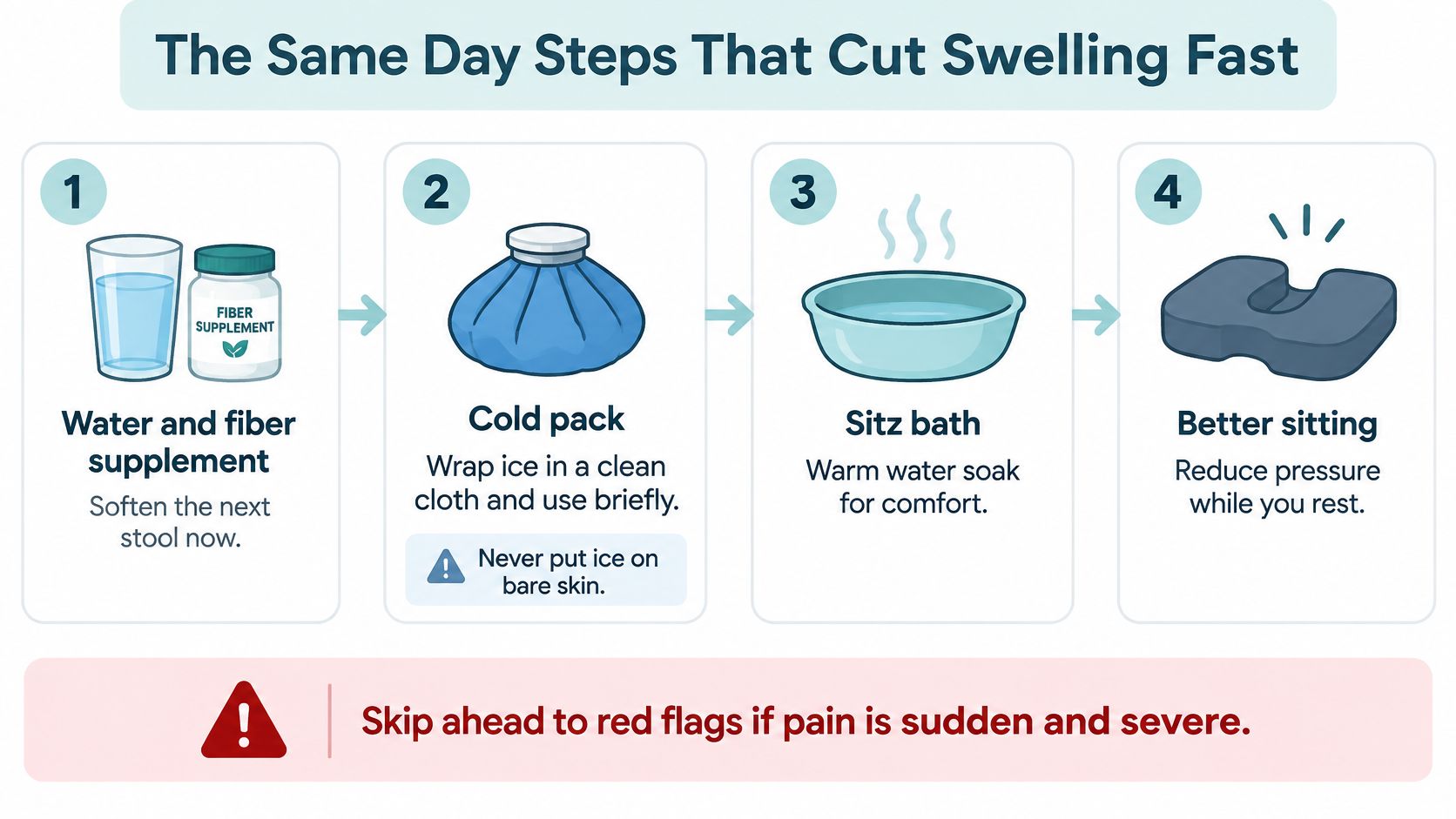
The order matters more than effort. Early steps take pressure off the swollen vein, and later ones calm the tissue while that work takes hold. No single step has to do the whole job, which is why piling on products can never replace the slower ones.
Six steps in order
- Soften the next stool now. Drink water through the day and consider a fiber supplement such as psyllium or methylcellulose, unless a clinician has limited your fluids or fiber. Hard stool is what keeps the vein angry. Pair any fiber increase with extra water, since a big scoop on its own can leave stool bulkier and harder to pass.
- Limit toilet time. Go when the urge hits, keep your feet supported, and get up if nothing happens within a few minutes. Sitting and straining raise pressure in the veins around the anus, and a phone can slowly turn a two minute visit into ten.
- Take a warm sitz bath. Sit in plain warm, not hot, water for about 10 to 15 minutes, then pat the area dry instead of rubbing. Warmth soothes pain, itch, and the feeling of swelling, while a rough towel can restart the sting you just calmed.
- Apply one topical product as labeled. Once skin is clean and dry, use a single over the counter hemorrhoid cream, ointment, or suppository exactly as its Drug Facts label says, for short term relief of swelling, itching, and pain. Topicals manage symptoms while softer stools remove the cause. Using two numbing products or two shrinking products at once raises irritation risk without adding benefit.
- Use cold for outside comfort between soaks. Rest a wrapped cool compress against the outside area for a short spell, then remove it and keep the skin dry. Cold takes the edge off quickly when you need to sit, work, or sleep, and ice on bare skin or left on too long does the opposite.
- Break up long stretches of sitting. Stand and walk for a few minutes regularly through the day. Steady pressure from sitting keeps the area loaded, and short walks are the simplest way to give the vein a rest between bathroom trips and soaks.
The mistake that keeps swelling going
The most common failure is treating the lump while the next stool stays hard. You soak, you apply cream, you feel a little better, and then a strained bowel movement undoes the day's work. Fiber and fluids are the part that stops repeat trauma, so they belong in the daily plan, not the background. That is why step 1 sits first even though it feels like the slowest one.
For cleaning after a bowel movement, dry toilet paper can drag on sore skin. Some people use Revivol-XR® Hygienic Cleansing Lotion – Gentle Relief + Soothing Aloe & Witch Hazel for "Down-There" Sensitive Areas, a cleansing lotion with aloe and witch hazel applied to toilet paper as the label directs, which turns it into a gentler wipe. It cleanses and soothes external skin; treating or shrinking the hemorrhoid is the medicated cream's job, handled in step 4.
If you're pregnant or recently gave birth, confirm any medicated cream or suppository with your obstetric clinician first. Until you have that conversation, stick with the non drug measures: cool packs or witch hazel pads, warm baths, fluids, fiber, walking, and less time sitting.
Cold Packs Sitz Baths and Better Sitting
Physical comfort steps sound simple, and small errors with temperature, time, and posture are where people lose ground. Getting these three moves right matters more than doing them more often. The basic home setup is modest: a seat, a wrapped cold compress, and a basin for soaking.
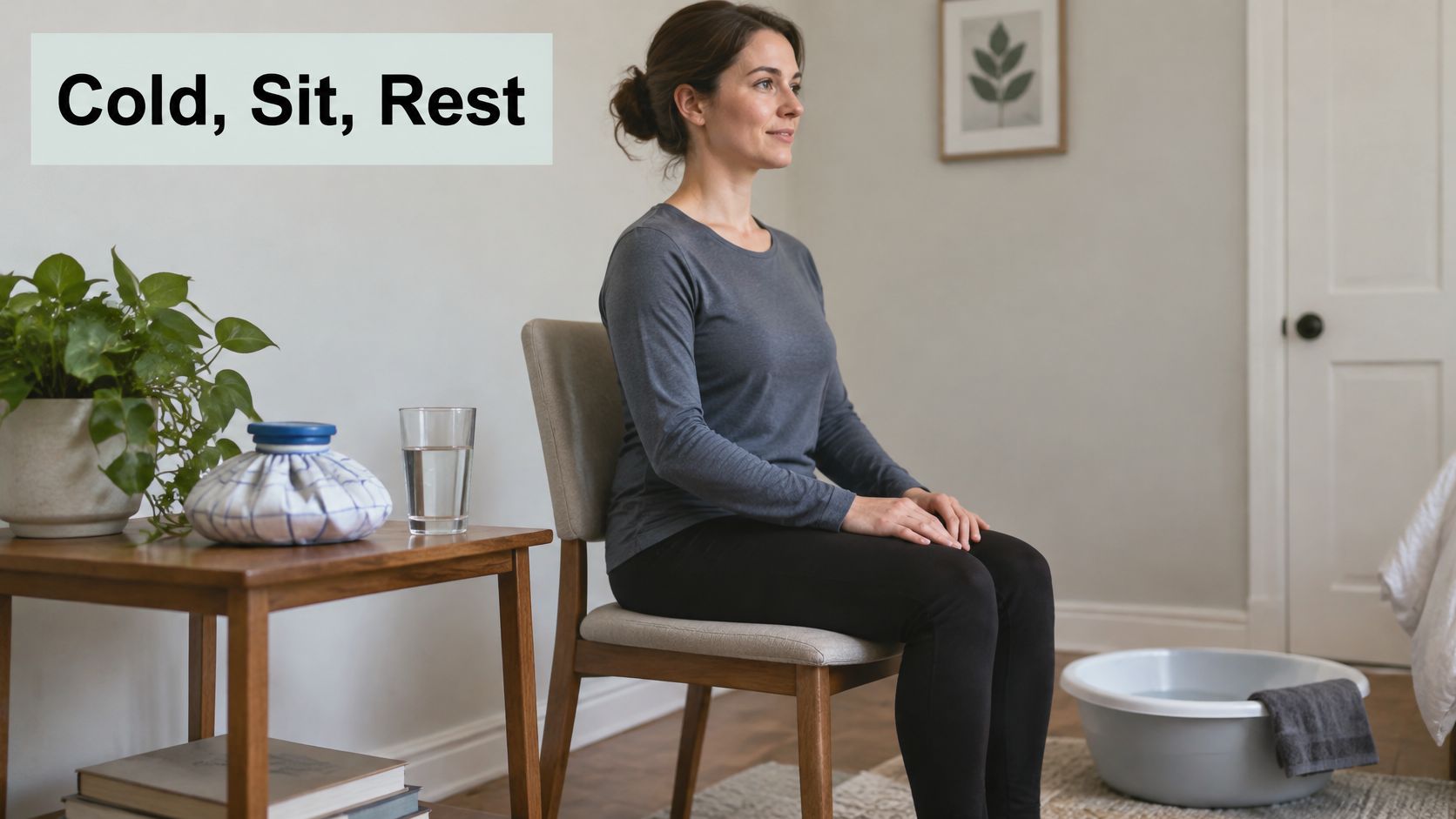
Cold done right and cold done wrong
Wrap ice or a cold pack in a clean cloth. Bare skin against ice is how a sore area ends up with a mild burn on top of the swelling. Rest the pack against the outside area for a short spell, take it off, and let the skin return to normal temperature before any next round.
Cold buys comfort and a calmer feeling of swelling. The vein itself shrinks on a slower clock. If the skin goes numb, white, or more painful, the pack stayed on too long, so shorten the next round.
At work or in the car, ice is awkward. A witch hazel pad stands in as a compress. Press it gently against the outside area, hold, then remove. Scrubbing the same skin with it just adds friction.
Warm water done right
The NIDDK guidance on hemorrhoid treatment recommends sitting in a tub of warm water several times a day to help relieve pain, with a typical routine of 10 to 15 minutes, two or three times daily in plain warm water. Plain water is generally preferable because soaps, bath lotions, and unapproved additives can irritate sensitive perianal skin.
Use a few inches of water in a tub or a basin that fits over the toilet. The water should feel comfortably warm on your inner wrist. Soak after a bowel movement when you can, since tissue is most irritated then, and pat dry with a soft cloth afterward.
For a more detailed walkthrough of basin setup and timing, our guide to a sitz bath for hemorrhoid relief covers the practical details. Some people later add a soak product such as Revivol-XR® Sitz Bath Soak Mix – Super Concentrated 20-in-1 Blend with Epsom Salt & Essential Oils – 15 Soaks – USP Grade, which combines Epsom salt, essential oils, and botanicals in bath water. Patch test any additive and stop if it stings.
The short video below shows the soak routine in practice: the water level, and how to get in and out without putting pressure on sore tissue.
Sitting with less pressure
When a lump is angry, lie on your side instead of sitting straight on it. At a desk or on a long drive, stand and walk briefly every so often to break up the pressure. A soft seat cushion helps. Hours perched in one position works against you.
On the toilet, a small footstool under your feet raises your knees and straightens the angle, so stool passes with less push. Give yourself a few unhurried minutes. If nothing is happening, get up and try again later rather than waiting it out.
Habits That Keep Swelling From Returning
Today's soaks calm tissue. This week's habits decide whether the vein refills tomorrow. Lasting relief comes from lowering the pressure that keeps blood pooled in the first place.
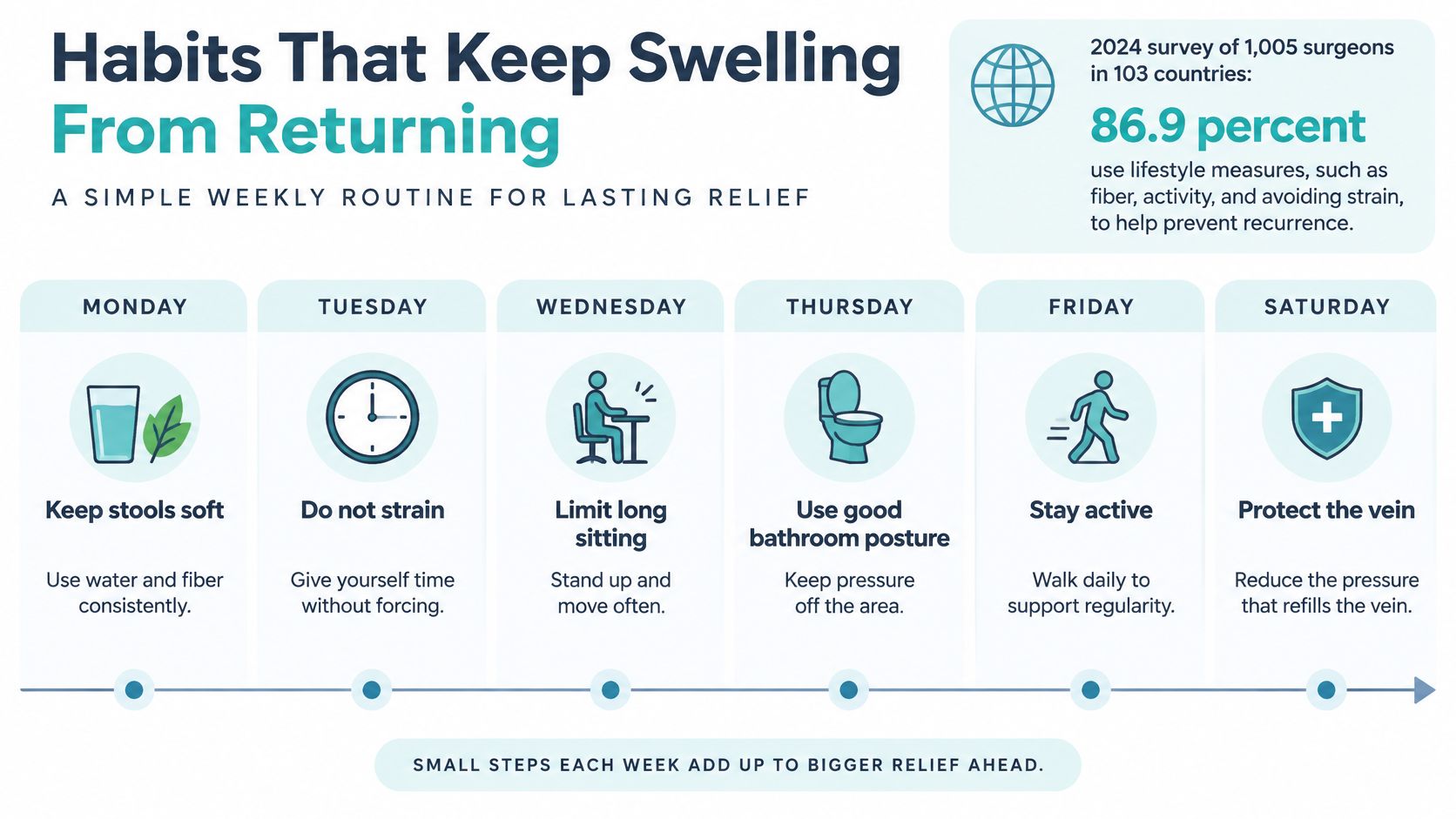
What surgeons actually recommend first
A 2024 global audit in Colorectal Disease surveyed 1,005 surgeons from 103 countries and found 86.9% identified increased daily fiber as a common conservative treatment, 82.7% identified increased water intake, and 74.4% emphasized normalizing bowel habits or toilet training.
That ranking fits a realistic clock. Creams and soaks can change how the area feels within minutes, while bowel habits decide how much pressure returns each morning. If stool stays hard, every sitz bath is followed by another push against the same swollen vein.
A simple daily plate and routine
You don't need a perfect diet. You need a repeatable one.
- Water with each meal: Keep a full glass at the table and refill it once. Steady intake beats a single large bottle late at night.
- Fiber added gradually: Oats at breakfast, beans or lentils a few times a week, fruit with skin where you can, or a psyllium or methylcellulose supplement. Increase over several days so gas doesn't spike.
- A short walk after meals: Ten minutes around the block helps the gut move and gets you off a chair. Desk workers, drivers, and new parents who sit to feed get the most from this.
- Toilet habits that stick: Go when the urge comes, leave the phone outside, and don't hold your breath and push. If stool is still hard after a few days of fiber and fluids, ask a clinician or pharmacist what's appropriate for you.
For meal ideas that keep fiber practical rather than punishing, see our guide on what to eat when you have hemorrhoids.
Pregnancy and postpartum constipation
Constipation after birth has extra causes: iron supplements, pain medicine, fear of pulling at a tear or stitches, and rushed bathroom trips between feedings. Each one can harden stool and prolong swelling.
Warm baths, fluids, fiber, movement, and shorter sits are the first line here. Medicated creams are not automatically proven for postpartum hemorrhoids and are not automatically right during pregnancy or while nursing, even when they're sold without a prescription. Ask your obstetric clinician before you use one.
Soaks and topicals are the fast comfort. Softer stools are what let that comfort last.
If you do only one thing this week, make the next bowel movement soft and unhurried. That's the habit that protects every other step you've taken.
When Swelling Needs a Clinician Instead
A sudden, hard, intensely painful outside lump calls for a different response than mild itching after a long drive. Knowing the pattern helps you choose the right next step instead of spending several days on the wrong one.
The sudden hard lump
That pattern can be a thrombosed external hemorrhoid, meaning a clot has formed inside the vein. It tends to feel firm, appear quickly, and hurt sharply when you sit or wipe.
The 2024 ASCRS guideline on Management of Hemorrhoids discusses early surgical excision for selected acute cases, sometimes within about 72 hours. Its recommendation is conditional and based on low quality evidence, so a clinician needs to examine the lump and confirm the timing. Waiting a week at home can mean missing that early treatment window.
Do not poke, squeeze, or try to drain a lump yourself. You cannot see what you are doing, and you can injure skin that is already stretched and sore.
When to keep home care and when to get seen
| What you notice | What it may mean | Next action |
|---|---|---|
| Mild itch or a small tender spot, softening over a few days | Uncomplicated swelling | Continue home care and recheck at 7 days |
| No real change after 7 days of home care | Needs an exam rather than a stronger dose | Contact a healthcare professional |
| Rash, dryness, or worse irritation after a cream | Possible sensitivity | Stop the product and ask a clinician |
| Sudden firm outside lump with severe pain | Possible thrombosed external hemorrhoid | In person exam, do not drain it yourself |
| Rectal bleeding that continues or is heavy | May be hemorrhoids or something else | Medical review, do not assume |
| Severe anal pain with bleeding, belly pain, diarrhea, or fever | Needs urgent evaluation | Same day care |
| Tissue that keeps coming out or will not stay in | Higher grade internal prolapse | Ask about office treatment instead of more cream |
The table helps you choose a next step, while a clinician confirms the diagnosis. Rectal bleeding should never be written off as just hemorrhoids, especially during pregnancy or after birth, because similar symptoms can occur alongside other conditions. If you are unsure which type of clinician to call first, our guide on who treats hemorrhoids explains the usual routes.
When office treatment beats more cream
For internal hemorrhoids that keep bleeding or prolapsing, office care is often more definitive than escalating topicals. The 2024 ASCRS guideline on Management of Hemorrhoids describes rubber band ligation as the most effective office based treatment for most symptomatic grade I to II disease and selected grade III cases that have not settled. Grade IV disease, where tissue stays out, is much more likely to lead to a discussion of surgery.
Watch for these self care traps:
- Using products past the label: Longer use raises the chance of irritation and sensitivity.
- Layering overlapping products: Two anesthetics or two vasoconstrictors at once add risk without speeding relief.
- Treating relief as proof: Feeling numb can make the area easier to ignore while another cause of bleeding goes unchecked.
Ask a clinician or pharmacist before using a phenylephrine product if you have heart disease, high blood pressure, thyroid disease, diabetes, or trouble urinating from an enlarged prostate, or if you take medicine for blood pressure or depression. During pregnancy or breastfeeding, ask before using any over the counter cream or suppository. Waiting at home is reasonable while symptoms are mild and clearly improving.
What to Do Tonight for Calmer Swelling
Tonight's job is simple: stop the next injury and calm the skin so you can sit, walk to the bathroom, and sleep with less dread.
Start with three moves. Drink a full glass of water. Set up a plain warm soak for 10 to 15 minutes and pat dry. Skip the long toilet sit afterward, even if you feel an urge that goes nowhere.
Applying a cream after the soak
Soak first, then apply product to clean, dry skin. That order matters. Cream spread on wet skin slides off, and cream applied before a soak mostly ends up in the water.
One labeled outside option is Revivol-XR® Advanced Hemorrhoid Cream - 5% Lidocaine + Phenylephrine (Vasoconstrictor) - Fast Relief of Burning, Itching, Discomfort. To use it, clean the area with mild soap and warm water, rinse, pat dry, and spread a thin layer on the outside area only. Don't push it inside with a finger or any applicator.
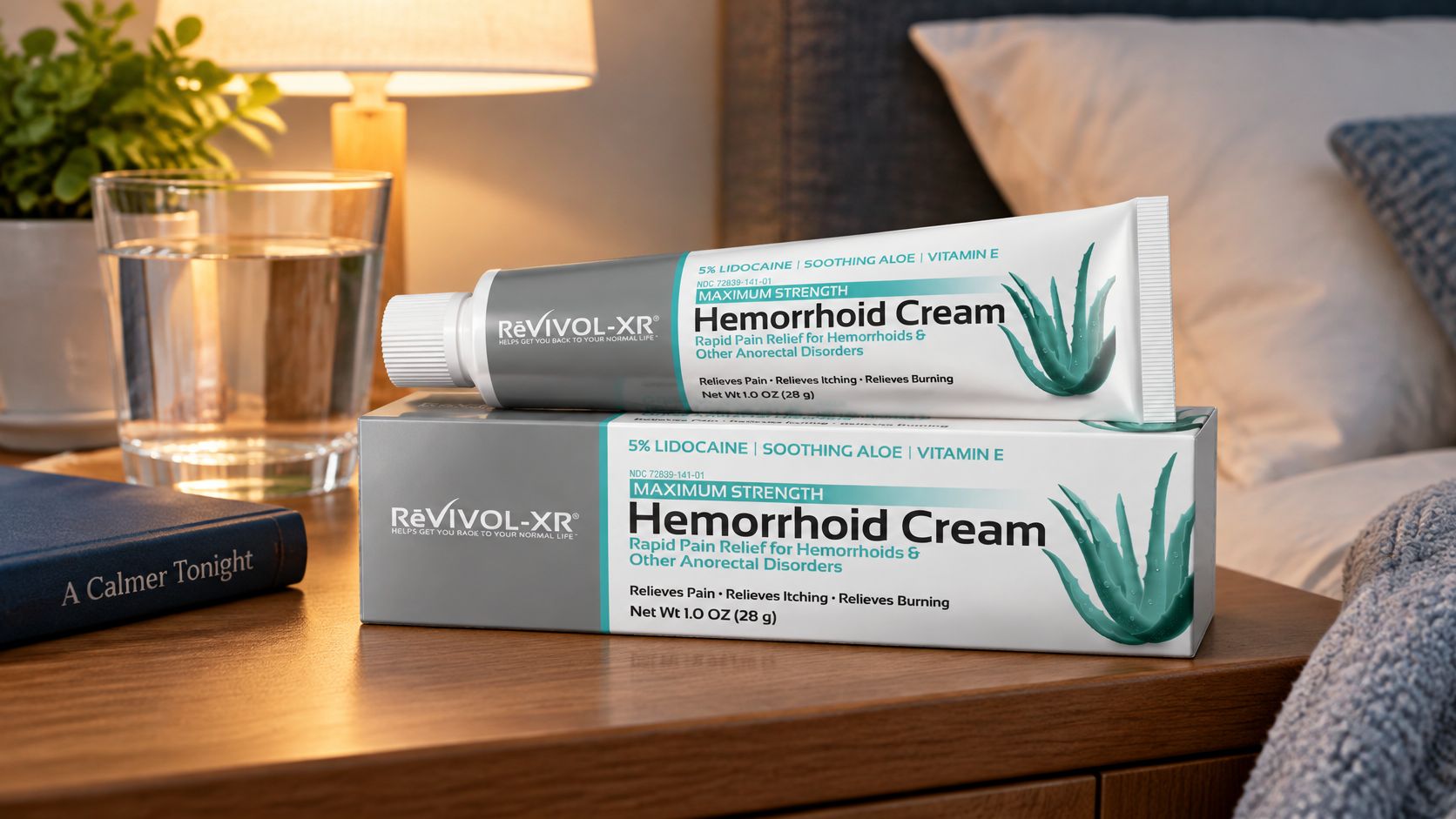
The formula uses 5% lidocaine, the maximum over the counter strength for this use, for temporary relief of pain, burning, and itch. It also includes phenylephrine HCl 0.25%, a vasoconstrictor included to temporarily shrink swollen hemorrhoidal tissue, plus a botanical blend with witch hazel and aloe for a soothing feel.
It may be applied up to 4 times per day, or as directed by a healthcare professional. Most customers report noticeable numbing within 3 to 5 minutes of applying the cream. That is temporary symptom relief while the swollen vein keeps its own slower schedule, measured in days and weeks rather than minutes.
Your one week finish line
The stop rules and ask-first warnings from the step list still stand tonight, including the 7 day check and the pregnancy or breastfeeding caution. What this section adds is the bedtime sequence:
- Make the last application count: a thin layer on clean, dry skin before bed gives the numbing window time to work while you settle in.
- Keep the stool plan running: the water you drink tonight is what sets up a softer morning, which is where swelling gets its rest.
- Keep nighttime trips short: if you wake with an urge, go, finish, and leave. Lingering on the seat restarts the pressure you spent the evening removing.
If the lump is suddenly hard and severely painful, use the red flag table instead of another application and get an in person exam. If symptoms are mild and easing a little each day, repeat the water, soak, dry, and thin layer routine, keep stools soft, and let the one week check decide your next step. Consult a healthcare provider for persistent, severe, or bleeding symptoms at any point.
If sitting through a meal or a feeding still feels hard tonight, start with the soak and softer stool plan, then consider whether a short term topical fits your label warnings and clinician's advice. Visit Revivol-XR to review the full Drug Facts, ingredients, and application directions before you buy, so you can choose soothing, temporary comfort with clear expectations.