Do Anal Fissures Smell and What It Really Means

An anal fissure itself usually doesn't produce a smell. Odor can appear when stool residue, drainage, infection, or hygiene problems are involved.
Many people ask “do anal fissures smell” because they've noticed something unfamiliar after using the bathroom. The useful distinction is whether you're noticing an ordinary fecal smell that improves after gentle cleaning, a mild mucus-like odor, or a persistent foul smell with pus, swelling, fever, or worsening pain.
A fissure is usually a pain-and-bleeding problem, not an odor problem. The sections below explain how to tell these patterns apart without embarrassment or guesswork.
Table of Contents
- The Short Answer to a Sensitive Question
- What an Anal Fissure Actually Is
- The Three Real Reasons a Fissure Can Smell
- How Stool and Hygiene Make the Odor Worse
- Warning Signs the Smell Is Something More Serious
- Simple Care Steps to Reduce Odor and Support Healing
- When to See a Doctor and What Relief Looks Like
The Short Answer to a Sensitive Question
An uncomplicated anal fissure usually doesn't smell because the tear itself doesn't normally release an odor. The classic symptoms are sharp pain during a bowel movement, burning afterward, and bright red blood on toilet paper or the stool, as described by the Mayo Clinic's anal fissure symptom guide.
Odor usually comes from something around the fissure. A small amount of stool may remain on irritated skin, especially when pain makes wiping difficult. Clear or cloudy fluid may also collect near the opening. A new infection can produce drainage or pus, which is more concerning than ordinary bowel odor.
Three odor patterns to notice
- Fecal residue: The smell resembles stool and improves after rinsing, drying, and changing underwear.
- Mucus or light discharge: The fluid may feel slippery or damp and may have a mild sour or metallic smell.
- Infection-related odor: The smell is persistent, distinctly foul, putrid, or pus-like, particularly when paired with swelling, fever, or increasing pain.
A bad-smelling discharge is a symptom to watch for, not proof that the fissure itself is infected. The WebMD symptom summary includes bad-smelling discharge among symptoms that deserve attention.
The question is completely reasonable. Noticing odor doesn't mean you've done anything wrong, and asking about it early can help you decide whether simple hygiene is enough or whether a healthcare provider should examine the area.
What an Anal Fissure Actually Is
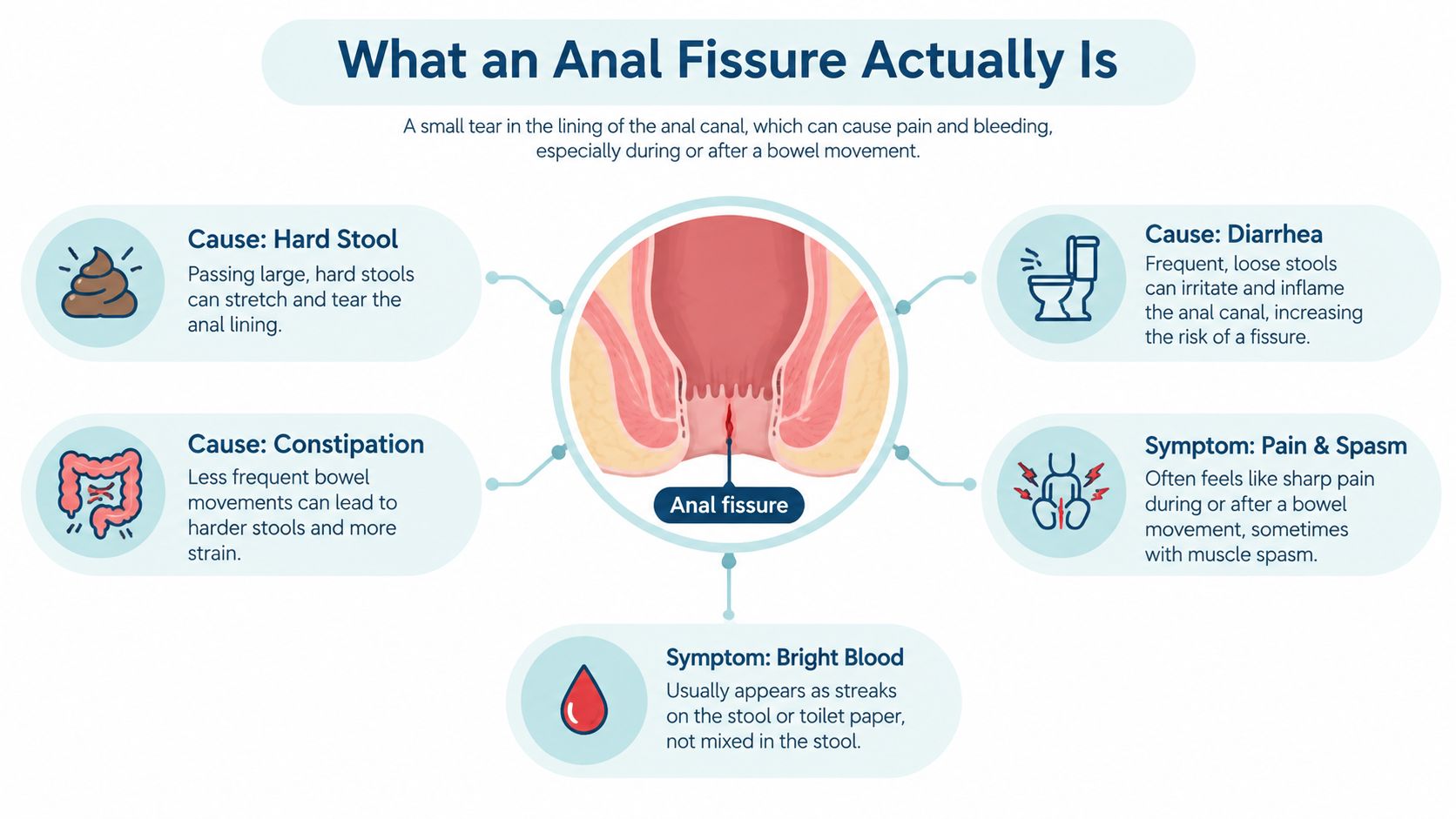
An anal fissure is a small crack or tear in the sensitive lining at the anal opening. It often follows hard stool, constipation, diarrhea, or straining. The tissue is delicate, and bowel movements repeatedly stretch it, which can keep the area painful.
The tear itself is usually clean tissue. That's why a simple fissure more often causes sharp pain and a small amount of bright red blood than a noticeable smell. A painful bowel movement can trigger tightening of the internal anal sphincter, creating a cycle in which pain leads to holding stool, holding stool contributes to harder bowel movements, and harder stool aggravates the tear. This cycle is described in Memorial Sloan Kettering's patient guide to anal fissures.
Where fissures usually occur
Most fissures sit in the posterior midline, the back portion of the anal opening. A clinical reference reports that about 90% occur in the posterior midline, 10% in the anterior midline, and only 1% off the midline, according to its clinical overview of anal fissures.
Location matters because an off-midline fissure can suggest another underlying condition rather than a routine tear. A chronic fissure may also develop a small skin tag near the opening, which can make cleansing more difficult.
For a visual explanation of common fissure features, see what anal fissures look like. The key point is simple: pain, bleeding, and muscle spasm fit an uncomplicated fissure better than odor does.
The Three Real Reasons a Fissure Can Smell
When someone says, “My fissure smells,” the odor usually comes from one of three sources. Identifying the source is more useful than trying to mask the smell.
Fecal residue
Pain can make people wipe lightly, stop early, or avoid washing. Tiny amounts of stool may remain on the outer skin, in folds, or around a skin tag. That produces a familiar bowel odor rather than a new medical smell.
This type of odor often changes after gentle rinsing and thorough drying. It may also appear after loose or sticky stool, which is more likely to spread across irritated skin.
Mucus or light drainage
Irritated tissue can feel moist. A small amount of clear, pale, or slightly cloudy fluid may mix with normal skin bacteria and create a faint sour, metallic, or musty smell.
Mucus or discharge isn't automatically an emergency, but recurring drainage deserves attention, especially if it's increasing or staining underwear. A clinical resource explains that an abscess may contain pus and lead to a fistula with foul-smelling mucus discharge in some cases, as noted by Ada Health's anal fissure overview.
Infection-related odor
A distinctly putrid, rotting, or pus-like smell is different from ordinary stool odor. Thick yellow or green drainage, a tender lump, swelling, fever, chills, or increasing pain raises concern for an abscess, fistula, or infected wound.
| Source | What it smells like | Color or texture | First action |
|---|---|---|---|
| Fecal residue | Familiar stool odor | Brown residue, often sticky | Rinse gently, pat dry, and change underwear |
| Mucus or light drainage | Mild sour, metallic, or musty odor | Clear, pale, slippery, or slightly cloudy | Observe the pattern and arrange medical advice if it persists |
| Infection-related drainage | Persistent foul, putrid, or pus-like smell | Thick yellow or green fluid, sometimes mixed with blood | Seek prompt medical evaluation |
If cleansing is uncomfortable, Revivol-XR® Hygienic Cleansing Lotion, Gentle Relief + Soothing Aloe & Witch Hazel for Down-There Sensitive Areas can be applied externally to toilet paper as a moisturizing cleansing wipe. Follow the product directions, avoid inserting it into the anus, and stop if irritation develops.
How Stool and Hygiene Make the Odor Worse
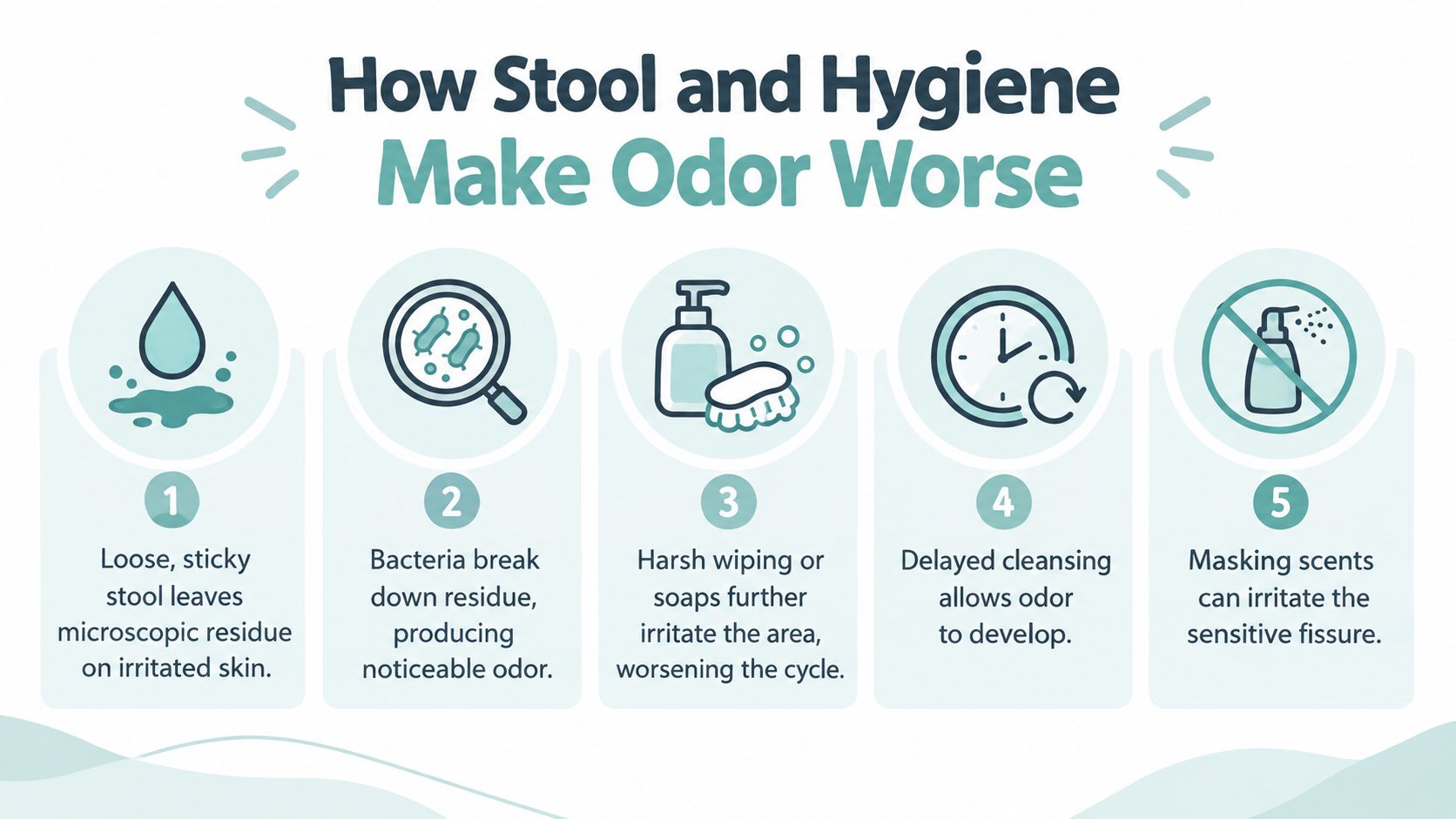
A fissure can turn an ordinary bathroom routine into a difficult one. Wiping hurts, so you may stop before the skin is clean. Scrubbing harder later can irritate the tear, making the next bowel movement more painful.
Loose or sticky stool can leave a thin film on the skin. Hard stool creates a different problem because it can scrape the fissure and prolong irritation. Both situations can make odor more noticeable, but neither proves that an infection is present.
Small routine changes can help
Use warm water when possible, then pat rather than rub. Fragrance-heavy soaps and scented wipes may sting broken skin, while repeated scrubbing can worsen the irritation and make cleansing harder the next time.
Stool consistency matters too. A steady intake of fiber and fluids can support softer, easier-to-pass stool, but sudden dietary changes may not suit everyone. If constipation is part of the pattern, ask a healthcare provider or pharmacist whether a stool softener is appropriate for you.
Moisture also keeps odor lingering. Tight clothing, damp underwear, and poorly breathable fabrics can hold residue against the skin. Choose comfortable, breathable underwear and change after sweating.
For a gentle soak option, Revivol-XR® Sitz Bath Soak Mix, Super Concentrated 20-in-1 Blend with Epsom Salt & Essential Oils is intended for external bath-water use. Follow the label, patch test as directed, and avoid it if you have sensitivity to its ingredients.
Warning Signs the Smell Is Something More Serious
Odor becomes more concerning when it arrives with other changes. A simple fissure generally causes pain and bleeding around bowel movements. Infection can add drainage, swelling, a tender lump, fever, chills, or pain that keeps getting worse instead of gradually easing.
A perianal abscess is a pocket of infection near the anus. A fistula is an abnormal passage that can continue draining. Either condition can create a persistent foul smell because fluid or pus is escaping, rather than because the fissure itself has an odor.
Practical rule: Odor that remains after gentle cleansing, especially with pus, swelling, fever, or worsening pain, shouldn't be managed with deodorizing products alone.
| Symptom | Usually a simple fissure | Possible infection or abscess |
|---|---|---|
| Pain | Sharp pain during or after stool | Increasing, throbbing, or constant pain |
| Bleeding | Small amount of bright red blood | Bleeding mixed with drainage or worsening symptoms |
| Odor | Usually absent or linked to residue | Persistent foul or pus-like smell |
| Fluid | Little or no discharge | Thick yellow or green drainage, pus, or repeated wetness |
| Skin changes | Tender tear or possible skin tag | Swelling, redness, or a painful lump |
| General symptoms | Usually no fever | Fever, chills, or feeling unwell |
Seek same-day medical advice when foul-smelling drainage appears with fever, chills, swelling, a tender lump, or worsening pain. Bleeding should also be checked rather than automatically attributed to a fissure, as explained in this rectal bleeding and anal fissure guide.
Simple Care Steps to Reduce Odor and Support Healing
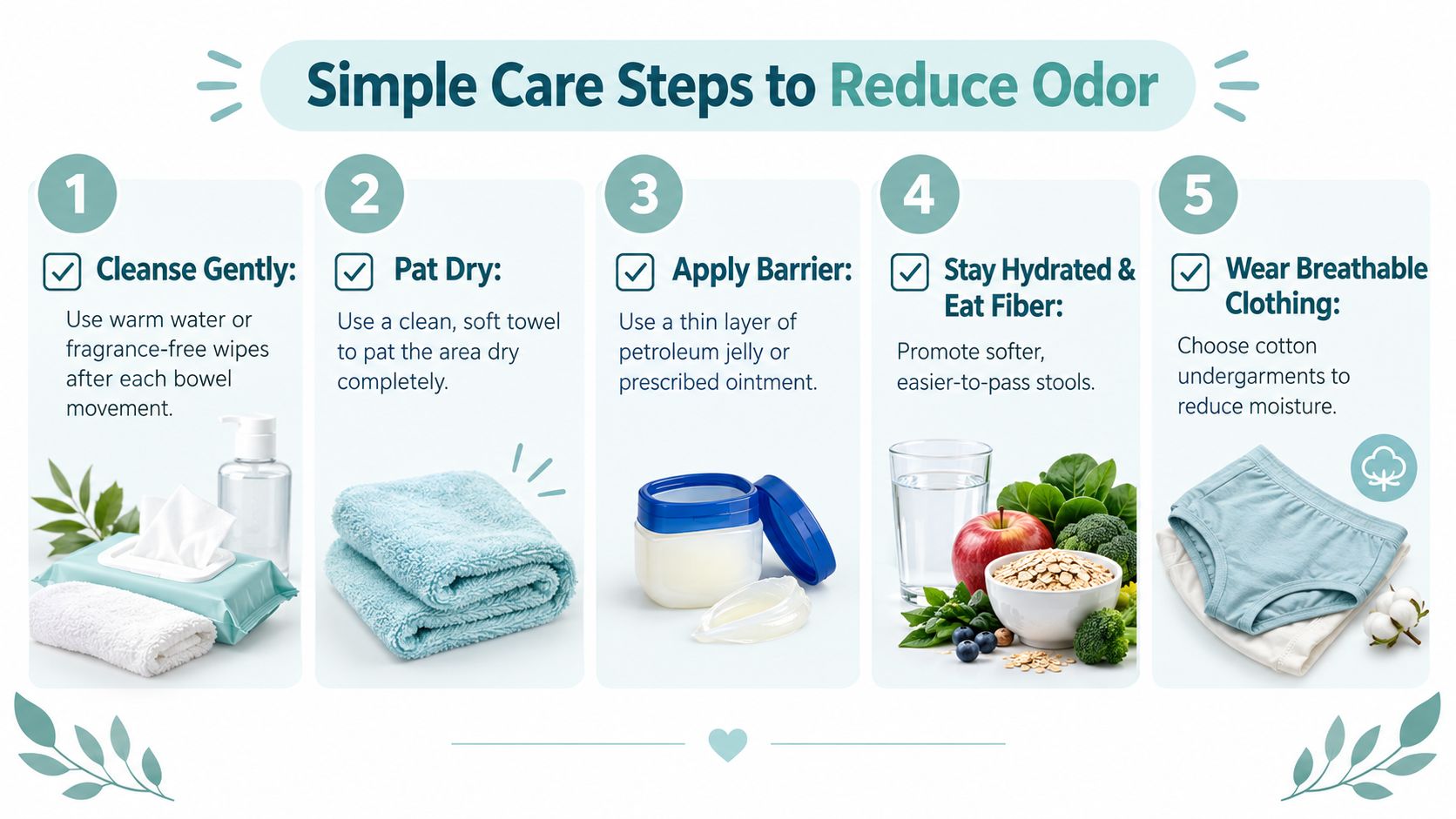
A calm, consistent routine is usually safer than aggressive cleaning. The aim is to remove residue, protect irritated skin, and make stool easier to pass.
- Clean gently after bowel movements. Use warm water or a fragrance-free wipe on the external area. Don't scrub inside the anal canal.
- Pat dry completely. Remaining moisture can keep the skin irritated. Use a clean, soft towel and press gently.
- Add a thin barrier if needed. Petroleum jelly or zinc oxide may protect external skin from moisture and friction. Avoid putting products inside the anus unless a clinician specifically tells you to.
- Support softer stools. Include fiber-rich foods gradually, drink fluids, and avoid straining. If constipation continues, discuss stool-softening options with a healthcare professional.
- Choose breathable clothing. Cotton underwear and looser clothing can reduce trapped moisture.
A warm sitz bath can rinse residue and relax the area after a bowel movement. Follow this guide to doing a sitz bath at home, and use warm rather than scalding water.
Managing discomfort
Pain relief can make gentle cleansing easier, but a numbing product doesn't treat an underlying infection or repair the cause of a fissure. If you're considering an external topical anesthetic, Revivol-XR 5% Lidocaine Numbing Cream is labeled for temporary relief of localized pain, itching, and burning associated with hemorrhoidal and anorectal irritation. Follow the label carefully, don't exceed the stated use, and stop and seek medical advice if bleeding occurs or symptoms worsen.
Consistency matters more than intensity. A gentle rinse, full drying, stool support, and reduced friction can remove the conditions that allow ordinary odor to linger.
When to See a Doctor and What Relief Looks Like
Arrange a healthcare visit for persistent odor, repeated discharge, significant bleeding, or symptoms that don't improve with careful home care. Seek prompt evaluation for foul-smelling drainage with pus, fever, swelling, or increasing pain.
A provider may begin with your symptom history and a gentle external examination. Depending on the findings, they may discuss stool softeners, prescription treatments such as nitroglycerin or diltiazem, or other options. Surgery, including lateral internal sphincterotomy, is generally reserved for selected chronic cases and isn't the first step for everyone.
For a realistic recovery overview, read how long a fissure can take to heal. An uncomplicated fissure often heals within four to six weeks, while a chronic or infected problem may need treatment aimed at the underlying cause, according to the clinical reference cited earlier.
The most useful takeaway is straightforward: a fissure usually hurts and bleeds, but it doesn't normally smell. If you notice odor, check whether it disappears after gentle cleansing. If it persists or comes with drainage, fever, swelling, worsening pain, or bleeding, contact a healthcare provider.
Revivol-XR offers external cleansing, sitz bath, and temporary topical comfort options for people managing fissure-related irritation and difficult bathroom routines. Visit Revivol-XR to review the available products, follow each label carefully, and contact a healthcare provider for persistent, severe, or bleeding symptoms.