FAST & FREE 📦 3-DAY SHIPPING!*

Most people don’t realize their daily routine is actually making their hemorrhoids worse.
I once spoke with a project manager who dreaded the end of every quarter... and not just because of the long nights staring at spreadsheets. It was the personal, painful problem that always seemed to show up right on schedule. As deadlines got closer, she could count on an uncomfortable hemorrhoid flare-up.
For years, she blamed the extra coffee, the greasy takeout, and all those hours glued to her chair. It never once crossed her mind that the immense pressure she felt mentally was creating a very real physical pressure somewhere else entirely.
Your gut is listening to your stress... and it’s not happy about it.
This isn’t just a hunch... it's a well-documented biological reality. Your brain and your digestive system are in constant conversation through a network known as the gut-brain axis. Think of it as a direct hotline connecting your emotions to your digestive tract.
When your brain picks up on high stress levels... from work, family, or general anxiety... it starts sending out emergency signals. These signals can send your digestive system into a tailspin, leading to constipation or diarrhea... both major triggers for hemorrhoids.
That project manager’s story isn’t about spreadsheets... it was about realizing that her mental state had a direct, painful impact on her physical health.
So, can you get hemorrhoids from stress? Yes, but stress doesn't magically create a hemorrhoid. It kicks off a chain reaction that sets the perfect stage for one.
This reaction starts with the gut-brain axis. When you’re stressed, your body releases hormones like cortisol. Think of these as emergency dispatchers that start rerouting your body's resources. Unfortunately, your digestive system is often the first to get its wires crossed.
For some people, stress hits the accelerator on their digestive system, leading to diarrhea and stomach cramps. The constant irritation from wiping can make existing hemorrhoids angry, swollen, and more likely to bleed.
For many others, stress slams on the digestive brakes, leading to constipation. Your system slows down, making stools harder to pass. This almost always leads to straining on the toilet... a textbook trigger for hemorrhoids. That intense pressure on the veins in your rectum is exactly what causes them to swell and bulge.
This infographic breaks down that stress-to-symptom pathway perfectly.
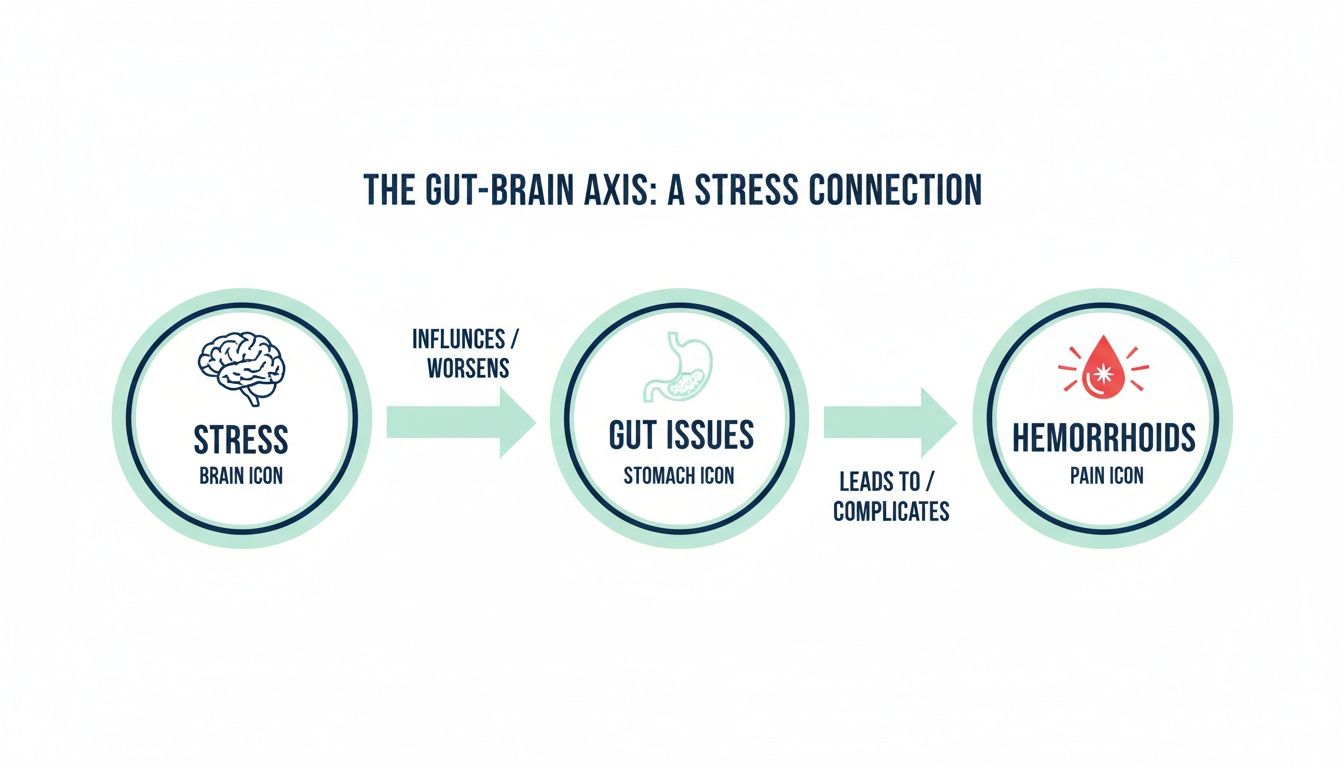
As you can see, the connection between what's happening in your head and the pain in your backside is surprisingly direct.
The link between a stressful day and a painful flare-up isn't just a coincidence. Here’s a clear breakdown of the physical and behavioral domino effect that stress sets off.
| Stress Response | Effect on the Body | How It Leads to Hemorrhoids |
|---|---|---|
| Hormonal Changes | The body releases cortisol, which can slow down or speed up digestion. | This disruption leads directly to either constipation (and straining) or diarrhea (and irritation). |
| Behavioral Shifts | We tend to eat "comfort foods," exercise less, and drink less water. | Low-fiber diets and dehydration result in harder stools, making straining on the toilet almost inevitable. |
| Increased Sedentary Time | High-stress jobs often involve long hours of sitting. | This puts constant downward pressure on the veins in the rectum. |
| Muscle Tension | We unconsciously clench our muscles, including the pelvic floor. | This constant tension can restrict blood flow in the rectal area, contributing to vein swelling. |
This table shows how stress attacks from multiple angles... disrupting your internal systems, changing your daily habits, and creating physical tension... all of which create the perfect conditions for hemorrhoids to form or flare up.
On top of the direct hormonal hit to your gut, stress also sabotages our healthy habits... often without us even realizing it. When life gets overwhelming, self-care is usually the first thing to go.
When you put it all together, the connection is crystal clear. The psychological stress in your mind sends signals that throw your gut into chaos, creating a cascade of physical problems that end in painful hemorrhoids.
It’s bad enough when stress triggers a hemorrhoid flare-up. But what happens when the hemorrhoid itself becomes a massive source of stress? This kicks off a frustrating and exhausting feedback loop... the physical pain fuels mental anxiety, and that anxiety just makes the physical symptoms worse.
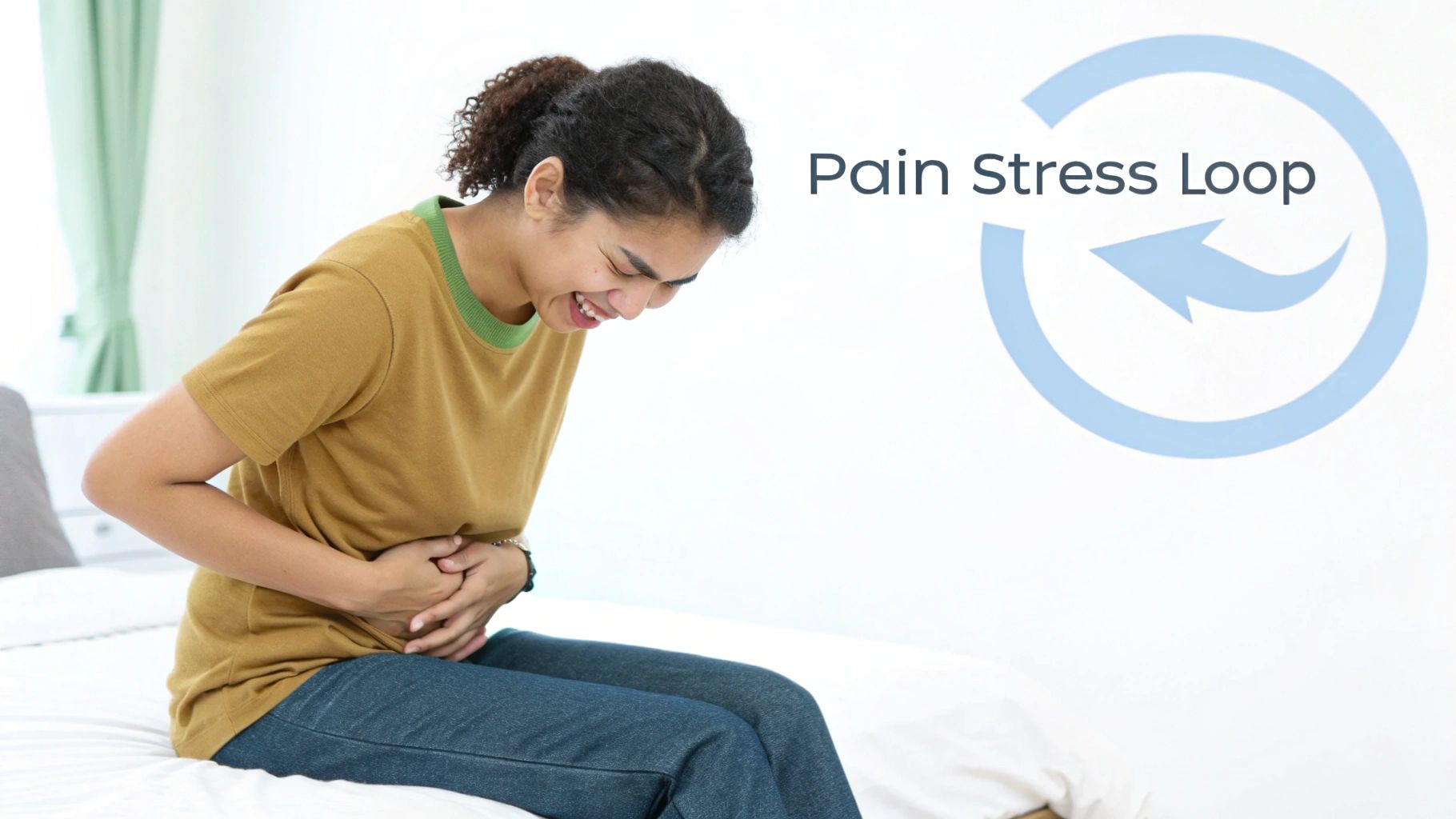
Dealing with the chronic discomfort, itching, and bleeding from hemorrhoids takes a real psychological toll. It's not just the physical pain... it's the constant worry that comes with it. You might feel embarrassed, anxious about social plans, or always on edge.
This isn't just in your head. It’s a real physiological response. That constant worry pumps out more stress hormones which, as we've covered, can mess with your digestion, tense up your pelvic muscles, and slow down your body's ability to heal.
Let's go back to that project manager. A few months after her quarterly deadline flare-ups, she had a huge presentation coming up. She wasn't just nervous about public speaking... she was terrified of having a painful flare-up right before she had to stand in front of the entire team.
That specific fear became a self-fulfilling prophecy. Her anxiety about a flare-up was so intense that it triggered the exact stress response... and the constipation... she was dreading. The day before her big presentation, she was in pain and miserable.
The psychological weight often makes the physical burden heavier. People with hemorrhoids often report feeling shame and isolation, which only adds more stress to the pile. This is especially true for women... about 40% of pregnant and postpartum mothers experience hemorrhoids from the combined physical strain and hormonal stress of childbirth.
This cycle can make you feel completely trapped. The pain causes anxiety, and the anxiety makes the pain worse... especially at night when you're just trying to get some rest. Focusing on immediate relief is one of the most powerful ways to break this cycle.
When you manage the pain, you reduce the source of your anxiety, giving your body and mind a chance to calm down and heal. You can learn some specific strategies in our guide on how to relieve hemorrhoid pain at night.
We know that a bout of intense stress can trigger a hemorrhoid flare-up. But what happens when the mental health struggle isn't just a temporary spike in anxiety, but a longer-term condition like depression? As it turns out, the connection runs much deeper than just a bad day.
It's not just a hunch, either. A growing body of scientific evidence points to a powerful, two-way street between your mental state and your rectal health. This isn't a simple cause-and-effect relationship... it's a complex cycle where each condition can fuel the other.
Some groundbreaking genetic research really put this connection into focus. One massive analysis revealed that individuals with a genetic predisposition to depression had a 20% higher risk of developing hemorrhoids.
But here’s where it gets interesting: the link goes in the other direction, too. The same study found that people who already had hemorrhoids showed a 7% greater risk of later developing depression. This confirms what many have suspected... the mental toll of depression can set the stage for physical problems, and the chronic pain of hemorrhoids can wear down your mental resilience.
So, how exactly does feeling down translate into a literal pain in the butt? The link lies in the subtle but significant changes to daily habits and bodily functions that often come with depression.
Effectively managing hemorrhoids isn't just about creams and sitz baths. It’s also about tending to your mental well-being. A healthy mind is a cornerstone of a healthy body, right down to the very end.
Knowing that stress can trigger hemorrhoids is the first step. But actually breaking that cycle is where you'll find real relief. You have to calm your gut and your mind at the same time.

Your digestive system is often the first to feel the effects of stress. The goal here is simple: make every bowel movement as easy and strain-free as possible.
You don't need some elaborate meditation retreat to lower your stress levels. Small, consistent actions can make a world of difference.
One of the most powerful tools is diaphragmatic breathing, also known as belly breathing. Just inhale deeply through your nose, let your belly expand, and then exhale slowly. This can almost immediately lower your heart rate and calm your nervous system.
Movement is another fantastic tool. Even a short, brisk walk for 10-15 minutes can release endorphins and help get your digestive system back on track. Learning how exercise helps hemorrhoids can be a great motivator to get moving.
It's nearly impossible to break the stress cycle when you're in constant pain. That’s why getting fast, effective relief for your symptoms is such a critical part of the puzzle.
For quick relief, a product like Revivol-XR Advanced Hemorrhoid Cream can be a lifesaver. It contains 5% lidocaine, the maximum strength you can get without a prescription, to numb the area fast. This immediate comfort helps break the pain-anxiety loop.
For overall soothing, try a warm soak. Using therapeutic salts like Revivol-XR 20-in-1 Sitz Bath Salts can provide incredible relief. The warm water helps relax tense pelvic floor muscles while soothing irritated skin. It’s a simple ritual that calms both your body and your mind.
While managing stress and at-home remedies can make a world of difference, there are times when you absolutely need a professional opinion. Self-care is a great first step, but it’s no substitute for a doctor’s diagnosis.
Seeing a doctor isn't just about getting treatment... it's also about ruling out more serious conditions and getting peace of mind. For the project manager, visiting her doctor was a game-changer. It was the first time a professional linked her chronic stress to her flare-ups.
Don't put it off. If you experience any of the following warning signs, it’s time to book an appointment.
It's natural to have more questions when you start connecting the dots between your mind and body. Here are some straightforward answers to the questions we hear most often.
Absolutely. When you feel anxious, your body kicks into the same "fight or flight" mode it does under stress.
This response can wreak havoc on your digestive system, leading to constipation or diarrhea. It can also make you clench your pelvic muscles, putting direct pressure on sensitive rectal veins and easily sparking a flare-up.
The healing time really depends on the person. A minor flare-up might clear up within a week if you're actively managing your stress, adjusting your diet, and using over-the-counter care.
But if your stress is a constant problem, the hemorrhoids might stick around or keep coming back. The flare-ups will likely continue until the root of the issue... the stress itself... is brought under control.
For quick, immediate relief, you’ll want to soothe the area directly. A warm sitz bath is a fantastic first step... it provides instant comfort and helps relax tense muscles.
After you gently pat the area dry, applying a topical cream with a numbing agent is your next move. Look for a cream with 5% lidocaine like the one in Revivol-XR's Advanced Cream. It works fast to dial down both the pain and the swelling.
For fast, effective relief that calms both the symptoms and the stress they cause, trust Revivol-XR. Our doctor-trusted formulas are designed to provide maximum strength care so you can get back to feeling like yourself again. Explore our solutions at https://hemorrhoid.com.