Do Kegel Exercises Help with Hemorrhoids? A Complete Guide

Most people don’t realize that the secret to lasting hemorrhoid relief might be an invisible exercise you can do anywhere, anytime.
Experience
I once spoke with a new mother who was at her wit's end. She had tried every cream, every diet change, and every cushion she could find. Nothing seemed to offer more than temporary relief from the constant, throbbing pain of her postpartum hemorrhoids. She felt defeated, believing this was just her new reality. She was doing everything right on the outside, but she was missing a key piece of the puzzle... the inside. She had no idea the root cause wasn't just about pressure from the outside, but a lack of support from within.
Label
True hemorrhoid relief isn't just about soothing symptoms... it's about rebuilding your internal support system.
Main Point
The foundation of that support system is your pelvic floor. Think of it as a muscular hammock that holds up your rectum. When pregnancy, chronic straining, or even just sitting for long periods weakens this hammock, it can’t support the veins in your rectum properly. This leads to poor blood flow and causes the veins to swell into painful hemorrhoids. This is where the question “do kegel exercises help with hemorrhoids?” gets a clear answer. By strengthening this muscular hammock, Kegels improve blood circulation, reduce straining during bowel movements, and provide the structural support needed to prevent flare-ups. You're not just treating the pain; you're fixing the underlying mechanical issue.
For that new mother, incorporating Kegels was a game-changer. It addressed the core weakness left behind by childbirth.
Take Action
- Identify the Right Muscles: The next time you urinate, try to stop the flow mid-stream for a second. Those are your pelvic floor muscles. Don't make a habit of this, just use it to find the muscles.
- Practice the Squeeze: Lie down comfortably. Squeeze and lift those muscles, hold for 5 seconds, then completely relax for 5 seconds.
- Build a Routine: Aim for 3 sets of 10-15 repetitions every day. Consistency is more important than intensity.
- Combine with External Care: Use a soothing cream like Revivol-XR for temporary relief of symptoms while you build internal strength.
Final Thought
That new mother’s breakthrough wasn’t about finding a miracle cure... it was about understanding that hemorrhoid care is a two-part system. You need to soothe the external symptoms while actively strengthening your internal foundation.
Understanding Your Pelvic Floor and Its Role in Hemorrhoid Health
Before you can strengthen a muscle, you have to know where it is and what it actually does. Picture your pelvic floor as a sturdy, flexible hammock of muscles slung across the base of your pelvis. It’s responsible for holding up your bladder, uterus (if you have one), and... most importantly for our chat... your rectum.
This muscular support system is the unsung hero of your core, helping you control bowel movements and keeping blood flowing smoothly down there. When these muscles are strong and healthy, they create a solid foundation that takes the pressure off those delicate rectal veins.
But when the pelvic floor gets weak or is constantly strained, that support system starts to give way. The organs it holds can droop a little, putting direct, downward pressure on your rectum. This constant pressure makes it tough for blood to leave the veins, which is what causes them to swell up into painful hemorrhoids.
Common Causes of Pelvic Floor Weakness
Several everyday life events and habits can weaken these critical muscles over time. It’s rarely just one thing; more often, it's a mix of factors that leads to trouble. Once you understand the causes, you’ll see why exercises like Kegels can be so helpful.
Here are some of the most common culprits:
- Pregnancy and Childbirth: The sheer weight of a growing baby, plus the intense strain of delivery, puts an incredible amount of stress on the pelvic floor, often leaving it stretched and weak.
- Chronic Straining: If you’re constantly pushing to have a bowel movement due to constipation, you’re not doing yourself any favors. This repeated pressure weakens the muscles and directly irritates the rectal veins. It’s a big reason why managing constipation and hemorrhoids are so closely linked.
- Persistent Coughing: A chronic cough from something like bronchitis, or even just a nasty cold that won't quit, creates repetitive downward pressure that strains the pelvic floor.
- Heavy Lifting: Lifting heavy objects the wrong way, without properly engaging your core, forces all that pressure downward and straight onto these muscles.
- Age and Inactivity: Just like any other muscle in your body, the pelvic floor can weaken if it isn't exercised, especially if you lead a more sedentary lifestyle.
This image helps visualize the link between a weak pelvic floor, the increased pressure on rectal veins, and how Kegels can step in to provide much-needed support.
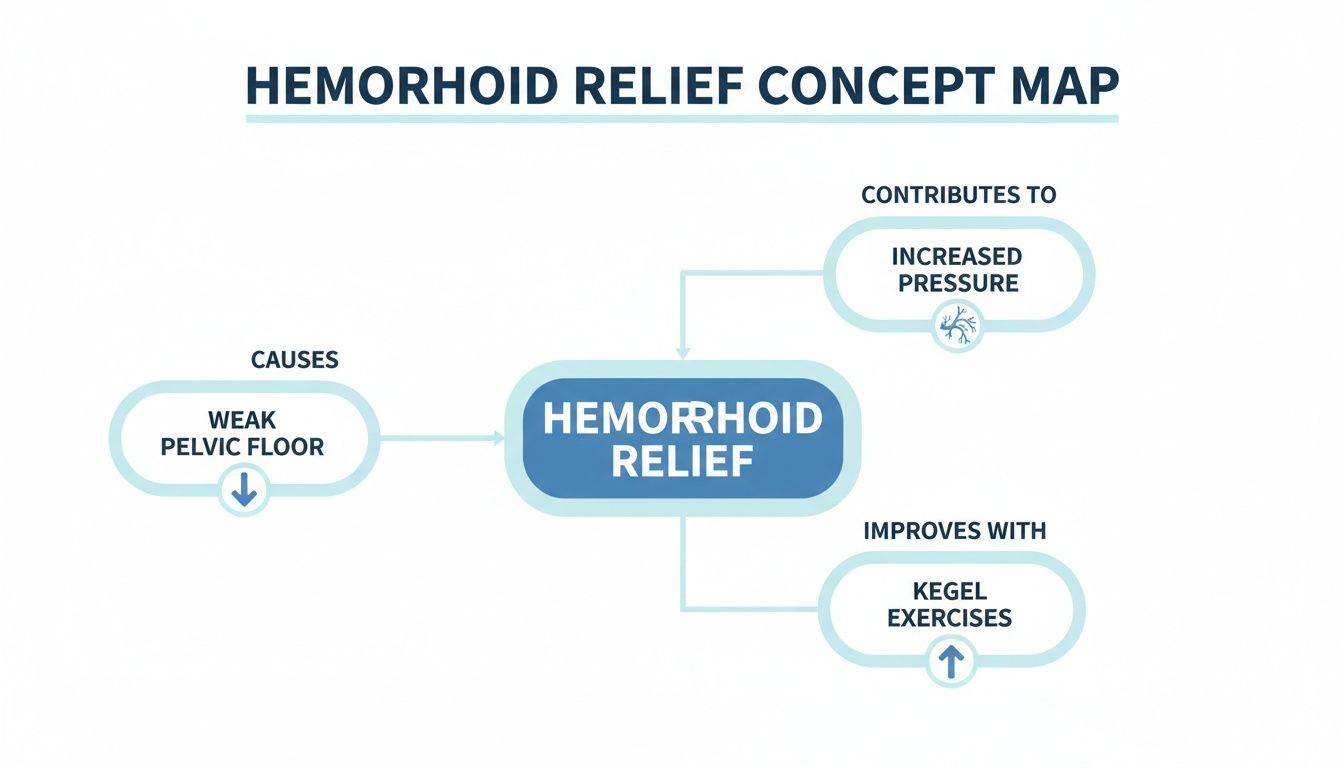
As you can see, strengthening the pelvic floor through Kegels can turn this situation around by building up muscular support and getting your circulation back on track.
When you ask, "do Kegel exercises help with hemorrhoids?," the answer is all about this connection. By targeting these specific muscles, you’re tackling one of the root causes of the pressure... not just putting a bandage on the symptoms.
The Evidence Behind Kegels for Hemorrhoid Symptoms
It’s fair to wonder if a simple, invisible exercise can actually do anything for a painful problem like hemorrhoids. The good news is that this isn't just wishful thinking... there's solid science to back it up. Researchers have looked closely at how strengthening the pelvic floor impacts hemorrhoid symptoms, and what they've found is pretty encouraging.

This isn't just some old folk remedy. The connection between a strong pelvic floor and hemorrhoid relief is rooted in basic anatomy and circulation. When you consistently perform Kegels, you’re directly improving the very systems that allow hemorrhoids to form in the first place. It’s an active way to manage a frustrating problem from the inside out.
How Kegels Mechanically Provide Relief
So, what’s really going on inside your body when you do a Kegel? It’s a combination of better blood flow, less strain, and improved physical support. Each squeeze works to bring things back into balance right where it’s needed most.
Here's a breakdown of the key mechanisms:
- Improved Venous Return: Strong pelvic floor muscles act like a gentle pump. When you contract them, you help push stagnant blood out of those swollen rectal veins and back into circulation. This directly reduces the painful swelling.
- Reduced Straining Pressure: A toned pelvic floor gives you much better control during bowel movements. That means less pushing and straining, which is one of the biggest culprits behind hemorrhoid flare-ups.
- Better Structural Support: Think of it like reinforcing the foundation of a house. A stronger muscular "hammock" gives better support to the tissues in your rectum, keeping them from bulging out under pressure.
These physical changes lead directly to less pain, itching, and swelling. A landmark 2009 study offered compelling proof. The research showed that people who added a daily Kegel routine to their standard treatments saw highly statistically significant improvements in their hemorrhoid symptoms compared to those who didn't. You can read the full research about these powerful findings.
Who Benefits Most from Kegel Exercises
While Kegels can be helpful for many, they seem to work best for people with mild to moderate hemorrhoids, specifically grades I-III. This is because the exercises directly address the underlying muscle weakness and poor circulation that often lead to these earlier stages.
Important Takeaway: Kegels are a proactive, evidence-backed strategy for managing hemorrhoid symptoms by improving blood flow and reducing strain. They are most effective for mild to moderate cases.
For anyone in these stages, making Kegels a daily habit can bring a noticeable drop in flare-ups and discomfort. It's a powerful tool for your self-care routine, giving you the power to tackle one of the root causes of the problem. So when you ask, do Kegel exercises help with hemorrhoids, this growing body of evidence gives a clear and confident "yes."
Your Step-by-Step Guide to Performing Kegels Correctly
Getting the hang of Kegels can feel a little strange at first. You’re trying to work muscles you can’t see, after all. But doing them the right way is what makes all the difference, and it’s easier than you think once you know what to look for.
Doing Kegels incorrectly is mostly just a waste of time, but it can occasionally make symptoms worse. To really find out if they can help your hemorrhoids, mastering the form is non-negotiable. This guide will walk you through it.
Finding Your Pelvic Floor Muscles
First things first, you have to pinpoint the right muscles. Think of it like this: the next time you're using the bathroom, try to stop the flow of urine midstream. That internal squeeze-and-lift sensation? Those are your pelvic floor muscles.
Important: This is just a one-time trick to identify the muscles, not a regular exercise. Repeatedly stopping your urine flow can mess with your bladder's normal function. Once you've got that feeling down, you’ve found your target.
Now you know exactly which muscles to engage. You can do the exercises anywhere, anytime, without needing to be in the bathroom. The trick is to isolate these muscles and only these muscles.
Mastering the Correct Technique
Proper form is everything. It's not about clenching with all your might. It’s about a smooth, controlled contraction followed by a complete, deliberate release. A lot of people make the mistake of squeezing their abs, thighs, or glutes, which means they aren’t isolating the pelvic floor. And remember to breathe! Holding your breath is a common mistake.
Just follow these simple steps to nail your technique:
- Get Comfortable: You can do Kegels anywhere... lying down, sitting at your desk, or standing in line. When you’re just starting, it’s often easiest to lie on your back with your knees bent.
- Squeeze and Lift: Gently tighten your pelvic floor muscles, imagining you’re both closing the area and lifting it upward and inward. It’s that same "stop the flow of urine" feeling.
- Hold It: Hold that squeeze for about 5 seconds. If you can only manage 2-3 seconds at first, that’s perfectly fine. You’ll build up from there.
- Relax Completely: Let go of the contraction and completely relax for 5 full seconds. This rest period is just as crucial as the squeeze. It lets the muscles recover and prevents them from getting overworked.
- Repeat: Aim for about 10 repetitions to complete one set.
Consistency is what builds strength and gets you results. Try to work in a few sets throughout your day. Nobody will even know you’re doing them!
Beginner's Kegel Exercise Routine
Getting started is the most important part. Don't worry about hitting big numbers right away. Focus on correct form and gradually build up your strength. This simple routine is a great place to start.
| Action | Duration / Reps | Frequency |
|---|---|---|
| Contract (Squeeze) | Hold for 3-5 seconds | Aim for 3 sets per day |
| Relax Completely | Relax for 5 seconds | (e.g., Morning, Afternoon, Evening) |
| Repetitions | 10-15 reps per set | Consistency is key! |
Once this feels comfortable, you can slowly increase the hold time, working your way up to 10 seconds per contraction. Listen to your body and don’t push it too hard, especially at the beginning.
When You Should Avoid Kegel Exercises for Hemorrhoids
While Kegels are a fantastic tool for many, they aren't a one-size-fits-all fix for hemorrhoid troubles. In fact, for some people, doing Kegels can pour fuel on the fire and make the problem much worse. It all boils down to what’s really going on with your pelvic floor muscles.
More strengthening isn’t always the answer. Sometimes, the issue isn't weakness but the complete opposite: your pelvic floor muscles are already too tight. This is known as a hypertonic pelvic floor, a state of constant tension. Imagine flexing your bicep and just… never letting it relax. Eventually, it becomes exhausted, overworked, and painful.
Recognizing a Hypertonic Pelvic Floor
When these muscles are clenched too tightly, they can’t relax properly, which is a big problem for bowel movements. This tension can worsen constipation and straining, putting even more pressure on sensitive hemorrhoids. Adding Kegels to this situation is like trying to fix a muscle cramp by flexing even harder... it only increases the pain and dysfunction.
You might have a hypertonic pelvic floor if you’re dealing with any of these issues:
- Persistent Pelvic Pain: A nagging, deep ache in your pelvis, genitals, or rectum.
- Painful Intercourse: Discomfort either during or after sex.
- Difficulty with Bowel Movements: Trouble starting or finishing a bowel movement, or that frustrating feeling that you haven't fully emptied.
- Urinary Issues: A urine stream that’s hesitant or weak, or feeling like you have to go all the time.
Crucial Advice: If these symptoms sound familiar, stop doing Kegels immediately. Your focus should shift from tightening the muscles to helping them relax and lengthen.
When to Seek Professional Guidance
If you suspect your pelvic floor is overly tight or if your hemorrhoid symptoms are severe, it's time to get a proper diagnosis. Pushing through with the wrong exercises can prolong your discomfort and get in the way of real healing. You can learn more about how to approach physical activity safely in our guide on working out with hemorrhoids.
Your best bet is to talk to a doctor or, even better, a pelvic floor physical therapist. These specialists are the experts in assessing your specific muscle tone. They can create a personalized plan that might include relaxation techniques, gentle stretches, and biofeedback instead of more strengthening. This ensures you’re actually helping your body heal, not accidentally making things worse.
Combining Kegels With a Smart Self-Care Routine
Kegel exercises are fantastic for building strength from the inside out, but they really shine when you pair them with a solid self-care plan. Think of it this way: Kegels are strengthening your internal foundation, while good habits manage the symptoms you feel on the outside. This two-pronged approach is your fastest route to lasting relief.
A holistic routine gives your body the full support it needs to heal properly. By mixing internal muscle conditioning with external soothing and prevention tactics, you’re tackling hemorrhoids from every possible angle. It’s a strategy that not only helps with current flare-ups but also cuts down the risk of them coming back.
Building Your Comprehensive Relief Plan
Your day-to-day habits play a massive role in keeping hemorrhoid symptoms in check. Even small tweaks to your diet, bathroom routine, and activity level can prevent the straining and pressure that make hemorrhoids so much worse. When you add these habits to your Kegel routine, you create the perfect environment for healing to take place.
Here are the essential pillars of a smart self-care plan:
- Focus on Fiber and Hydration: Make it a goal to get 25-35 grams of fiber every day from foods like fruits, veggies, and whole grains. And don't forget to drink plenty of water... it keeps stools soft and easy to pass, which is the key to reducing straining.
- Improve Toilet Habits: Try not to linger on the toilet, as sitting too long puts a ton of pressure on those rectal veins. When you feel the urge to go, go... but never force it. A small footstool can also be a game-changer, putting your body in a more natural squatting position for easier bowel movements.
- Stay Active: You don’t need an intense workout. Just a simple walk for 20-30 minutes a day gets your blood moving and improves circulation everywhere, including the rectal area. Better circulation helps reduce the blood pooling that leads to swelling.
Adding Targeted, Fast-Acting Relief
While Kegels and lifestyle changes are your long-term prevention strategy, sometimes you just need relief right now from the pain, itching, and swelling. This is where combining your efforts with effective topical treatments makes a world of difference.
For immediate comfort, consider using our Revivol-XR Advanced Hemorrhoid & Fissure Cream. It contains lidocaine for temporary relief of pain and phenylephrine to temporarily shrink swollen hemorrhoidal tissue, giving you temporary relief while your internal muscles get stronger.
A warm soak can also work wonders. Adding our Revivol-XR Sitz Bath Soak Mix to the water makes for a soothing, comforting soak. You can learn more about the benefits in our guide to using a sitz bath for hemorrhoids.
This multi-faceted approach combines the internal support from your exercises with the external, fast-acting relief from trusted products. The power of Kegels has even been shown to reduce pain after hemorrhoid surgery. By helping relax pelvic muscles, they offer a non-invasive way to control discomfort during recovery.
A Few Common Questions About Kegels and Hemorrhoids
Starting any new exercise for a sensitive area is bound to bring up some questions. It's smart to get clear, straightforward answers so you can feel confident and safe as you start working toward relief. Here are some of the most common things people ask when they begin looking into Kegels for hemorrhoid care.
How Long Until I See Results?
This is a game of patience. Just like strengthening any other muscle, it takes time, especially with a group of muscles you're not used to isolating. Most people begin to feel a real difference in their symptoms after a few weeks to a few months of consistent, daily practice.
Consistency will always beat intensity here. You'll get much better, more sustainable results by doing 3 sets of 10-15 repetitions every single day than you would from one long, exhausting session once a week. Stick with it, and you will gradually build the internal support system you need for lasting relief.
Is It Safe to Do Kegels While Pregnant?
In most cases, yes. In fact, Kegels are frequently recommended during pregnancy to help prepare the pelvic floor for childbirth and speed up postpartum recovery. They can be a perfectly safe and effective way to manage pregnancy-related hemorrhoids by boosting circulation and support.
That said, every pregnancy is unique.
Always check with your doctor or OB/GYN before starting any new exercise routine, including Kegels. They can give you advice that's tailored to your specific health situation and make sure it’s a safe choice for you and your baby.
Can Kegels Actually Make Hemorrhoids Worse?
This is a great question, and the answer is yes, they absolutely can… but only if they're done incorrectly or if your pelvic floor is already too tight (hypertonic). As we covered earlier, a hypertonic pelvic floor doesn't need more strengthening. Trying to squeeze muscles that are already tense can ramp up pain and worsen constipation, which only aggravates hemorrhoids.
If you feel any pain or notice your symptoms getting worse, stop immediately and talk to a doctor or physical therapist. Proper form is everything. You should only be feeling the contraction in your pelvic floor muscles, not in your abs, butt, or thighs.
Is the Technique Different for Men and Women?
The fundamental action... isolating, squeezing, and lifting the pelvic floor muscles... is exactly the same for everyone. The end goal is to strengthen that muscular "hammock" that holds up the rectum and other organs.
The way we find those muscles is sometimes described a little differently. Women are often told to imagine stopping the flow of urine. Men can use that same cue, or they might find it easier to think about retracting the penis or stopping the passage of gas. The internal feeling and the exercise itself are identical.
While you're building that internal strength with Kegels, you still need relief from the pain and discomfort you're feeling right now. Revivol-XR offers a complete care system designed to soothe, numb, and temporarily shrink swollen tissue. Our Advanced Hemorrhoid & Fissure Cream provides temporary multi-symptom relief to help you feel comfortable again. Explore our full line of solutions at hemorrhoid.com.