Can I Work Out With Hemorrhoids? Safe Exercise Guide

- Can I Work Out With Hemorrhoids? Your Safe Exercise Guide
- Working Out With Hemorrhoids: 7 Dos and Don'ts for the Gym
- The Truth About Exercise and Hemorrhoids: What's Safe & What's Not
- Can I Work Out With Hemorrhoids? How to Modify Your Routine for Relief
- How to Safely Work Out With Hemorrhoids (Without Making Them Worse)
Can I Work Out With Hemorrhoids? Your Guide to Safe Exercise
Most people don’t realize their daily workout routine could be making their hemorrhoids dramatically worse.
It’s a frustrating catch-22. You know exercise helps with hemorrhoids, but the idea of hitting the gym during a painful flare-up seems impossible. The good news? You absolutely can work out with hemorrhoids. In fact, gentle movement is one of the best things for them. The trick isn't to stop exercising altogether... it’s to temporarily modify what you’re doing.
Swapping high-pressure, straining exercises for low-impact activities boosts circulation to the area, which can speed up healing and even help prevent future problems.
The Smart Way To Exercise With Hemorrhoids
I once had a client, a dedicated weightlifter, who was terrified of losing his progress during a bad flare-up. He tried to push through his usual heavy squats and deadlifts, but all it did was make the pain and swelling dramatically worse. He felt stuck... believing he had to choose between his fitness goals and his physical comfort.
It’s a story I hear all the time. You want to stay active, but you’re worried about making a bad situation even more unbearable. Luckily, you don’t have to choose. The secret isn't stopping, it's swapping. You just need to trade those high-strain movements for activities that get your blood flowing without putting a ton of pressure on the sensitive rectal area.
Your biggest win during a flare-up is consistency, not intensity.
Think of it as a strategic detour in your fitness journey. Pushing through the pain is the worst thing you can do, as it will only set your recovery back. By understanding which exercises help and which ones hurt, you can keep your body moving without derailing your recovery. This simple shift in focus allows you to keep moving with confidence, knowing you’re helping your body recover instead of working against it.
Safe vs High-Risk Exercises
When you're in pain, the last thing you want to do is guess which exercises are okay. To make it simple, I’ve broken down the good from the bad in this quick-reference guide.
Here’s a simple table to help you distinguish between exercises that support healing and those that are best avoided during a flare-up.
| Exercise Category | Safe Choices (Low Pressure) | High-Risk Choices (Avoid During Flare-Ups) |
|---|---|---|
| Cardio | Walking, Swimming, Elliptical, Light Cycling (on a comfortable seat) | Running/Sprinting, High-Intensity Interval Training (HIIT), Spinning |
| Strength Training | Glute Bridges, Clamshells, Bird-Dog, Bodyweight Leg Lifts | Heavy Squats, Deadlifts, Leg Presses, Abdominal Crunches |
| Flexibility & Mind-Body | Yoga (avoid deep squats), Tai Chi, Stretching | Certain Pilates moves (e.g., The Hundred), Poses requiring deep core contraction |
The table makes it clear: stick with low-impact, steady-state movements and put the high-intensity, heavy-lifting sessions on hold until you feel better.
This infographic gives you an even clearer visual breakdown of what to aim for versus what to avoid.
The takeaway here is pretty straightforward. Activities that promote gentle circulation are your best friends right now. Anything that causes intense abdominal pressure or straining should be benched until you’ve healed.
This simple shift in focus allows you to keep moving with confidence, knowing you’re helping your body recover instead of working against it.
Why Certain Exercises Make Hemorrhoids Worse
To figure out why some exercises are a definite no-go during a flare-up, we need to talk about one core concept: intra-abdominal pressure. Think of it as the pressure building up inside your abdomen. When that pressure spikes, it can make an already bad hemorrhoid situation much, much worse.
It’s like trying to over-inflate a bicycle tire. That intense, building pressure is precisely what happens inside your core when you strain the wrong way. The classic example is holding your breath while lifting something heavy.
The good news? Once you understand this principle, you can move beyond a simple list of "bad" exercises. You'll start to develop an intuition for making smarter choices about every movement in your routine.
The Role of Straining and Pressure
When you do movements like a heavy squat, leg press, or even old-school sit-ups, you naturally tense your abs. If you hold your breath at the same time... a technique called the Valsalva maneuver... you send that internal pressure through the roof.
This pressure forces blood down into the delicate veins around your rectum, causing them to swell and bulge. It’s the very same physical process that happens when you strain on the toilet, which is one of the biggest culprits behind hemorrhoids in the first place. You can learn more about the link between constipation and hemorrhoids in our detailed guide.
Which Athletes Are Most at Risk?
It’s no surprise, then, that people who do certain types of fitness are at a higher risk of developing or aggravating hemorrhoids. Recent clinical research makes this connection crystal clear.
A major study found that while 34% of all athletes reported having issues with hemorrhoids, the numbers shot up for specific sports. The rate among cyclists and horseback riders soared to 57%, with bodybuilders close behind at 48%.
These activities all share a common thread: prolonged sitting in a fixed position or repetitive, intense straining. Both create sustained intra-abdominal pressure.
By learning to spot and sidestep activities that cause this straining effect, you can protect yourself from more irritation and pain. This lets you stay active while giving your body the best chance to heal.
The Best Exercises For Hemorrhoid Relief
Now for the good news: you don't have to stop moving. In fact, choosing the right exercises can actually help you heal. When you're trying to figure out if you can work out with hemorrhoids, the key is to swap out anything that causes strain for movements that promote healing.
Low-impact cardio is your best friend during a flare-up. Think brisk walking, swimming, or gliding on an elliptical machine.
These activities boost circulation to your pelvic region without the jarring impact you’d get from running. This increased blood flow helps bring down swelling and encourages the regular bowel movements that prevent future issues in the first place.
Gentle Strengthening and Flexibility
Beyond just cardio, some gentle strengthening and flexibility routines offer huge benefits. They help build a stronger, more resilient foundation in your core and pelvic floor, which takes a lot of the daily strain off the area.
Some of the best choices include:
- Yoga and Pilates: Both are brilliant for building core strength, improving posture, and increasing flexibility. Just improving your posture alone can take a surprising amount of pressure off your lower back and rectal area.
- Pelvic Floor Exercises (Kegels): These are a powerful tool for both men and women. The subtle contractions tone the muscles that support your rectum, improving both stability and control.
- Glute Bridges: This is a great way to strengthen your glutes and lower back without putting any direct pressure on sensitive spots.
A six-week study on Pilates found it significantly helped reduce both constipation and internal hemorrhoids, proving that this kind of specialized, low-impact exercise has real, measurable benefits.
This sort of moderate, consistent activity is exactly what you should aim for. Guidelines suggest 20–60 minutes of exercise, 3–5 days per week, to help manage hemorrhoids. You can learn more about the positive effects of exercise on hemorrhoids in our comprehensive article.
How to Perform Kegels Correctly
A lot of people have heard of Kegels, but they aren’t quite sure they’re doing them right. It’s simple once you find the correct muscles... the same ones you’d use to stop urination midstream.
Here’s a quick guide to doing them effectively:
- Get into a comfortable position, either sitting or lying down.
- Tighten your pelvic floor muscles and hold that squeeze for 3-5 seconds.
- Completely relax the muscles for another 3-5 seconds.
- Try to do 10-15 repetitions in a set, aiming for three sets a day.
The best part about Kegels is how discreet they are. You can do them at your desk, in the car, or while watching TV, and no one will ever know. Making them a part of your daily routine is an incredibly simple and effective way to build pelvic strength and support your long-term rectal health.
How to Modify Your Strength Training Routine
For those of us who love to lift, the idea of giving it up completely just isn’t in the cards. The trick is to train smarter, not just harder, especially when you're figuring out if you can work out with hemorrhoids. The single most important change you can make starts with your breath.
Instead of holding your breath during a heavy lift... a risky technique called the Valsalva maneuver... focus on a forceful exhale during the hardest part of the movement. Picture blowing out birthday candles as you push up from a squat. This simple switch is a game-changer for releasing that dangerous internal abdominal pressure.
Prioritize Form Over Weight
When you’re dealing with a flare-up, your goal needs to shift. Forget about hitting a new personal best; it's all about muscular endurance now. This means dropping the weight significantly and upping your repetitions instead.
Improper lifting form is a huge risk factor for hemorrhoids. Common mistakes, like holding your breath and straining with poor posture, can dramatically increase abdominal pressure and cause those rectal veins to swell. In fact, many medical pros recommend that lifters stick to a progressive loading plan, capping sets at around 12 repetitions in early sessions instead of pushing for a one-rep max. You can find more on this from the experts at GoodRx.com.
Make Smart Exercise Swaps
You don’t have to abandon the weight room, but you do need to make some intelligent substitutions to keep from making things worse. The goal is simple: pick exercises that take the direct pressure off your pelvic floor and lower abdomen.
Here are a few easy swaps to get you started:
- Instead of Heavy Barbell Back Squats: Try lighter goblet squats or even just bodyweight squats. Holding the weight in front of you helps you maintain a more upright posture, which eases the strain.
- Instead of Seated Leg Presses: Swap these out for bodyweight lunges or glute bridges. The seated, compressed position of a leg press can be a real problem.
- Instead of Traditional Sit-Ups: Opt for planks or bird-dog poses. These moves strengthen your entire core without the intense crunching that sends internal pressure through the roof.
Making these simple adjustments lets you keep building and maintaining your strength without putting your body at risk. You get to keep your momentum in the gym while giving yourself the space you need to heal properly. It’s a win-win that keeps you active and on the path to feeling better.
A Simple Pre and Post Workout Care Plan
What you do before and after you exercise is just as important as the workout itself. A smart care routine can make a massive difference in your comfort, how quickly you heal, and your ability to stay active. It turns exercise from a potential trigger into a healing activity.
Before You Get Started
Think of this as setting the stage for a pain-free workout. Just a few simple steps can dramatically reduce irritation and friction, making every movement much more manageable.
- Hydrate Well: Start drinking water long before your workout begins. Proper hydration is key to keeping stools soft, which prevents the straining that often causes flare-ups in the first place.
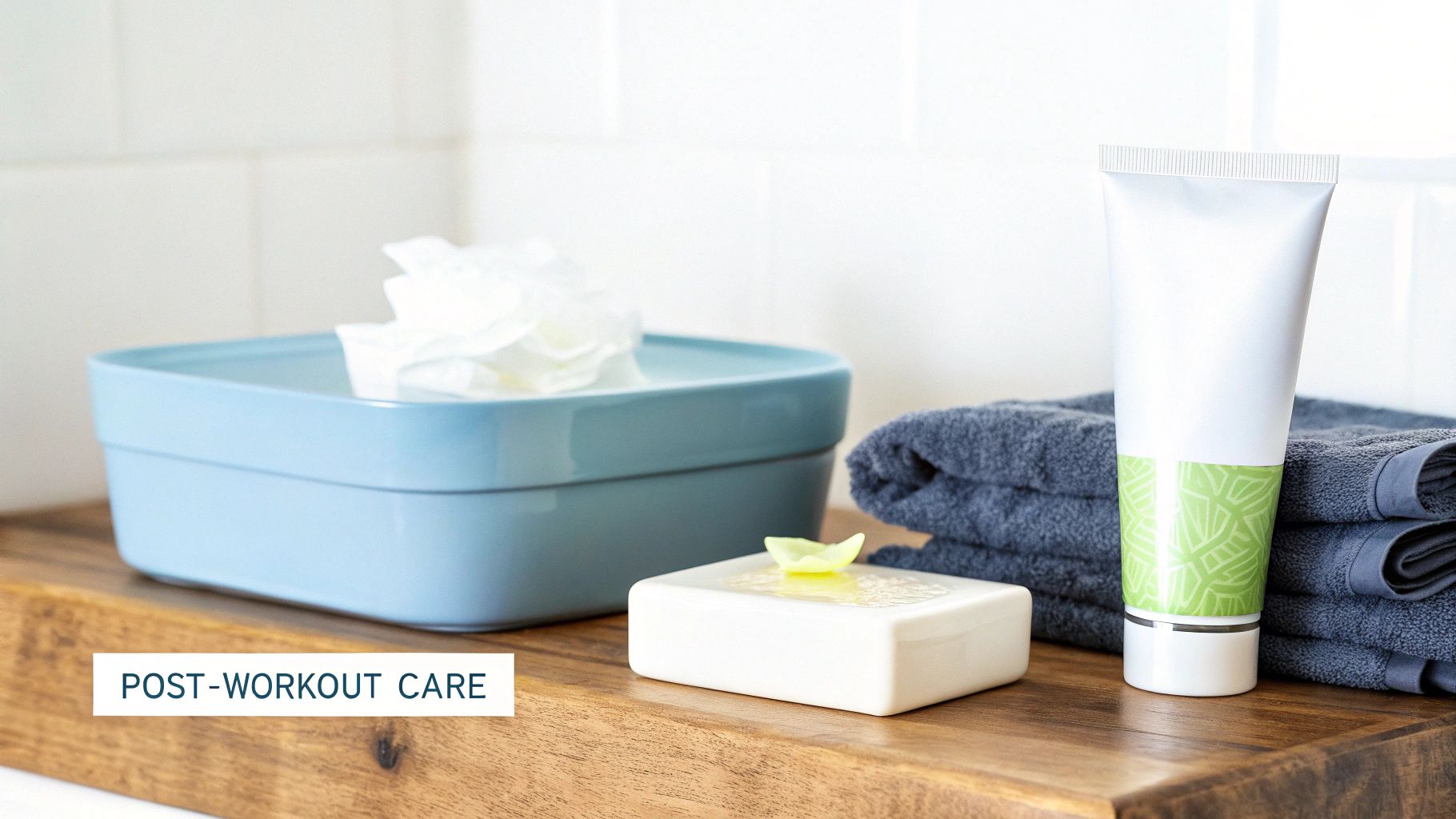
- Apply a Protective Barrier: A thin layer of a cream like Revivol-XR Advanced Hemorrhoid & Fissure Cream can be a game-changer. It temporarily provides a protective coating that helps minimize friction from sweat and movement on sensitive skin.
This prep work takes less than a minute, but it provides a crucial layer of defense. It lets you focus on your form instead of your discomfort.
Your Post-Workout Recovery Ritual
The real healing happens after your workout is over. As soon as you finish exercising, it’s time to shift into recovery mode. Ignoring this step is a common mistake that can turn minor irritation into a full-blown flare-up.
First thing’s first: gently cleanse the area. Sweat and bacteria can create a perfect storm for itching and inflammation. But whatever you do, don't reach for rough, dry toilet paper... that’s one of the worst things you can do for irritated tissue.
Instead, a product like Revivol-XR Hygienic Cleansing Lotion offers a much smarter solution. It transforms ordinary toilet paper into a soothing, cleansing wipe without the harsh chemicals often found in pre-packaged wipes.
The most powerful step you can take after a workout is a sitz bath... it's a non-negotiable for fast relief.
This is where you can truly take control of your recovery. Soaking in warm water is incredibly effective at calming swollen tissue and easing soreness. For an extra-soothing soak, add Revivol-XR 20-in-1 Sitz Bath Salts to the water. The blend of Epsom salts and soothing botanicals provides a comforting, calming soak.
You can learn more about all the benefits in our guide to using a sitz bath for hemorrhoids.
This simple pre-and-post-workout plan gives you the tools to manage your symptoms effectively, ensuring you can continue to work out with hemorrhoids safely and comfortably.
Your Questions Answered: Exercising With Hemorrhoids
Even with a solid game plan, you're bound to have some specific questions. Let's dig into the most common concerns people have when trying to stay active with hemorrhoids. Getting clear, direct answers can make all the difference in moving forward with confidence.
How Soon Can I Exercise After A Flare-Up?
This is probably the number one question, and the answer is refreshingly simple: listen to your body. There’s no magic number of days that works for everyone.
If you’re dealing with a mild flare-up and just minor discomfort, you can often get back to gentle, low-impact activities like walking or swimming within a day or two. But if you're facing severe pain, noticeable swelling, or any bleeding, it’s time to hit the brakes and rest completely. Give your body a few days for things to calm down before you even think about exercise. In these more serious cases, checking in with your doctor before you restart your routine is always the smartest move.
Is Running Okay With Hemorrhoids?
The short answer here is… it depends. For some people, the constant jarring and high impact from running can definitely make irritation worse.
If you’re a dedicated runner, you don’t necessarily have to hang up your shoes. First, try switching to a softer surface. A grassy trail or a treadmill can absorb a lot more of the shock than pavement. Wearing supportive, moisture-wicking clothing is also a huge help. If you try these things and still feel discomfort, that's a clear signal to swap running for brisk walking or the elliptical until your symptoms are completely gone.
Can Abdominal Exercises Worsen Hemorrhoids?
Absolutely. Certain ab exercises are notorious for aggravating hemorrhoids. Classic moves like sit-ups and crunches dramatically spike that intra-abdominal pressure we talked about earlier. They put a direct, downward strain on your pelvic floor... exactly what you want to avoid.
A much better approach is to focus on core-stabilizing exercises. Moves like planks, bird-dog poses, and glute bridges strengthen your entire core without the dangerous compressive force.
Should I Use A Donut Cushion When Exercising?
It seems logical, but using a donut cushion during seated exercises like cycling or rowing is generally not recommended.
Believe it or not, these cushions can sometimes restrict blood flow right around the rectal area, which can make swelling even worse. Instead of grabbing a cushion, focus on other adjustments. Take frequent breaks to stand up and stretch, shift your sitting position often, and if you're on a bike, a good pair of padded cycling shorts is a far better investment for reducing direct pressure. These small changes are much more effective for long-term comfort and healing.
That weightlifter I mentioned earlier? He took this advice to heart. He swapped heavy lifts for lighter, higher-rep sets and focused on his breathing. He added walking and stretching to his routine. Within two weeks, his flare-up was gone, and he felt more in control of his body than ever. He didn't lose his progress... he just found a smarter, safer way to keep it.
For daily comfort and post-workout relief, Revivol-XR offers a complete system to soothe and protect. From our Advanced Hemorrhoid & Fissure Cream to our soothing 20-in-1 Sitz Bath Salts, find the temporary relief you need to stay active and in control at https://hemorrhoid.com.