Can You Work Out with Hemorrhoids? Your Guide to Safe Exercise

Most people don’t realize their daily workout routine is actually making their hemorrhoids worse.
I used to think that pushing through the pain at the gym was a sign of strength. During one particularly intense leg day, I felt a sharp, sudden pressure that had nothing to do with muscle burn. The next few days were a blur of discomfort, making everything from sitting to walking a painful ordeal. I had triggered a massive hemorrhoid flare...up, all because I thought "no pain, no gain" applied to everything.
What I didn't understand then was that my form, my breathing, and even the type of exercises I chose were a perfect storm for aggravating hemorrhoids. It wasn't about being weak; it was about being uninformed. I had to learn the hard way that smart, modified exercise is the key to staying fit without flare...ups.
Working out smart isn’t about stopping... it’s about adapting.
The real secret to answering can you work out with hemorrhoids is learning how to manage internal pressure and choose movements that heal rather than harm. It’s about understanding that certain exercises create a downward force that makes rectal veins swell, while others improve blood flow and promote recovery. My painful experience taught me that the goal isn't to stop moving... it's to adapt your routine.
By choosing exercises that support your body, you can turn fitness into a powerful tool for your long...term health. This guide will walk you through exactly how to modify your workouts, protect yourself from more irritation, and stay active without the agony. It’s all about listening to your body and making smart choices that promote healing.
That leg day flare...up wasn't just a painful setback... it was the moment I realized that true fitness means working with your body, not against it.
The Surprising Truth About Exercising with Hemorrhoids
Many people think they have to hit pause on all physical activity when dealing with a flare...up. But that’s a myth that can actually slow down your recovery.
Inactivity often leads to constipation, which is one of the biggest triggers for hemorrhoids in the first place. The real secret is understanding why certain movements cause problems while others bring relief. It all comes down to managing your intra...abdominal pressure.
How Exercise Impacts Hemorrhoids
Imagine your abdomen is a container under pressure. When you do something strenuous, like lifting a heavy box or holding a difficult yoga pose, you’re cranking up that internal pressure. This surge forces blood into the delicate veins in your rectum, causing them to swell and bulge.
This is especially true for athletes. Research has shown that certain sports significantly increase the risk. One study found that 34% of athletes who trained at least twice a week reported suffering from hemorrhoidal disease.
The numbers get even more specific for certain activities:
- 57% of cyclists and horseback riders experienced issues.
- 48% of bodybuilders reported problems.
These rates are far higher than in the general population. You can dive into the full study about exercise and hemorrhoids on PMC.
The infographic below gives a quick visual summary of which exercises tend to help and which ones can hurt.
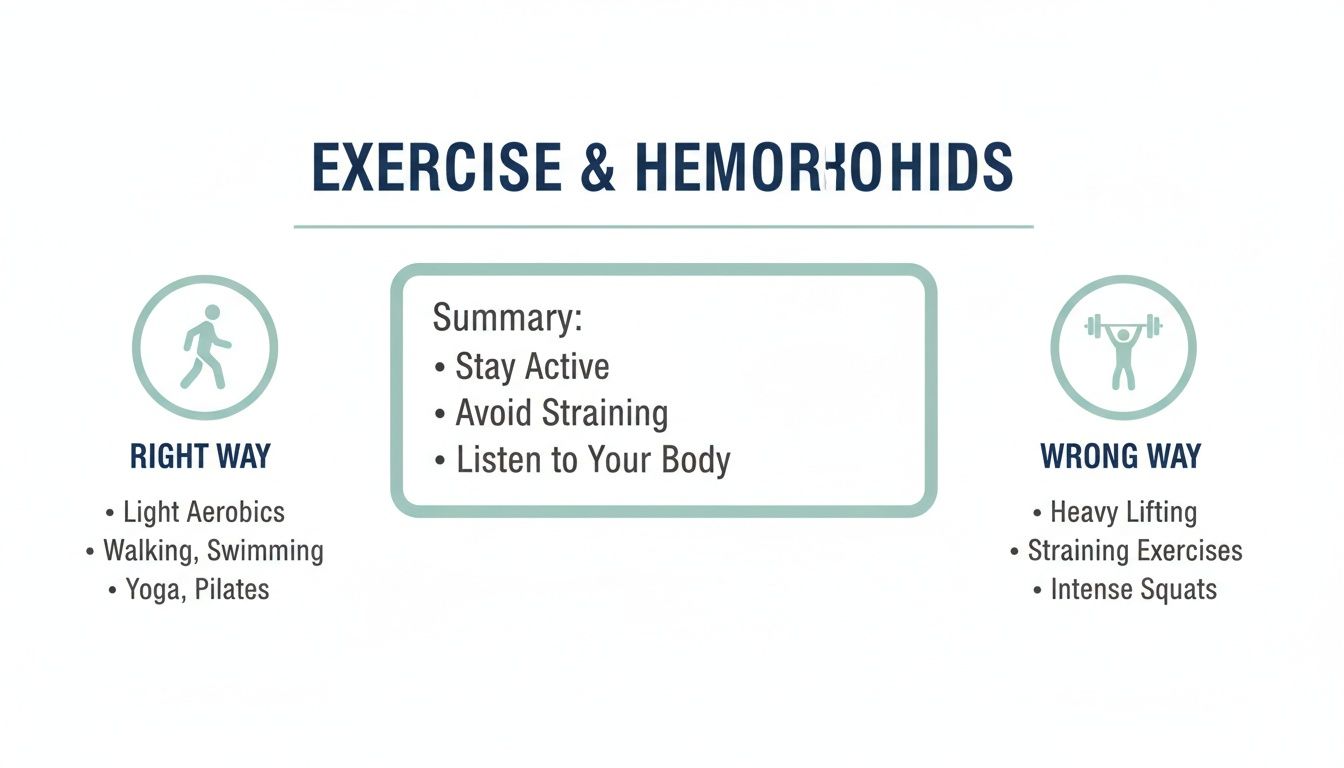
As you can see, the core idea is simple: gentle, consistent movement is your friend, while workouts that involve heavy straining need to be handled with care.
To make it even easier to see the difference, here's a quick comparison of what to look for and what to avoid.
Quick Guide to Safe vs Risky Exercises
| Exercise Type | Safe Choices (Low-Impact) | Risky Choices (High-Strain) |
|---|---|---|
| Cardio | Walking, swimming, light jogging, elliptical | High-intensity cycling, spinning, horseback riding |
| Strength | Bodyweight exercises, light resistance bands, Pilates | Heavy squats, deadlifts, leg presses, abdominal crunches |
| Flexibility | Gentle yoga, Tai Chi, stretching | Deep squats, certain intense Pilates or yoga poses |
This table isn't about completely banning certain exercises forever, but about being mindful of the pressure they create, especially during a flare...up.
Why Certain Workouts Aggravate Hemorrhoids
Ever finish a great gym session only to find yourself in pain for days? And I don't just mean sore muscles. When you're dealing with hemorrhoids, the real troublemaker is something called intra...abdominal pressure.
Imagine your abdomen is a sealed container. When you do certain movements...like lifting a heavy weight...you crank up the pressure inside that container. That pressure needs to go somewhere, and it often pushes straight down on your pelvic floor.
This downward force makes the delicate veins in your rectum swell and bulge, leaving them irritated and angry. The more you strain, the worse the flare...up.
The Role of Straining and Breath Holding
One of the biggest mistakes I see people make at the gym is holding their breath when they're exerting themselves. It’s a common reflex, technically called the Valsalva maneuver.
When you bear down and hold your breath while lifting, squatting, or even doing intense sit...ups, you create a massive spike in that internal pressure. It's the same kind of strain that happens when you’re constipated.
This single habit is a direct ticket to making hemorrhoids worse. Learning to exhale during the hardest part of any movement is one of the most powerful changes you can make to your routine.
The single biggest factor that irritates hemorrhoids during exercise is increased intra...abdominal pressure, which is often caused by heavy lifting and holding your breath.
High-Impact and Prolonged Sitting Activities
It’s not all about lifting heavy, though. High...impact exercises and activities that keep you sitting for long stretches can cause problems, just in different ways.
- Repetitive Jarring: Think about running on pavement or doing high...intensity aerobics. That repetitive jarring can irritate the sensitive rectal area, fueling inflammation and discomfort in existing hemorrhoids.
- Sustained Pressure: Exercises that have you seated for a long time, like spinning, long...distance cycling, or horseback riding, put direct, steady pressure on your rectal veins. This can restrict blood flow and make swelling even worse.
Getting a handle on these mechanics is the first step toward building a workout plan that works for you, not against you. It helps explain why some people who ask can you work out with hemorrhoids find their symptoms flaring up despite trying to stay active. It's not about stopping exercise altogether...it's about choosing movements that don't put your body under the wrong kind of stress.
The Best Exercises for Hemorrhoid Relief
Instead of focusing on what you can't do, let's look at the movements that actually help your body heal. So, can you work out with hemorrhoids? Absolutely. You just need to be smart about it.
The right exercises can improve circulation, strengthen key muscles, and even help you sidestep future flare...ups. This isn’t about hitting pause on your fitness journey; it’s about making smart swaps that keep you moving without adding strain.
Embrace Low-Impact Cardio
Low...impact cardio is your best friend during a flare...up. These activities get your heart pumping and boost blood flow everywhere, including the rectal area. Better circulation helps reduce swelling in those inflamed veins and can speed up the healing process.
Think of it as a gentle internal massage that also gets your digestive system moving, which helps prevent the very constipation that often triggers hemorrhoids in the first place.
Here are some of the best options to get started:
- Brisk Walking: Simple, easy to start, and incredibly effective. It keeps you active without jarring the sensitive area.
- Swimming and Water Aerobics: The water’s buoyancy is a game...changer. It supports your body, taking almost all the impact and pressure off your pelvic floor. You get a fantastic full...body workout with virtually zero strain.
- Using an Elliptical Machine: This machine gives you that smooth, gliding motion of running but without the harsh impact of your feet pounding the pavement.
Consistent, low...impact cardio doesn’t just help with your current hemorrhoid situation...it’s one of the best ways to prevent them from coming back.
Build Strength with Yoga and Pilates
Yoga and Pilates are brilliant for building core strength and improving flexibility without the risky intra...abdominal pressure you get from heavy lifting. Many poses are designed specifically to strengthen the pelvic floor, which gives better support to the veins in your rectum.
Gentle poses that get the blood flowing and relieve pelvic congestion are perfect. For instance, Child's Pose and Legs...Up...the...Wall can feel incredibly soothing. Just be sure to skip any deep squats or poses that make you bear down intensely.
Reconsider Your Strength Training
You don't have to abandon weights completely. The trick is to change your approach.
Instead of lifting heavy for just a few reps, switch to lighter weights with higher repetitions. This strategy builds muscular endurance and tones your body without causing those dangerous spikes in internal pressure.
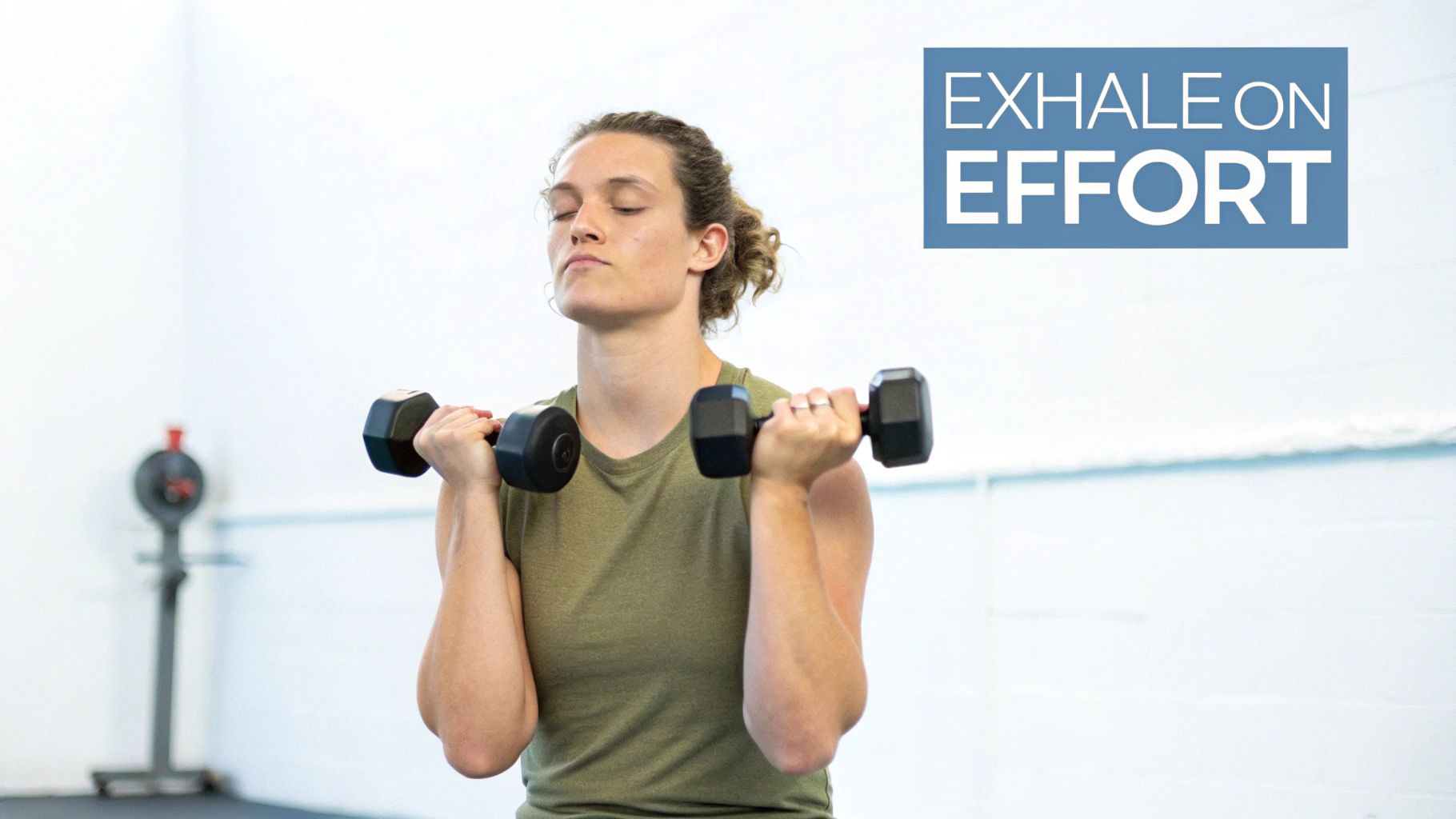
And most importantly, watch your breathing. Always exhale on the effort...for example, as you push a weight away from your body. Holding your breath is a huge no...no.
Regular, thoughtful exercise is a proven defense against hemorrhoids coming back. One study found that even occasional exercisers had a significantly lower risk of recurrence than people who were sedentary. The benefit was even greater for regular exercisers, mostly because of better gut motility and abdominal muscle tone, which makes bowel movements easier. You can read the full research on how exercise impacts hemorrhoid recurrence on Frontiers in Surgery.
Smart Workout Modifications to Prevent Flare-Ups
The answer to "can you work out with hemorrhoids" usually comes down to how you work out, not if. You don't have to give up on your fitness goals. It's all about making a few smart changes to turn a risky movement into one that's safe and effective.
The single most important skill to learn is how to breathe correctly. A lot of us have a bad habit of holding our breath during the toughest part of an exercise, which sends intra...abdominal pressure through the roof.
Master Your Breathing
To protect yourself, you need to do the exact opposite. Always exhale on the effort.
This one simple change releases internal pressure instead of letting it build up. Here’s what that looks like in practice:
- When lifting a weight: Breathe out as you push or pull the weight. Breathe in as you slowly return to the starting position.
- During a bodyweight squat: Breathe out as you push through your heels to stand back up. Breathe in as you lower yourself down.
This technique is a game...changer for almost any strength exercise. It might feel a bit awkward at first, but making it second nature is one of the best things you can do to prevent a flare...up.
Adjust Your Intensity and Form
Breathing isn't your only tool. Modifying your workout's intensity is another key strategy. Instead of going for the heaviest weight you can lift for just a few reps, try using a lighter weight and increasing your repetitions.
This approach builds muscular endurance and tones your body without the dangerous strain that makes hemorrhoids worse. Experts warn that common lifting mistakes...like holding your breath or using bad form...directly increase the pressure that can cause or aggravate hemorrhoids. Using proper technique and aiming for around 12 reps per set helps lower this risk. You can learn more about the connection between weight lifting and hemorrhoids on GoodRx.
If you feel any sharp pain, pinching, or a sensation of downward pressure, stop immediately. Your body knows best.
Support Your Workouts with Smart Habits
Finally, what you do outside the gym is just as important as what you do inside it. Your fitness routine should be part of a bigger plan that addresses the root causes of hemorrhoids.
Here are two concrete steps you can take:
- Stay well...hydrated throughout the day.
- Eat a fiber...rich diet to keep stools soft and easy to pass.
These habits prevent the constipation and straining that often trigger flare...ups in the first place. You can find more tips in our complete guide on how to prevent hemorrhoids.
Your Pre and Post-Workout Care Routine
A smart approach to the question "can you work out with hemorrhoids" goes way beyond the gym floor. What you do before and after your exercise session is just as crucial for managing symptoms and preventing flare...ups.
Think of it as setting yourself up for success. A solid routine can soothe irritation, reduce friction, and promote faster healing. Just a few minutes of preparation and recovery can make the difference between a workout that helps and one that hurts. This isn't about adding complicated steps... it’s about simple, effective care.
Your Pre-Workout Checklist
Before you even start moving, take a moment to protect the sensitive area. Friction from movement and sweat can quickly turn a minor irritation into a major problem.
A simple step is to apply a protective barrier cream before you get dressed. A product like Revivol-XR’s Advanced Hemorrhoid & Fissure Cream is designed for exactly this. It creates a smooth surface that reduces chafing while also providing soothing relief during your workout.
If you’re heading to the gym straight from work or just need a quick, discreet option, a touch...free product is a great alternative. The Hemorrhoid Relief Spray offers an easy, no...mess application for on...the...go protection.
The Post-Workout Recovery Plan
After your workout, your focus should shift immediately to recovery and cleansing. Sweat and bacteria can worsen irritation, so gentle hygiene is key.
Start by taking a warm shower to clean the area. Avoid using harsh soaps with strong fragrances or dyes, as they can strip natural oils and cause more discomfort. Pat the area dry with a soft towel... never rub.
This is also the perfect time for a therapeutic soak.
A warm sitz bath for 15-20 minutes after exercising is one of the most effective ways to calm inflammation and reduce swelling.
To make your soak even more effective, consider adding specialized salts. Using something like Revivol-XR’s 20-in-1 Sitz Bath Salts can boost the anti...inflammatory benefits with a blend of Epsom salts, essential oils, and soothing botanicals. You can learn more in our guide to using a sitz bath for hemorrhoids.
Gentle Cleansing After Exercise
Proper hygiene after a workout is non...negotiable, but standard toilet paper can be rough and abrasive on sensitive skin. This is where a gentle cleansing product can make a huge difference.
Instead of dry paper or irritating wipes, a toilet paper lotion provides a much better solution. A product like the Revivol-XR Toilet Paper Lotion applies directly to your toilet paper, turning it into a soft, soothing wipe. It cleanses effectively with witch hazel and aloe without causing further irritation, leaving you feeling fresh and comfortable.
Building these simple steps into your fitness routine ensures you can stay active while keeping hemorrhoid pain and discomfort under control.
When You Should Stop Exercising and See a Doctor
 While the answer to “can you work out with hemorrhoids” is usually yes, it’s critical to know when to pull back. Listening to your body is non...negotiable. Certain symptoms are clear signals to pause your routine and consult a healthcare professional.
Pushing through the wrong kind of pain can absolutely make things worse and lead to serious complications. Your body will tell you when it’s time to take a break...you just have to pay attention.
Recognizing Red Flag Symptoms
Stop exercising immediately and schedule a doctor’s appointment if you experience any of these warning signs:
- Sharp or Severe Pain: This is a big one. It feels completely different from the typical dull ache or discomfort. If the pain is intense, comes on suddenly, or doesn't ease up with rest, it needs a medical evaluation.
- Significant Bleeding: A little spotting on the toilet paper can happen, but any noticeable or persistent bleeding during or after a workout or bowel movement should be checked by a doctor.
- A Hard, Painful Lump: If a hemorrhoid becomes firm, takes on a bluish or purple hue, and is intensely painful to the touch, it may be a thrombosed hemorrhoid. This is a blood clot that requires prompt medical attention.
Why You Shouldn't Wait
Don't let fear or embarrassment stop you from getting a proper diagnosis. A doctor can give you peace of mind, rule out other conditions, and recommend an effective treatment plan to get you back on track.
You can learn more about your options by exploring our guide on hemorrhoid swelling treatment. Being proactive is the smartest and safest move you can make for your health.
FAQs: Your Top Questions About Exercise and Hemorrhoids
We get a lot of questions about how to stay active when dealing with hemorrhoids. Here are straight answers to the most common ones.
Is It Safe to Run with Hemorrhoids?
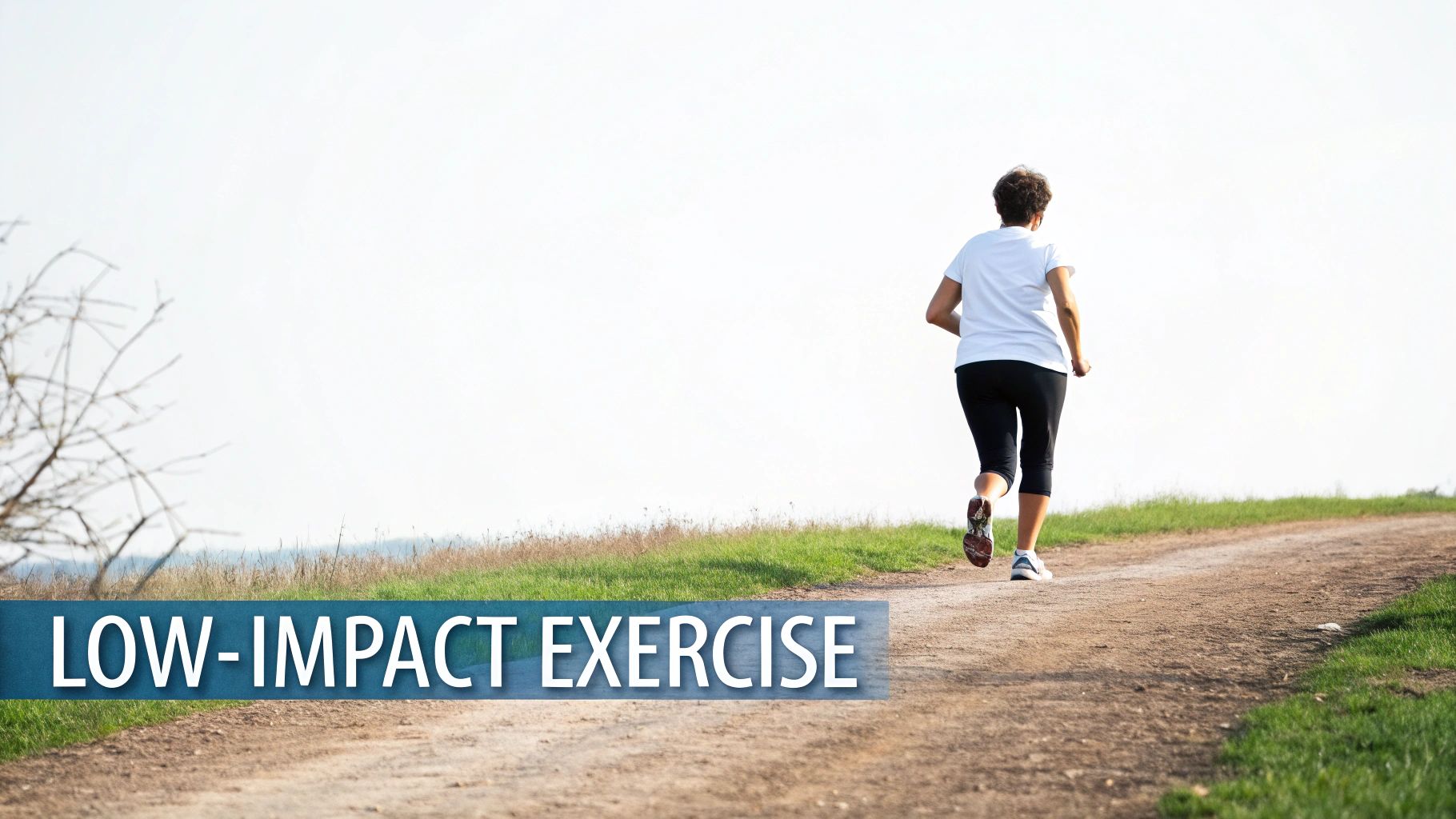
It really comes down to the intensity. Light jogging is generally fine...in fact, it can be great for circulation. If you can, stick to softer surfaces like a running track or a dirt trail to minimize the jarring impact.
That said, high...impact distance running on hard concrete can definitely make things worse. If you're in the middle of a flare...up, it’s a smart move to switch to the elliptical or power walking until the swelling goes down.
Can I Still Do Squats with Hemorrhoids?
Absolutely, but with a few important adjustments. Simple bodyweight squats are usually okay as long as you maintain good form and breathe correctly.
The real problem arises with heavy, weighted squats. That’s when you’re most likely to strain and hold your breath, which sends intra...abdominal pressure through the roof.
Instead, try alternatives like lunges or leg presses with lighter weight. The key is to always exhale during the hardest part of the movement.
How Soon Can I Work Out After a Flare-Up?
This is where listening to your body is non...negotiable. For a minor flare...up, a few days of rest might be all you need to let the inflammation and discomfort subside.
However, if you've undergone a medical procedure, your doctor will provide a specific timeline for getting back to your routine. Don’t rush it. Pushing yourself too soon will only set you back and could make the situation worse.
Does Exercise Help Prevent Hemorrhoids?
Without a doubt. Regular, moderate exercise is one of the best preventative tools you have.
It gets your blood flowing, strengthens your pelvic and core muscles, and helps keep your bowel movements regular. All of these factors work together to significantly reduce your risk of developing hemorrhoids in the first place.
For a comprehensive approach to managing symptoms, trust Revivol-XR to provide fast, effective, and soothing relief. Our doctor...trusted formulas are designed to help you stay active and comfortable. Explore our full range of hemorrhoid and fissure care products at https://hemorrhoid.com.