Best Topical Treatment for Hemorrhoids: What Works

The strongest numbing cream isn't automatically the best topical treatment for hemorrhoids. Colorectal guidance puts symptom relief in a supporting role, not ahead of dietary and bathroom-habit changes. Choose by the job you need done, pain relief, swelling relief, itch relief, or skin protection, rather than by the loudest claim on the box.
Table of Contents
- Why There Is No Single Best Hemorrhoid Cream
- The Four Topical Formats Side by Side
- How the FDA OTC Monograph Shapes Real Labels
- Matching the Product to the Symptom and the Person
- Real-World Picks by Reader Profile
- Where Revivol-XR Fits in This Decision
- A Five-Step Checklist Before You Buy
- Stop Rules and When to Call a Clinician
Why There Is No Single Best Hemorrhoid Cream
There's no single best hemorrhoid cream for everyone. My recommendation is straightforward: match the active ingredient to your main symptom, then check that the product is appropriate for you and the place you'll apply it.
The American Society of Colon and Rectal Surgeons' 2024 hemorrhoid guideline lists hydrocortisone, phenylephrine, pramoxine, and witch hazel as commonly used ingredients, but says the evidence guiding selection is limited. It describes topical medical therapy as generally carrying minimal harm and potentially relieving symptoms, while dietary and behavioral measures remain the primary first-line treatment.
That distinction matters when you're uncomfortable and want something that works. A cream can make a sore area more comfortable without correcting the constipation or straining that keeps aggravating it. Relief is useful, but it isn't proof that the underlying problem has disappeared.
Choose the job before the tube
Use this quick ingredient map to narrow the shelf down.
| Your main concern | Ingredient category to consider | What you're looking for |
|---|---|---|
| Pain or burning | Local anesthetic, such as lidocaine or pramoxine | Temporary numbing |
| Swelling | Vasoconstrictor, such as phenylephrine | Temporary swelling relief |
| Itching or irritation | A short-term itch-relief product, potentially containing hydrocortisone or witch hazel | Symptom-focused comfort |
| Friction and irritated skin | Protectant, such as an appropriate petrolatum or glycerin formulation | A protective coating |
Don't automatically buy the product with the longest ingredient list. If friction is your main complaint, start by looking at protectants rather than assuming you need the strongest anesthetic. If several symptoms overlap, a combination formula may be a practical choice.
The buying rule: Pick the ingredient for the symptom, not the brand for the embarrassment.
You don't need to explain your entire bathroom history at the pharmacy counter. A useful opening is that you need an external product for itching, burning, or irritation. Mention bleeding, severe pain, pregnancy, and current medicines, though, because those details change the recommendation.
The Four Topical Formats Side by Side
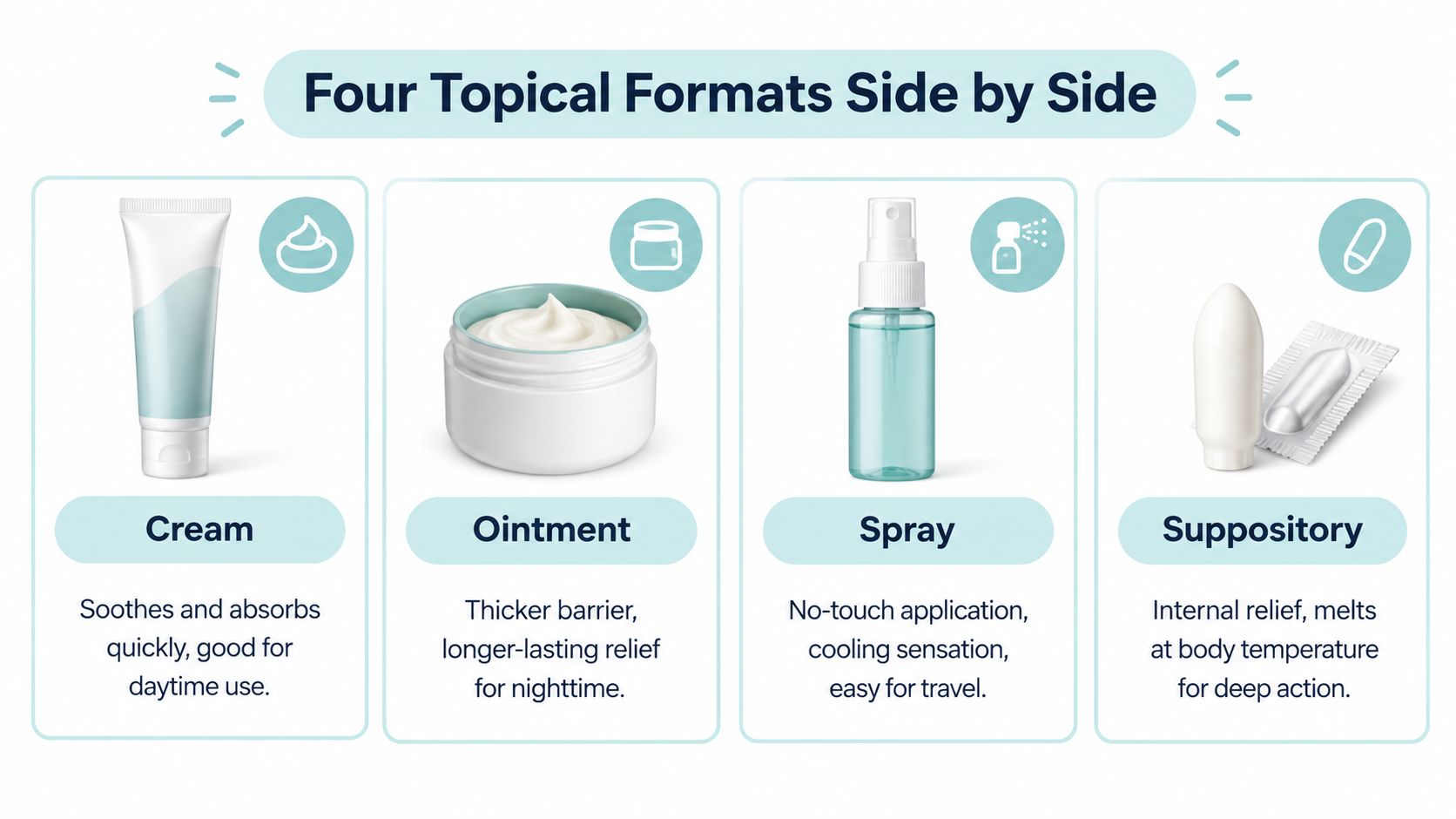
Format determines how you apply a product. Ingredients determine its intended job. Don't confuse the two when comparing a cream, ointment, spray, and suppository.
The visual below separates the common formats. Treat descriptions about absorption or lasting comfort as general format guidance, not proof that every product performs the same way.
Creams and ointments
A cream is a practical format to consider when you want controlled application to a specific external area. For example, someone dealing with irritation after a bowel movement might prefer a tube that allows careful placement rather than a broad spray.
An ointment is worth considering when the product's protectant function is the main attraction. Judge it by the active panel and directions, not by whether it feels thicker. A heavier texture doesn't establish stronger pain relief.
For either format, external use and internal use aren't interchangeable. Follow the route printed on the package, and don't assume an applicator is permitted because the tube looks like another product you've used.
Sprays and suppositories
A spray offers a different application method, which may appeal when touching the area is awkward. Before choosing one for work or travel, check its directions, active ingredients, and whether you can apply it accurately.
A suppository is an internal format. It isn't a stronger version of an external cream, and it shouldn't be your automatic next purchase when an external product hasn't helped. Uncertain symptom location is a reason to ask a pharmacist or clinician.
- For targeted external application: Compare creams and ointments with the correct labeled use.
- For less direct handling: Consider a spray, but verify that its ingredients match your needs.
- For internal use: Choose only a product specifically labeled for that route.
- For application difficulty: Ask someone to explain the directions before buying.
My preference is the simplest format you can use correctly. Convenience matters, but it comes after the right route and the right active ingredient.
How the FDA OTC Monograph Shapes Real Labels
Ignore the front-of-box adjectives initially. Turn the package around and read Drug Facts, where the active ingredient, concentration, purpose, directions, and warnings belong.
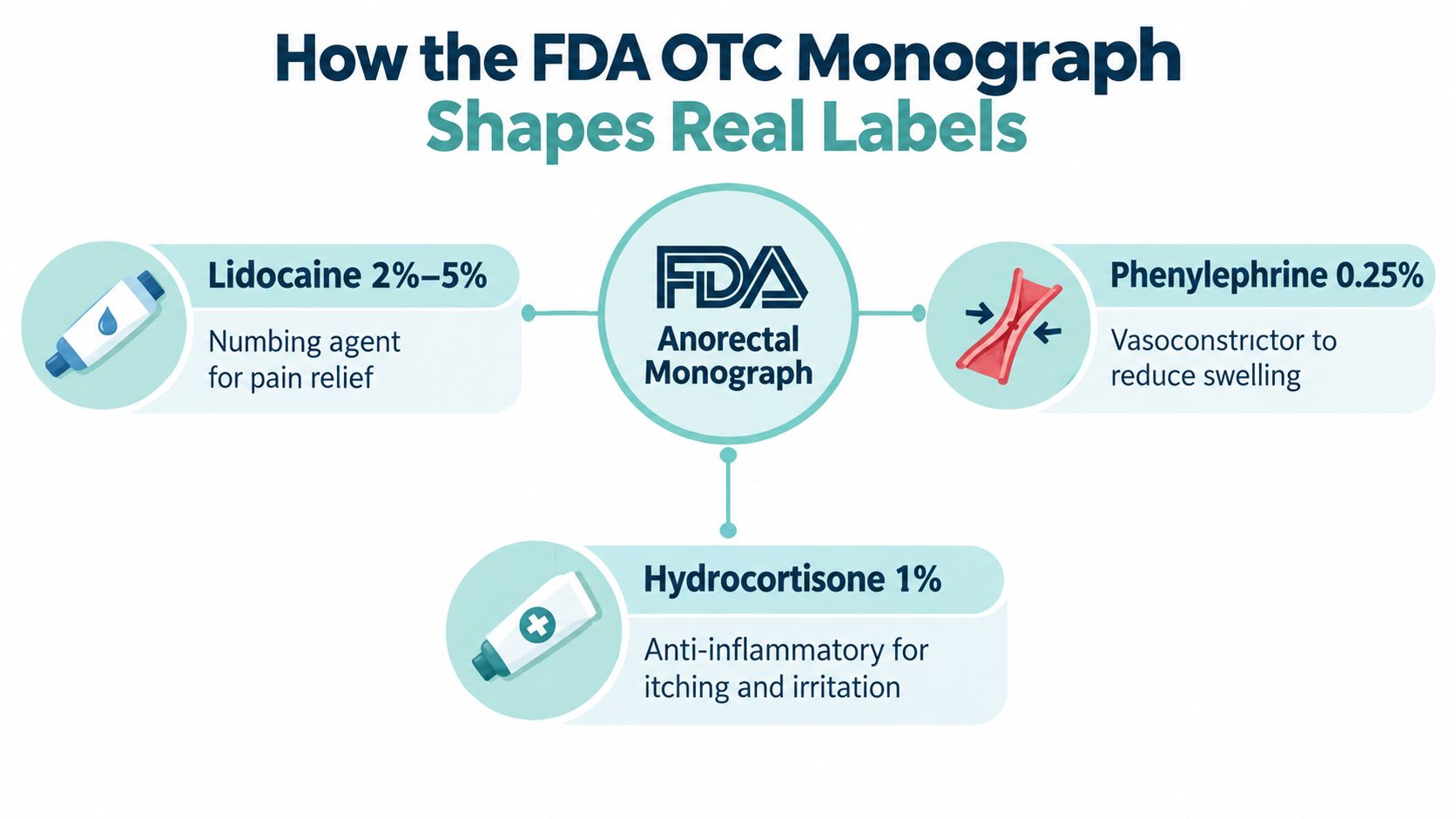
The anorectal OTC monograph requirements recognize lidocaine at 2% to 5%, phenylephrine hydrochloride at 0.25%, and glycerin at 20% to 45% by weight among the relevant ingredient ranges. Those figures provide a useful comparison yardstick when applicable formulation, route, and labeling conditions are met.
The infographic illustrates ingredient categories, but the Drug Facts panel should guide an actual purchase. Don't use a graphic as a substitute for checking a formulation's requirements.
What the concentrations tell you
Lidocaine at the top of the recognized range is still a local anesthetic. It doesn't become a swelling ingredient or a treatment for every cause of rectal pain because the percentage is higher.
Phenylephrine belongs to a different category. Its vasoconstrictor role explains why it appears beside an anesthetic in some combination products rather than replacing it.
Protectants have another job again. Their presence tells you that the formula also aims to coat irritated skin. The monograph recognizes several protectant ingredients and formulations, so don't judge an entire combination from one isolated ingredient range.
| Category | Label question to ask |
|---|---|
| Local anesthetic | Is temporary pain or burning relief the main purpose? |
| Vasoconstrictor | Does the product include an ingredient intended for swelling? |
| Protectant | What ingredients provide the protective coating? |
| Itch-focused ingredient | What duration limits and warnings apply? |
What the monograph doesn't tell you
Monograph alignment isn't evidence that one cream is clinically superior. It also doesn't mean a particular OTC product has been individually approved by the FDA.
Apply the same label-first standard to botanical products. If you're considering an unfamiliar herbal option, the guide to Chinese herbal hemorrhoid creams offers a related starting point, but the actual package still needs scrutiny.
I'd rather see a clearly identified active ingredient and readable warnings than a dramatic promise about strength. A shopper should be able to explain what the product is supposed to do without relying on its advertising.
Matching the Product to the Symptom and the Person
The right shelf choice depends on more than symptoms. Pregnancy, breastfeeding, other medicines, and ease of application belong in the decision too.
Don't rank products by speed unless you have credible, product-specific evidence. The comparison below deliberately avoids invented onset times. It also avoids treating a format as automatically pregnancy-safe.
Topical Hemorrhoid Formats and Active Ingredients Compared
| Format | Best For | Onset | Pregnancy Note | Standout Feature |
|---|---|---|---|---|
| Anesthetic cream | External pain or burning priority | No universal onset established | Ask about the exact formula | Targeted numbing role |
| Anesthetic spray | External discomfort when direct handling is awkward | Product-dependent | Confirm before use | Different application method |
| Phenylephrine cream | Swelling-focused label selection | No universal onset established | Ask about suitability | Vasoconstrictor category |
| Protectant ointment | Friction and irritated-skin priority | Don't equate coating with healing | Review ingredients with your clinician | Barrier-focused purpose |
| Hydrocortisone product | Short-term itch-focused care | No universal onset established | Clinician-guided choice | Requires attention to duration |
| Witch-hazel topical | Soothing care for itching or irritation | No comparative speed established | Discuss the specific preparation | Astringent-focused option |
| Suppository | Symptoms requiring an internal labeled format | Formulation-dependent | Confirm route and ingredients | Internal administration |
Best for means a useful shopping category, not a diagnosis or guaranteed result. A person with severe pain shouldn't select an anesthetic and skip assessment because that row sounds appropriate.
Pregnancy and postpartum choices
The American College of Obstetricians and Gynecologists' pregnancy hemorrhoid advice includes cold witch-hazel compresses, sitz baths, and topical sprays or ointments for swelling and itching. It also recommends asking an obstetric clinician about a stool softener because straining can aggravate hemorrhoids.
ACOG notes that symptoms can worsen after delivery or first appear during recovery. That makes postpartum care its own conversation, especially when you're breastfeeding or following other recovery instructions.
For older adults, I'd prioritize readable directions and manageable application over a special “senior” marketing label. Bring a medication list to the pharmacist, particularly if you're considering a multi-ingredient product.
The pictured product is an example of an external numbing format, not evidence that every painful symptom needs it.
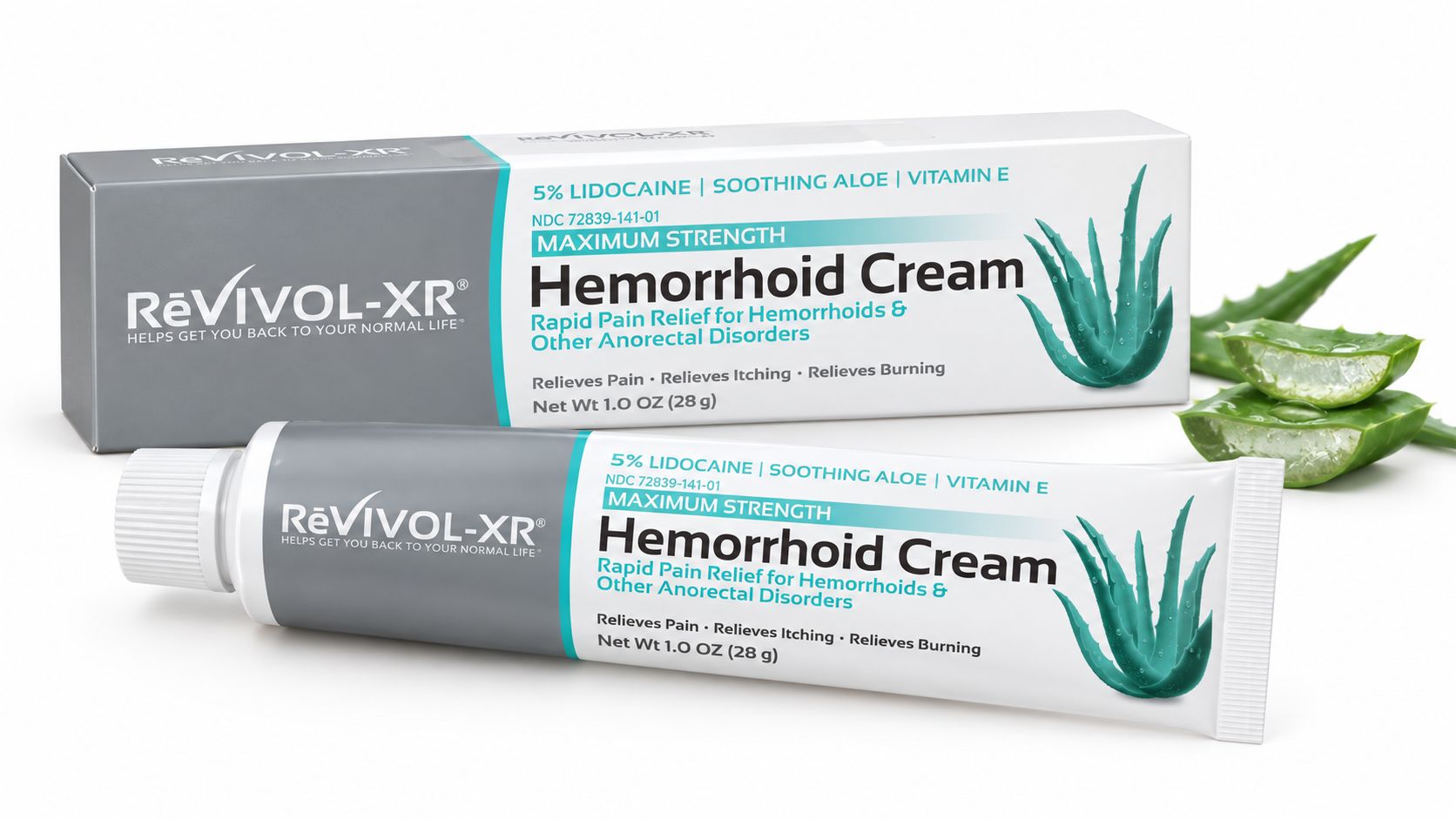
A combination tube is convenient only when its ingredients, warnings, and application route all fit the person using it.
Real-World Picks by Reader Profile
These are shopping scenarios, not patient stories or diagnoses. Use the closest match to prepare a focused conversation with your pharmacist or healthcare provider.
Postpartum comfort deserves a careful choice rather than a hurried purchase.

The postpartum parent
You're caring for a baby and want a routine that doesn't add complicated application steps. My recommendation is to ask your obstetric clinician which soothing measures and exact topical preparation fit your recovery and breastfeeding status.
The pregnancy OTC hemorrhoid treatment guide can help you organize that discussion. Don't borrow someone else's tube without checking its label.
The desk worker with external burning
You need a product that you can apply correctly before returning to your day. I'd compare an external anesthetic cream with a combination formula only if you also need the additional labeled functions.
One focused option is Revivol-XR's lidocaine numbing cream, intended for temporary external comfort, with aloe and vitamin E listed as inactive ingredients. It isn't an internal product or a substitute for assessment of sharp, severe, or unusual pain.
This video is additional viewing, not a replacement for product directions or individual clinical advice.
The older adult with recurring discomfort
Repeated flares deserve a clinician's review, not just a larger supply of cream. For a temporary purchase, choose the easiest permitted application method and have a pharmacist check the warnings against your medicines.
The natural-wellness shopper
Start with comfort measures that don't require choosing a long botanical blend. Natural doesn't settle whether an ingredient suits sensitive skin, pregnancy, or your particular symptoms.
For fissure support, MedlinePlus recommends warm sitz baths for 10 to 15 minutes, two to three times daily, with water covering the hips and buttocks, and notes that numbing cream may be considered when pain interferes with bowel movements. That guidance describes warm water, not a requirement to add salts or essential oils.
- Choose by purpose: Botanicals don't replace a clearly labeled anesthetic or protectant role.
- Avoid diagnosis by shopping: Cutting pain may need a different assessment from ordinary external irritation.
Where Revivol-XR Fits in This Decision
Revivol-XR is one option to evaluate by the same standards as any other OTC product. I wouldn't choose it solely because it combines pharmaceutical actives and botanicals. I'd choose a combination format only when its label fits the symptoms and the person using it.
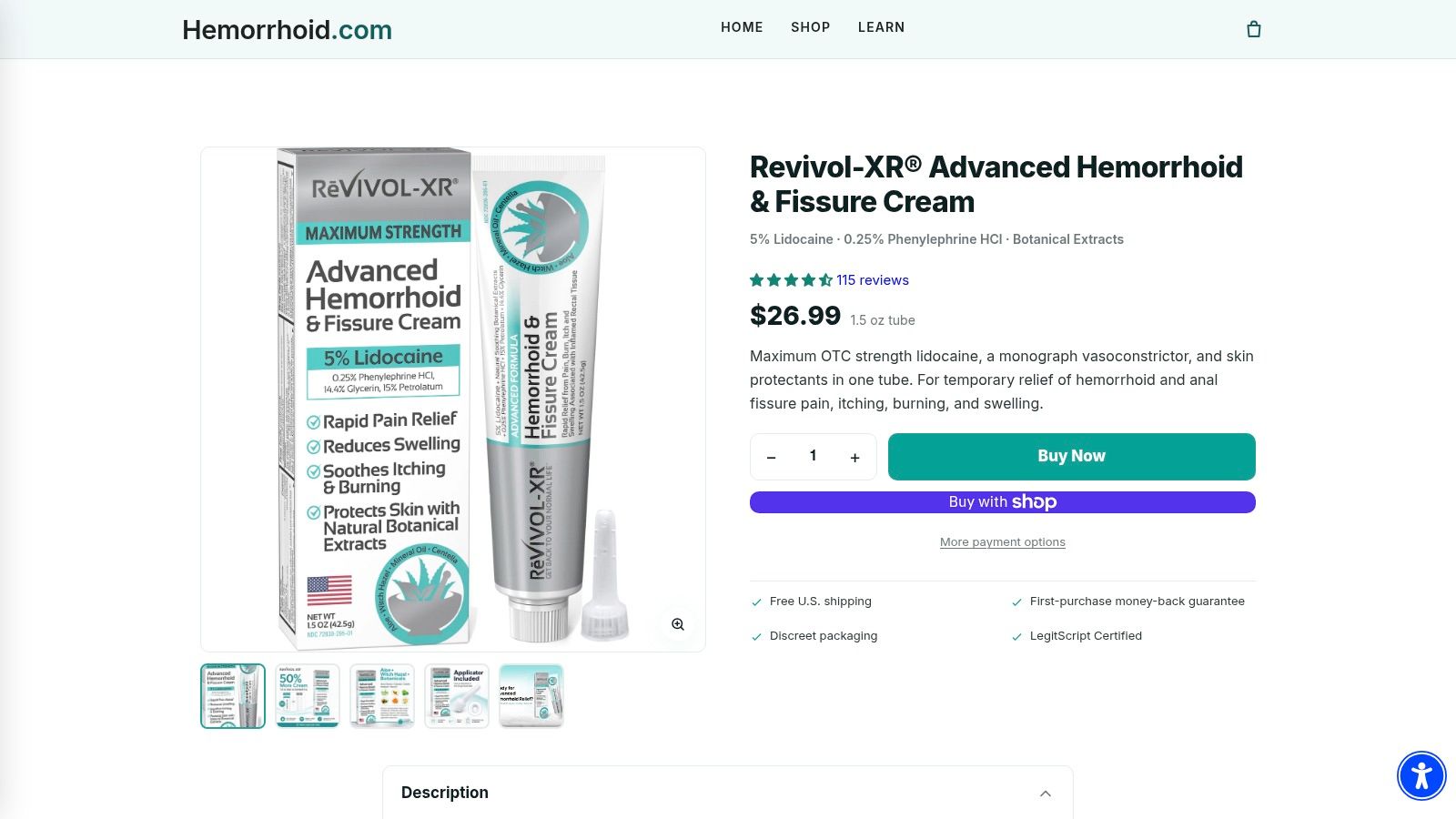
The Revivol-XR Advanced Hemorrhoid Cream product listing identifies 5% lidocaine, 0.25% phenylephrine HCl, glycerin, and petrolatum, alongside aloe, witch hazel, horse chestnut, calendula, centella asiatica, panthenol, and vitamin E. It lists a 1.5 oz tube, which contains 50% more cream than a 1 oz tube.
The screenshot shows the product page, but the package's current Drug Facts panel should govern use.
What makes the combination relevant
The formula brings several ingredient categories into one external product for temporary soothing relief and comfort. That can simplify a purchase when you're comparing separate tubes for different purposes.
The botanical blend is part of the formulation, not proof of superior clinical results. Likewise, a larger tube means more product, not stronger relief or permission to continue indefinitely.
Value check: Compare cost per ounce only after you've confirmed that the formula is appropriate. More cream isn't a benefit if you shouldn't use it.
Who should check before buying
The product's warnings call for healthcare advice before use with certain conditions or medicines. Its directions also specify external use and prohibit putting it into the rectum.
- Check health conditions: Ask before use with heart disease, high blood pressure, thyroid disease, diabetes, or urinary difficulty related to prostate enlargement.
- Check prescriptions: Ask a doctor or pharmacist if you take prescription medicine for high blood pressure or depression.
- Check pregnancy or breastfeeding: Ask a health professional before use.
My recommendation is conditional but clear: consider this type of combination when you need its several labeled comfort functions. Choose a simpler product when you don't.
A Five-Step Checklist Before You Buy
A discreet online order can still be a careful purchase. Keep the same standards you'd use with a pharmacist standing beside you.
Read the package, not just the listing
- Check Drug Facts and the route. Identify the active ingredients, their purposes, directions, and warnings. Confirm external versus internal use before looking at reviews or comparing prices.
- Compare tube size sensibly. Use the package quantity and current price to compare value. Don't assume a larger tube justifies a longer course, and don't stock up before you know the product suits you.
- Verify FSA or HSA eligibility. Check the exact item and your plan's rules if you intend to use those funds. Do not assume every cream, cleansing product, or bath additive qualifies because it is sold alongside OTC medicine.
- Read reviews for usable details. Look for comments about packaging, texture, label clarity, and application. Treat reviews as shopping feedback, not evidence that a product can diagnose a fissure or safely manage bleeding.
- Confirm shipping details. Ask the seller about outer packaging and what appears on the delivery label if privacy matters. Don't assume every marketplace seller uses the same packaging.
Keep the checkout decision narrow
The Revivol-XR Amazon storefront is a place to inspect current listings, not a reason to skip these checks. Review the exact seller and product before completing an order.
If you're buying for a partner or parent, ask about the main symptom and whether they've already tried something. Bring the existing package or a clear label photo to a pharmacist rather than guessing from a product name.
Don't stack overlapping creams on your own. Ask a pharmacist to review what you're using, especially when several products contain anesthetics or itch-relief ingredients.
Stop Rules and When to Call a Clinician
Bleeding, severe pain, and persistent symptoms move the decision out of the shopping aisle. Don't respond by buying a stronger tube.
The NHS Specialist Pharmacy Service's hemorrhoid treatment guidance supports a symptom-focused, limited-duration approach. Seek clinical assessment when home care hasn't helped after about a week, when bleeding recurs, or when pain is severe. Heavy bleeding, dizziness, or faintness warrants urgent evaluation.
Rectal bleeding shouldn't automatically be blamed on hemorrhoids. Other conditions, including colorectal or anal cancer, can present with bleeding, so even a familiar history doesn't establish the cause.
Act on these signals
- Bleeding occurs: Contact a healthcare provider rather than covering the symptom with another product.
- Pain is severe or unusual: Get assessed, particularly when the pattern feels different from previous discomfort.
- Symptoms worsen or keep returning: Stop relying on repeated OTC purchases.
- Application increases irritation: Stop the product and ask for advice about a possible reaction.
Common questions
Can hemorrhoid cream permanently remove hemorrhoids?
No. Topical comfort isn't the same as correcting prolapse or recurrent disease.
Should I numb sharp pain during bowel movements?
Don't assume it's hemorrhoidal pain. A clinician can assess whether a fissure or another problem needs different care.
Can I keep using a cream whenever symptoms return?
Recurring symptoms deserve review. Follow the product's duration limits rather than creating your own ongoing schedule.
The guide to when hemorrhoids need medical attention can help you prepare for that conversation. You don't need to feel embarrassed, just describe what hurts, whether there's bleeding, and what you've already used.
Revivol-XR offers external creams and other care options designed for temporary soothing relief and comfort. Visit Revivol-XR to compare labels and formats for your main symptom, and consult a healthcare provider before self-treating persistent, severe, or bleeding symptoms.