Best Pain Medication for Hemorrhoids: What Works and Why

You're standing after another painful bathroom trip, looking for the best pain medication for hemorrhoids, but making the area numb doesn't mean the cause is getting better. Whether you're dealing with burning, swelling, or soreness after childbirth, the useful choice is the medicine that matches your main symptom, with a clear stopping point.
Table of Contents
- Which Pain Medicine Fits Your Symptom
- Oral Pain Relievers and Pregnancy Considerations
- Numbing Creams and How Long to Use Them
- Soothing Ingredients and Sitz Baths Explained
- A Daily Routine for Hemorrhoid Pain Relief
- When to Call a Provider and Next Steps
Which Pain Medicine Fits Your Symptom
No single hemorrhoid medicine is best for everyone. The right choice depends on what bothers you most, how severe it is, and whether self-care is appropriate.
The 2024 American Society of Colon and Rectal Surgeons guideline gives medical therapy a conditional recommendation based on low-quality evidence, noting limited evidence for common ingredients such as hydrocortisone, phenylephrine, pramoxine, and witch hazel. That doesn't mean these products can't help. It means you should expect temporary symptom relief, not assume a cream will solve every cause of pain.
Hemorrhoid pain options by main symptom
| Option | Main job | Best fit | Key limit |
|---|---|---|---|
| 5% lidocaine cream | Numbs pain, burning, and itching | Sharp or burning pain and fissure discomfort | Short term only; follow label duration |
| Phenylephrine 0.25% in combined creams | Temporarily shrinks swollen tissue | Visible swelling with discomfort | Check heart, blood pressure, and thyroid cautions first |
| Glycerin and petrolatum | Coat and protect irritated skin | Friction and pain during bowel movements | Protect but don't numb |
| Witch hazel pads or lotion | Soothe and cool | Mild itching and irritation | Supportive only; evidence is limited |
| Acetaminophen by mouth | Eases general pain | Mild pain; pregnancy only with provider input | Follow dosing limits on the label |
| Ibuprofen or naproxen by mouth | Ease pain and swelling | Mild pain in adults who aren't pregnant | Generally avoided in pregnancy; ask a doctor |
| Warm sitz bath | Provides local comfort and muscle ease | Pain after straining or childbirth | Comfort measure, not a cure |
Match the ingredient to the problem
For localized burning, an anesthetic is more directly targeted than a soothing pad alone. If skin feels rubbed and raw during bowel movements, a protectant may be more useful than repeatedly adding another numbing product.
Swelling calls for a different decision. A vasoconstrictor may temporarily reduce swollen tissue, but it brings health-history cautions that a simple barrier product doesn't share. Choose by the active ingredients and Drug Facts label, not just words such as advanced or maximum strength.
Hydrocortisone is another option readers may encounter for itching and inflammation. It isn't a reason to keep treating indefinitely, particularly when pain is the main symptom or the diagnosis is uncertain.
Practical rule: Choose the ingredient for the symptom, then choose the stopping date from the label.
Don't layer several hemorrhoid products without checking their ingredients with a pharmacist. Different packages can contain overlapping medicines, and more application doesn't necessarily mean more comfort.
These options don't correct every underlying problem, including constipation, prolapse, or a clot. Persistent, severe, or bleeding symptoms need a healthcare provider, not an endless rotation of creams.
Oral Pain Relievers and Pregnancy Considerations
Oral pain relievers work throughout the body rather than only where you apply a cream. They can be useful for mild discomfort, but they don't protect irritated skin from friction or address the reason you're straining.
The National Institute of Diabetes and Digestive and Kidney Diseases lists acetaminophen, ibuprofen, naproxen, and aspirin as over-the-counter options for mild hemorrhoid symptoms. That list isn't a blanket recommendation for every person, particularly during pregnancy or when other medicines are involved.
Pregnancy and postpartum aren't the same situation
For pregnancy-related discomfort, short-term acetaminophen is generally the option considered first with provider input. NSAIDs are generally not recommended during pregnancy, while codeine can worsen constipation and make bowel movements harder.
The American College of Gastroenterology clinical resource on pregnancy-related anorectal disorders also cautions that some anesthetic-containing topical products aren't recommended during pregnancy. Applying something to the skin doesn't automatically make it pregnancy-safe.
After delivery, your options may change. Breastfeeding still requires a product-specific review, and your delivery team's instructions should take priority over a general medicine list. Don't assume that a medicine approved for someone else's postpartum recovery fits yours.
Questions to ask before taking a pill
Bring the medicine package or a photo of its label to a pharmacist. Ask:
- Pregnancy or breastfeeding: Is this exact ingredient appropriate for my current situation?
- Other medicines: Does it overlap with anything I'm already taking, including combination pain products?
- Health conditions: Do blood thinners, stomach disease, kidney disease, or my medical history change the choice?
- Dose and duration: What's the label limit, and when should I stop self-care?
Follow the package dose exactly, and don't combine oral pain medicines casually. If pain is strong enough that you're considering escalating beyond ordinary OTC care, seek an assessment rather than taking something stronger.
This video offers additional context for hemorrhoid comfort care.
Numbing Creams and How Long to Use Them
A numbing cream can make the next bowel movement bearable, but the label sets the clock. The guidance below shows how timing and duration differ by source.
Lidocaine timing and duration by guidance source
| Source | Maximum duration | Timing | Key note |
|---|---|---|---|
| Primary-care review of 5% lidocaine ointment | Up to 14 days | 1 to 2 minutes before a bowel movement | Brief use only; this is fissure guidance |
| NHS-linked colorectal guidance for 5% lidocaine gel | Short course; anesthetic use is commonly limited to 5 to 7 days | 20 to 30 minutes before opening the bowels | Severe fissure pain warrants assessment; bleeding needs a doctor |
| Our external numbing cream label | Stop if no improvement in 7 days | Apply externally as directed on the label | Follow the label's age and frequency directions |
The longer course in fissure guidance doesn't override a shorter OTC label. These recommendations involve different formulations and clinical settings. Don't borrow an ointment's timing for a cream, and don't assume a prescription-style care plan applies to self-treatment.
What lidocaine does and doesn't do
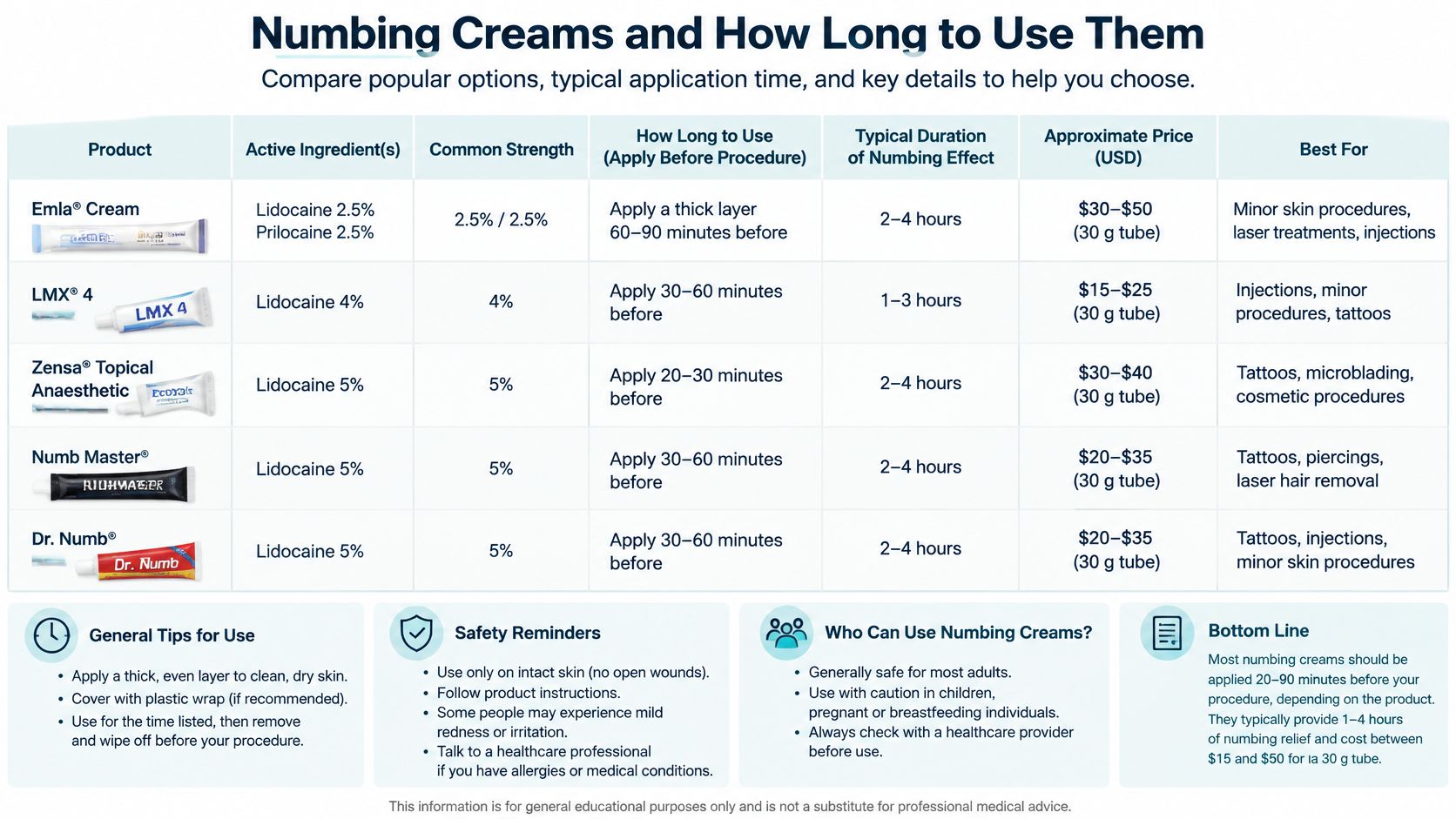
Lidocaine temporarily reduces sensation where it's applied. It can make localized burning and soreness more manageable, but it doesn't shrink a hemorrhoid, soften stool, or heal the underlying cause of pain.
The FDA anorectal OTC monograph permits lidocaine concentrations of 2% to 5% in suitable anorectal products. Treat the upper concentration as a strength limit. Follow the label's frequency and duration limits.
This chart offers a visual comparison of numbing-cream considerations.
Use the exact product's directions
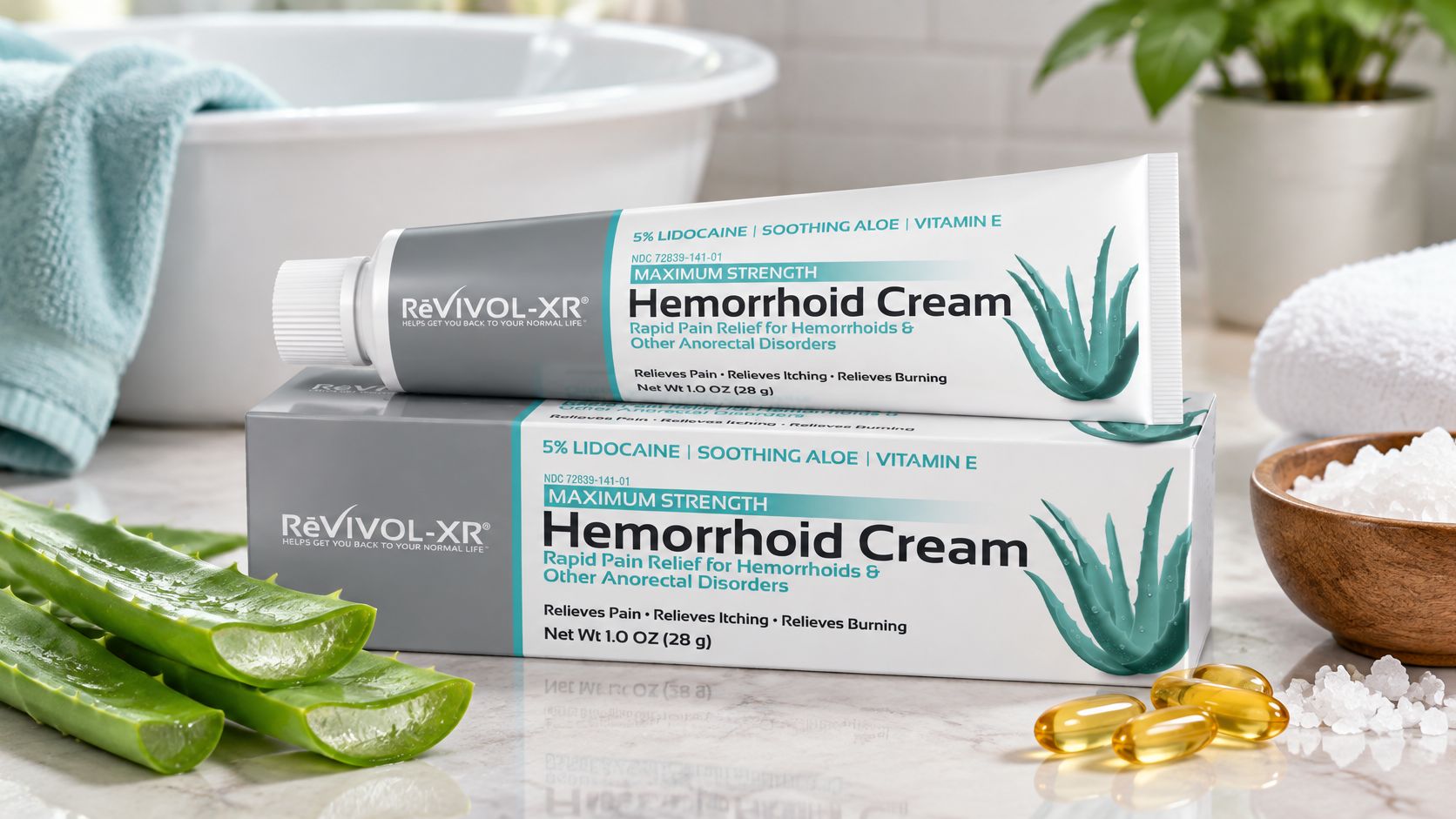
Revivol-XR® 5% Lidocaine Numbing Cream is an over-the-counter topical anesthetic for temporary relief of hemorrhoid pain, burning and itching. Follow its Drug Facts label for application and frequency.
Clean gently as directed, rinse, and pat dry before applying a thin layer. It's for external use only: don't insert it into the rectum with fingers, a device, or an applicator. Avoid the eyes and don't exceed the recommended amount.
Our numbing and advanced creams are formulated in accordance with the FDA monograph for anorectal drug products. Monograph compliance isn't individual FDA approval, and it doesn't remove the need to follow warnings.
Feeling less pain is useful information about comfort, not proof that the underlying problem has resolved.
Stop and ask a doctor if bleeding occurs, symptoms worsen, an allergic reaction develops, or there's no improvement within the label's treatment period. Prolonged anesthetic use can irritate or sensitize the skin, so continuing “just in case” isn't a good maintenance plan.
Soothing Ingredients and Sitz Baths Explained
A soothing product and a numbing product do different jobs. Glycerin and petrolatum coat irritated skin, helping reduce contact and friction; they don't switch off pain sensation.
Witch hazel can provide a soothing, cooling feel, while aloe may make application more comfortable. Evidence for witch hazel in hemorrhoid care is limited, and a botanical blend shouldn't be treated as proof that a product heals hemorrhoids or fissures.
Check combination-cream cautions
Revivol-XR® Advanced Hemorrhoid & Fissure Cream is an external-use option for soothing relief and comfort. Its phenylephrine HCl 0.25% is a vasoconstrictor, meaning it narrows blood vessels to temporarily shrink swollen hemorrhoidal tissue; glycerin and petrolatum provide a protective coating.
Ask a doctor before use if you have heart disease, high blood pressure, thyroid disease, diabetes, or difficulty urinating because of an enlarged prostate. Check with a doctor or pharmacist if you take prescription medicine for high blood pressure or depression.
Don't use this product if you've had an allergic reaction to local anesthetics or vasoconstrictors. Never insert it into the rectum.
The product shown below is an external numbing option, distinct from a warm-water comfort routine.
A gentle sitz bath routine
ACOG's postpartum pain guidance recommends warm sitz baths and witch-hazel pads on the perineal area for postpartum comfort.
- Prepare: Use clean, comfortably warm water without soap.
- Soak: Sit with the affected area covered, following your postpartum care instructions.
- Dry: Gently pat the area dry rather than rubbing.
- Add cooling comfort: Chilled witch-hazel pads may feel soothing if your provider says they fit your recovery plan.
Our sitz bath guide for hemorrhoid relief explains the setup. These measures support comfort; they don't replace care for a postpartum wound or infection. Pain that worsens after birth deserves a call to your maternity provider.
A Daily Routine for Hemorrhoid Pain Relief
The most useful routine makes bathroom trips less irritating while keeping medication use within clear limits. Buying another cream won't compensate for continued straining or rough cleaning.
Hemorrhoid care has long combined local symptom support with bowel management. The National Institute of Diabetes and Digestive and Kidney Diseases' hemorrhoid overview describes topical medicines alongside bowel-regulating options such as psyllium.
Build the routine around easier bowel movements
- Make stool consistency a priority. Add fiber-rich foods and appropriate fluids throughout the day. If food changes aren't enough, ask a pharmacist whether psyllium, a bulk-forming fiber supplement, fits your needs; our guide to stool-softening options helps explain the choices.
- Leave the phone outside the bathroom. Go when you feel the urge, avoid forceful pushing, and don't remain seated while waiting for something to happen. The goal is an easier bowel movement, not getting every last bit out.
- Use warm water for comfort. Take a sitz bath when it helps, such as after an uncomfortable bowel movement. Plain warm water is a reasonable starting point; more additives don't automatically mean better relief.
- Dry without scrubbing. Pat with a soft towel or tissue. Repeated wiping can make already-sensitive skin feel worse.
- Apply only the chosen product. Use the amount and frequency on its label, and keep external-use products outside the rectum. Don't add another anesthetic because the first application hasn't made you completely comfortable.
- Address friction deliberately. If rubbing is your main problem, use a labeled protectant at an appropriate time, such as before a bowel movement or bedtime. Check combination-product ingredients so you know whether you're also applying medicine.
- Keep a brief symptom record. Note whether pain, swelling, and itching are improving, and record any bleeding. Don't wait until the end of a planned self-care course to report a new warning sign.
This visual summarizes the daily habits that support comfort.
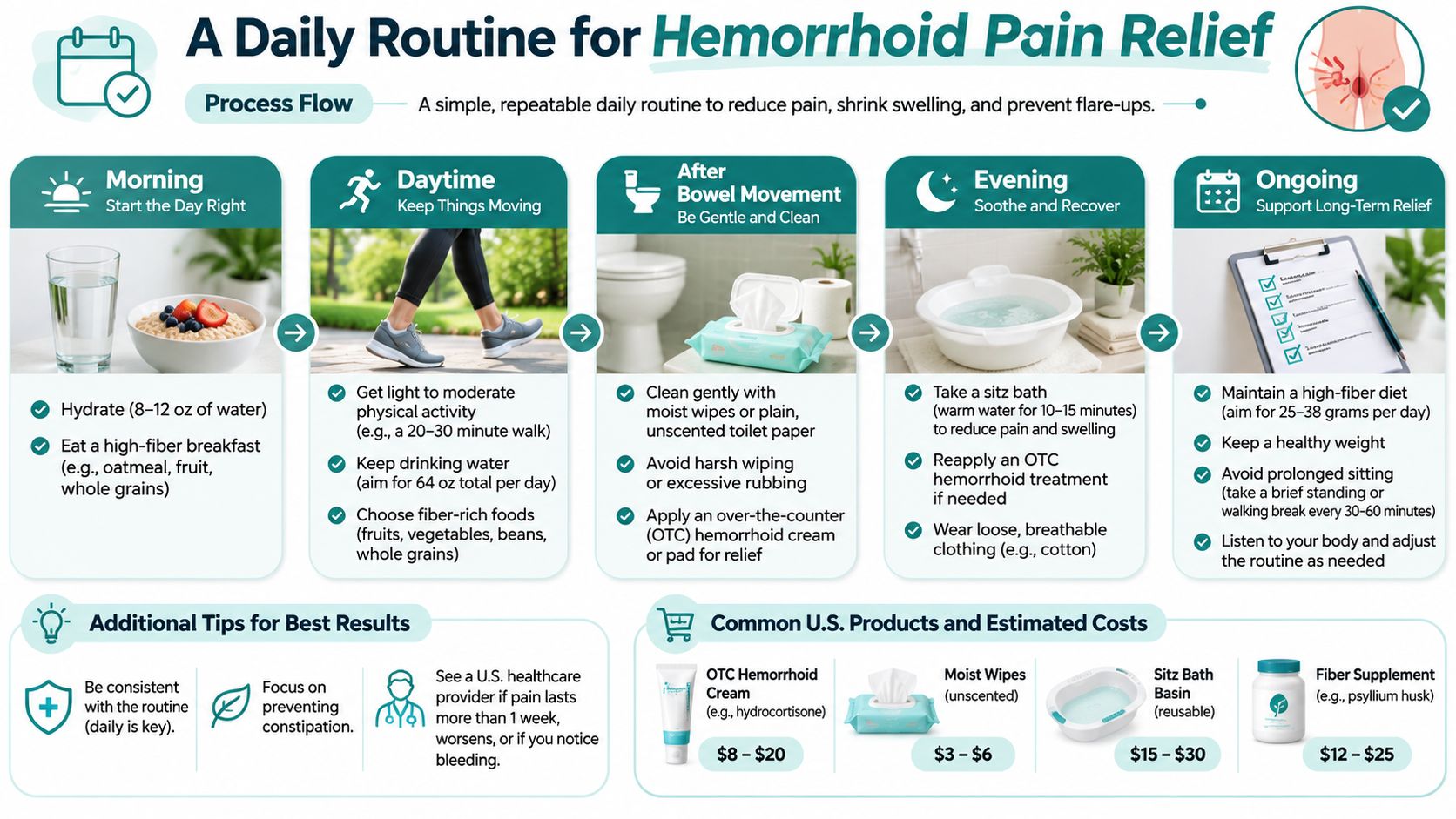
Keep it simple: A routine you can follow gently is more useful than repeatedly switching products.
Our line includes external creams, a sitz bath soak mix, and a hygienic cleansing lotion. These can support soothing comfort, but they aren't a cure or a requirement for recovery. If the routine isn't helping within the cream's labeled treatment period, get advice rather than extending it on your own.
When to Call a Provider and Next Steps
Repeatedly numbing pain you don't understand can delay assessment of a fissure, a thrombosed hemorrhoid, an abscess, or something that needs different care. The label limit on any numbing product is where self-care ends and a conversation begins.
A JAMA review of hemorrhoid management describes oral and topical analgesics as part of medical care for selected thrombosed external hemorrhoids. That is supportive treatment inside a clinical decision, not a way to diagnose a painful lump yourself.
Use symptoms to decide how quickly to get help
- Mild itching or discomfort: Short-term OTC care may be reasonable when symptoms are familiar, there's no bleeding, and nothing is worsening.
- Sudden severe, lump-like pain: Arrange prompt assessment. A clot is one possible cause, but pain alone can't confirm it.
- Rectal bleeding: Have a doctor check it rather than assuming hemorrhoids are responsible.
- Increasing pain, fever, or spreading redness or swelling: Seek prompt medical care, especially after childbirth.
- Symptoms past 7 days or coming back: For our external creams, that is the labeled point to consult a healthcare professional. Recurring symptoms deserve an evaluation, not another round of numbing.
Bleeding, worsening symptoms, or an allergic reaction are reasons to stop sooner.
If you've been told you have a fissure, temporary relief isn't the same as healing. Persistent pain or a fissure that isn't closing needs follow-up, so report worsening symptoms before a referral threshold arrives.
Our guide to who treats hemorrhoids can help you choose where to start. Pregnancy, breastfeeding, blood thinner use, and heart, kidney, stomach, or thyroid conditions are reasons to review a product with a doctor or pharmacist first.
Common questions about hemorrhoid pain medicine
What is the best pain medication for hemorrhoids?
For localized burning or soreness, a short-term topical anesthetic is the closest symptom match. General aching, friction, and swelling respond to different options.
Can I use numbing cream every day?
Ask what the daily use is covering. Needing it most days to feel normal means the symptom is outrunning the product, and that pattern belongs in a conversation with a clinician.
Is hemorrhoid cream safe during pregnancy?
There's no blanket answer for every cream. Ask your pregnancy care provider about the specific actives in the tube you're holding, lidocaine and phenylephrine included, and whether a warm sitz soak suits your recovery.
Should I keep using cream if I see blood?
New bleeding is a reason to get it looked at, not to stay numb while you wait. Note how much, how often, and what color it is, because that detail shapes what your provider does next.
Mild flares that ease within a few days usually need no more than the routine above. Pick the option that matches your main symptom, respect its label limit, and ask for help early when something isn't improving.
Revivol-XR offers external creams and comfort-care options for soothing relief when pain, itching, or irritation interferes with daily life. Compare ingredients and read the full Drug Facts directions at Revivol-XR, and consult a healthcare provider for persistent, severe, or bleeding symptoms.