Best Exercises for Hemorrhoids: 8 Safe Options

Many people think hemorrhoid relief requires complete rest, but the wrong kind of rest can leave you constipated, tense, and sitting in the exact position that worsens discomfort. The best exercises for hemorrhoids are gentle, pressure-aware movements that support regular bowel habits and relaxation rather than forceful effort.
A 2021 review identified walking, swimming, and yoga as generally safe options, recommending moderate activity for 20 to 60 minutes, 3 to 5 days per week when appropriate. It also cautioned against cycling, rowing, horseback riding, and weightlifting movements that involve breath-holding or the Valsalva maneuver because they can increase pressure on sensitive anorectal tissue. (2021 review)
This list focuses on eight practical strategies for straining, constipation, prolonged sitting, poor breathing mechanics, and pelvic tension. Stop any movement that increases pain, pressure, or bleeding. Exercise can support comfort and prevention habits, but it can't diagnose or cure a condition. Contact a healthcare provider for persistent, severe, or bleeding symptoms.
Table of Contents
- 1. Pelvic floor strengthening exercises
- 2. Walking and gentle cardio exercise
- 3. Proper sitting posture and positioning adjustments
- 4. Squatting and deep hip flexor stretches
- 5. Abdominal breathing and gentle core engagement
- 6. High-fiber intake paired with progressive exercise habits
- 7. Yoga and flexibility-focused stretching routines
- 8. Interval walking and graduated walking progression programs
- 8-Exercise Comparison for Hemorrhoid Relief
- Build a gentle routine and know when to get help
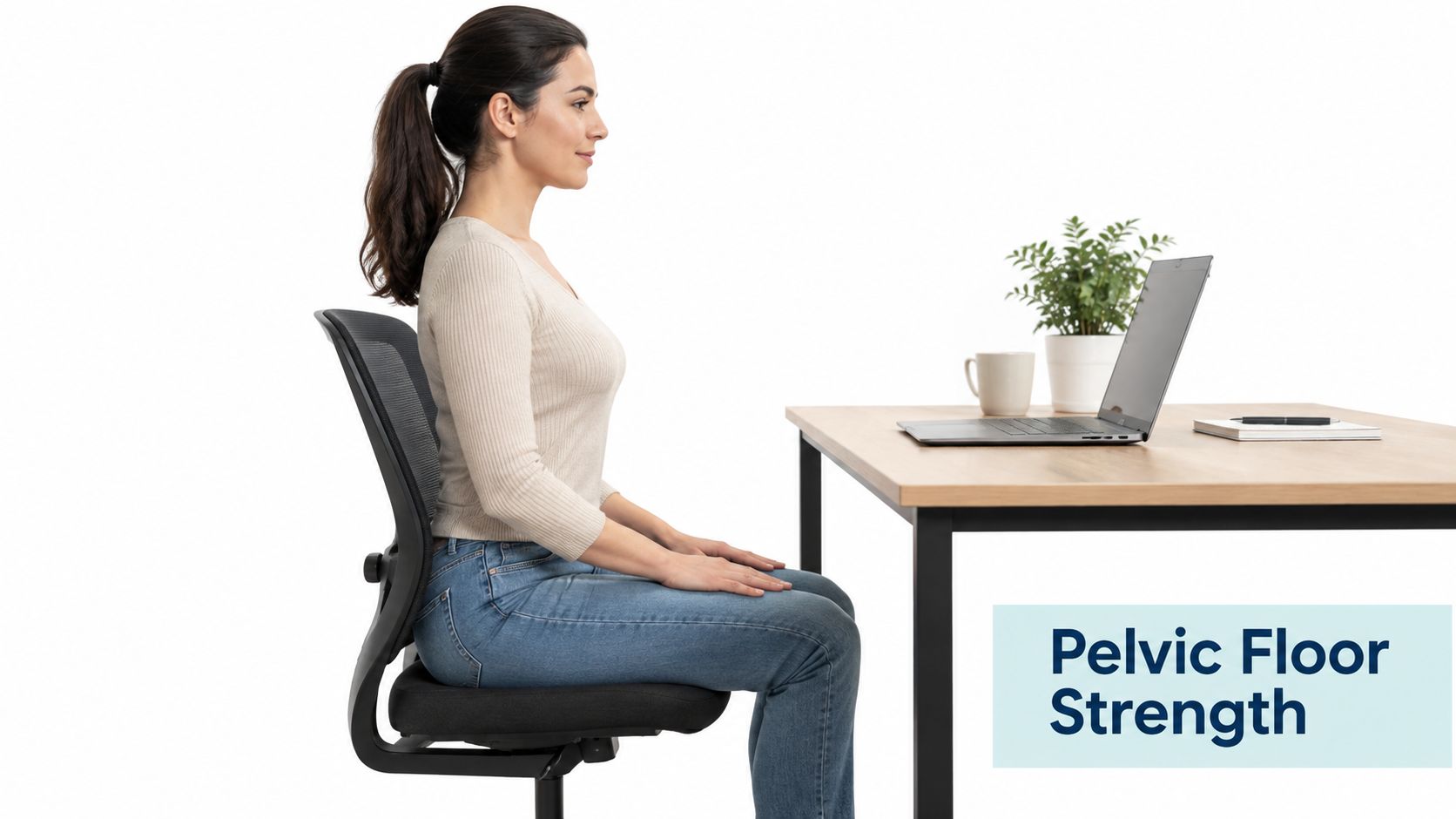
1. Pelvic floor strengthening exercises
Kegel exercises can help you become more aware of the muscles around the pelvic floor, rectum, and anal canal. The useful action is a gentle squeeze followed by a complete release. The release matters because constantly clenching can add pelvic tension during an active flare.
Pregnancy and childbirth can place extra demands on the pelvic floor. Hemorrhoids occurred in 37.9% of women after a first pregnancy, 38.4% after two pregnancies, and 40% after three or more pregnancies, according to a 2022 review of pregnancy-related hemorrhoids. (2022 pregnancy review)
How to practice without increasing pressure
Start in a comfortable position, such as lying down or sitting upright.
- Find the sensation: Imagine you're gently stopping gas from passing. Don't repeatedly stop your urine stream as an exercise, because that can interfere with normal bladder emptying.
- Contract and release: Squeeze gently for 3 to 5 seconds, then rest for the same length of time.
- Breathe normally: Breath-holding increases abdominal pressure, so keep your jaw, belly, and shoulders relaxed.
- Reduce intensity during pain: If the area feels sore or tightly clenched, use shorter contractions or focus only on slow relaxation.
Consistency matters more than force. A postpartum patient might practice while feeding a baby, while an office worker might use a brief set after standing from a desk. If you're unsure whether you're using the right muscles, a pelvic floor physical therapist can provide individual guidance.
For a fuller explanation of technique and limitations, see whether Kegel exercises help with hemorrhoids. After a bowel movement, some adults may also choose Revivol-XR® Advanced Hemorrhoid Cream, 5% Lidocaine + Phenylephrine for temporary soothing relief, used exactly as directed on its Drug Facts label.
2. Walking and gentle cardio exercise
Walking is often the safest starting point for increasing activity because it creates steady movement without saddle pressure or heavy abdominal bracing. It can also break up long periods of sitting and support regular bowel movement. Begin with a comfortable walk and increase duration only when symptoms remain stable.
Keep the effort easy enough to speak in full sentences. Slow down or stop if pain, pressure, bleeding, or swelling builds during the walk or remains worse afterward. Swimming may suit older adults or people whose joints make walking uncomfortable, although getting in and out of the pool must be safe.
Use these adjustments to reduce common pressure triggers:
- For desk workers: Take a brief walk after meals or during planned breaks instead of remaining seated until discomfort appears.
- For pregnancy: Choose level ground, supportive shoes, and a steady pace that does not leave you exhausted.
- For postpartum recovery: Follow your clinician's advice, particularly after a C-section, and return gradually as healing allows.
- For older adults: Walk with a partner, use a rail or mobility aid, or choose a pool when balance or joint pain makes independent walking less secure.
Pregnancy and childbirth can increase the likelihood of constipation and anorectal discomfort. Cleveland Clinic guidance highlights regular movement, hydration, and avoiding straining. It also notes that walking soon after delivery or a C-section may help reduce initial constipation when medically appropriate.
For practical pacing ideas, see the guide to walking for hemorrhoid relief. Cardio choices still require judgment. A 2024 observational study of pregnant women found no significant association between exercise exposure and anorectal symptoms. Separately, a small pilot study reported higher hemorrhoid prevalence among participants who cycled, rode horses, or bodybuilt, though the sample was too small to establish cause. (2024 sport and hemorrhoid findings)
Movement may support bowel regularity and reduce time spent sitting, but it does not replace short-term soothing care or medical assessment when symptoms are severe, persistent, or unusual.
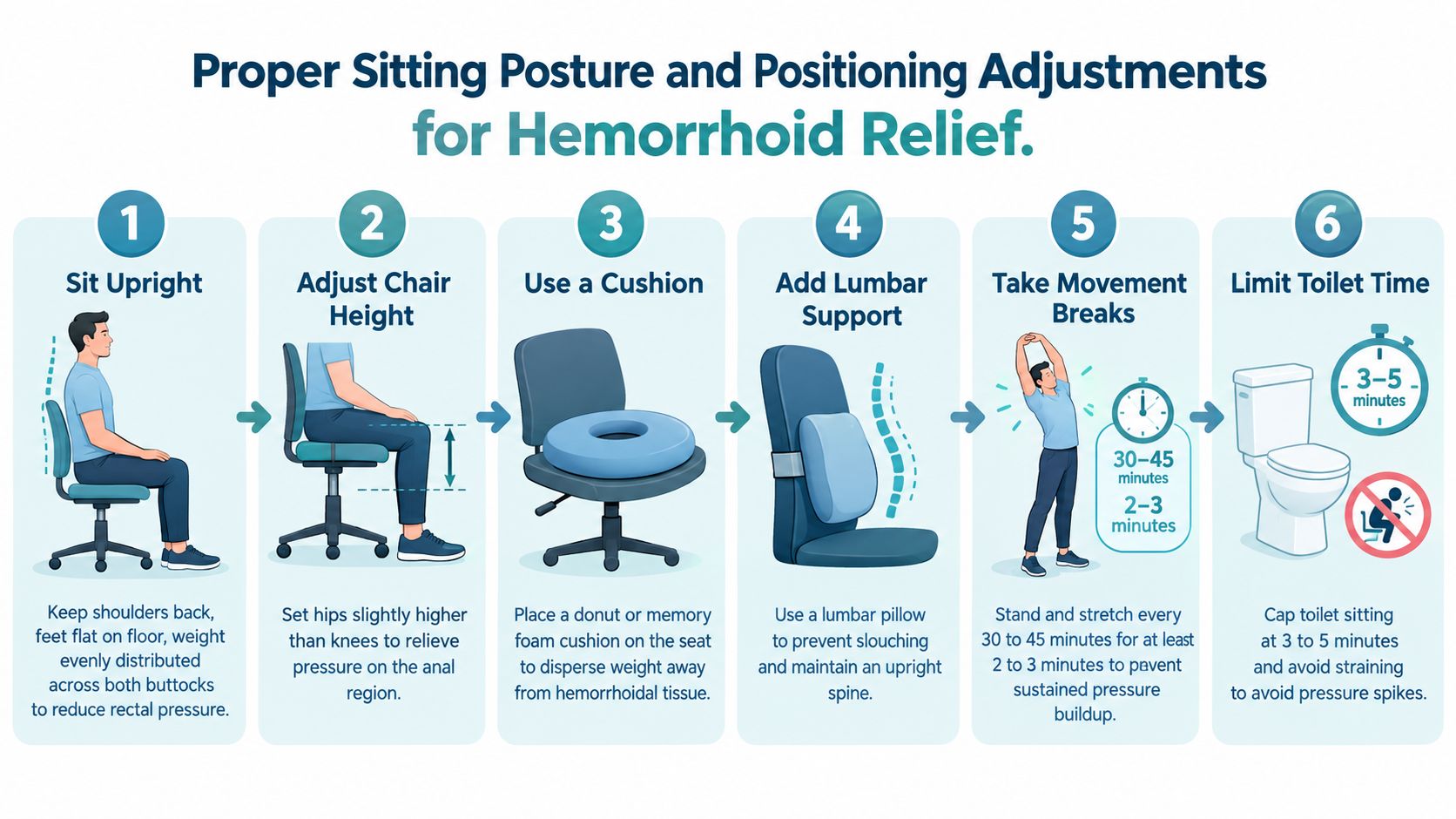
3. Proper sitting posture and positioning adjustments
Sitting can increase pressure when your pelvis is tucked under, your weight rests unevenly, or you remain still through a workday, commute, or recovery period. A soft couch may feel comfortable at first, yet it can encourage slouching and pressure around the anal and perineal area.
Set up your seat so both feet are supported, your shoulders stay relaxed, and your weight is shared between your sitting bones and thighs. Use a cushion only if it reduces pressure without making you sink backward or struggle to stand. Shift position before numbness, soreness, or pressure becomes pronounced.
A simple reset takes less than a minute:
- Place both feet flat on the floor.
- Lift your chest gently while keeping your back neutral.
- Keep your knees and hips comfortably aligned.
- Stand, walk, or stretch at regular intervals.
- Change position as soon as the seat feels painful or restrictive.
Pregnancy may call for a support pillow, a wider stance, or slightly raised legs. After delivery, side-lying or brief sitting periods may feel better than a long session on a firm chair. Older adults should choose a stable seat and a position that allows easy, safe transitions. A cushion that makes standing difficult is the wrong choice.
Toilet time also matters. Sit only for the bowel movement, breathe without straining, and leave when you finish. Scrolling can turn a brief task into prolonged sitting, reinforcing the pressure pattern that movement is meant to reduce.
For more positioning options, see how to sit with hemorrhoids comfortably. Remove any cushion that causes tingling, increased pressure, or pain.
Practical rule: Choose the position you can change easily and leave without pain.
4. Squatting and deep hip flexor stretches
A small footrest can help some people adopt a more comfortable toileting position by bringing the knees above the hips. The aim isn't to force a deep squat or push through a bowel movement. It's to create a stable position that lets the pelvic floor relax while you breathe normally.
Use a sturdy footrest that won't slide. Place both feet on it, lean forward slightly with a relaxed back, and allow the abdomen to soften. If nothing happens naturally, get up and try again later instead of bearing down.
Add mobility away from the toilet
Gentle hip mobility may help people who sit for long periods or feel generally tight through the hips and lower back. Try a supported lunge or a comfortable hip stretch, keeping the range small enough that you don't brace or strain.
Bodyweight squats can be useful for general leg strength, but they aren't automatically safe during a painful flare. Avoid loaded squats, forceful repetitions, and any movement that causes throbbing or pressure. During pregnancy, use support and stop for dizziness, pelvic pain, or unusual discomfort. After delivery, wait for appropriate clearance and modify for healing tissues.
A warm sitz bath can be used as separate soothing care after activity or bowel movements. Revivol-XR® Sitz Bath Soak Mix is an external bath-water additive containing Epsom salt among its listed ingredients. Follow the product directions, patch-test as advised, avoid swallowing it, and ask a clinician before use if you have sensitive skin, essential-oil allergies, or diabetes.
This video demonstrates positioning concepts that may help you assess your own setup.
5. Abdominal breathing and gentle core engagement
Breathing mechanics can reduce unnecessary pressure. During lifting, exercise, or a bowel movement, breath-holding and abdominal bracing may create a bearing-down pattern. A slower exhale helps you recognize that response and keep the effort lighter.
Try this before adding core work. Lie down or sit with support, place one hand on your lower ribs, and inhale through your nose. Let your ribs and abdomen expand naturally, without forcing them. Exhale slowly as your belly softens. Practise for a few minutes before a bowel movement or after prolonged sitting.
When the pattern feels comfortable, add one low-load movement, such as a supported bridge, bird dog, or modified dead bug. Keep the range small and the effort easy enough to speak in full sentences. The goal is coordinated breathing, not maximum strength.
- Breathe through the effort: Exhale during the harder part instead of holding your breath.
- Choose gentle core work: Skip forceful crunches, sit-ups, and intense abdominal exercises during a painful flare.
- Use stable support: Perform balance-based movements beside a wall or sturdy surface.
- Watch the pressure pattern: Stop if you notice bearing down, breath-holding, or a bulging sensation. These signs suggest the load is too high for your current stage.
Pregnancy may require a supported position and a smaller range of motion. After childbirth, abdominal healing and pelvic floor symptoms deserve attention alongside hemorrhoid discomfort. A pelvic-health physical therapist can help tailor breathing, abdominal support, and relaxation, especially for postpartum recovery or older adults rebuilding strength.
Movement supports pressure management, but it does not replace short-term soothing care or medical assessment for persistent bleeding or worsening symptoms.
6. High-fiber intake paired with progressive exercise habits
Fiber isn't an exercise, but movement works better when bowel movements are easier to pass. A routine that combines comfortable activity with gradual fiber and fluid changes is more useful than pushing through a hard workout while remaining constipated.
The American Academy of Family Physicians notes that constipation may affect up to 17% of women during the first year after childbirth. Its first-line management discussion includes increased water and fiber, osmotic laxatives such as polyethylene glycol or lactulose, and stool softeners when appropriate for postpartum hemorrhoid care. (AAFP postpartum constipation guidance)
Make the change gradual
Add fiber from foods such as oats, beans, fruit, vegetables, and whole grains. Increase it gradually and drink enough fluid for your body and medical situation. A sudden increase can cause bloating, which may make you abandon the routine.
Pair a fiber-containing meal with a gentle walk. For example, take a short walk after an oat-based breakfast, or move around after a lunch containing beans and vegetables. If you have inflammatory bowel disease, irritable bowel symptoms, kidney disease, swallowing problems, or another digestive condition, ask a healthcare professional before making a major dietary change.
A postpartum parent may need individualized guidance, particularly when breastfeeding, taking iron, using pain medication, or recovering from surgery. Older adults may also need medication review because some medicines contribute to constipation.
Bowel comfort depends on the whole routine: movement, fluids, fiber, relaxed breathing, and responding to the urge all work together.
7. Yoga and flexibility-focused stretching routines
Gentle yoga can ease pelvic tension, stiffness, and stress that make relaxation harder. Choose restorative, beginner, or prenatal sessions. Hot yoga, power yoga, and classes that promote intense core bracing can increase heat, pressure, or breath-holding.
Try a short sequence of cat-cow movements, supported child's pose, a comfortable butterfly stretch, and relaxed hip mobility. Place pillows or blocks under your knees, hips, or hands to reduce strain. Breathe steadily, allow the exhale to lengthen, and keep the pelvic floor relaxed rather than gripping.
Modify for pregnancy and recovery
During pregnancy, stop any position that causes dizziness, abdominal discomfort, or pelvic pressure. Follow pregnancy-specific guidance, especially as balance and joint comfort change. After birth, account for perineal healing, abdominal recovery, fatigue, and pelvic floor symptoms. A teacher trained in prenatal or postpartum movement can suggest appropriate modifications.
Older adults can perform stretches seated or hold a chair for balance. Desk workers can use a brief standing sequence with gentle hip movement and spinal mobility, which avoids staying on the floor.
Use yoga as movement-based support, separate from short-term soothing care such as a cool compress or clinician-recommended treatment. Skip deep twists, inversions, intense hip opening, and any pose that makes you hold your breath.
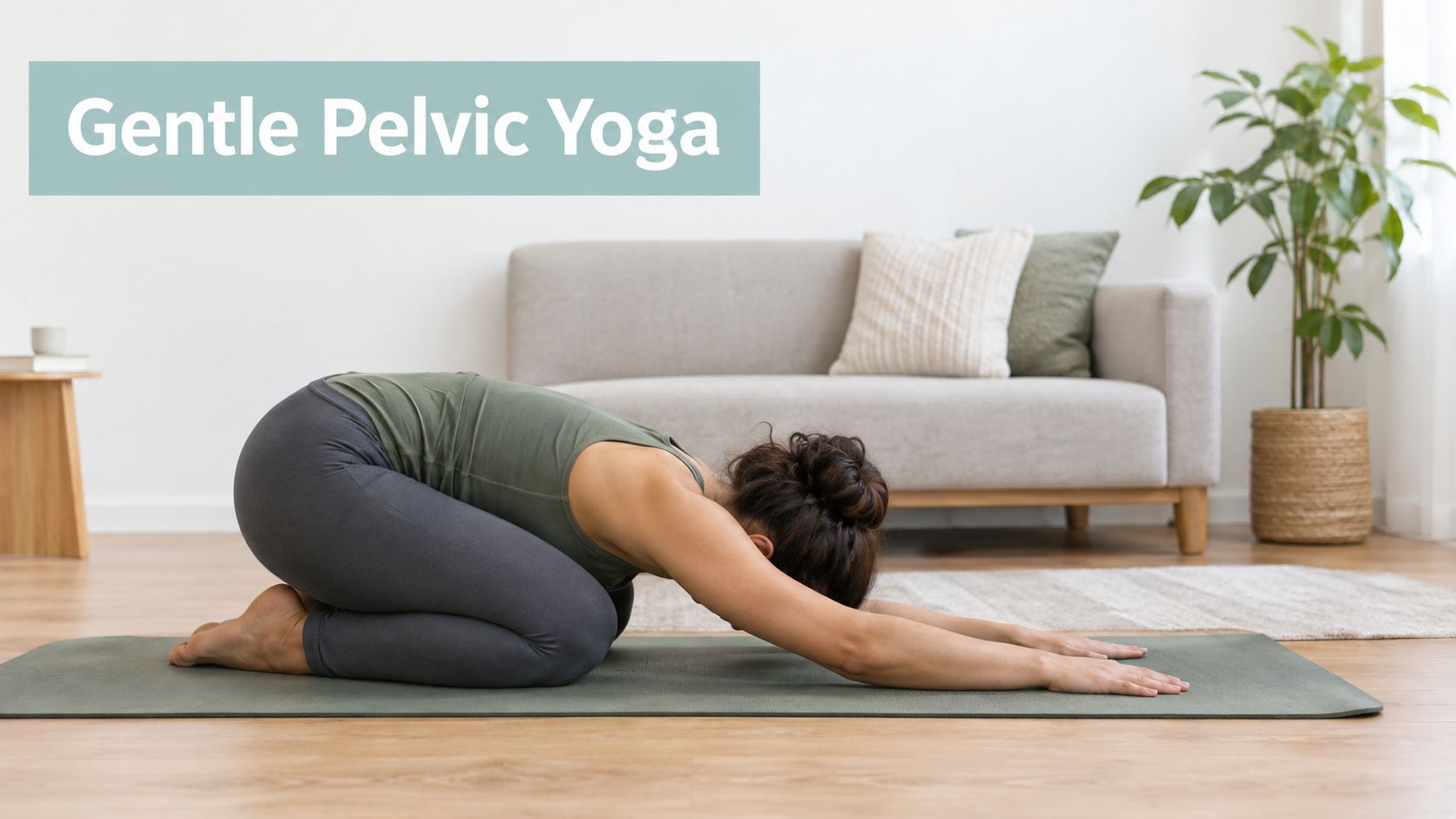
A good session should leave the pelvic area looser and the shoulders dropped, with no gripping or added pressure.
8. Interval walking and graduated walking progression programs
Interval walking works best as a controlled progression, not a test of speed. It can build regular movement while limiting the prolonged sitting, constipation, and fatigue that may aggravate symptoms.
Start with an easy walk and relaxed breathing. Keep your shoulders loose, avoid bearing down, and maintain an upright posture without bracing your abdomen. Continue at that level until your symptoms remain stable during and after the walk.
A pressure-aware progression
- Early sessions: Walk comfortably for a short period and notice whether pressure, throbbing, or bleeding increases.
- Next stage: Add a few minutes when the current duration feels manageable.
- Later stage: Introduce brief brisk intervals followed by slower recovery walking.
- Ongoing routine: Keep the effort moderate. Shorten an interval if your breathing becomes strained or your posture changes.
For example, alternate a brief brisk segment with slower walking, then finish at an easy pace. Progression matters more than intensity. If brisk walking creates pelvic pressure, return to the comfortable pace and build consistency before trying again.
Pregnancy and postpartum recovery may require a slower increase, particularly after delivery or surgery. Follow your clinician's guidance and stop for new pain, dizziness, or increased bleeding. Older adults can use even surfaces, a phone, or a walking partner when balance is uncertain. Sedentary workers may begin with several brief walks spread across the day.
This plan supports movement and bowel regularity. It does not replace short-term soothing care, such as a cool compress or clinician-recommended treatment. During a flare, choose the version that lets you walk without straining, breath-holding, or added pelvic pressure.
8-Exercise Comparison for Hemorrhoid Relief
| Intervention | 🔄 Implementation complexity | 💡 Resource requirements | ⭐📊 Expected outcomes (timeframe) | ⚡ Ideal use cases | Key advantages |
|---|---|---|---|---|---|
| Pelvic Floor Strengthening Exercises (Kegels) | Medium, requires learning correct technique and consistency | None to low, no equipment; optional PT or guided app | ⭐⭐⭐⭐, noticeable improvement in 4–8 weeks; reduces straining and improves continence | Postpartum recovery, straining-related hemorrhoids, preventative maintenance | Strengthens pelvic support; discreet and low-cost |
| Walking and Gentle Cardio | Low, easy to start, habit formation needed | Minimal, comfortable shoes, 20–30 min/day time commitment | ⭐⭐⭐, benefits in 2–4 weeks; improves circulation and bowel regularity | Pregnant/postpartum, sedentary workers, constipation prevention | Low-impact, boosts circulation and mood; reduces constipation |
| Proper Sitting Posture & Positioning | Low, habit change and periodic adjustments | Low, ergonomic chair or cushion ($20–60); workplace adjustments | ⭐⭐⭐, immediate pressure relief; limited effect on root cause | Office workers, drivers, people sitting long periods | Immediate non‑pharmacologic relief; portable solutions |
| Squatting & Deep Hip Flexor Stretches | Medium, requires practice and mobility work | Low to moderate, footrest (~$20–60) or bodyweight practice | ⭐⭐⭐⭐, immediate improvement during bowel movements; 1–2 weeks to adapt | Chronic constipation, postpartum (with clearance), those using squat footrests | Aligns anorectal angle to reduce straining; addresses evacuation mechanics |
| Abdominal Breathing & Core Engagement | Medium, technique learning and gradual progression | Minimal, instruction/guidance helpful; short daily sessions | ⭐⭐⭐, gradual benefits in 3–4 weeks; regulates intra‑abdominal pressure | Postpartum core rebuilding, desk workers, stress-related constipation | Reduces pressure spikes, supports pelvic floor without strain |
| High‑Fiber Intake + Progressive Exercise | Medium, lifestyle and diet change; sustained commitment | Low, food choices; optional fiber supplements; planning/time | ⭐⭐⭐⭐, significant benefits in 2–4 weeks; lowers recurrence when maintained | Anyone with constipation risk, long‑term prevention, postpartum | Addresses root cause (constipation); broad health benefits |
| Yoga & Flexibility‑Focused Stretching | Low–Medium, regular practice and pose modification | Low, mat/classes/online guidance; props optional | ⭐⭐⭐, benefits in 4–6 weeks; improves pelvic mobility and relaxation | Stress‑related constipation, postpartum, seniors, mobility work | Low‑impact, promotes relaxation and parasympathetic bowel support |
| Interval Walking & Graduated Walking Programs | Medium, structured progression and tracking | Minimal, time, comfortable shoes, optional app | ⭐⭐⭐⭐, measurable fitness and bowel benefits in 6–8 weeks; reduces constipation risk ~40–50% | Sedentary people returning to activity, postpartum (post‑clearance) | Builds sustainable habit and measurable progress; efficient cardio gains |
Build a gentle routine and know when to get help
You don't need to use all eight strategies at once. Start with a short, comfortable walk and a few minutes of relaxed breathing. Add pelvic floor work only if you can contract and release without clenching. During long sitting periods, stand and change position regularly. A stable footrest may help bowel positioning if it feels comfortable, but don't force a squat or strain.
A practical daily rhythm might look like this:
- Morning: Gentle walking or relaxed mobility.
- During work: Frequent posture changes and brief movement breaks.
- Before a bowel movement: Slow breathing, relaxed shoulders, and no pushing.
- After a bowel movement: Gentle cleaning and separate soothing care if needed.
- Evening: Restorative stretching or a short walk, depending on symptoms.
Avoid breath-holding, forceful straining, heavy lifting, high-impact activity, and any exercise that increases pain, pressure, swelling, or bleeding. Cycling, rowing, horseback riding, and Valsalva-heavy weightlifting deserve particular caution because they can place pressure on sensitive tissue. The 2021 review recommends moderate activity, while also emphasizing that exercise choices should be adjusted to symptoms and pressure demands. (Lifestyle review on hemorrhoidal disease)
Warm-water sitz care may provide short-term comfort. Mayo Clinic guidance for anal fissure symptoms describes warm-water soaks for 10 to 20 minutes several times daily, particularly after bowel movements, along with avoiding straining. (Mayo Clinic sitz bath guidance) This type of care can soothe irritation, but it doesn't establish the cause of symptoms or replace an evaluation.
Appropriately labeled OTC products such as Revivol-XR may provide temporary soothing relief and comfort when used exactly as directed. Read the Drug Facts label, don't exceed the stated use, and ask a healthcare professional before use during pregnancy or breastfeeding. For the cream described above, the product information says to stop use and ask a doctor if bleeding occurs, symptoms worsen, or symptoms don't improve within 7 days.
Contact a healthcare provider for persistent, severe, or bleeding symptoms. Seek advice sooner if you're pregnant, recently delivered, recovering from surgery, taking medicines that affect bowel movements, or managing a condition that makes exercise or warm baths less suitable. University of Rochester postpartum guidance advises contacting a provider if a bowel movement hasn't occurred by day 3 or 4 after birth and lists warm baths, cold witch hazel, and gradual return to exercise after clearance among comfort measures. (University of Rochester postpartum guidance)
The safest plan is the one that reduces pressure, keeps breathing easy, supports comfortable bowel movements, and respects your recovery stage. Gentle consistency is more useful than pushing through a flare.
Revivol-XR offers topical products designed for temporary relief of hemorrhoid-related pain, itching, burning, soreness, and discomfort, including a 5% lidocaine formula and protective ingredients in its advanced cream. Visit Revivol-XR to review the options and use them alongside, not instead of, gentle movement and appropriate medical guidance.