Anal Fissure Pain Relief: A Practical Step-by-Step Plan

A sharp, tearing pain during a bowel movement can turn an ordinary bathroom visit into something you actively avoid. Anal fissure pain relief works best when you calm the pain quickly while also softening stool, reducing straining, and stopping the wound from being torn open again.
Anal fissures are common and often painful. One clinical reference estimates a lifetime incidence of about 11%, while a U.S.-focused estimate places annual new diagnoses between 240,000 and 342,000, with an approximate lifetime risk of 7.8%. (Clinical review of acute anal fissures)
Table of Contents
- Why Anal Fissure Pain Feels So Bad Right Now
- Immediate First-Aid to Calm the Pain
- How to Use Sitz Baths the Right Way
- Softening Stools So the Fissure Can Heal
- Topical Vasodilators Nitrates and Where Lidocaine Fits
- Suppositories and Internal Care That Actually Help
- Red Flags and When to See a Doctor
Why Anal Fissure Pain Feels So Bad Right Now
You sit down at work and feel a sudden sting. It's sharp enough to make you shift in your chair, and the next bowel movement already feels like a threat. Then, after you finish, the cutting pain changes into a deep burn or throb that lingers.
That pattern is typical of a fissure, a small tear in the sensitive lining of the anal canal. The injury hurts when stool passes over it, but the tear itself isn't the whole story. Pain can trigger tightening of the internal anal sphincter, the muscle that controls the anal opening. That spasm can restrict blood flow around the wound and make healing harder. (Explanation of fissure-related muscle spasm)
The real target isn't numbness alone. It's fewer re-tears.
You may notice two distinct pain phases:
- During the bowel movement: A cutting, tearing, or glass-like sensation as stool stretches the injured tissue.
- Afterward: Burning, throbbing, or cramping that may continue for a while after you leave the bathroom.
Hard stool, constipation, straining, frequent diarrhea, childbirth, and irritation can all contribute. If you want a clearer explanation of how these triggers interact, review this guide to what causes anal fissures.
The mistake I see most often is treating only the first phase with a numbing cream. That may make the next bathroom trip more tolerable, but it won't correct stool hardness or sphincter spasm. Effective care runs on two tracks: comfort now and protection during every bowel movement.
Immediate First-Aid to Calm the Pain
Start with gentle care, not an aggressive routine. During the first day, the goal is to reduce contact, prevent additional irritation, and use topical relief only as directed.
- Clean without scrubbing. Rinse with lukewarm water after a bowel movement, or use a fragrance-free wipe that doesn't sting. Avoid harsh soap, rubbing, and dry toilet paper pressed repeatedly against the area. Pat dry.
- Use topical anesthetic externally. A small amount of lidocaine may temporarily reduce localized pain, burning, or itching. Apply it to the external anal opening only. Don't insert cream far inside, and follow the product label rather than extending use because the area still feels sore.
- Be careful with combination products. Products containing hydrocortisone and pramoxine may provide temporary symptom relief, but steroid-containing products shouldn't become an unsupervised long-term routine. Perianal skin is delicate, and repeated steroid use can cause problems.
- Check pain medicines before taking them. Ibuprofen may be unsuitable if you have a history of stomach ulcers, kidney disease, certain heart conditions, take blood thinners, or have been told to avoid nonsteroidal anti-inflammatory drugs. Ask a pharmacist or clinician which pain reliever is appropriate for you.
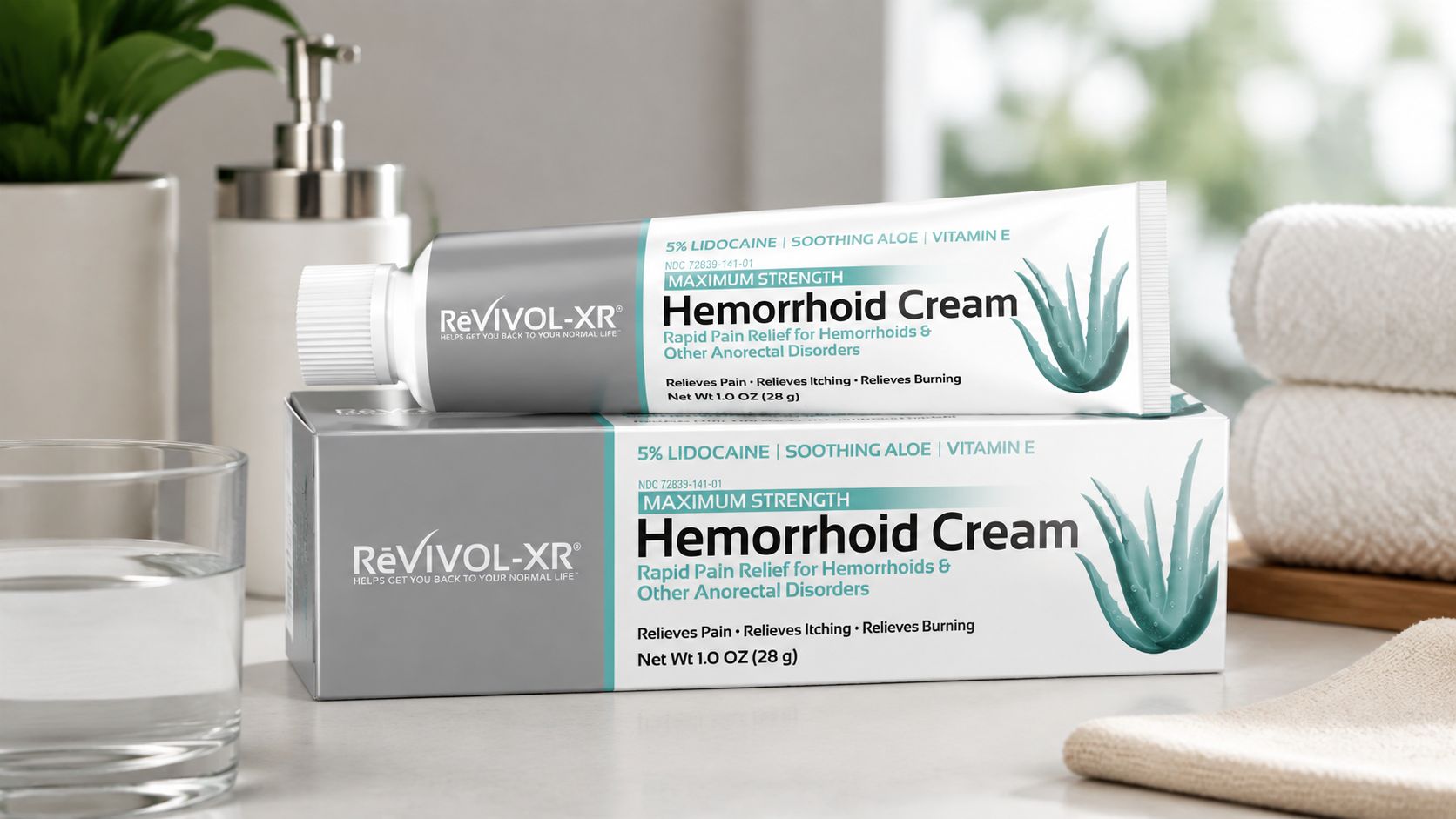
For external, temporary comfort, Revivol-XR 5% Lidocaine Numbing Cream, Maximum OTC Hemorrhoidal Grade Strength is described by the manufacturer as an external-use topical anesthetic containing lidocaine 5%, with aloe vera and vitamin E. It isn't intended to cure or treat an underlying condition. Follow its label, don't put it into the rectum, and stop use if bleeding occurs, symptoms worsen, or an allergic reaction develops.
What to avoid during a flare
Skip alcohol-based numbing gels, forceful cleaning, manual stretching, prolonged sitting, cycling, and anything that clearly aggravates the area. Don't force a bowel movement because you're trying to “get it over with.” If pain is severe, bleeding is more than minor, or you're unsure whether the problem is a fissure, contact a healthcare provider.
How to Use Sitz Baths the Right Way
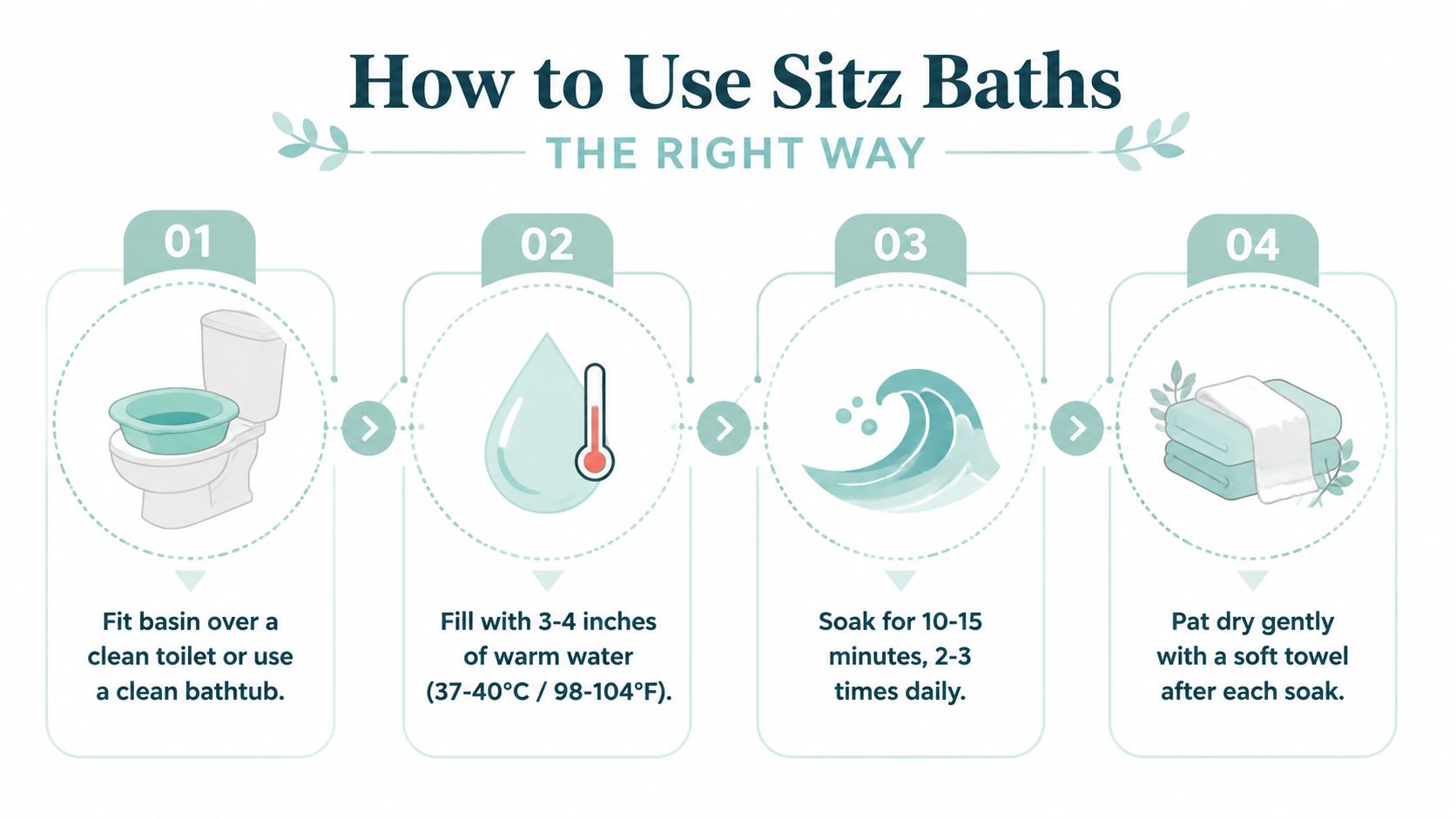
A sitz bath should feel warm and calming, not hot. Use a basin designed to fit over a clean toilet or a clean bathtub with enough water to submerge the perineum.
A simple routine
- Fill the basin: Use about 3 to 4 inches of warm water, roughly 37 to 40 degrees Celsius, and test it with your wrist.
- Soak briefly: Sit for 15 to 20 minutes, keeping the affected area submerged. Repeat two to three times daily and after a bowel movement if that feels soothing.
- Dry carefully: Stand slowly, then pat the area dry with a soft cotton towel. Rubbing can reopen irritated skin.
- Keep additions simple: Plain water is enough. Plain colloidal oatmeal may help itching. If you tolerate it, plain Epsom salt can be added, but stop if it stings.
Avoid essential oils, bubble bath, and strong soaps. Very hot water can increase irritation, swelling, or bleeding, while overly long soaks can dry and crack the skin. For a more detailed home setup, follow this guide to how to do a sitz bath at home.
If you prefer a prepared bath additive, Sitz Bath Soak Mix, Super Concentrated 20-in-1 Blend with Epsom Salt and Essential Oils contains Epsom salt, Dead Sea salt, aloe vera, witch hazel, coconut oil, and other botanical ingredients according to its product information. It's for external use only, and the manufacturer advises patch testing and avoiding it if you have sensitive skin or known essential-oil allergies.
Here's a visual reminder of the sequence:
Softening Stools So the Fissure Can Heal
A fissure can't heal reliably if every bowel movement scrapes it open again. Stool softening isn't background advice. It's the foundation of anal fissure pain relief.
Conservative care commonly includes fiber, hydration, warm baths, and stool-softening measures. One NHS clinical guideline notes that 50% of fissures resolve completely with constipation management, sitz baths, and fiber, and recommends limiting lidocaine 5% ointment to severe pain for only several days. (NHS-linked clinical guidance)
Build a gentler bowel routine
Start with fiber-rich foods such as oats, fruit, cooked vegetables, chia, and whole grains. Increase gradually, because a sudden increase can cause gas and cramping. Psyllium can be useful when food alone isn't enough, but take it with plenty of water and ask a pharmacist about the right product and amount for you.
Drink fluids consistently through the day. Water won't soften stool by itself if your overall diet is low in fiber, but inadequate fluid can make a fiber increase uncomfortable. Coffee and alcohol may worsen bowel irregularity for some people, so reduce them if you notice harder stool or more urgency afterward.
For persistent constipation, a clinician or pharmacist may suggest an osmotic option such as polyethylene glycol or lactulose. These draw water into the stool and are different from stimulant laxatives, which can cause urgency and cramping. Don't start prescription-strength or repeated laxative treatment without checking that it's suitable for you.
Track the stool, not just the pain. A less painful bowel movement is useful, but a consistently soft one protects healing.
For gentler cleanup after bowel movements, Hygienic Cleansing Lotion, Gentle Relief and Soothing Aloe and Witch Hazel is described as an external cleansing lotion that can be applied to toilet paper. Its product information lists aloe, vitamin E, witch hazel, and chamomile, and advises external use only.
Keep a simple one-week record:
- Fiber: Note fiber-rich foods and any supplement use.
- Fluids: Record whether you're drinking consistently.
- Bowel movements: Note stool hardness, straining, and pain afterward.
- Medication: Record any stool-softening product and how you tolerated it.
Topical Vasodilators Nitrates and Where Lidocaine Fits
Lidocaine can quiet the pain signal, but it doesn't relax the internal sphincter or directly address the healing problem. For a persistent fissure, prescription medicines may target the spasm instead.
Topical nitrates, such as glyceryl trinitrate, relax smooth muscle and can improve blood flow around the fissure. Calcium-channel blockers, including diltiazem, also relax the sphincter. A meta-analysis found that diltiazem modestly outperformed glyceryl trinitrate for healing, with a risk ratio of 1.16 and a 95% confidence interval of 1.01 to 1.33. The same review found glyceryl trinitrate reduced pain versus placebo by about 0.97 points on a visual analog scale, though the overall evidence was low certainty. (Meta-analysis of diltiazem and glyceryl trinitrate)
| Option | Typical dose | Healing evidence | Main side effect | Best for |
|---|---|---|---|---|
| Diltiazem | Often prescribed as 2% topical treatment, commonly twice daily | Modestly better healing than glyceryl trinitrate in the cited meta-analysis | Local irritation or other medicine-specific effects | Chronic fissure when a clinician recommends sphincter relaxation |
| Glyceryl trinitrate | Prescription topical treatment, strength and schedule set by the prescriber | Can support healing, but tolerability matters | Headache, reported in up to 30% of patients in the cited guidance | When diltiazem isn't suitable or available |
| Lidocaine | Short-course external pain control according to the label | Symptom relief, not a healing treatment | Irritation, allergy, or masking worsening symptoms | Severe pain during the first several days |
Many guideline approaches favor diltiazem over nitroglycerin because healing is similar while headaches are less common. Don't apply these prescription products internally unless your prescriber gives exact instructions. A clinician should decide whether a fissure is acute, chronic, recurrent, or something else entirely.
Hydrocortisone deserves restraint. It may be used for selected anorectal symptoms under medical guidance, but it isn't the core treatment for a fissure and can thin delicate skin when used repeatedly.
Suppositories and Internal Care That Actually Help
Internal products can be useful in specific situations, but they're easy to overuse. A glycerin suppository may briefly help lubricate and ease a hard stool, but repeated daily use can irritate the anal canal.
Prescription rectal creams or compounded preparations containing diltiazem or nitroglycerin may be considered when a clinician thinks direct access to the internal sphincter is appropriate. They're not interchangeable with any hemorrhoid suppository on a pharmacy shelf. If you're uncertain about a product, ask a pharmacist before using it.
A careful application routine is straightforward:
- Empty your bowel first if you can do so without straining.
- Wash your hands and clean the area gently.
- Lie on your left side with your knees slightly bent.
- Insert the prescribed product only as directed, using a light finger or applicator.
- Remain lying down briefly so it doesn't slip out.
- Wash your hands again.
Stop and seek advice if insertion causes sharp worsening pain or bleeding. Don't use numbing suppositories for an extended period just because they make symptoms easier to ignore. The guide to suppositories for anal fissures can help you understand where these products may fit, but it doesn't replace an individualized medical evaluation.
Red Flags and When to See a Doctor
Self-care is reasonable for mild symptoms when you're improving. It isn't a substitute for evaluation when the pattern is severe, unusual, or persistent.
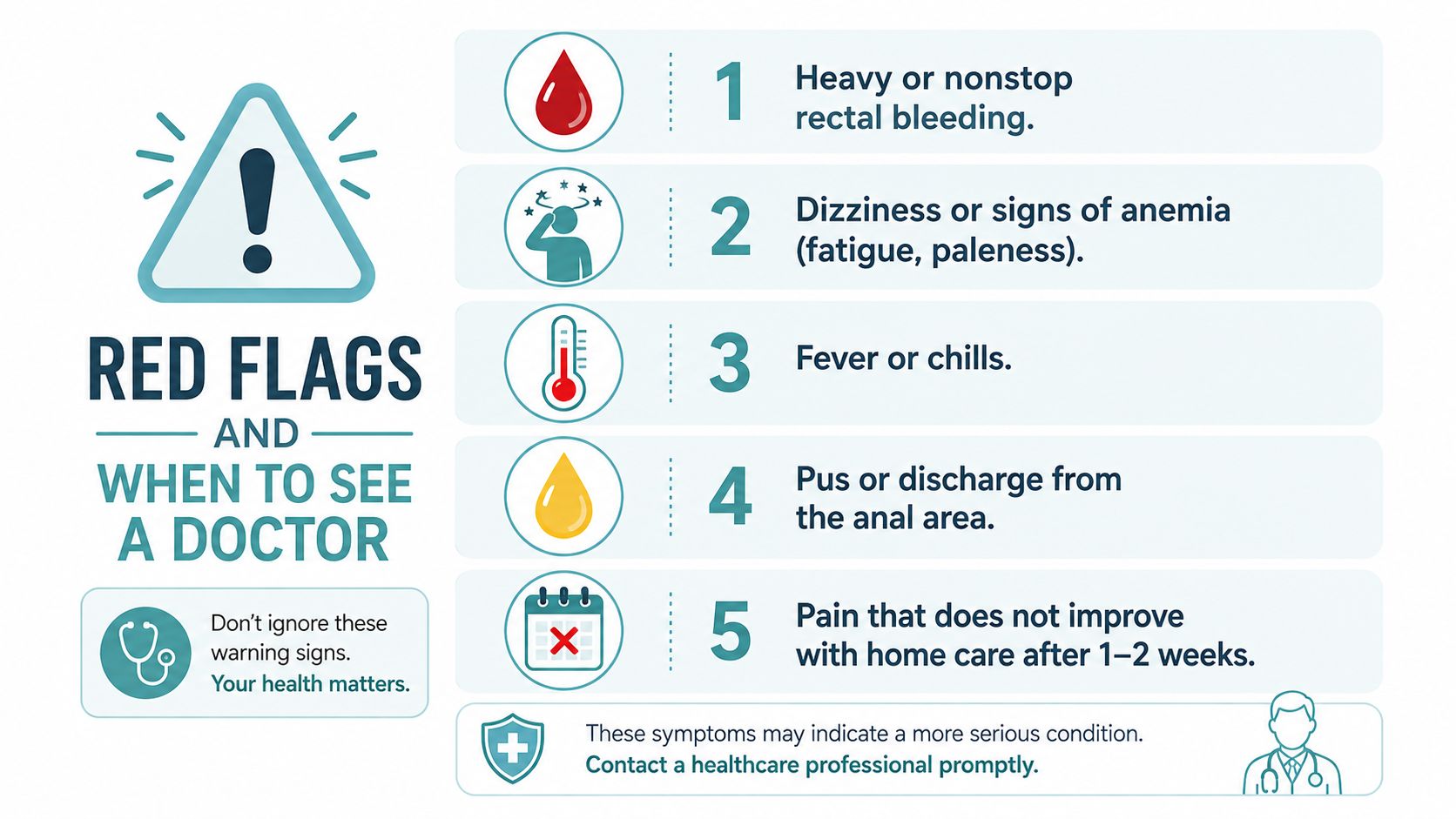
Seek prompt medical care for:
- Heavy or nonstop bleeding: Don't assume substantial bleeding is from a fissure.
- Dizziness or possible anemia: Weakness, unusual fatigue, or paleness with rectal bleeding needs attention.
- Fever or chills: These can signal an infection rather than a simple fissure.
- Pus or foul-smelling discharge: This requires clinical assessment.
- A palpable lump: A painful lump may need evaluation for an abscess or fistula.
- Inability to pass stool: Don't keep straining or repeatedly use laxatives.
- Worsening pain: Arrange an appointment if pain intensifies after two weeks of consistent home care.
- Recurrent reopening: Fissures that heal and split again need a prevention plan and possibly prescription treatment.
At an appointment, expect questions about bowel habits, pain timing, bleeding, childbirth, constipation, diarrhea, and products you've tried. A provider may perform an external inspection and, when appropriate, a gentle anoscopy. Persistent cases may lead to prescription diltiazem or nitroglycerin, botulinum toxin treatment, or referral to a colorectal specialist. Lateral internal sphincterotomy remains more effective than medical therapy for chronic fissures, with healing rates of at least 88% sustained for up to six years, according to modern guideline summaries. (Guideline summary and treatment patterns)
Pregnancy and postpartum recovery deserve extra care. A review reports that hemorrhoids and anal fissures occur in about 40% of pregnant women and women during the postpartum period, with symptoms most often reported in the third trimester and shortly after delivery. (Review of anorectal disorders during pregnancy and postpartum) Ask your obstetric or primary-care provider before using medication while pregnant or breastfeeding.
For temporary external comfort around fissure-related burning or irritation, Revivol-XR offers topical products including 5% lidocaine cream and soothing cleansing or sitz-bath options, each with its own label directions and warnings. Visit Revivol-XR to review the available products, and contact a healthcare provider if pain persists, worsens, or includes significant bleeding.