Suppository for Anal Fissure: Your Guide to Targeted Relief

I once watched a customer nearly give up, thinking the sharp, tearing pain of his anal fissure would be a life sentence... but the right product changed everything.
He came into our pharmacy defeated after trying every cream on the shelf. He described the pain as a "constant paper cut," a feeling so sharp it made sitting, walking, or even thinking about a bowel movement unbearable. Creams provided a fleeting moment of surface-level comfort, but the deep, internal pain always returned with a vengeance. He was convinced nothing would work.
Trust in a treatment disappears the moment it only masks the symptom instead of reaching the source.
The issue wasn’t that the creams were bad... it was that they were the wrong tool for the job. An anal fissure is an internal tear, and trying to heal it with an external cream is like trying to fix a leaky pipe by painting the wall in front of it. You’re not getting to the actual problem. The real breakthrough happens when you deliver medicated relief directly to the torn tissue, something only a suppository for anal fissure can effectively do. By dissolving right at the site of the injury, it coats the tear, reduces swelling, and creates a protected environment for healing to begin.
This is the guide to get you there. Here’s how to take action:
- Understand why suppositories work when creams fail.
- Identify the key ingredients that promote healing.
- Learn the correct way to use a suppository for maximum relief.
That customer’s story didn’t end in defeat. When he switched to a targeted suppository, the relief was profound. It wasn’t about just masking the pain... it was about finally delivering the healing ingredients to the place that desperately needed them.
Why Fissure Pain Needs a Different Approach
An anal fissure is a small, sharp tear in the delicate lining of your anal canal. Imagine a deep paper cut in one of the most sensitive parts of your body. These tears often result from the strain of passing hard stools, but they can also be caused by chronic diarrhea or even childbirth.
The intense pain you feel isn’t just from the tear itself. The injury triggers a powerful spasm in the internal sphincter muscle, which clamps down, reduces blood flow, and makes it incredibly difficult for the fissure to heal. It’s a vicious cycle of pain and tension.
The Problem with Surface-Level Creams
When you’re in pain, reaching for a cream seems logical. But for an anal fissure, it’s often ineffective. Since the tear is inside the anal canal, a topical cream applied to the outside simply can’t reach the source of the problem.
It’s like trying to soothe a sore throat by rubbing lotion on your neck... you’re not treating the right spot. For true healing, the medication must make direct contact with the injured tissue.
How a Suppository Delivers Targeted Healing
This is where a suppository for anal fissure treatment becomes a game-changer. Unlike a cream, a suppository is designed for targeted, internal delivery. Once inserted, your body's warmth melts it, releasing its active ingredients directly onto the fissure.
This direct-contact approach provides several key benefits:
- Reduces Swelling: An ingredient like phenylephrine helps shrink swollen tissues around the tear, which dramatically lessens pressure and throbbing pain.
- Creates a Protective Barrier: The suppository base, often made of cocoa butter or hard fat, forms a smooth, protective layer over the wound, shielding it from irritation during bowel movements.
- Calms Inflammation: Medicated ingredients soothe the inflamed tissue on contact, helping to break the cycle of pain and sphincter spasms essential for healing.
By getting the medicine exactly where it’s needed, a suppository acts like a medicated bandage on an internal wound. This focused approach is far more effective than just treating the surrounding skin.
Anal fissures are surprisingly common. One study found the lifetime risk is about 7.8%, leading to over 342,000 new cases in the U.S. each year. This highlights the need for effective treatments that get to the root of the problem.
"The biggest advantage of a suppository is its ability to bypass external barriers and deliver soothing, healing agents directly to the internal tissue that needs it most."
This targeted action not only offers faster relief but also sets up the ideal conditions for the tear to mend properly. If you're struggling with this painful condition, understanding your treatment options is the first step toward getting better. You can also check out our guide on how to treat anal fissures.
What to Look for in an Effective Fissure Suppository
Walking down the pharmacy aisle for a suppository for an anal fissure can be confusing, but not all products are created equal. The secret is in the formula... you need a smart combination of active ingredients that tackle the root cause of pain and gentle protectors that soothe the tissue.
A great suppository offers a two-pronged approach. First, an active ingredient targets swelling and pressure. Second, a protective base creates a safe environment so the torn tissue can mend. If you're missing one of these, you’re only solving half the problem.
Powerful Actives to Reduce Swelling
One of the best ingredients to look for is Phenylephrine HCl (0.25%). This is a vasoconstrictor, a technical term for something that helps shrink swollen tissues. When you have an anal fissure, the surrounding blood vessels become inflamed, adding extra pressure and that awful throbbing pain.
Phenylephrine works by gently tightening those vessels, bringing down the swelling. Less swelling means less pressure on the fissure and the sensitive nerves nearby. This is a game-changer for breaking the cycle of pain and sphincter spasms that prevents a fissure from healing.
When you target the swollen tissue directly, you’re not just masking the pain. You’re dismantling the physical pressure that makes the fissure worse with every little movement.
Essential Protectants for a Healing Barrier
While the active ingredient reduces swelling, the suppository's base plays an equally crucial role. Look for protectants like Cocoa Butter and Hard Fat. These ingredients are solid at room temperature but melt at body temperature.
Once inserted, they dissolve and form a smooth, lubricating layer that coats the anal canal. This barrier does two important things:
- Shields the Fissure: It creates a physical shield over the tear, protecting it from the irritation of passing stool.
- Soothes and Lubricates: The coating provides immediate soothing relief and helps make future bowel movements less painful.
This protective layer acts like a medicated bandage, giving your body the uninterrupted time it needs to heal the tissue. A well-formulated over-the-counter (OTC) suppository combines these elements for comprehensive relief.
Key Ingredients and Their Roles in Fissure Relief
| Ingredient | Type | Primary Function in Fissure Relief |
|---|---|---|
| Phenylephrine HCl | Vasoconstrictor | Reduces swelling in blood vessels to relieve pressure, pain, and throbbing. |
| Cocoa Butter | Protectant | Melts to form a soothing barrier that shields the fissure from irritation. |
| Hard Fat | Protectant | Creates a lubricating layer to make bowel movements less painful. |
| Aloe Vera | Botanical | Provides a cooling sensation and supports the body's natural healing process. |
| Witch Hazel | Botanical | A natural astringent that helps reduce minor irritation and discomfort. |
By combining these ingredients, a single suppository can address swelling, protect the tear, and soothe irritation all at once.
The Added Benefit of Calming Botanicals
The best formulas often include natural, calming ingredients. Botanicals like Aloe Vera and Witch Hazel have been trusted for centuries for their anti-inflammatory and soothing properties. When part of a suppository, they offer an extra layer of comfort.
Aloe is famous for its cooling effects, while Witch Hazel is a natural astringent that can help calm minor irritation. These ingredients work in harmony with the main actives to provide holistic relief.
How to Use a Suppository Correctly for Maximum Relief
Using a suppository for an anal fissure for the first time can feel a bit intimidating. But getting the technique right makes all the difference. The goal is simple: get the medication exactly where it needs to go without causing extra discomfort.
Think of it like learning any new skill. A little prep and knowing what to expect can make the process smooth and effective. The most important thing is to be relaxed and gentle.
Pre-Insertion Prep
Before you do anything, a few quick steps will set you up for success.
- Chill the Suppository: If the suppository feels soft, run it under cool water or pop it in the fridge for about 10 minutes. A firm suppository is easier to insert.
- Empty Your Bowels: If you can, try to use the bathroom before inserting the suppository. This helps it stay in place long enough to dissolve.
- Wash Your Hands: This is a must. Wash your hands thoroughly with soap and warm water. You can also use a disposable glove.
This simple diagram shows how the key ingredients in a well-formulated suppository work together to shrink swollen tissue, soothe irritation, and protect the area to promote healing.
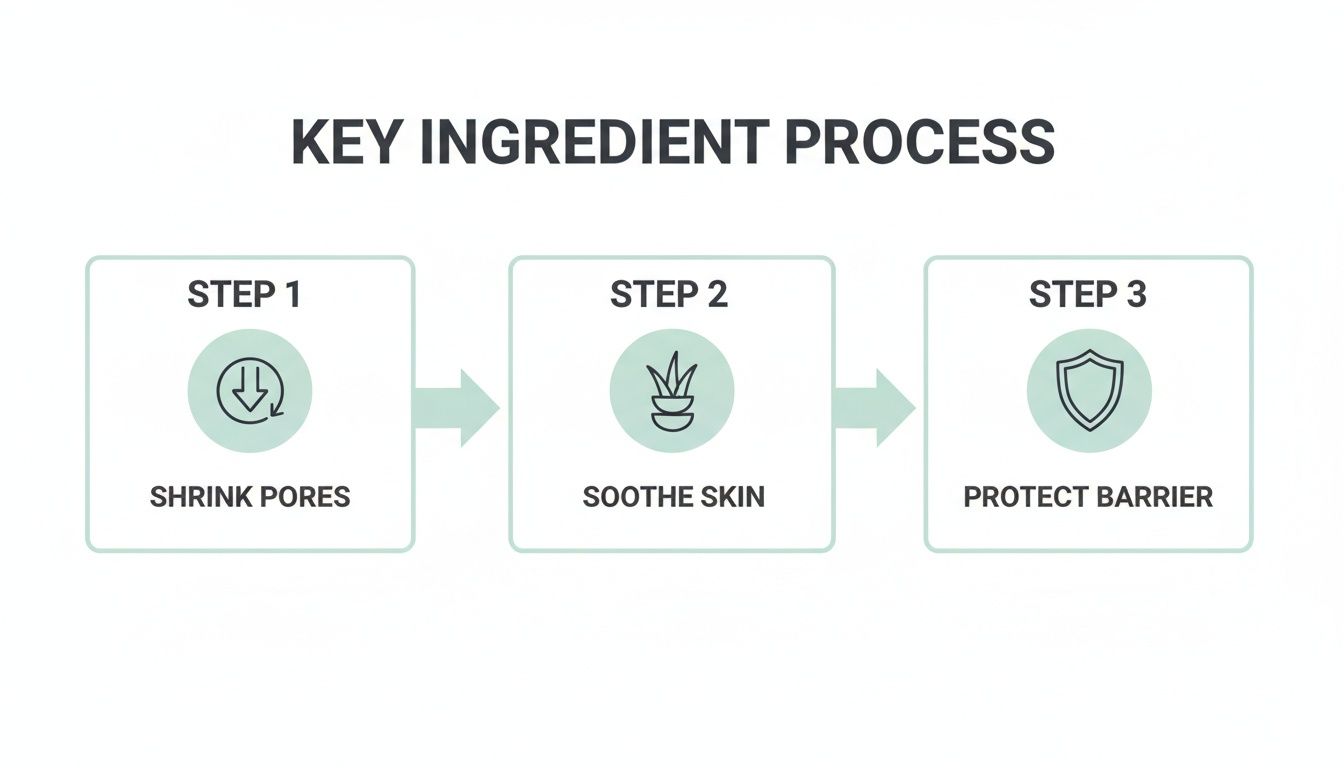
This process highlights how a single product can offer multi-symptom relief by targeting swelling, calming inflammation, and creating a protective environment so your body can heal.
The Step-By-Step Insertion Guide
Once you're prepped, find a comfortable, private spot. The right position is key because it helps relax your anal muscles. For a more detailed walkthrough, check out our complete guide on how to use hemorrhoidal suppositories.
Here’s the simplest method:
- Find a Comfortable Position: Lie on your side with your bottom leg straight and your top leg bent up toward your chest. This position naturally opens the anal area.
- Prepare for Insertion: Unwrap the suppository. Applying a tiny bit of water-based lubricant to the tip can help.
- Gentle Insertion: Take a deep breath and relax. Gently push the suppository, pointed end first, about one inch into your rectum, just past the muscular sphincter.
- Hold It in Place: After insertion, gently hold your buttocks together for a few seconds to ensure it stays put.
After Insertion: What to Expect
What you do next is just as important as the insertion.
Crucial Tip: Stay lying down for at least 10 to 15 minutes after insertion. This prevents the suppository from slipping out before it fully melts.
During this time, your body's warmth will dissolve the base, allowing the ingredients to coat the fissure. You might feel a slight urge to have a bowel movement... this is normal and should pass. Resisting that urge is key. After about 15 minutes, you can get up.
Managing Fissures During Pregnancy and Postpartum
Pregnancy and the postpartum period are physically demanding times. Hormonal shifts, pressure on the pelvic floor, and the strain of childbirth create a perfect storm for developing anal fissures.

The strain from delivery is a major factor, but constipation is often the trigger. Hormones slow digestion, and the weight of a growing uterus makes bowel movements more difficult, leading to painful tears. The postpartum phase isn't easier, with healing, constipation, and exhaustion making things worse.
Safe and Gentle Relief for Moms
When you're pregnant or breastfeeding, every choice is filtered through the question: "Is this safe?" This is especially true when choosing a suppository for anal fissure relief. Many products contain steroids, which may not be the right choice.
That’s why a steroid-free option is so important. You need something tough on symptoms but gentle on your system.
Key Takeaway: Always talk to your OB/GYN or another healthcare provider before starting any new treatment while pregnant or breastfeeding. They can give you personalized advice.
Choosing an OB/GYN-approved, steroid-free suppository can give you peace of mind. Formulations using ingredients like cocoa butter and phenylephrine can calm pain and swelling without medications you'd rather avoid.
Creating a Comprehensive Care Routine
Getting through a fissure during this time is about building a gentle routine. A quality suppository is a great start, but you can speed up recovery by adding other soothing practices.
A complete approach might look like this:
- Targeted Internal Relief: Use a steroid-free suppository after a bowel movement to reduce swelling and create a protective barrier.
- Soothing External Care: Take a daily sitz bath. Soaking in warm water helps relax the sphincter muscle, which is key to breaking the pain cycle.
- Gentle Cleansing: Skip harsh toilet paper. Instead, try a gentle cleansing lotion on toilet paper to clean without friction.
Combining internal and external care creates an ideal healing environment. For the external side, Revivol-XR Sitz Bath Soak Mix makes a soothing, comforting addition to your daily sitz bath.
Understanding the High Risk
The risk of an anal fissure skyrockets during and after pregnancy. Studies show a jump from 1.2% in the last trimester to 15.2% right after birth. This is driven by delivery strain, hormonal changes, and postpartum constipation. You can learn more about the specific risks during this period.
Dealing with a fissure on top of everything else feels overwhelming. But safe, effective over-the-counter options exist. By choosing the right products and talking with your doctor, you can manage the pain and focus on what matters... your recovery and your new baby.
Knowing When to See a Doctor for Your Anal Fissure
While an over-the-counter suppository for an anal fissure is an excellent first step, it’s not always the final answer. It's important to know when at-home care isn't enough. Recognizing the signs that you need a professional can prevent complications.
Most fissures are "acute," meaning they’re new and usually heal within a few weeks with home care. But if a fissure persists, it can become a chronic issue that requires a doctor's help.
Red Flags That Signal a Doctor's Visit
If you're dealing with any of the following, it’s time to make an appointment.
Keep an eye out for these warning signs:
- Severe or Unrelenting Pain: If the pain isn't improving with OTC treatments, is constant, or is disrupting your daily life, see a doctor.
- Heavy or Persistent Bleeding: A little bright red blood on toilet paper is common. Heavy or persistent bleeding is a red flag.
- Signs of Infection: Pus, fever, or increased swelling and redness could mean an infection, which requires medical attention.
When Your Fissure Becomes Chronic
Here’s a key timeline: one week. If you've been consistently using a suppository and other remedies for seven days with no improvement, call a doctor. A lack of progress may mean your fissure has become chronic.
Anal fissures are most common in young and middle-aged adults, with 87% of chronic cases found in people between 20 and 60. It's the second-most common reason people see a proctologist, after hemorrhoids. You can learn more about the prevalence and risk factors of anal fissures here.
A chronic fissure often involves the underlying sphincter muscle. It may not heal without medical intervention, like prescription medications or procedures designed to relax that muscle and boost blood flow.
Ignoring a persistent fissure won't make it go away. In fact, it can lead to bigger problems. Being proactive is your best move. For a better idea of what recovery looks like, check out our guide on the stages of fissure healing.
A doctor can provide an accurate diagnosis and create a treatment plan that’s right for you.
Common Questions About Fissure Suppositories
When you're dealing with the sharp pain of an anal fissure, you want clear answers. Understanding how a suppository for anal fissure treatment helps is the first step.
Here are a few of the most common questions.
How Fast Does a Suppository Work on a Fissure?
The soothing part happens quickly. You'll likely feel some immediate relief as ingredients like cocoa butter create a protective barrier.
But healing the tear takes time. For noticeable improvement, use the suppository consistently for several days to a week. This works best when you also add more fiber and water to your diet to prevent re-injury.
Can I Use a Hemorrhoid Suppository for an Anal Fissure?
Yes, you can. Many ingredients in a quality hemorrhoid suppository are exactly what you need for a fissure.
Both conditions share symptoms like pain, swelling, and inflammation. Ingredients like vasoconstrictors (phenylephrine) and protectants (cocoa butter) shrink swollen tissue and shield the raw area.
What Is the Difference Between a Fissure Cream and a Suppository?
The biggest difference is where the medicine goes. A suppository is a solid medication for targeted internal delivery. This is perfect for fissures inside the anal canal, as it dissolves right on the tear.
On the other hand, a cream is designed for external irritation. It can soothe the surrounding skin but can’t effectively reach an internal fissure to help it heal.
Should I Use a Suppository Before or After a Bowel Movement?
For the best results, always use a suppository after a bowel movement. If you use it beforehand, it will likely be pushed out before it can dissolve.
The best routine is to have a bowel movement, gently clean the area (a warm sitz bath is great for this), pat dry, and then insert the suppository. This gives the medicine plenty of time to work.
For steroid-free, temporary relief of external fissure and hemorrhoid discomfort, explore Revivol-XR Advanced Hemorrhoid Cream and our full range of products at https://hemorrhoid.com.