Witch Hazel and Hemorrhoids: A Practical Soothing Guide

Witch hazel and hemorrhoids are often mentioned together for one simple reason, when the area feels hot, itchy, and swollen at 2 a.m., people want something that feels gentle but still works. If you're staring at the bathroom cabinet and hoping for safe relief, the good news is that witch hazel can play a real role in a calm, practical hemorrhoid routine.
People generally don't need a complicated plan in the middle of a flare-up. They need clear steps, realistic expectations, and a way to avoid making tender skin worse while they wait for symptoms to settle.
Table of Contents
- The 2 a.m. Moment Most Hemorrhoid Sufferers Know Too Well
- How Witch Hazel Actually Works on Hemorrhoids
- What the Evidence Really Says About Witch Hazel for Hemorrhoids
- How to Use Witch Hazel Safely on Sensitive Skin
- Witch Hazel vs Aloe and Lidocaine for Hemorrhoid Relief
- A Witch Hazel Sitz Bath Routine That Actually Helps
- Building a Simple Daily Plan and Knowing When to Call a Doctor
The 2 a.m. Moment Most Hemorrhoid Sufferers Know Too Well
You wake up half-asleep, head to the bathroom, and immediately remember why you were uncomfortable before bed. The itching is stubborn, the swelling feels like pressure, and every wipe seems to make the area more irritated.
That moment is miserable, but it's also common enough that a simple home routine can make a difference. Witch hazel is one of the first things many people reach for because it's easy to use, easy to find, and meant for short-term soothing rather than anything dramatic.
Practical rule: if the skin feels angry, start with the gentlest option that won't scratch, sting, or dry it out more.
The basic idea is straightforward. Clean the area softly, avoid rubbing, and use a topical step that calms the surface while you give the tissue a break.
That's where witch hazel and hemorrhoids becomes a useful pairing, especially for external irritation after a bowel movement. It's not a magic fix, but it can be part of a calmer night and a less irritating morning.
How Witch Hazel Actually Works on Hemorrhoids
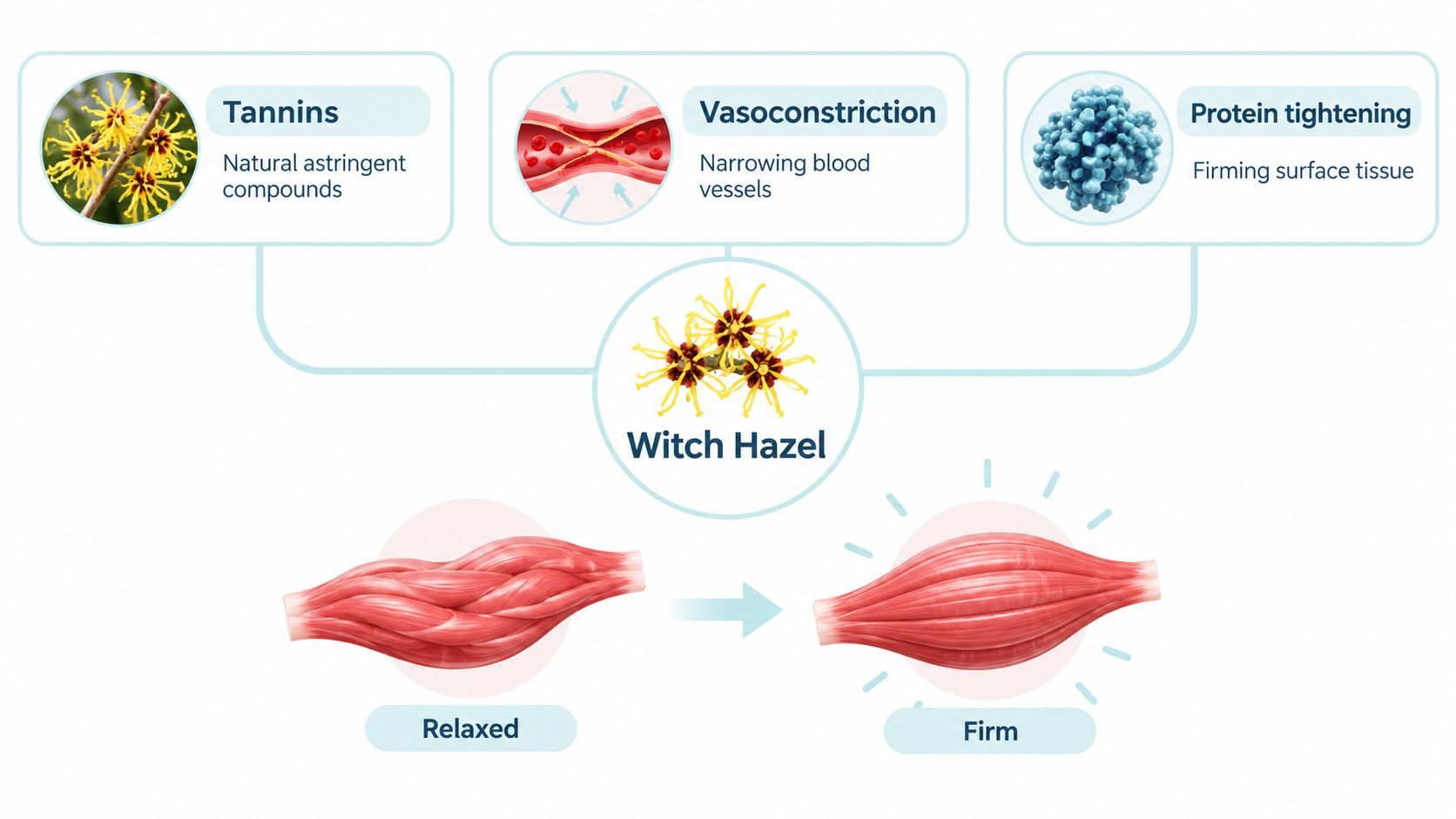
Witch hazel is an astringent, which means it helps tighten surface tissue a little and dry up excess moisture on irritated skin. That matters because hemorrhoid discomfort often includes a mix of itching, burning, minor bleeding, and swelling, all of which can feel worse when the skin stays damp or raw.
The part that makes it feel soothing
The tannin-rich part of witch hazel is what gives it that tightening effect. In plain language, it can help the skin feel less puffy and less “open,” which is why people often describe it as cooling or calming after wiping or bathing what witch hazel is good for.
It's important to keep the promise realistic, though. Witch hazel can ease surface discomfort, but it doesn't fix the pressure, constipation, or vein changes that caused the hemorrhoid in the first place.
Witch hazel is for comfort, not correction.
That's why it tends to work best as a short-term support tool. The goal is to reduce irritation long enough for the body to settle, not to make the problem disappear in one use.
Forms that people actually use
You'll see witch hazel as distilled liquid, medicated pads, wipes, ointments, and sprays. The form matters because sensitive skin usually tolerates simple, alcohol-free products better than stronger formulas.
Alcohol-containing products can sting on inflamed tissue and make dryness worse, which defeats the purpose. If the area already feels raw, choose the mildest option you can find and use it sparingly.
What the Evidence Really Says About Witch Hazel for Hemorrhoids
Witch hazel has a long history of use, and the FDA treats Witch Hazel USP as a GRASE astringent active ingredient for hemorrhoid drug products, with permitted uses that include temporary relief of anorectal itching and discomfort and protection of irritated anorectal areas HerbalGram profile. That tells you something important, regulators recognize it as a topical soothing ingredient, not a cure.
What it seems useful for
The strongest practical case for witch hazel is short-term relief of mild external symptoms. That includes the kind of itching, light burning, and minor irritation that make sitting, wiping, and walking feel more annoying than they should.
A clinical summary from Cleveland Clinic also shows why this topic comes up so often in pregnancy and after childbirth, when hemorrhoids are especially common Cleveland Clinic pregnancy hemorrhoids overview. In those settings, people usually want something external, gentle, and easy to fit into daily care.
What it does not prove
The research base is modest. That means witch hazel has support as a symptom-relief option, but not as proof that it shrinks hemorrhoids permanently or replaces proper evaluation when bleeding or pain keeps going.
If a product only changes how the surface feels, it can still help, but it doesn't solve every cause underneath.
| Claim | Evidence Strength | Practical Takeaway |
|---|---|---|
| Temporary soothing for itching and burning | Moderate support for mild symptoms | Useful after bowel movements or during a flare |
| Long-term hemorrhoid resolution | Limited support | Don't expect a cure |
| Replacement for medical care | Not supported | Get checked if symptoms persist or worsen |
Witch hazel makes the most sense when the goal is short-term comfort, especially for mild external symptoms that need a gentle, low-effort option.
How to Use Witch Hazel Safely on Sensitive Skin
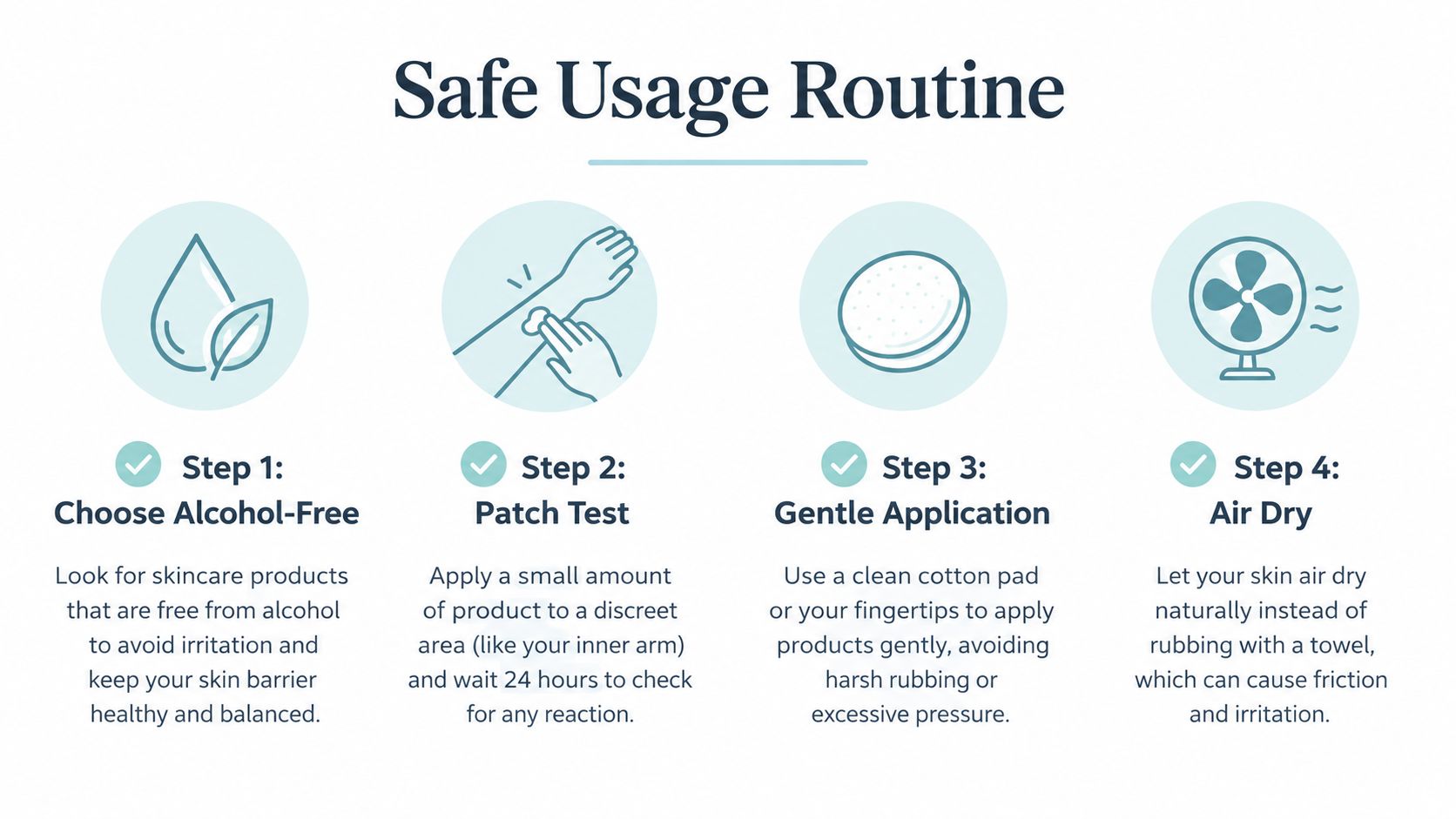
The safest routine starts with choosing an alcohol-free witch hazel product. Sensitive anorectal skin reacts quickly to strong formulas, so the label matters more than the marketing.
A simple step-by-step routine
- Clean gently first. Use water or a fragrance-free wipe, then pat the area dry.
- Check the formula. If it stings on first contact, stop and switch products.
- Apply lightly. Put the liquid on a soft cotton pad or gauze, then dab, don't scrub.
- Let the skin rest. Air dry if you can, and avoid tight clothing right afterward.
A lot of people make the same mistakes here. They use alcohol-based pads, rub too hard, or keep applying product because they think more is better. With hemorrhoids, more often means more irritation.
What to avoid on already tender tissue
Don't use witch hazel on broken skin unless a clinician tells you it's okay. Don't scrub the area with toilet paper, and don't combine several strong products at once just because the itching is intense.
Gentle application usually beats frequent application.
If you want to pair witch hazel with other comfort habits, keep it simple. Barrier ointments, soft underwear, and careful wiping can all help reduce friction while the skin settles.
Witch Hazel vs Aloe and Lidocaine for Hemorrhoid Relief
Witch hazel, aloe, and lidocaine all show up in hemorrhoid care, but they do different jobs. Witch hazel is the one people reach for when they want a cooling, drying, astringent feel. Aloe is softer and more moisturizing, while lidocaine is for numbness when pain is sharper.
A quick way to think about the three
- Witch hazel works best for surface irritation, mild swelling, and post-bowel-movement discomfort.
- Aloe fits better when the skin feels raw, dry, or rubbed sore.
- Lidocaine is for pain that feels more intense and immediate, especially if itching has turned into burning or stabbing discomfort.
For aloe, a good plain-English reference point is that it's often used as a soothing moisture step, not a tightening step aloe and hemorrhoids overview. For lidocaine, DailyMed labeling for 5% lidocaine anorectal products says it helps relieve pain, itching, and burning associated with hemorrhoids and other anorectal disorders, and one regimen directs adults and children over 12 to apply a thin layer every 6 to 8 hours, with no more than 3 applications in 24 hours DailyMed lidocaine label.
| Option | How It Works | Best For | Cautions |
|---|---|---|---|
| Witch Hazel | Astringent, surface-tightening feel | Mild itching, swelling, and burning | Alcohol-based formulas can sting |
| Aloe | Soothing, moisturizing, cooling | Rawness and friction | Choose fragrance-free products |
| Lidocaine | Numbing relief | Sharper pain or intense burning | Follow the label and dosing limits |
The cleanest approach is usually not “either-or.” Some people use aloe after bathing, witch hazel later in the day, and lidocaine only when pain breaks through.
A small, well-timed routine usually causes fewer problems than stacking several harsh products at once.
A Witch Hazel Sitz Bath Routine That Actually Helps
After a bowel movement, soreness can come from more than the hemorrhoid itself. Wiping, friction, and muscle tension may keep the area irritated. A warm sitz bath gives the skin a short break, while carefully used witch hazel may add temporary comfort.
A practical setup
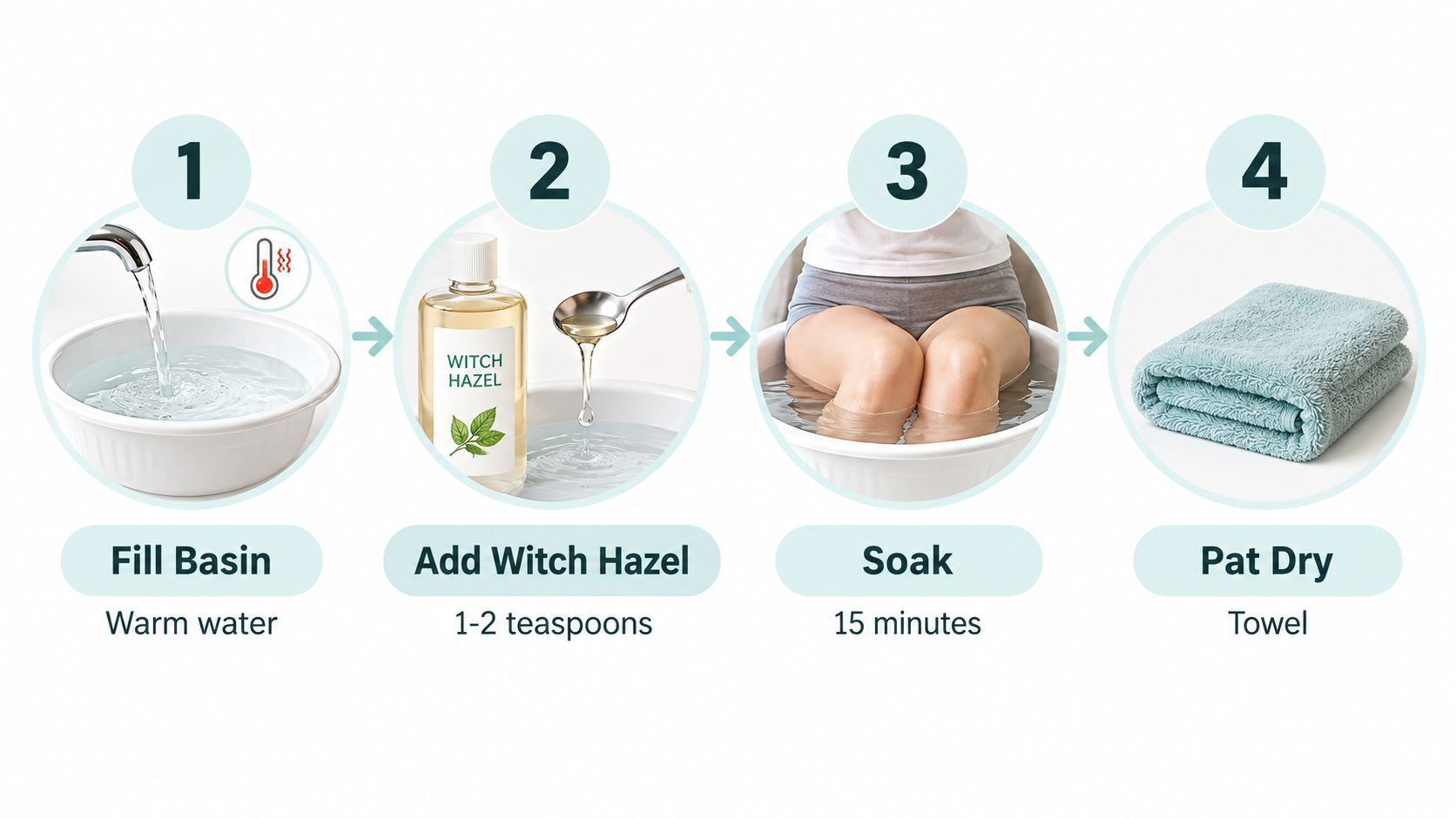
Use a clean sitz basin over the toilet or a shallow tub with warm, not hot, water. For step-by-step instructions, see how to do a sitz bath at home. Sit for about 15 minutes, then pat the area dry with a soft towel. Rubbing can restart the irritation you are trying to calm.
Keep the witch hazel mild. Add a small amount to the water only if the product is suitable for this use, or place an alcohol-free compress on the area after bathing. Alcohol-based formulas may sting sensitive or broken skin, and using more witch hazel does not guarantee more relief. The aim is comfort, not prolonged exposure to an astringent.
A DailyMed spray label for a hemorrhoid product containing lidocaine HCl 5%, phenylephrine HCl 0.25%, and witch hazel 50% states that it is for external use only. The label describes temporary shrinking of hemorrhoidal tissue, relief of swelling and irritation, and protection for irritated anorectal areas. It allows use up to 4 times daily, especially at night, in the morning, or after each bowel movement. This supports witch hazel as part of an external comfort routine, not proof that it cures hemorrhoids.
Small details that make a difference
Skip bubble bath products, scented oils, and rough drying. If constipation contributes to the problem, softer stools and less straining can make the bath more useful.
A soothing soak helps most when paired with less friction elsewhere.
Use the bath as a support step alongside gentle cleansing and careful wiping. Stop if burning or rash develops, and seek medical advice for warning signs rather than repeatedly treating symptoms at home.
Building a Simple Daily Plan and Knowing When to Call a Doctor
A workable hemorrhoid routine doesn't need to be fancy. After a bowel movement, clean gently, use a witch hazel pad or alcohol-free compress if it helps, then add a soothing layer such as aloe or a barrier ointment if the skin feels dry or rubbed raw.
Later in the day, a warm sitz bath can reset the area and cut down on friction. If you're dealing with constipation, use the habits that reduce straining, since pressure is one of the main reasons symptoms keep coming back.
A simple daily rhythm
- After bowel movements: Clean gently, pat dry, and use witch hazel only on intact external skin.
- During the day: Keep the area dry, wear loose cotton underwear, and avoid repeated harsh wiping.
- In the evening: Use a warm sitz bath if the area feels sore or swollen.
- Alongside the topical care: Focus on fiber, water, and easier stools so the irritation doesn't keep getting restarted.
That routine can help a lot, but it has limits. If bleeding keeps going, the lump doesn't shrink, pain gets worse, or you feel dizzy, feverish, or unusually weak, it's time to talk with a healthcare provider.
The same caution applies if symptoms don't improve in about a week or two, or if you're in the pregnancy or postpartum period and unsure what's safe. Hemorrhoids are common then, but persistent pain or bleeding still deserves a real evaluation.
For people who want a discreet topical option, Revivol-XR offers soothing relief and comfort in products built around hemorrhoid care, including formulas that fit into a gentle external routine. If you want a practical next step, visit Revivol-XR and choose the option that matches your symptoms and comfort level.