Swollen Hemorrhoids During Pregnancy: Safe Relief Guide

Most expecting mothers don't realize that swollen hemorrhoids during pregnancy can become most uncomfortable right when sitting, sleeping, and using the bathroom already feel difficult.
You may notice itching, pressure, tenderness, a small lump, or bright red blood on toilet paper and immediately worry that something is seriously wrong. Pregnancy hemorrhoids are common, but bleeding and severe symptoms still deserve medical attention. This guide explains why they happen, how constipation and delivery can affect them, which comfort measures are reasonable to discuss with your healthcare provider, and when not to manage symptoms alone.
Table of Contents
- Why Swollen Hemorrhoids During Pregnancy Happen
- The Role of Constipation and Progesterone
- Pregnancy-Safe Bowel and Posture Strategies
- Choosing the Right Relief Products and Sitz Baths
- Medication Safety and What to Avoid
- Postpartum Expectations and Recovery Timeline
- Frequently Asked Questions About Pregnancy Hemorrhoids
Why Swollen Hemorrhoids During Pregnancy Happen
You finish using the bathroom, wipe carefully, and feel a tender bump that wasn't there before. Or you notice itching when you sit down and wonder whether you caused it by eating the wrong food, exercising too little, or straining once. Hemorrhoids during pregnancy aren't a personal failure. They develop as pregnancy changes circulation, pelvic pressure, bowel function, and the tissues around the anus.
Clinical reviews estimate that about 25% to 35% of pregnant women experience hemorrhoids, while other reports place pregnancy-related hemorrhoids and anal fissures at about 40% among pregnant and postpartum patients. Some third-trimester populations report rates as high as 85%. These figures come from NIH-hosted pregnancy hemorrhoid reviews and a later review of hemorrhoids and anal fissures in pregnancy and after birth.
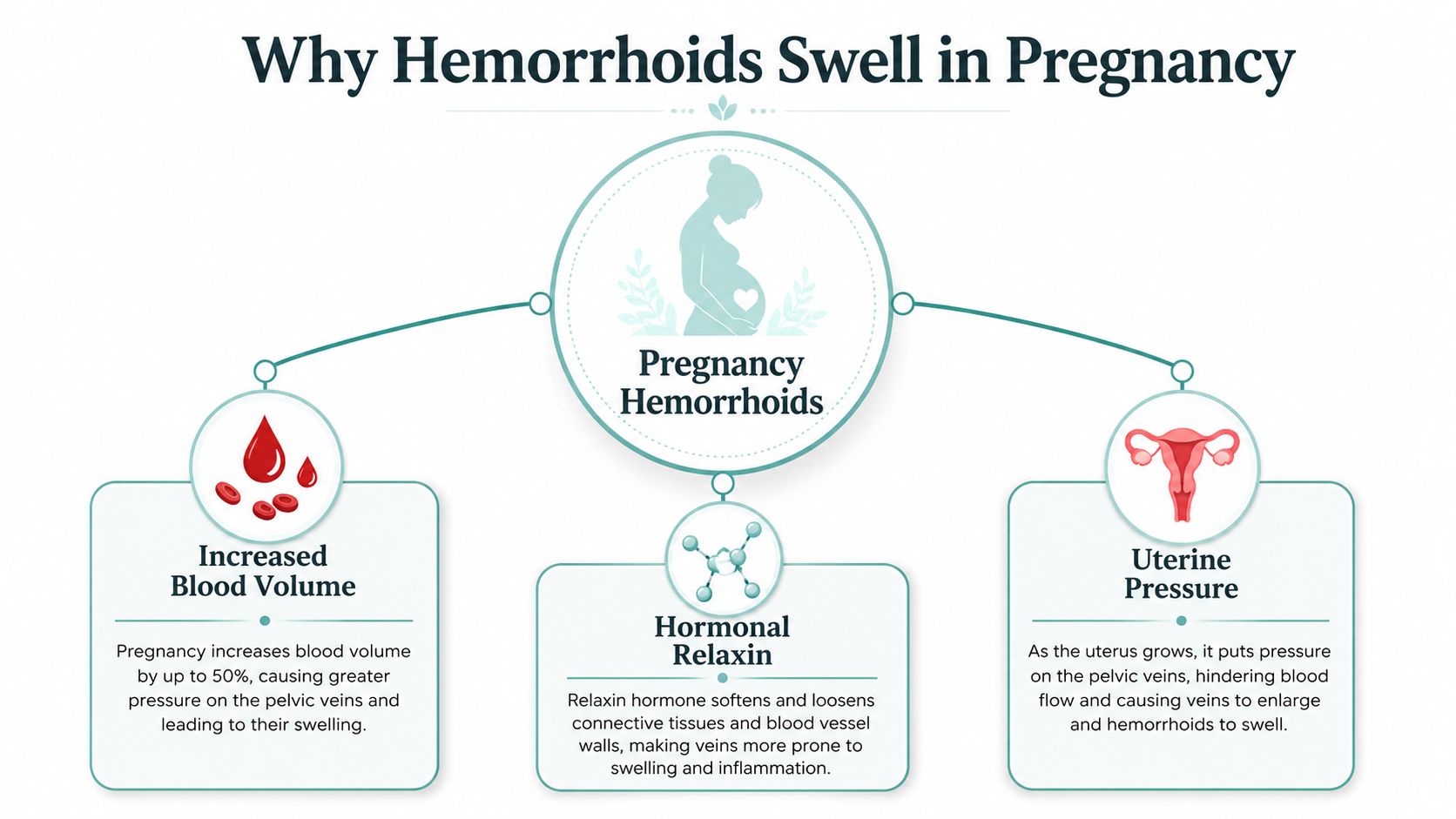
Three physical changes work together
As pregnancy progresses, circulating blood volume rises by about 25% to 40%, according to Cleveland Clinic's pregnancy hemorrhoid overview. Think of the pelvic veins as a river carrying blood back toward the heart. More flow enters the system, but the growing uterus can press on nearby vessels, making the return journey slower.
That slower movement, called venous stasis, can make the normal blood vessel cushions inside and around the anal canal swell. Hormonal changes also soften connective tissue, while the increasing weight and pressure of the uterus add a mechanical burden. The result may be pressure, itching, aching, or a lump that becomes more noticeable late in pregnancy.
The third trimester is the most frequent time of onset in the 2022 review, accounting for 61% of reported onset, while the first or second day after delivery represented another major peak at 34%. The review of pregnancy and postpartum hemorrhoid timing helps explain why symptoms may appear suddenly, even if earlier bowel movements seemed normal.
For a straightforward overview of how pregnancy can bring on hemorrhoids, see can you get hemorrhoids while pregnant. Understanding the mechanism can replace embarrassment with a practical plan: reduce stool pressure, protect irritated skin, and ask for guidance before using stronger products.
The Role of Constipation and Progesterone
Progesterone relaxes smooth muscle, including the muscles that move food through the intestines. As intestinal movement slows, stool can remain in the bowel longer and become harder to pass. The bathroom problem then becomes mechanical: pushing against firm stool raises pressure around already congested anal veins.
That pattern can turn mild swelling into soreness or pain. It can also aggravate an anal fissure, which often causes sharp pain during or after a bowel movement. Guidance on constipation and hemorrhoid prevention in pregnancy emphasizes fiber, fluids, movement, avoiding long periods of sitting, and minimizing straining.
A useful distinction is that softening the bowel movement addresses the trigger, while a topical product may only improve comfort at the skin or anal opening. One doesn't automatically replace the other. A review on pregnancy hemorrhoid treatment safety describes laxatives, stool softeners, and fiber supplements as options considered safe for pregnant women, while topical medicines and oral phlebotonics require more caution because safety and effectiveness evidence is limited.
If you're considering a fiber supplement, review the practical considerations in psyllium husk for hemorrhoids, then ask your obstetric provider whether it fits your situation. For gentle external cleansing, Hygienic Cleansing Lotion, Gentle Relief + Soothing Aloe & Witch Haze for Discomfort of "Down-There" Sensitive Areas is described as an external-use lotion with aloe, mineral oil, chamomile, and witch hazel that can be applied to toilet paper for cleansing. Stop if irritation develops, and don't apply it internally.
Pregnancy-Safe Bowel and Posture Strategies
The most useful bathroom routine is the one that keeps you from repeatedly pushing. Start with the basics, then adjust them with your prenatal care team if nausea, swelling, diabetes, activity restrictions, or another pregnancy concern affects what you can safely do.
Build a gentler daily routine
- Choose fiber regularly: Include fiber-rich foods that you tolerate, such as fruits, vegetables, beans, and whole grains. Increase gradually if your current diet is low in fiber, because a sudden change can worsen gas or discomfort.
- Drink generously: Fluids help support softer stool, especially when you add more fiber. Your healthcare provider can help personalize fluid guidance if you have a condition that limits intake.
- Move when cleared: Gentle walking or other approved physical activity can support bowel regularity and reduce the long sitting periods that place pressure on the anal area.
- Ask about stool softeners: Stool softeners and some laxative options are considered safe in pregnancy in the cited review, but your clinician should confirm the product and timing for you.
Change what happens on the toilet
Go when your body signals the need rather than delaying for long periods. Sit with your feet supported on a low step stool if that feels comfortable, keep your torso relaxed, and avoid holding your breath while trying to pass stool.
Don't turn the toilet into a reading chair. Prolonged sitting increases pressure without helping the bowel movement. If nothing happens easily, pause and try again later instead of forcing it.
Practical rule: A comfortable bowel movement should feel supported, not forced. Persistent straining is a reason to ask for help with constipation rather than simply adding more topical products.
Choosing the Right Relief Products and Sitz Baths
Different products target different sensations. A warm sitz bath may feel best for generalized soreness, witch hazel may provide brief cooling comfort after cleansing, and a cream may be more practical when itching or external pain is the main problem. Pregnancy changes the safety conversation, so read the active ingredients and check with your healthcare provider before using medication-containing products.
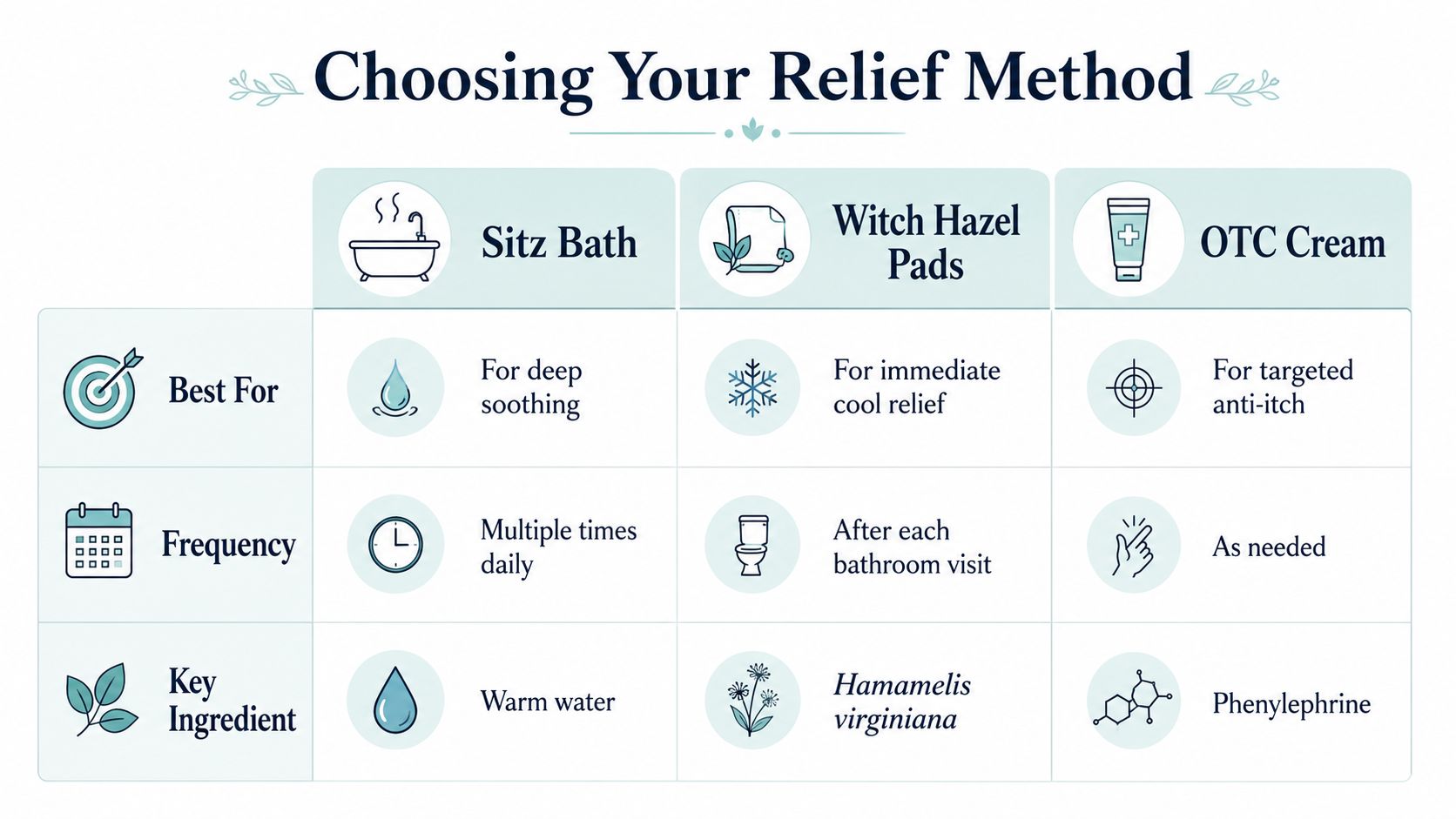
Match the format to the symptom
A warm-water sitz bath can soothe the surrounding area without introducing medication. Use comfortably warm water, not water hot enough to make you feel dizzy or overheated. A practical guide to setup and hygiene is available in how to do a sitz bath at home.
A product such as Sitz Bath Soak Mix, Super Concentrated 20-in-1 Blend with Epsom Salt and Essential Oils, 15 Soaks for Toilet Basin, USP Grade contains Epsom salt alongside salts, oils, witch hazel, aloe vera, chamomile, calendula, and other listed ingredients. It's for external use as a bath-water additive, not for swallowing. The product instructions advise starting with a small amount and patch testing, particularly if you have sensitive skin or known essential-oil allergies. Stop if irritation occurs, and ask your clinician before using an essential-oil blend during pregnancy.
Witch hazel pads may offer temporary cool relief after a bowel movement. Witch hazel is an astringent, so it can feel drying or irritating on cracked skin. Don't scrub, and stop if burning, redness, or worsening tenderness develops.
External creams can target itching, burning, or pain at the anal opening. Suppositories are a different format intended for internal use, and they shouldn't be treated as interchangeable with an external cream. Check the label carefully, and don't insert an applicator or medication unless a healthcare professional has confirmed that the product is suitable for you.
Medication Safety and What to Avoid
“Over the counter” doesn't mean “automatically appropriate during pregnancy.” The main safety gap is that reproductive safety data have historically been limited for some topical antihemorrhoidal compounds. That doesn't mean every topical product is unsafe, but it does mean choosing by brand name alone is a poor strategy.
A stepwise approach makes more sense:
- Start with the bowel trigger: Address constipation, stool firmness, and straining with food, fluids, movement, and a clinician-approved stool-softening plan.
- Add nonmedicated comfort: Warm water, careful cleansing, and avoiding prolonged sitting may reduce irritation without exposing you to multiple active ingredients.
- Review the label with your provider: Ask specifically about numbing agents such as lidocaine, vasoconstrictors such as phenylephrine, protectants, steroids, and botanical ingredients. Don't assume that “natural” means risk-free or that a cream and suppository have the same safety profile.
- Use only as directed: If a healthcare professional approves an OTC product, follow its label. Don't combine several products with overlapping ingredients, apply more often than directed, or use a product internally when it's labeled for external use.
Mayo Clinic guidance supports warm-water soaks, fiber, fluids, physical activity, and provider-approved witch hazel pads or hemorrhoid creams and suppositories during pregnancy. It also emphasizes discussing OTC options with a healthcare provider in its pregnancy hemorrhoid guidance.
Postpartum Expectations and Recovery Timeline
The first days after delivery can bring a noticeable change. A 2022 review identified the first or second day after childbirth as a major peak for hemorrhoid onset, at 34%. Pushing during birth, tissue swelling, constipation, and added pressure can intensify symptoms that began during pregnancy. A hemorrhoid that was manageable before labor may therefore feel much more swollen afterward.
Relief may take time. One cited 2025 clinical review reported that about 25% of women are affected postpartum and that symptoms may last up to six months. Some women experience problems for longer. This postpartum hemorrhoid overview explains how delivery mechanics and constipation can influence recovery.
Before birth, prepare a small care station with water, soft unscented toilet paper, clinician-approved cleansing supplies, and a way to take a warm soak. Keep care gentle: rinse or cleanse, pat dry, and avoid rubbing. Use the toilet without forcing. If you have perineal stitches or a tear, follow your maternity team's instructions before applying any product.
The following video may help show how comfort measures can fit into recovery:
Contact your healthcare provider for persistent, severe, or bleeding symptoms. A suddenly painful, firm, or bluish lump may be a thrombosed external hemorrhoid, but examination is needed for an accurate assessment. Do not assume every postpartum lump is ordinary swelling, especially when pain is intense or bowel movements become difficult.
Frequently Asked Questions About Pregnancy Hemorrhoids
Is bleeding from a pregnancy hemorrhoid normal?
Bright red blood can occur with hemorrhoids or an anal fissure, particularly after a bowel movement, but bleeding shouldn't be self-diagnosed. Contact your healthcare provider so they can decide whether examination is needed, especially if bleeding is heavy, recurrent, mixed into stool, or accompanied by dizziness, severe pain, fever, or weakness.
How can I tell whether a hemorrhoid is thrombosed?
A thrombosed external hemorrhoid may feel like a sudden, firm, very painful lump near the anus. Ordinary swelling can also hurt, so don't rely on color or touch alone. Prompt medical advice is appropriate when pain is severe, symptoms worsen quickly, or the lump interferes with sitting or passing stool.
Can I use a numbing product while breastfeeding?
Ask your healthcare provider or pharmacist before using lidocaine or another numbing agent while breastfeeding. The correct advice depends on the product, how it's applied, whether the skin is broken, and whether the medication could contact the infant. Follow the label and stop if irritation occurs.
When should I escalate care?
Seek professional guidance for persistent, severe, or bleeding symptoms, worsening swelling, fever, significant pain, or symptoms that don't improve with gentle care. A clinician can distinguish hemorrhoids from fissures and other causes of anal pain or bleeding.
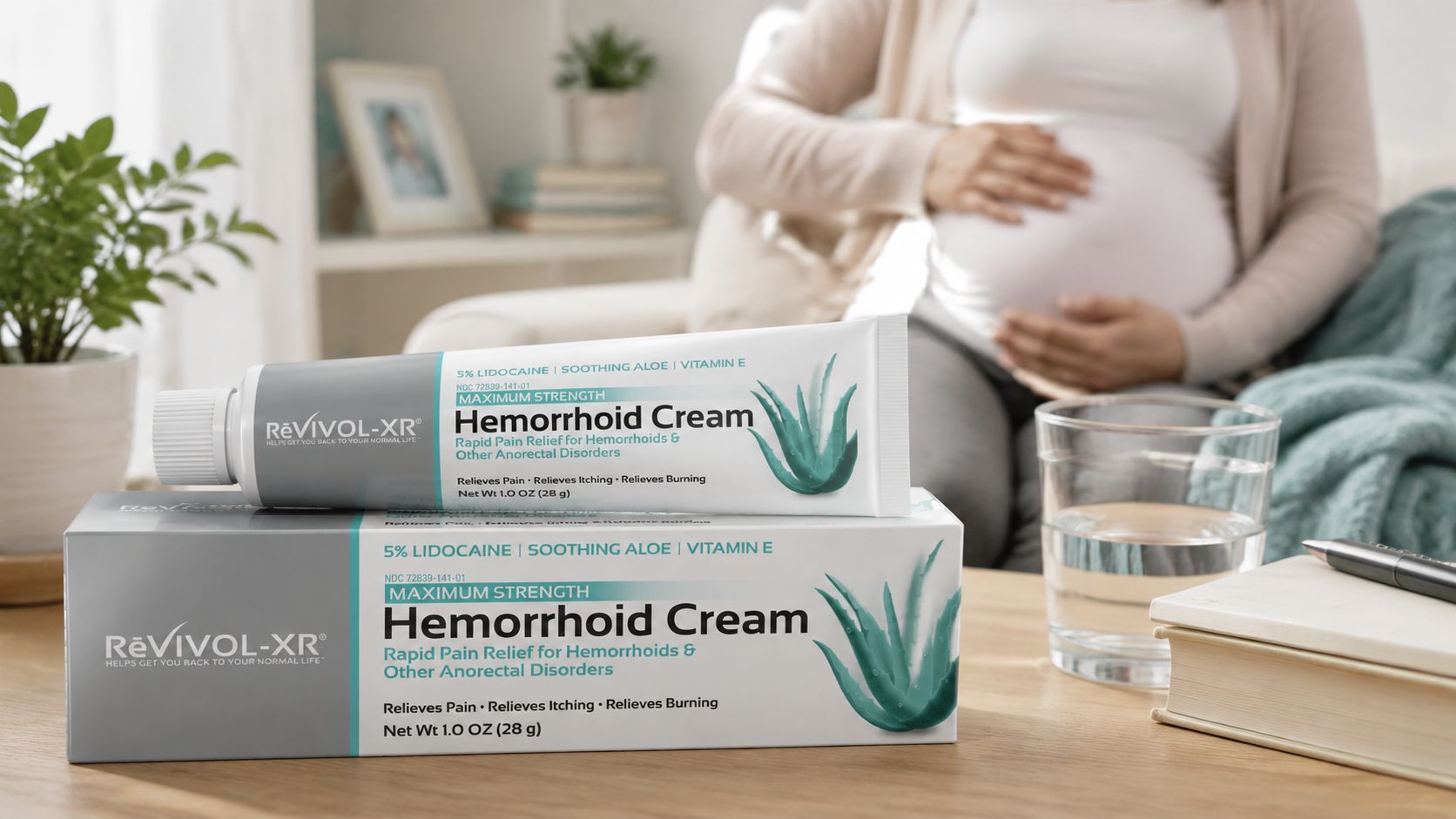
Revivol-XR offers external soothing and temporary comfort options, including products formulated with lidocaine, aloe, vitamin E, or witch hazel, depending on the product. Visit Revivol-XR to review the available choices, then share the product label with your obstetric or postpartum healthcare provider before use.