Stool Softener After Birth Recovery Guide

If the idea of your first bathroom trip after birth makes your stomach tighten, you're not overreacting, because a stool softener after birth is usually about protecting sore, healing tissue, not just “getting things moving.”
Five possible SEO titles:
- Stool Softener After Birth, What Helps, What Doesn't, and When to Call Your Doctor
- Stool Softener After Birth Recovery Guide for New Moms With Hemorrhoids or Tears
- Stool Softener After Birth, A Gentle Guide to Safer Postpartum Bathroom Relief
- Stool Softener After Birth or Laxative, How to Choose the Right Postpartum Option
- Stool Softener After Birth, Comfort, Hydration, and Healing Tips for New Moms
A stool softener after birth can make that first bowel movement feel less intimidating, but it's not a magic fix, and the evidence around routine use is weaker than many expect.
Table of Contents
- Postpartum Bathroom Anxiety: Why the First Trip Feels Hard
- How Stool Softeners Work for New Moms
- Building Your Daily Hydration and Fiber Routine
- Adjusting Your Plan Based on Delivery Type
- Soothing External Discomfort with Sitz Baths and Lotions
- When to Stop Self Treating and Call Your Doctor
Postpartum Bathroom Anxiety: Why the First Trip Feels Hard
At 2 a.m., with your newborn asleep against your chest, the bathroom may be the last place you want to think about. Yet many new mothers begin bracing for their first bowel movement, especially when stitches, swelling, hemorrhoids, or general soreness are involved.
The fear has a physical explanation. Birth can leave the perineum and nearby tissues tender. Anticipating pain may make the pelvic muscles tighten, much like closing a door just as you are trying to move through it. Holding back can then make the next attempt feel more difficult. You are not being weak or dramatic. Your body is responding to a genuine mechanical challenge.
Practical rule: aim to reduce pushing and pressure on healing tissue, rather than forcing a bowel movement to happen quickly.
A stool softener after birth may help by reducing hardness and the need to bear down. That can be useful after hemorrhoids, an episiotomy, or a tear. Evidence for routine laxative use for every new mother is limited, so the goal is a targeted plan based on discomfort, stool consistency, and difficulty passing it. For practical preparation, read our guide to the first bowel movement after birth.
Relief can also come from a calm routine: breathe slowly, avoid prolonged straining, and use gentle warmth or a rinse to soothe tender skin. These measures address the whole experience, not only the stool itself.
Many mothers feel embarrassed to ask about bowel movements. Postpartum recovery brings unfamiliar sensations, and anxiety is common. Softer stool, relaxed muscles, and less pressure matter more than speed.
How Stool Softeners Work for New Moms
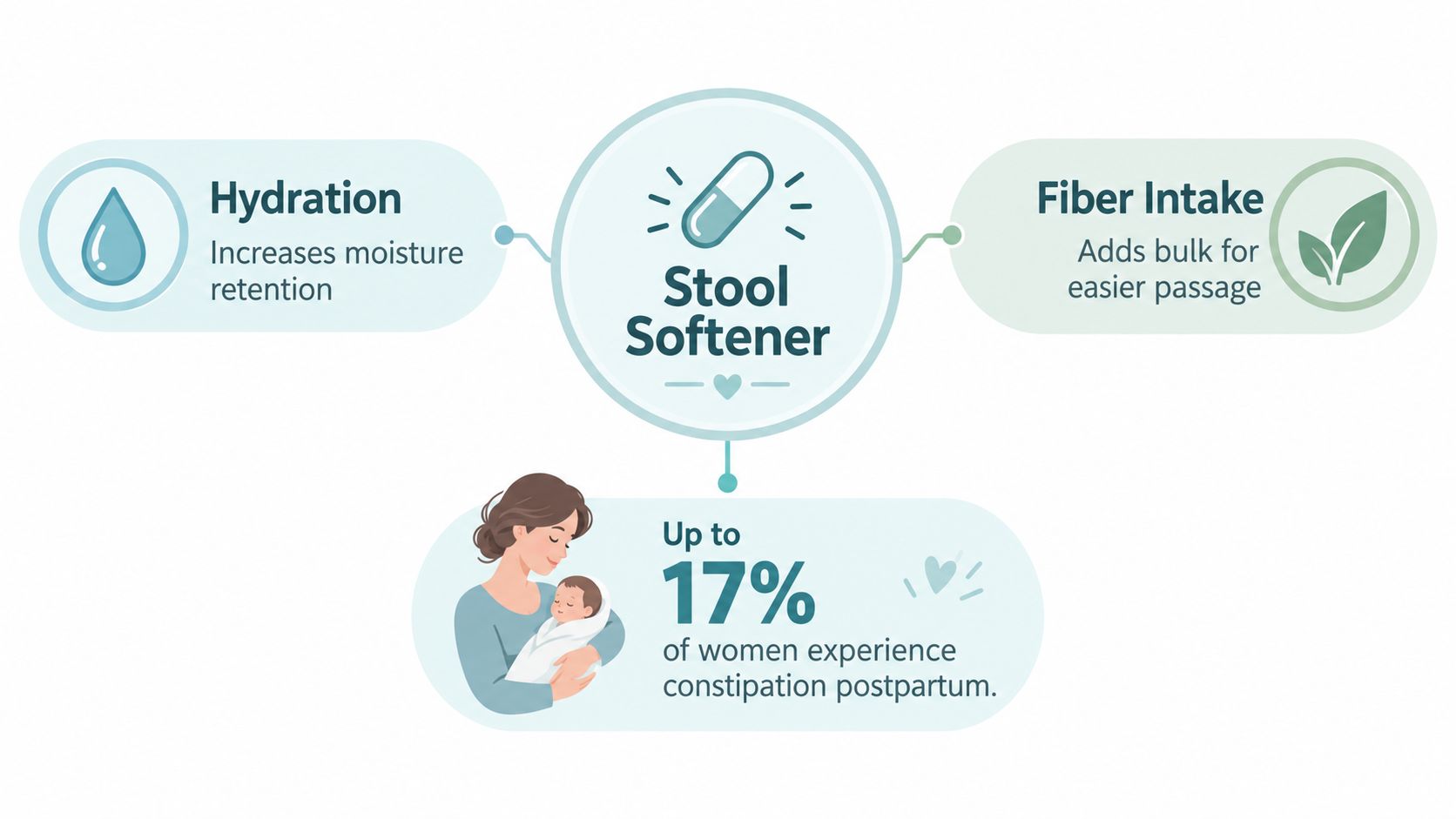
The evidence for routine postpartum laxative use is limited, even though constipation is common. A clinical review reports that it can affect up to 17% of women during the first six weeks after childbirth (AAFP review). Risk may increase with iron, opioids, cesarean birth, reduced mobility, dehydration, or fear of pain from wounds and hemorrhoids.
The mechanics explain why product choice matters. A stool softener reduces stool hardness, which may make it easier to pass without pressing hard against sore tissue. An osmotic laxative works differently. It draws water into the bowel and may help more directly when bowel movements are infrequent or difficult to pass.
A softener can reduce the discomfort of straining, but it may not resolve constipation on its own. The same AAFP review identifies increased water and dietary fiber as foundational measures, and lists polyethylene glycol and lactulose among first-line medication options when treatment is needed. If you are considering bulk-forming fiber, see our guide to psyllium husk for hemorrhoids for more context.
Routine medication deserves a careful discussion. A Cochrane review covering five trials with 1,208 postpartum participants found evidence too weak for broad conclusions, with some outcomes rated low or very low certainty (Cochrane review). One trial found that senna increased the chance of a bowel movement within 24 hours. Another found loose stools were much more common with a laxative than with placebo in that study population.
For that reason, stool softener after birth is better viewed as a targeted comfort tool than a universal cure. Hard stool, painful hemorrhoids, or a tear may justify discussing one option with a clinician. Going a few days without a bowel movement may call for a different approach.
External comfort matters too. Revivol-XR® Hygienic Cleansing Lotion is described as a moisturizing cleansing lotion for external use containing aloe, chamomile, and witch hazel. It may feel gentler than dry toilet paper when the skin is sore.
What to keep in mind before you pick a product
A softener is for reducing strain, not for rescuing every kind of constipation.
Breastfeeding, iron supplements, cesarean recovery, and tears can all affect the plan. Ask a clinician about the product, dose, duration, hydration, and other medicines when symptoms are more than mild.
Building Your Daily Hydration and Fiber Routine
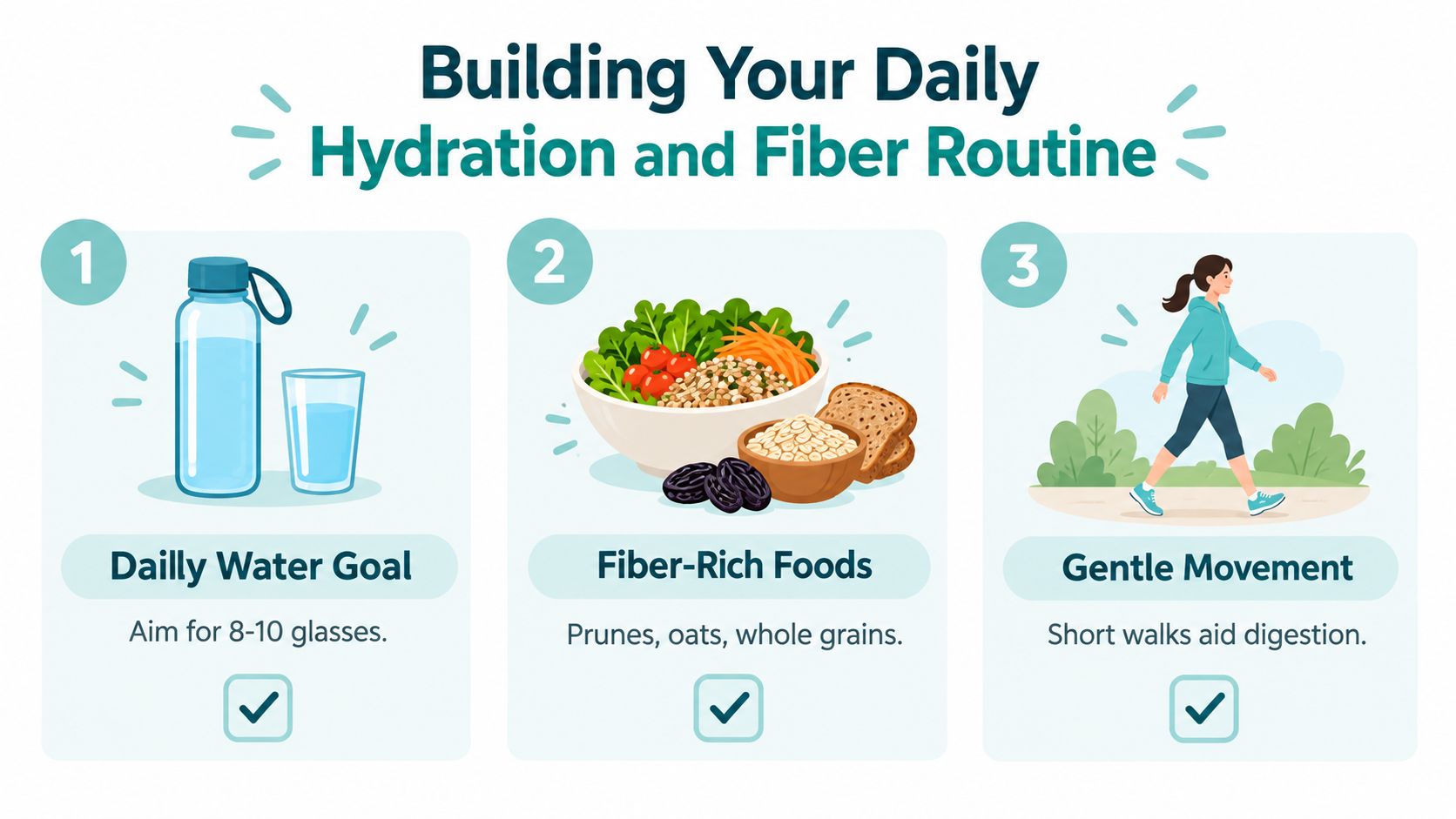
You may sit down with your baby nearby, feel the urge, and still hesitate because your stitches or hemorrhoids make pushing feel risky. A steady routine helps by keeping stool easier to pass, so the goal becomes less straining rather than forcing a bowel movement on schedule. Drink regularly, eat fiber, move gently, and respond when your body signals that it is ready.
A simple daily routine that fits newborn life
- Start with fluids early. Keep water beside you during feeds and rest periods. Regular fluids help prevent stool from becoming dry, especially when sleep, appetite, or daily routines are unsettled.
- Build meals around fiber you will realistically eat. Whole grains, beans, fruit, and vegetables can support softer, more regular stool. Choose convenient options that fit the meals you can manage, as recommended in the OUH postnatal guidance.
- Walk when you can. A brief, gentle walk around the room or outside may encourage bowel movement and reduce the stillness that can follow birth. The OUH postnatal guidance also connects mobility with easier digestion.
- Respond to the urge promptly. Waiting gives the bowel more time to draw water from stool, which can make passing it harder. Go when you can, without rushing or bearing down.
If a clinician suggests docusate, give it time to work. NHS Dorset guidance lists docusate sodium 100 mg with an expected time to effect of 12 to 72 hours (NHS Dorset guidance). Do not keep adding doses because nothing has happened after lunch. Sleep loss, pain medicine, stitches, and a changed routine can all slow progress.
Constipation medicines also work in different ways. Examples include bulk-forming ispaghula husk, osmotic lactulose or macrogol, and stimulant senna. Knowing the difference can help you discuss a targeted option rather than treating every delay the same way. For practical ideas, see our postpartum constipation remedies guide.
Adjusting Your Plan Based on Delivery Type
After birth, the same toilet trip can feel very different depending on what your body is healing. A cesarean incision, a perineal repair, and an uncomplicated vaginal birth each change how comfortably you can sit, relax, and bear down.
With a third- or fourth-degree tear involving the anal sphincter or rectum, the mechanical aim is simple: keep stool easy to pass so healing tissue is not loaded with repeated pressure. The MSD Manual advises considering a mild cathartic, such as psyllium, docusate, or bisacodyl, if defecation has not occurred within three days. It also recommends stool softeners after this type of repair to reduce strain (MSD Manual).
Match support to the repair
- Third- or fourth-degree tear: Avoiding hard stool can limit the need for forceful pushing near the sphincter repair.
- Episiotomy or stitched perineum: A softer bowel movement may reduce stretching across the tender stitches while you sit and release.
- Hemorrhoids: Less bearing down can reduce pressure on swollen veins around the anus.
- Cesarean birth: The abdominal incision may make curling forward or tightening the abdominal muscles uncomfortable, so a stool that passes with less effort can make toileting easier.
- Uncomplicated vaginal birth: If there is no significant repair, routine laxative use may offer little benefit. A targeted plan makes more sense than taking medicine automatically.
The AAFP review also discusses delivery-related bowel changes, but birth type is only one part of the decision. Your clinician can match the option to your repair, examination, medicines, and bowel pattern.
Good recovery rule: when tissue is healing, reducing straining matters more than forcing a bowel movement on a fixed schedule.
Soothing External Discomfort with Sitz Baths and Lotions
After a bowel movement, the stool may be softer, yet the surrounding skin can still burn or feel swollen. Hemorrhoids, fissure-type pain, stitches, moisture, and repeated wiping can turn a manageable bathroom visit into a source of dread. Reducing friction matters because protecting the skin can make the next bowel movement feel less threatening.
A warm sitz bath offers comfort without changing stool consistency or bowel movement speed. Sitting briefly in comfortably warm water can help the pelvic and anal area feel calmer and less tense, especially after using the toilet. It supports soothing, rather than replacing fluids, fiber, movement, or a clinician-approved stool softener.
Cleaning technique matters too. Dry toilet paper can scrape irritated skin, particularly when hemorrhoids are tender. Rinsing or using a gentle cleansing lotion may reduce the need for repeated wiping. Revivol-XR® Hygienic Cleansing Lotion is one option for external cleansing. It is not a laxative and does not alter bowel motility.
A simple comfort routine
- Use warmth carefully. Take a short sitz bath when the area feels sore or tight.
- Pat, don't rub. Gently dry the skin instead of wiping back and forth.
- Keep stool care and skin care separate. A softener addresses stool hardness, while warmth and gentle cleansing address surface discomfort.
- Notice the direction of change. Comfort measures should calm irritation. Stop using anything that stings or makes symptoms worse.
The mechanical goal is simple: let stool pass with less force, then reduce the rubbing and tension that can keep the area sore. That combination can make recovery feel more manageable, without assuming that a laxative is needed for every postpartum bowel movement.
When to Stop Self Treating and Call Your Doctor
You may expect a bowel movement to feel uncomfortable after birth, especially with stitches, hemorrhoids, or tender pelvic muscles. A stool softener after birth may make hard stool easier to pass, but escalating treatment can distract from symptoms that need an examination.
Call your doctor promptly if you have any of these signs:
- Persistent or worsening pain
- Fever
- Vomiting
- Marked abdominal swelling
- Rectal bleeding, especially more than expected from hemorrhoids
- Inability to pass stool or gas
These symptoms can point beyond ordinary postpartum constipation. The AAFP review discusses assessment of constipation and warning signs. The Cochrane review found limited, weak evidence for routine postpartum laxative use, so a laxative is not automatically the answer to every difficult bowel movement.
If stool is firm and you have mild straining, focus on fluids, fiber, gentle movement, and any clinician-approved softener. The mechanical goal is to reduce force, much like easing a stuck drawer instead of pushing harder. Warmth and gentle external cleansing may soothe irritation, while Revivol-XR offers products for temporary external comfort. Visit Revivol-XR and ask your clinician what suits your healing plan.