Sitz Bath Water Temperature: How Warm Is Safe?

Treat 104°F (40°C) as the upper limit you never exceed. For a practical working range, keep the water between 94 and 98°F (34 to 37°C), where it feels gently warm against your wrist. The lower range offers a comfortable starting point for irritated skin; the upper limit is a safety boundary, not a comfort goal.
Perineal tissue can be more heat-sensitive than the skin on your hands, especially during a hemorrhoid flare, fissure, or postpartum recovery. A wrist check alone may not reveal when water is too hot, so use a thermometer to check the temperature before sitting. If it feels hot or begins to sting, cool the water or stop.
Table of Contents
- Sitz Bath Water Temperature Ranges at a Glance
- Matching Depth and Time to Your Situation
- How to Set the Water Temperature Before You Sit
- Why Hot Water Burns Sensitive Skin
- When to Cool Down, Stop, or Call a Provider
Sitz Bath Water Temperature Ranges at a Glance
These temperature bands are lanes, not steps toward a higher tolerance. Choose the range that suits your current comfort, and treat 104°F (40°C) as a safety ceiling, not a comfort goal.
| Water Range | Fahrenheit | Celsius | When It Fits |
|---|---|---|---|
| Warm range for cleansing and healing | 94 to 98°F | 34.4 to 36.7°C | First soaks, tender skin, or when unsure |
| Common clinical average target | 104°F | 40°C | Upper comfort target for most adults |
| Above the routine ceiling | Above 104°F (40°C) | Above 40°C | Not for routine soaks |
| Hot-water range to avoid | 105 to 110°F | 40.5 to 43.3°C | Too hot for routine perineal soaking |
| Postpartum hospital protocol | 106 to 109°F | 41 to 43°C | Only under clinician direction after delivery |
Cleveland Clinic's sitz bath instructions describe 104°F (40°C) as a good average temperature and warn that water that is too hot can burn perineal skin. The same guidance recommends a shallow bath of roughly 3 to 4 inches, enough to cover the perineum without filling a full tub.
Why Warm Water and Hot Water Are Different Categories
Warm water can support cleansing and comfort; hotter water adds burn risk rather than making a soak more effective. A temperature above 104°F is outside the routine range, even if a higher figure appears in a clinical protocol.
The postpartum row needs context. A hospital protocol may specify 41 to 43°C as part of care directed by clinicians. That setting includes checks and supervision. At home, do not use those temperatures unless your clinician specifically advises it.
Your Hands Are a Poor Thermometer
In practice, water that feels pleasantly warm to your fingers may feel too hot once you sit. A bath thermometer gives you a more reliable check than touch alone.
If you have reduced sensation, a recent procedure, an open wound, or restrictions from a clinician, ask for individual instructions instead of choosing from the table. Cool the water if it feels hot or uncomfortable, and get out if discomfort continues. Treat these figures as guides, not targets to push toward.
Matching Depth and Time to Your Situation
Depth, duration, and frequency move together, and they change based on why you're soaking in the first place. The chart below covers the four situations most readers bring to a sitz bath.
| Situation | Water Depth | Soak Time | How Often |
|---|---|---|---|
| Hemorrhoid symptoms | 3 to 4 inches | 10 to 15 minutes | Two or three times daily |
| Postpartum recovery | 2 to 3 inches | 10 to 20 minutes | Once or twice daily, unless your clinician advises otherwise |
| Anal fissure or general discomfort | 2 to 3 inches | Up to 20 minutes | Up to three sessions daily |
| After a bowel movement | 3 to 4 inches | 10 to 15 minutes | As needed after each bowel movement |
For hemorrhoids specifically, Mayo Clinic's guidance is refreshingly concrete: plain warm water, 10 to 15 minutes, two or three times a day. No "soak as needed" vagueness. A basin that sits over the toilet makes that schedule realistic, because you can repeat it after a bowel movement without turning it into an event.
Postpartum instructions look slightly different. Boston Medical Center's perineal care guide describes 2 to 3 inches of warm water for 10 to 20 minutes, once or twice daily, adding more warm water if the bath cools. It also tells you to pat dry rather than wipe. If you have stitches, heavy pain, bleeding, or signs of infection, your own clinician's rules override every number here.
Why Longer Soaks Don't Work Better
Nothing in the published guidance suggests that staying in past the recommended window improves results. What extended soaking does do is keep sensitive skin wet and macerated, which is the opposite of healing.
A sitz bath that leaves skin calm and dry afterward did its job. Heat and length stop adding benefit the moment comfort is reached.
Frequency works the same way. Three short soaks spaced through the day beat one long one, and a fourth or fifth soak mostly adds moisture exposure. If you're squeezing in extra sessions hoping to speed things up, you're trading comfort for irritation.
If you're unsure how to sit in the basin without pressure on the area, this guide to sitz bath position walks through the setup. And if your situation doesn't match any row above, ask your clinician rather than improvising.
How to Set the Water Temperature Before You Sit
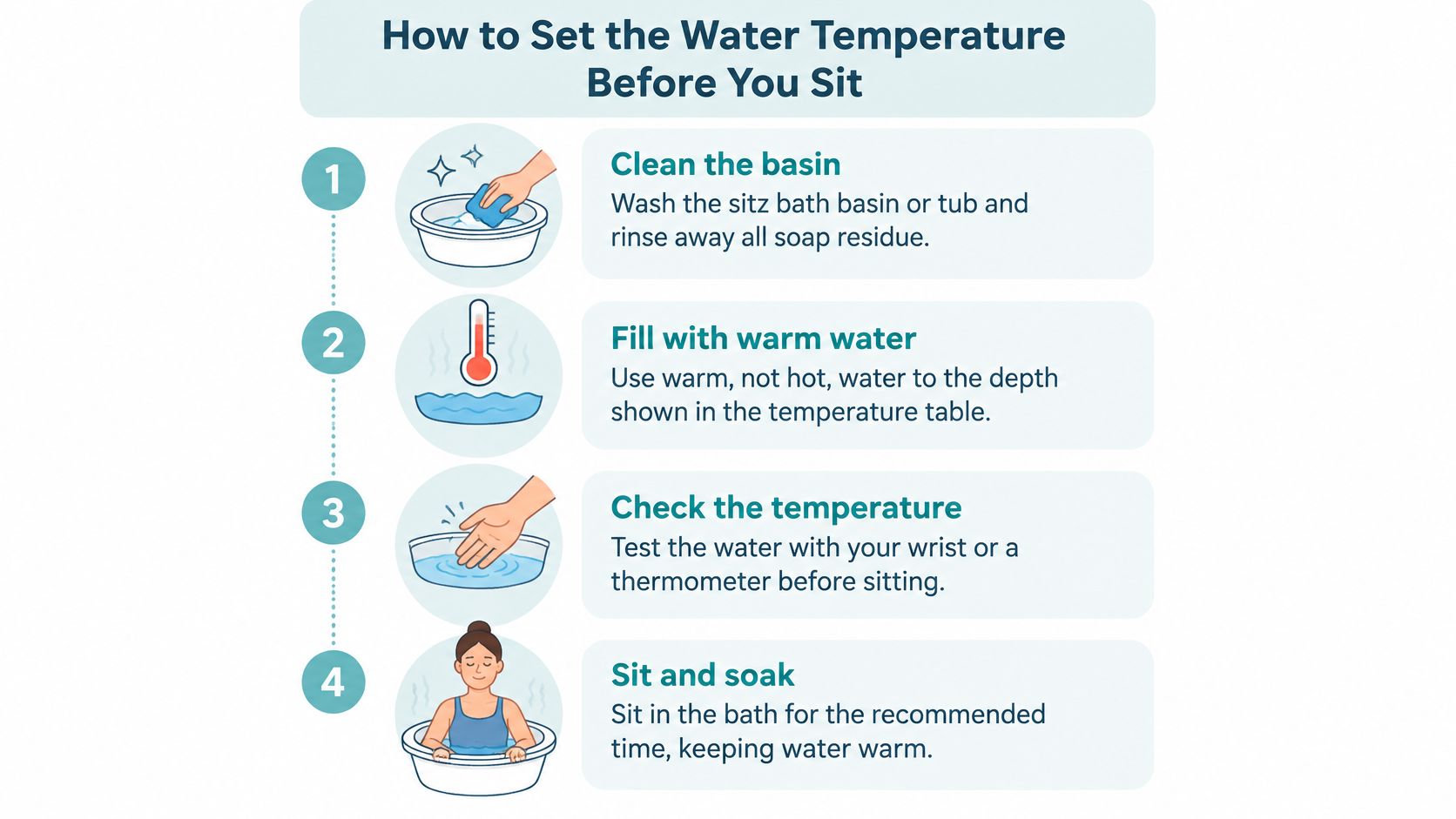
Six steps, in order. The whole routine takes less time than the soak itself.
- Clean the basin and rinse the soap. Sitz bath basins and tubs collect residue between uses, and soap film on the seat is a sting waiting to happen. Rinse until the water runs clear.
- Fill with warm water, not hot, to the right depth. Use the chart above: 3 to 4 inches for hemorrhoids, 2 to 3 inches after childbirth. Shallow water covers the perineum without turning a sitz bath into a full bath you have to drain.
- Check the temperature with a bath thermometer and aim for 94 to 104°F. Stay toward the cooler end when skin is raw or freshly healing. If you're adding a soak mix, dissolve one scoop in the water before you sit and keep the soak to 10 to 15 minutes.
- Without a thermometer, test with a clean hand and then subtract. If it feels distinctly warm to your fingers, it will feel hotter to the perineum. Add a splash of cool water and retest.
- Sit for the full soak time, then pat dry. Gentle patting with a clean towel beats rubbing, which drags on irritated tissue. Leave the area fully dry before underwear goes back on.
- Recheck at the two-minute mark. Water cools fast in a shallow basin. Top up with a little warm water, never boiling or very hot water straight from the kettle.
The Slip Almost Everyone Makes
Running the tap hot so the bath feels better sooner. It's understandable, especially on a bad day, and it's the single most common way people turn a soothing soak into hours of stinging. Heat doesn't reach the tissue faster. It just raises the risk.
Practical rule: If you have to talk yourself into sitting down, the water is too hot.
You know the temperature was right when your skin feels calm during the soak, nothing stings, and there's no new redness afterward. If you're building this into a routine alongside other home care, this overview of a sitz bath for hemorrhoid relief covers where the soak fits in the day.
Why Hot Water Burns Sensitive Skin
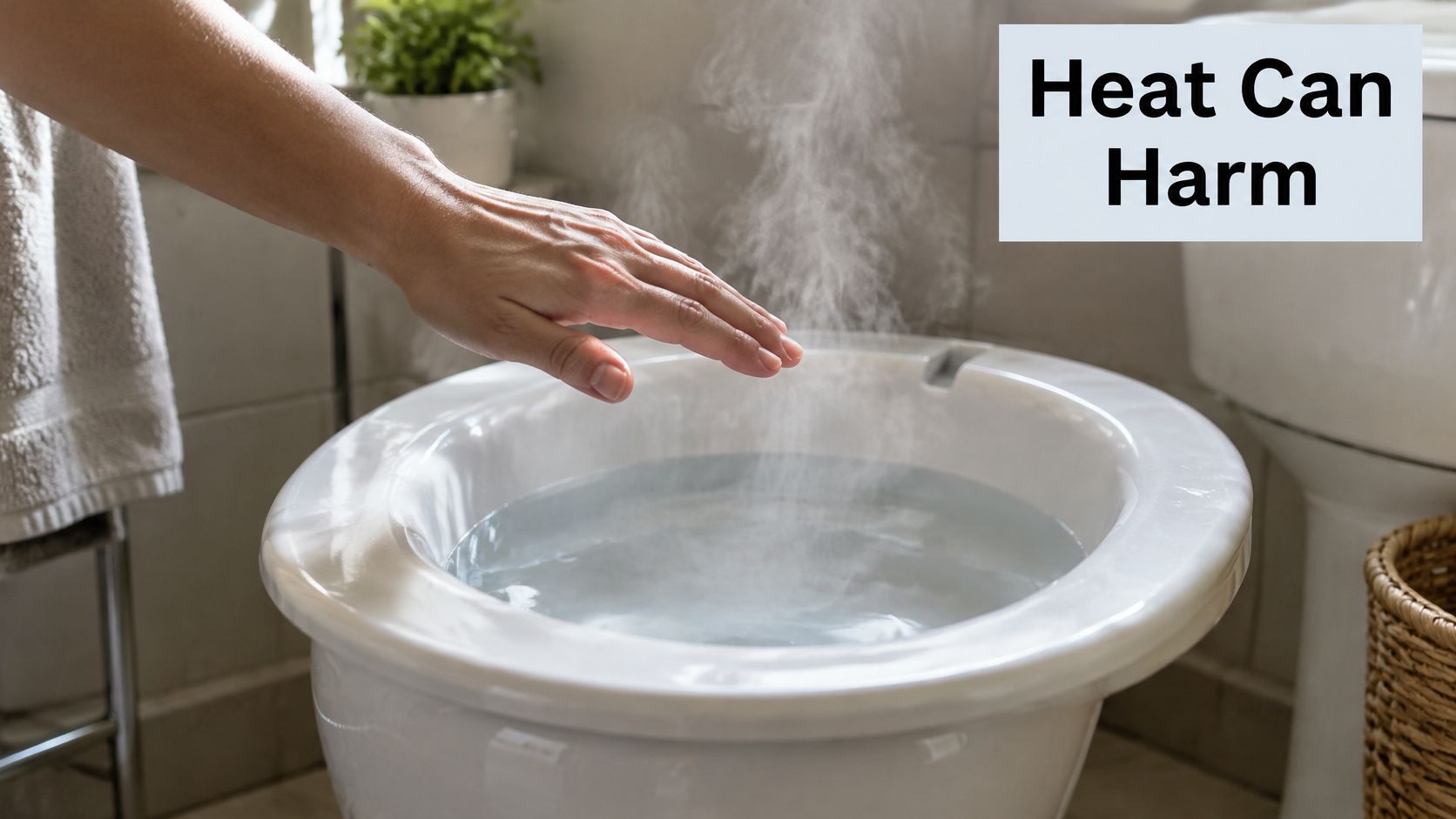
A brief soak can turn uncomfortable when inflamed tissue is exposed to water that is too hot. Skin around the perineum may already be irritated by hemorrhoids, fissures, or postpartum healing, so it can be more vulnerable to heat than skin elsewhere. A pleasant first sensation is not a reliable safety test; continued contact can leave sensitive tissue stinging.
What the Published Guidance Actually Says
An Indiana health-training guide gives 94 to 98°F (34.4 to 36.7°C) for cleansing and promoting healing. For situations where heat is the objective, it starts at 95°F (35°C) and rises gradually to a maximum of 105°F (40.5°C). The same guide's discharge-care reference calls 94 to 98°F warm water and 105 to 110°F hot water.
Treat 104°F as a safety ceiling, not a comfort goal. A higher temperature is not evidence of greater benefit, and water near the upper limit may still feel too hot for irritated skin. Keep the soak comfortable rather than trying to reach a particular number.
A 2005 review found limited published evidence for sitz baths in anorectal disorders and reported complications, including skin burns, across five articles. That evidence makes temperature control more important, not less: use a thermometer if available instead of relying only on how the water feels.
Who Needs Extra Caution
- People with diabetes: Avoid hot or warm baths unless a physician advises otherwise. Reduced sensation can make it harder to notice water that may injure skin.
- Anyone with reduced sensation: Neuropathy, spinal conditions, and some medications can dull the body's warning signals.
- Older adults: Thinner skin may be more vulnerable to burns and can take longer to heal.
- New mothers with stitches: Follow your discharge instructions, which may differ from general temperature guidance.
- Anyone with an open wound or recent procedure: Ask a healthcare provider before soaking.
A brief walkthrough can help clarify setup and safety points.
Warmth may feel soothing, and comfort matters. A sitz bath should not be treated as a cure: it does not shrink hemorrhoids or close a fissure, and trials have not established that it reliably reduces pain. Aim for comfort without exposing sensitive tissue to excessive heat.
When to Cool Down, Stop, or Call a Provider
A sitz bath should leave the area more comfortable, not more irritated. If warmth starts to feel hot or stinging, get out and cool the water before deciding whether to try again. If discomfort continues after the soak, stop soaking and contact a healthcare provider if it does not settle.
Temperature can affect comfort and swelling differently. A scientific review of sitz bath evidence reported that cold sitz baths reduced perineal edema more than warm ones in one study, although patients generally preferred warm baths. The review also described the evidence for anorectal benefits as weak and called for better randomized trials. Warm water may feel soothing, while cooler water may be more comfortable when swelling is the main concern. Choose the temperature your skin tolerates.
| Symptom or Water Feel | What It May Mean | What to Do |
|---|---|---|
| Water feels hot or stinging after you sit down | The water is too hot for comfort | Get out, cool the water, and test it before sitting again |
| Stinging or redness lasts after the soak | Possible irritation or heat exposure | Stop soaking and contact a healthcare provider if it does not settle |
| Swelling is the main concern and cooler water feels comfortable | Cooler water may help with swelling | Try cooler water, but stop if pain increases |
| Pain worsens, or the perineum becomes red and swollen | The condition may be worsening | Stop soaking and seek medical advice |
| No improvement after two or three baths | Home care may not be enough | Contact a healthcare provider |
| Fever, substantial or ongoing bleeding, or severe pain | Symptoms need prompt medical evaluation | Contact a healthcare provider right away |
Stop signals: Increasing pain, spreading redness, or new swelling after a soak are reasons to stop.
Cleveland Clinic advises stopping if pain worsens or the perineum becomes red and swollen, and seeking medical advice if there is no improvement after two or three baths. WebMD's sitz bath guidance also explains that warm soaking can ease discomfort but is not a cure. Fever, new symptoms, or worsening symptoms are reasons to call a doctor.
Where a Soak Still Earns Its Place
A sitz bath can offer a period of comfort, including after a bowel movement, while leaving the underlying problem for other care. Follow the schedule in the earlier depth-and-time guidance, and change or stop the soak if it makes symptoms worse.
For help deciding which symptoms call for a clinician, read this guide to who treats hemorrhoids.
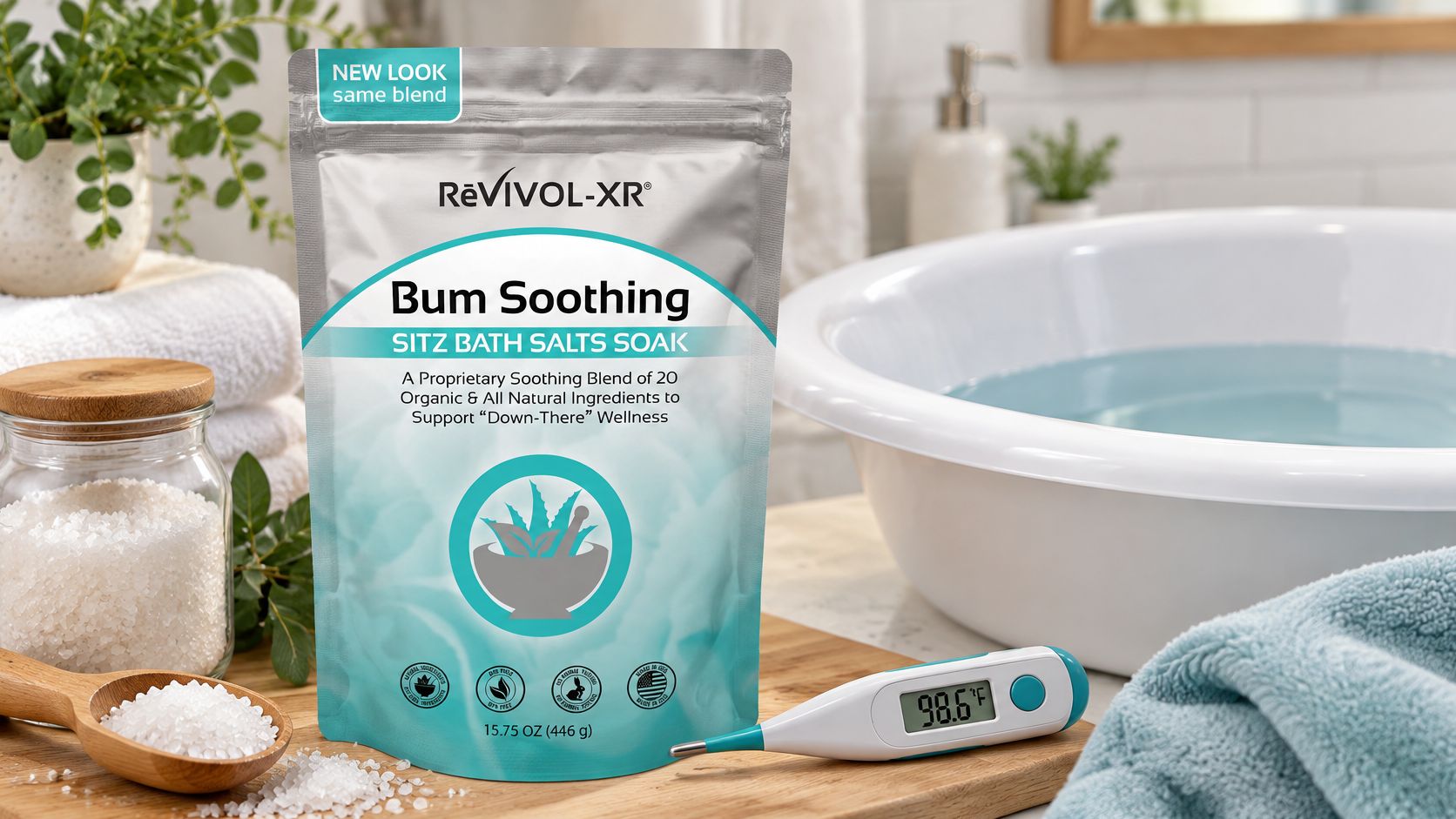
The Revivol-XR® Sitz Bath Soak Mix is a concentrated soak intended for the end of the day or when applying a cream is uncomfortable. It costs $21.99. To use it, dissolve one scoop in a few inches of warm, not hot, water in a sitz bath basin or clean tub, then soak for 10 to 15 minutes. It is for external use only as a bath-water additive. Patch test before first use, and do not use it as a substitute for medical care.
A reasonable target is comfort without injury. If the soak leaves you worse, stop; a cooler or shorter soak may be more comfortable next time, or you may choose to skip it.