Best Seat Cushion for Hemorrhoids and How to Choose One

A seat cushion for hemorrhoids can make sitting more comfortable by taking some of the pressure off swollen, sensitive tissue. It does not treat hemorrhoids themselves, but reducing direct pressure may make long workdays, car rides, and feeding sessions easier to manage. If symptoms are severe, bleeding, or worsening, speak with a healthcare provider before relying on a cushion for relief.
Table of Contents
-
Why a Seat Cushion for Hemorrhoids Matters
- Features to Consider First
- Seat Cushion Types at a Glance
- Donut Cushions Remove Direct Contact
- U-Shaped Cushions Offer Stability at Work
- Memory Foam Spreads Weight Over Time
- Gel Cushions Stay Cooler for Longer Sits
- Inflatable Cushions Win on Portability
- Side by Side Look at Seat Cushion Designs
- Matching a Design to Your Daily Schedule
-
Features That Deliver Real Pressure Relief
- Match Cushion Height and Firmness to Your Chair
- Choose Everyday Features You'll Actually Use
- Office Workers Who Sit All Day
- Drivers and Frequent Travelers
- New Mothers in Early Recovery
- Home Sitting and Long Evenings
- Three Questions Before You Buy
- Test It Before Committing
- Using a Warm Sitz Bath in the Evening
- Adding Gentle Topical Care
- A Simple Daily Pattern to Follow
- When to Talk with a Healthcare Provider
- Cleaning Foam and Removable Covers
- Drying and Storing Your Cushion
- Knowing When a Cushion Is Not Right
- Warning Signs That Need Medical Attention
- Is a Donut Cushion Safe During Pregnancy?
- How Long Should You Use a Cushion Each Day?
- Can Memory Foam Make Symptoms Feel Worse?
- How Often Should You Clean a Cushion?
Why a Seat Cushion for Hemorrhoids Matters
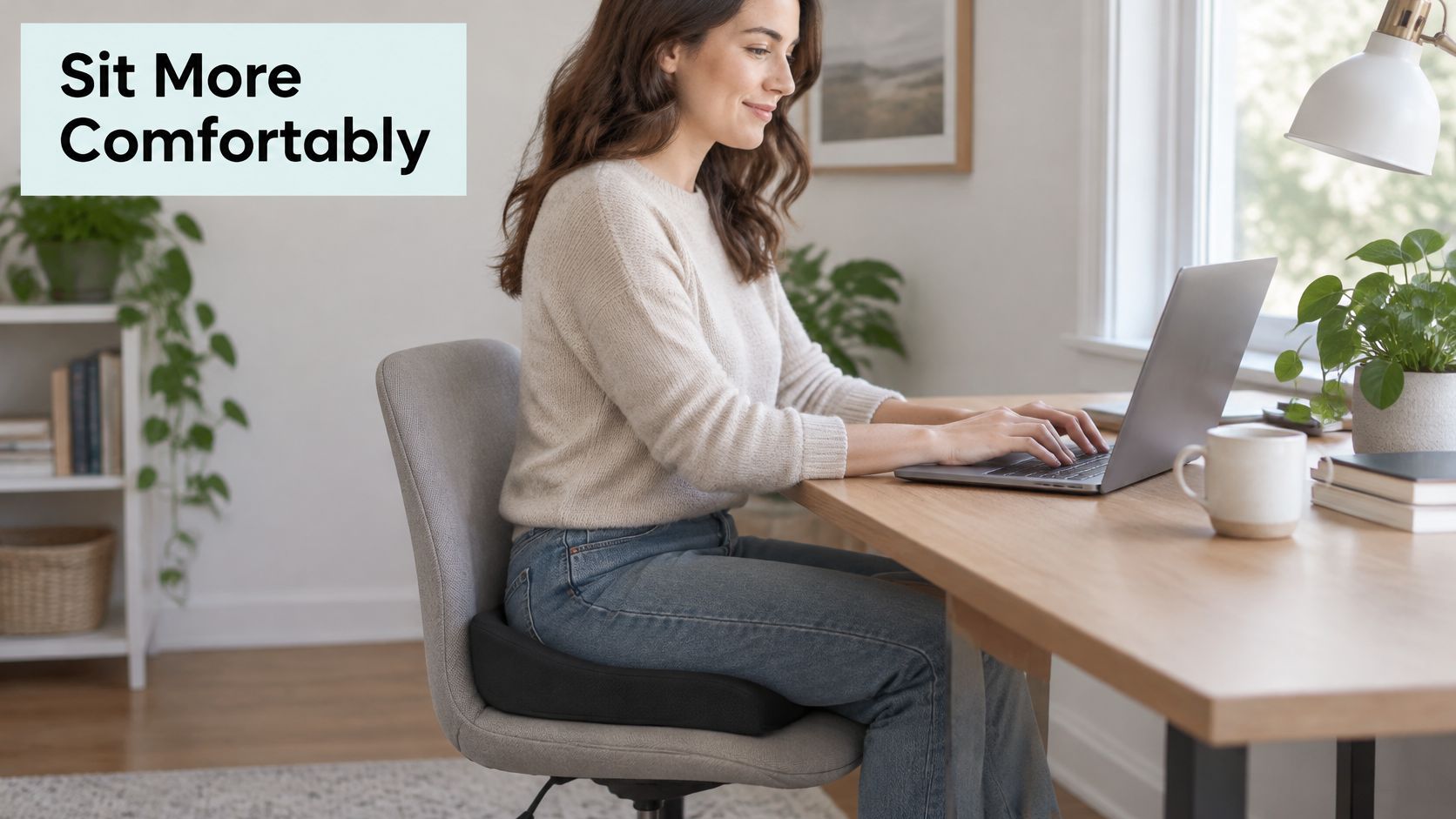
When you sit, your body weight presses against the perineum and rectal area. If that tissue is already swollen or irritated, an ordinary chair can quickly become uncomfortable.
A well-chosen cushion changes where your weight rests. Rather than concentrating pressure in the sensitive center, it spreads more of that weight onto the sit bones and reduces contact with irritated tissue.
Features to Consider First
Look for these details before buying:
- Pressure-relief design: A central opening or cutout reduces direct contact with the tender area.
- Supportive firmness: A cushion that sinks too deeply may leave you sitting on a hard chair instead.
- Portable size: Compact models are useful in cars, airplanes, waiting rooms, and other temporary seating.
- Washable cover: A removable, wipeable cover makes regular cleaning much easier.
Seat Cushion Types at a Glance
No single cushion works best in every setting. Here is a quick comparison of the five main styles, along with the situations where each one tends to be most useful.
| Cushion Type | Best For | Main Benefit | Main Drawback |
|---|---|---|---|
| Donut | Short periods at home | Keeps direct pressure away from sensitive tissue | Can shift or feel awkward during longer sits |
| U-Shaped | Office chairs and desk work | Stays in place and supports a more stable posture | May not provide as much relief around the center |
| Memory Foam | Extended periods of sitting | Spreads weight evenly and contours to the body | Can retain heat and soften over time |
| Gel | Warm climates or hotter work environments | Feels cooler and provides firmer support | May feel too hard for some people |
| Inflatable | Travel and limited storage | Packs down small and is easy to carry | Requires careful inflation and can shift |
Your daily routine matters more than any general "best" rating. A desk worker who sits for eight hours may prefer a stable U-shaped cushion on a rolling office chair. A frequent driver, by contrast, may want a slim inflatable model that fits easily into a bag.
For feeding sessions, especially after childbirth, consider a cushion that stays in place and can be cleaned easily. A memory foam model may offer comfortable support during longer feeds, while an inflatable design offers flexibility when space is limited.
The right cushion is not necessarily the softest one. Comfort depends on how pressure is positioned, not simply how plush the material feels.
For a better understanding of how sitting affects hemorrhoid symptoms, read our guide on why sitting hurts when you have hemorrhoids.
A cushion can support comfort between other forms of care, but it does not address the cause of hemorrhoids. Warm sitz baths, gentle cleansing, and treatments recommended by a healthcare provider may be useful alongside it. If you notice bleeding, severe pain, or symptoms that last more than a few days, arrange a medical evaluation.
If possible, test a cushion for one week in the place where you spend the most time sitting. Pay attention to pressure relief, stability, comfort, and ease of cleaning; the best choice is the one that supports your symptoms without creating new problems.
Every seat cushion for hemorrhoids promises relief, but they don't all handle pressure the same way.
You usually feel the difference after a full workday or a long drive, not in the first five minutes in the store.
The graphic below lines up all five designs so you can see how each one takes weight off the sore spot.
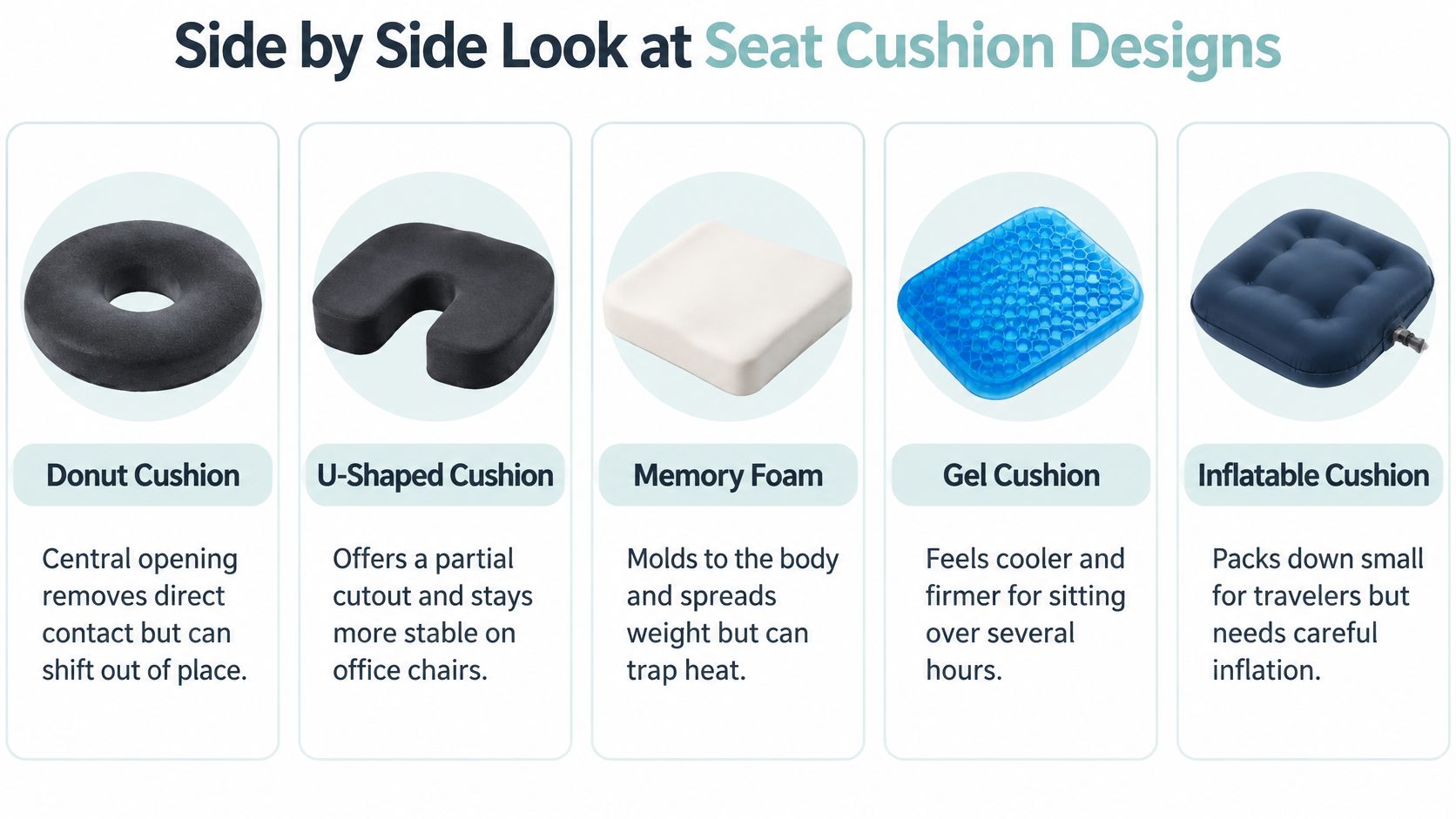
Look closely and a trade-off jumps out. Stability, coolness, and portability tend to pull in opposite directions, so there is no one winner.
Your daily routine should make the call.
Donut Cushions Remove Direct Contact
The classic donut leaves a hole in the middle, so nothing presses straight on the tender tissue. For short sits at home or those first rough weeks of recovery, that gap can feel like instant relief.
It does wander, though. The ring can slide forward when you shift, and some people feel their weight roll toward the edges instead of staying on the sit bones.
U-Shaped Cushions Offer Stability at Work
A U-shape only opens at the back, so you get a little breathing room without the full hole. The relief is milder, but the cushion actually stays where you put it.
That matters in an office chair. You can lean, swivel, and reach for the keyboard without chasing it. For six to eight hours of desk time, most people find this shape easier to live with.
Memory Foam Spreads Weight Over Time
Memory foam softens around you and spreads your weight over a wider patch. That spreading action takes the sharp edge off the pressure that builds during a long sit.
Heat is the catch. Foam traps warmth and can feel sticky by afternoon, especially in summer. It also packs down, so squeeze it every few months and replace it when it stops springing back.
Gel Cushions Stay Cooler for Longer Sits
Gel feels cool right away and runs firmer than foam. That extra push-back keeps you from sinking straight through to the chair underneath.
For some, though, firm reads as hard. If the area is already throbbing, test a gel pad for a few days before you decide.
Inflatable Cushions Win on Portability
Blow-up models fold down small enough for a carry-on or the glove box. If you travel a lot, nothing else packs this easy.
They are picky about air. Too little and you bottom out, too much and you get a hard ridge under your thighs.
Portability only helps if the cushion still feels supportive once you arrive.
Side by Side Look at Seat Cushion Designs
Here is the quick snapshot to match a style to how you actually sit during the day:
| Cushion Type | Pressure Relief Approach | Portability | Firmness | Washability |
|---|---|---|---|---|
| Donut | Central opening removes direct contact | Moderate | Medium | Varies by model |
| U-Shaped | Partial cutout at the back | Moderate | Medium-firm | Varies by model |
| Memory Foam | Spreads weight across a wider area | Low | Soft | Varies by model |
| Gel | Firm support with a cooling feel | Moderate | Firm | Wipe clean |
| Inflatable | Adjustable air chamber | High | Adjustable | Wipe clean |
No row is perfect across the board. Pick the compromise you can live with... coolness for hot offices, firmness for support, or packability for travel.
Matching a Design to Your Daily Schedule
Where you sit most should point to what you buy:
- Desk work: Go U-shaped for stability through long shifts
- Driving and travel: Go inflatable so you will actually bring it
- Nursing and home rest: Try donut or memory foam for softer, shorter sits
- Hot rooms and cars: Try gel, as long as the firmness agrees with you
Grab the one that fits your longest sit of the day, then give it three or four days before you judge it.
A seat cushion for hemorrhoids has to do more than feel soft. The real test comes when you sit down, shift your weight, and stay put for a while, not in the first few seconds of squeezing it in a store.
Features That Deliver Real Pressure Relief
Pressure redistribution is the feature that matters most. The goal is to spread your weight across the seat so nothing bears down on tender tissue. A central opening or channel should stay open under you, not close up as the padding compresses. This guide to pressure placement after surgery explains why that detail counts.
A visible cutout doesn't guarantee comfort, though. Look at whether its edges press into sore spots, especially when you lean forward or reach to one side.
Judge the relief area while you're sitting on the cushion, not while it's empty.
Before you tear off the packaging or toss the return label, run through a few quick checks:
- Sit centrally. Follow the manufacturer's orientation instructions.
- Shift gently. Notice whether the opening stays lined up with you.
- Check underneath. If the hard chair seat pushes through the padding, try a different support level.
Match Cushion Height and Firmness to Your Chair
Thickness and firmness depend on each other. A tall cushion can still flatten out under you, while a thinner one may feel surprisingly supportive on the right chair. What you want is usable support, not the biggest number on the product page.
Test it at your actual desk if you can. Can your feet rest flat, and can you reach the keyboard without hiking your shoulders? If the extra height makes the whole setup awkward, change the chair or choose a slimmer cushion.
| What You Notice | What to Check Next |
|---|---|
| Hard seat beneath you | Whether the cushion collapses under your weight |
| Pressure along the opening | Cutout size, placement, and edge firmness |
| Feet hanging above the floor | Combined chair and cushion height |
| Sliding when reaching | Cushion fit and base grip |
These checks are about fit, not medical results. If a cushion makes sitting feel worse, there's no reason to keep using it out of stubbornness.
Firmer isn't always better, either. The right choice is support you can sit on comfortably, without bracing yourself or constantly shifting away from a painful spot.
Choose Everyday Features You'll Actually Use
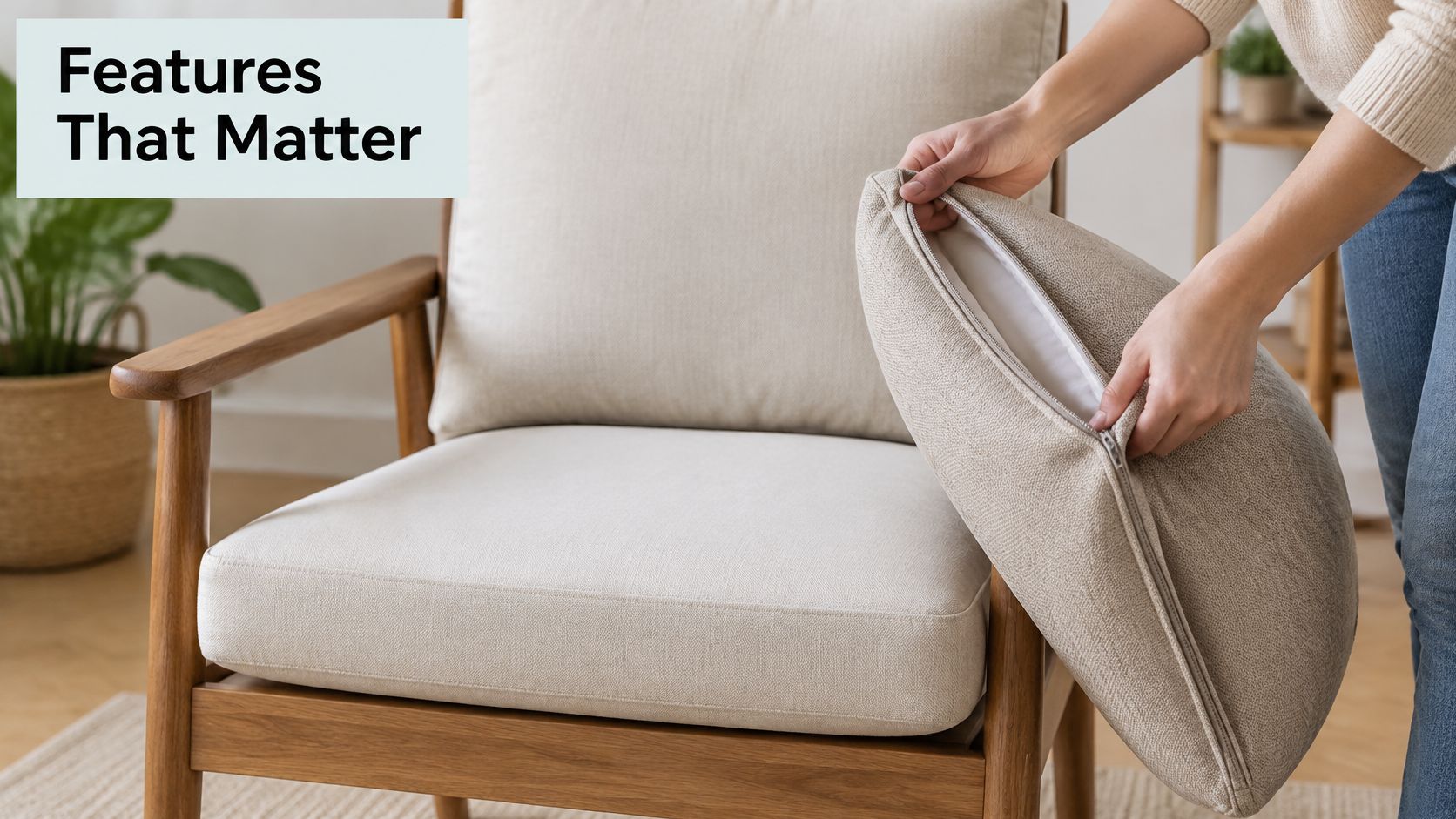
Washability is easy to overlook until the cover gets grimy. Before you buy, check whether the cover comes off without a fight, whether replacement covers are sold separately, and whether the core has its own cleaning instructions.
- Shared spaces: An easily removable cover keeps things simple.
- Travel: Check the packed dimensions and how much the cushion weighs to carry.
- Cars: Make sure it stays put without getting in the way of safe driving.
Portability only matters if you'll actually carry the cushion around. Measure your bag and the seat you use most before you order.
Comfort also isn't a license to sit for hours. This sitting advice from a colorectal practice recommends getting up to walk every 30 to 60 minutes. Try your new setup today, and see a healthcare provider if symptoms persist, become severe, or involve bleeding.
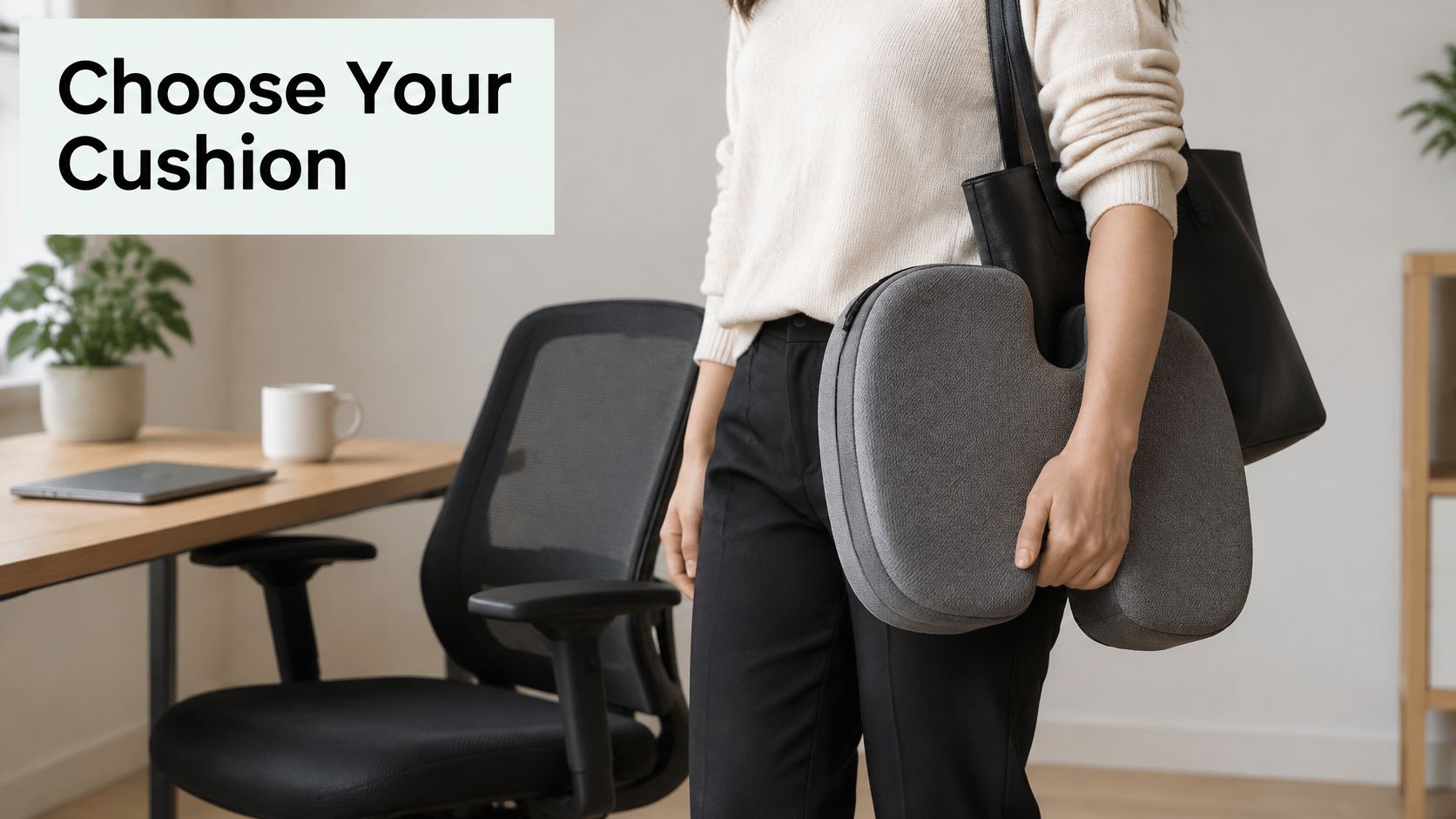
Different life situations call for different cushions. In practice, the right pick has less to do with the label on the box and more to do with where you actually spend your hours sitting.
Office Workers Who Sit All Day
Office workers often spend most of their waking hours in one chair. A cushion that slides off every time someone rolls back to grab a file from the printer gets old fast.
Picture a claims processor who spends most of a shift on a rolling chair. A U-shaped cushion with a non-slip base usually stays put through a busy day. Look for a base with real grip, because a smooth surface tends to shift every time you stand up and sit back down.
Drivers and Frequent Travelers
On the road, convenience beats plush padding. You need something you can grab, set up, and stow in seconds, and weight and bulk matter far more than thickness here.
Consider a regional sales rep who logs long days behind the wheel. A slim inflatable or lightweight foam model slides into a laptop bag and is ready before the first stop. Compact models also work well as a backup for hotel rooms, airport lounges, and stadium seats.
Before a long trip, try the cushion in your own car so it doesn't get in the way of the pedals.
New Mothers in Early Recovery
New mothers have different priorities altogether. Comfort during feeding and rest counts for far more than portability.
In the early weeks, a donut or U-shaped design often feels better because it keeps direct pressure off tender tissue. A new mother feeding on the couch at night may want a cushion she can leave on the sofa rather than one she has to haul upstairs. If symptoms feel unusual, ask your healthcare provider which options make sense for you.
Home Sitting and Long Evenings
Memory foam suits longer stretches at home, like movie nights or an afternoon with a book in the armchair. Pick a cover you can take off, since sofa time tends to bring spills and snacks along for the ride. Keep a spare cover on hand so you can swap quickly.
Three Questions Before You Buy
Before you commit, answer three simple questions.
- Where will you use it most? An office, a car, or the living room each points toward a different shape.
- How long do you sit at a time? Short sits suit simpler designs, while longer sessions call for more even support.
- How often will you clean it? If you plan to wash it weekly, a removable cover is worth the extra cost.
A cushion that fits your routine beats one that merely looks good on a shelf.
Test It Before Committing
Use the cushion during your normal routine before you judge it. Pay attention to where discomfort builds by mid-afternoon, and notice whether you keep reaching for a shift in position.
Keep the receipt and read the return policy first. A satisfaction guarantee or a flexible return window gives you room to change your mind if the cushion doesn't work out.
In the end, your choice should fit your life, not someone else's. If the cushion helps during the day but symptoms stay sharp, bleeding appears, or pain grows worse, talk with a healthcare provider promptly.
A seat cushion for hemorrhoids does its best work as one piece of a daily comfort routine. Think of it as the daytime step, with a few gentle habits covering the rest of the day.
Sitz baths have been around for a long time, and for good reason. Plenty of people soak in warm water after a long stretch at a desk or behind the wheel, and that warmth often feels good on tired tissue.
Using a Warm Sitz Bath in the Evening
A simple routine uses plain warm water for about 10 to 15 minutes, once or twice a day. Fill the tub just deep enough to cover your hips, and keep the water comfortably warm rather than hot. Hot water can irritate tender skin.
Revivol-XR makes 20-in-1 Sitz Bath Salts that combine Epsom salts, natural oils, and botanicals. Many people stir them into the warm water as part of their evening routine.
Warm water is about comfort, not cure. A soak can ease tightness, but it won't treat the underlying condition.
Adding Gentle Topical Care
Topical products can add another layer of relief, especially when symptoms flare up. Revivol-XR also offers a cream, a spray, and a cleansing lotion, and people often use them alongside a cushion.
The cream fits everyday use, while the spray comes in handy when you're away from home. The cleansing lotion blends aloe and witch hazel, so it's a gentler option than dry wipes.
A Simple Daily Pattern to Follow
You don't need an elaborate plan. Try this:
- Use your seat cushion for hemorrhoids during long sits, such as desk shifts or road trips.
- Take a warm sitz soak in the evening, then pat the area dry.
- Follow with a gentle cleansing step, such as the Revivol-XR lotion, and use any cream as the label directs.
Pick the timing that fits your schedule. Consistency tends to matter more than getting the timing perfect. Always read product labels first, and check with a pharmacist or clinician about what suits your needs.
Want more detail on soaking at home? Read our guide on hemorrhoid relief with a sitz bath for step-by-step tips.
A cushion, a soak, and gentle cleansing work together to support comfort through the day. Each step is small, but together they make sitting a little easier.
When to Talk with a Healthcare Provider
Persistent, severe, or bleeding symptoms need a healthcare provider's evaluation, even when your routine is working well today. Don't wait if something feels different, especially after childbirth.
A cushion only does its job if it stays clean and in decent shape. Good care also keeps odor and moisture from creeping in over time.
Cleaning Foam and Removable Covers
Read the care label before you do anything else. Foam cores and covers often need different cleaning methods, and sticking to the label is the easiest way to keep the material from breaking down.
For everyday upkeep, this routine works well:
- Wipe foam surfaces with a damp cloth and a little mild soap.
- Take the cover off if it zips or snaps free, then wash it on a gentle cycle.
- Let every piece air dry completely before you put things back together.
Don't slide damp foam back onto a chair. Trapped moisture leads to musty smells, and the padding flattens out much sooner than it should.
Drying and Storing Your Cushion
Lay the cushion flat in a breezy spot, away from direct sunlight. Heat warps foam and fades fabric, so keep it well clear of dryers and radiators.
Once it's fully dry, store it somewhere cool and dry. A damp car trunk is the last place it should end up.
Knowing When a Cushion Is Not Right
Sometimes a cushion just isn't the answer. If sitting brings on sharp new pain or seems to make your symptoms worse, stop using it and talk with a healthcare provider.
A cushion also can't fix the habits behind most flare-ups. Long stretches on the toilet and straining both add pressure, so keep bathroom time short.
Drinking enough water and eating fiber, when it fits your routine, helps keep stools soft. Softer stools mean less straining, and that often matters more than any cushion you own.
Warning Signs That Need Medical Attention
Hemorrhoids are very common, but that doesn't mean you should brush off something that feels wrong. Symptoms that are persistent, severe, or bloody need a healthcare provider to take a look.
Reach out promptly if you notice:
- Bleeding from the rectum or in the toilet bowl
- Pain that gets worse instead of better over several days
- Swelling or a lump that sticks around or keeps growing
Trust your gut here. If something seems off, a quick phone call is never a wasted step.
Bleeding should always be checked, especially after childbirth. Don't wait it out and hope things settle on their own.
If you're not sure where to begin, take a look at our guide on who treats hemorrhoids and which specialist to see.
Good cleaning habits keep a cushion comfortable for much longer, so it holds up through many busy weeks at home and on the road. Knowing when to call a provider keeps your routine safe and steady.
Once you start comparing cushions, the same few questions tend to come up. Here are the ones people ask most often.
Is a Donut Cushion Safe During Pregnancy?
Plenty of pregnant women find a donut cushion comfortable for short sits, but no two bodies respond the same way. Pregnancy changes how your weight is carried, so check with your OB-GYN before relying on one. Some people like the open center, while others feel better on a different shape.
How Long Should You Use a Cushion Each Day?
There's no magic number of hours. Save the cushion for the sits that bother you most, like a long meeting or a drive, and get up for a short walk whenever you can. If the discomfort grows the longer you use it, stop and talk with a healthcare provider.
Can Memory Foam Make Symptoms Feel Worse?
For some people, yes. Memory foam traps heat and sinks under your weight, which can leave you feeling warm or unsteady during longer sits. If your area feels hotter or more sore after using foam, try a firmer, more breathable option and let your provider know.
How Often Should You Clean a Cushion?
Wipe the surface after each use if it gets sweaty or dirty, and wash removable covers about once a week or as the label directs. Let everything dry completely before sitting on it again. Damp padding is a quick route to odor and moisture buildup.
Every cushion is a tool, not a cure. Pick one that fits your routine, then test it for a few days before you decide.
Start with one cushion and adjust as you go. Reach out to a healthcare provider promptly if symptoms are unusual, keep coming back, or involve bleeding.
A cushion can make sitting easier, but it cannot tell you what is causing your symptoms.
Revivol-XR also offers soothing topical options, including a cream, a spray, and sitz bath salts. Many people pair these with a cushion for everyday comfort. Browse the full range at shop hemorrhoid.com.