5 Reasons It Hurts When Sitting (And How to Fix It Fast)

Most people don’t realize that the dull ache in their backside from sitting all day could be the first warning sign of a much more painful problem. I once spoke with a customer who had ignored his sitting pain for months, thinking it was just stress... only to find out he had a severely thrombosed hemorrhoid that required medical intervention. He told me, “I just thought it was normal to be uncomfortable. I never imagined it could get that bad.” His story isn't unique; millions mistake a serious warning sign for a minor annoyance.
Ignoring pain when you sit is a recipe for long-term suffering.
The truth is, when it hurts when sitting, your body is sending up a flare. That pain isn't just a consequence of a long workday; it’s a symptom pointing to an underlying issue. Whether it's hemorrhoids, an anal fissure, or nerve pressure, identifying the cause is the only way to find real, lasting relief. This experience taught me that educating people on the why behind their pain is the most powerful first step toward healing.
To get started, let’s break down the common reasons for your discomfort and what you can do about it right now.
- Pinpoint the Cause: Identify whether your pain is from hemorrhoids, fissures, sciatica, or tailbone issues.
- Get Immediate Relief: Use simple tools like cushions and topical treatments to reduce pain today.
- Build a Long-Term Plan: Create a consistent at-home care routine to manage symptoms and prevent flare-ups.
- Know When to See a Doctor: Recognize the red flags that signal a more serious problem.
That customer’s story ended well. Once he understood the cause, he built a simple care routine and finally got back to sitting comfortably. Your journey to relief starts with the same step... understanding what your body is trying to tell you.
The Hidden Agony of Your Office Chair
Most of us just write off that nagging pain as a consequence of a long workday, but ignoring it only makes the discomfort stick around longer. The truth is, your chair probably isn't the real enemy... it's just the trigger that's exposing an underlying problem.
Whether you feel a burning sensation, a sharp stabbing pain, or a deep, radiating ache, each feeling offers a clue to what's really going on.
This kind of discomfort is incredibly common, yet it's something people rarely talk about. In many countries, pain when sitting is a frequent side effect of hemorrhoids, a condition that impacts an estimated 4–11% of adults at any given time. And that's just the reported cases. Data from colonoscopies suggests the real number is closer to 38% of people, with millions quietly shifting in their seats to cope with the pain. You can read the full research on just how widespread sitting-related pain is.
Pinpointing Your Pain
To find the right solution, you have to play detective and identify the likely cause. Think about the specific sensation you feel... it provides valuable insight into what's happening. A sharp, localized pain right near the anus often points to anorectal issues, while a dull, spreading ache might suggest a problem with your tailbone or lower back.
This simple flowchart can help you start to differentiate between the various kinds of pain.
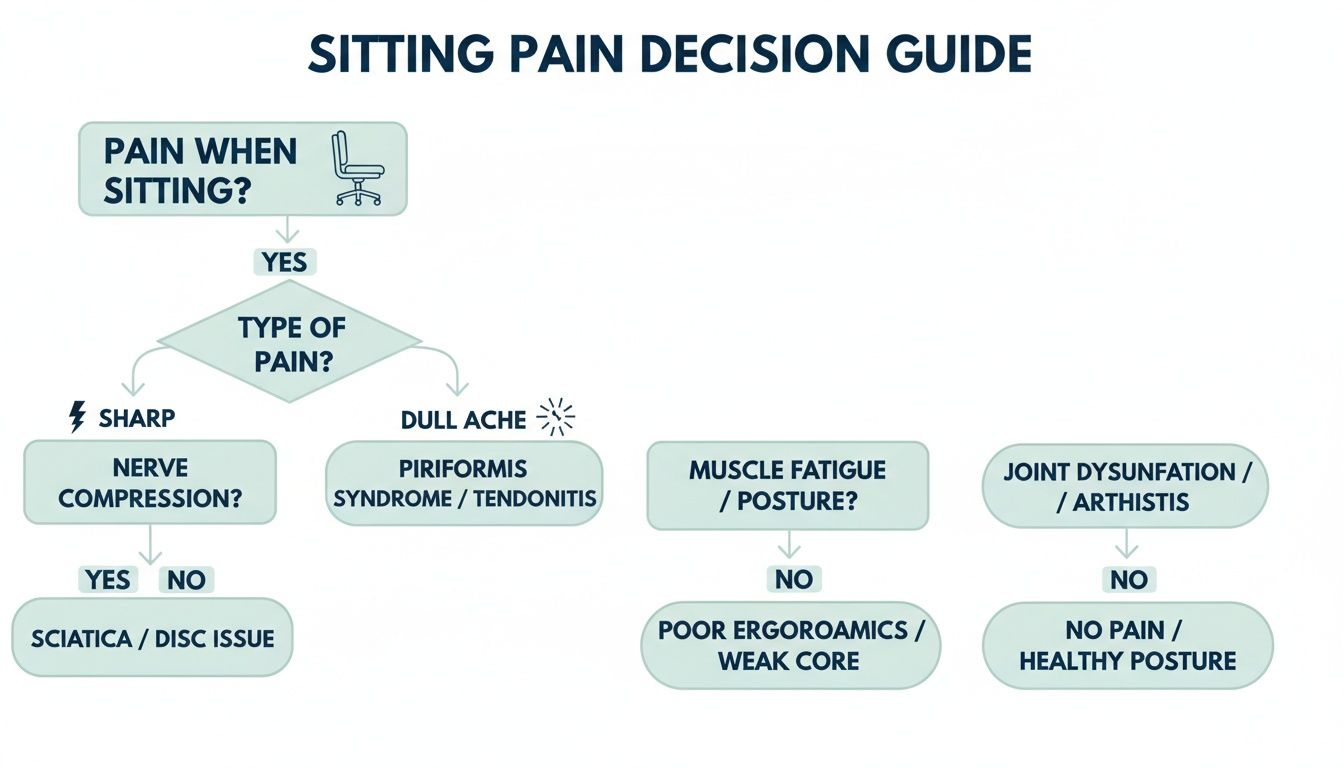
As the guide shows, paying attention to your pain's characteristics can lead you down different paths, helping you narrow down the possibilities and get closer to an answser.
Identifying Your Pain When Sitting
Sometimes, just putting a name to the sensation is the hardest part. This table breaks down common types of pain to help you connect what you're feeling to a likely source.
| Pain Type | What It Feels Like | Likely Cause |
|---|---|---|
| Sharp & Stabbing | A sudden, intense, almost knife-like pain, especially during or after bowel movements. | Anal Fissures, Thrombosed Hemorrhoids |
| Burning & Itching | A persistent, irritating sensation that makes sitting uncomfortable and distracting. | Hemorrhoids, Perianal Dermatitis |
| Dull & Aching | A deep, constant ache around the tailbone or lower back that gets worse the longer you sit. | Coccydynia (Tailbone Pain), Poor Posture, Piriformis Syndrome |
| Radiating & Numb | Pain that shoots down one leg, often with a "pins and needles" feeling or numbness. | Sciatica, Herniated Disc |
| Throbbing & Pressure | A feeling of fullness or constant pressure, sometimes with a rhythmic throbbing. | Perianal Abscess, Prolapsed Hemorrhoids |
By recognizing these patterns, you're not just guessing anymore. You’re starting to understand your body's signals, which is the key to finding the right kind of help.
Uncovering The Common Causes Of Sitting Pain
When it hurts when sitting, your body is sending you a pretty clear signal that something isn’t right. This pain isn't just a random annoyance; it's a symptom, and figuring out the root cause is the first real step toward relief.
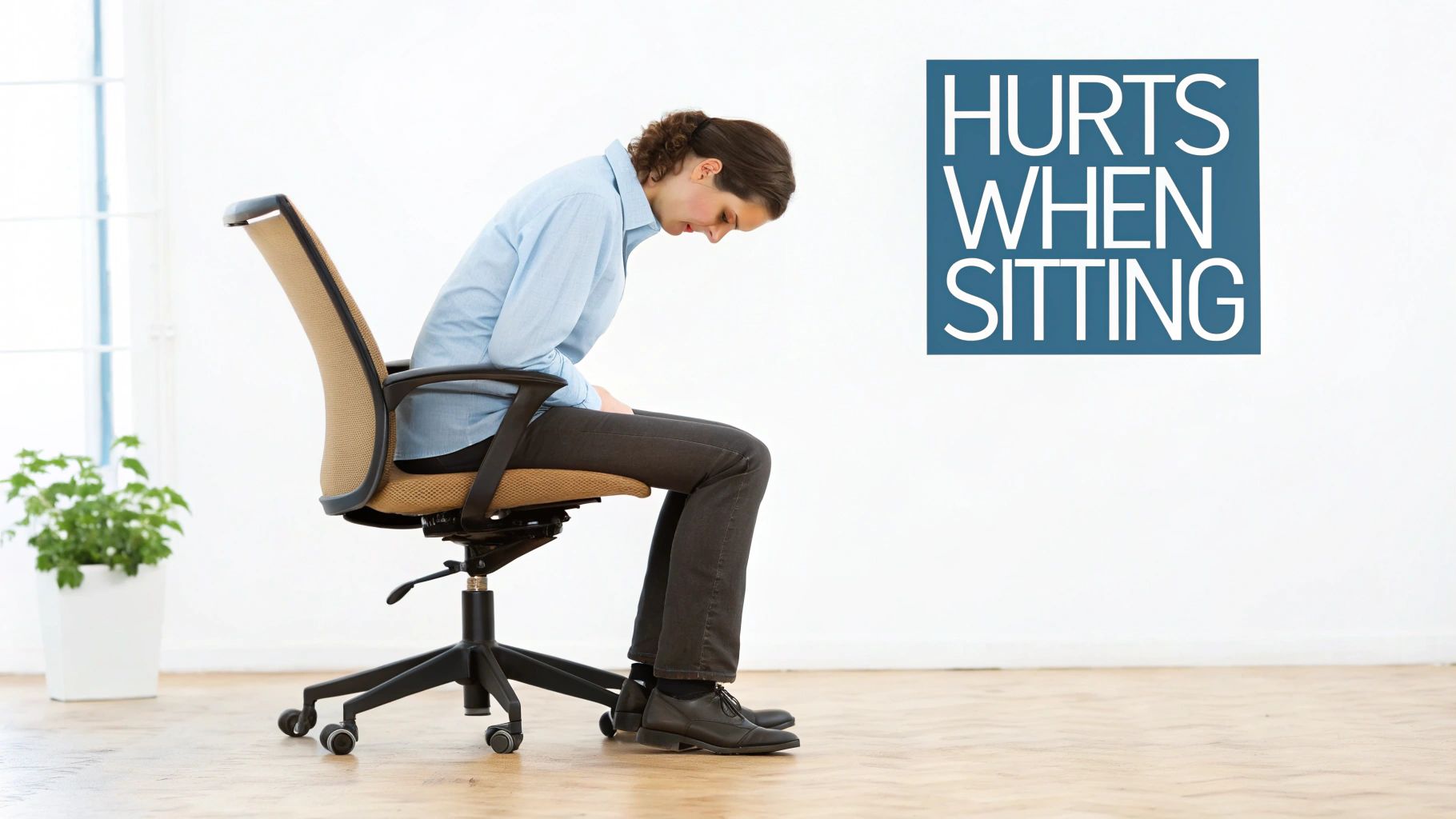
Think of it like being a detective for your own body. A sharp, localized pain tells a different story than a deep, radiating ache. The discomfort usually falls into a few main categories, each with its own signature feel.
Let's break down the most common culprits behind that pain in your rear.
Anorectal Issues: Hemorrhoids And Fissures
This is probably the most frequent reason sitting becomes an absolute nightmare. Hemorrhoids are just swollen veins in your lower rectum and anus. Picture them as tiny, sensitive cushions that get painfully squashed every single time you sit down.
The pain can be anything from a dull, persistent throbbing and itching to a sharp, stabbing sensation if the hemorrhoid has a blood clot (thrombosed).
Anal fissures are another problem... they're small tears in the delicate lining of the anus. They often cause a severe, sharp pain during and after a bowel movement that can stick around for hours, making the thought of sitting down awful. Both of these issues get much worse with prolonged sitting, especially on hard chairs.
Musculoskeletal Problems: Sciatica And Tailbone Pain
Sometimes, the problem isn't where you feel the pressure, but starts in your bones, muscles, or nerves.
- Coccydynia (Tailbone Pain): This is pain focused right at the very bottom of your spine, the coccyx. It can kick off after an injury like a fall, from the repetitive strain of activities like cycling, or even during childbirth. The pain is usually a sharp or deep ache that gets dramatically worse when you sit down or try to stand back up.
- Sciatica: This one involves the sciatic nerve, the longest nerve in your body, which runs from your lower back down through your hips and legs. If this nerve gets pinched or irritated, it can trigger a radiating pain, numbness, or tingling that shoots from your lower back or buttock down one leg. Slouching or just sitting for too long can really flare it up.
Less Common Culprits: Cysts And Infections
While not as common, a few other issues can cause serious pain when you sit. A pilonidal cyst, for instance, is a small sac that forms near the tailbone at the top of the cleft of the buttocks. If it gets infected, it becomes incredibly painful.
Similarly, a perianal abscess is a pocket of pus that develops near the anus. Both of these create an intense, localized pain and pressure that makes sitting almost impossible and definitely requires a trip to the doctor. Knowing these distinctions helps you stop just enduring the pain and start actually solving it.
How To Get Immediate Relief From Sitting Pain
When it hurts when sitting, you don't want a long-term plan... you want relief that works right now. The good news is, several simple strategies can make an immediate difference by easing pressure and calming inflammation so you can get through your day.
The first move is to change how you and your chair get along. Simple adjustments can shift pressure away from sensitive areas, often providing instant relief.
Master Your Seating and Posture
Your chair can be your best friend or your worst enemy. A hard, unsupportive surface concentrates pressure directly on the anorectal area and your tailbone, which can make any existing pain feel so much worse.
The key is to introduce a buffer between you and the chair.
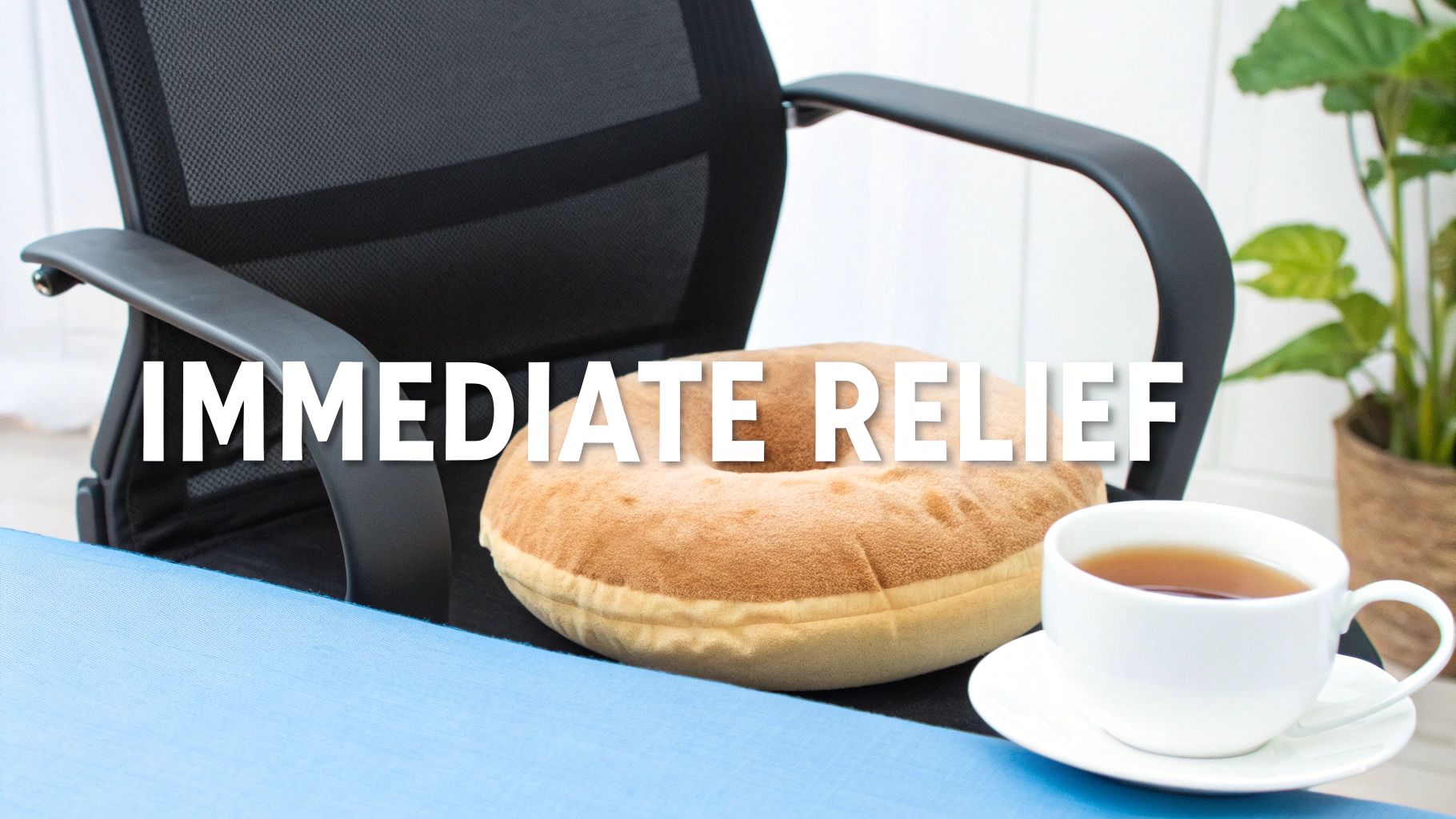
- Use a Donut or Coccyx Cushion: A donut cushion has a hole right in the center, which is perfect for suspending the anal area and preventing direct, painful contact. A coccyx cushion has a cutout at the back to relieve pressure on the tailbone. Both are excellent tools for immediate comfort.
- Adjust Your Posture: Sit with your back straight, shoulders relaxed, and feet flat on the floor. Slouching tilts your pelvis forward, putting extra strain on your lower back and rectal region.
Soothe Inflammation and Numb The Pain
For anorectal pain from hemorrhoids or fissures, topical treatments and therapeutic soaks are your fastest path to relief. They get to work directly on the source of the inflammation and discomfort.
A sitz bath is a shallow, warm bath that cleanses and soothes the perineal area. Adding therapeutic salts can seriously boost its effectiveness. The Revivol-XR 20-in-1 Sitz Bath Salts are formulated with Epsom salt, dead sea salt, and soothing botanicals to reduce swelling and calm irritation almost instantly.
When the pain is sharp and distracting, you need something stronger. For those acute flare-ups, Revivol-XR 5% Lidocaine Cream offers maximum-strength numbing. It works by blocking nerve signals in the affected area, providing powerful, targeted relief that allows you to sit more comfortably.
Get Up and Move Gently
Finally, one of the most effective strategies is also the simplest: stop sitting for so long.
Staying in one position reduces blood flow and keeps the pressure on. Set a timer and make sure to stand up, stretch, and walk around for a few minutes every 30 minutes. This simple habit gets your circulation going again, relieves pressure, and stops your muscles from getting stiff... giving those painful spots a much-needed break.
Building Your At-Home Treatment Plan
Finding quick relief is a great first step, but truly getting a handle on sitting pain means creating a consistent plan you can actually use at home. Think of it less as just treating a flare-up and more as building a complete care system to manage discomfort and stop it from coming back.
For so many of us, the moment it hurts when sitting isn't just a minor annoyance... it's a real problem at the office, in the car, or on a long flight. The fact that the global market for hemorrhoid treatments is expected to hit USD 1.74 billion by 2032 shows just how many people are searching for solutions. It’s a massive, shared experience, and you can read the full research about the growing need for OTC treatments to see how common this really is.
The best at-home toolkit is one that’s built for your specific symptoms, with the right products ready for both internal and external pain.
Assembling Your Complete Care System
A smart approach means having a solution ready for whatever kind of discomfort shows up. It’s like having a first-aid kit designed specifically for anorectal pain.
- For Multi-Symptom Relief: The core of your plan should be a product that can handle pain, itching, and swelling all at once. The Revivol-XR Advanced Hemorrhoid & Fissure Cream is perfect for this, creating a protective barrier while its active ingredients get to work soothing irritation.
- For Internal Discomfort: Sometimes the pain feels like it's deeper inside. This is where Revivol-XR Suppositories come in, delivering medication directly to internal hemorrhoids to help shrink swollen tissue from the inside out.
- For On-The-Go Convenience: Pain doesn’t stick to a 9-to-5 schedule. For those moments when you're at the office or traveling, the Revivol-XR Hemorrhoid Relief Spray offers a discreet, touch-free application that’s incredibly convenient.
Picking the right product can feel overwhelming, so here’s a quick guide to help you match the best Revivol-XR solution to your needs.
Choosing The Right Revivol-XR Product For Your Pain
| Product | Best For | Key Benefit |
|---|---|---|
| Revivol-XR Cream | External pain, itching, and swelling | All-in-one relief with a protective barrier |
| Revivol-XR Suppositories | Deep, internal discomfort | Targets and shrinks internal hemorrhoids |
| Revivol-XR Spray | Quick relief when you're out and about | Touch-free, discreet, and fast-acting |
| Revivol-XR Toilet Paper Lotion | Daily cleansing and irritation prevention | Turns regular toilet paper into a soothing wipe |
This table should help you pinpoint exactly what you need to build your personal care kit. Having the right combination of products ensures you're prepared for any symptom.
Gentle Cleansing Is Non-Negotiable
One of the sneakiest culprits for making irritation worse is dry, rough toilet paper. It can easily aggravate sensitive tissue, turning a small problem into a big one.
This is where a product like Revivol-XR Toilet Paper Lotion makes a huge difference. With just a single pump, it turns any toilet paper into a gentle, soothing wipe. Because it’s made with aloe and witch hazel, it cleans and calms the skin instead of just scraping against it.
When you bring all these elements together, you create a routine that attacks pain from every angle. Being proactive is the secret to not just managing your symptoms but getting back to a life where sitting down is comfortable again.
Navigating Pain During Pregnancy And Postpartum
Pregnancy and the postpartum period are incredible times, but let's be honest... they can also bring a whole new world of physical challenges. One of the most common complaints? It just plain hurts when sitting.
The immense pressure from a growing baby, combined with hormones that loosen up your pelvic tissues, creates a perfect storm for discomfort. After you’ve given birth, the stress on your perineal area can make even the plushest armchair feel like you’re sitting on a pile of rocks. This is a uniquely tough time, and finding relief that's both safe and effective is a huge priority for new moms.
Why Sitting Becomes So Painful
During pregnancy, all that extra weight in your abdomen puts a ton of strain on the veins around your rectum and your entire pelvic floor. This intense pressure is a huge reason why hemorrhoids become such a frequent and unwelcome guest.
In fact, pregnancy and childbirth are some of the biggest reasons women experience this type of pain. Research shows that hemorrhoidal issues affect a staggering 12–41% of pregnant or postpartum women. That means a lot of new moms are dealing with rectal pain and swelling that makes everyday things, like nursing the baby or driving to the store, incredibly uncomfortable. You can read the full research about hemorrhoid prevalence to see just how common this really is.
Safe And Soothing Relief For Moms
When you're expecting or recovering from delivery, you need solutions that are gentle but still get the job done. Harsh chemicals are a no-go, which is why turning to natural, soothing therapies can give you both physical comfort and peace of mind.
Here are a few safe strategies to help ease the pain:
- Embrace the Sitz Bath: A warm sitz bath can feel like a lifesaver. It’s a new mother's best friend for a reason... it gently cleanses the perineal area, gets the blood flowing to promote healing, and gives you instant relief from soreness and itching.
- Use a Specialized Cushion: A donut pillow or a coccyx cushion can be a game-changer. It works by lifting your sensitive tissues off hard surfaces, taking that direct pressure right off the sore spots.
- Choose Gentle Topical Creams: Look for formulas made with soothing, natural ingredients that can calm irritated skin without causing any more sensitivity.
For a truly therapeutic soak, adding Revivol-XR 20-in-1 Sitz Bath Salts to your bath can make all the difference. The blend of Epsom salt, botanicals, and essential oils is made specifically to help with postpartum swelling and soothe the discomfort from hemorrhoids or perineal tearing. It’s an essential piece of any postpartum recovery kit. For more on this, you can also check out our guide on what causes hemorrhoids during pregnancy.
When It's Time to See a Doctor
While products like Revivol-XR and other home remedies are fantastic for managing most common causes of sitting pain, it's crucial to know when your body is signaling something more serious. Listening to those signals is the key to your long-term health.
Think of it this way: self-care is your first line of defense, but it’s not a replacement for a professional diagnosis when certain symptoms pop up.
Red Flags to Watch For
If you notice any of the following, it’s time to pause the self-treatment and give your doctor a call. These signs could point to a bigger issue that needs a proper medical game plan.
- Severe or Worsening Pain: If the pain is just plain unbearable or seems to be getting worse day by day despite your best efforts, don't just tough it out.
- Significant Bleeding: A little spotting on the toilet paper can happen with hemorrhoids. But if you see heavy, persistent, or dark-colored blood in the toilet, that needs an immediate professional look.
- Pain with a Fever: When you have pain down there plus a fever, chills, or stomach pain, it might be a sign of an infection, like an abscess. That’s not something you can handle at home.
- No Improvement After a Week: If it still hurts when sitting and you see zero improvement after a solid week of at-home care, a doctor can figure out what's really going on and get you on the right track.
Answering Your Questions About Sitting Pain
When it hurts to sit, a million questions can run through your mind. It's a frustrating and surprisingly disruptive problem. Let's clear up some of the most common concerns we hear from people dealing with this type of discomfort.
How Long Does Hemorrhoid Pain Last When Sitting?
This really depends on the severity and how consistent you are with care. For a mild case, you can often get things under control pretty quickly. With the right approach... like using a soothing product like Revivol-XR cream and taking daily sitz baths... many people feel a significant difference in less than a week.
If your symptoms are more stubborn, it might take a bit longer. The absolute key to feeling better faster is sticking with your treatment plan day in and day out.
Can My Office Chair Make My Pain Worse?
Oh, absolutely. Your chair might not be the root cause of something like a hemorrhoid or fissure, but a bad one can pour gasoline on the fire. A hard, flat, or poorly designed seat puts direct pressure on an already tender area, which can make the pain feel ten times worse.
We always recommend investing in a good ergonomic chair and, just as importantly, a specialized donut or coccyx cushion. It's not just a comfort item; it's a critical tool for both relief and prevention.
Is Standing Better Than Sitting If I Have Pain?
You might think switching to standing all day is the answer, but the best strategy is actually a mix of sitting, standing, and moving. Standing for hours on end can also increase pressure in the lower rectal veins, which isn't what you want.
The real goal is to avoid staying in any one position for too long. Try to get up and walk around for a few minutes at least once every hour. This simple habit keeps your blood flowing and gives that sensitive area a much-needed break.
Can Revivol-XR Products Help With Anal Fissure Pain?
Yes, they're designed for it. Our formulas were created to tackle the unique and often sharp pain that comes from both hemorrhoids and anal fissures.
Our Revivol-XR Advanced Hemorrhoid & Fissure Cream is perfect for soothing the general irritation and protecting the delicate torn skin. For that sharp, almost glass-like pain that fissures can cause, our 5% Lidocaine Cream offers maximum-strength numbing to calm down those nerve endings and give your body a chance to heal.
At Revivol-XR, we have a complete lineup of solutions to help you get a handle on sitting pain. You can build a personalized relief plan with our doctor-trusted, USA-made products today. Find your solution at hemorrhoid.com.