Rectal Pain Relief: Fast Fixes and When to Get Help

You are sitting gingerly on one side of the chair, dreading the next bowel movement, and typing a search you'd rather not say out loud. That's a very common place to be, and it's nothing to be embarrassed about. Rectal pain relief works best when you sort the likely cause first, match each tool to that cause, and set a clear limit for when home care stops and medical care starts.
Table of Contents
- How to Tell the Difference
- Warning Signs That Need a Doctor Right Away
- Home Relief Steps and Which Option Does What
- Stool Habits That Keep Rectal Pain From Coming Back
- Pregnancy and Postpartum Rectal Pain Safety
- Common Questions About Rectal Pain Relief
- Choose Your Relief Plan and Check In With a Provider
How to Tell the Difference
People often call any pain down there a hemorrhoid. That guess is often wrong, and it matters because different causes need different care.
A hemorrhoid is swollen tissue that tends to itch, burn, or ache. An anal fissure is a small tear in the lining. It usually causes sharp pain during a bowel movement, then an ache or spasm that can linger afterward. In a 2020 systematic review of chronic anal fissure trials, anal fissure was characterized as the most common cause of severe anorectal pain in adults. That review also separated short term symptom comfort from care aimed at healing, since persistent or severe pain can signal a fissure that needs professional evaluation.
A thrombosed hemorrhoid is different again. A clot forms in an external hemorrhoid, so pain often starts suddenly and you may feel a hard, tender, bluish lump. A perianal abscess is an infection near the anus. It tends to cause constant deep throbbing, swelling, and sometimes fever or pus.
Symptom Patterns for Common Rectal Pain Causes
| Feature | Hemorrhoids | Anal fissure | Thrombosed hemorrhoid | Perianal abscess |
|---|---|---|---|---|
| Typical pain | Itch, dull ache or burning | Sharp pain during and after a bowel movement | Sudden severe throbbing | Constant deep throbbing |
| Bleeding | Small amounts of bright red blood on tissue | Bright red streaks, usually small | Possible bleeding | Usually little or none |
| Lump | Soft, sometimes protruding | Usually none | Hard, tender and bluish | Tender swelling |
| Fever or pus | Not typical | Not typical | Rare | Common with pus or fever |
Read the table row by row, not by one symptom alone. Sharp pain that peaks with stool and then lingers points more toward a fissure pattern. A sudden tender lump points more toward a thrombosed hemorrhoid. Constant throbbing with swelling and fever does not fit simple hemorrhoids.
These patterns guide your next step. They don't diagnose you, and only an exam can confirm the cause.
If your pattern looks most like a tear, learning about fissure treatment without surgery can help you understand why stool softness and sphincter relaxation matter so much. Don't keep re-labeling worsening pain as a hemorrhoid if the pattern doesn't fit.
Warning Signs That Need a Doctor Right Away
Home care works inside a safety net, and the net has edges. A numbing cream can make an infection or a clot feel quieter while it keeps getting worse underneath, which is exactly why the checklist comes before the cream.
Run through this list before you start home treatment, and again each day. Get medical care promptly if any of these show up.
- Bleeding that is more than small streaks: Blood that keeps coming back, fills the bowl, or is mixed into stool needs an assessment.
- Severe pain or no improvement: Pain that is intense, disabling, or hasn't improved within 7 days of home care needs an exam.
- A hard, painful, or growing lump: A lump that's getting bigger or more tender shouldn't be watched at home.
- Fever, chills, spreading swelling, pus, or drainage: These can point to infection and need prompt care.
- Trouble passing urine: Difficulty urinating alongside rectal pain is a reason to seek care the same day.
- Inability to pass stool or gas: This needs urgent assessment, especially with belly pain or swelling.
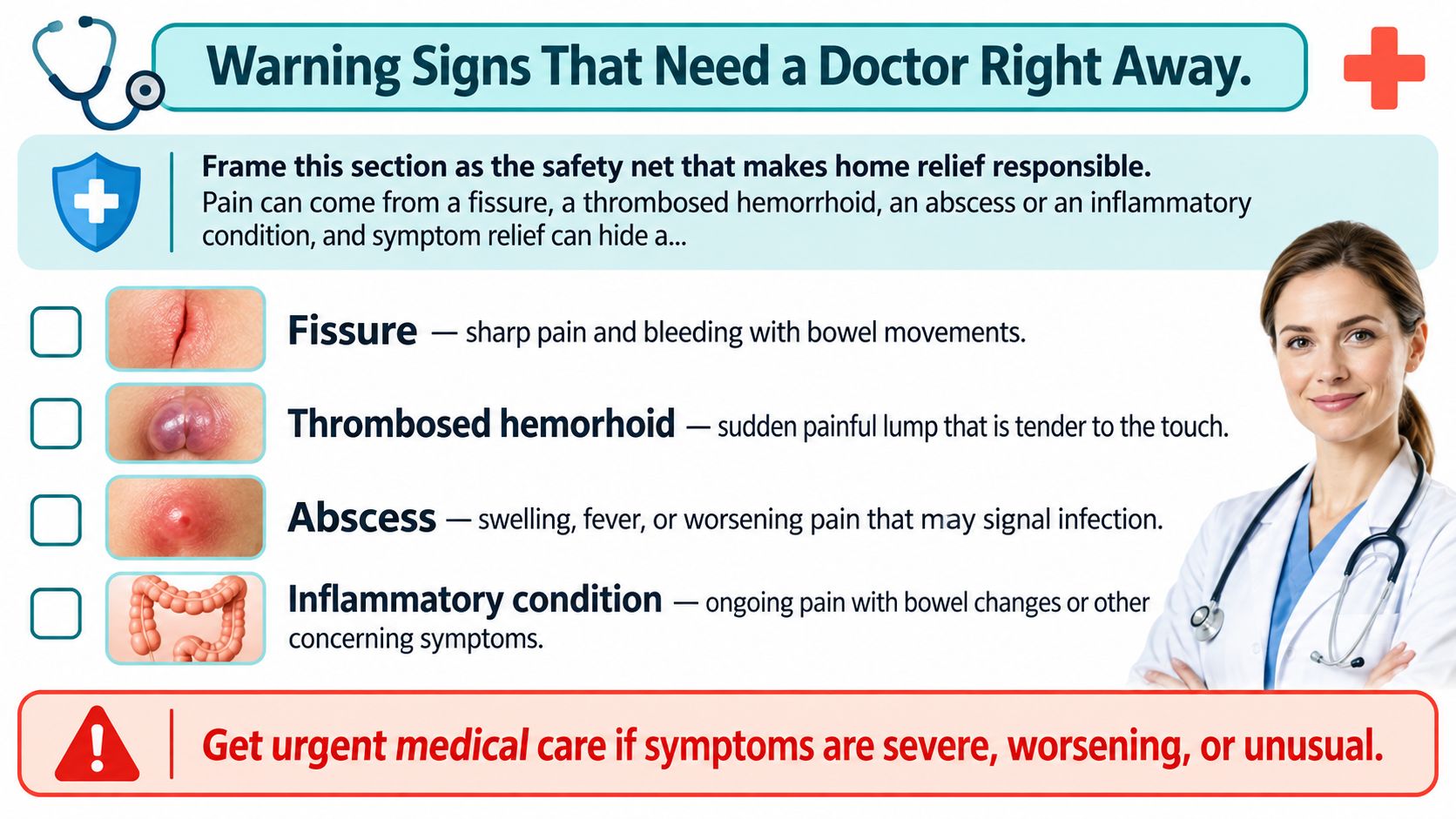
Some changes call for a booked appointment rather than a same-day visit. Persistent changes in bowel habit, unexplained weight loss, or ongoing belly symptoms belong in that category. These often have noncancer causes, and they still shouldn't be explained away as hemorrhoids without an exam.
When to Stop a Numbing Product
The same time limit applies to the cream itself. Stop using it and ask a doctor if rectal bleeding occurs, the condition worsens or fails to improve within 7 days, or an allergic reaction occurs. Those limits come straight from the drug label, and they hold even while the product is still numbing the area.
Catching these signs early keeps a simple problem simple to treat.
Home Relief Steps and Which Option Does What
Home care works best when each tool is matched to the job it can do. Warm water relaxes, fiber and fluids soften stool, lidocaine numbs surface nerves, and witch hazel soothes irritated skin. Expecting one product to do all four is where routines go wrong.
Start with the likely cause. Pain that spikes after a bowel movement often points to spasm or a small tear, so warmth and gentler cleaning come first. Burning and itching at the surface fit a numbing cream better than a soak. Mild irritation after wiping fits witch hazel. None of these treats infection, and none should be used to keep going when symptoms are getting worse.
The difference between two common topicals shows the point. In postpartum comfort guidance on witch hazel and lidocaine, witch hazel is described as an astringent that can reduce irritation and swelling, while lidocaine is a topical anesthetic that temporarily numbs the treated area. They sit on the same shelf, but they do different work.
Rectal Pain Relief Options Compared
| Option | What it does | Best for | Main limit |
|---|---|---|---|
| Warm sitz bath | Relaxes the sphincter and soothes tissue | Pain after a bowel movement and fissure spasm | Needs repeat use and does not treat infection |
| Fiber and fluids | Softens stool and reduces straining | Pain from hard stool and hemorrhoids | Works over days, not minutes |
| Topical lidocaine cream | Temporarily numbs the outer skin | Burning, itching and sharp surface pain | Symptom comfort only, does not treat the cause |
| Witch hazel pads | Astringent that calms irritation and swelling | Mild irritation after bowel movements | Comfort only, no diagnostic or healing effect |
| Stool softener | Eases passage of stool | Hard stools after childbirth or with certain medicines | Use only when a clinician advises it |
The soak has evidence behind it as the anchor of the routine. In the ASCRS evidence summary on anal fissure care, pain relief occurred in 91% of patients receiving sitz baths and fiber, compared with 60% receiving topical anesthetics. A numbing product can help, especially for sharp surface pain, but the base layer is softer stool plus calmer tissue.
A Simple Daily Routine
- Avoid straining: Keep toilet sitting to a few minutes, and don't sit scrolling.
- Soak warm, not hot: Sit in warm water for 10 to 15 minutes, two or three times a day, with enough water to cover the hips. A sitz bath routine for hemorrhoid relief can make setup easier.
- Clean gently: Wash with mild soap and warm water, rinse, then pat dry. Don't rub.
- Calm irritation: Use a witch hazel pad after bowel movements if irritation is the main problem. Chilled pads can feel extra soothing.
- Numb surface pain when needed: For sharp surface pain, spread a thin layer of numbing cream over the affected external area. Revivol-XR® 5% Lidocaine Numbing Cream is an over-the-counter topical anesthetic for temporary relief of hemorrhoid pain, burning and itching.
- Use cold for swelling: Apply a cold pack wrapped in cloth for short periods. Never place ice directly on skin.
- Track your days: Note pain, bleeding, and bowel movements so you can tell if you're improving.
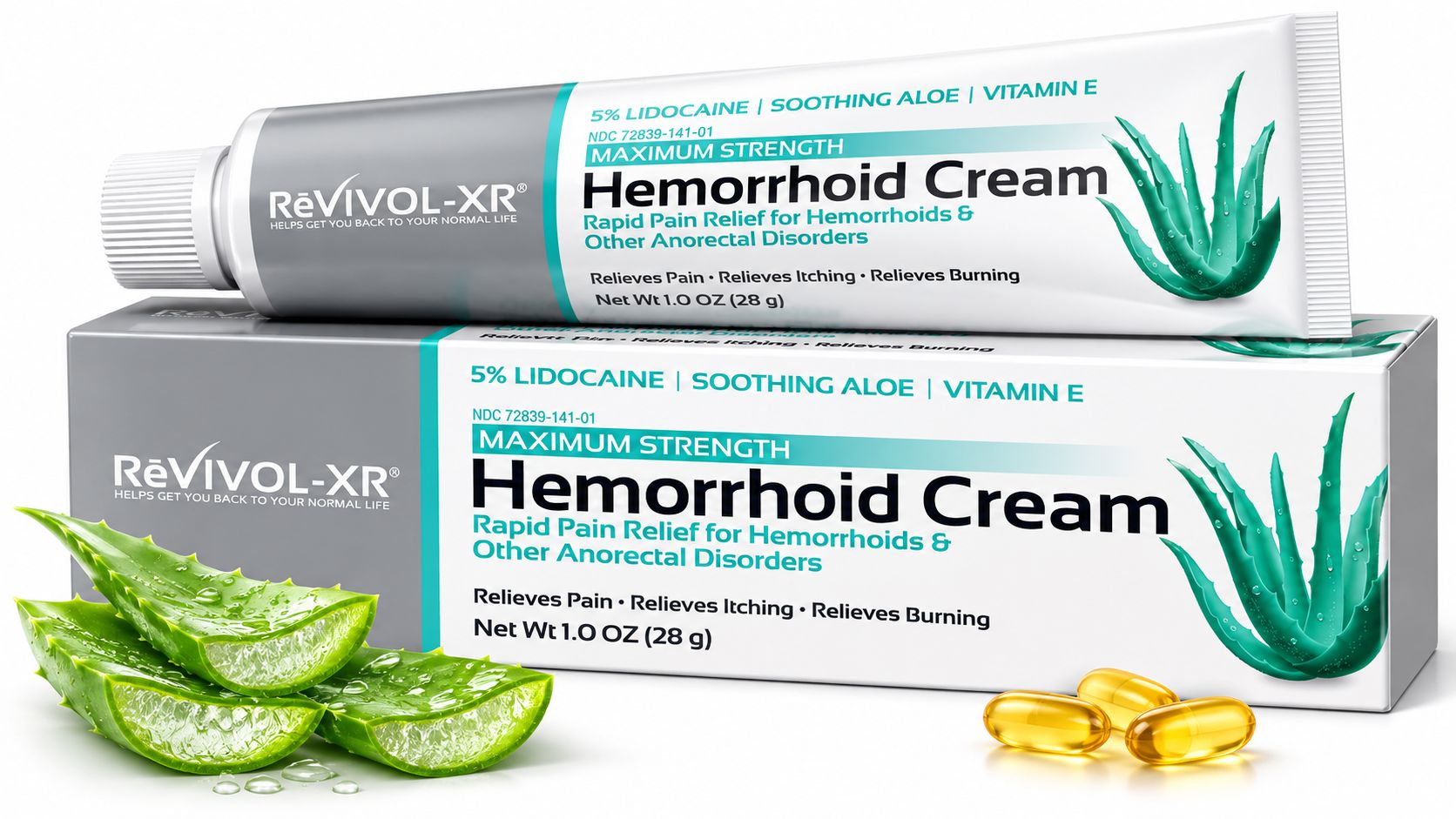
Follow the package directions for how often to apply any cream, and keep it outside the body. Creams of this type are for external use only and must not be inserted into the rectum.
Avoid the common slips that set people back. Hot water can irritate tender tissue. Rubbing with dry tissue can reopen a tear. Inserting fingers or objects can worsen a fissure or injure swollen tissue.
Practical rule: If a step makes pain sharper during or right after you do it, stop that step and reassess.
You may feel some comfort within a day, especially after soaks. Steadier improvement usually builds over about a week as stool softens and tissue calms down.
Stool Habits That Keep Rectal Pain From Coming Back
A flare can ease for a few days, then one hard bowel movement brings the pain right back. That pattern usually points to stool consistency. Hard stool stretches tissue, straining raises pressure, pain makes holding stool more likely, and held stool becomes harder. The way out is a steadier daily routine.
Fiber softens stool; it does not numb pain. The 2024 ASCRS guideline on hemorrhoid management cites a Cochrane review of seven randomized trials involving 378 patients where fiber reduced persistent hemorrhoid symptoms by 53% and bleeding by 50%. Improvement in pain and itching was limited, so fiber works best as a prevention tool alongside a separate option for surface pain.
Targets and Habits That Help
- Build fiber slowly: Work toward a daily fiber goal in small steps to limit gas.
- Pair fiber with fluids: Drink steadily through the day so fiber can do its job and stool stays softer.
- Walk after meals: Gentle movement supports regular bowel activity and reduces long periods of sitting.
- Answer the urge promptly: Holding stool because you are busy or worried it will hurt gives it more time to become harder.
- Keep toilet visits short: Get up if nothing is happening, then try again later.
Each habit changes a different part of the loop. Fiber and fluids change the stool. Walking and prompt bathroom trips change timing. Short toilet visits limit the pressure that can restart pain.
Check the pattern once a week. Is stool soft and easy to pass, are you straining less, and is bleeding little or none? If the answer stays no, or pain is severe or persistent, schedule an exam. Ongoing symptoms need a clinician to look for the cause.
Pregnancy and Postpartum Rectal Pain Safety
Pregnancy and the weeks after delivery need their own safety check. Your body, your medicines, and your delivery recovery all change what's reasonable to use.
The NHS Specialist Pharmacy Service guidance on hemorrhoids in pregnancy states that no hemorrhoid preparations are licensed specifically for pregnancy and recommends a stepwise approach. Start with non-drug measures, then add short term analgesia or topical therapy only when needed.
That order looks like this in practice. Use warm soaks, fiber, fluids, and gentle walking first. Clean the area gently after urination and bowel movements. Witch hazel pads can be chilled for cooling comfort, and lidocaine gel, foam, or spray appears in postpartum comfort guidance after cleansing.
After delivery, constipation is common for several reasons at once. Reduced intestinal movement, dehydration, less food during labor, opioids, iron supplements, pain medicines, and anesthesia can all contribute. A clinician may recommend a stool softener or laxative when it's clinically indicated, so ask rather than guessing.
Natural doesn't automatically mean safe in pregnancy, and over the counter doesn't automatically mean the label covers breastfeeding.
Before using any topical product while pregnant or breastfeeding, check with your OB/GYN or pharmacist. Ask about the ingredient, how long to use it, and whether tears or an episiotomy change where you should apply it. Our guide to hemorrhoid suppositories and pregnancy explains why internal products need the same careful check.
Don't self treat postpartum pain that comes with heavy bleeding, fever, spreading redness, or a hard painful lump. Those signs need prompt care, especially while you're healing from delivery.
Common Questions About Rectal Pain Relief
Can Rectal Pain Go Away on Its Own
Soft stool, warm soaks, and gentle care can let mild hemorrhoid or fissure pain ease within a week. The change should run one way: less sting with each bowel movement, and no new or heavier bleeding. Pain that jumps back, or bleeding that increases, needs an exam.
Does Pain Mean I Have a Hemorrhoid
Pain can fade while a lump keeps growing. Two days of soaks may quiet the sting, yet a firm lump that was small on Monday can be larger by Friday. Less pain does not shrink that lump. A growing lump is a different problem from a simple external hemorrhoid, so a clinician should name the cause before home care continues.
Is the Cream Masking a Change
A numbing cream works like a mute button on surface burn. Before the next application, look at the skin. A larger lump, new bleeding, spreading redness, or pain that returns sooner after the numbness fades means the cream is covering a change. Stop and get that change checked.
Choose Your Relief Plan and Check In With a Provider
Start today with a three-layer plan. It has a daily base, short-term comfort for flare-ups, and a firm date to get checked if you aren't improving.
The base is the routine you already built: habits that keep stool soft, warm soaks, short toilet time, gentle cleaning. Flare-up comfort is a labeled numbing cream used on the outer skin, exactly as directed, for surface pain only. The third layer is the provider visit, booked right away for any warning sign, or by day seven if you still haven't improved.
What turns this plan from a promise into proof is a short tracking log. Write three lines each evening, on paper or in your phone:
| Day | What to write down | What you are looking for |
|---|---|---|
| Day 1 | Pain level on a 0 to 10 scale, any bleeding, whether you passed stool | Your starting point |
| Days 2 to 6 | The same three notes each night | Pain trending down, stool staying soft, no new bleeding |
| Day 7 | The same notes, plus one question: am I better than day 1? | A clear yes or no |
A yes means keep the routine going. A no, or any bleeding at any point, means make the appointment that same day. Either way, bring the log. Seven evenings of notes give a clinician far more to work with than a week of fuzzy memory, and they make an awkward conversation much shorter.
For temporary, soothing comfort from hemorrhoid pain, burning, and itching, explore the external use options and follow the Drug Facts label carefully. Visit Revivol-XR to find the product that fits your routine, and talk with your healthcare provider if symptoms persist, worsen, or include bleeding.