Pregnancy Hemorrhoids First Trimester: Safe Relief

A sudden sting, itching, or bright-red blood at 2 a.m. can make a newly pregnant person fear the worst, but early hemorrhoid symptoms usually call for calm recognition and the right next step, not panic.
You may be wondering whether pregnancy hemorrhoids in the first trimester are normal, whether bleeding could harm the pregnancy, and which relief products are appropriate before 12 weeks. This guide focuses on the first trimester as its own clinical window, where preventing constipation and checking unexplained symptoms matter more than choosing a cream quickly.
Possible SEO titles:
- Pregnancy Hemorrhoids First Trimester: Safe Relief and When to Call Your OB
- Pregnancy Hemorrhoids First Trimester: Causes, Symptoms, and Treatment Options
- Hemorrhoids in Early Pregnancy: What to Do Before 12 Weeks
- First Trimester Hemorrhoid Relief: Safe Tips for Pregnancy
- Are Pregnancy Hemorrhoids Normal in the First Trimester? A Practical Guide
Table of Contents
- What First Trimester Hemorrhoids Actually Feel Like
- Why Hemorrhoids Can Start Before 12 Weeks
- Symptoms That Mean Call Your OB Today
- Stopping the Constipation Cycle in Early Pregnancy
- Reading the Label on Pregnancy-Safe Creams and Wipes
- Sitz Baths, Cold Packs, and Bathroom Positioning
- Your First Trimester Hemorrhoid Plan and When to Loop in Your Provider
What First Trimester Hemorrhoids Actually Feel Like
It's 2 a.m. You've finally fallen asleep after a day of nausea and exhaustion, then wake with a sharp sting during a bowel movement. When you wipe, you notice a small streak of bright-red blood. Your mind moves quickly to miscarriage, a dangerous complication, or the fear that you've somehow done something wrong.
That reaction is understandable. Rectal discomfort during early pregnancy can feel alarming because it's unfamiliar and because pregnancy makes every new symptom feel important. Hemorrhoid symptoms may include itching, burning, aching, pressure, or a small tender lump near the anus. Some people notice discomfort after sitting through a workday, while others feel soreness after a workout or a bowel movement.
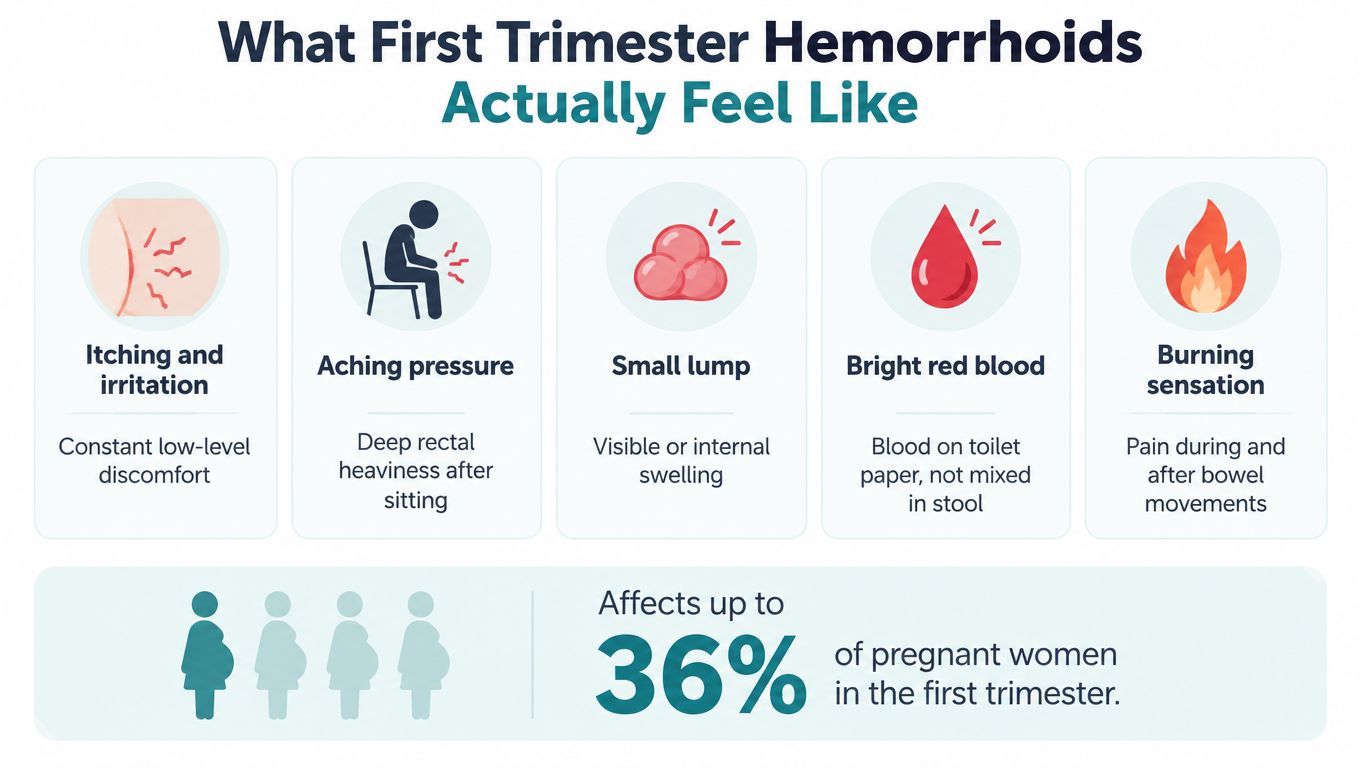
A small amount of bright-red blood on toilet paper can occur with hemorrhoids, particularly after passing a hard stool. Itching often feels like persistent surface irritation. A dull ache or pressure may become more noticeable after sitting. A fissure, by contrast, can cause sharp pain during or after a bowel movement and may need a different care plan, as described in this guide to what hemorrhoid pain can feel like.
A reassuring distinction: Rectal bleeding usually isn't connected to bleeding from the uterus, but pregnancy-related bleeding should still be discussed with your prenatal care team when you're uncertain about its source.
Early symptoms don't mean you caused harm, and they don't automatically signal a pregnancy problem. They do deserve attention, especially if the bleeding is more than light spotting, the pain is severe, or the symptoms don't fit a familiar hemorrhoid pattern. The timing matters too. First-trimester hemorrhoids are clinically meaningful, but available evidence shows that most pregnancy-associated cases become more common later.
Why Hemorrhoids Can Start Before 12 Weeks
A lot can happen before the uterus is large enough to press heavily on the rectal veins. Progesterone rises early in pregnancy, and that hormone can relax vein walls while also slowing digestion. Our guide to pregnancy body changes explains these early shifts in more detail. The result is a setup many people recognize by week six, seven, or eight. Stool sits longer, dries out more, and becomes harder to pass.
That is why the first trimester deserves its own lens. In these early weeks, constipation prevention and clinician-guided triage usually matter more than picking a cream. If bowel movements stay soft and you avoid repeated straining, you may interrupt the cycle before swollen veins become a bigger problem.
Daily life in early pregnancy can push things in the wrong direction. Nausea can make water unappealing. Food aversions may crowd out fruits, vegetables, and whole grains. Prenatal vitamins that contain iron can add to constipation for some people, and fatigue often means less walking and less routine movement.
ACOG notes that pregnancy-related pressure can slow blood flow from the lower body, especially as the uterus grows, and it recommends fiber, liquids, movement, and avoiding prolonged sitting in its guidance on pregnancy-related vulvovaginal health. That later-pregnancy pressure matters, but it does not fully explain symptoms that begin well before 12 weeks.
What the timing evidence shows
The pattern in published research is consistent even when the numbers differ. A prospective cohort study found hemorrhoid symptoms or physical findings in 11% of participants during the first trimester, compared with 23% during the third trimester. The same study reported 36.2% one month after delivery, declining to 16.9% at three months postpartum (prospective pregnancy hemorrhoid study).
A separate 2024 pregnancy hemorrhoid analysis reported hemorrhoid development in 1.5% during the first trimester, 1.5% during the second trimester, and 61.65% during the third trimester (2024 pregnancy hemorrhoid analysis). These figures should not be treated as interchangeable because the studies measured different things. What they do show is straightforward. Symptoms can start early, even though onset is more common later.
The same analysis also described higher incidence with increasing maternal age, a prior history of hemorrhoids, or a multifetal pregnancy. Only 1.8% required a procedure or surgery during pregnancy, and 41.4% of those procedures occurred during the first trimester. That reflects a small group with more severe disease, not the usual person with mild early symptoms.
For gentle external cleansing, some people may consider Revivol-XR® Hygienic Cleansing Lotion, which contains aloe, mineral oil, chamomile, vitamin E, and witch hazel and is intended for external use. Pregnancy suitability still depends on your history and the ingredient list, so check with your OB or pharmacist before using it.
Symptoms That Mean Call Your OB Today
Mild itching, a small external lump, or light bright-red spotting only on toilet paper may be appropriate to mention at your next prenatal visit if you otherwise feel well. Rectal bleeding during pregnancy shouldn't automatically be labeled hemorrhoids, though. A healthcare professional may need to confirm the source.
Call your OB, midwife, or prenatal clinician the same day if you have:
- More than light spotting: Heavy bleeding, bleeding that continues, dark blood, or clots needs prompt assessment.
- Severe or escalating pain: Pain that disrupts sleep, prevents sitting, or doesn't ease deserves a call.
- A rapidly enlarging lump: A hard, very tender lump may reflect thrombosed tissue and needs clinical review.
- Fever or feeling faint: Fever, dizziness, weakness, or feeling acutely unwell shouldn't be managed as ordinary hemorrhoid discomfort.
- An unfamiliar pattern: Persistent, unexplained, painful, or mixed-in-stool bleeding may have another cause.
The distinction between a hemorrhoid and a fissure matters. A review of perianal disease in pregnancy found hemorrhoids and perianal fissures were the most common conditions, with a combined frequency of 43.9%; 61% of reported onset occurred in the third trimester, while 34% occurred during the first or second day after delivery (perianal disease review). A fissure often produces sharp pain during or after stool passage, rather than mainly itching or pressure.
First Trimester Hemorrhoid Triage at a Glance
| Symptom | Likely cause | What to do now |
|---|---|---|
| Mild itching or pressure | Irritated hemorrhoidal tissue | Keep the area clean and mention it at prenatal care |
| Small tender lump | External swelling | Contact your OB if it grows or becomes very painful |
| Bright-red blood on toilet paper | Possible hemorrhoid or fissure | Report it if it recurs, increases, or feels unexplained |
| Sharp pain during or after a bowel movement | Possible fissure | Ask your clinician for an assessment |
| Heavy, dark, or clotted bleeding | Not typical mild hemorrhoid spotting | Call your OB or seek urgent care guidance |
Stopping the Constipation Cycle in Early Pregnancy
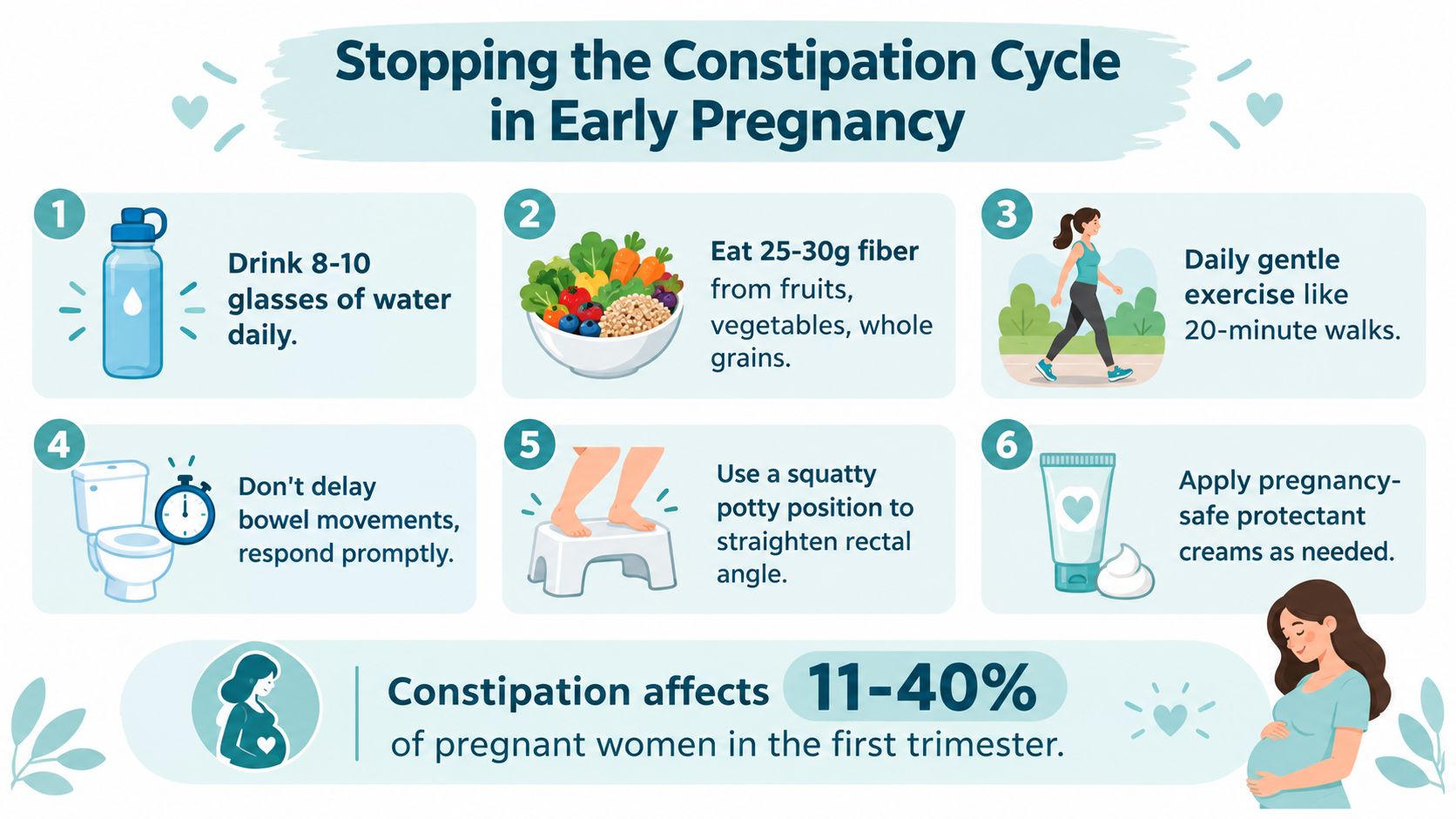
The most useful first-trimester strategy is to reduce the chain of hard stool, straining, and venous irritation. A gastroenterology review recommends fiber, fluids, stool softeners when appropriate, and timed toileting as initial measures in the first trimester (constipation and hemorrhoid guidance).
Try this routine, adjusting it around nausea, vomiting, and your clinician's advice.
Build meals around fiber
Aim for roughly 25 to 30 grams of fiber each day from food first, if your prenatal team agrees. Oats, berries, pears, beans, lentils, vegetables, and whole grains can help soften stool, but increase fiber gradually if your stomach is already unsettled.
If food alone isn't enough, ask your OB or pharmacist whether a gentle option such as psyllium is suitable. Guidance on psyllium husk for hemorrhoids can help you understand how fiber works, but your provider should confirm the right product and amount for pregnancy.
Make drinking easier
A practical target may be around 10 cups of fluid daily, adjusted for vomiting, medical conditions, and your clinician's advice. Small, frequent sips can work better than a large glass when nausea is strong. Broth, water-rich foods, and ice chips may feel easier than plain water.
Use timed toileting
Respond when you feel the urge instead of delaying it. Sit with your feet supported, relax your abdomen, and avoid prolonged toilet time. A short visit is better than scrolling while sitting and straining.
Add gentle movement
Short walks after meals can support regular bowel habits without demanding a full workout. Prenatal yoga or another activity may be appropriate if your pregnancy care team has cleared it. On a fatigue-heavy day, several brief periods of movement can feel more realistic than one long session.
Ask about stool softeners
Stool softeners may be appropriate during pregnancy, but the specific product matters. Confirm the choice with your OB, particularly if iron is contributing to constipation. Don't stop or change a prescribed prenatal supplement without discussing alternatives with your clinician.
Morning sickness may make fiber and fluid difficult. Try cool fruit, softened oats, or small portions rather than forcing a large meal. If vomiting prevents you from keeping fluids down, contact your prenatal clinician because dehydration can worsen constipation and needs its own evaluation.
A review of pregnancy anorectal care recommends treating the bowel habit, not relying only on local symptom relief. A cream may temporarily soothe the surface, but it won't replace softer stools and less straining.
Reading the Label on Pregnancy-Safe Creams and Wipes
The first question at the pharmacy is often, “What can I use right now?” Before 12 weeks, the safest answer usually depends on the active ingredient, how much tissue is irritated, and whether your OB or pharmacist has reviewed the exact label.
“Topical” doesn't automatically mean risk-free. Absorption can vary by ingredient and may change when skin or anal tissue is damaged.
Lower-concern comfort options
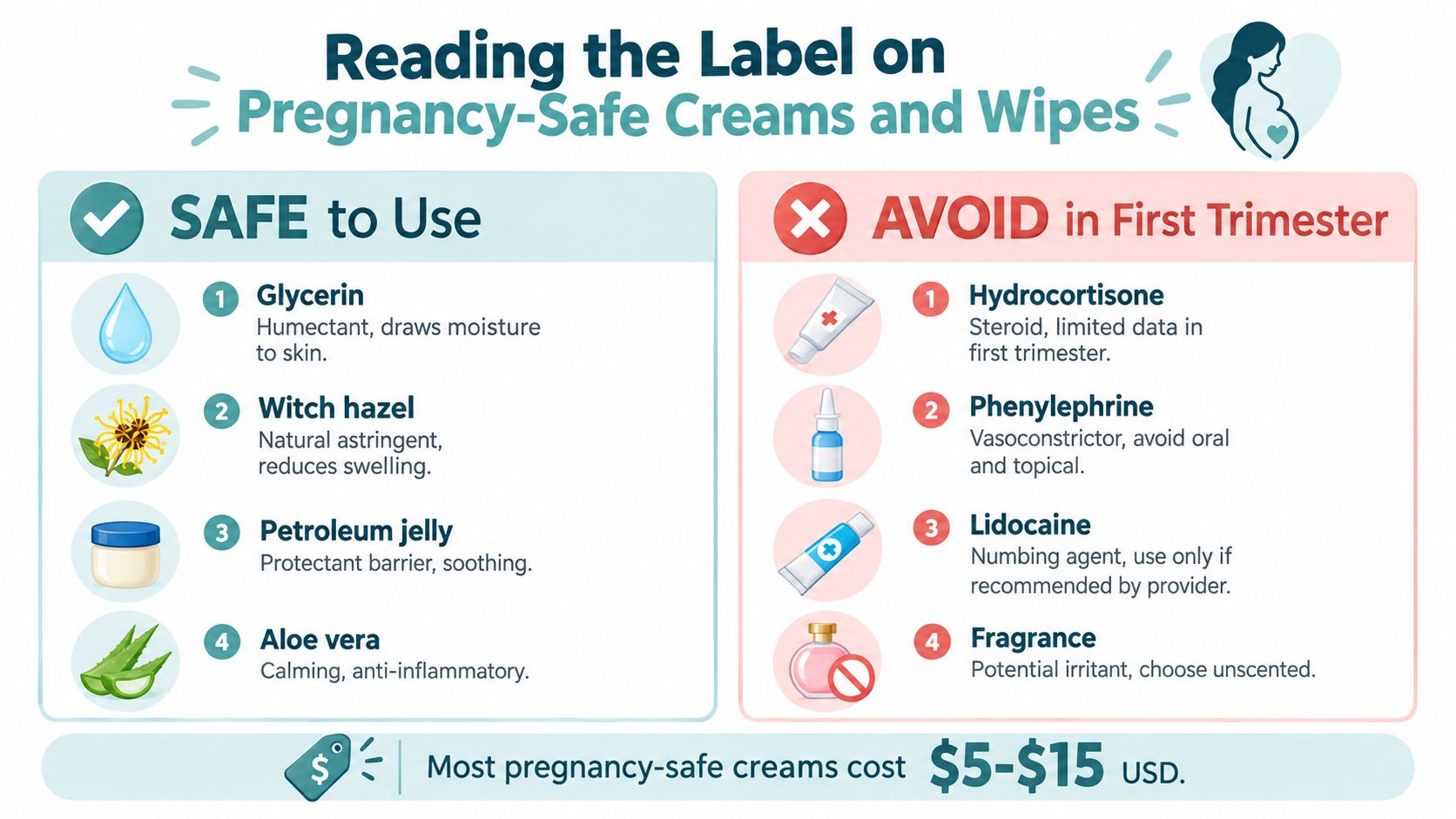
Simple protectants such as glycerin or petrolatum form a barrier over irritated skin. Witch hazel pads and plain aloe-based cleansing products may offer soothing comfort for some people. They still can irritate sensitive skin, especially if they contain fragrance or multiple botanicals.
The NHS Specialist Pharmacy Service states that no hemorrhoid preparations are specifically licensed for pregnancy and that simple soothing products may carry less risk than products containing corticosteroids or local anesthetics (pregnancy hemorrhoid medication guidance). “Less risk” isn't the same as a personal approval.
Ingredients that need a careful conversation
The American Family Physician review describes topical lidocaine as acceptable after the first trimester, which leaves an evidence gap for someone at six to ten weeks (OTC medication review in pregnancy). That doesn't establish that every early-pregnancy use is harmful, but it does mean you shouldn't assume a 5% lidocaine product is automatically appropriate.
Products that combine lidocaine with other ingredients need the same review. For example, Revivol-XR Advanced Hemorrhoid Cream contains 5% lidocaine, 0.25% phenylephrine, glycerin, petrolatum, aloe, and witch hazel. Because phenylephrine is a vasoconstrictor and lidocaine is a local anesthetic, ask your OB or pharmacist before using it during the first trimester.
Corticosteroid products and vasoconstrictors such as phenylephrine deserve explicit professional guidance. Don't choose them solely because the package says “hemorrhoid relief.” Avoid fragranced products if your skin is reactive, and stop any product that causes increased redness, swelling, burning, or pain.
A pharmacist can help you compare a cream, spray, suppository, or wipe with your pregnancy history and other medicines. A suppository or internal product may not be appropriate when the diagnosis is uncertain, bleeding is present, or tissue is very painful.
Sitz Baths, Cold Packs, and Bathroom Positioning
Comfort measures can be simple, but use them gently. A warm sitz bath can relax the area and ease surface irritation. Use warm water rather than hot water, and sit only as long as your body tolerates comfortably. If your OB approves a salt or botanical blend, follow that product's directions and stop if the skin stings or becomes more irritated.
A repeatable evening routine might look like this:
- Clean gently after a bowel movement: Use water, a peri bottle, or a mild external cleansing lotion rather than vigorous dry wiping.
- Soak in warm water: A brief sitz bath can be used after a bowel movement or before bed.
- Cool swelling afterward: A cold pack wrapped in cloth can be applied briefly. Don't place ice directly on skin.
- Change position: Rest on your side or use a small cushion to reduce pressure from prolonged sitting.
- Move during the day: Stand up regularly instead of remaining seated for long stretches.
ACOG recommends avoiding prolonged sitting and getting up to move to reduce pressure on pelvic veins. Don't sit on the toilet to read or scroll, and don't force a bowel movement because you're already there.
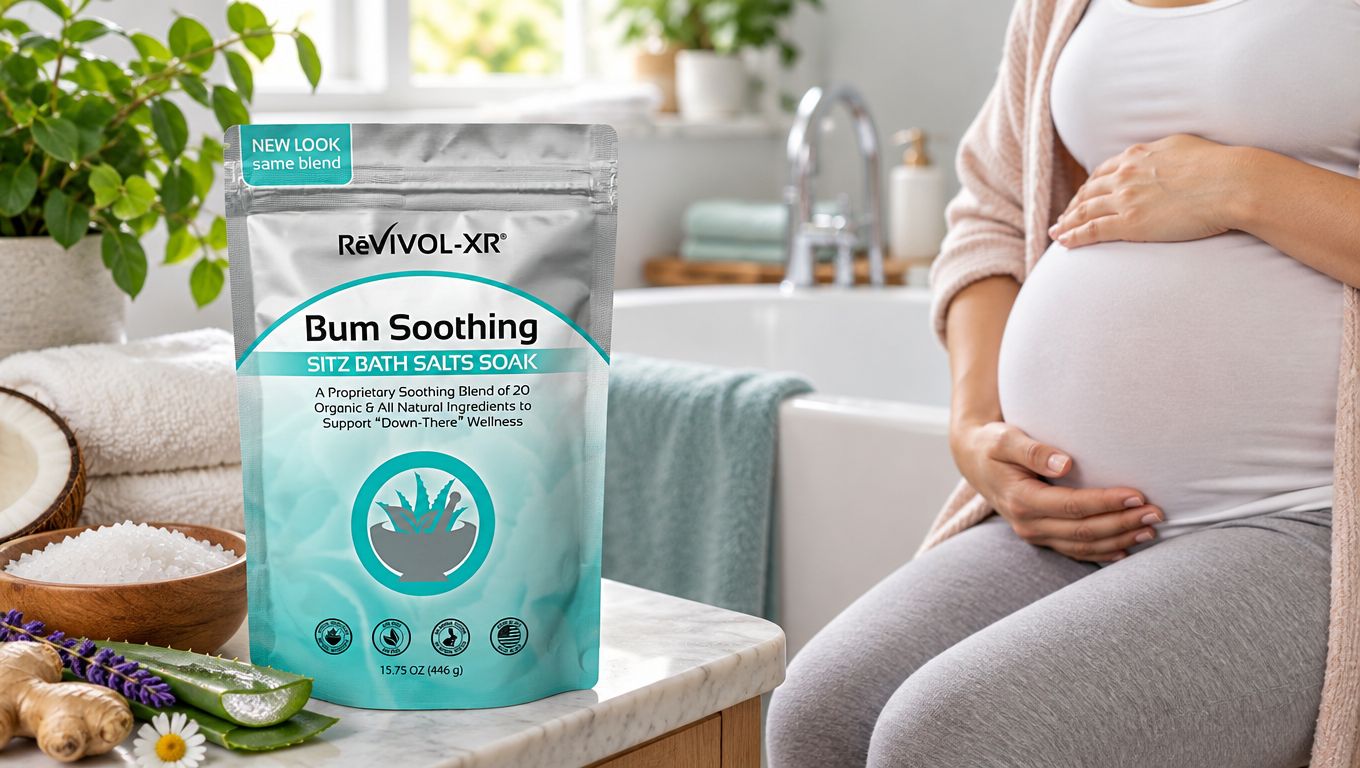
The Revivol-XR® 20-in-1 Sitz Bath Soak Mix is one example of a product designed for a soak, but pregnancy-specific suitability should be confirmed with your OB or pharmacist before use. The same rule applies to essential oils, Epsom salt blends, and fragranced additives. Natural ingredients can still irritate sensitive tissue.
Your First Trimester Hemorrhoid Plan and When to Loop in Your Provider
Pregnancy hemorrhoids in the first trimester are less common than later pregnancy hemorrhoids, but they aren't strange or imagined. Your immediate aim is to soften bowel movements, reduce straining, and identify symptoms that need professional assessment.
Use this seven-day starter plan:
- Day 1: Add one fiber-rich serving and an extra glass of water if tolerated.
- Day 2: Start responding promptly to the urge to have a bowel movement.
- Day 3: Try a warm sitz bath after one bowel movement.
- Day 4: Add gentle movement that your prenatal team has cleared.
- Day 5: Review any OTC cream, wipe, spray, or suppository with your OB or pharmacist.
- Day 6: Reassess pain, itching, swelling, and bleeding.
- Day 7: Schedule a visit if symptoms haven't improved or if you're still unsure of the diagnosis.
Call your provider sooner for bleeding beyond light spotting, severe pain, fever, a new hard lump, dark or clotted blood, or symptoms that don't improve. Before using a new product in the first trimester, take a photo of the Drug Facts label or bring the package to your pharmacist.
Revivol-XR offers soothing comfort options including sitz bath products and external cleansing support for hemorrhoid and fissure-related irritation, but product suitability during pregnancy depends on the ingredients and your clinician's advice. Visit Revivol-XR to review the available options, then discuss the specific product with your OB or pharmacist before first use.