Peri Bottle Guide: How to Use One for Postpartum Relief

You're sitting on the toilet at 2 a.m. with a sleeping baby nearby, dreading the sting of urinating and the drag of toilet paper on sore skin. That's the moment a peri bottle earns its place by the sink. It's a simple rinse tool, not a treatment, and used well it can make each bathroom trip calmer, cleaner, and much less painful during postpartum recovery.
Table of Contents
- What a Peri Bottle Is and Which Cleansing Option Fits
- How to Use a Peri Bottle Step by Step
- How to Clean, Dry and Store Your Peri Bottle
- Features to Look for in a Peri Bottle
- Pairing a Peri Bottle with Sitz Baths and Topicals
- Warning Signs That Need a Healthcare Provider
- Common Questions About Peri Bottles
- Your Plan for the Next Few Days
What a Peri Bottle Is and Which Cleansing Option Fits
A peri bottle, also called a perineal irrigation or squirt bottle, is a low tech squeeze bottle that pours warm water over the vulva and perineum after urinating or a bowel movement. Its job is gentle cleansing without rubbing tender tissue.
In an interventional study of 80 postpartum women taught perineal hygiene with an irrigation bottle plus warm sitz baths, the Alliance Healthcare Lansinoh summary reports significantly improved comfort at 4, 24, and 48 hours and at 7 days, with less interference with walking, sitting, and urinating at 24 and 48 hours and at 7 days. That study measured comfort, not hemorrhoid healing.
A separate randomized trial of 143 mothers, with 72 using warm water and 71 using povidone iodine, found no statistically significant difference in maternal or neonatal infection related indicators, according to the randomized trial report. Water cleansing supports hygiene. It doesn't prove the bottle treats infection.
Cleansing options after birth compared
| Option | Best for | Main limit | What research shows |
|---|---|---|---|
| Peri bottle with warm water | Rinsing without rubbing tender tissue | Needs a clean bottle and gentle drying | Better comfort through day 7 in a study of 80 women |
| Dry toilet paper | Quick cleanup when skin isn't tender | Can rub or drag on sore tissue | Not directly compared in the research provided |
| Warm sitz bath | Soaking the whole perineal area | Takes 10 to 20 minutes and a basin or tub | Used alongside peri bottle use in the 80 woman study |
| Topical care after drying | Adding a soothing layer on intact skin | Not cleansing, and not for an open wound unless a provider advises it | Not studied in the research provided |
You'll likely benefit most if swelling, abrasions, tears, stitches, or hemorrhoids make wiping uncomfortable. If you're weighing disposable options, read about witch hazel wipes separately, since wipes aren't the same as a plain water rinse. The World Health Organization advises daily perineal washing and cleansing after bathroom use postpartum.
How to Use a Peri Bottle Step by Step
Think of this as a rinse, blot, and reset routine. You're not scrubbing, spraying hard, or cleaning inside the vagina. You're letting warm water do the work so your hands and toilet paper don't have to.
The visual below sums up the flow before the details.
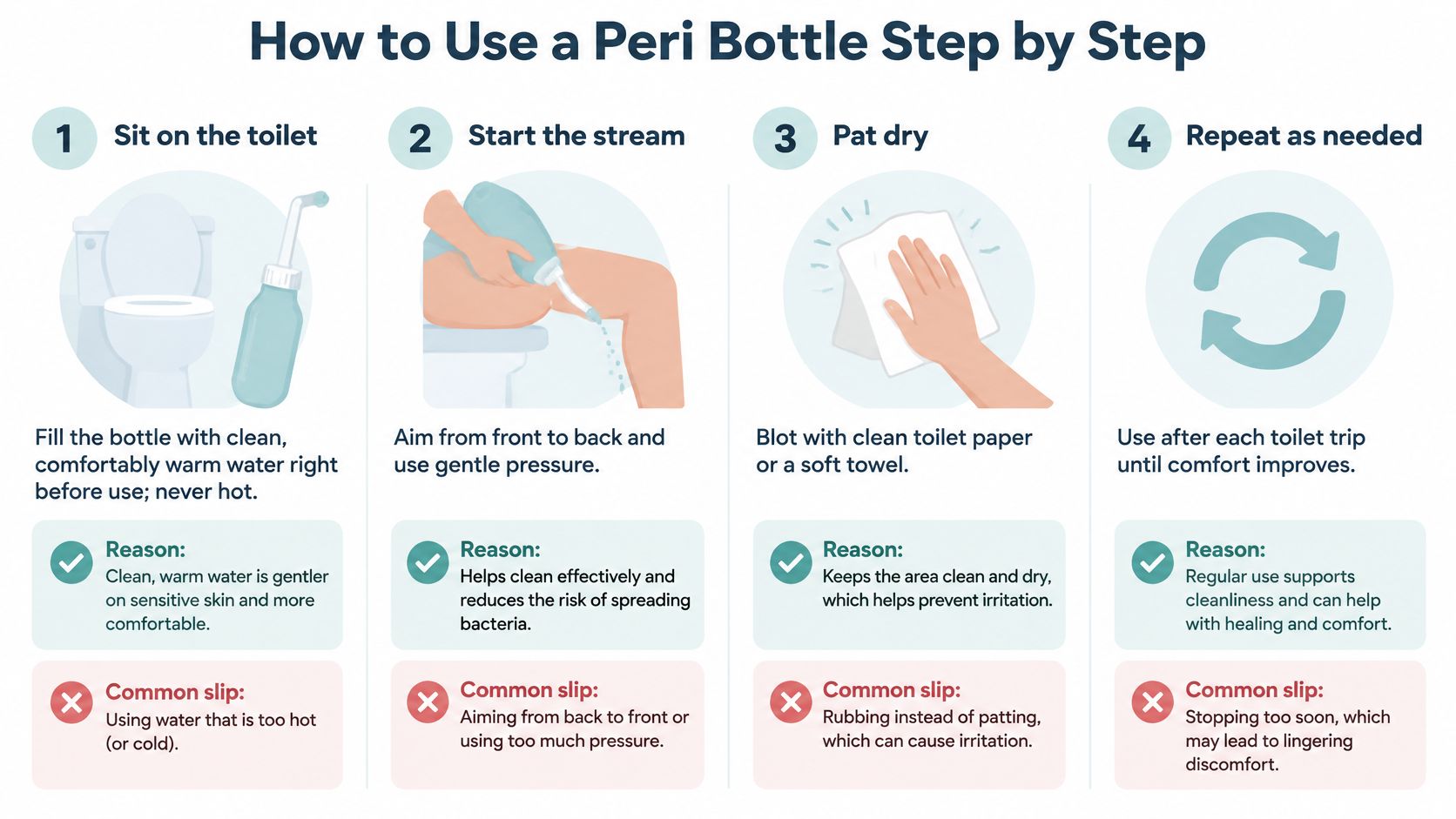
The toilet routine
- Sit and fill fresh. Sit on the toilet first, then fill the bottle with clean, comfortably warm water, never hot. Filling right before use means the water is clean and the temperature is right.
- Start while you urinate. Begin the stream as you pee, or lean forward over your knees so urine is less likely to touch a sore area. NHS pelvic health guidance recommends pouring warm water over the vulva while passing urine, or leaning forward, then dabbing dry.
- Aim front to back, gently. Direct the stream over the perineum from front to back with light pressure. The Merck Manual postpartum care guidance supports this directional rinse during or right after urination, then patting dry. A common slip is squeezing hard. No specific pressure, volume, or number of rinses is established as superior, so a steady, gentle flow is enough.
- Rinse a few seconds more. Keep rinsing briefly after urinating or a bowel movement to clear residue. Don't scrub, and don't aim a forceful jet at stitches, swelling, or a spot that feels open.
- Pat, don't rub. Blot with clean toilet paper or a soft cloth until dry. Rubbing is the slip that can reopen irritated skin and bring back stinging.
- Wash hands and change your pad. Wash your hands before and after bathroom care. Change pads regularly so healing skin isn't sitting against dampness.
A comfortable rinse should feel soothing, with less stinging and no new pain. If the stream itself hurts, soften your squeeze and check the water temperature.
What to keep out of the routine
Skip vaginal douching, fragranced soaps, and wipes on healing tissue, along with shower gels, creams, and oils on a wound. They can irritate skin that's already raw. A peri bottle is for external rinsing only, so the tip never goes inside your body.
Warm water can dilute urine on tender tissue and may help trigger urinary flow when you're tense. That's why it feels practical after vaginal birth, perineal repair, hemorrhoids, or fissure related irritation. If you can't pass urine, though, that's not a problem to solve with more rinsing. Get checked promptly.
How to Clean, Dry and Store Your Peri Bottle
You'll use this bottle several times a day, so a clean, dry bottle matters as much as a gentle stream. After each use, empty it, rinse it with clean water, shake it out, and stand it upside down with the cap off to air dry fully. Once a day, wash the outside, cap, and spout with warm soapy water, rinse well, and dry. Use a dishwasher only if the manufacturer label says it's safe.
Store it in a dry spot, not sealed in a bag while damp. Never share it. One bottle, one person.
Peri bottle cleaning and care schedule
| When | What to do | Why it matters |
|---|---|---|
| After each use | Empty, rinse, shake out, air dry upside down with cap off | Stops moisture building up inside |
| Once a day | Wash outside, cap, and spout with warm soapy water, rinse and dry | Removes residue from frequent use |
| Weekly | Check for cracks, cloudiness, sticky or sour smell, loose cap, replace if found | Damaged parts are harder to keep clean |
| Always | Keep for one person only, filled with clean water and nothing added | Limits germ spread and follows plain water evidence |
Don't add disinfectants, essential oils, or antiseptics to make the rinse stronger. In a randomized trial of 126 low risk women, the European Journal of Midwifery trial found clean water and povidone iodine showed no significant differences in inflammatory or wound healing outcomes, including REEDA scores. If pain, redness, swelling, discharge, fever, foul odor, urinary retention, or wound opening develops, you need medical assessment, not stronger spraying. Follow your product's manufacturer directions.
Features to Look for in a Peri Bottle
A plain bottle does the job well. What separates an easy one from an annoying one is how it aims, flows, and cleans up when you're sore and holding it one handed.
This checklist shows the features that matter most at the toilet.
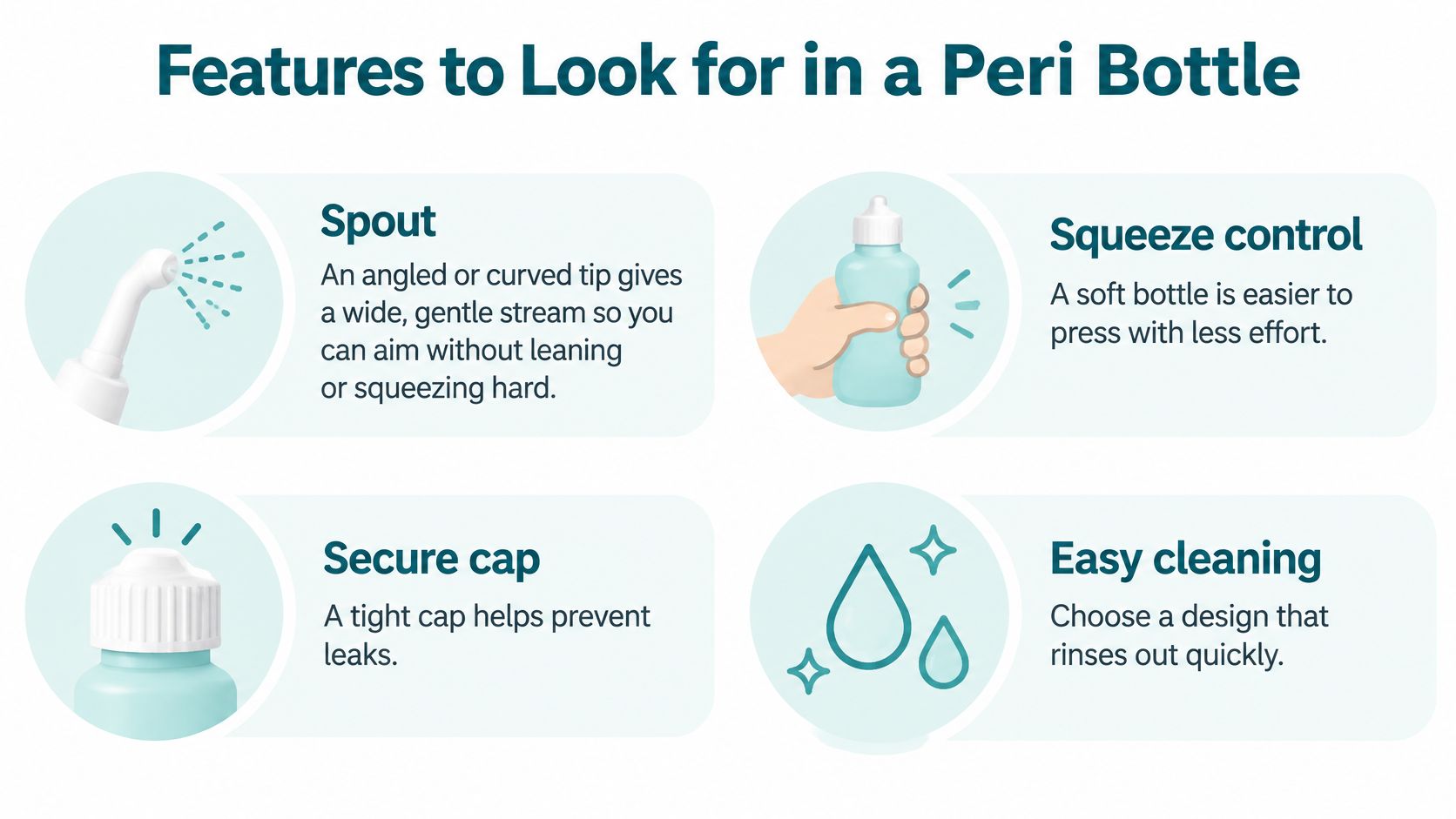
Spout. Look for an angled or curved tip that gives a wide, gentle stream. You can aim without leaning, twisting, or squeezing hard.
Squeeze control. A soft body releases a steady flow with light pressure. Since no best pressure is established, control matters more than force, especially over stitches or swollen skin.
Capacity. About 8 to 16 oz usually covers a full rinse without a refill, and it's still easy to fill at the sink. A huge bottle can feel heavy and awkward when you're seated.
- Material: BPA free plastic with smooth inner surfaces that rinse and dry quickly.
- Cap: A secure lid keeps water clean between uses and prevents spills in a bag.
- Grip: A shape you can hold and squeeze with one hand while sitting.
Avoid fragranced or pre filled bottles, and anything marketed as an internal douche. Fragrance adds irritation risk, and internal use isn't what this tool is for.
Three question check: Can you fill it easily, can you clean inside it, and can you aim it without pain? If the answer to any one is no, keep looking.
Pairing a Peri Bottle with Sitz Baths and Topicals
These tools do different jobs, so order matters. The bottle cleans after toileting, the sitz bath soaks, and a topical goes on last, only on dry, intact skin. Mixing up that order, especially putting cream on wet skin or on a wound, is where people get confused.
The sequence below shows how the pieces fit during a normal day.
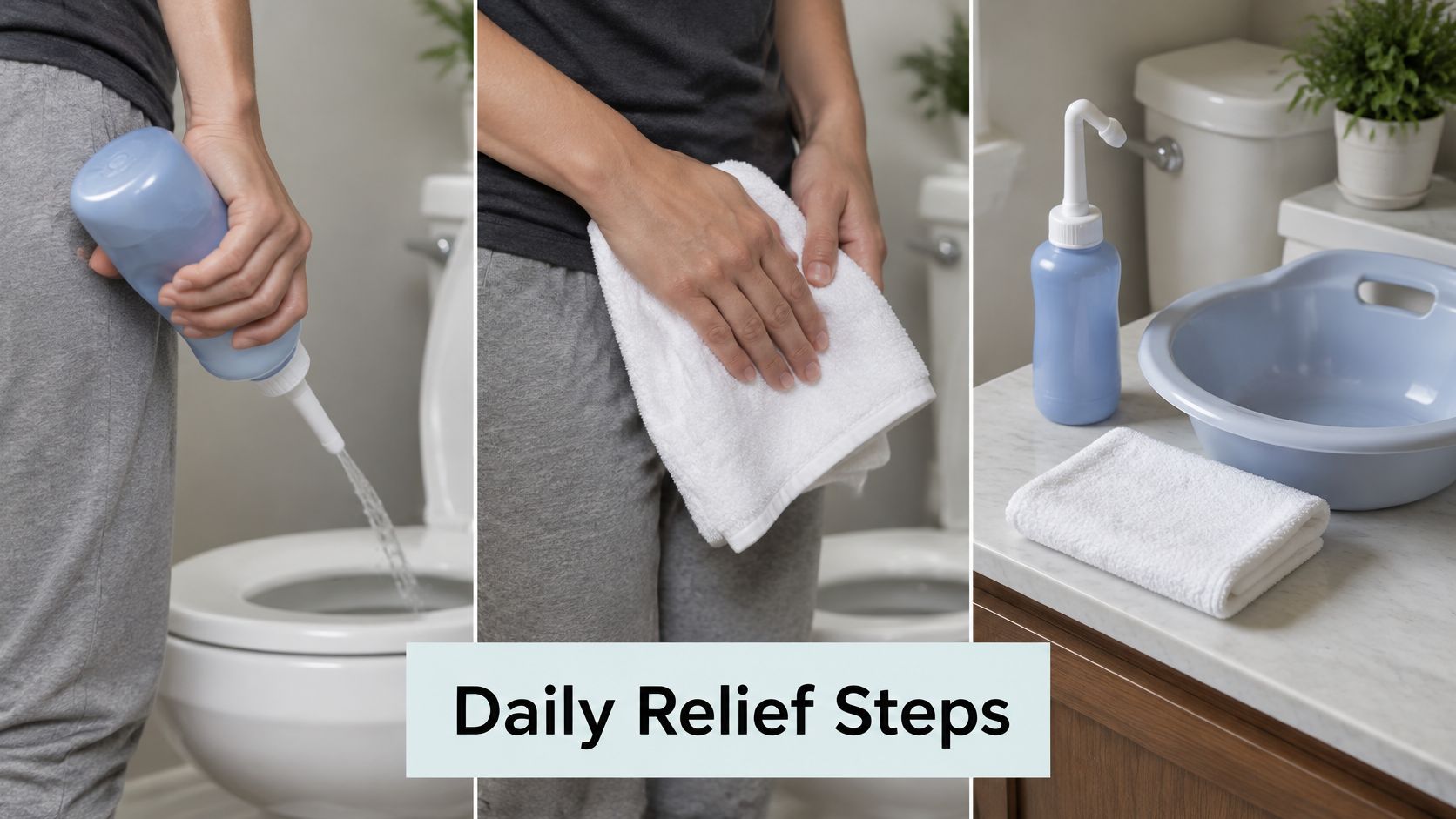
A simple daily order
- After each toilet trip, rinse with the peri bottle and pat dry.
- A few times a day, take a warm sitz bath for 10 to 20 minutes in plain warm water, then pat dry again. If you want setup details, see this guide to a sitz bath for postpartum care.
- After drying, apply a topical only on intact skin and only as the label directs.
Use water only on a perineal wound, with no shower gels, creams, or oils on the wound itself. Check with your provider before putting any topical on healing tissue, stitches, or broken skin.
Daily routine timing for peri bottle, sitz bath and topicals
| Moment | Peri bottle | Sitz bath | Topical |
|---|---|---|---|
| After each urination | Rinse with warm water, pat dry | Not needed | Not needed |
| After each bowel movement | Rinse with warm water, pat dry | Not needed | Only on intact skin, as label directs |
| A few times a day | Rinse after bath to clear residue | Warm soak 10 to 20 minutes | After patting dry, if you choose |
| Before bed | Final rinse if needed, pat dry | Optional short soak | Optional, intact skin only |
Soft stools protect everything else you're doing. According to NHS guidance on your body after birth, postpartum hemorrhoids usually disappear within a few days or weeks, and you should avoid pushing or straining while eating fruits, vegetables, and whole grains and drinking plenty of water. A peri bottle doesn't treat the swelling, but it reduces abrasive wiping.
If a soothing lotion fits your provider approved plan for intact skin, Revivol-XR® Hygienic Cleansing Lotion is an external use lotion with aloe leaf extract, witch hazel, and chamomile, applied as a dime sized amount to toilet paper. Read the label first and stop if it irritates you.
Warning Signs That Need a Healthcare Provider
Most postpartum discomfort eases gradually, so worsening symptoms deserve attention instead of tougher home care. NHS England postnatal guidance says perineal pain usually resolves by the six to eight week postnatal consultation, and ongoing pain should prompt examination. It also identifies constipation, hemorrhoids, and anal fissures as factors that can worsen perineal pain, so don't assume every ache is just stitches.
Symptoms that call for medical care
| Symptom | What it could point to | Next step |
|---|---|---|
| Pain or swelling easing over days or weeks | Usual healing after birth | Continue gentle care, review at six to eight week visit |
| Bleeding heavy or not stopping | More than a simple hemorrhoid | Contact a provider the same day |
| Redness, warmth, discharge, or foul odor | Possible infection | Get prompt medical assessment |
| Fever or chills | Possible infection | Seek same day medical care |
| Pain worsening or lasting past six to eight weeks | Ongoing perineal problem | Book an examination |
| Wound opening or stitches coming apart | Wound breakdown | Seek urgent care |
| Trouble passing urine | Possible urinary retention | Seek prompt medical care |
A peri bottle supports gentle hygiene, but it doesn't replace an assessment. Significant infection, systemic symptoms, or substantial wound breakdown warrant same day specialist assessment.
If pain is lingering and you're trying to sort out the cause, this overview of perineal pain after childbirth can help you prepare questions. Persistent, severe, or bleeding symptoms always call for a healthcare provider, sooner if they're getting worse.
Common Questions About Peri Bottles
How often should I use a peri bottle?
Use it after each urination and each bowel movement while tissue is sore. That matches advice for daily perineal washing and cleansing after bathroom use in the postpartum period. You can taper off as wiping stops hurting.
Can I use a peri bottle with stitches?
Yes, for gentle external rinsing with clean, comfortably warm water. Use light pressure and pat dry. If stitches come apart, the wound opens, or pain and swelling increase, seek care promptly instead of rinsing more.
Do I need a sitz bath too?
Not always. The peri bottle handles the quick rinse after toileting, while a sitz bath adds longer soaking comfort. Use either or both based on how you feel and what your provider advises.
Can I add soap or antiseptic to the water?
No. Plain clean water is the point, and added products can irritate healing skin. If you're worried about infection because of odor, discharge, redness, or fever, get checked rather than changing what's in the bottle.
Your Plan for the Next Few Days
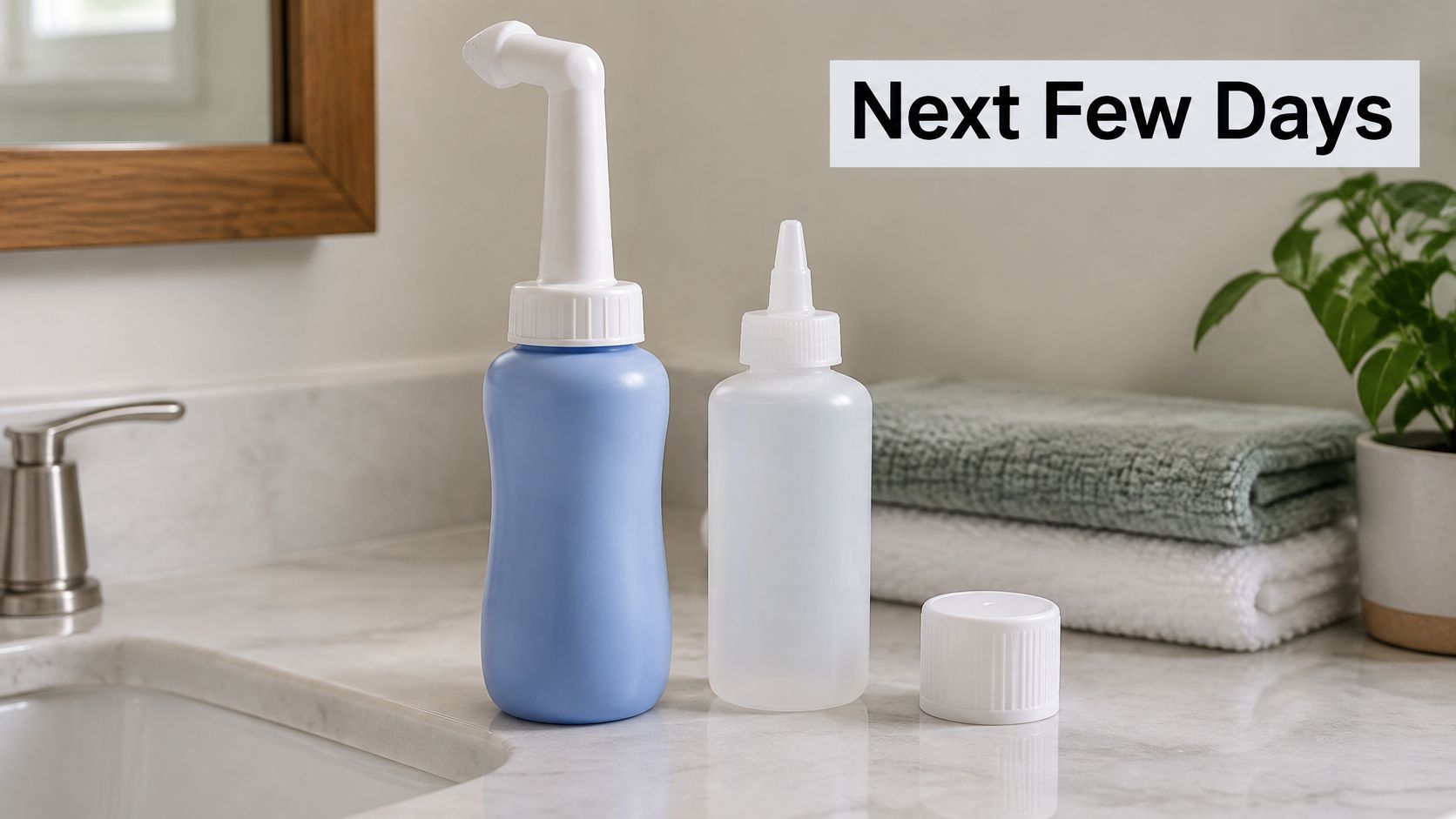
Start with a bottle that has an angled spout, a soft squeeze, and a secure cap, then keep it filled fresh at each bathroom trip. Small consistency beats occasional perfect care when you're tired and sore.
This photo shows the simple setup you're aiming for at home.
Keep a short daily note on pain level, bleeding, swelling, and how sitting and walking feel. Compare that note with the warning signs before deciding to wait or call, and call the same day for anything on that list. Bring the notes to your six to eight week postnatal visit.
If you want to see the routine in motion before you try it, watch this short walkthrough.
If a soothing option fits your topical step, check with your provider first and follow the label. For privacy, every Revivol-XR product ships in plain packaging with no product description on the outside.
When a peri bottle rinse leaves you clean but still sore on intact skin, Revivol-XR offers soothing options designed to provide relief and comfort as part of a gentle postpartum routine, not as a treatment or cure. Check with your healthcare provider first, follow each label, and visit Revivol-XR to explore the range and choose what fits your recovery.